

Blog > Travel Blogs > 2025
Northern Norway - Dashing Through the Snow
Welcome everybody to our first trip report of 2025! This journey will be filled with cold, snow, nature, and even some well-deserved relaxation and luxury. Oh, and Dash-8s. Lots of Dash-8s, as we try to tick off the entire DHC-8 Classic clan. That means the -100, -200, and -300.
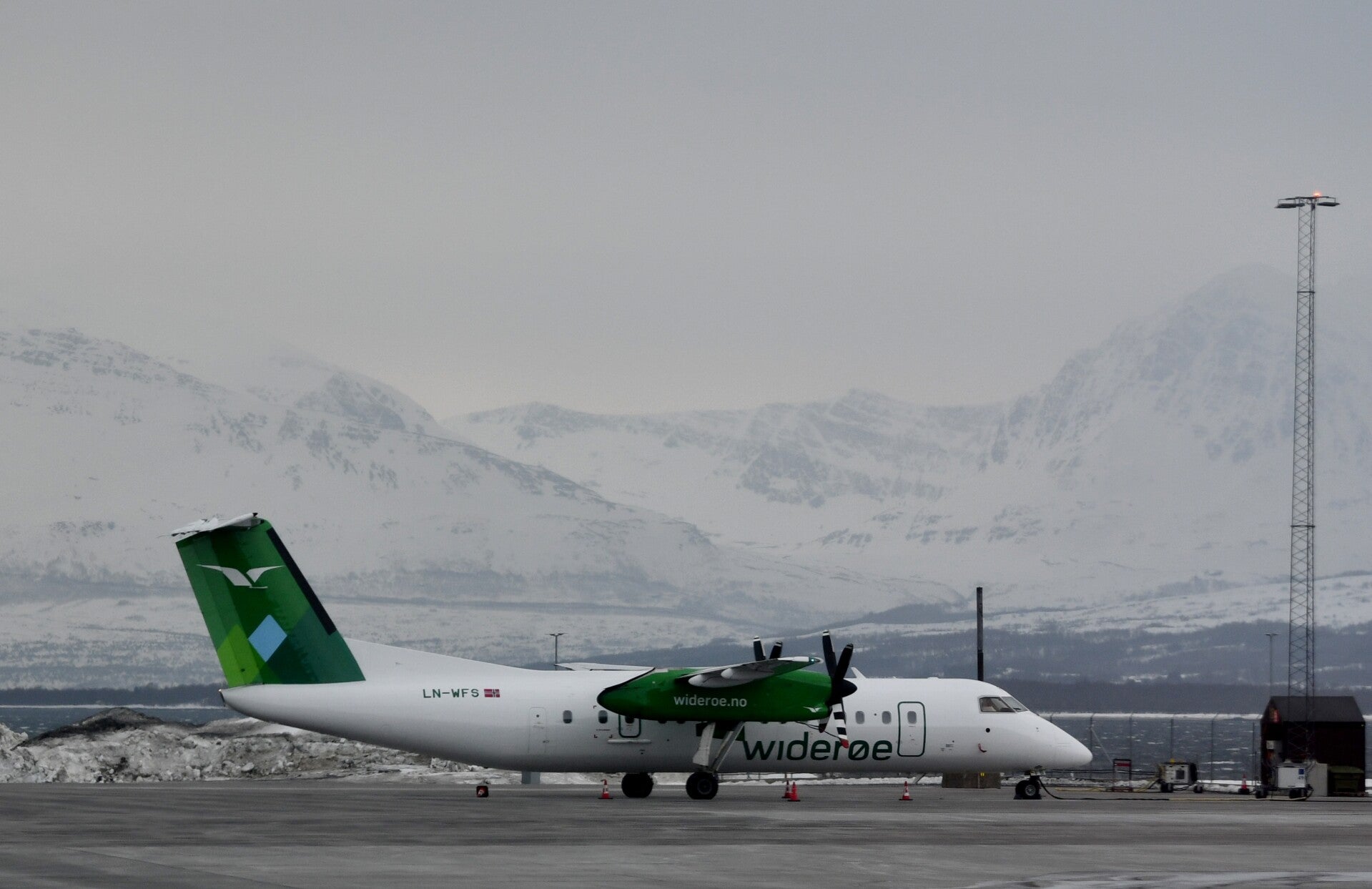
The airline we’re talking about is the Norwegian regional carrier Widerøe. Widerøe is one of the very few, if not the only, airlines worldwide that still operates all four versions of this versatile turboprop, from the -100 all the way to the Q400.
On the Widerøe website, the planned aircraft type is shown when selecting your flight, although we’ve heard that this booking engine is notoriously unreliable when it comes to the actual aircraft that ends up operating the flight. For this trip, we’ve booked three flights. First, we’ll be flying the rare -200 from Tromsø to Stokmarknes, where we’ll transfer to a -100 to continue our journey toward Bodø. From Bodø, we’ll fly back on a -300, with a short stop in Andenes without leaving the plane.
Well, sounds like a plan(e), doesn’t it?
Let’s now find out if it all works out.
Wednesday 19 March - Easy on the Polar Express
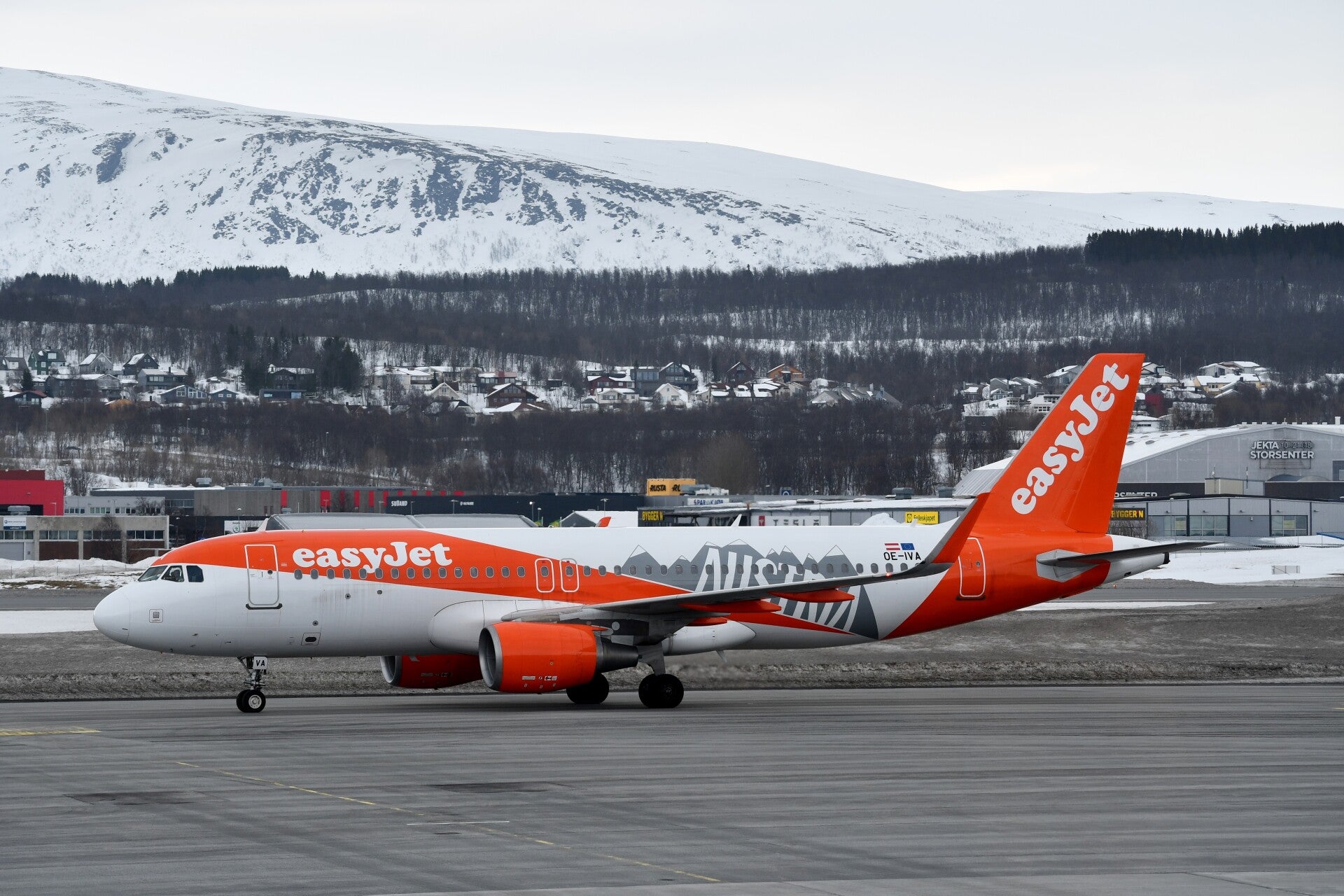
This morning, we report to Schiphol Airport to fly with one of our favorite European “taxi flyers”: easyJet. From their base in Amsterdam, we take the long northbound flight all the way across the Arctic Circle. Today’s destination is Tromsø Langnes Airport.
As we wait to board our A320neo, OE-LSN, we spot a familiar face: our friend Wouter is working this flight as a cabin attendant. It would even turn out to be one of his last flights for easyJet before transferring to a different airline. Marieke had no idea he’d be on our flight, so she was genuinely surprised to see him waving at us from the apron.
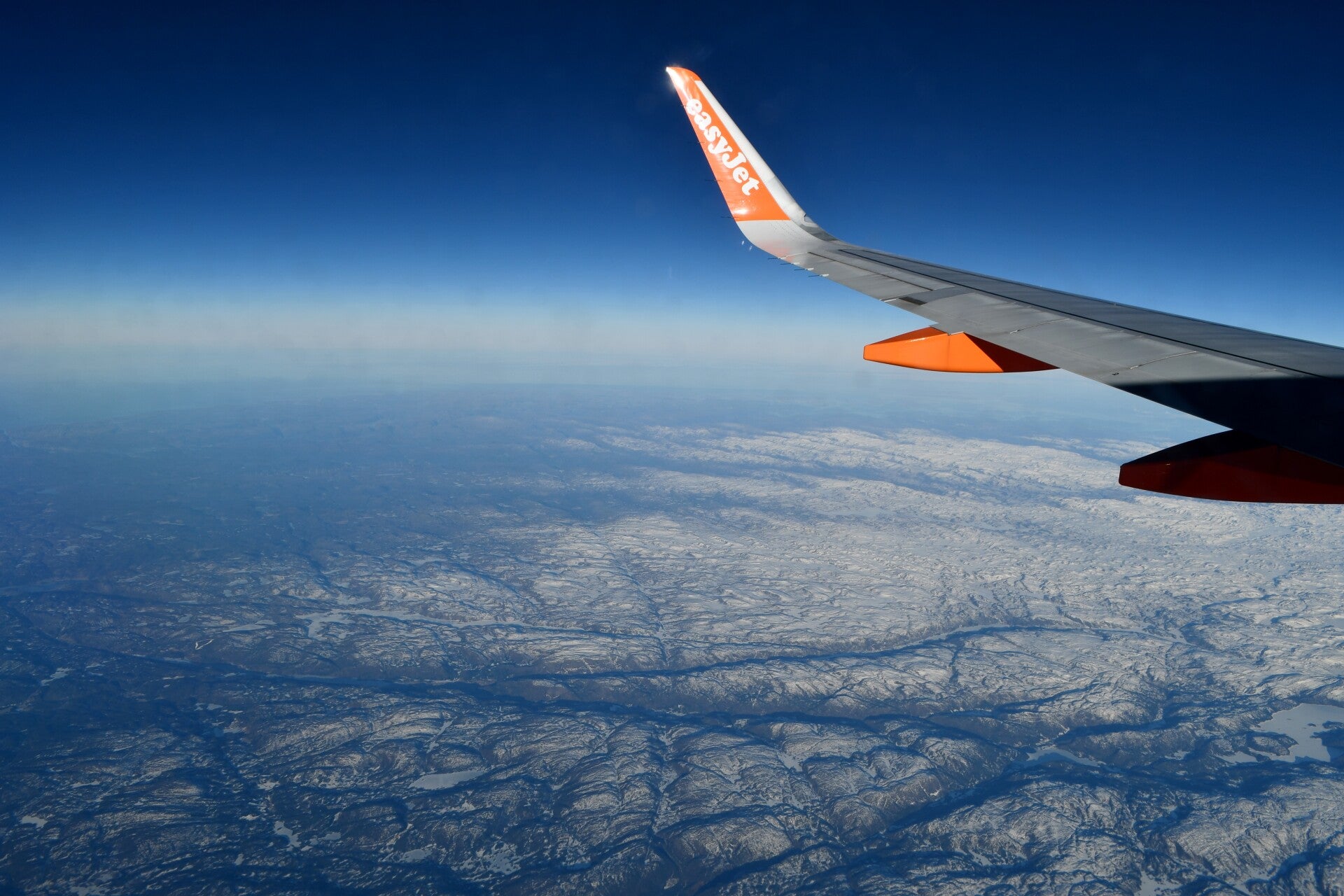
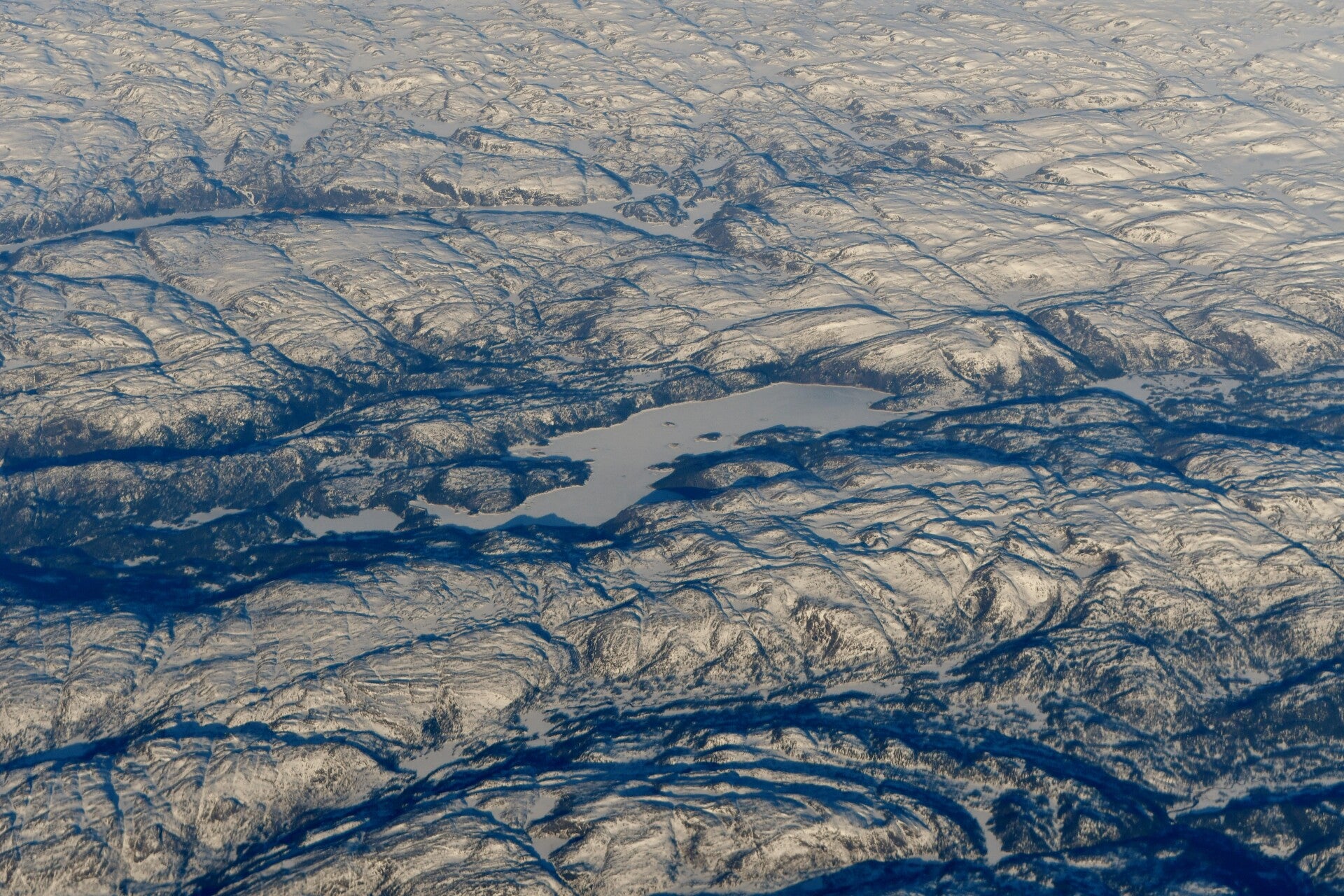
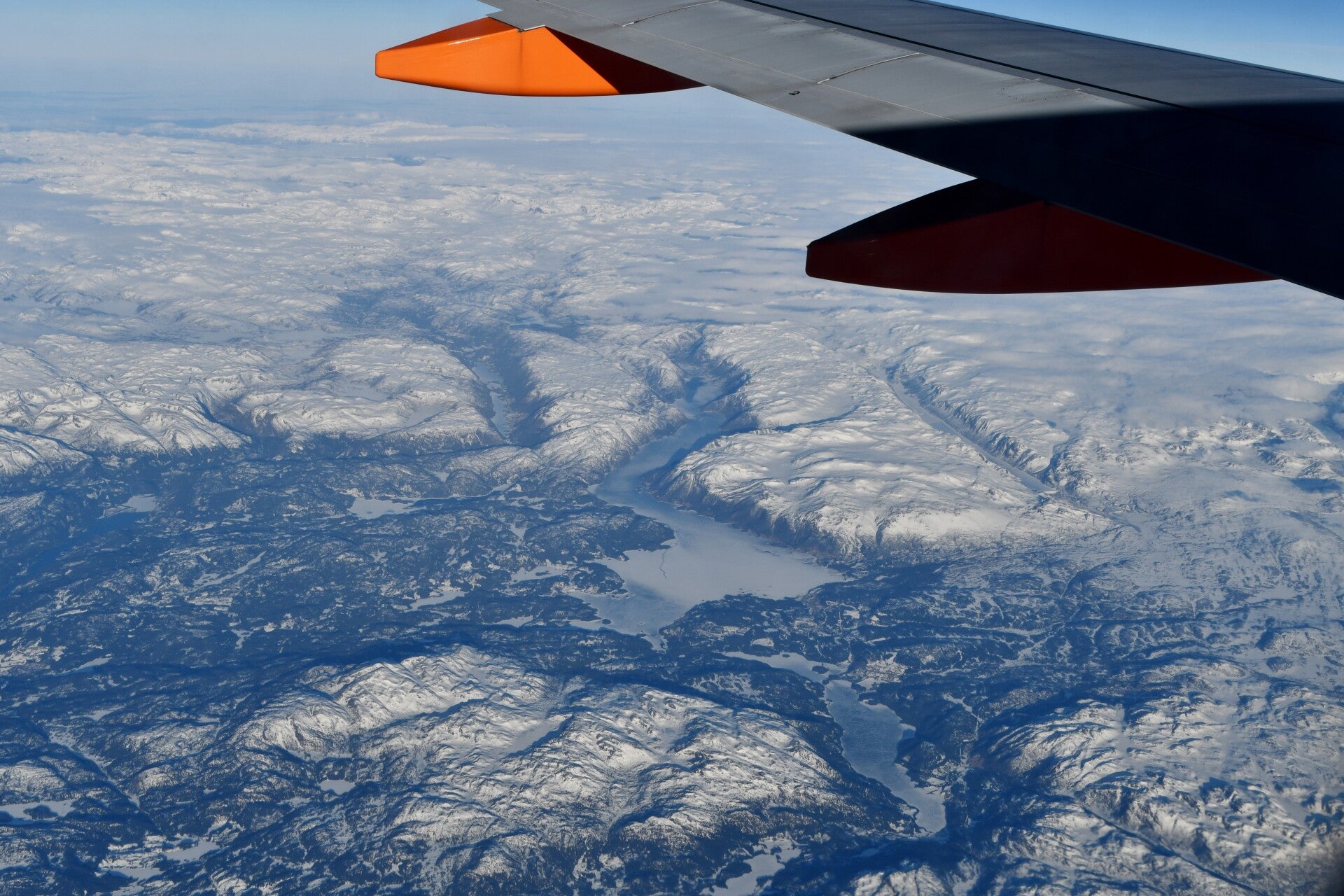
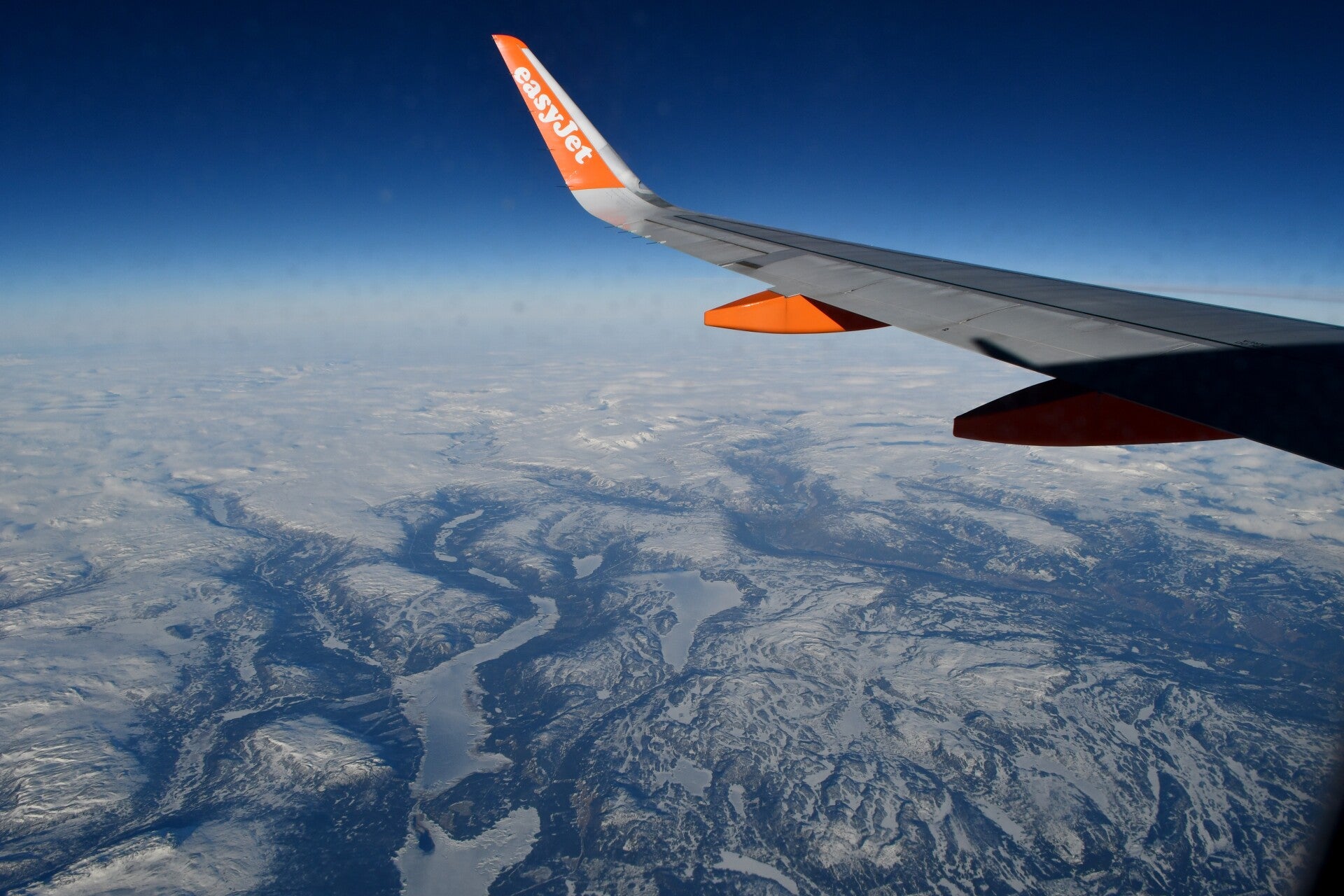
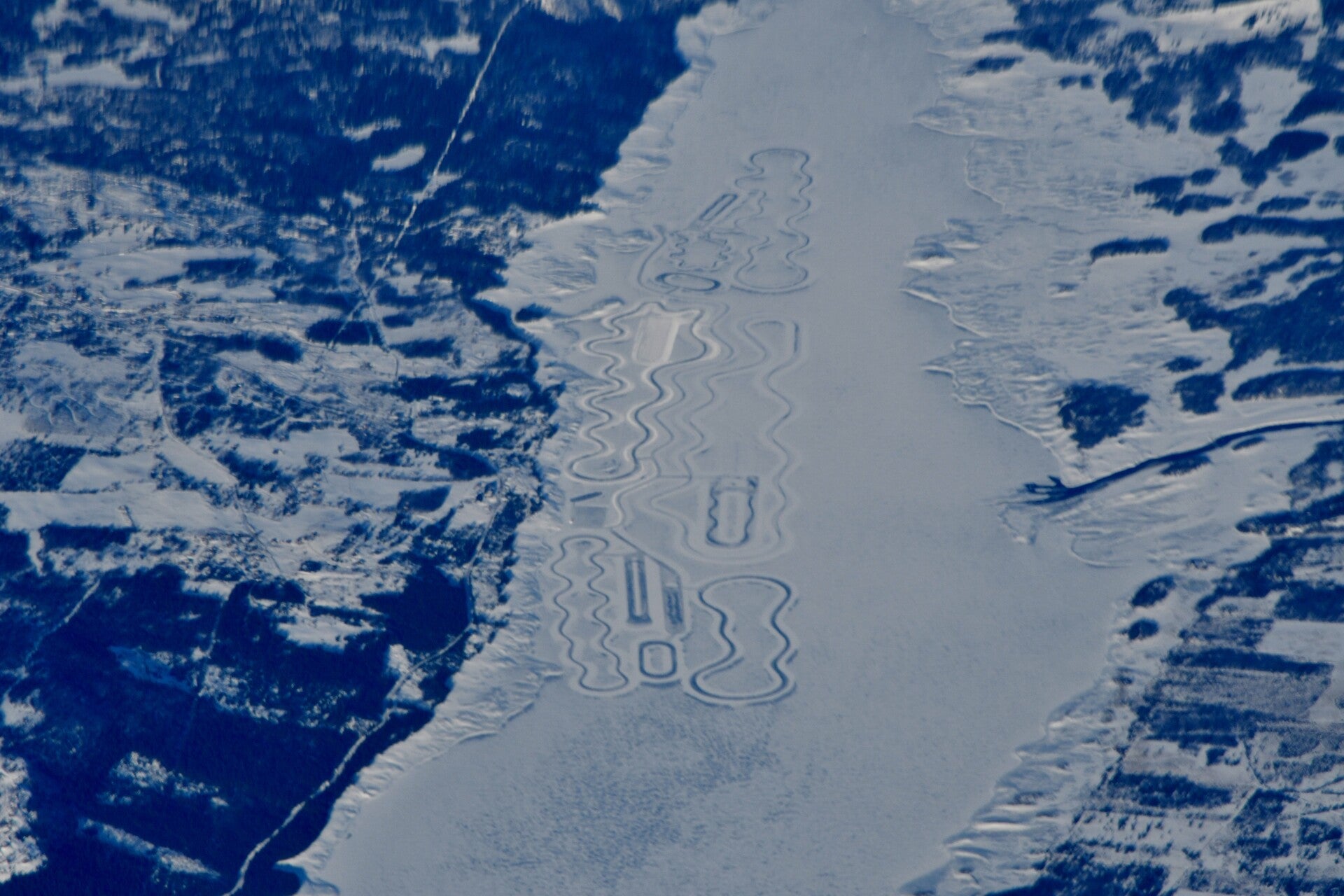
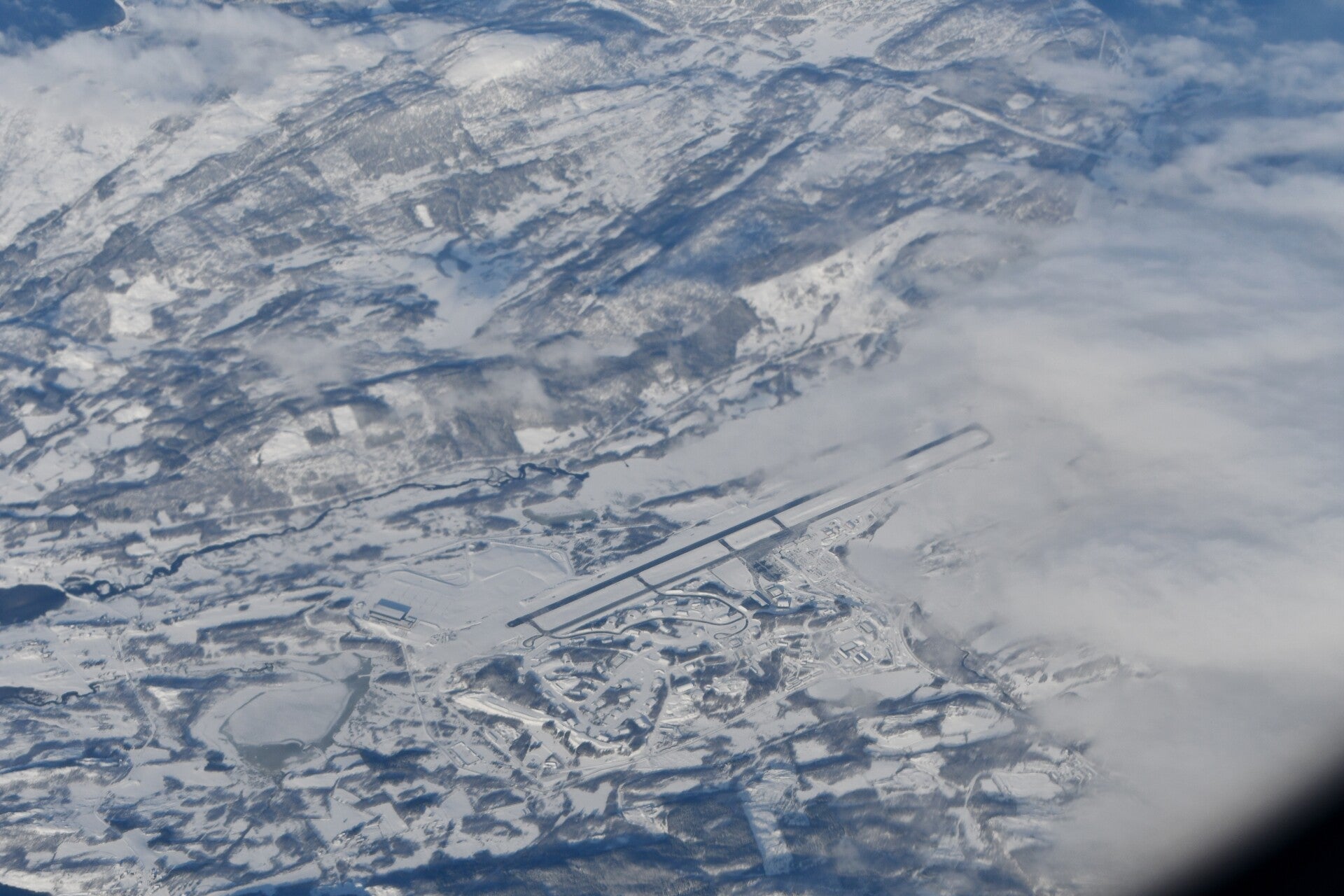
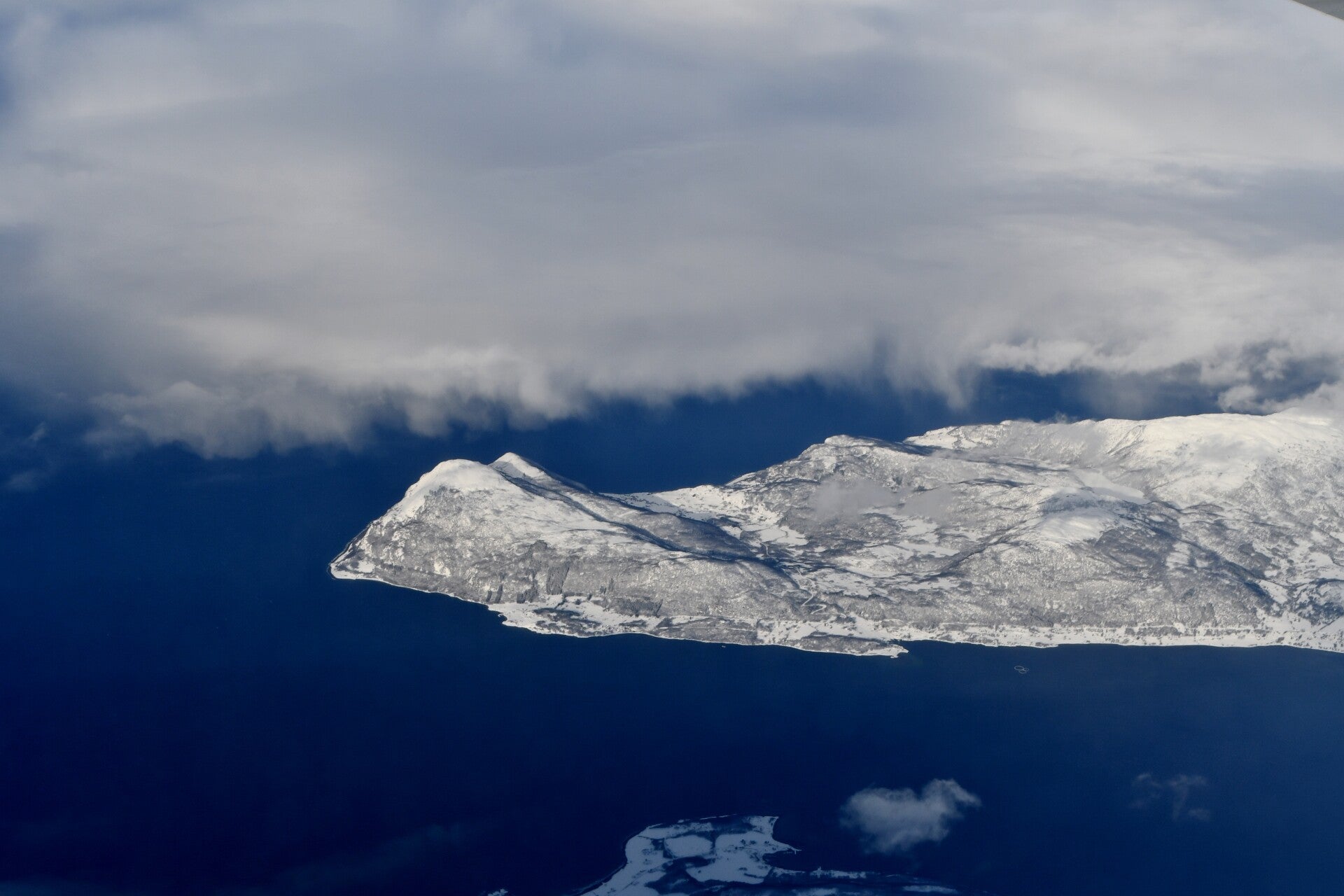
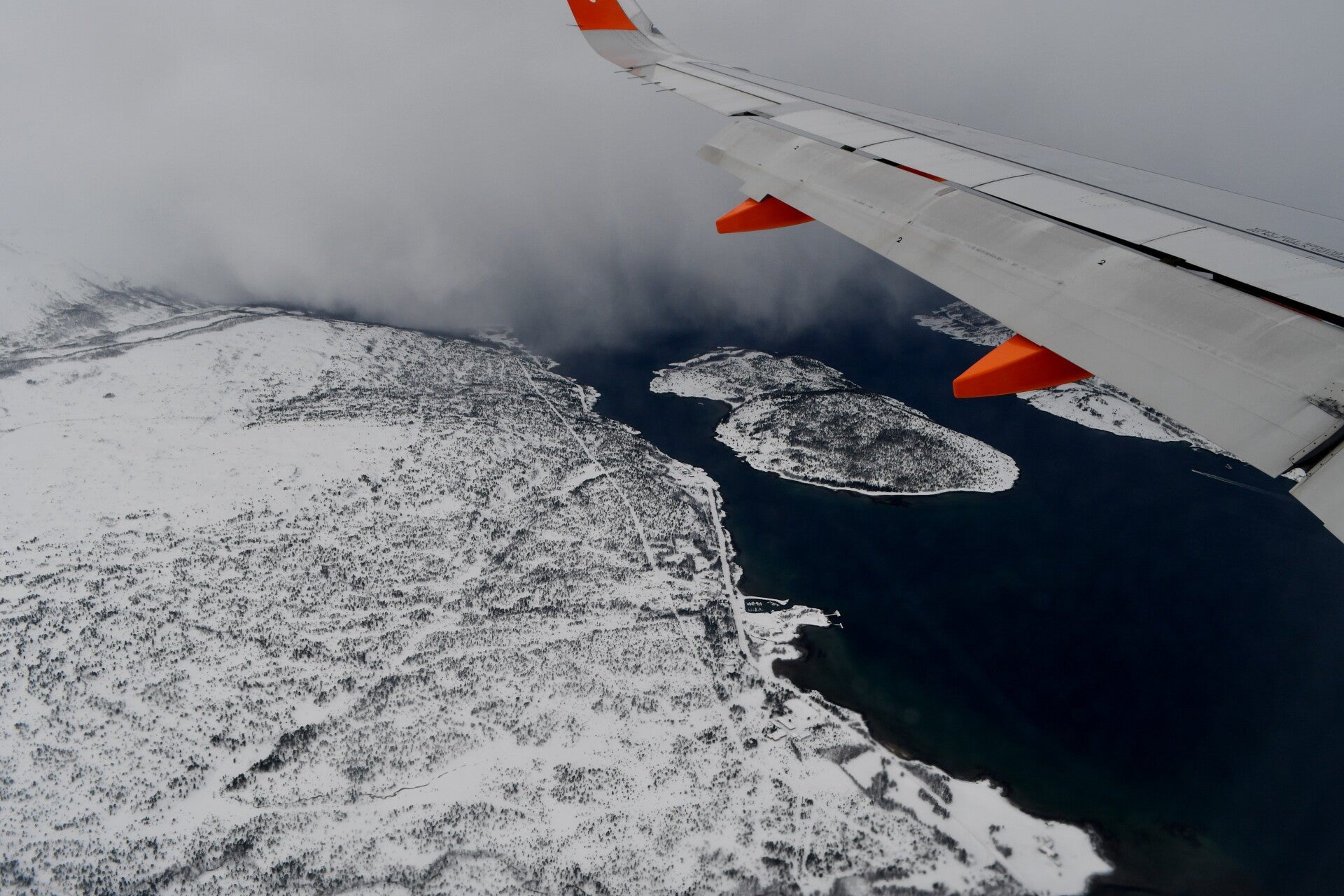
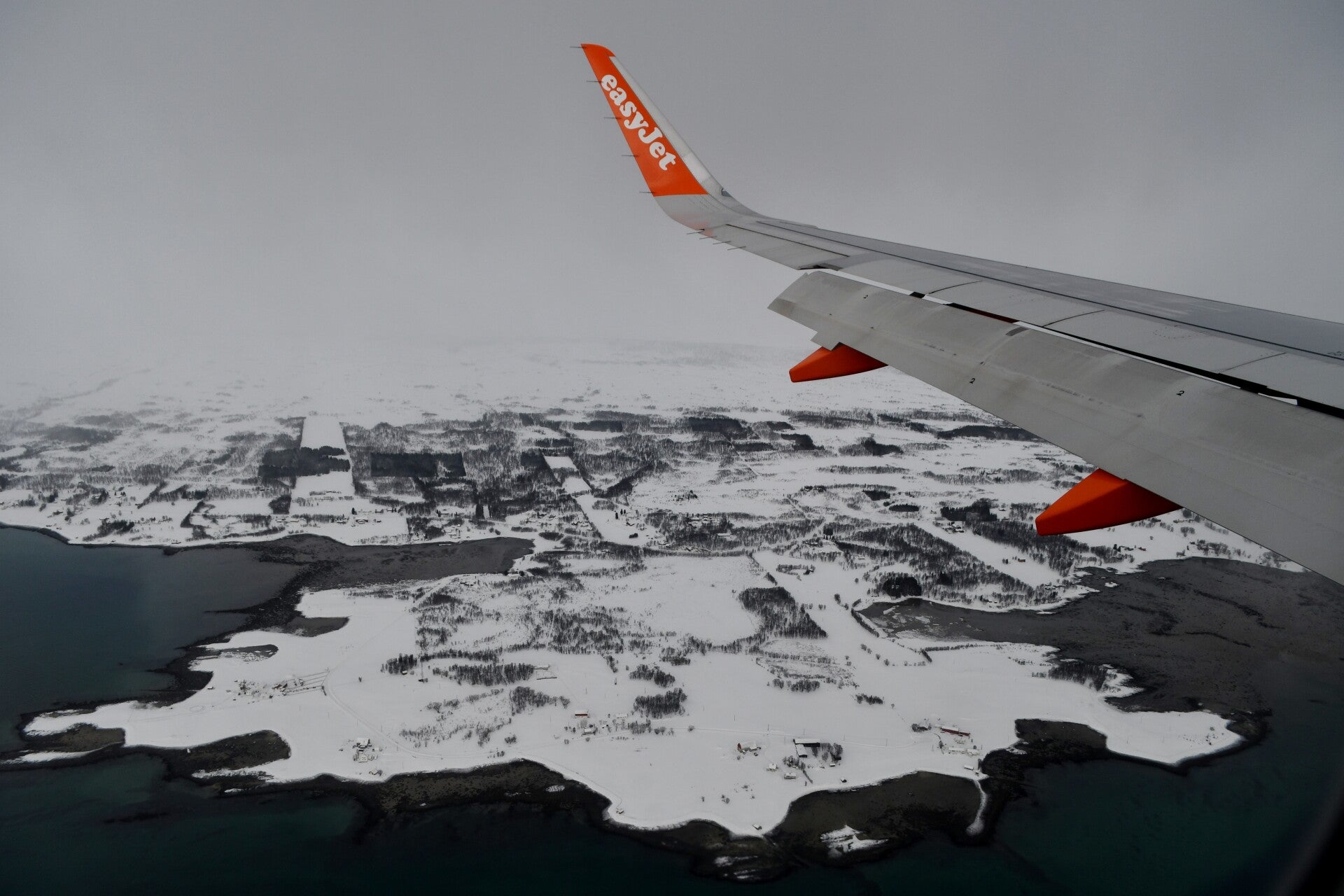
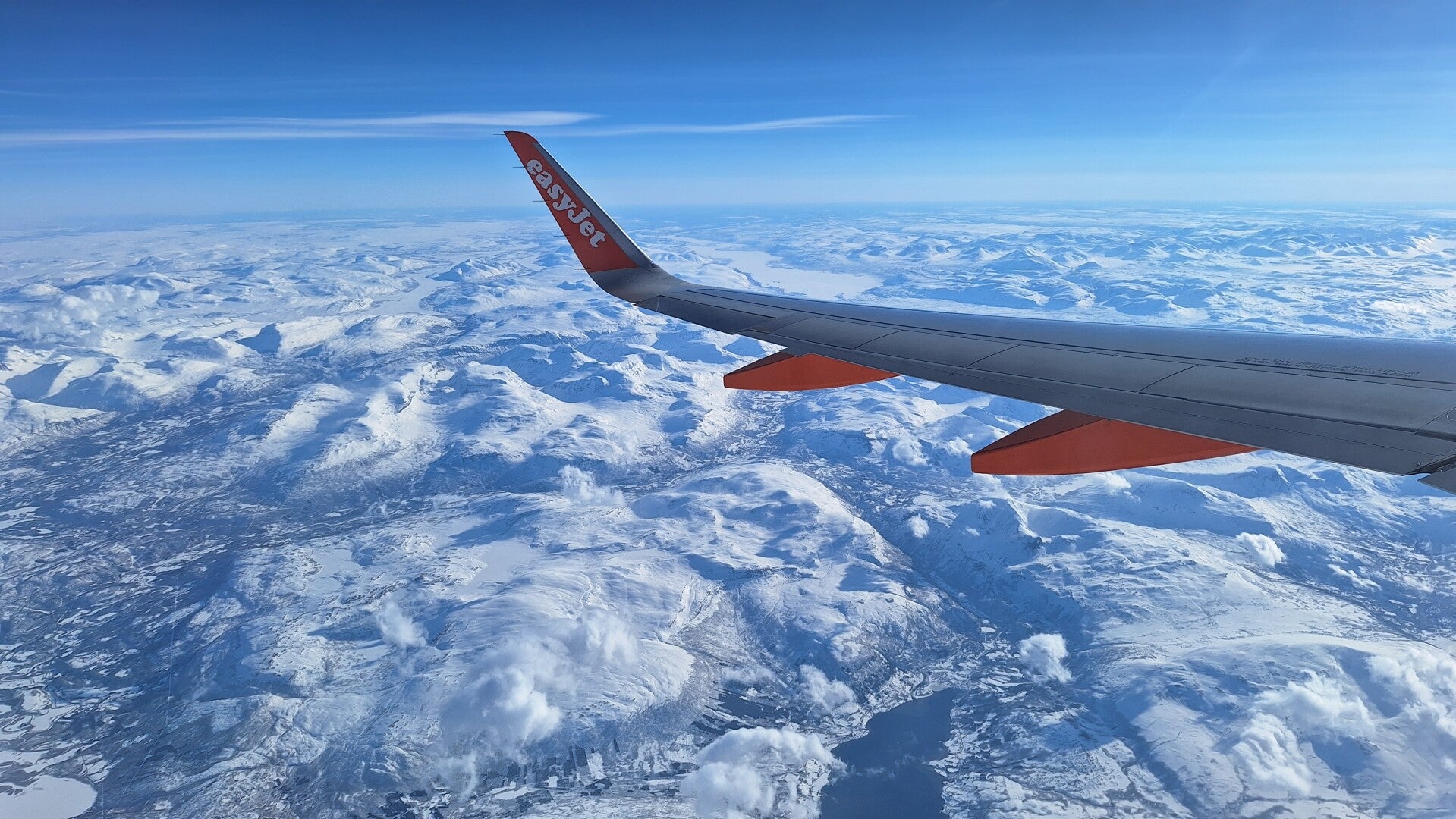
As expected, the flight goes smoothly, and with Wouter taking such good care of us, we have absolutely no complaints whatsoever. As we cross Bergen, the clouds below begin to disappear, revealing beautiful snowy Norwegian landscapes. The vast emptiness, snow, and endless fjords and mountain ranges are already breathtaking.
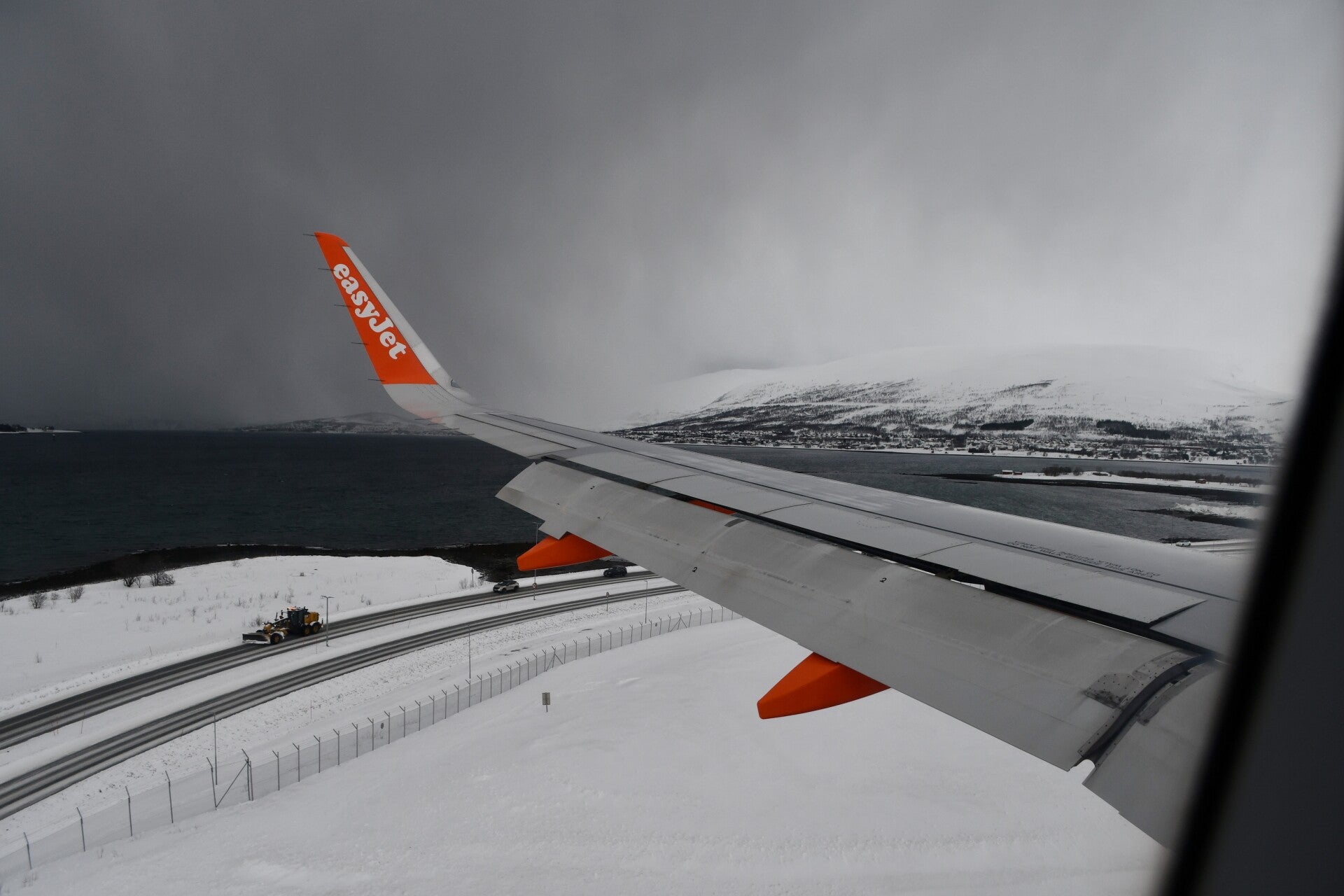
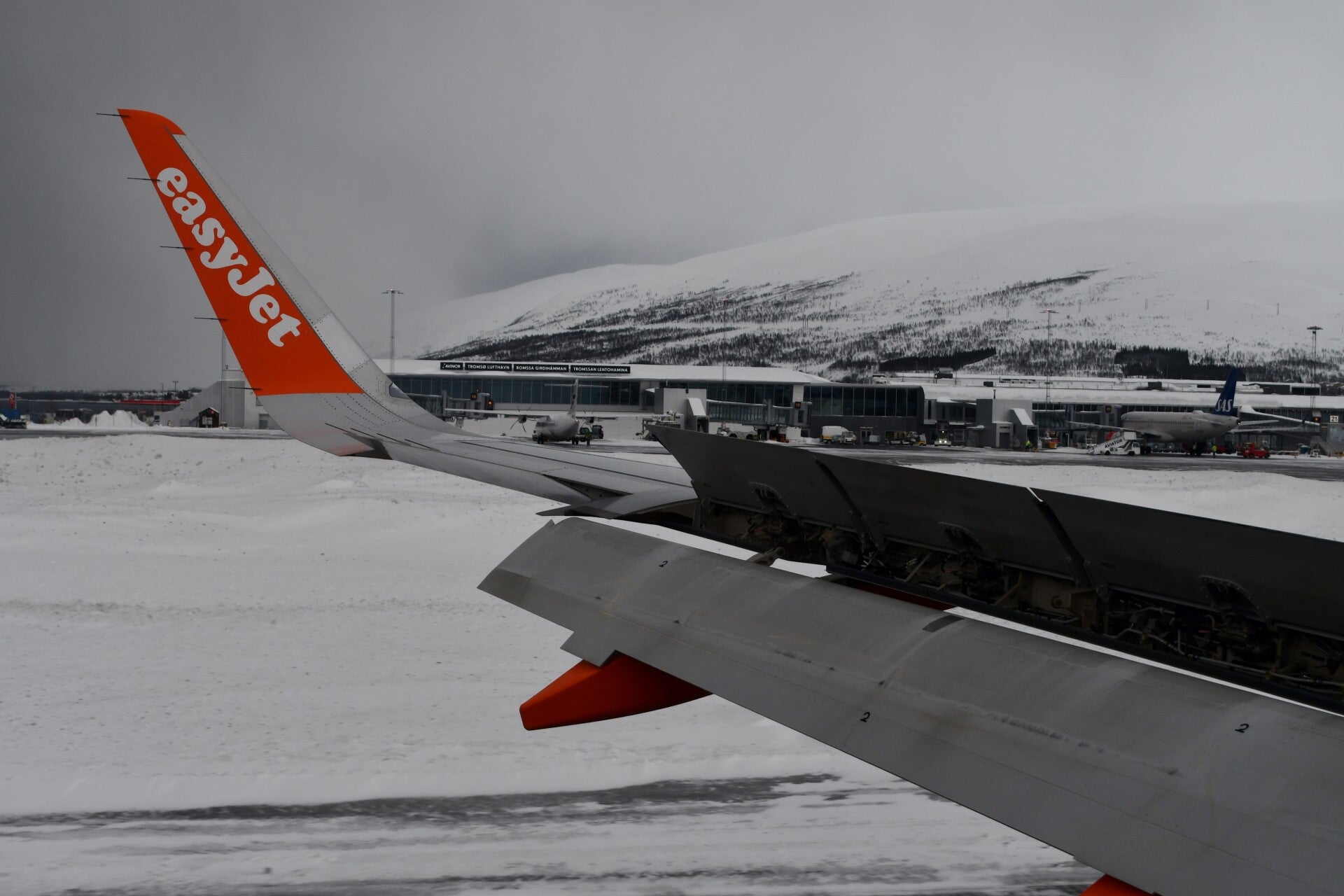
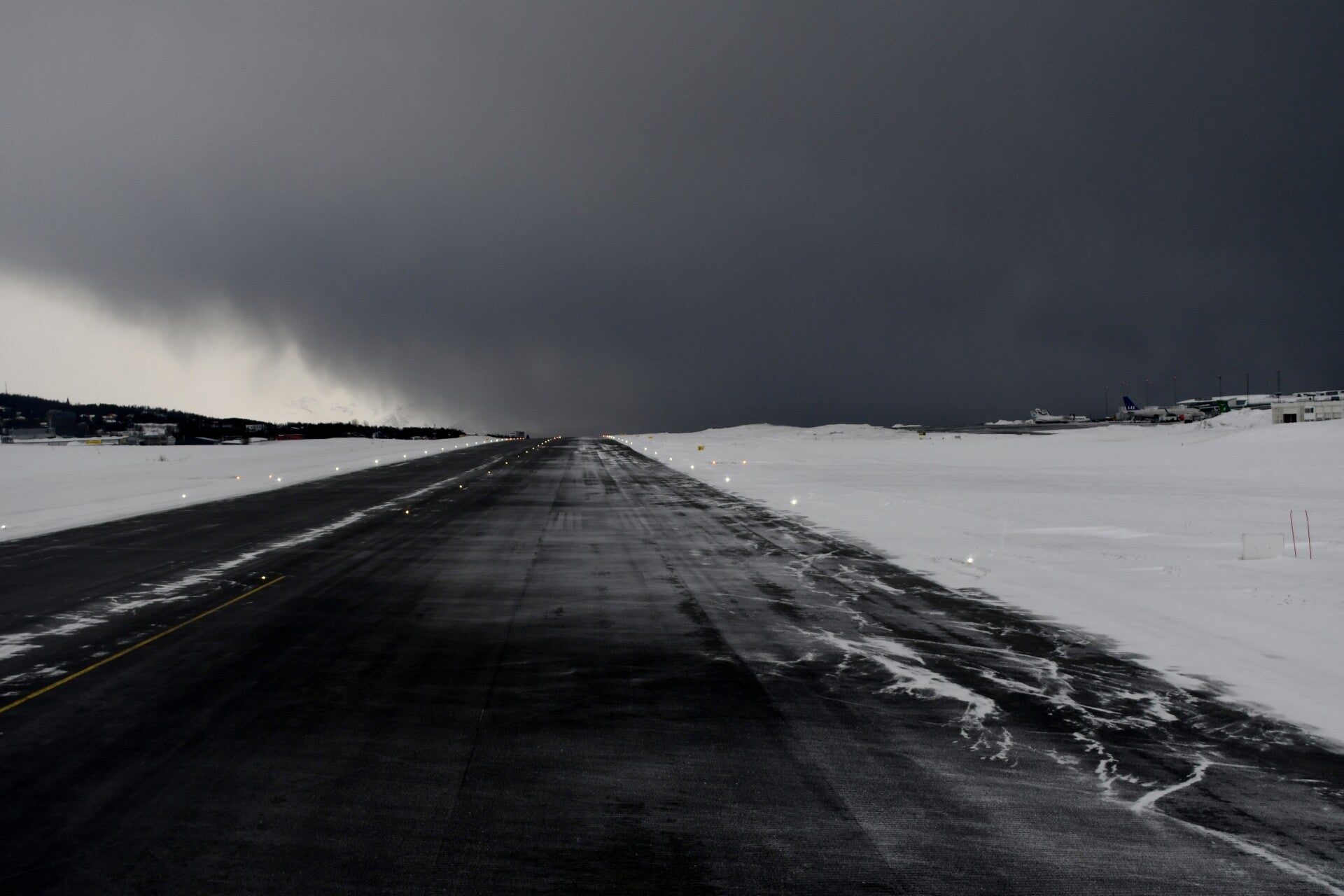
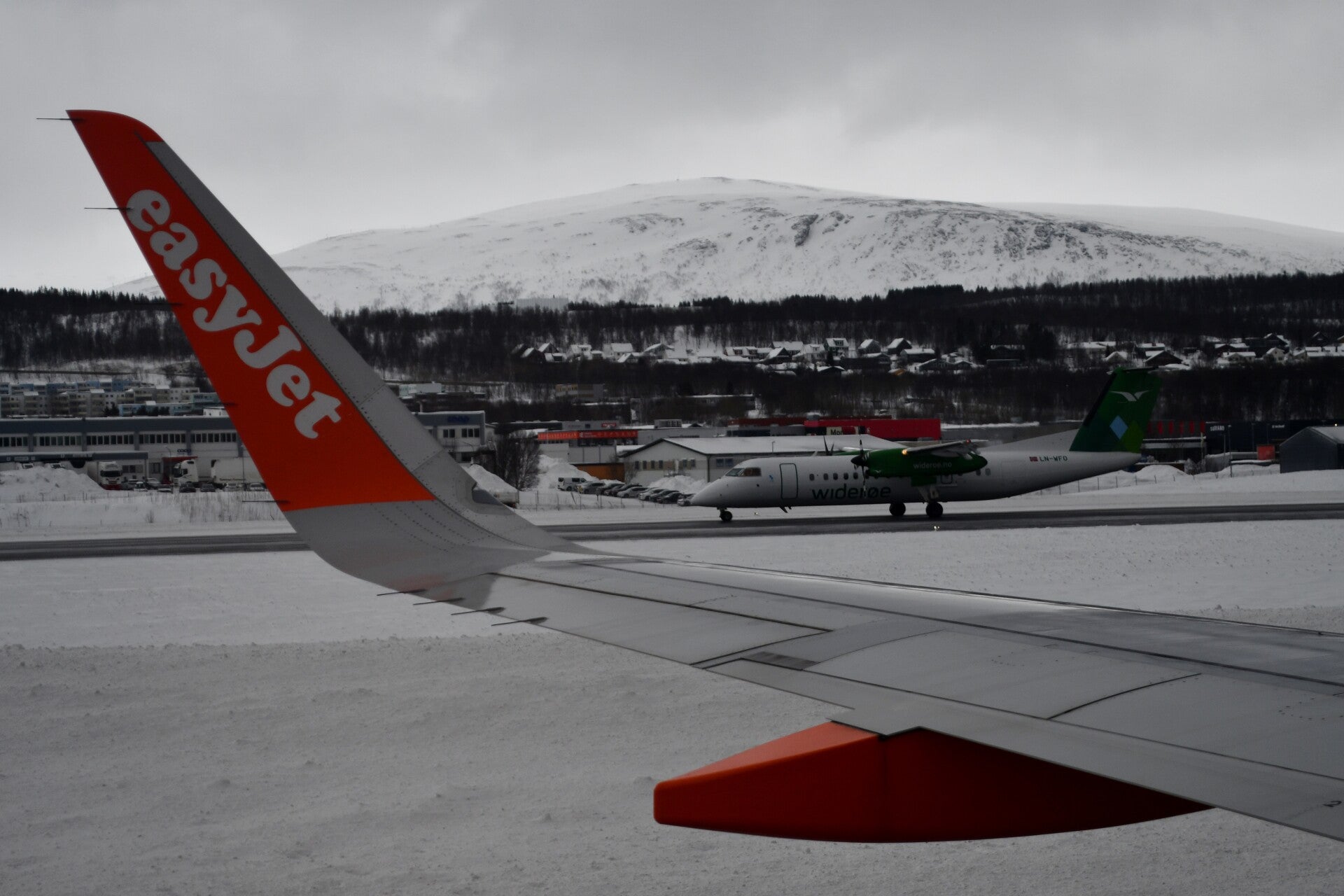
The weather in Tromsø, however, is pretty bad. Heavy snowfall is affecting the area, and the pilots even consider diverting to Sweden. Luckily, a small gap in the precipitation means we don’t need to divert, and the crew butters the landing on Runway 01. During taxi-in, ominous clouds are already on final approach, and mere seconds later, heavy snowfall begins. We say goodbye to Wouter and make our way to collect our luggage.


A short Uber ride later, we arrive at our hotel for the night: the brand-new Moxy Hotel. Even though it’s one of the more affordable options in the area, this hotel is absolutely stunning. Upon entering, you take an elevator straight to the 11th, the top floor, which houses not only the reception desk but also a spacious lounge area.
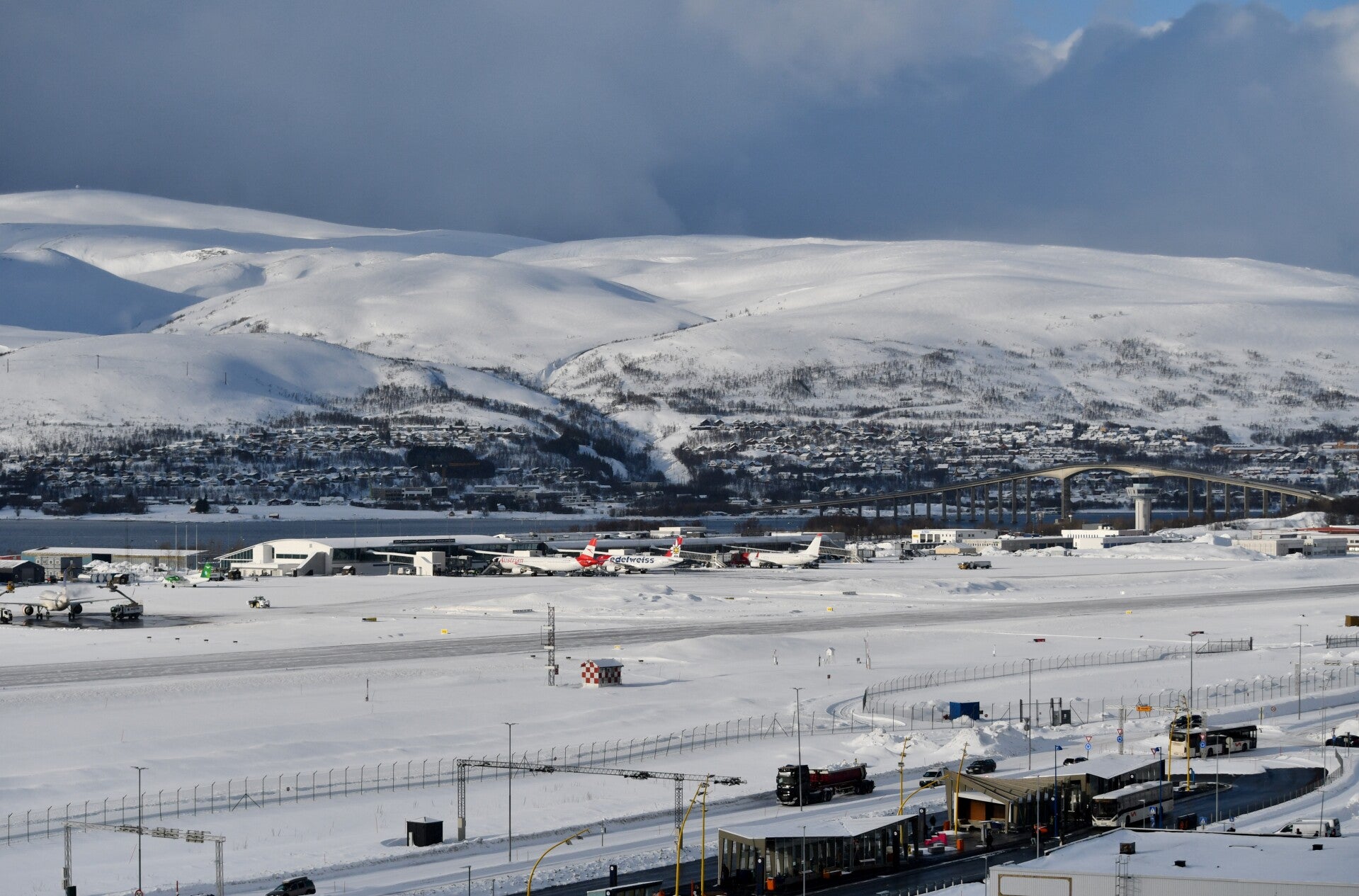
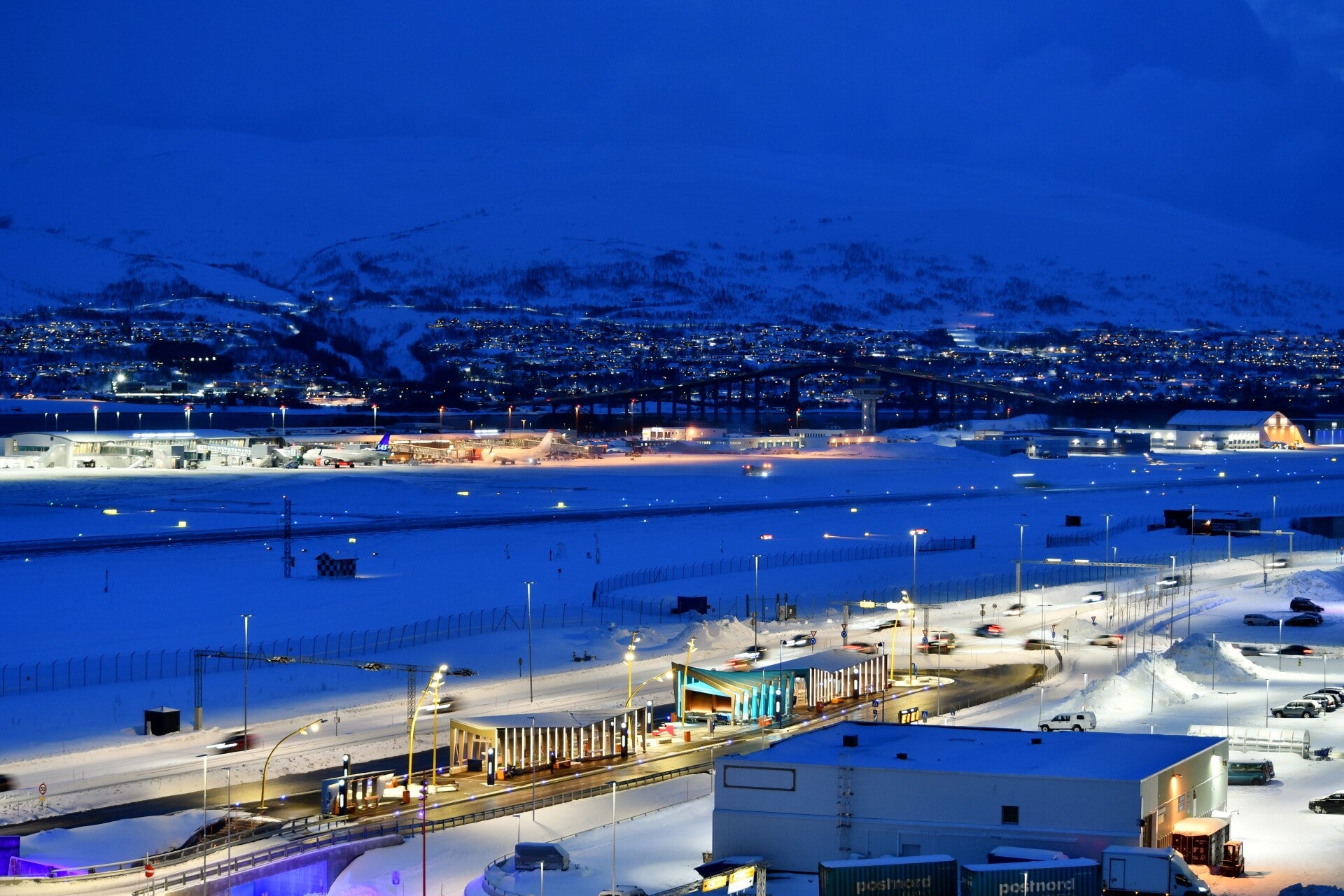
We’re far too early for check-in, but we’re more than welcome to use the facilities. Here we find the Sky Bar, a library stocked with books and board games, several hangout areas, and even a pool table and a foosball table. The floor is surrounded by large windows, providing a stunning 360-degree panorama of the area. The cherry on top is the outdoor viewing terrace, which offers an incredible view over the entire airport.
As snow showers come and go, we spend the rest of the day plane spotting while enjoying ourselves at the pool table, only to discover that you don’t need to be great at pool or snooker to have a lot of fun. With Flightradar24 on standby, we soak in all the beauty around us. Free water is available in the lounge area, while the Sky Bar offers a wide selection of drinks and snacks.
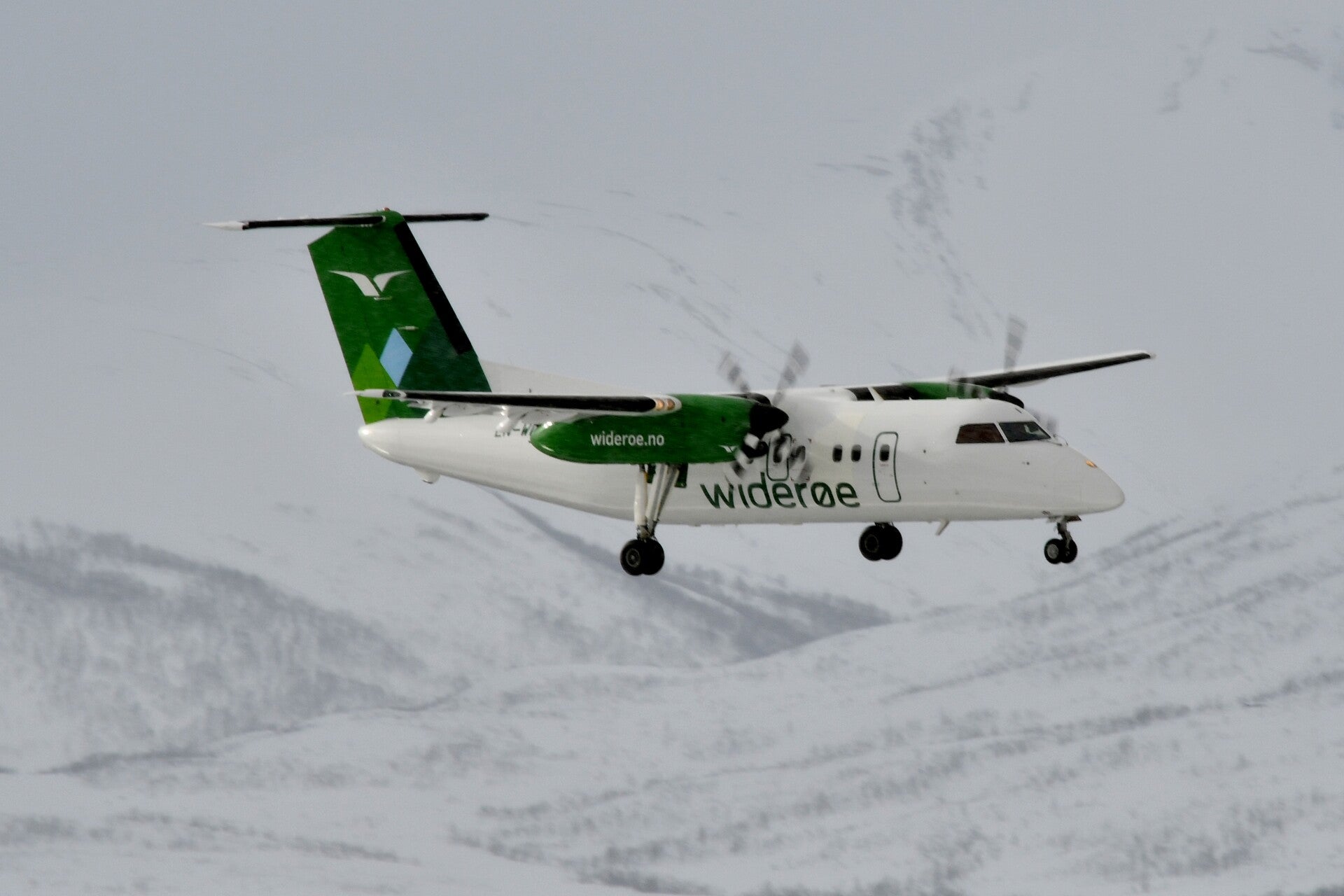
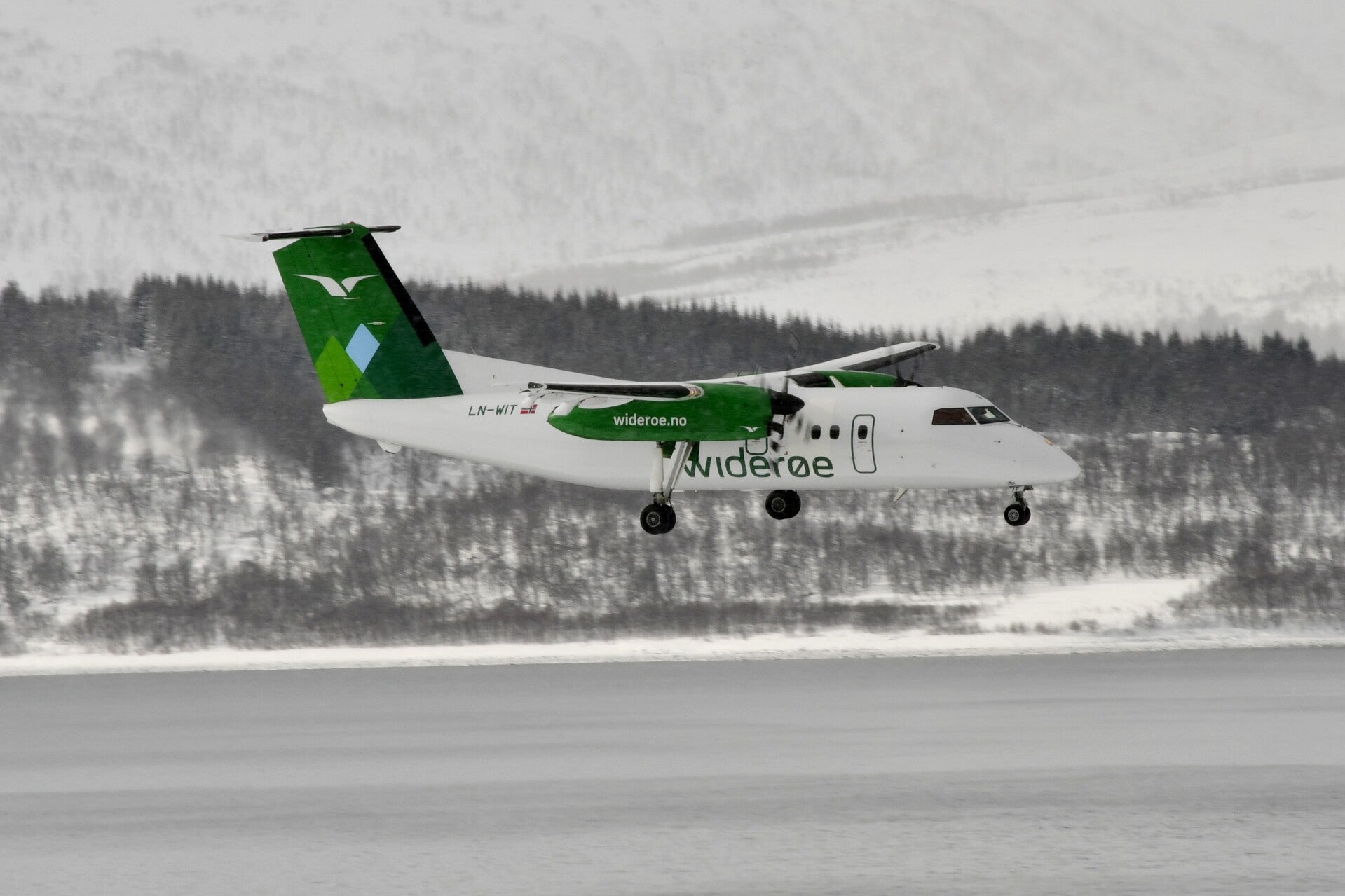
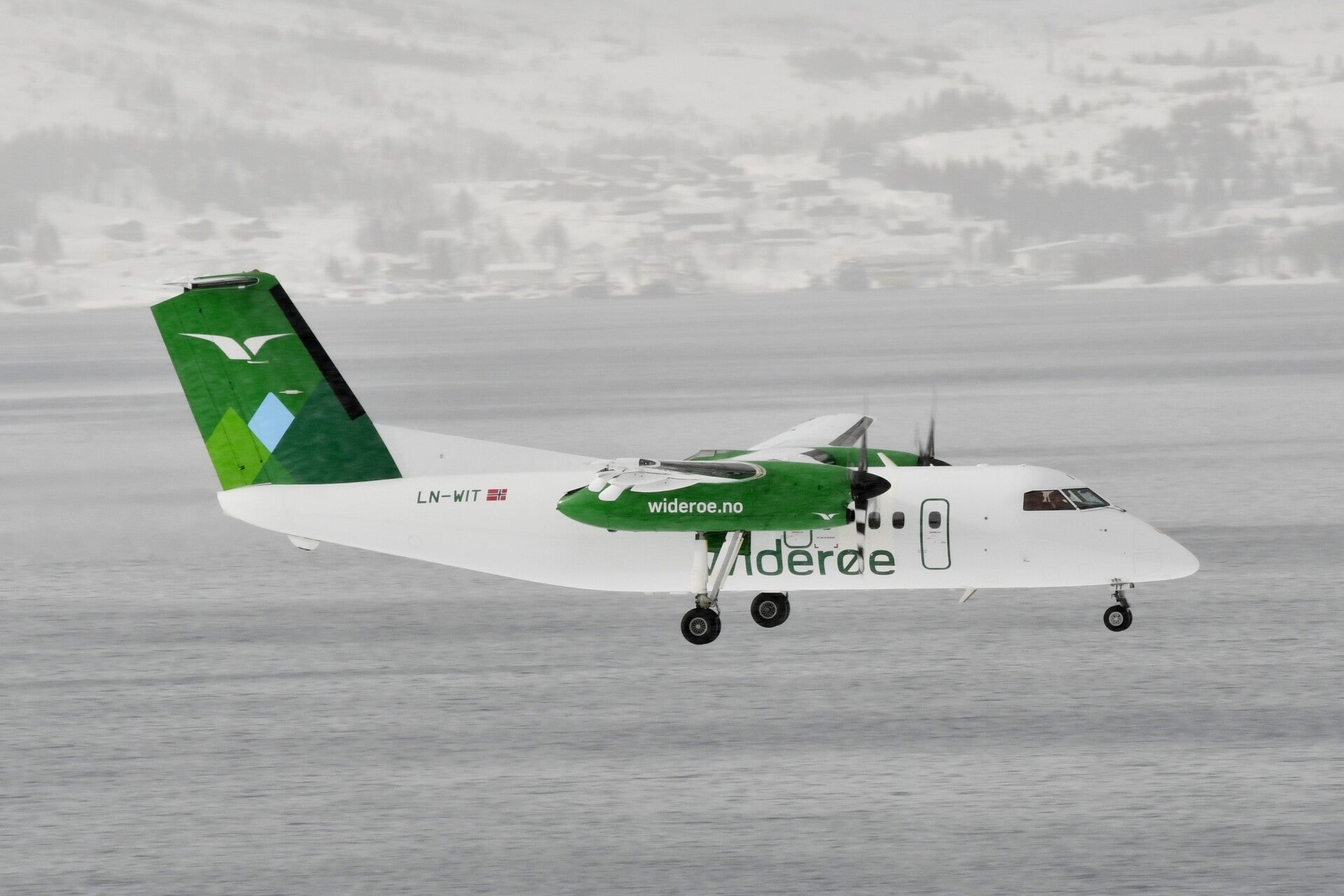
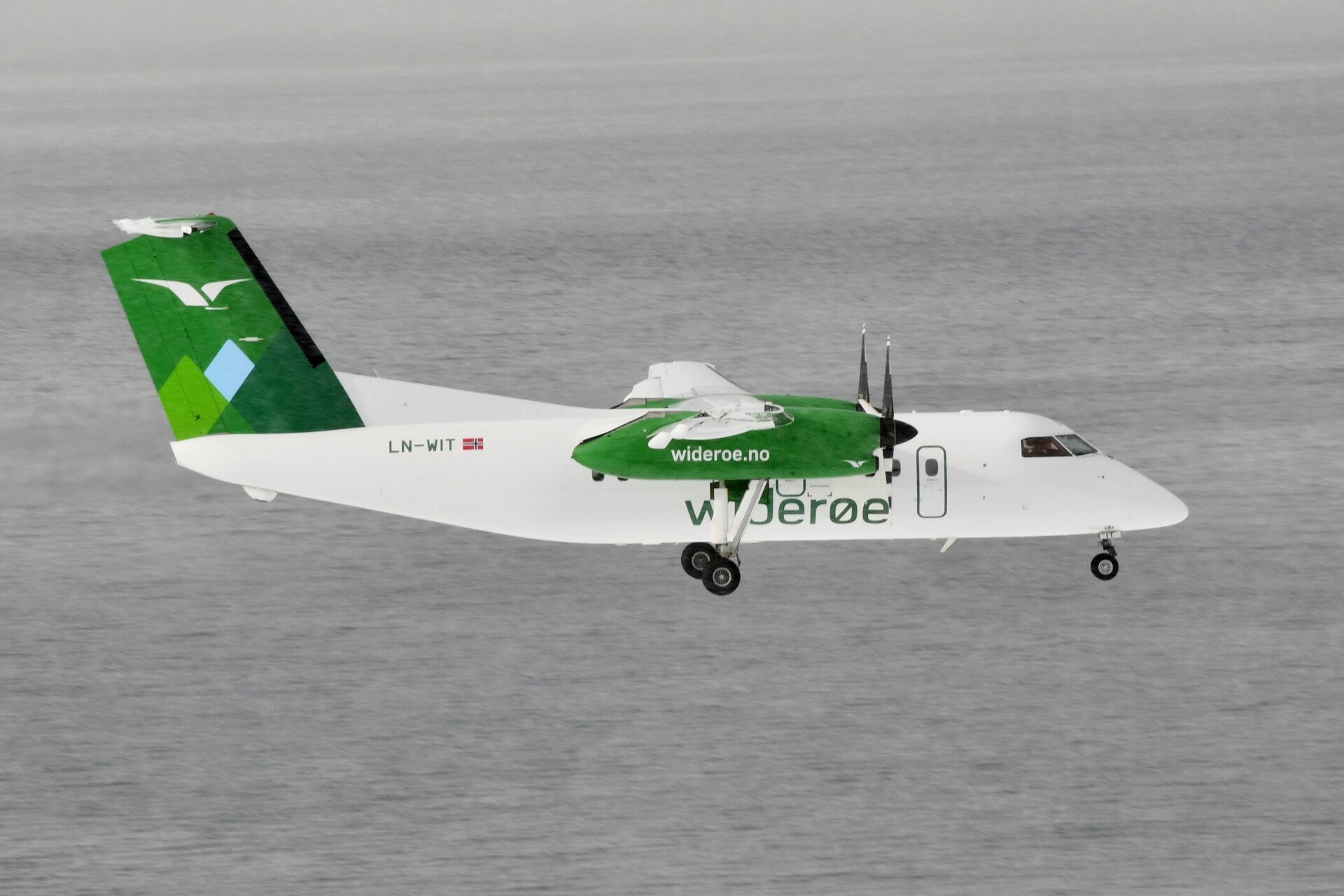
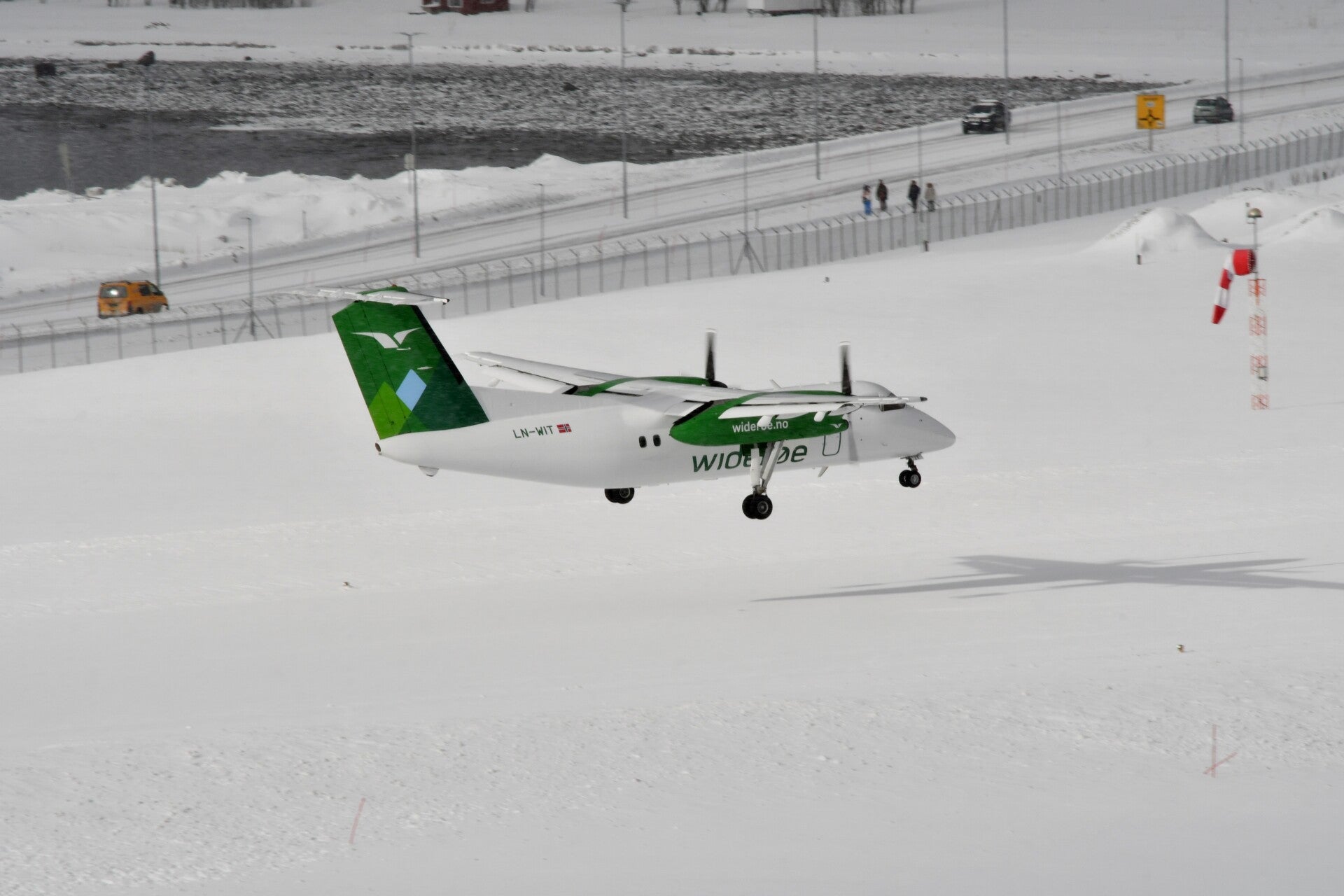
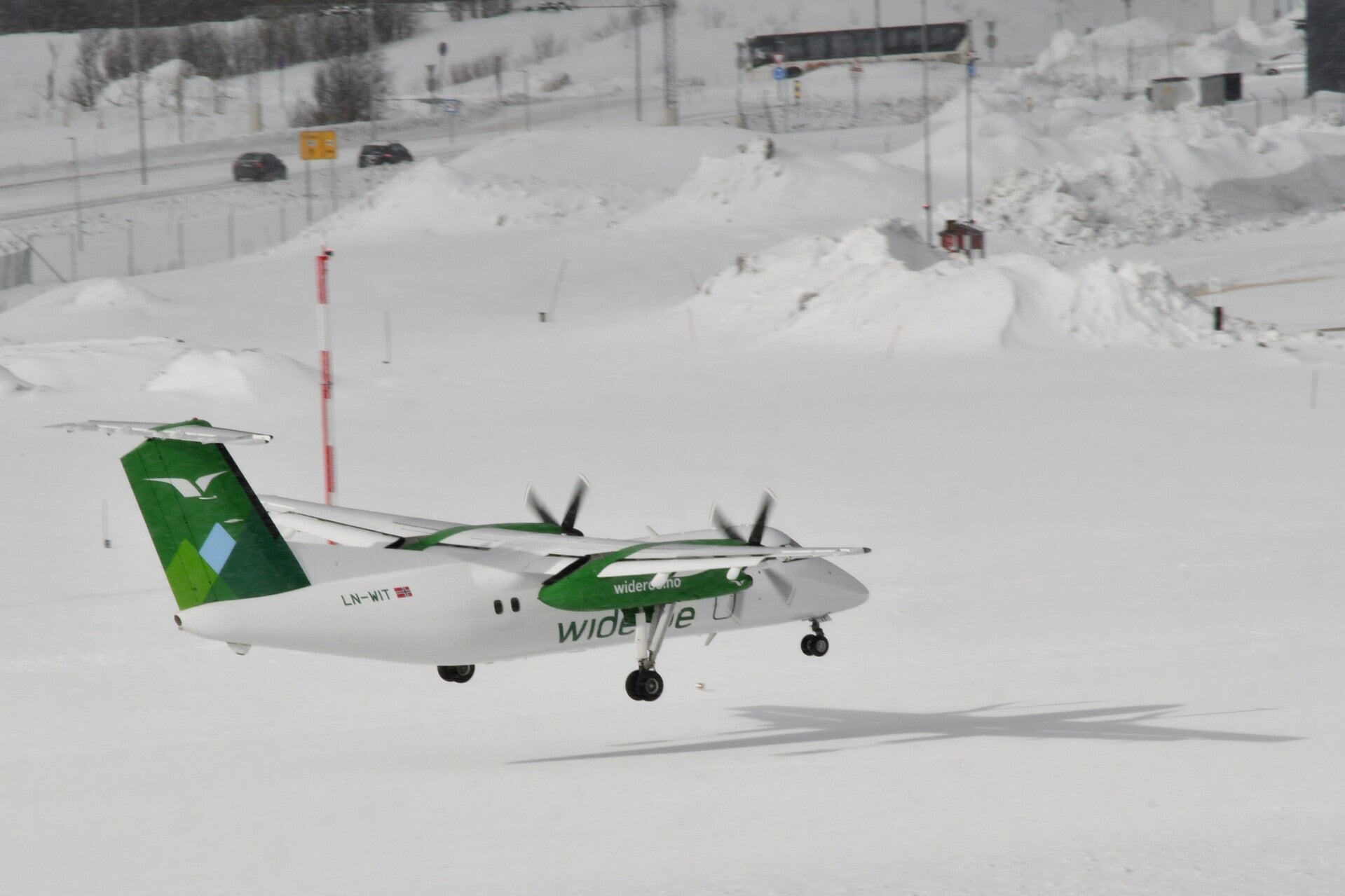
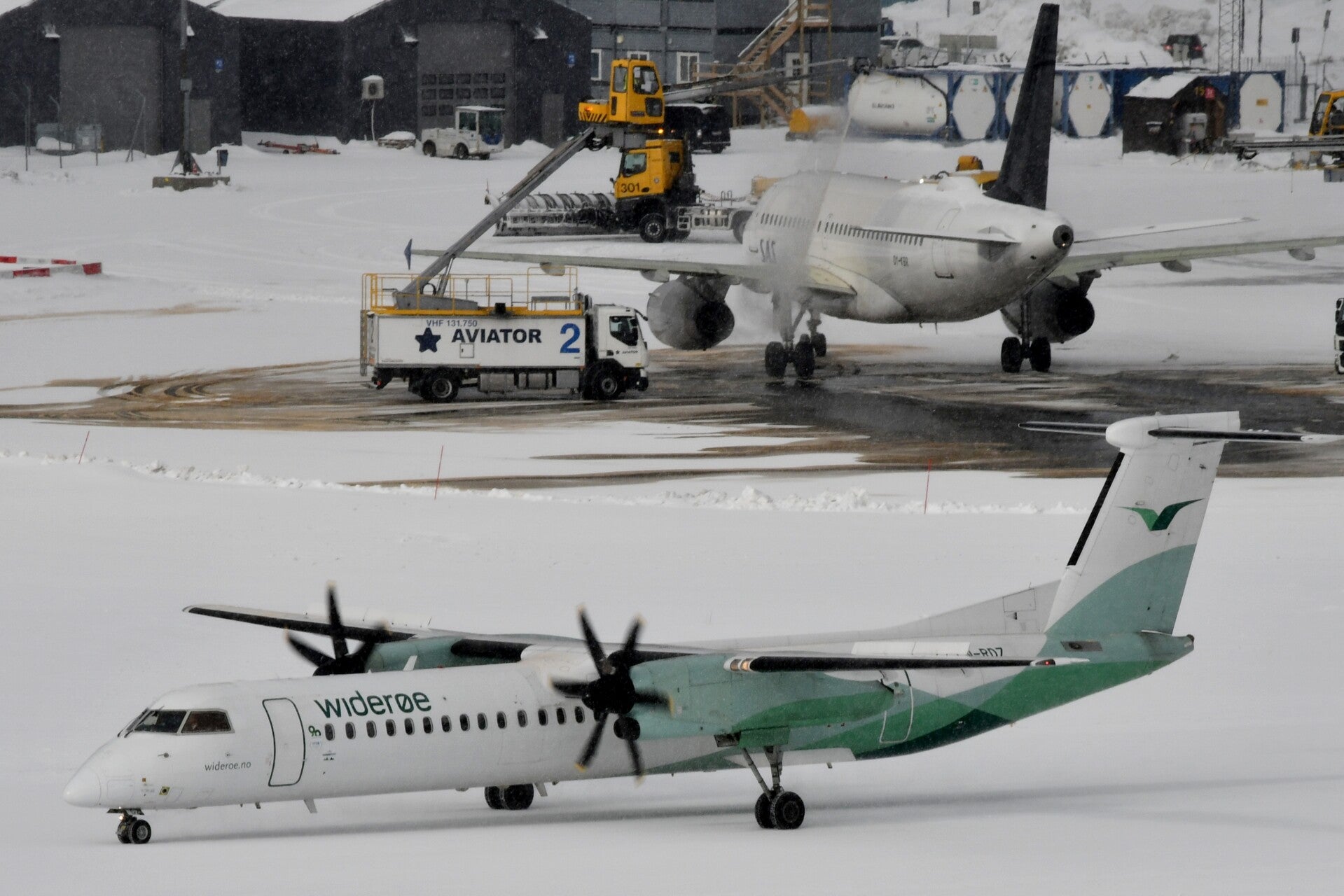
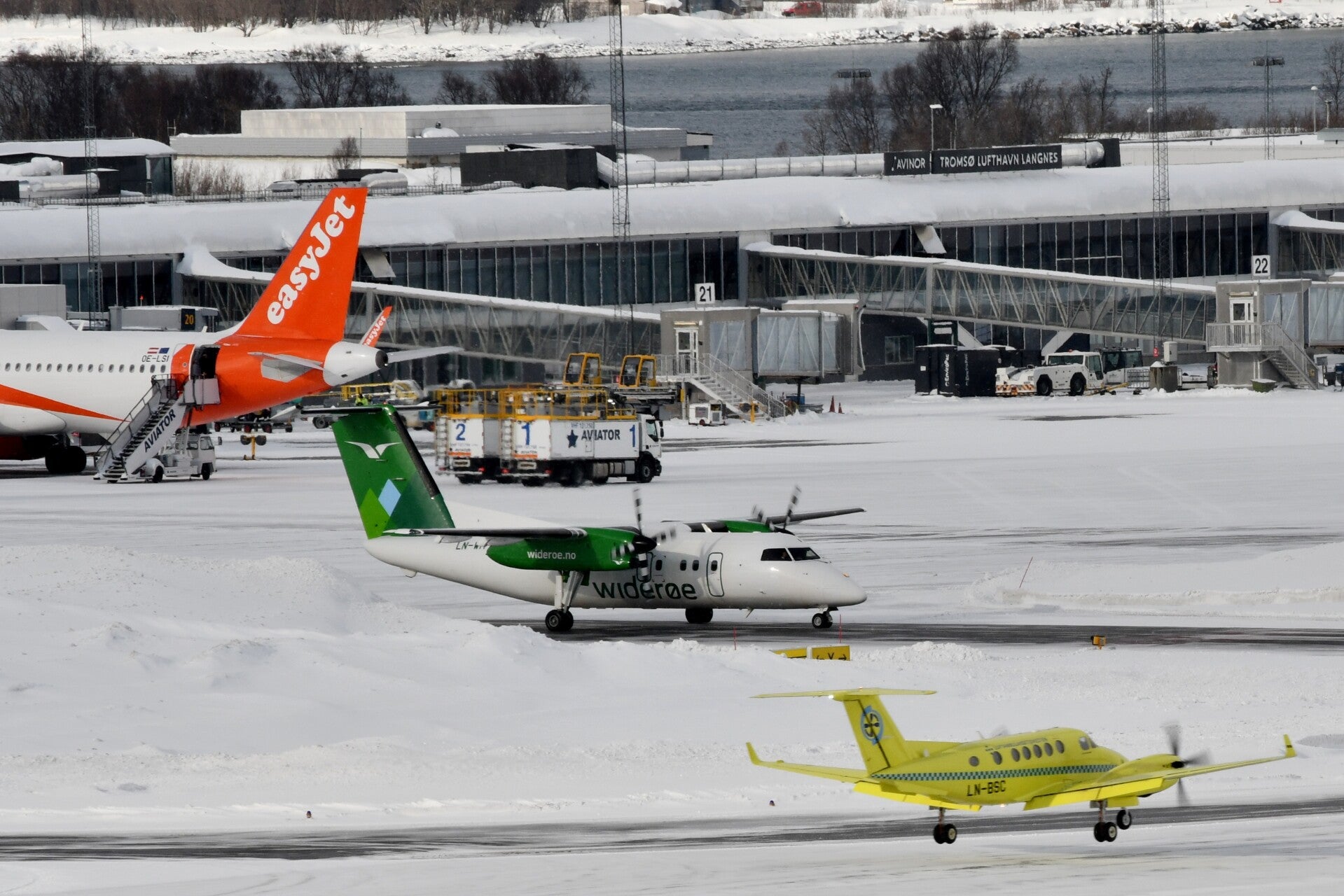
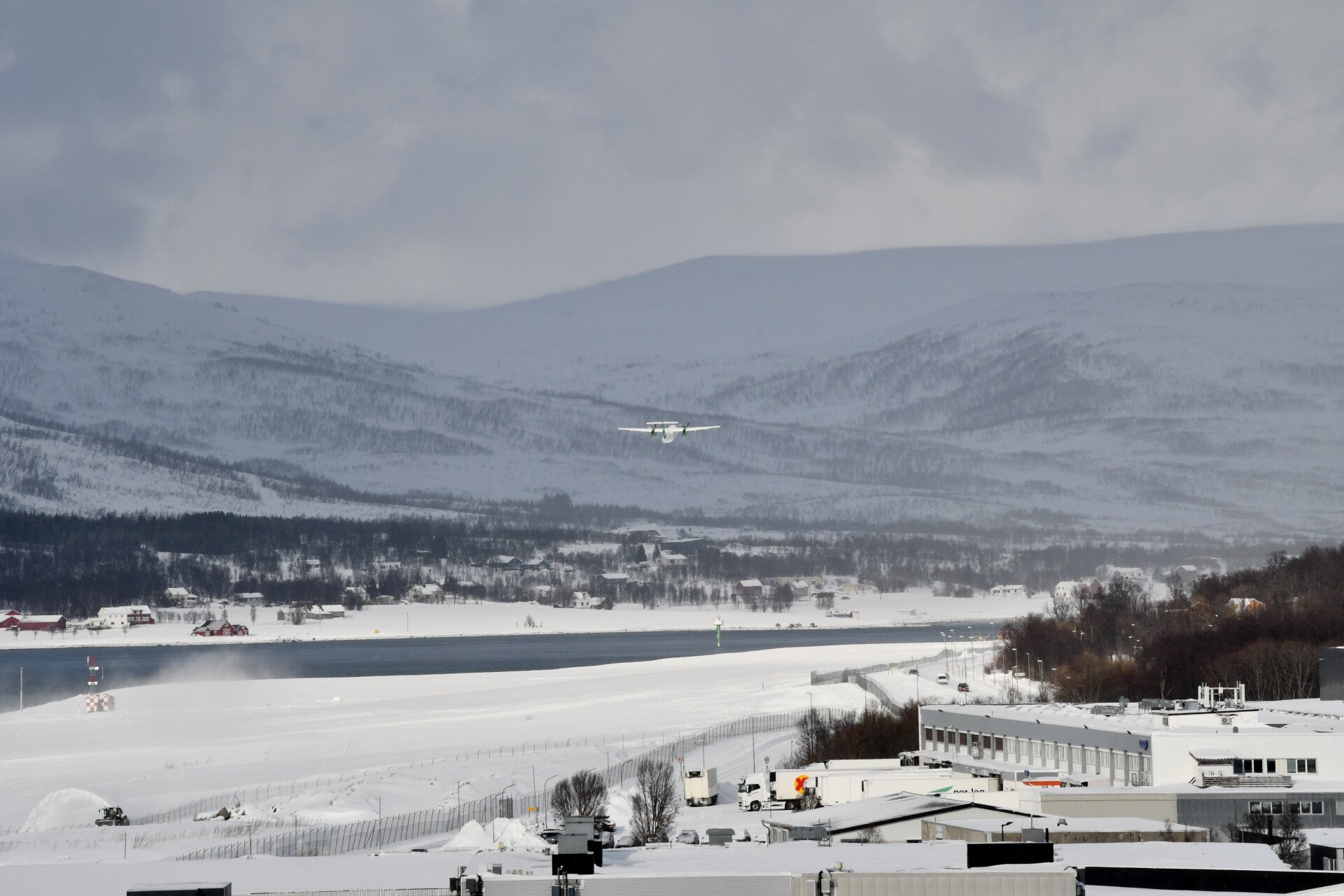
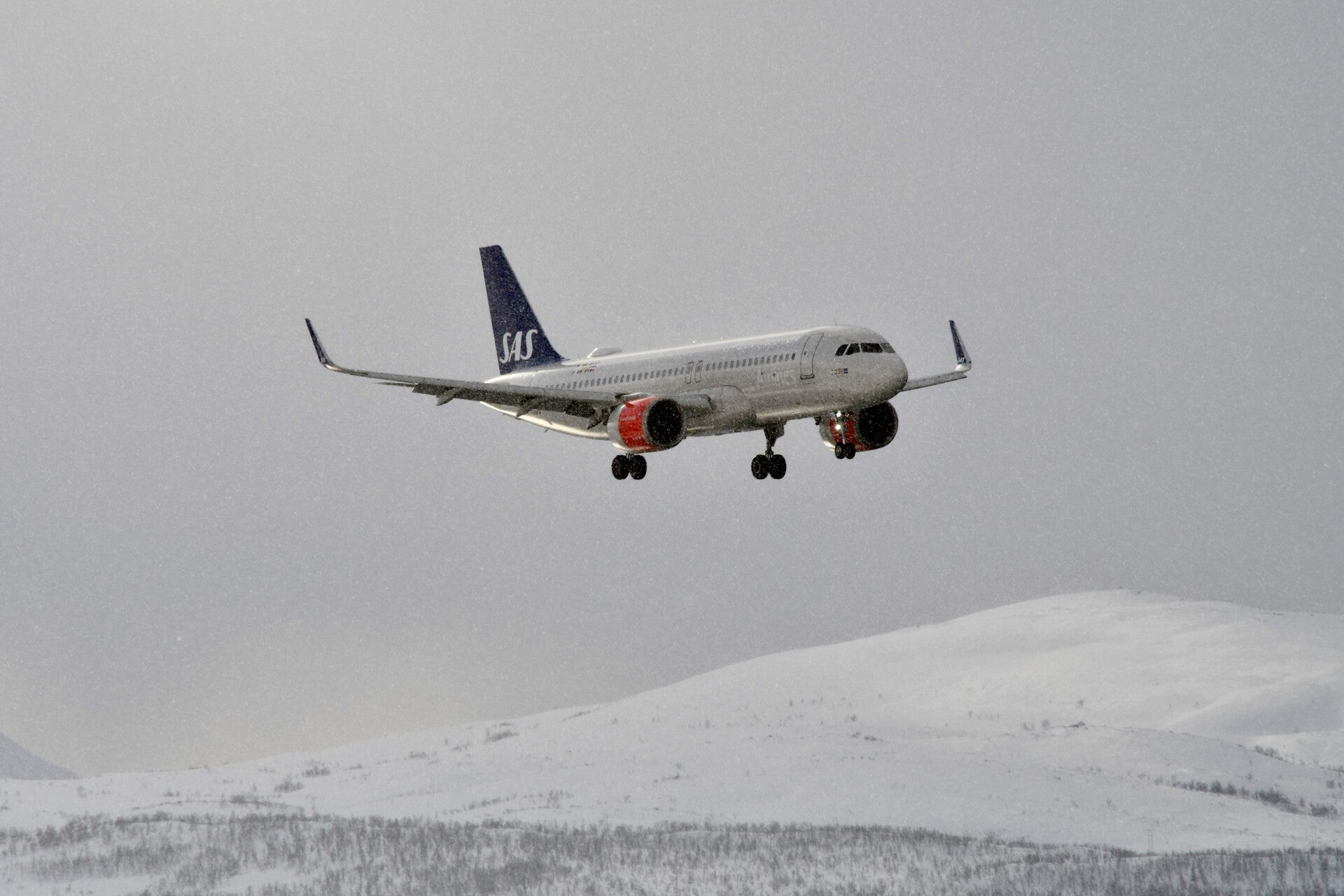
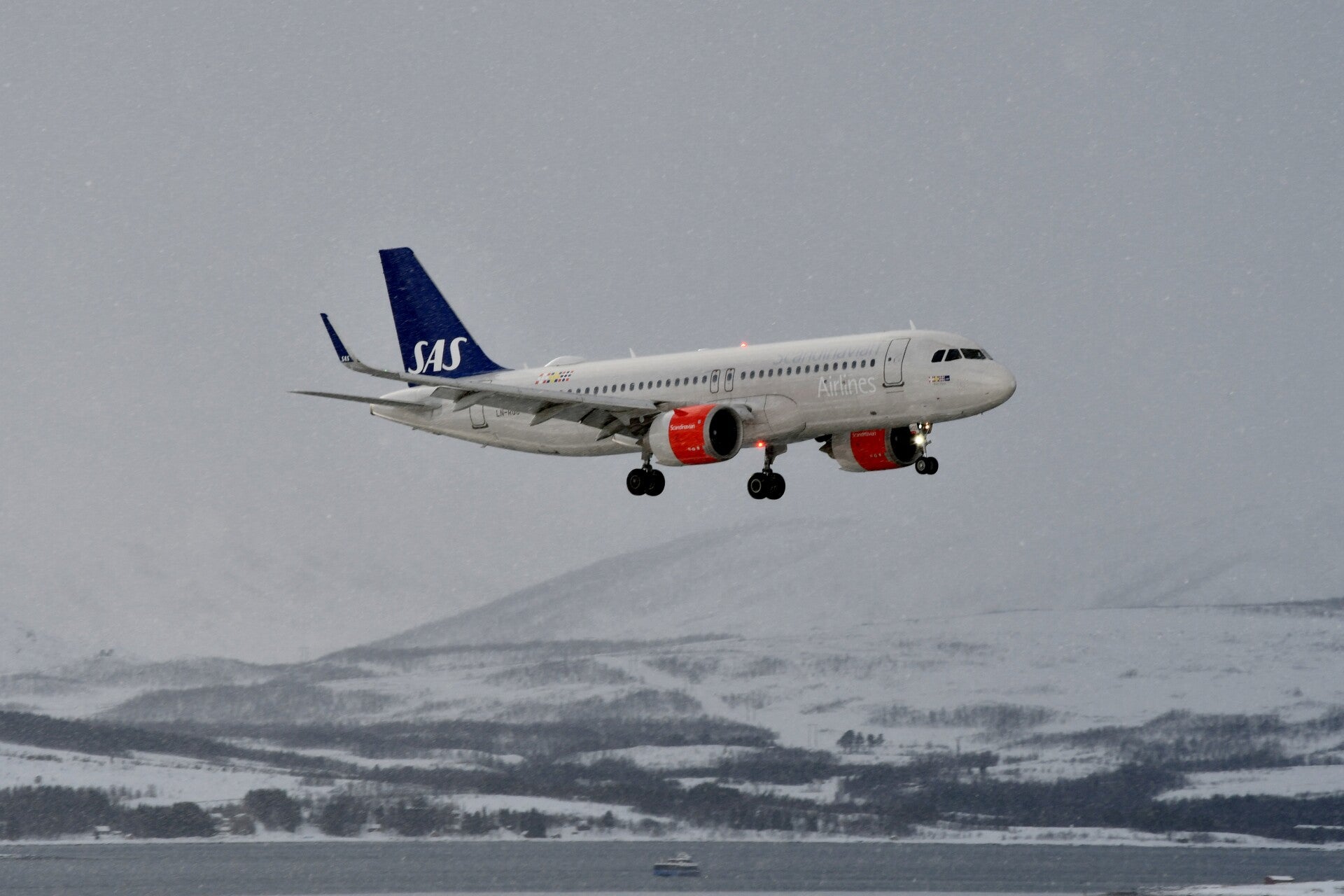
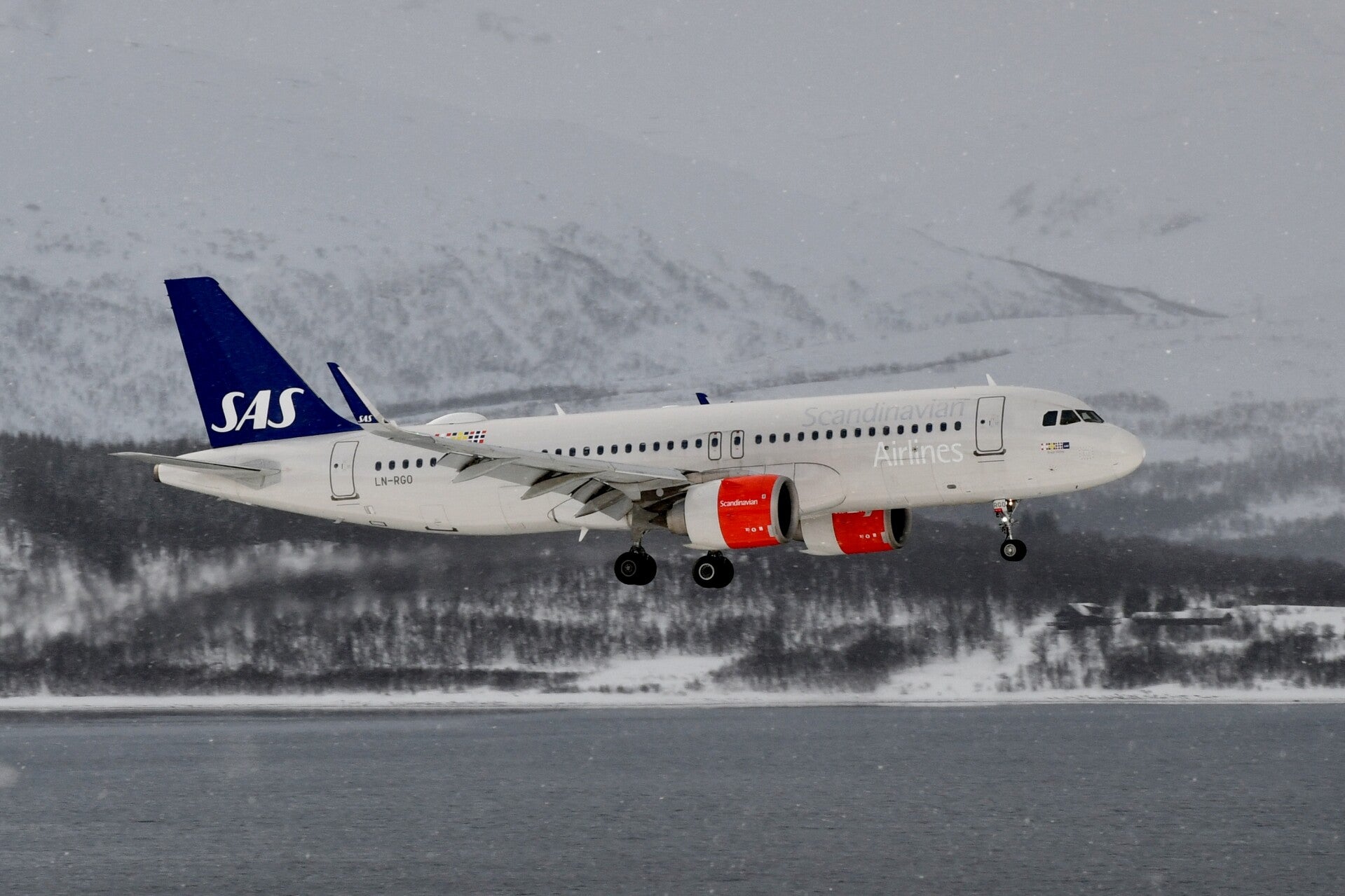
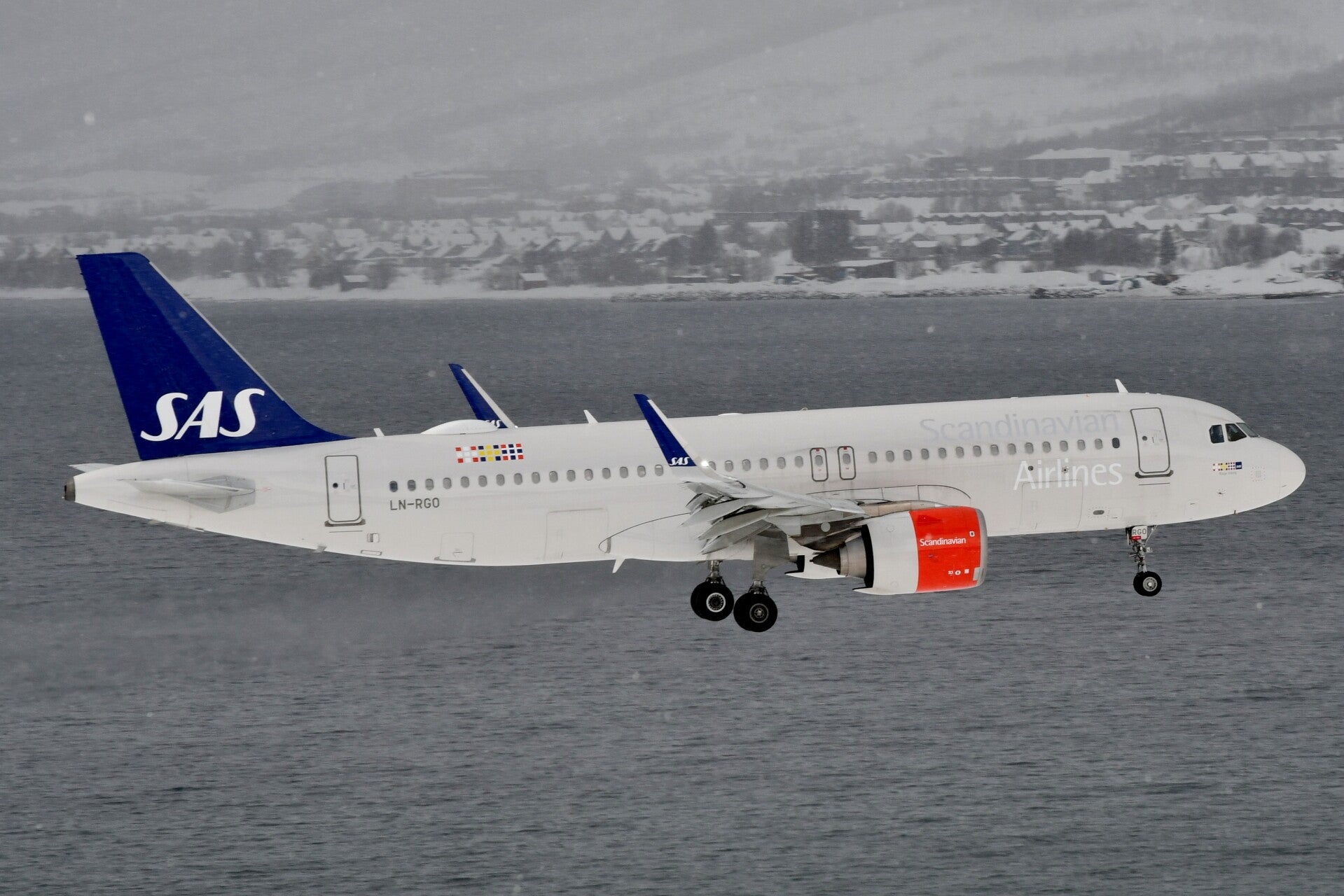
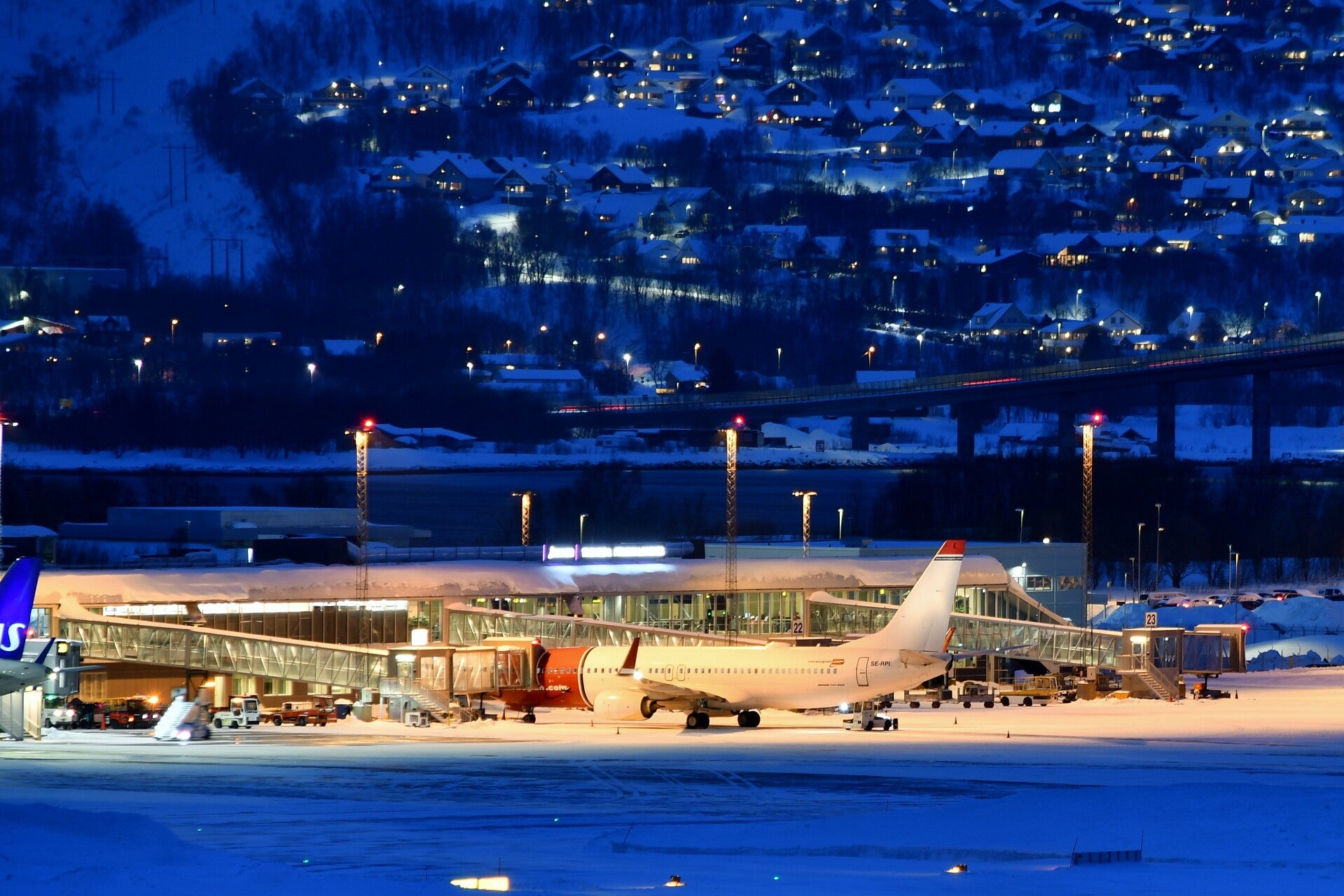
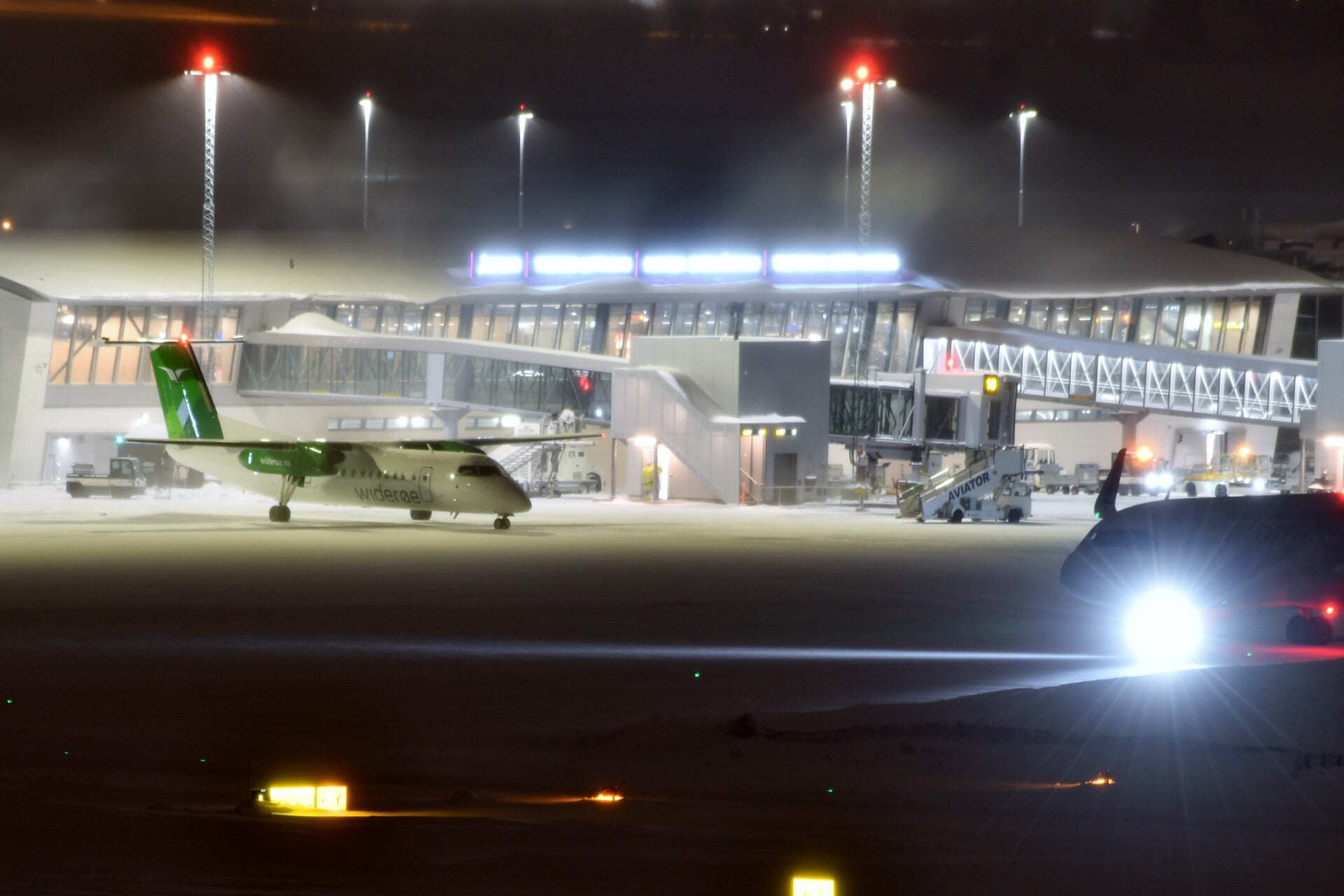
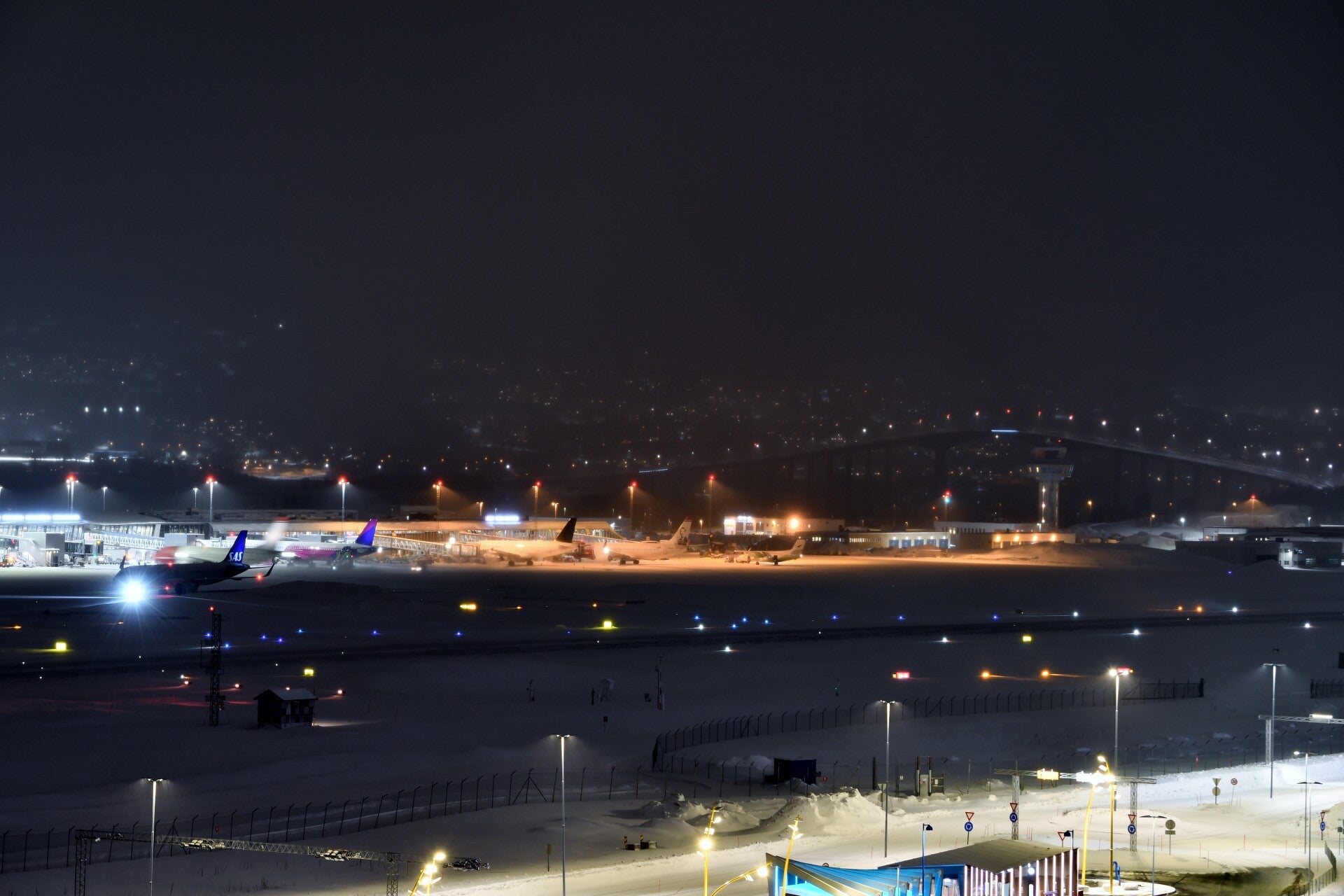
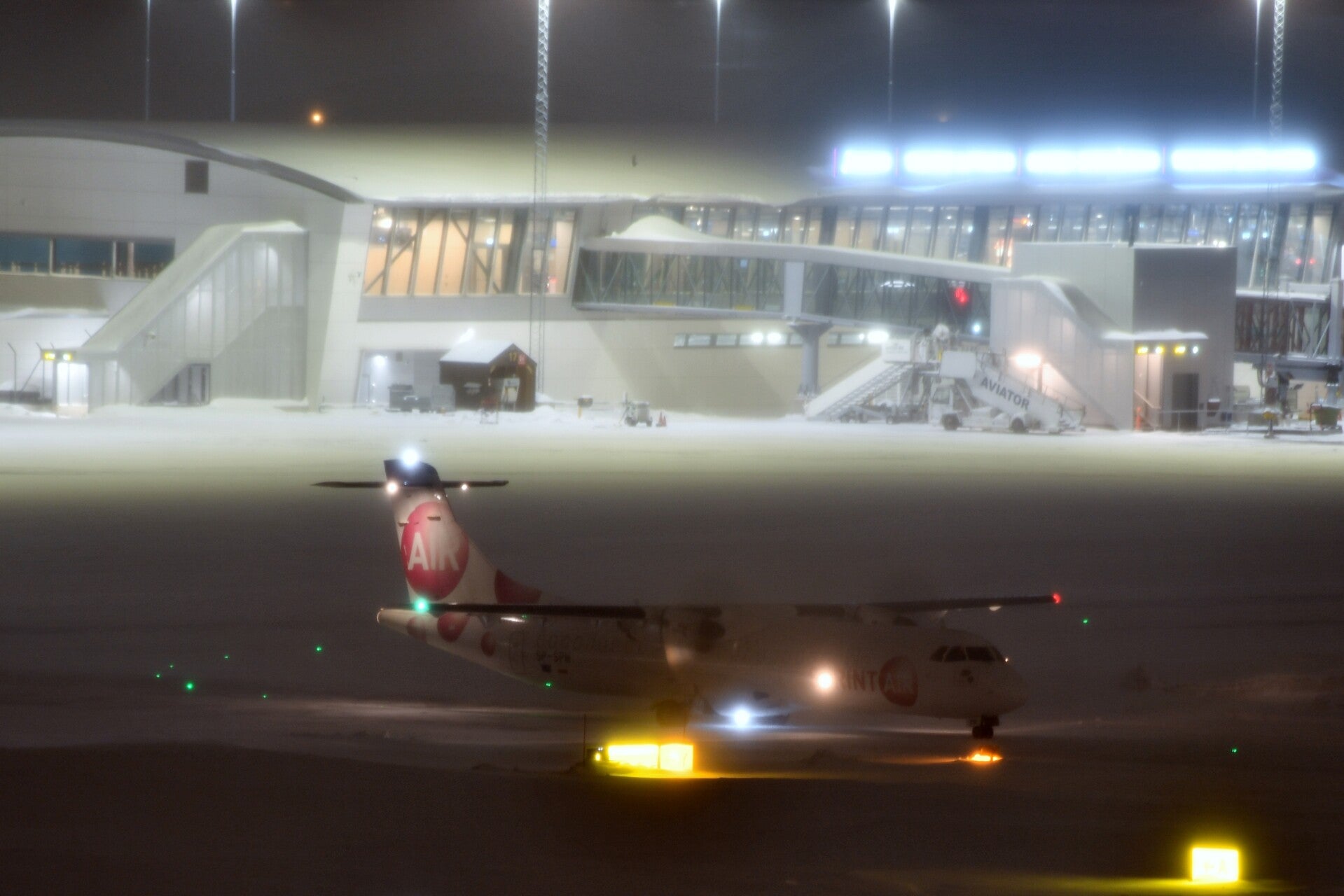
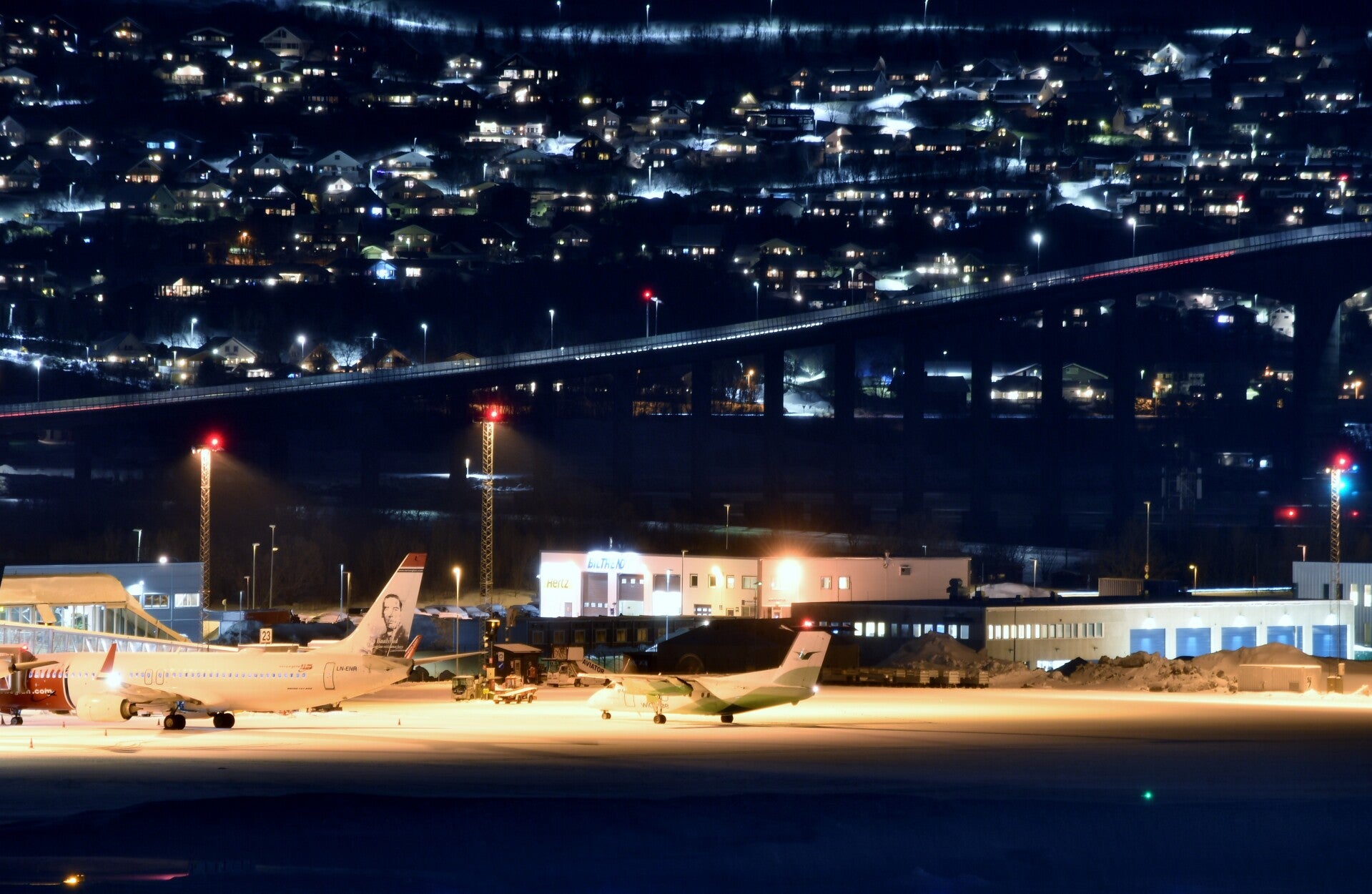
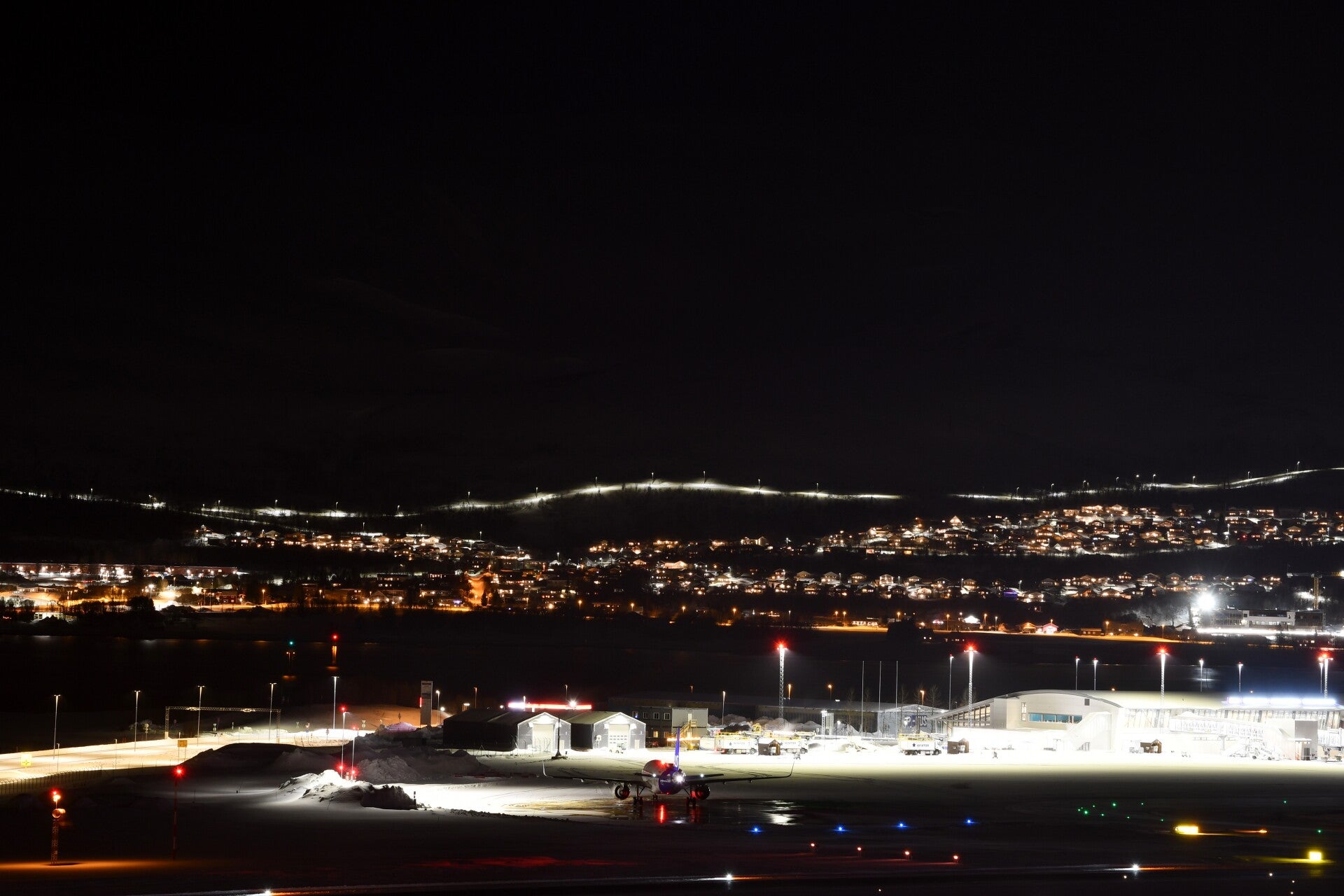
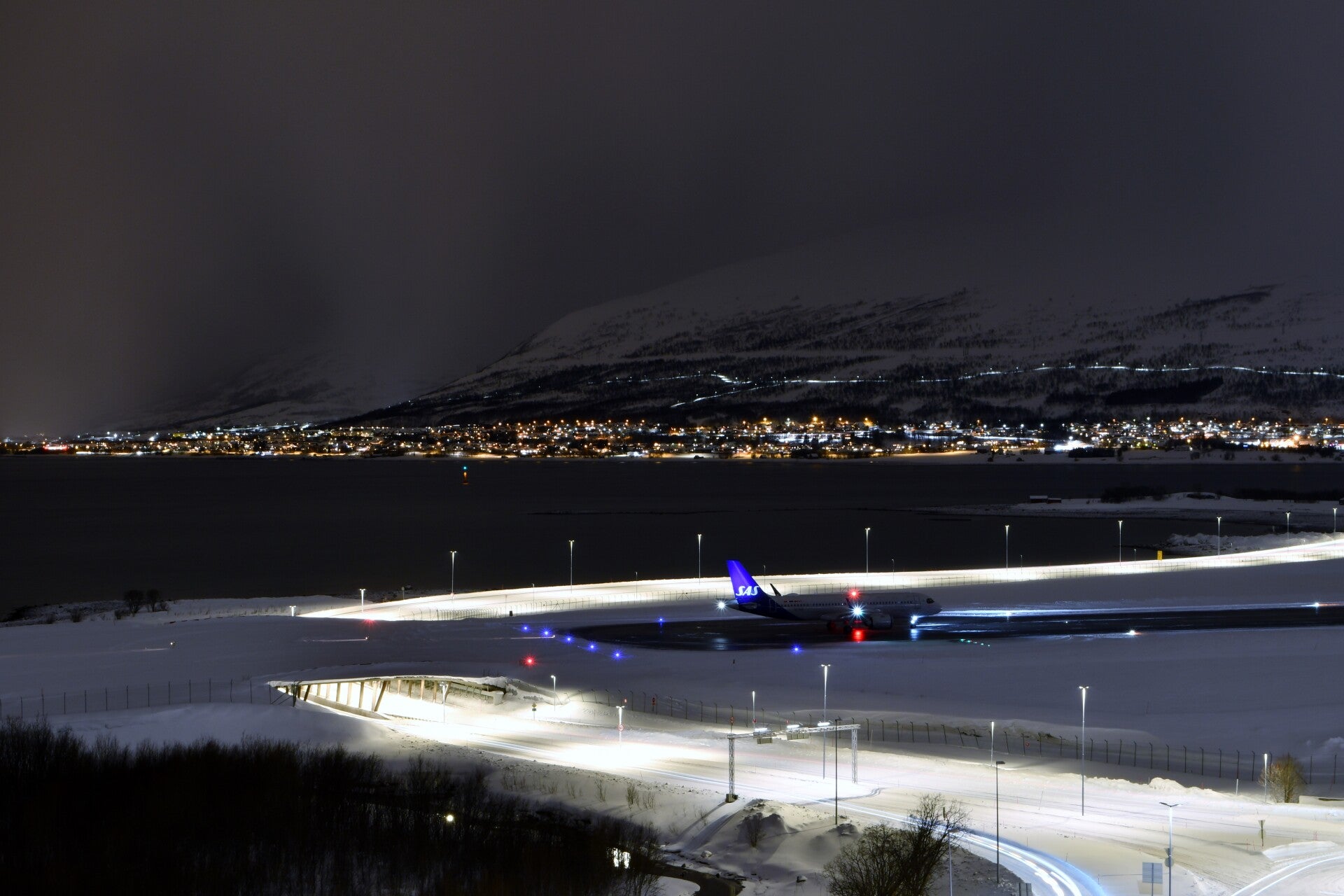
Traffic at Tromsø Airport is actually quite impressive, with plenty of Widerøe “buzzers” coming and going, as well as larger jets such as the A320 and 737. Combined with smooth deicing operations and the continuous movement of snowplows, there’s never a dull moment. The weather today is absolutely wild. Good visibility can rapidly change into heavy snowfall with almost no visibility at all. Walls of snow can cover only parts of the airport; for example, the approach path and runway threshold may be perfectly clear, while halfway down the runway visibility drops to nearly zero due to heavy snow and low clouds. All of this can change in the blink of an eye, making for a wide variety of fascinating photos and videos.
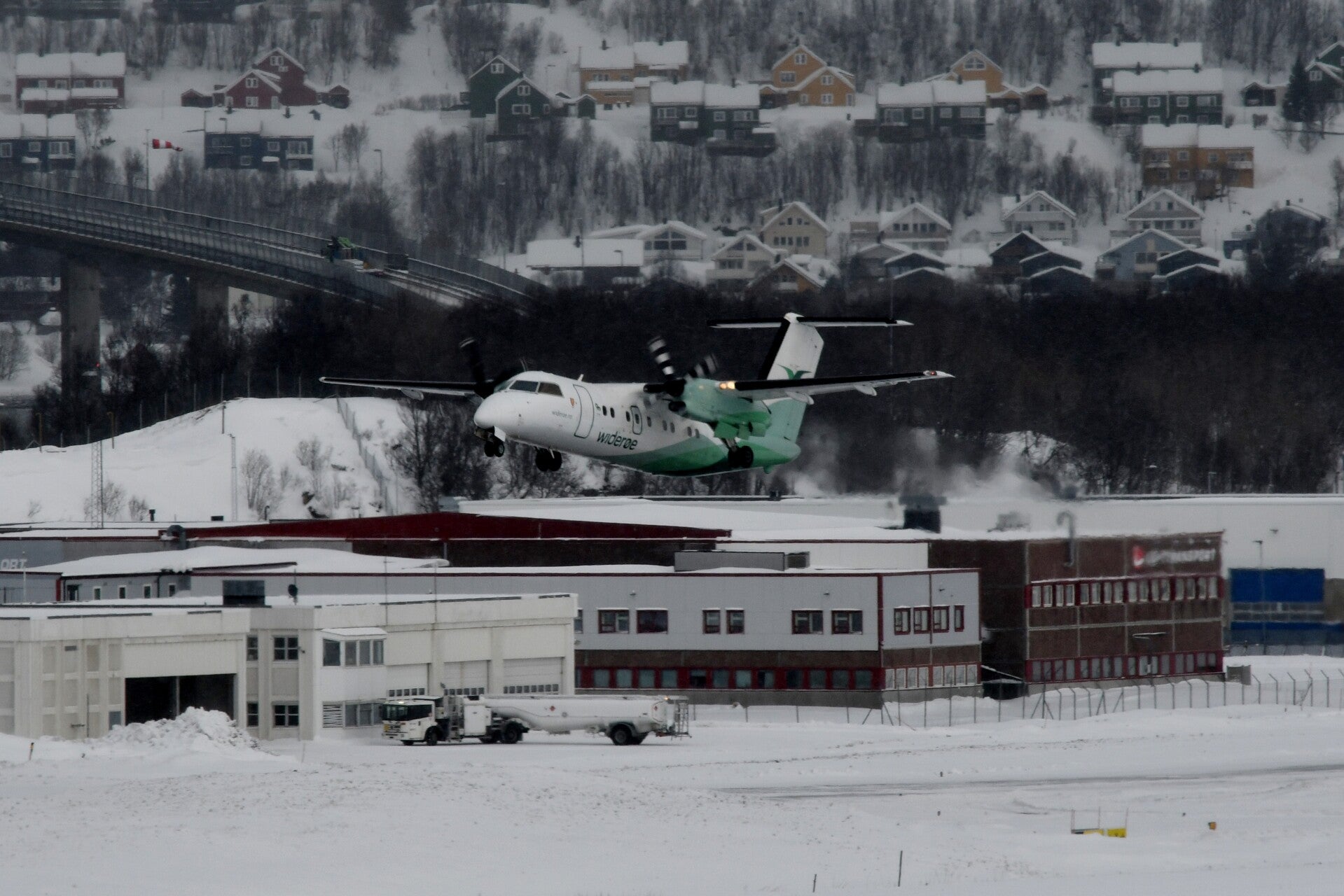
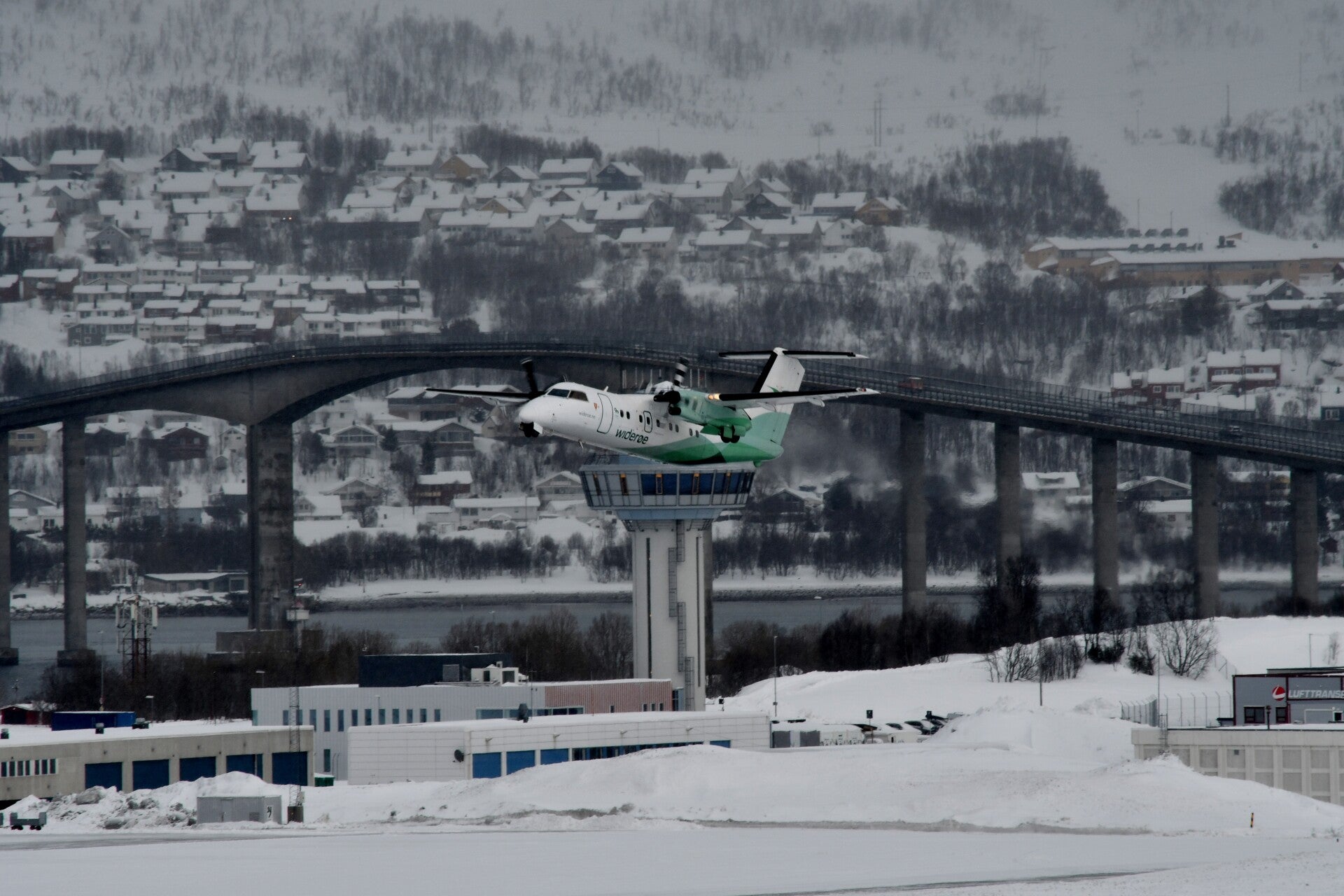
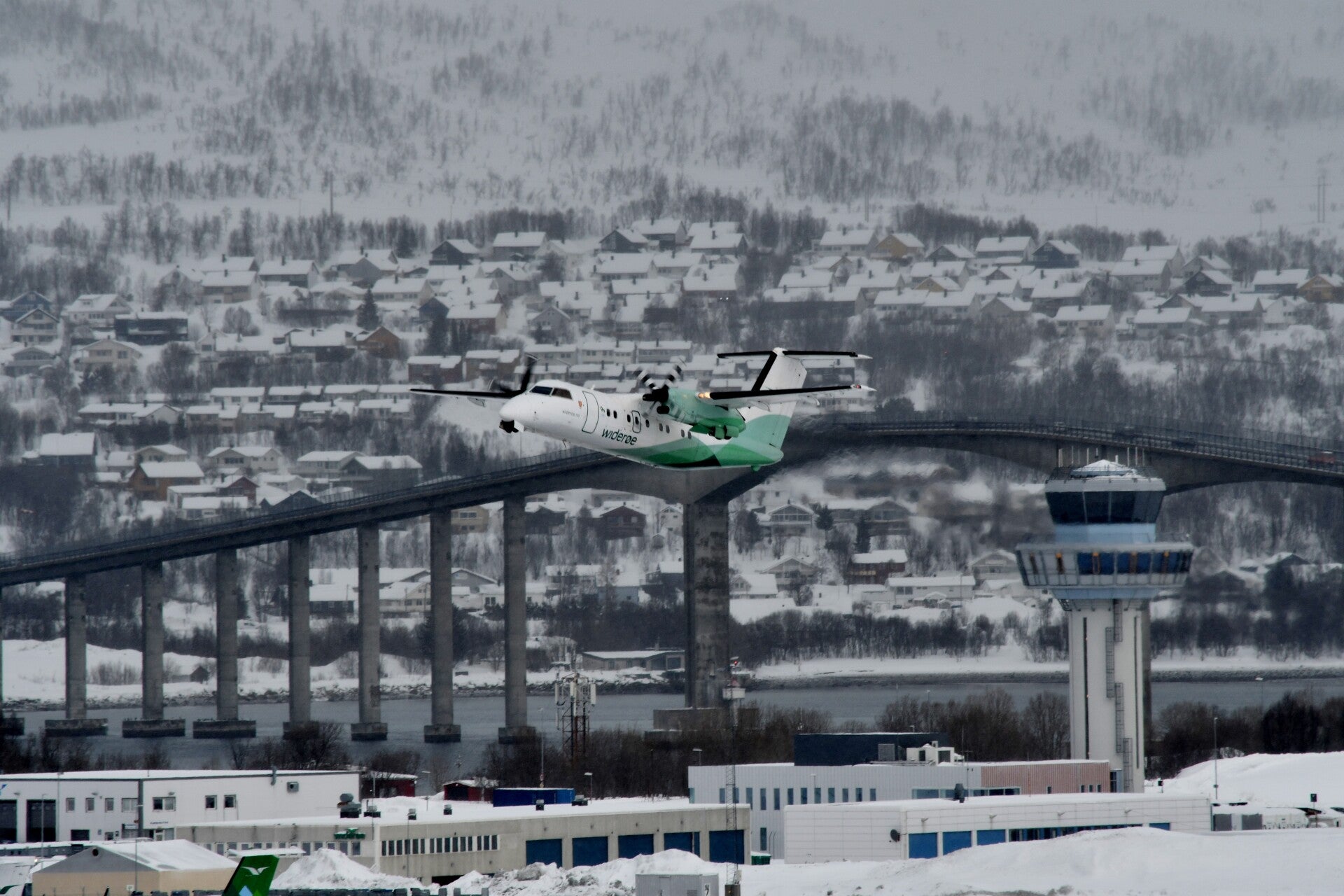
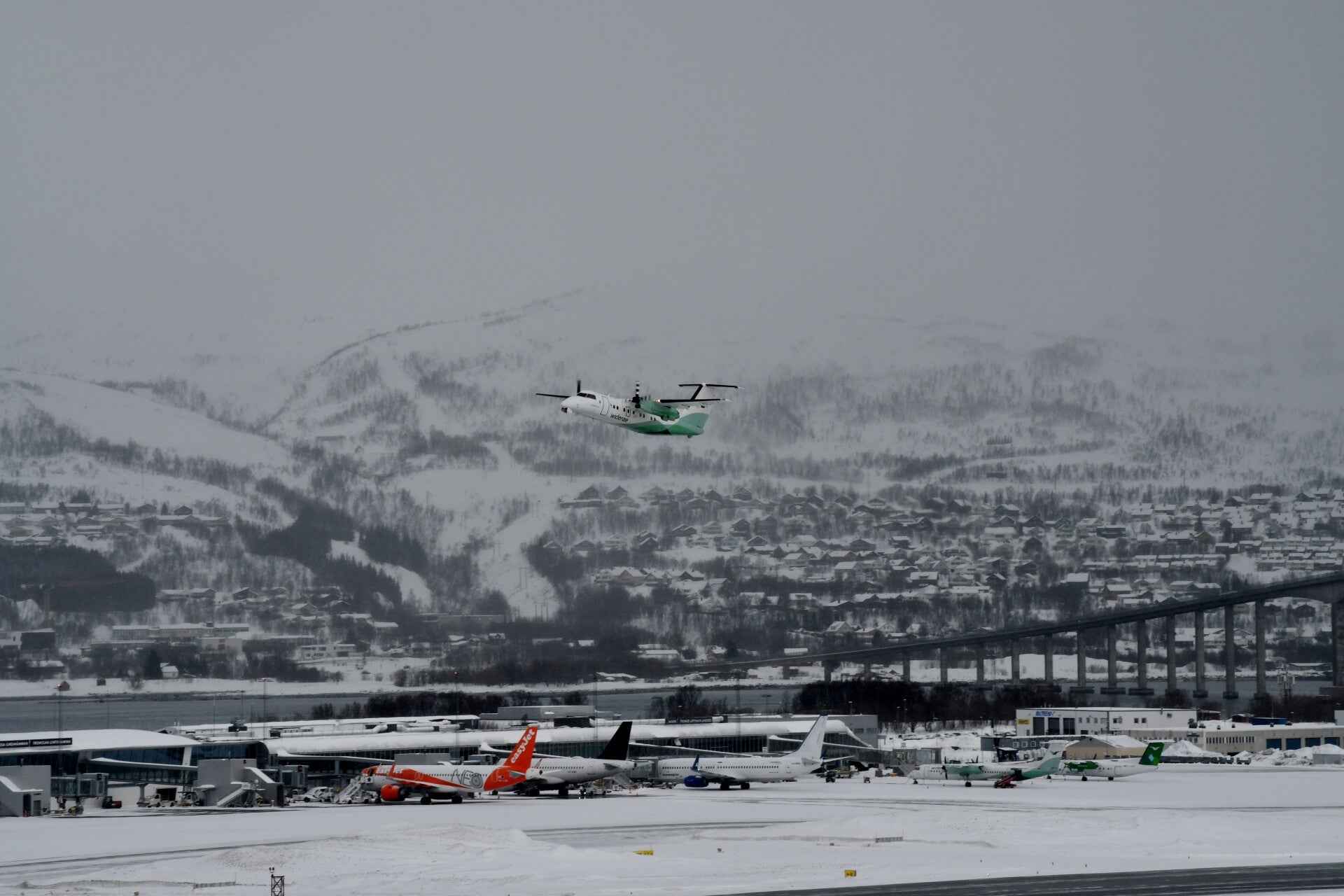
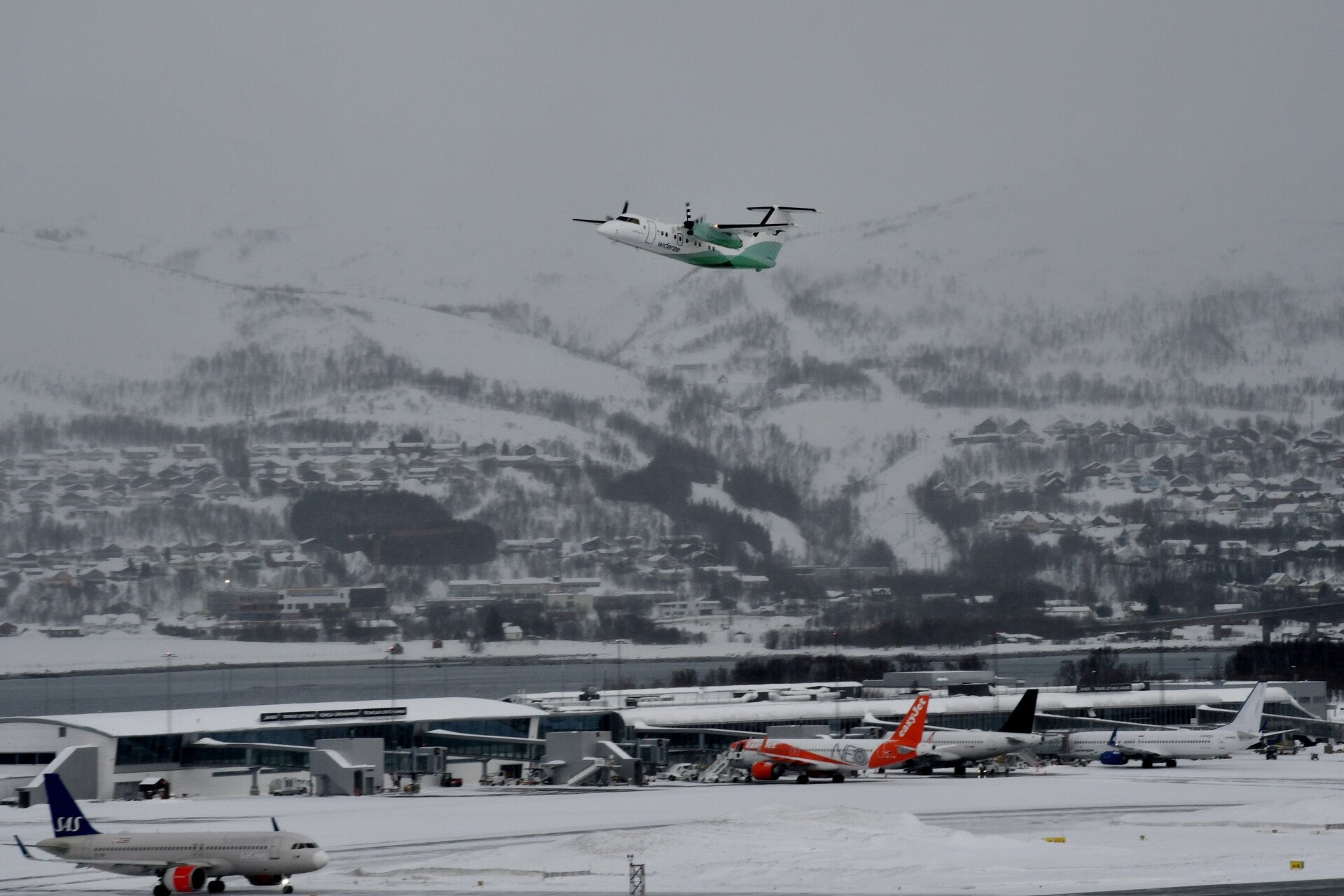
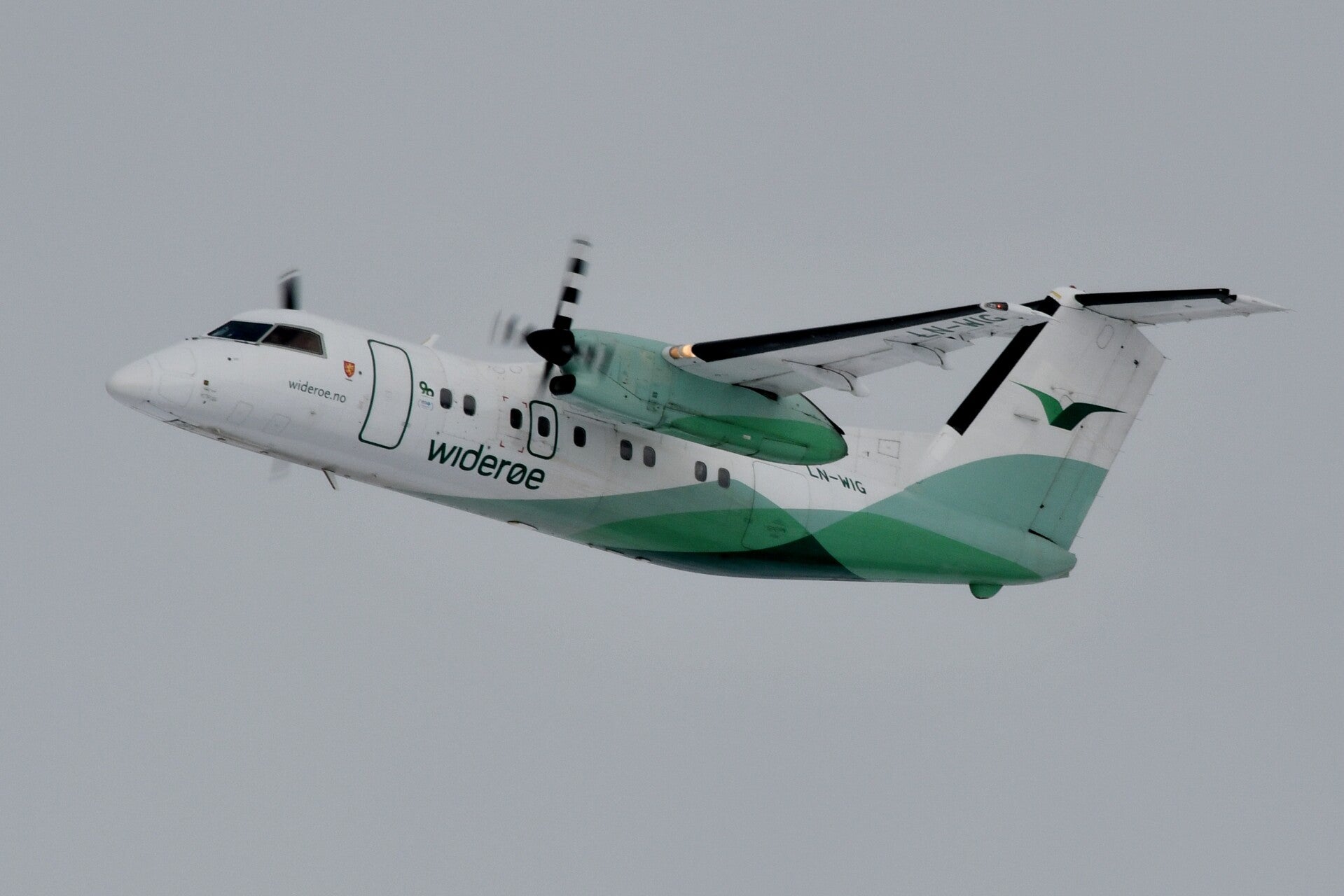
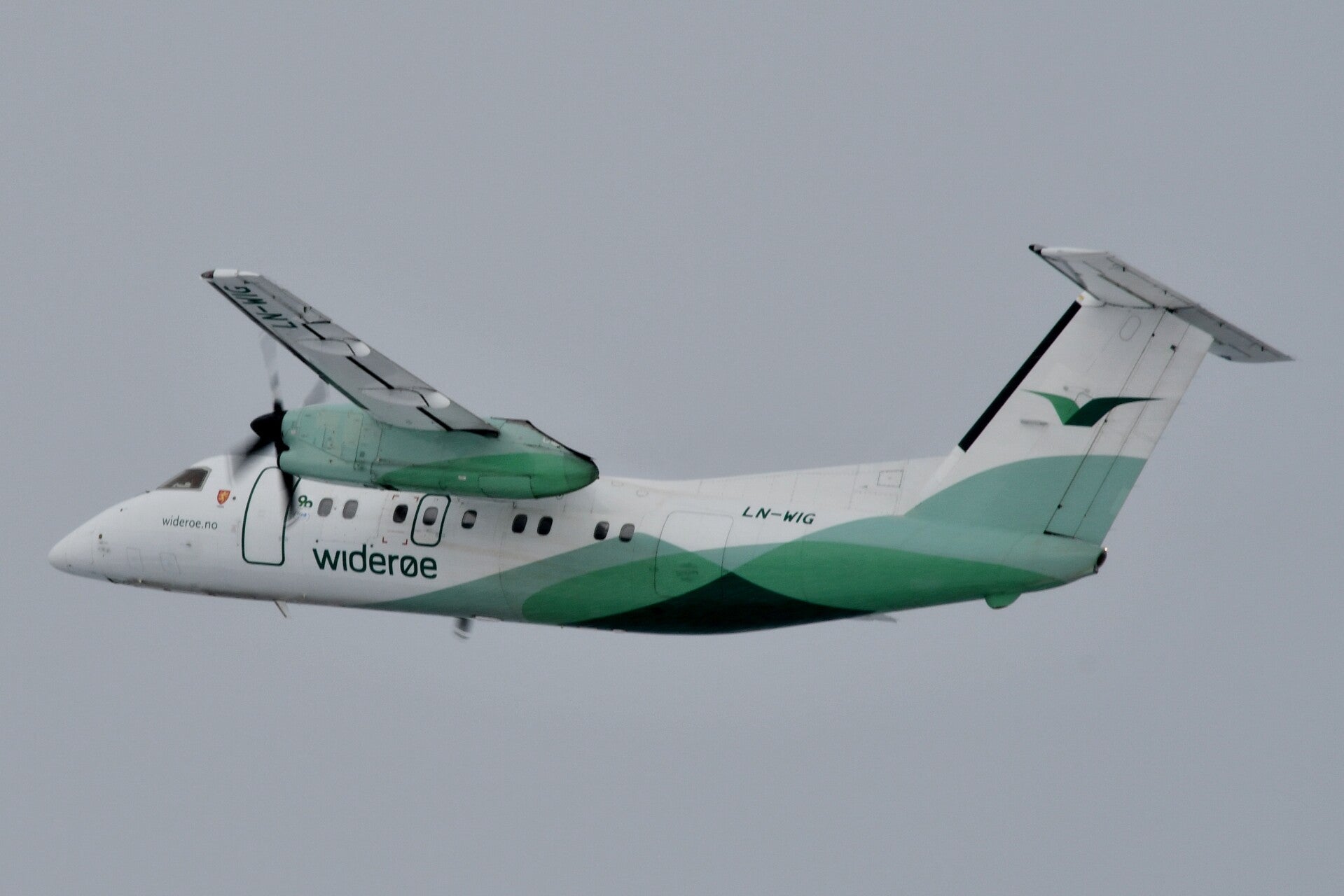
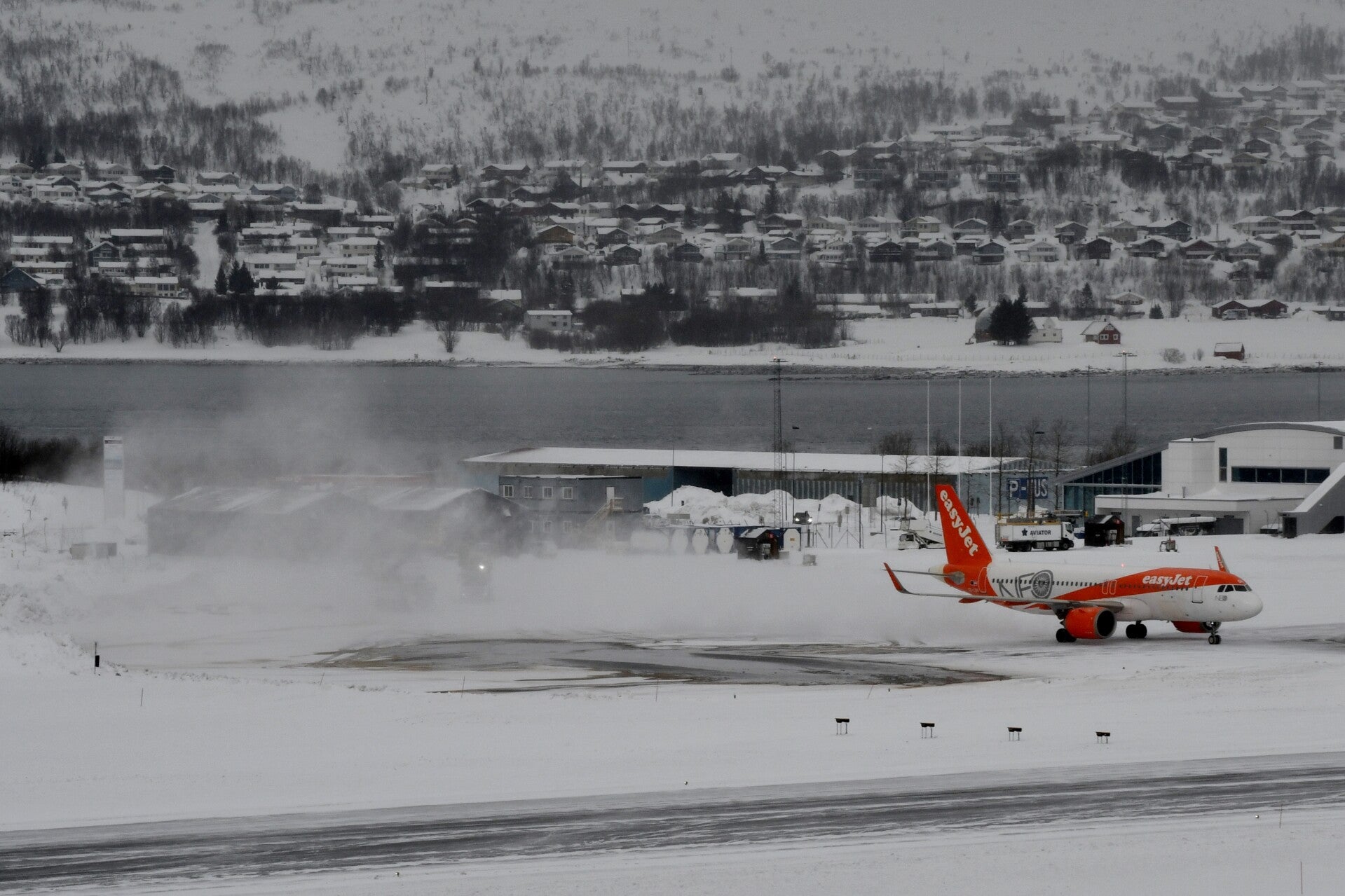

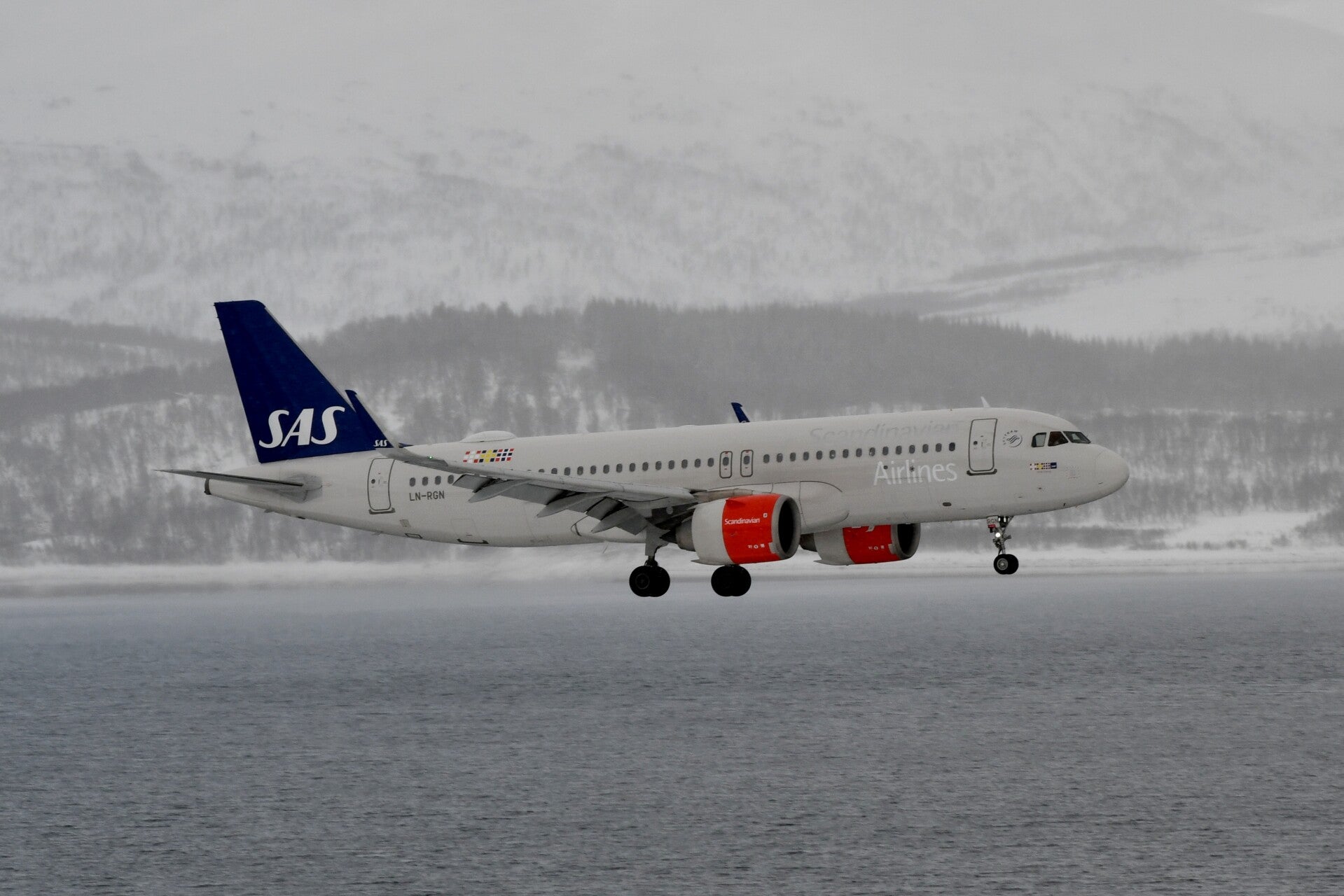
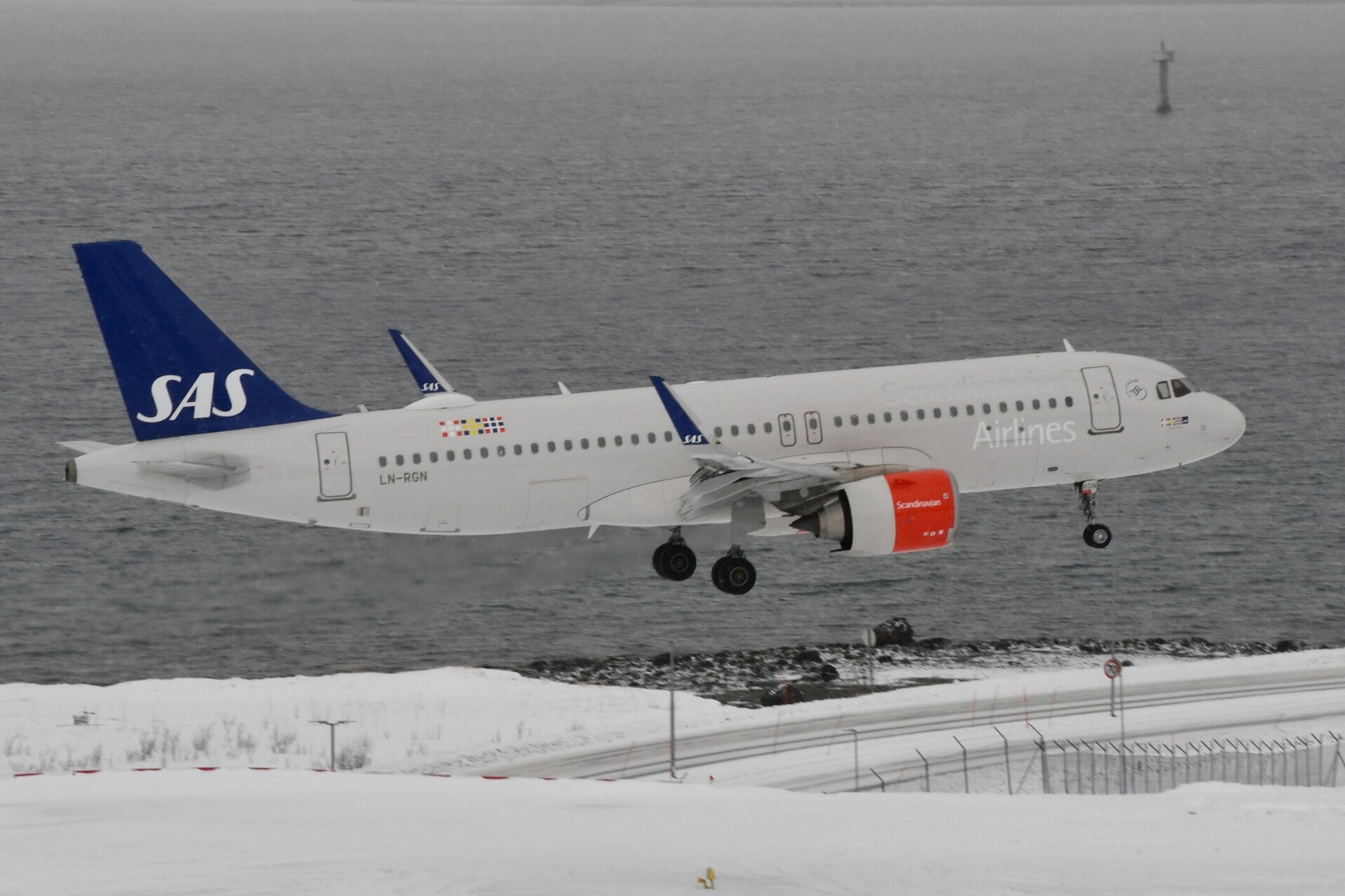

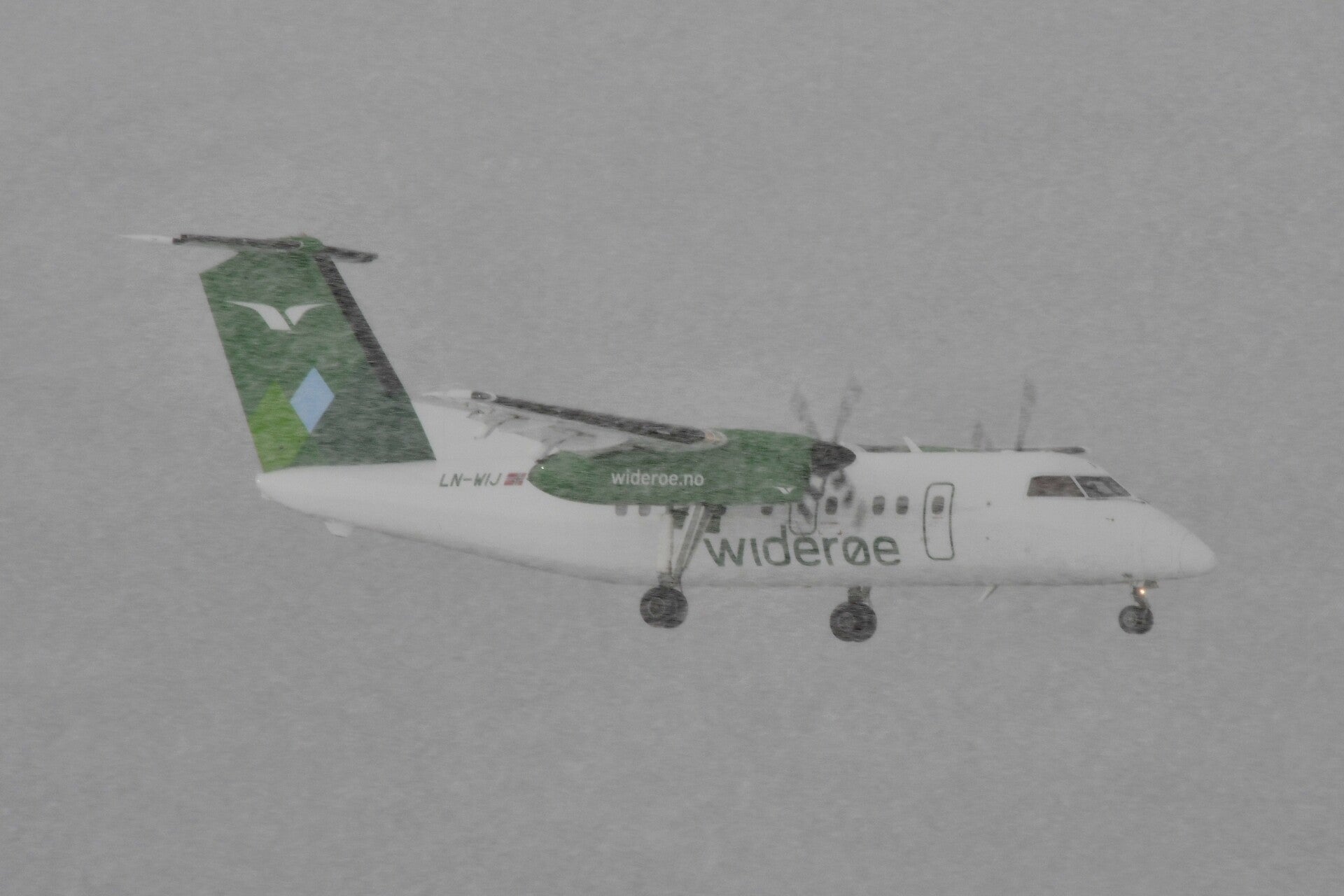

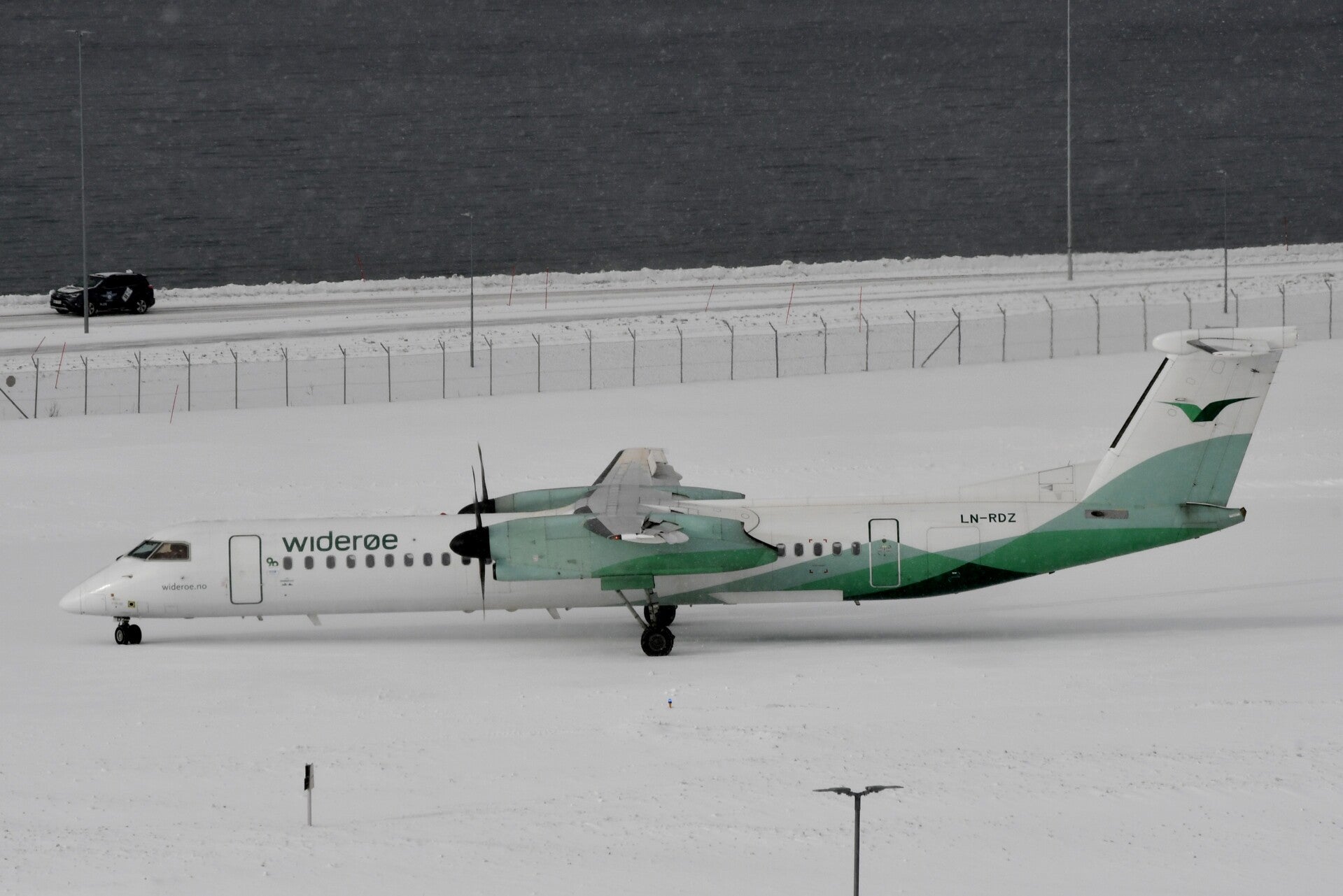
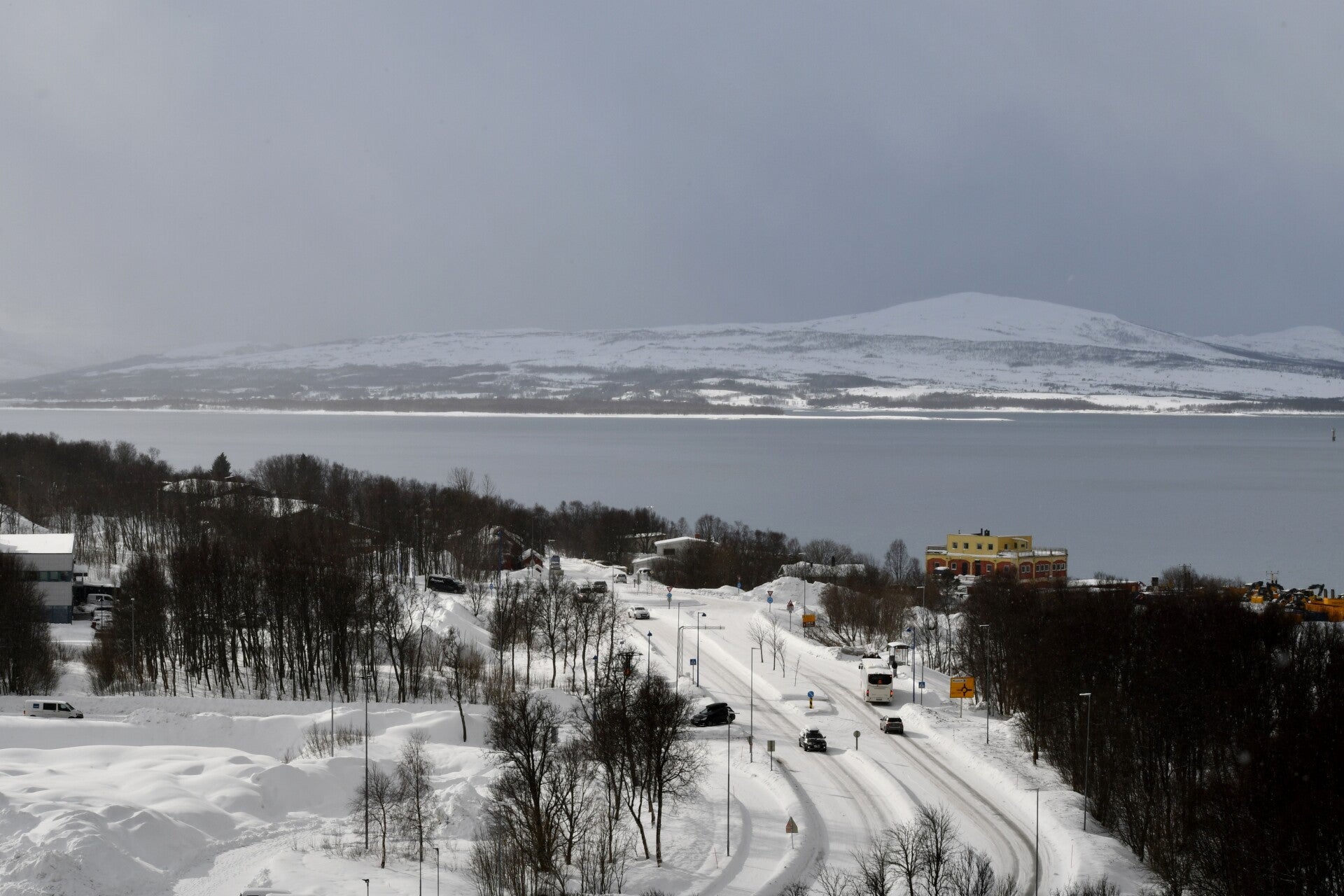
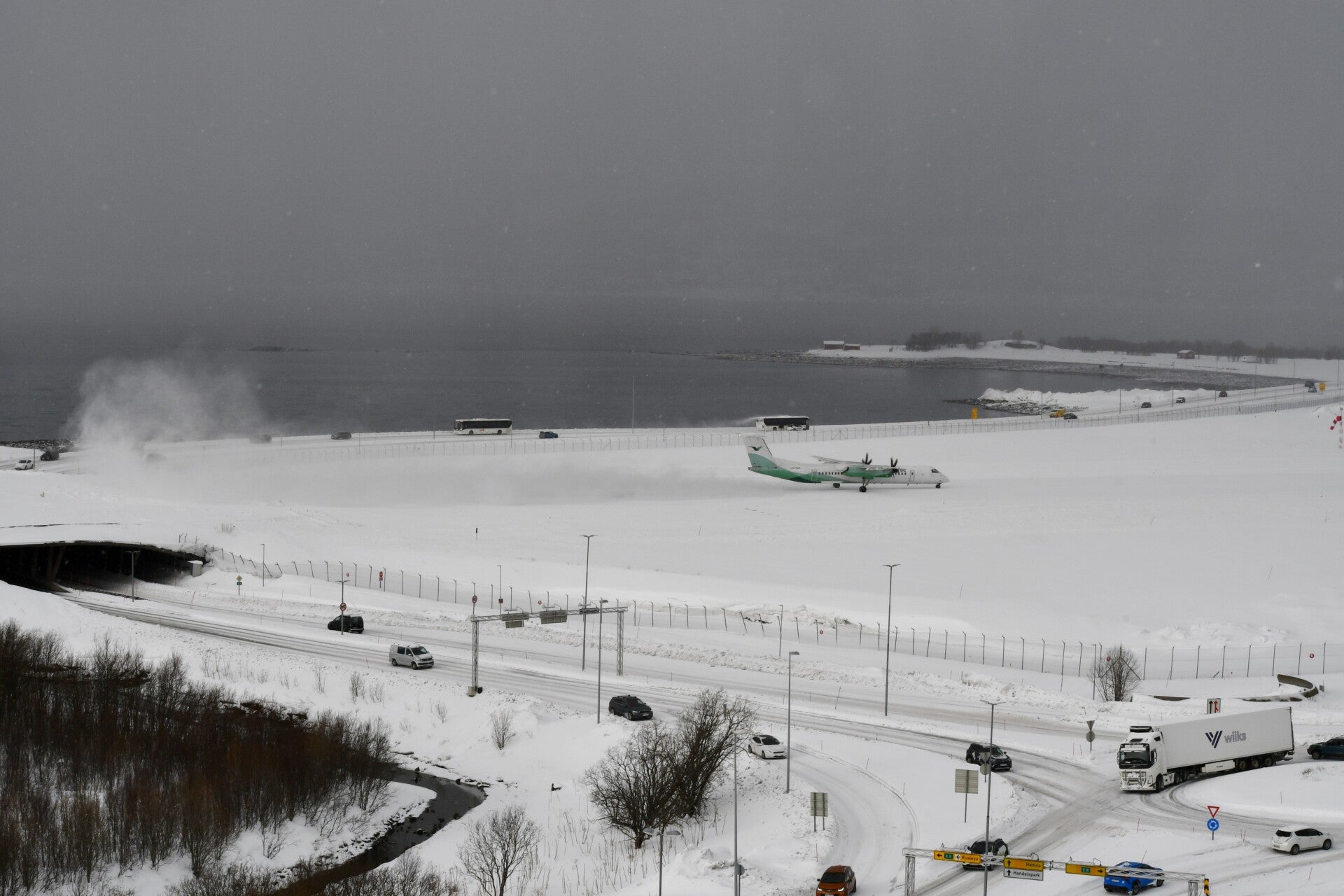
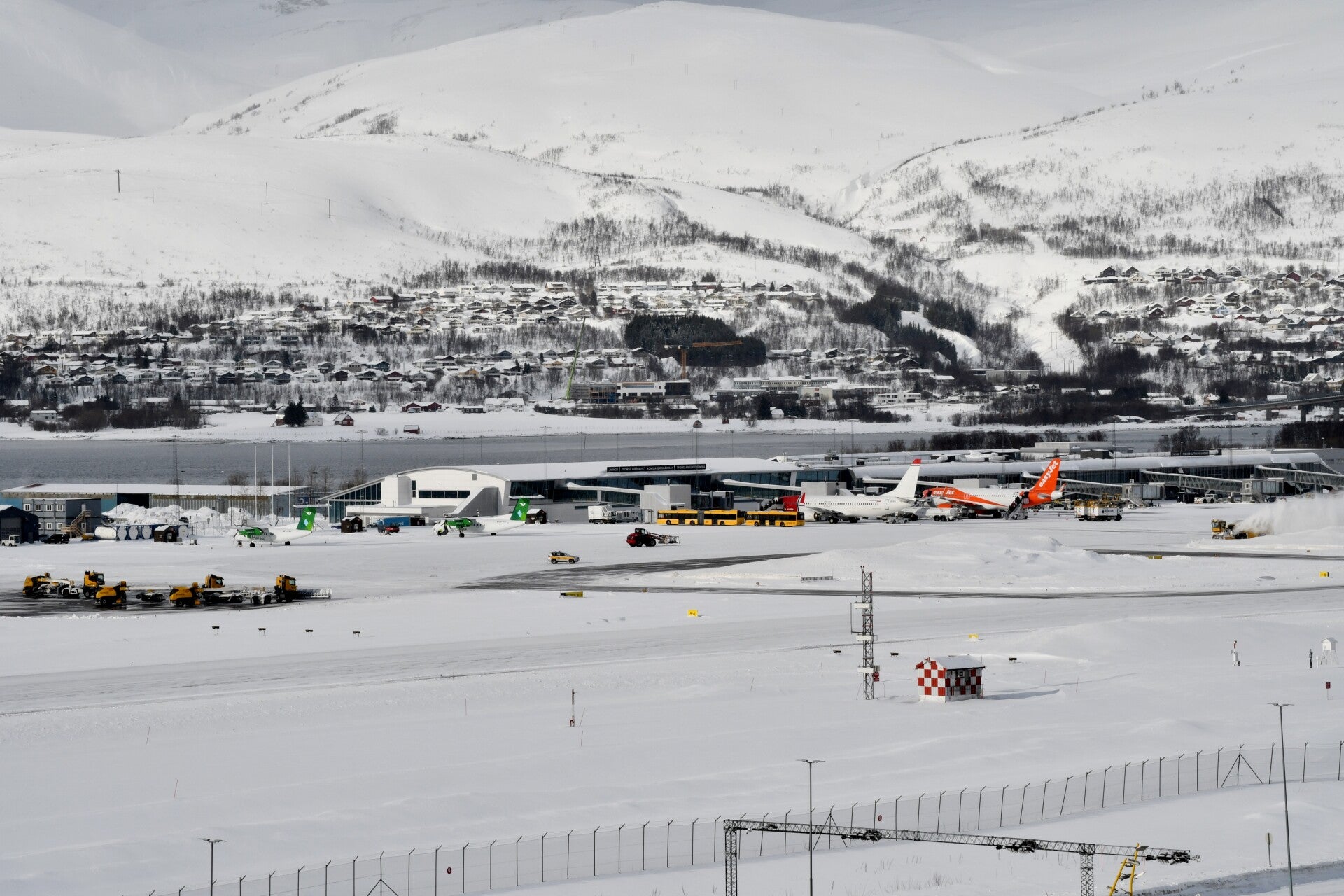
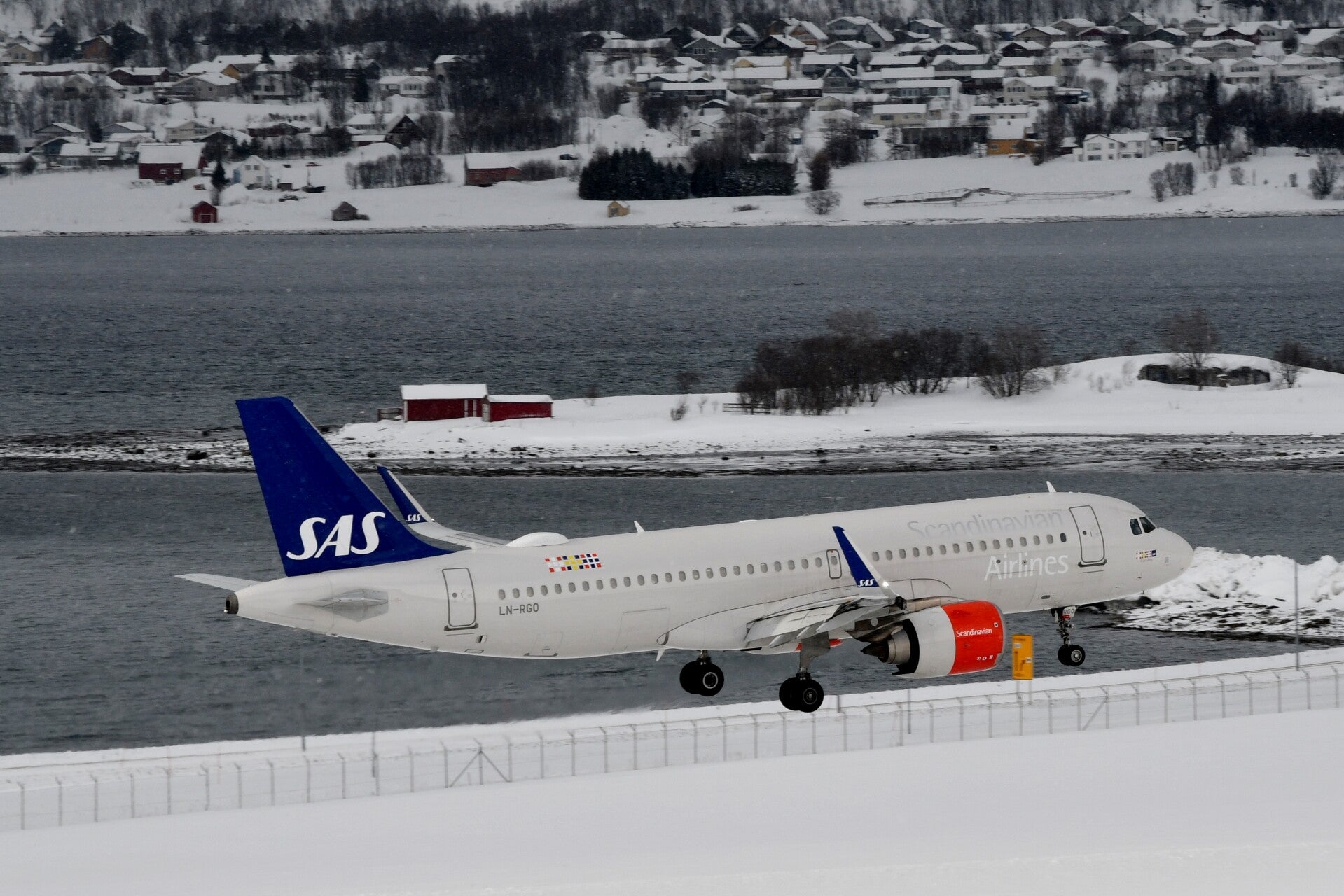

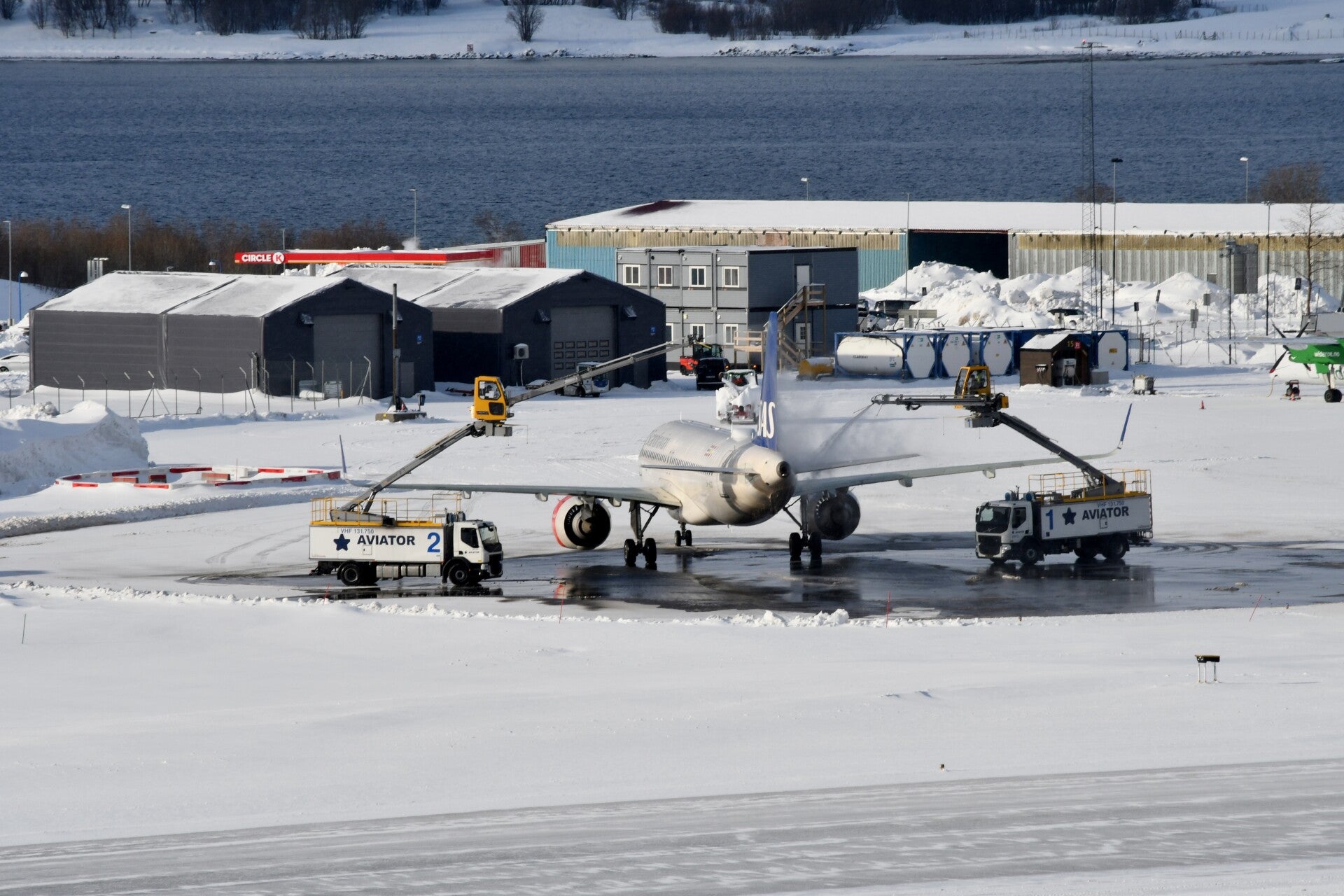
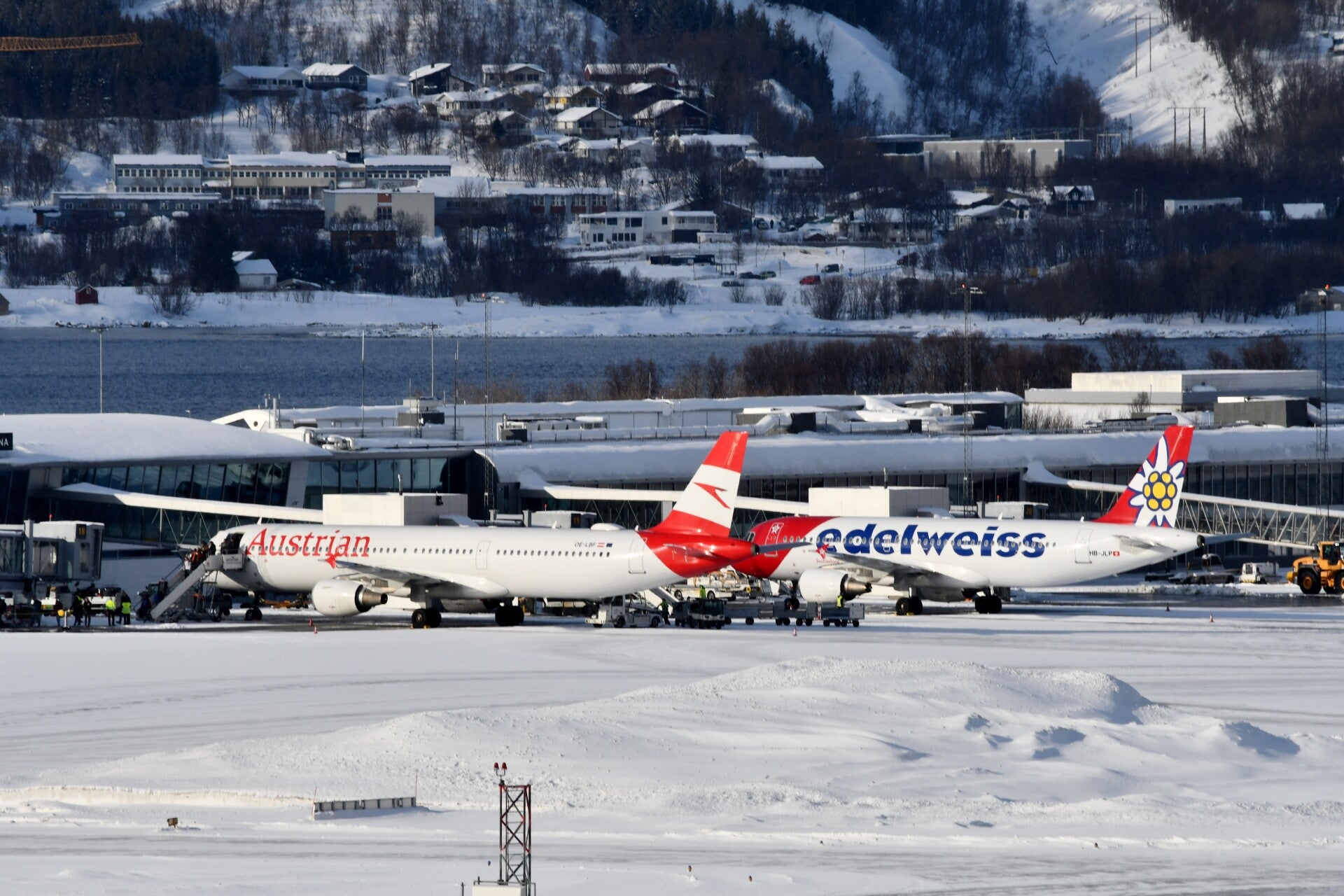
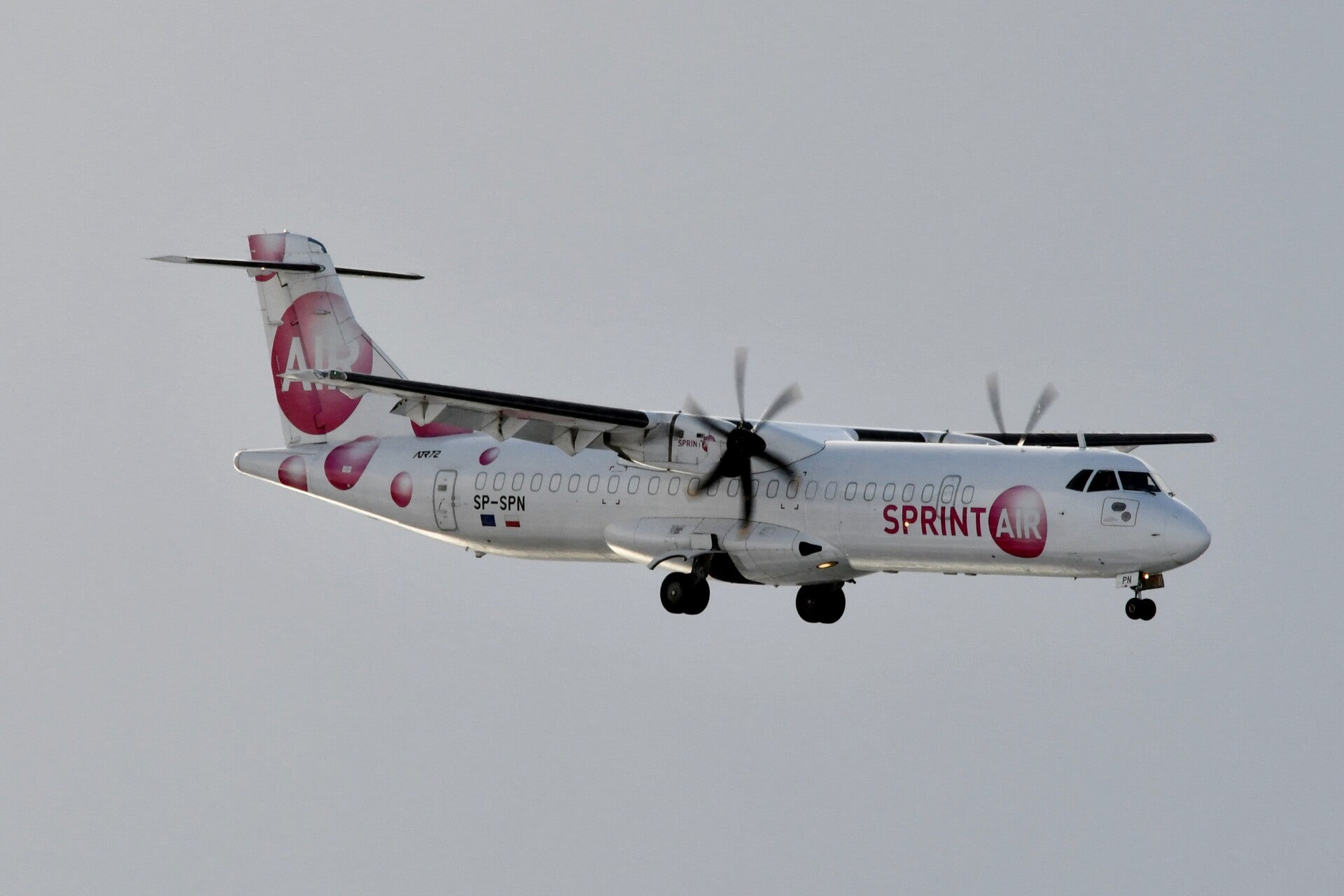
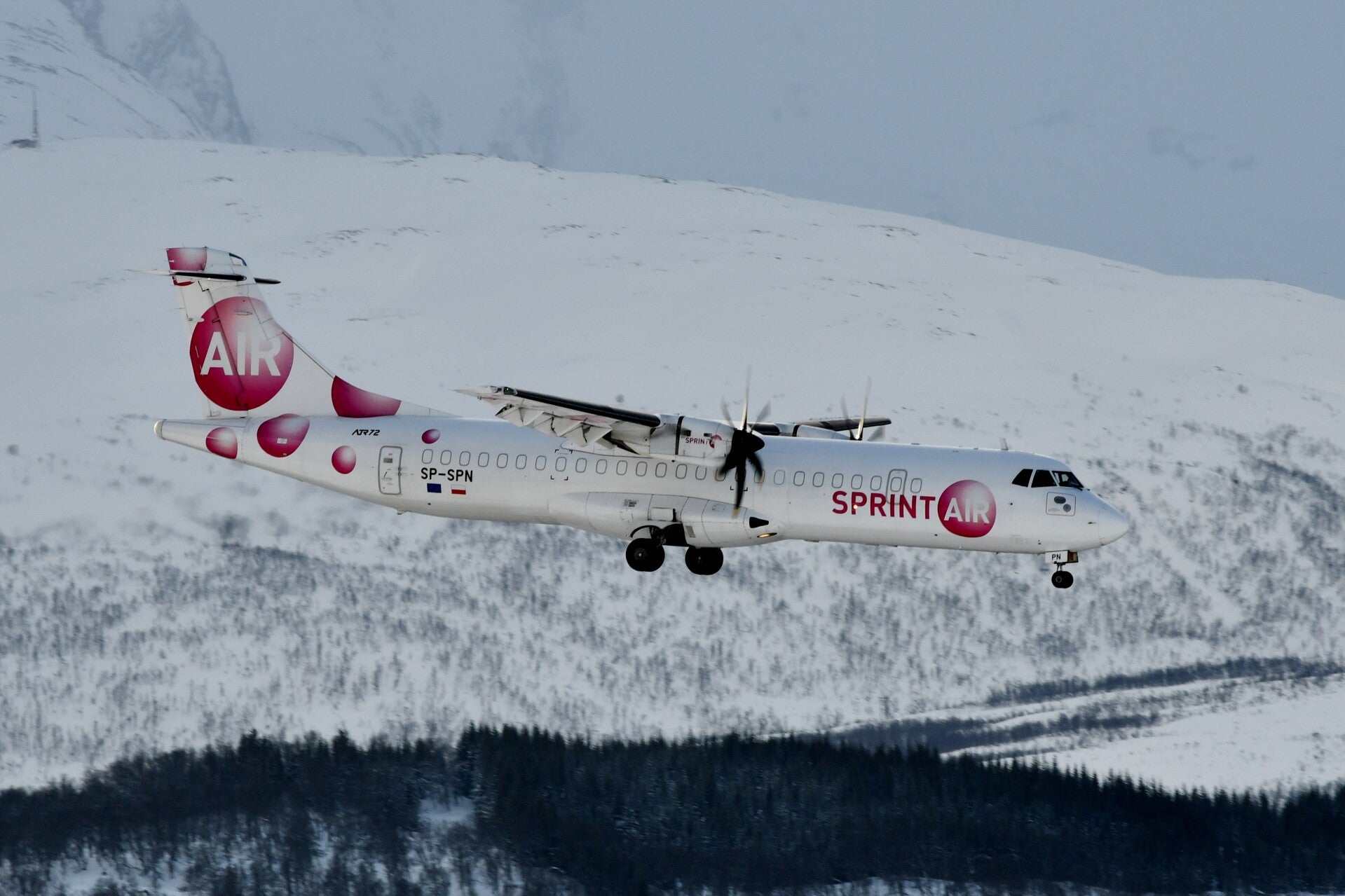
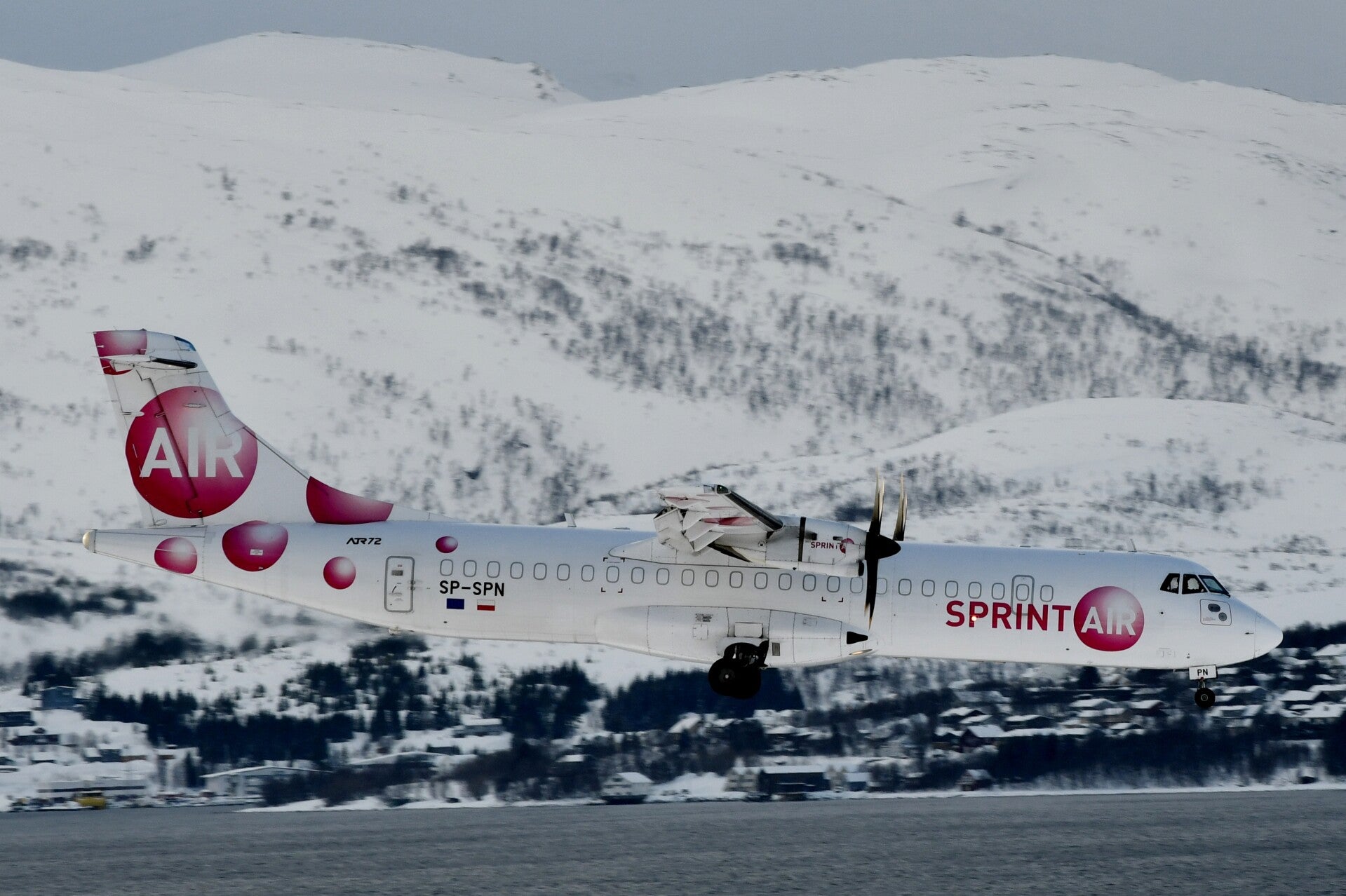
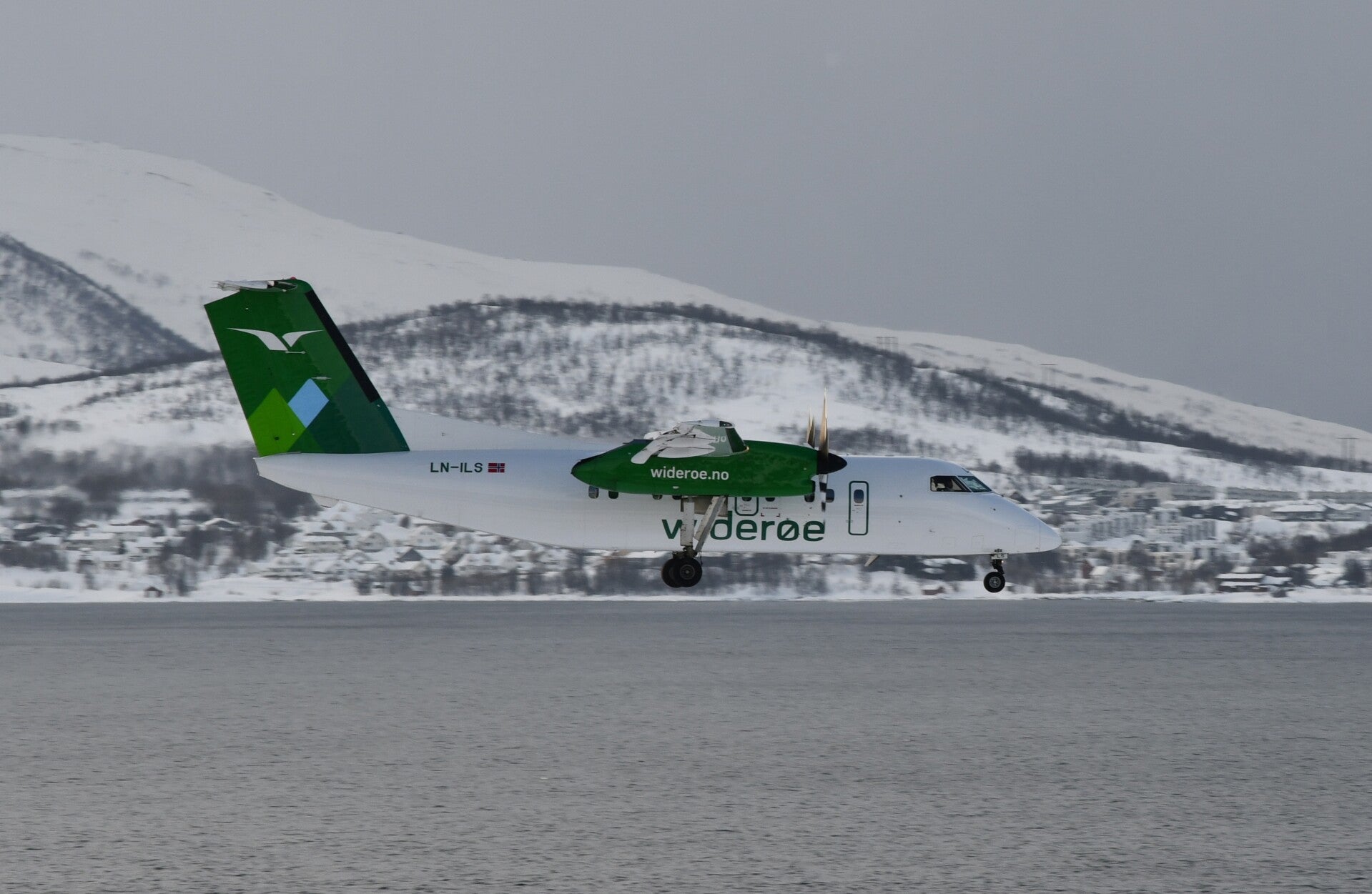
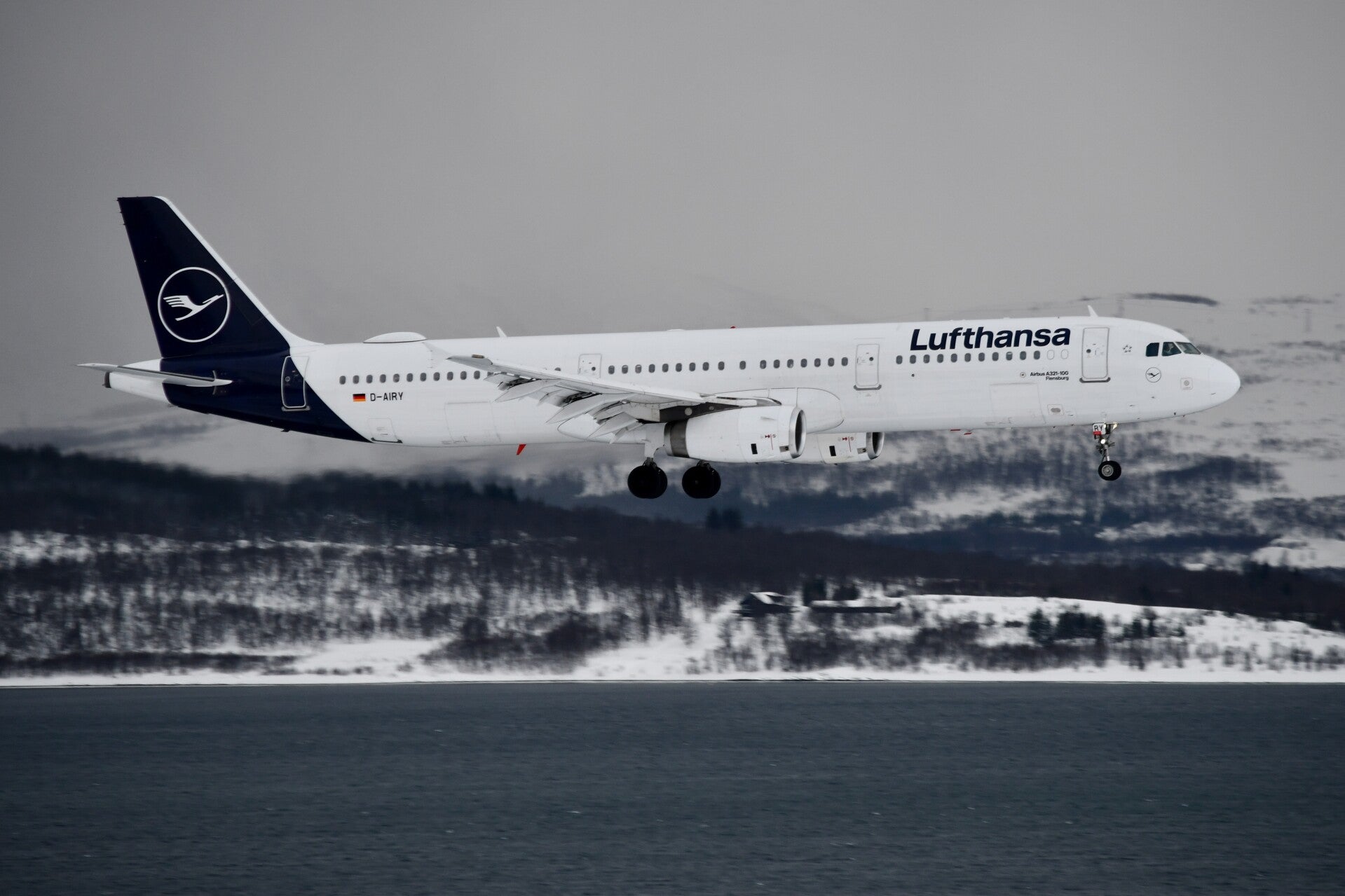

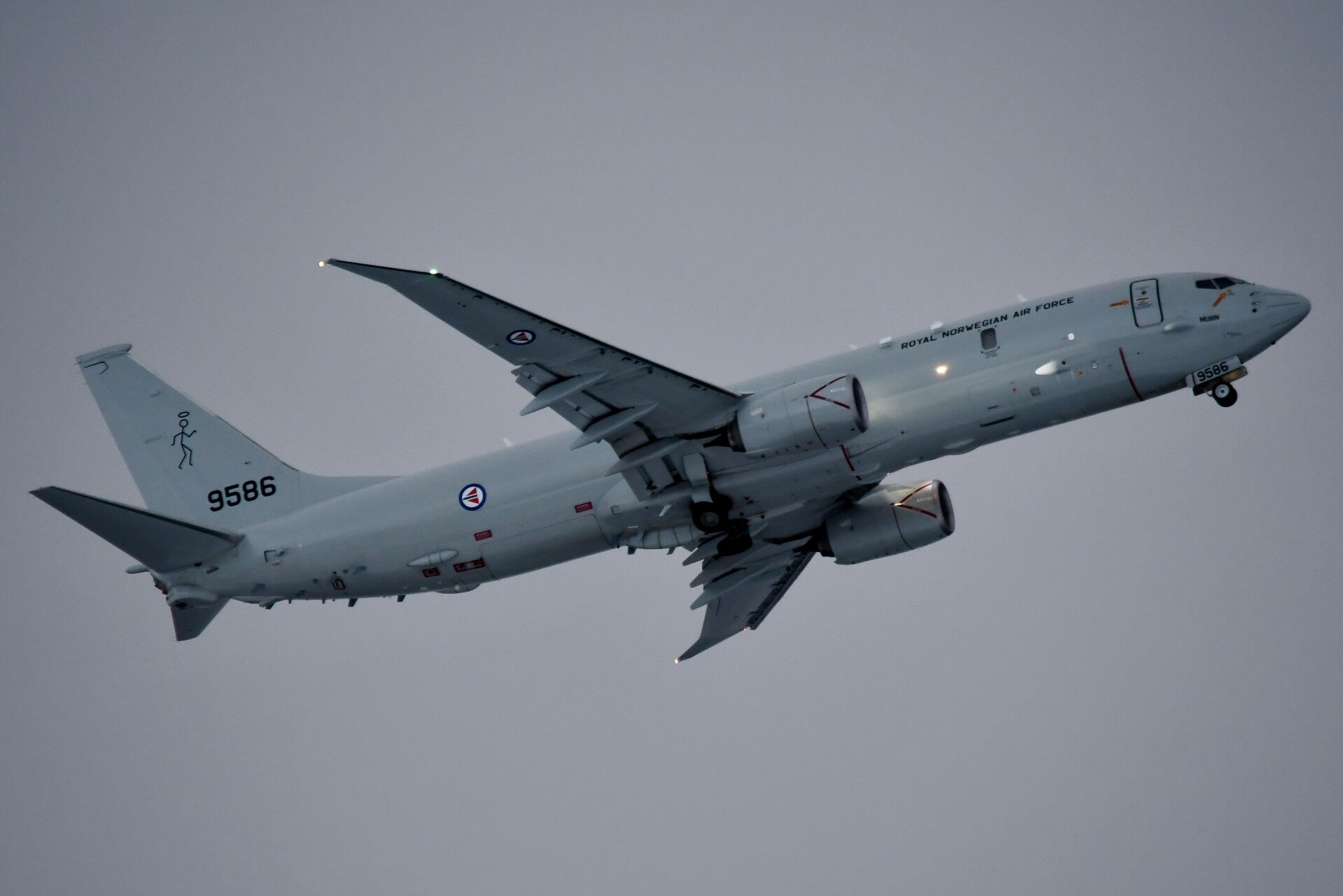
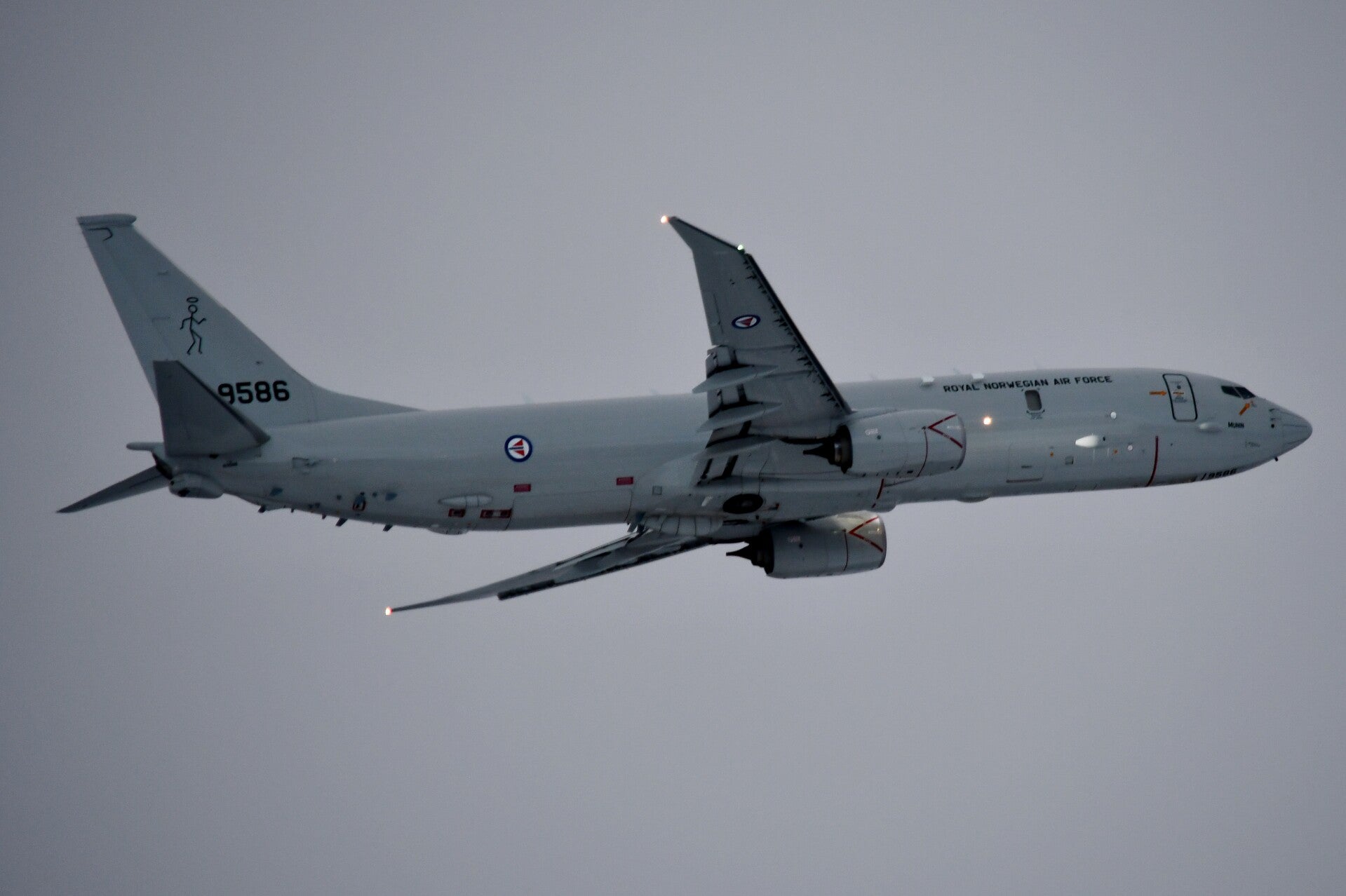
As evening falls over Tromsø and we finally check into our room, we head out for some dinner. We take a short walk to the adjacent Burger King—although a sleigh ride or a pair of skis would have been wayyyyy more convenient given the thick layer of snow. Even though it doesn’t advertise itself as such, this is the world’s northernmost Burger King! Naturally, we grab some absolutely delicious crispy chicken burgers before snowplowing our way back to the Moxy.
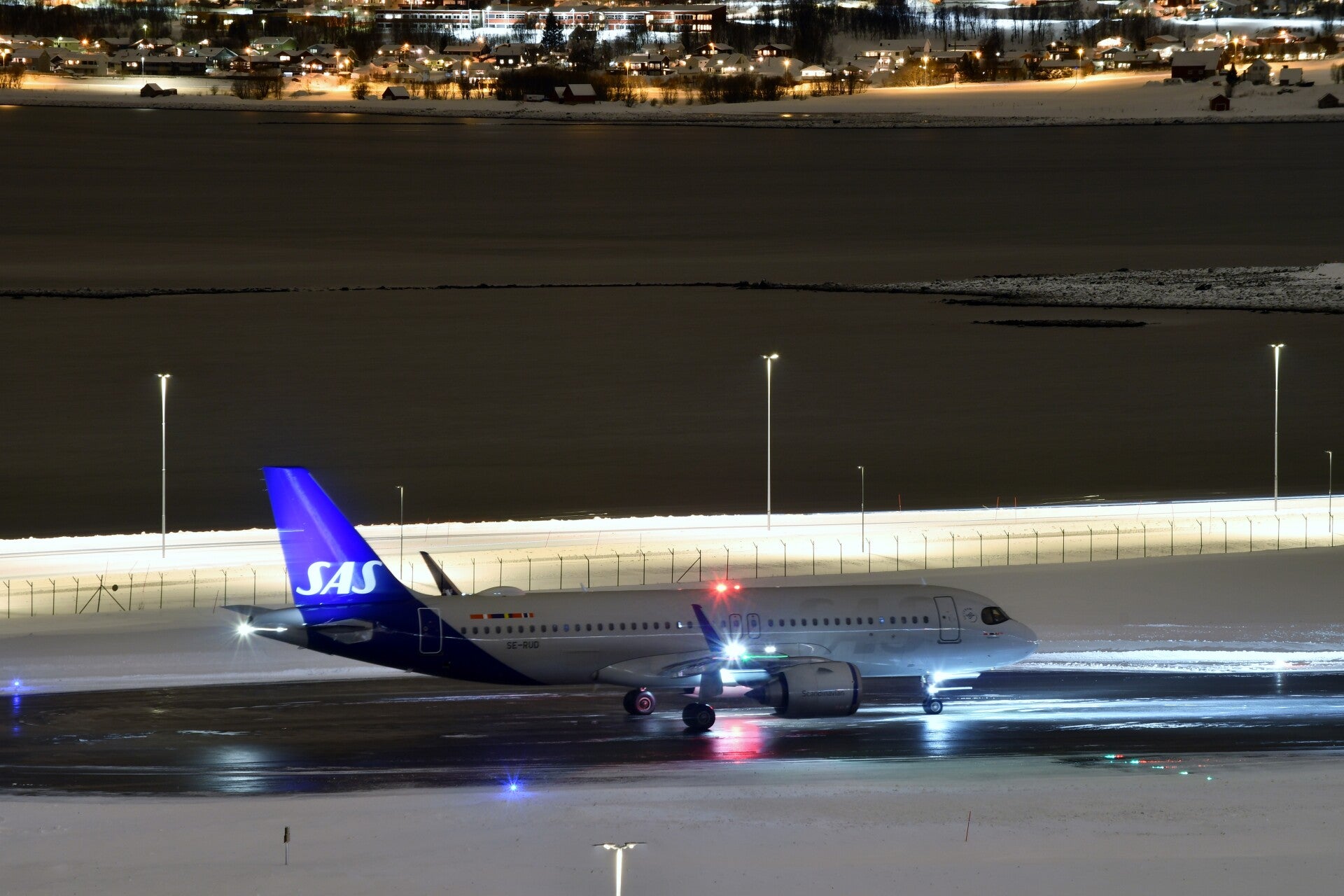
We spend the rest of the evening at the Sky Bar, hoping to catch a glimpse of the aurora through the thick cloud cover. You guessed it: zero chance. Still, the night shots turn out to be very interesting, as all the hustle and bustle at the airport happily continues after dark. The place now feels like a Christmas village diorama with airplanes. Absolutely mesmerizing.
That said, it’s time to head to bed, as our alarms are set early for tomorrow’s adventure!



Thursday 20 March - Dashing Through the Snow
Good morning! We’re well rested and excited to see what today has in store. As mentioned in the introduction of this trip report, our plan is to tick off the entire Dash-8 family, except for the Q400, on this journey. Today’s schedule should see us flying the DHC-8-200 to Stokmarknes (SKN), followed by a connection to Bodø (BOO) on a -100.
So far, however, Flightradar tells us that our plan has already fallen apart. Our first flight today will now be operated by a -100 instead of the -200. Widerøe has just three -200s left in the fleet, so the odds were slim, but still… bugger.
The De Havilland DHC-8-200 is essentially an upgraded version of the -100, featuring more powerful Pratt & Whitney PW123 engines instead of the PW120/121. These provide better hot-and-high and short-runway performance, along with a slightly higher cruise capability. Structurally and dimensionally, the two variants are almost identical, with the -200 retaining the same fuselage, wing, passenger capacity, and general layout as the -100. This makes both types fully interchangeable in Widerøe’s operations, so the swap comes as no real surprise, even if it stings a little. Oh well, we’re still going to have a great time!
During breakfast at the Sky Bar, we soak in the views one last time, as we won’t be returning to this hotel on this trip. The weather remains much the same as yesterday: sunshine mixed with snow, with showers coming and going. For now, it’s time to check out and head to the airport!
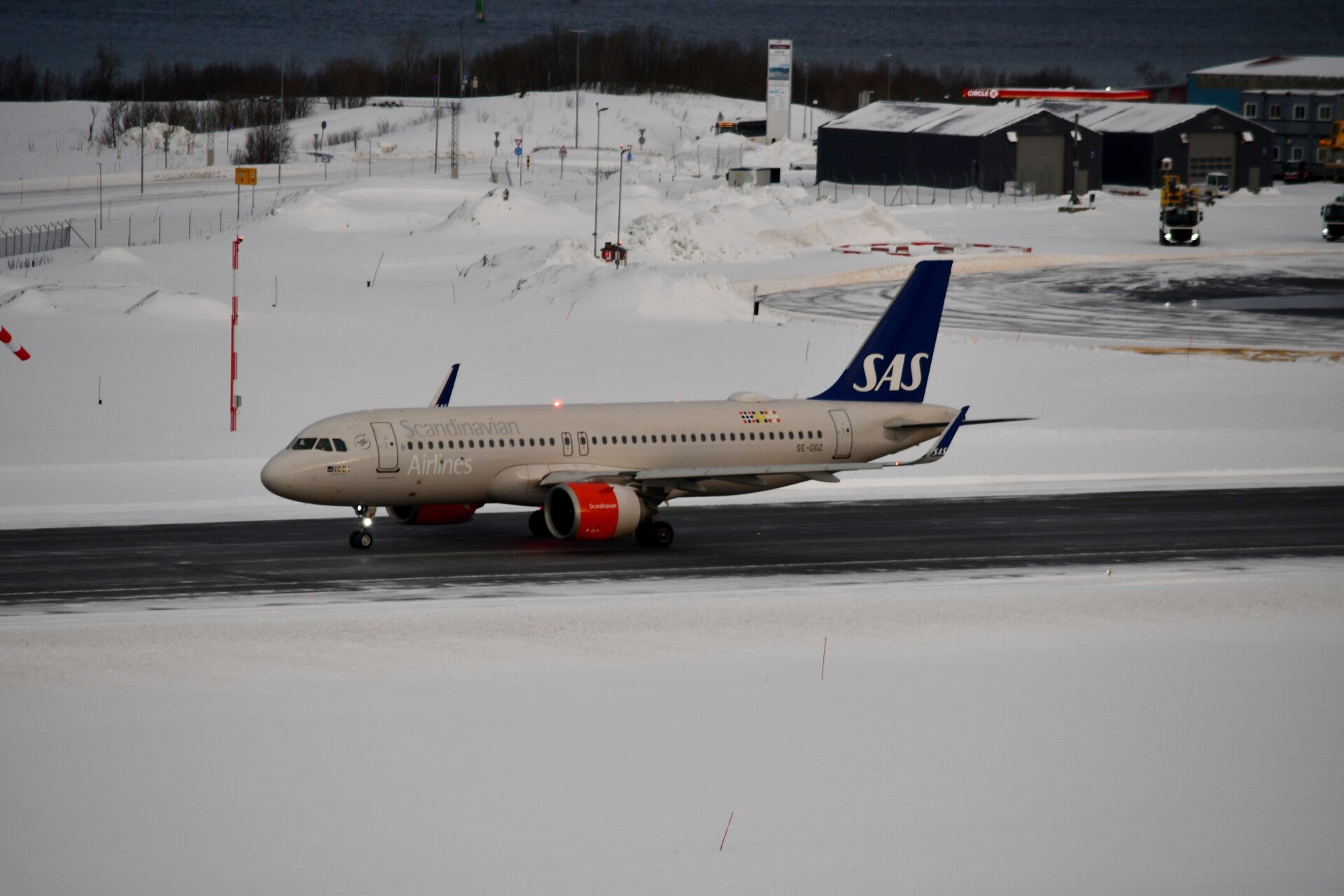
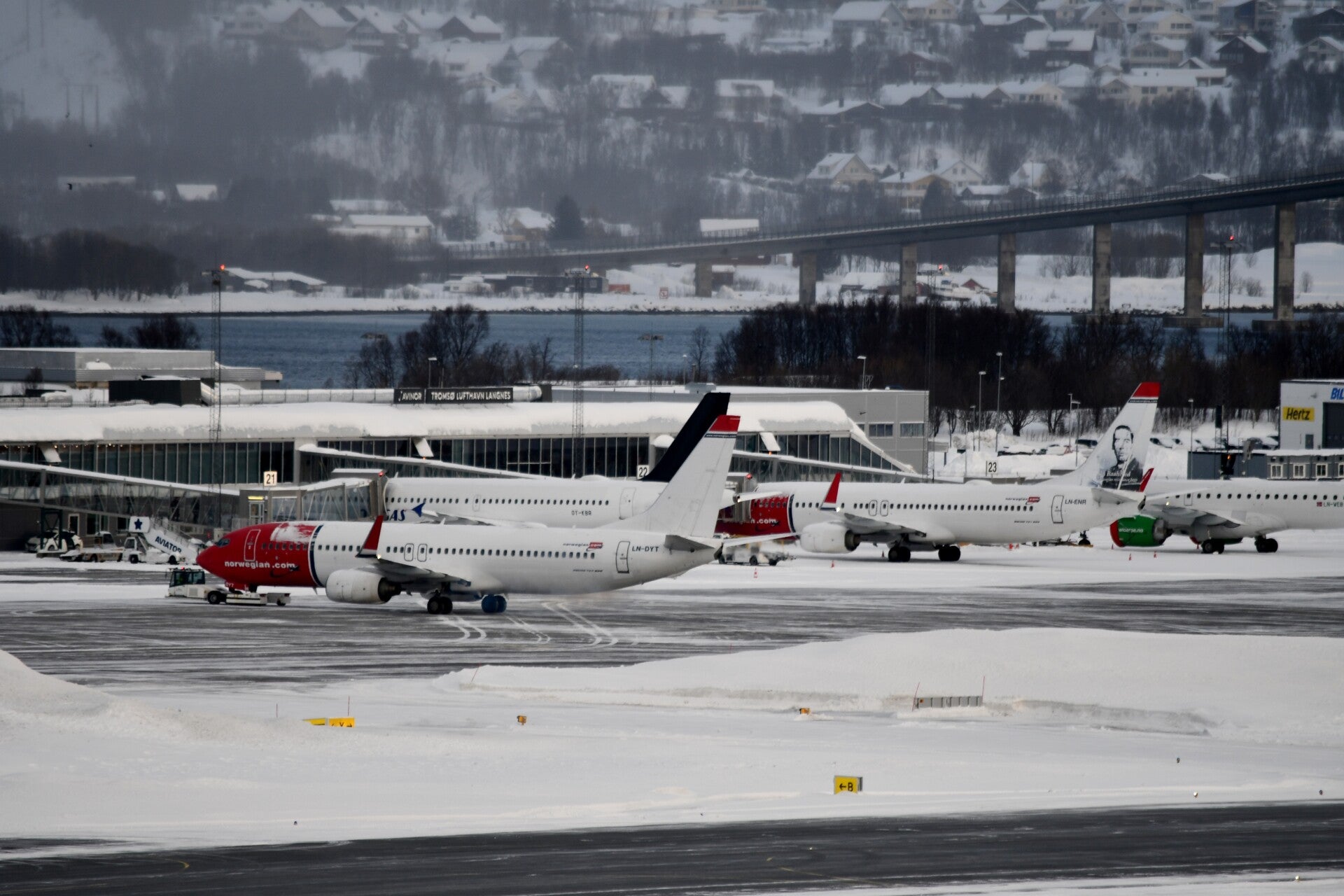
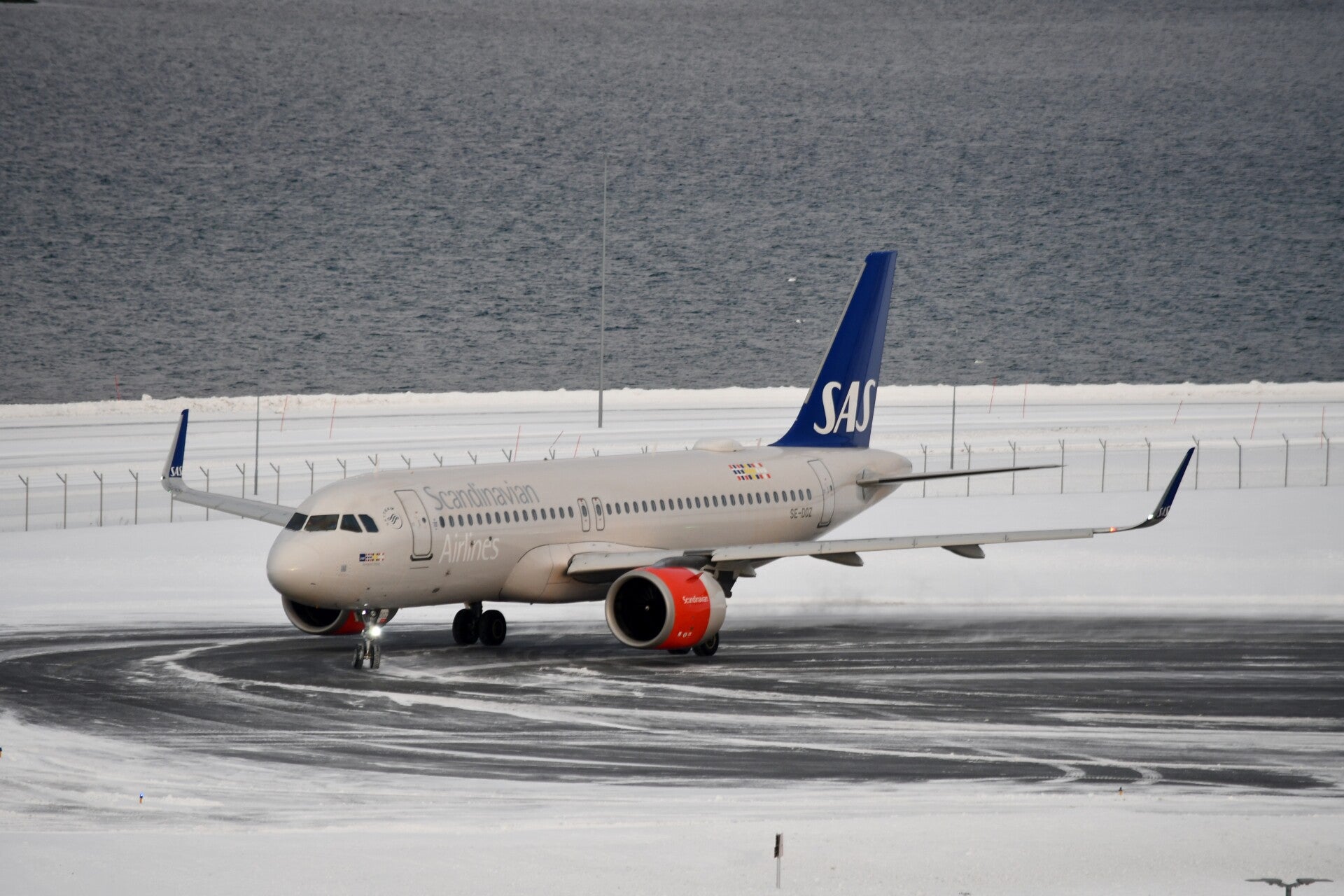
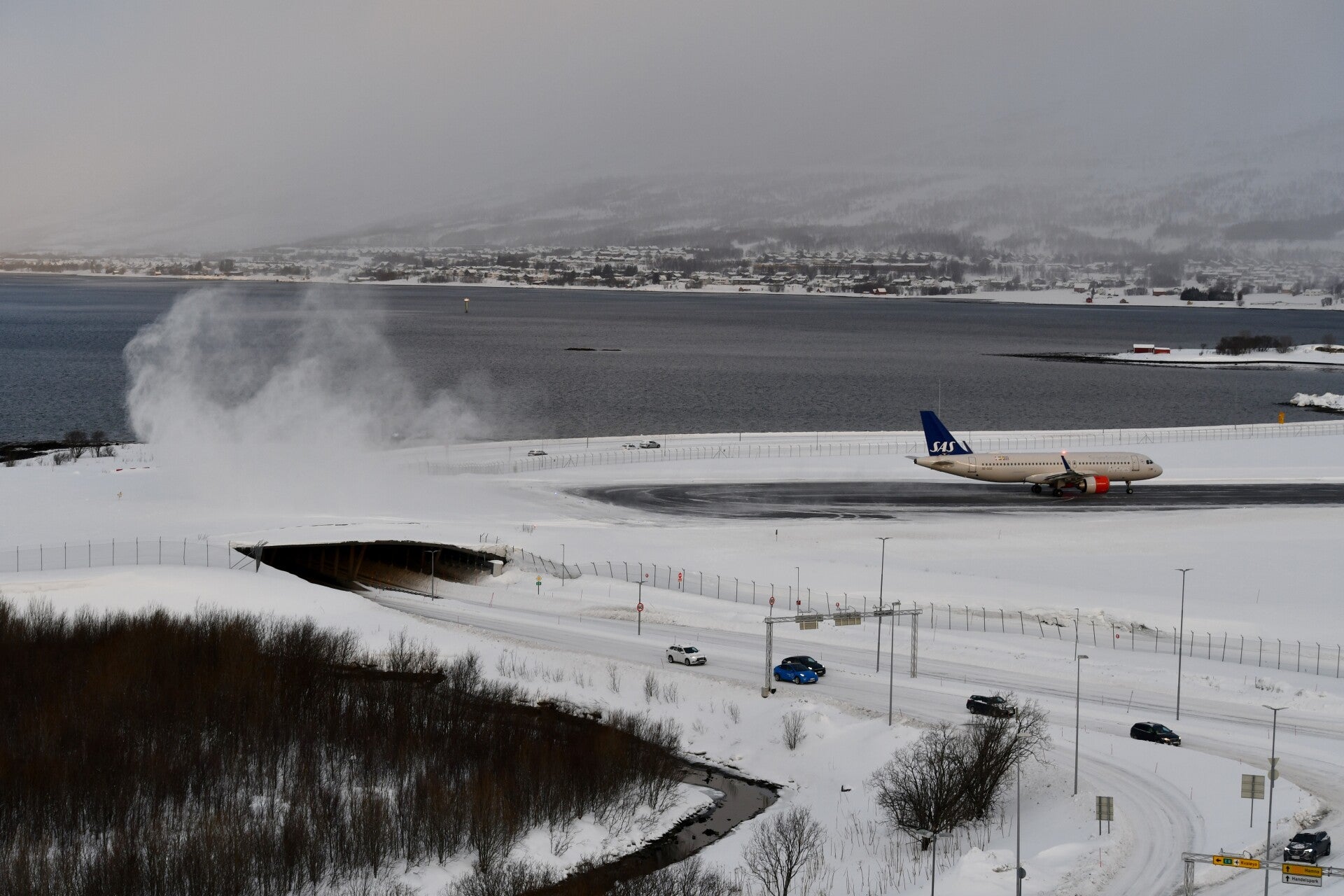
Once airside, we grab some snacks for the first part of the day and take some time to explore the terminal. Tromsø Airport has clean, well-positioned windows for plane spotting, so we’re having a great time while waiting for our flight. Eventually, though, we’re sent to some kind of dungeon that Widerøe calls a “gate.”
Here, we really get to see just how thick the snow layer is, with some areas buried under more than two meters of snow. It gives us a newfound appreciation for all the snowplows and sweepers working tirelessly up here in the north. Eventually, a warden—sorry, a gate agent—arrives, and we prepare ourselves for boarding.
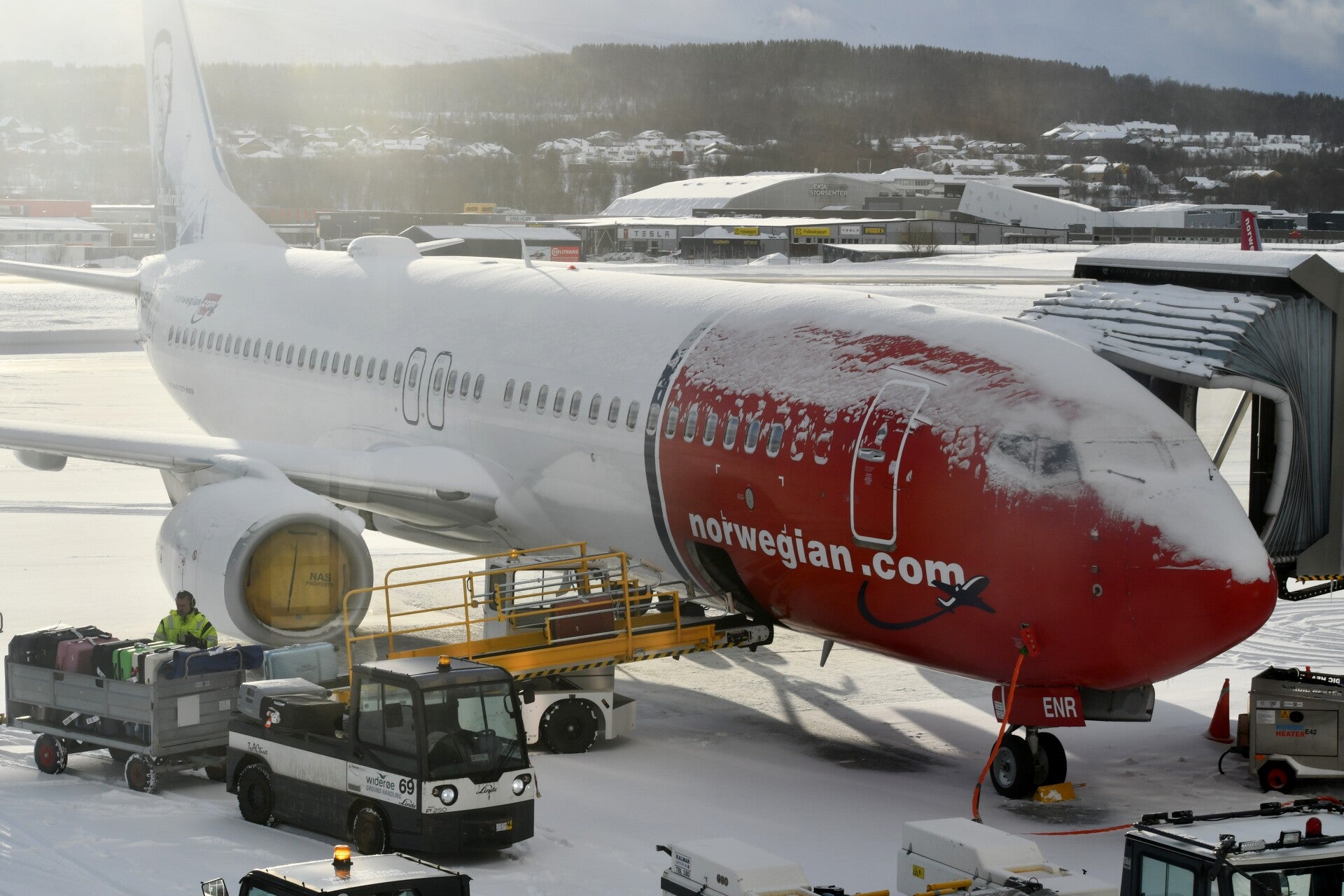
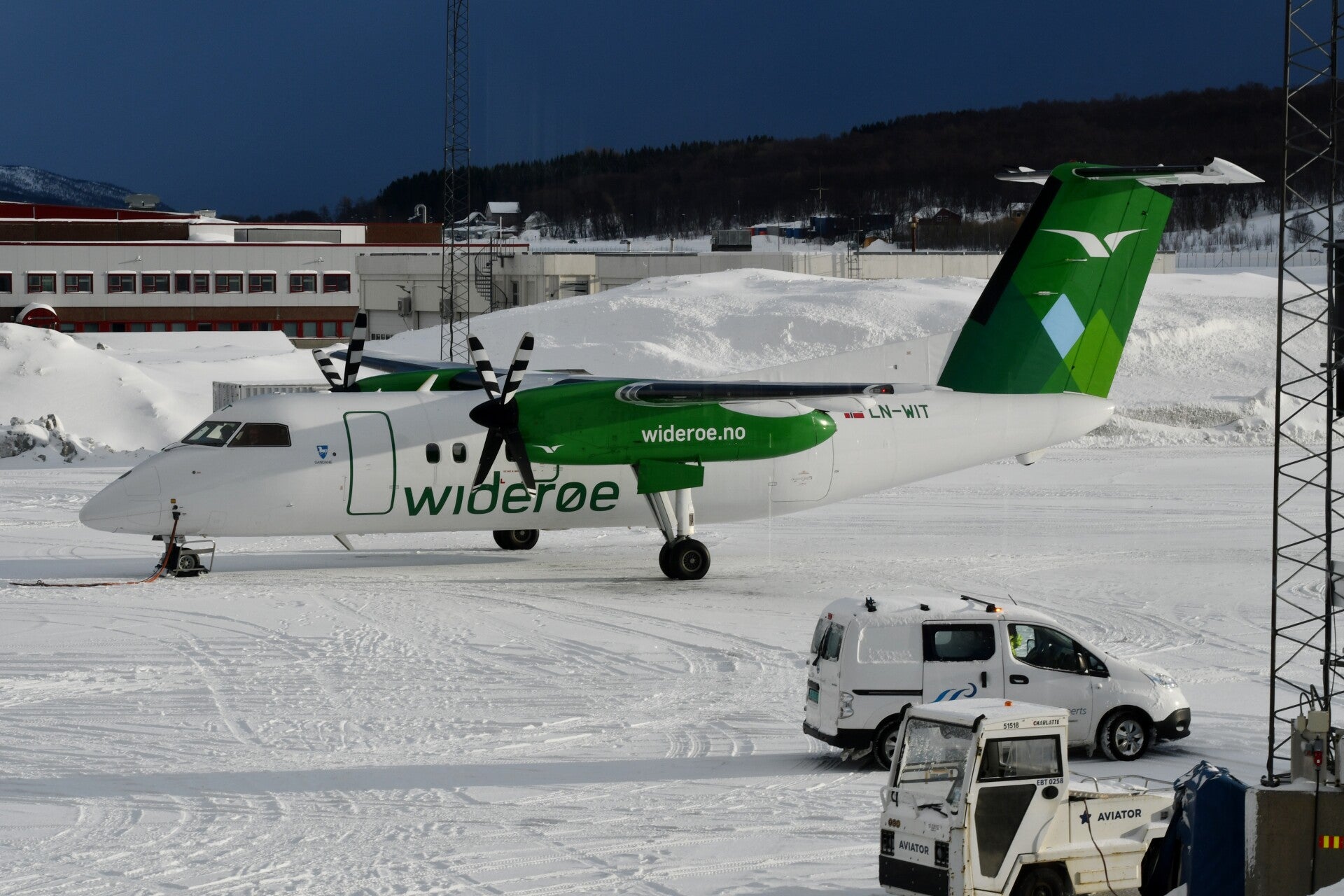
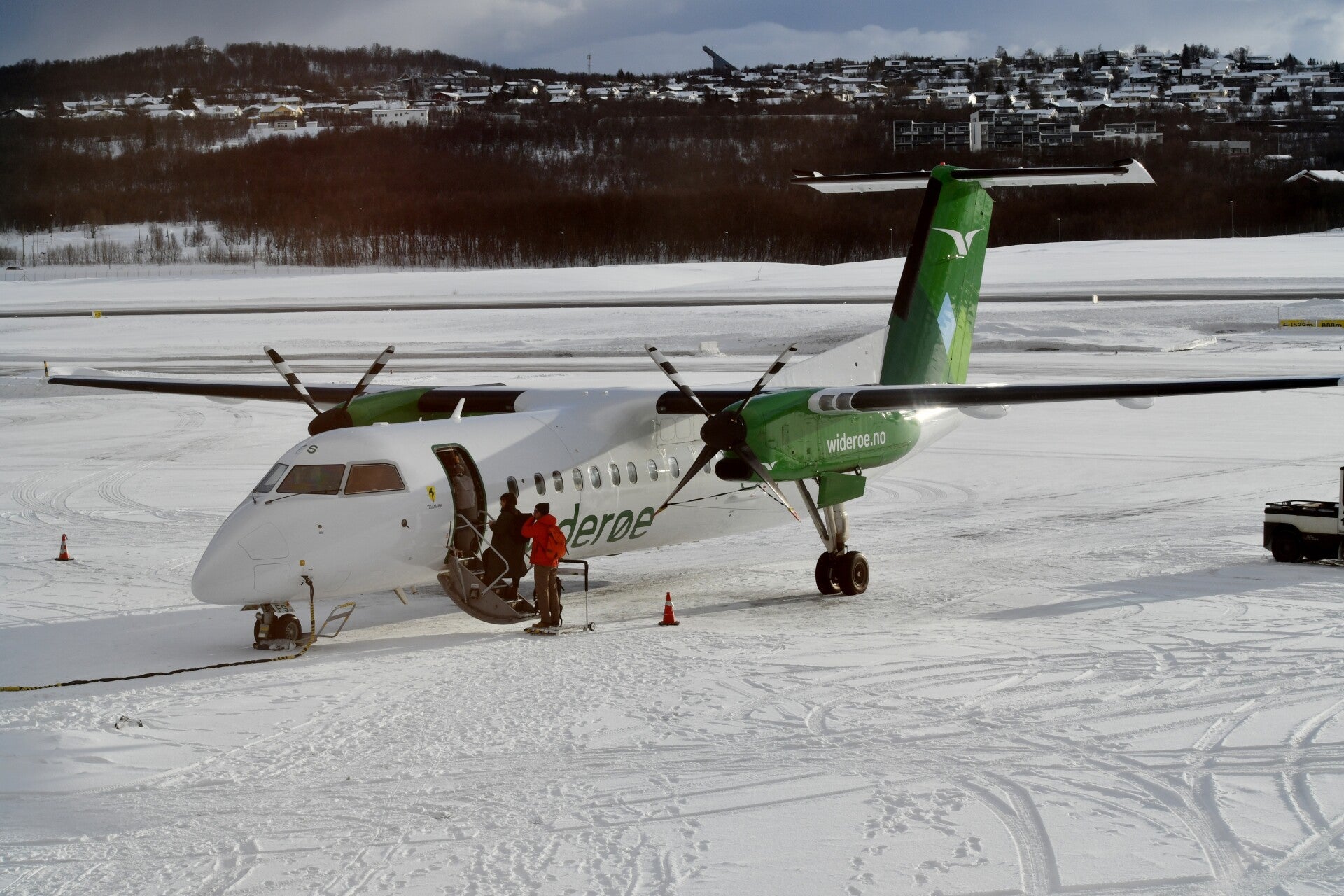
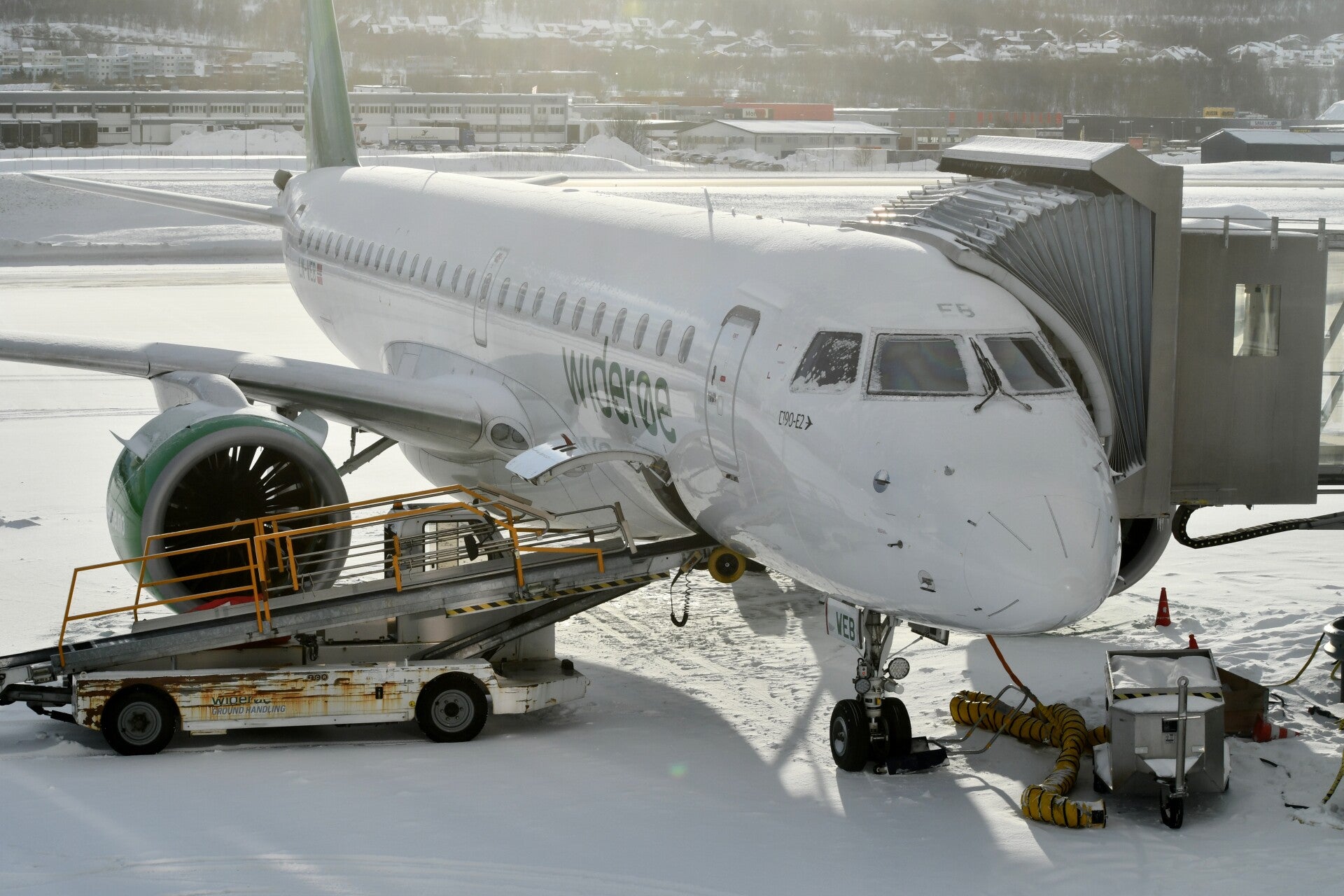
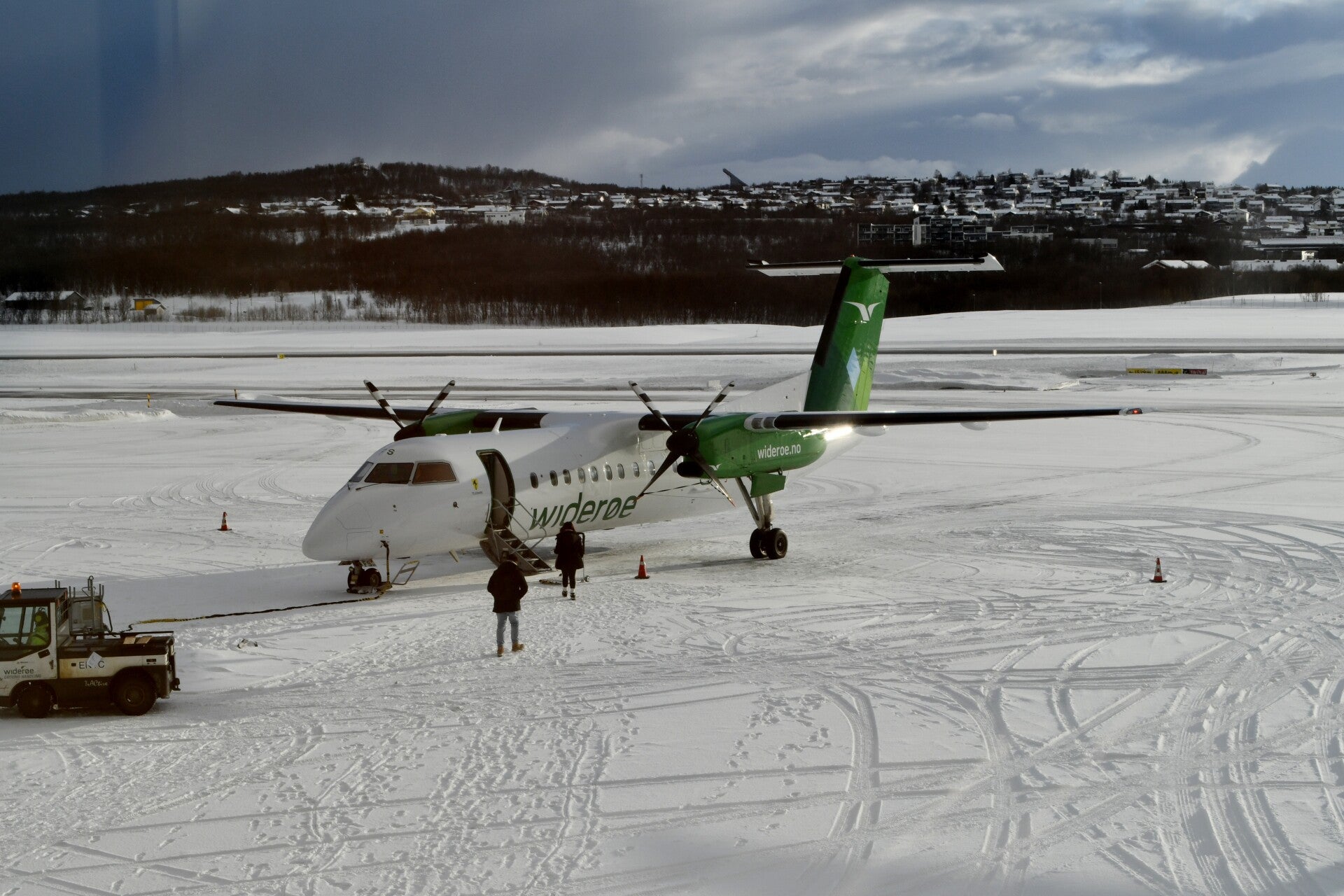
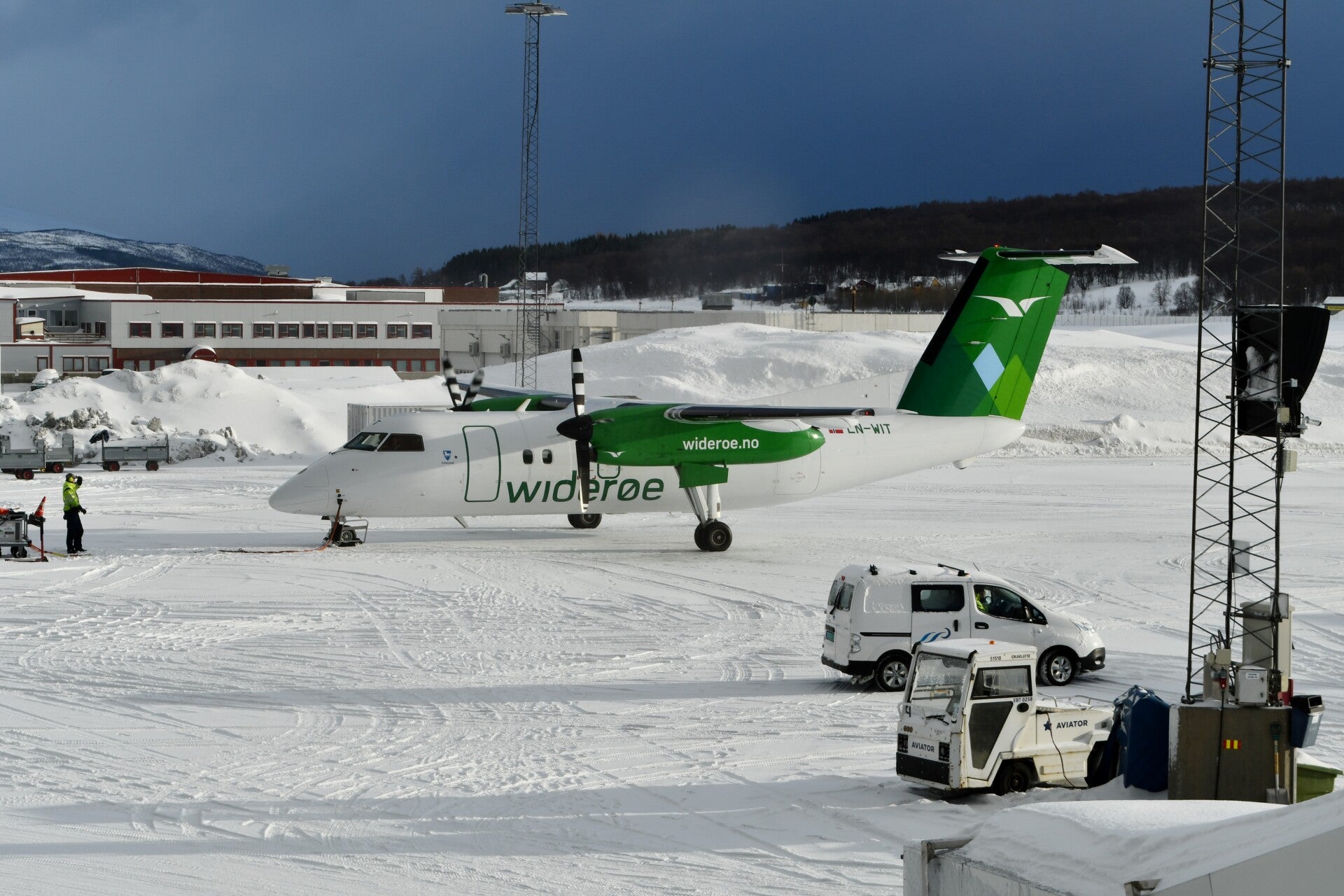
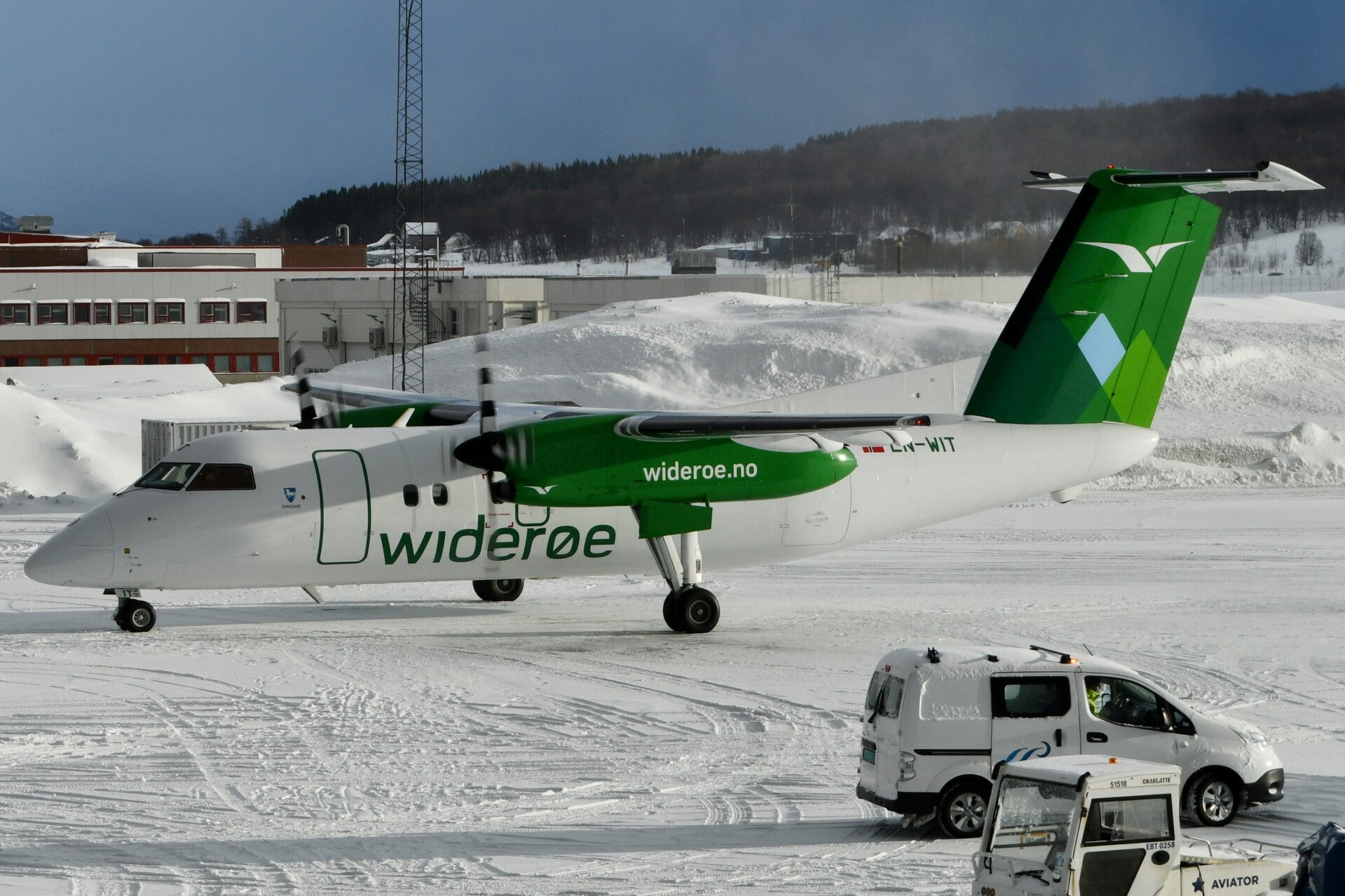
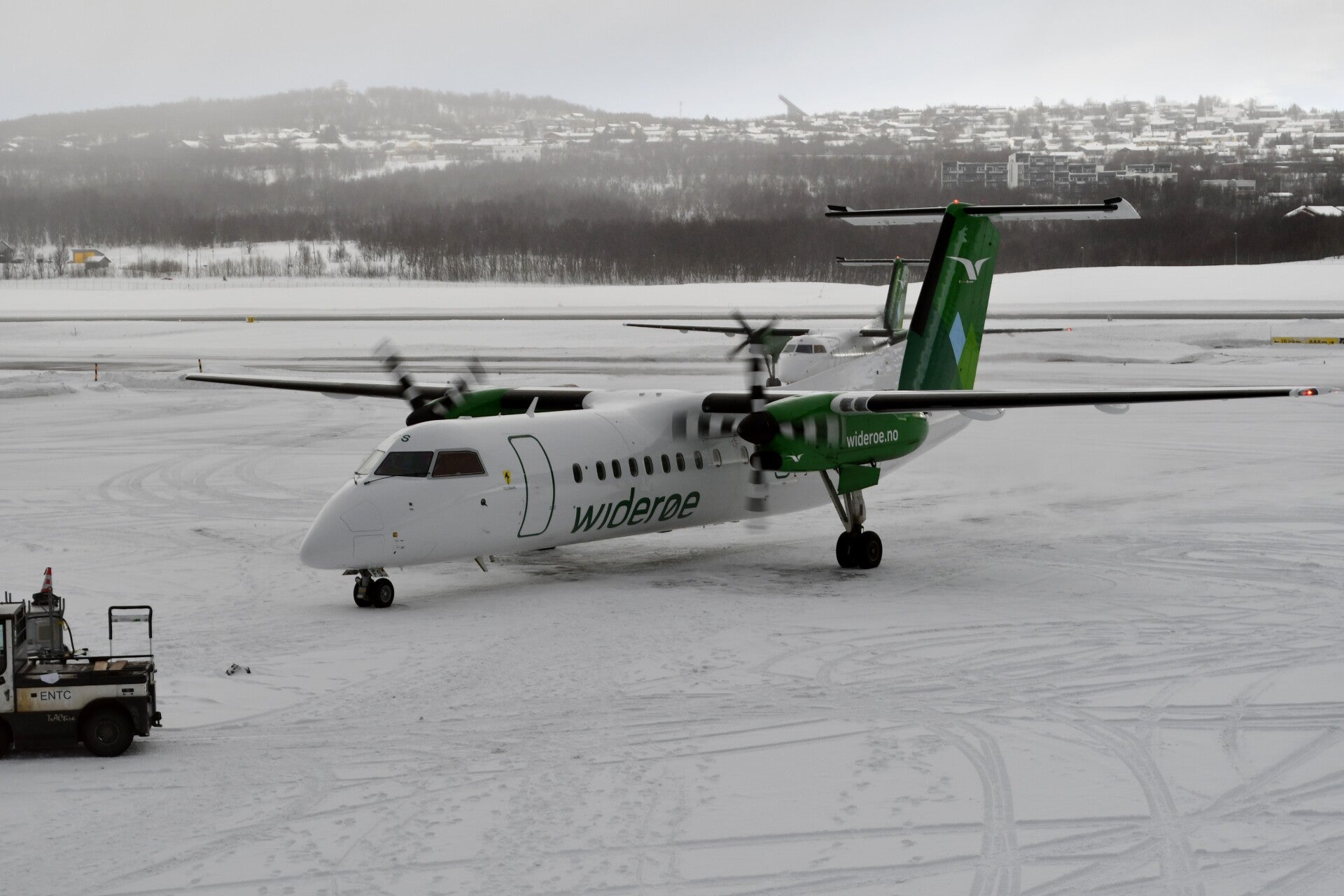
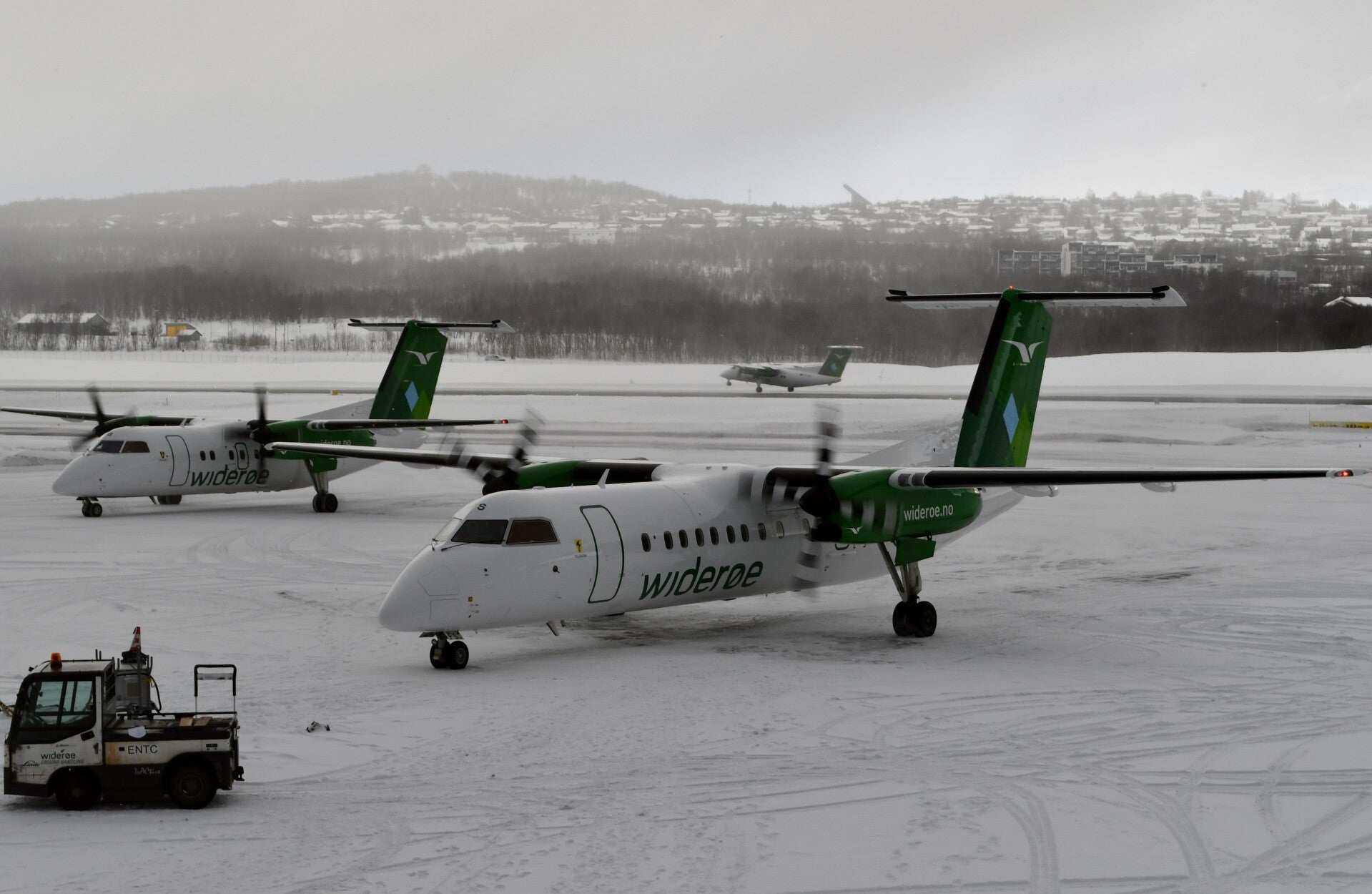
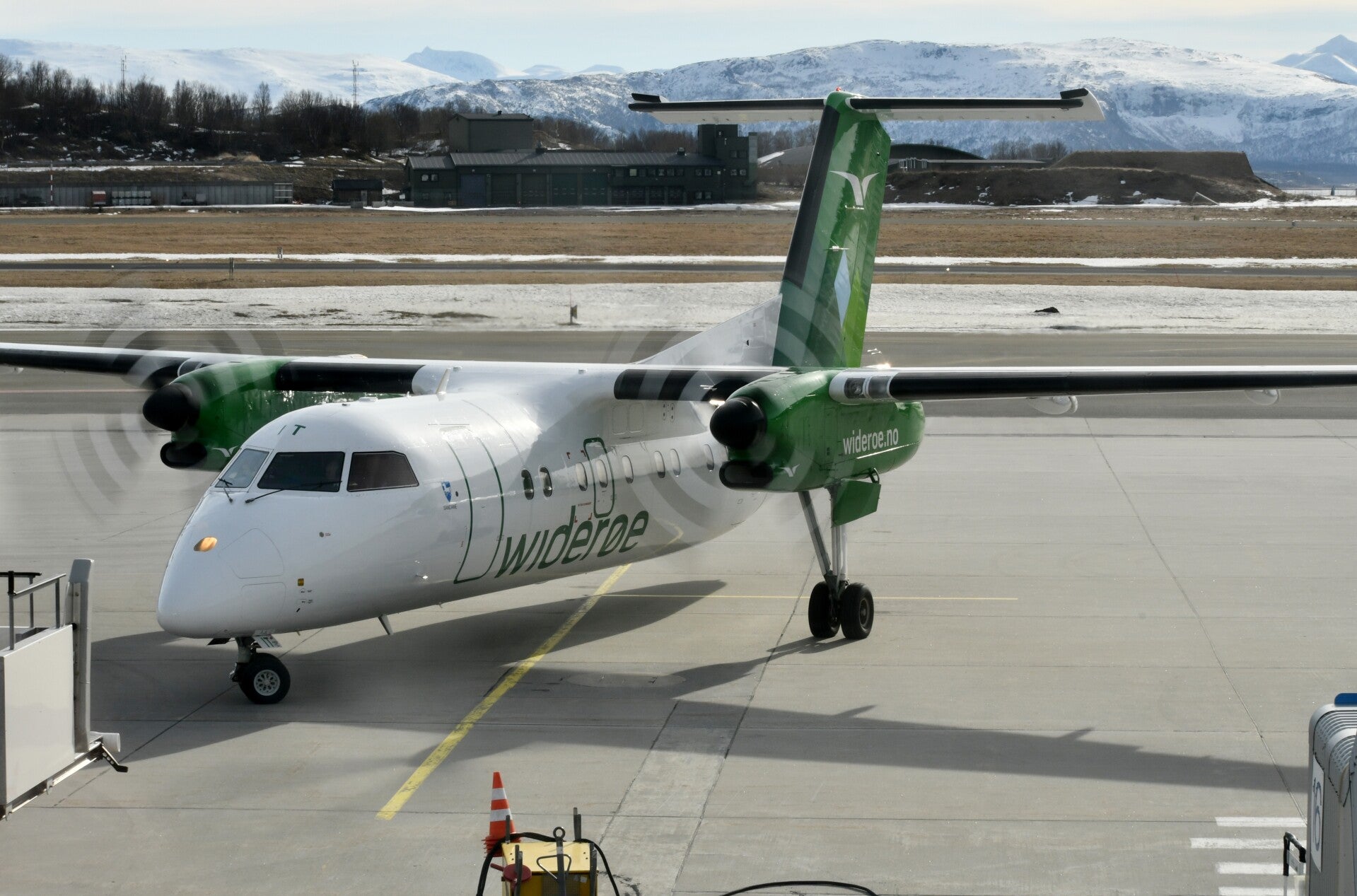
Eventually, the cave doors open and we’re good to go. It is unbelievable: the entire morning at the terminal, the sun has been out, but as if the devil himself is toying with us, big snowflakes now fill the grey skies as we carefully skedaddle toward the plane. It all adds to the vibe, I suppose. Covered in snow, we board our ride for the morning: the 32-year-old DHC-8-100, LN-WIB.
Since Widerøe offers free seating on its Dashes, seats are first come, first served so we’re happy to be the very first to board. The -100 has a neat feature in the first two rows, with the first row facing backward toward the second. Naturally, this becomes our home sweet home for the next thirty minutes.
Once all passengers are on board, the airstairs are retracted and the door is closed without any effort to remove the snow still clinging to the stairs. This immediately highlights some of the quirks of this charming little airline. The aging Dash shows her years as well, with cool retro details like branded seatbelts and a sturdy, old-school cabin control panel. The captain must think quite highly of himself, as a proud portrait of Johnny Bravo decorates the cockpit door.
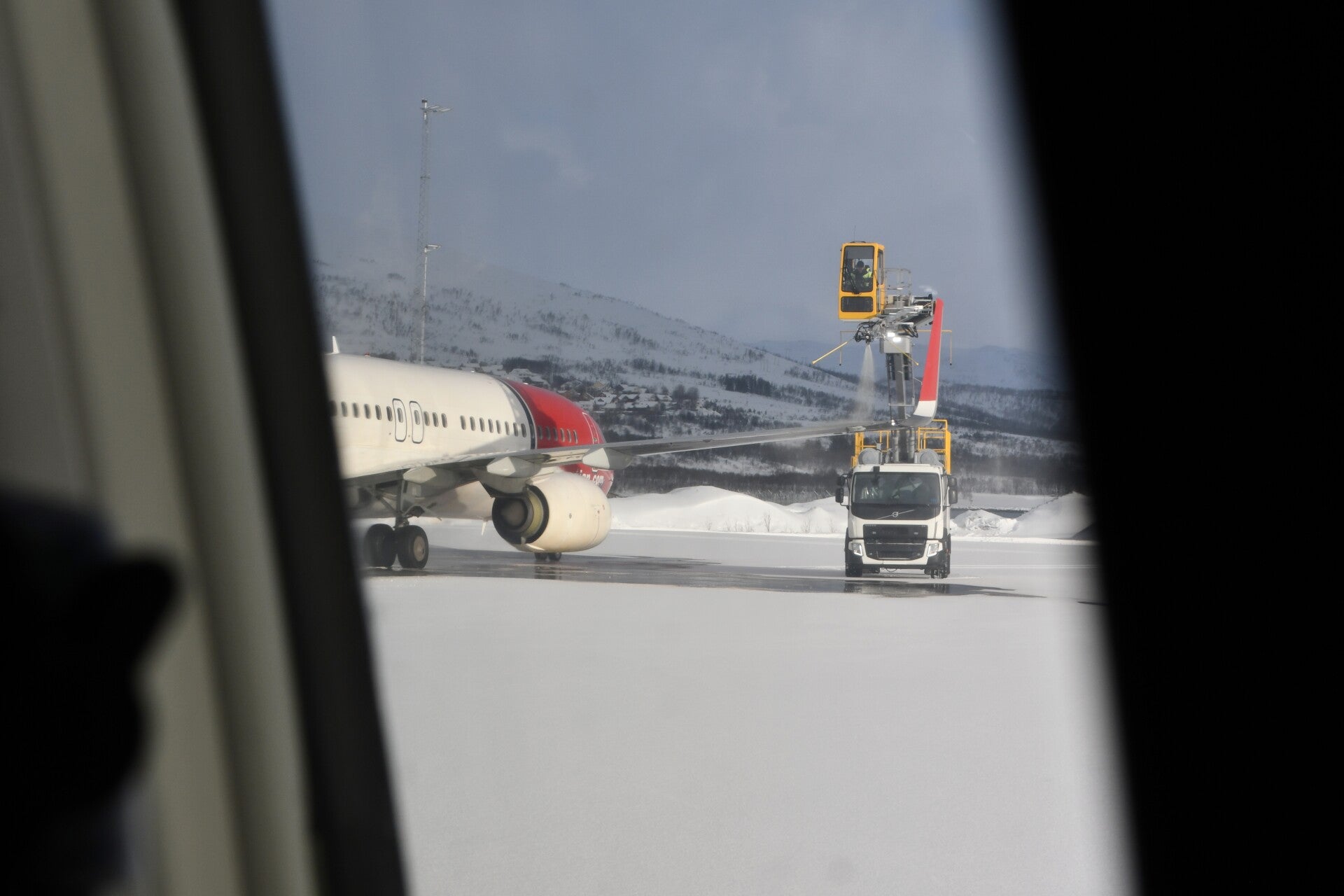
The engines are started, and of course, the snow has stopped and the sun is out again. Our first stop is the deicing pad, and the pilots are clearly eager to get going as they almost park underneath the Norwegian 737 ahead of us. Widerøe pilots are known as the cowboys of the European North, and we’re starting to see why. Crazy, but cool.
Soon it’s our turn to be sprayed, and we receive a nice hot shower of Type I deicing fluid, wiping out almost all visibility outside. The fuselage, wings, and tail are thoroughly cleared of contamination, and we’re good to go. We line up on Runway 19 for our southbound departure.
The engines begin to rumble, and once the brakes are released, we thunder down the runway. In no time, we rotate and climb away toward Stokmarknes.
Service on this short hop is nonexistent, but our attention is drawn to the cabin attendant seated on the jump seat next to the door and airstairs. He’s a young steward who we assume is still studying, because as soon as the landing gear is retracted, he pulls out a massive physics book and actually uses the time to study. We wish him the best of luck in his career!
Eventually, we dive back beneath the clouds on our approach into SKN. We descend beautifully over the Hadselfjorden and touch down on Runway 26. Stokmarknes is a small airport located two bridges away from the village. Stokmarknes is a small coastal town in Nordland, located on the island of Hadseløya in the Vesterålen archipelago, just north of the Lofoten islands across the Raftsundet strait. Known as the birthplace of the Hurtigruten coastal express, the town features a museum by the harbor and serves as a local center for services, education, and healthcare.
The airport itself is tiny, but we have a few hours to kill here. We say goodbye to our crew and to LN-WIB as we exit the terminal to pick up our rental car. And yes, amazingly, this tiny airport even has a rental car facility! No desks nor any staff, just a small machine that drops your key once you've entered your details. Clever!
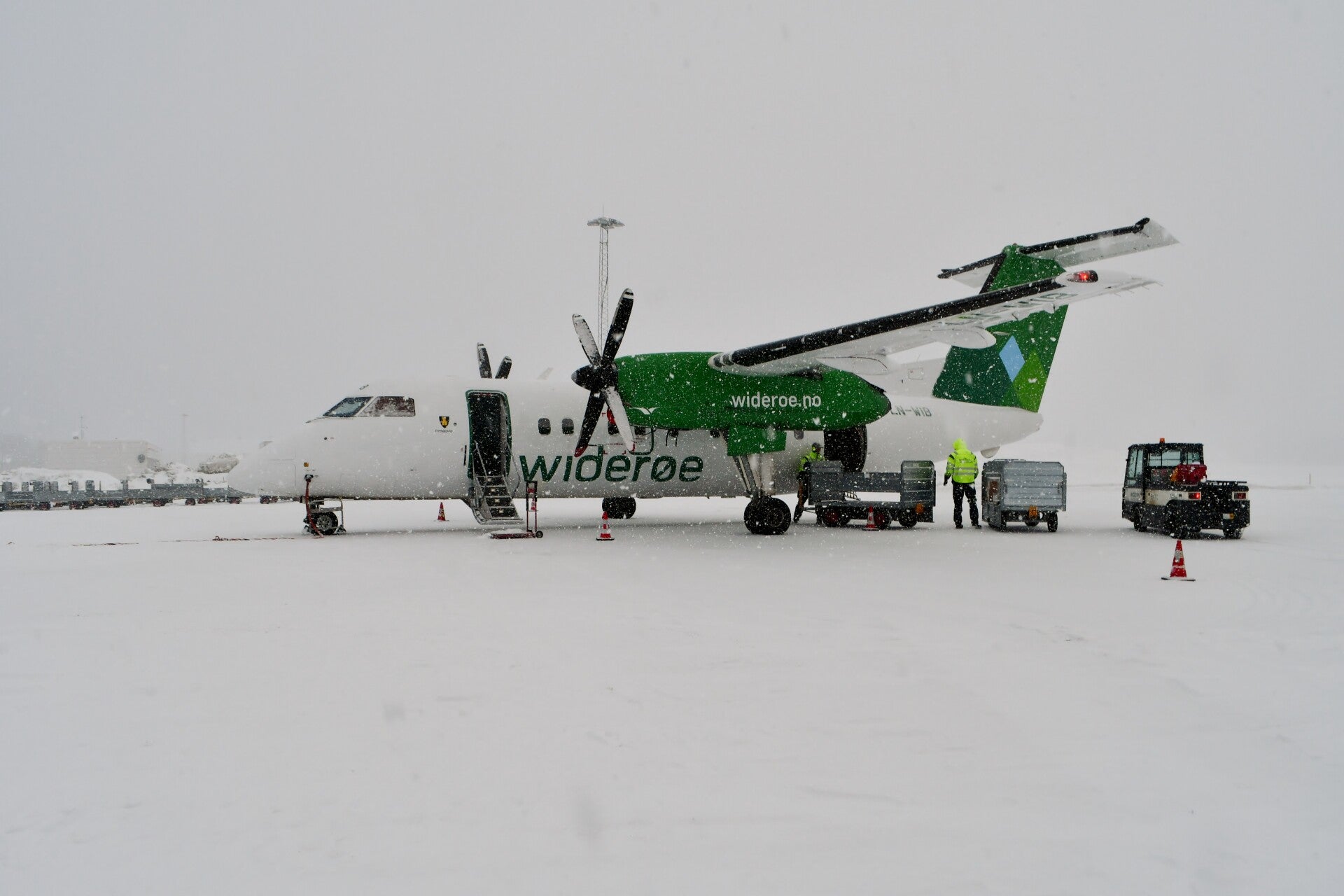
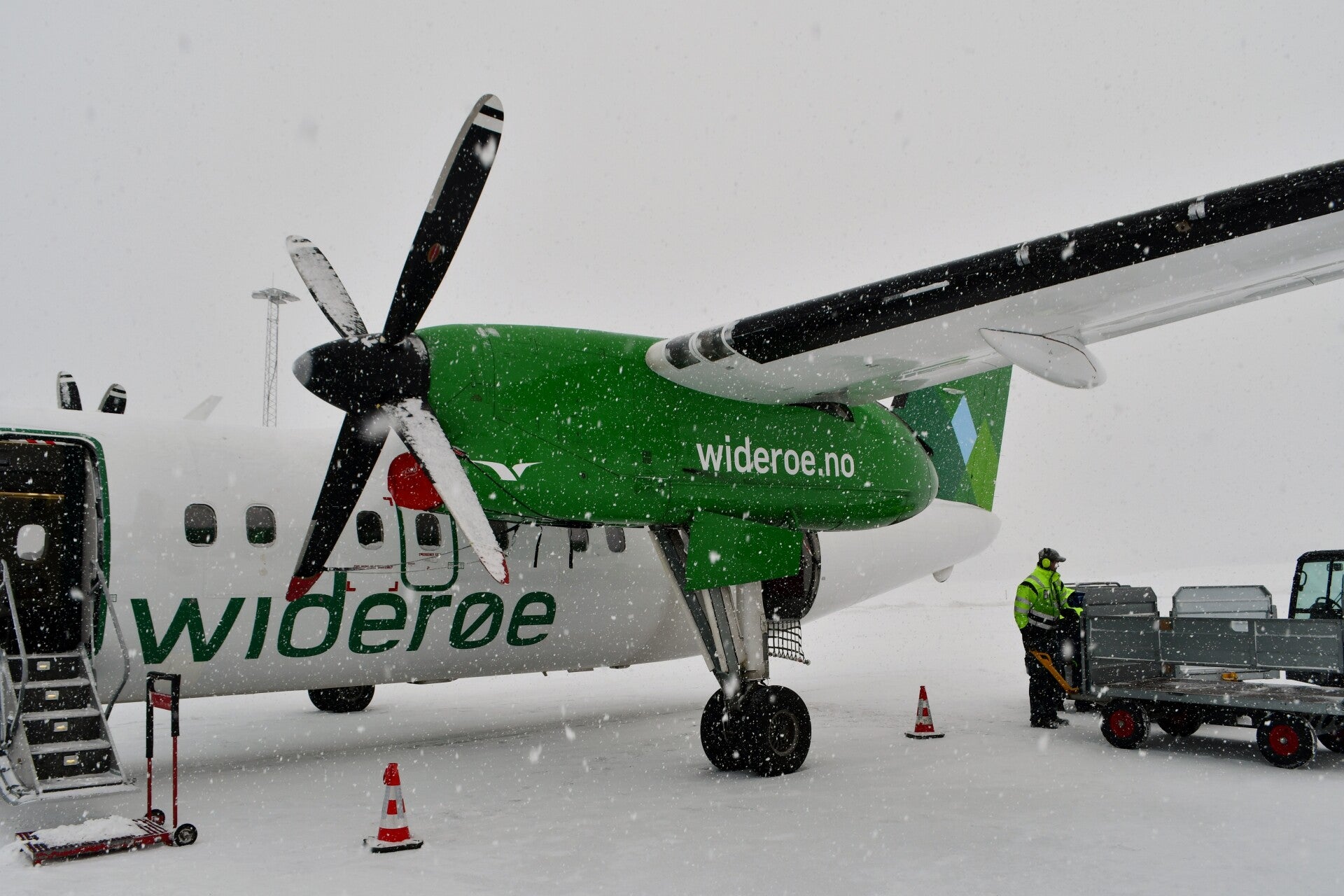


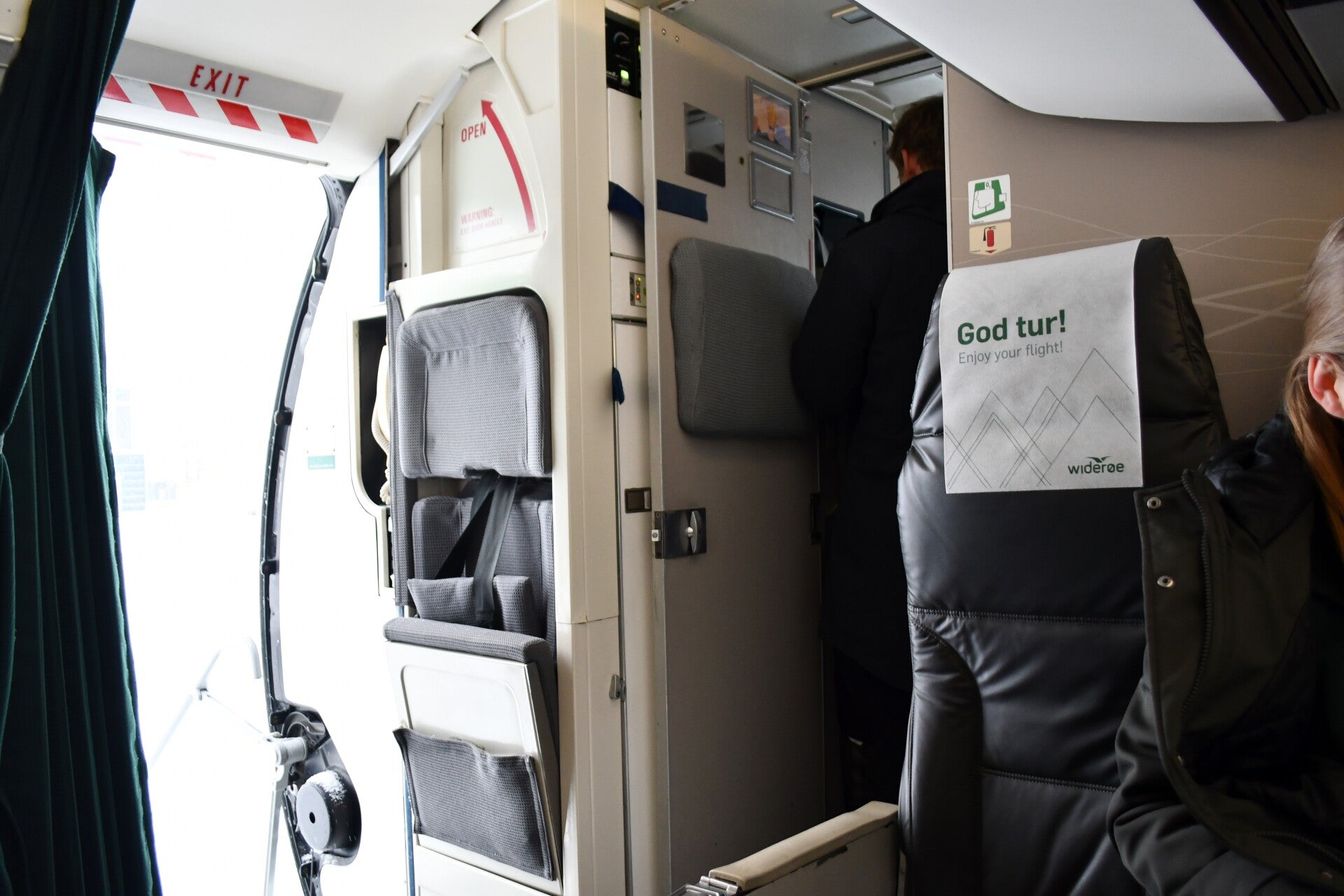
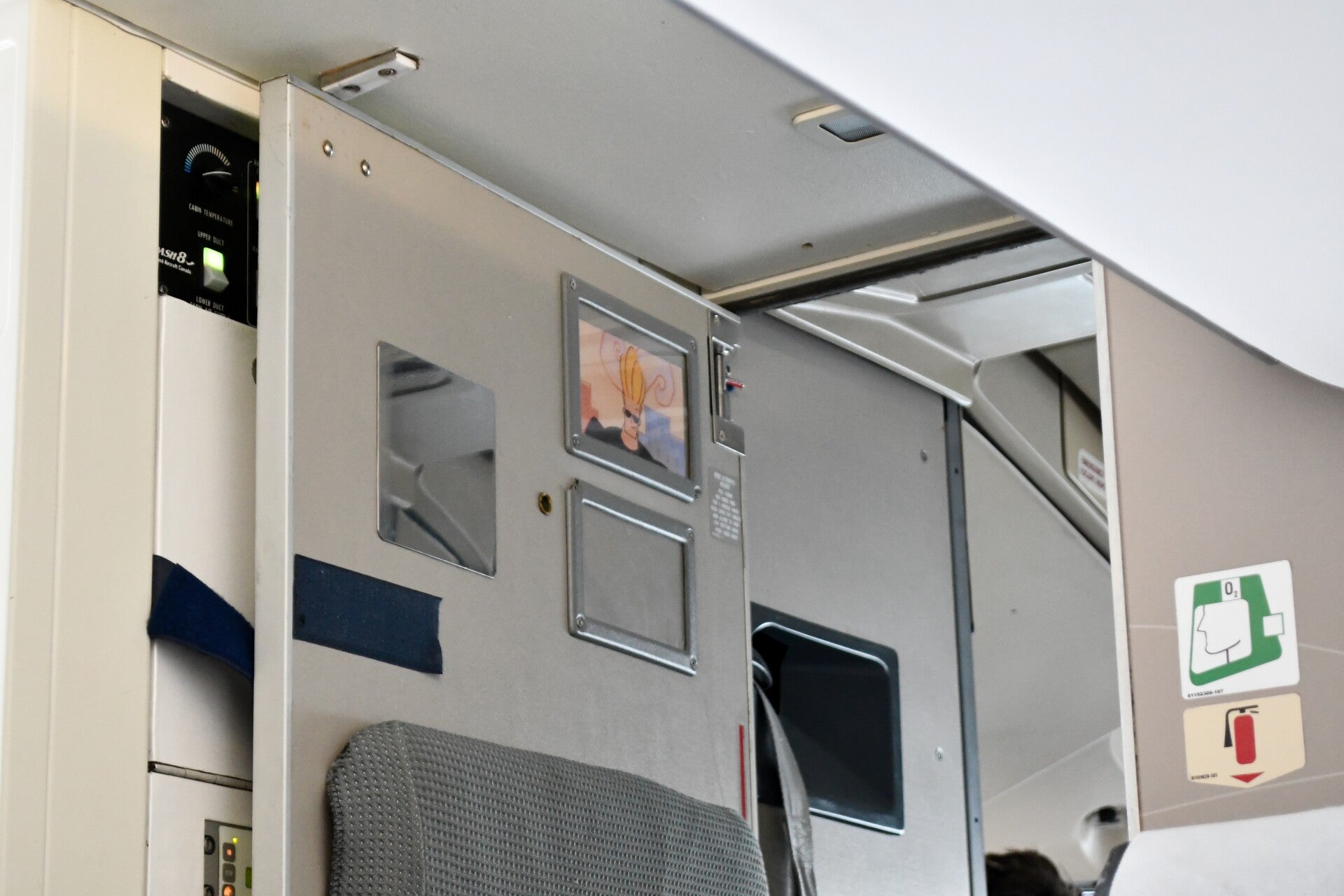
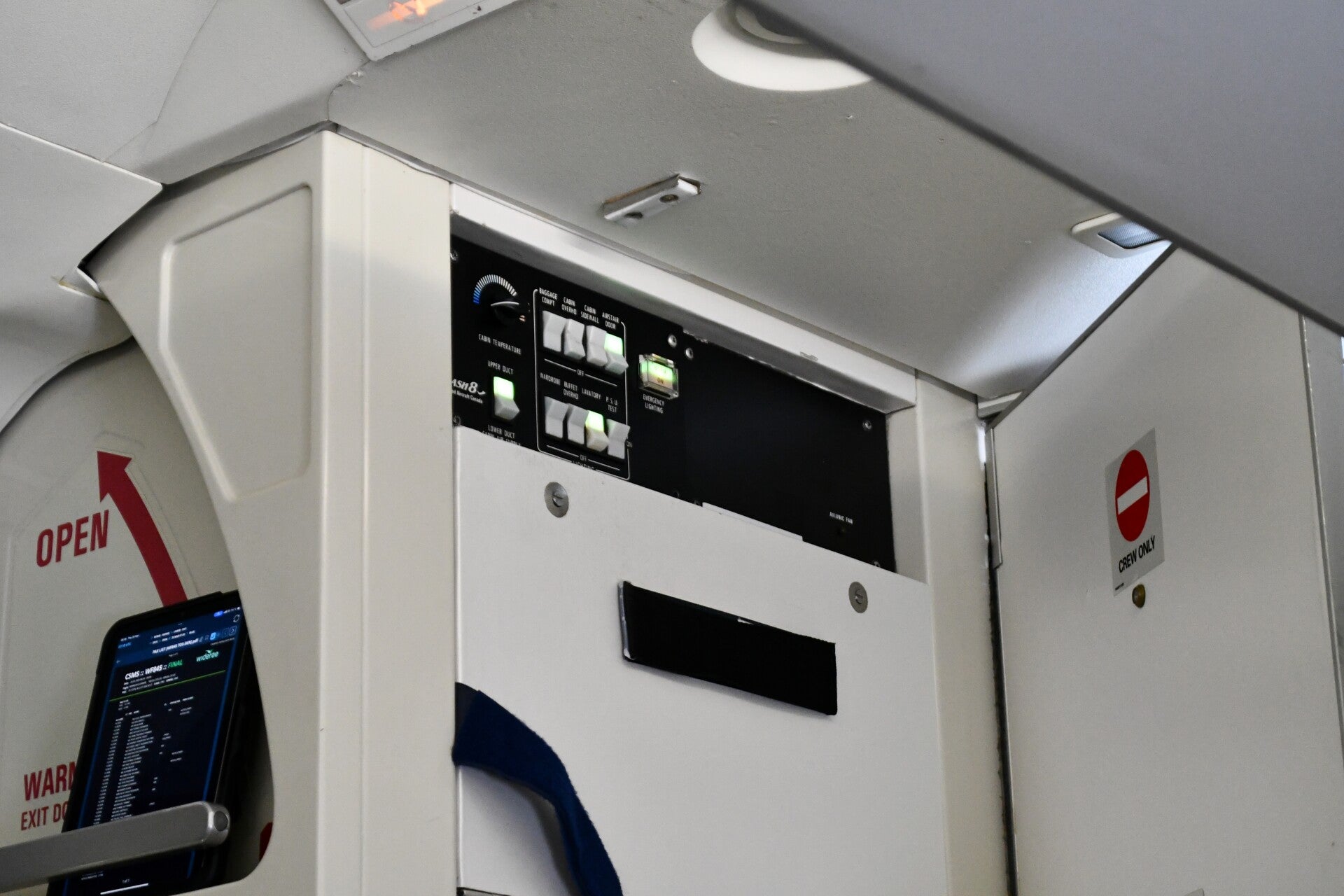
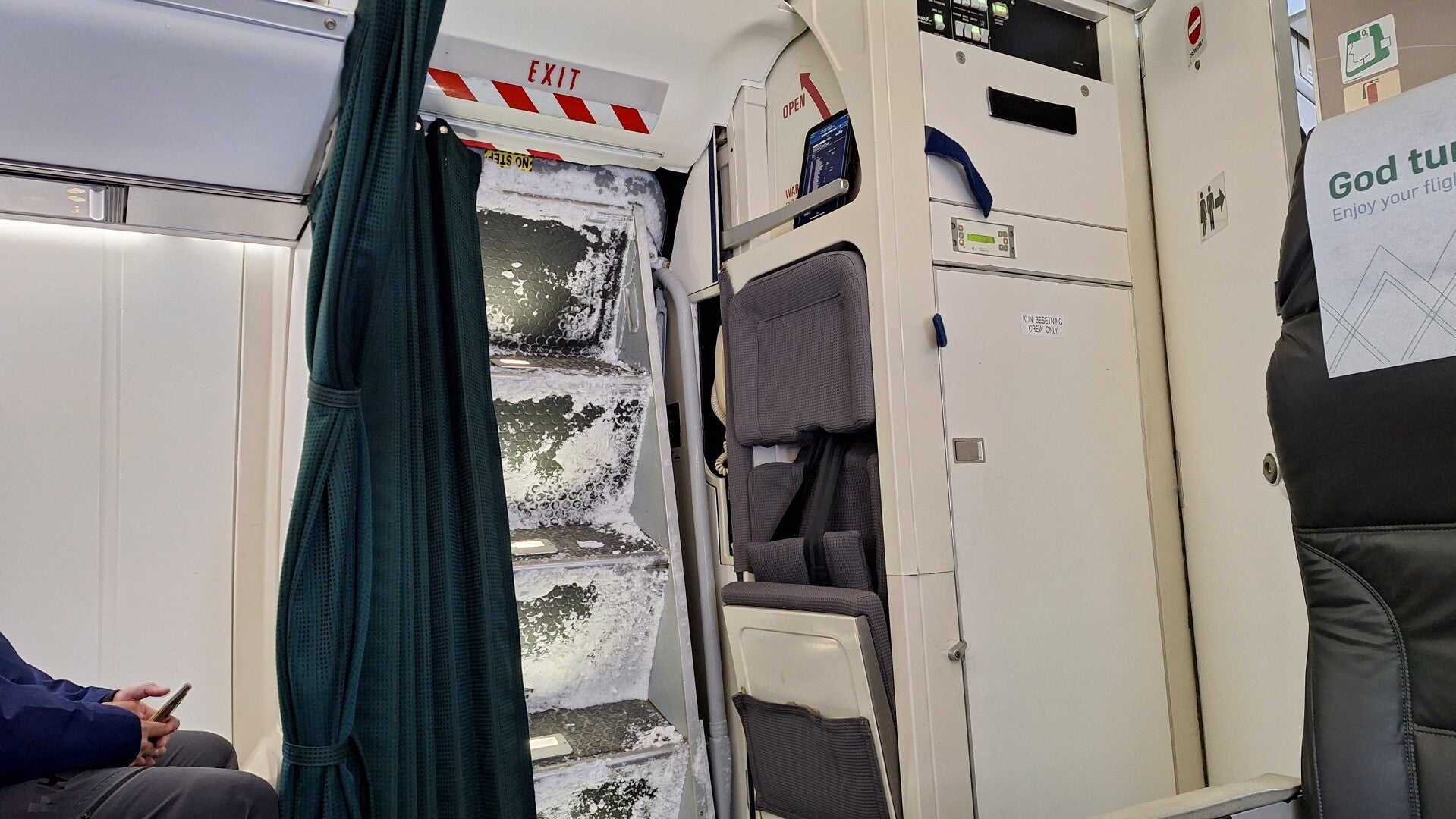
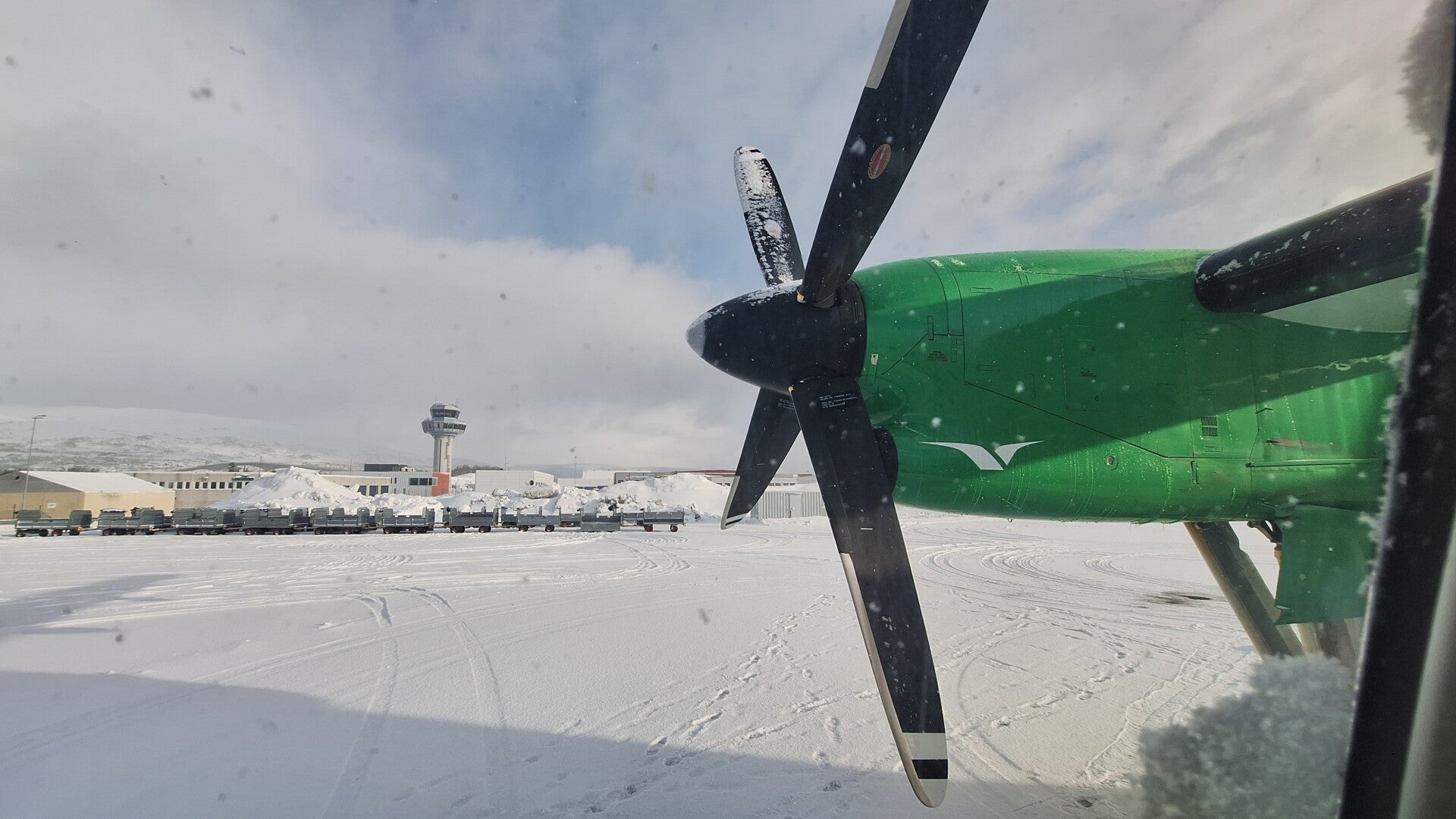
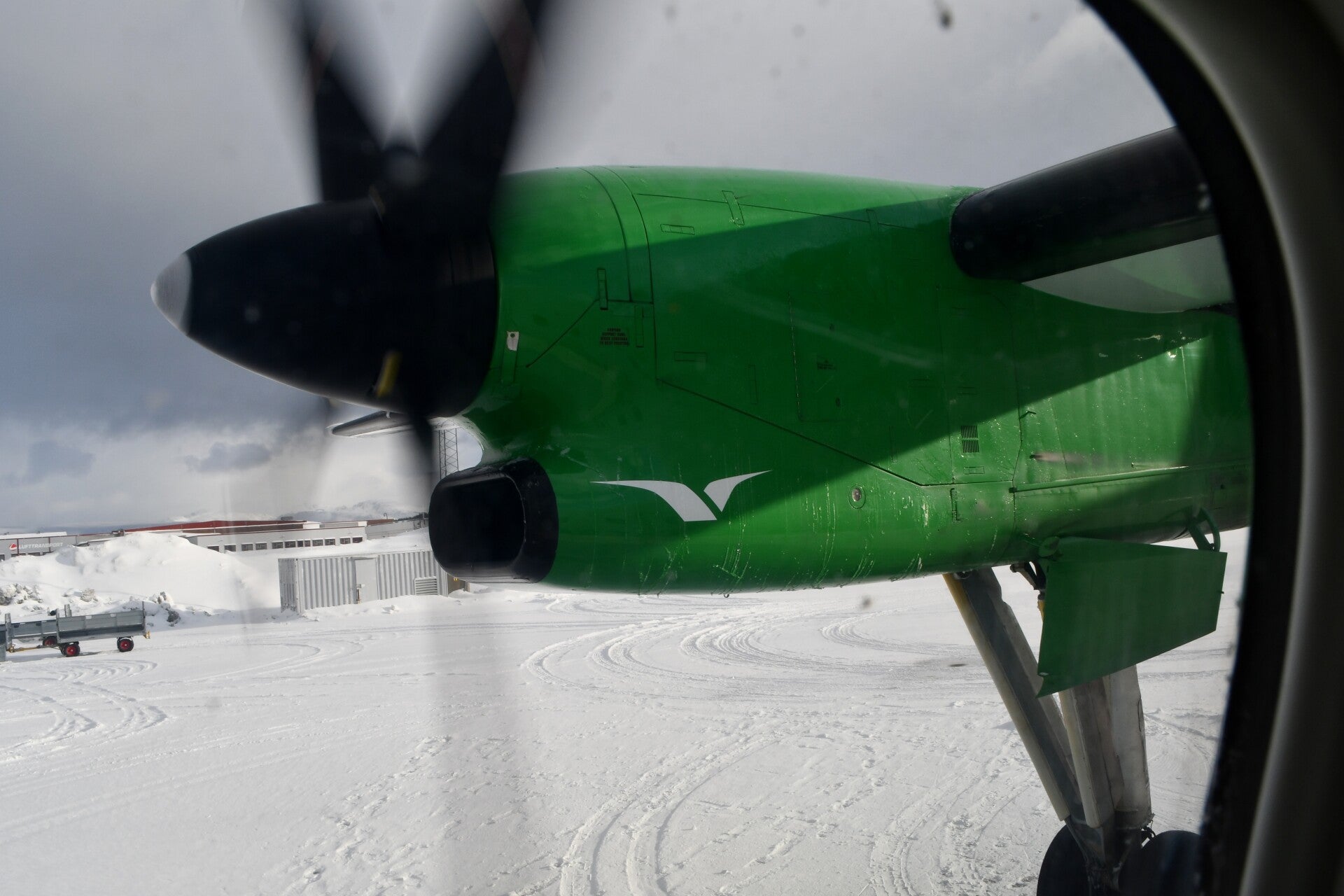
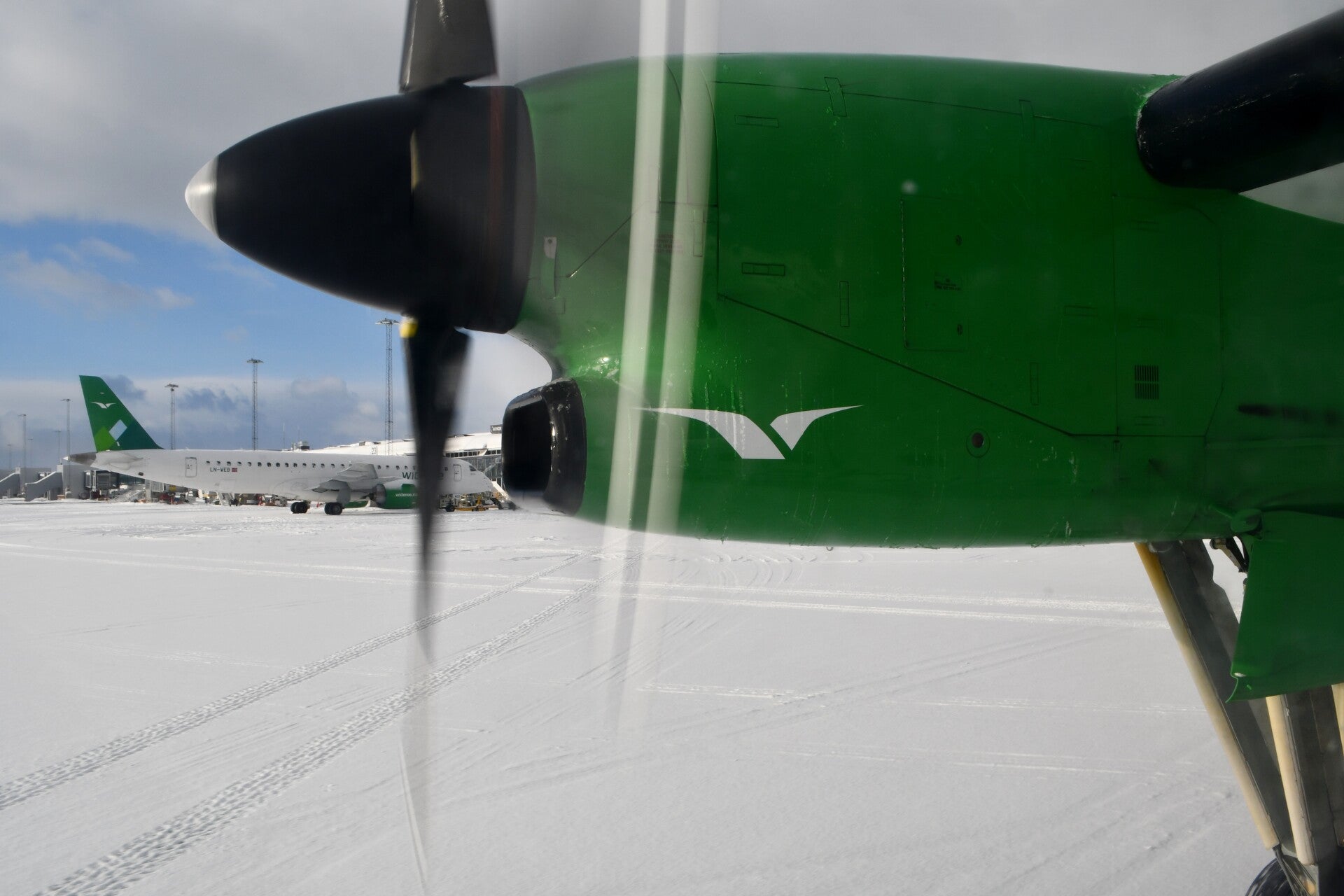
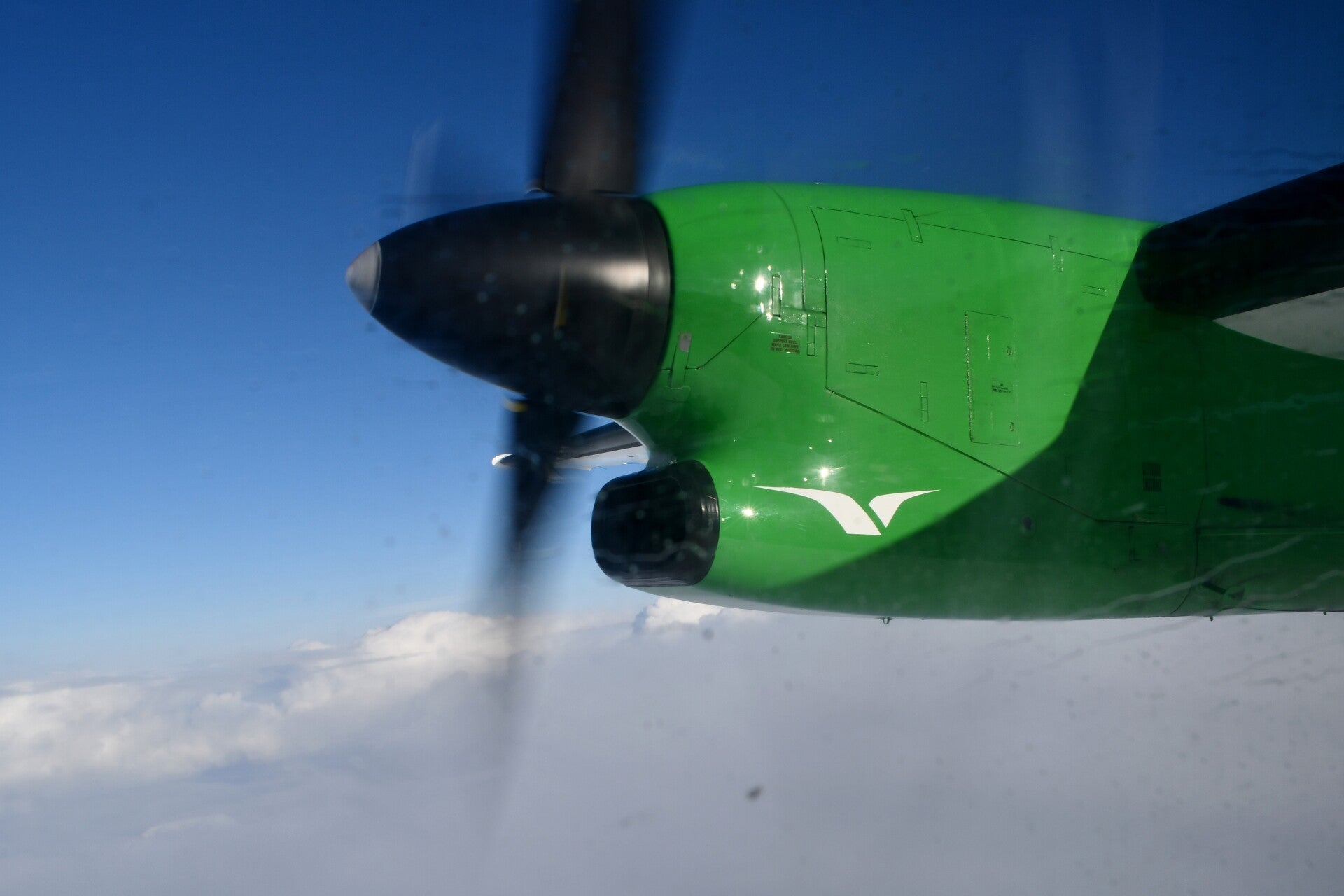
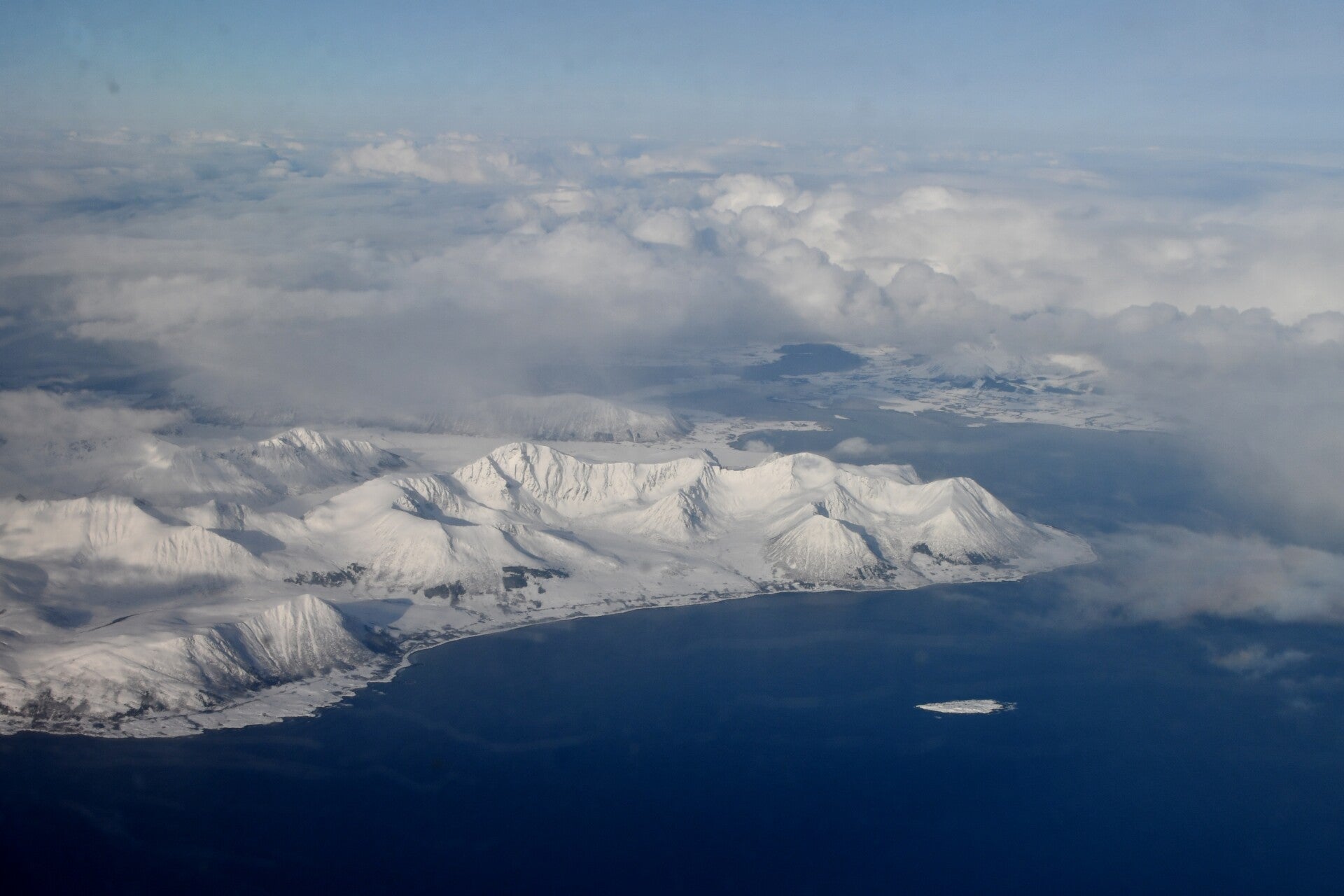
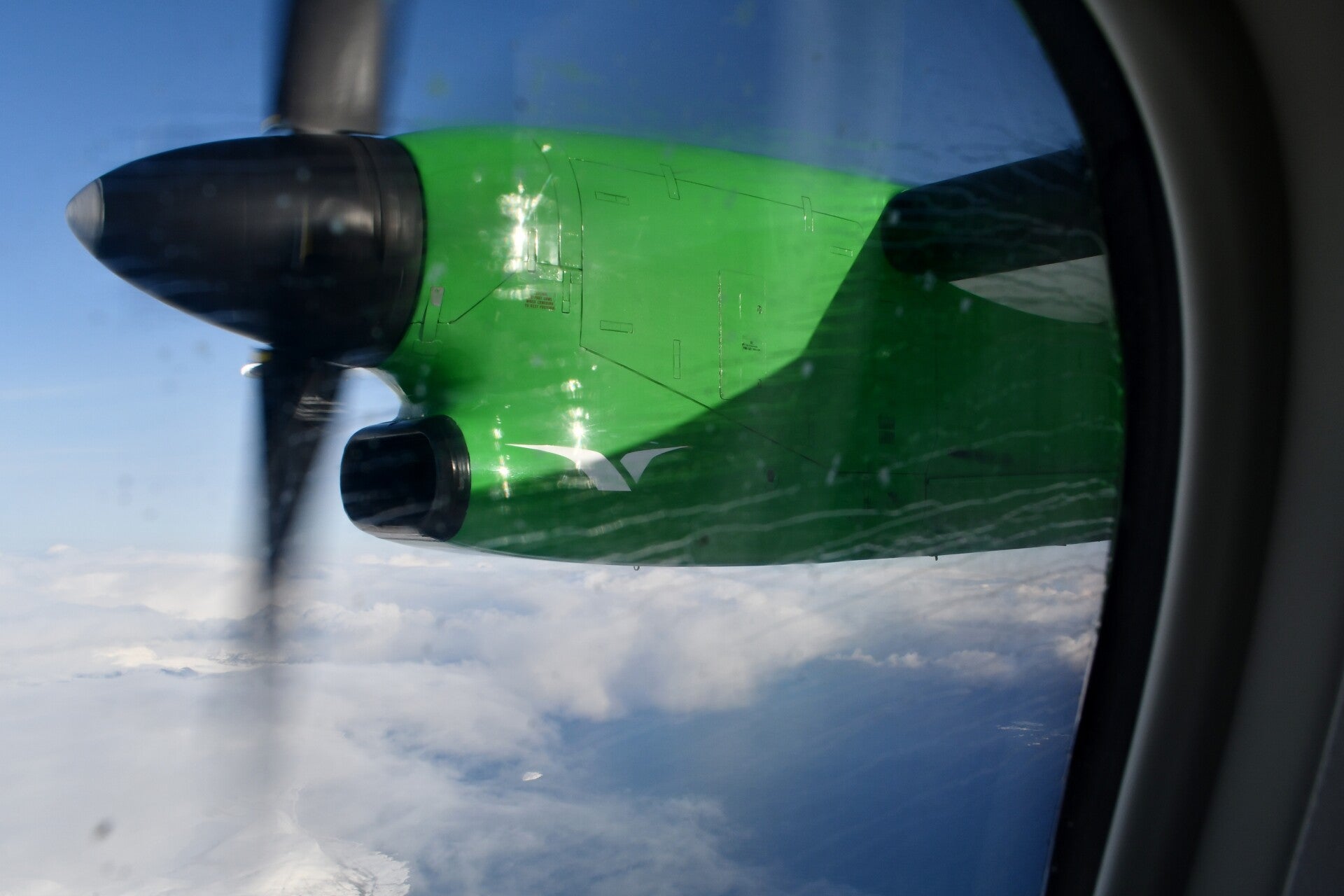
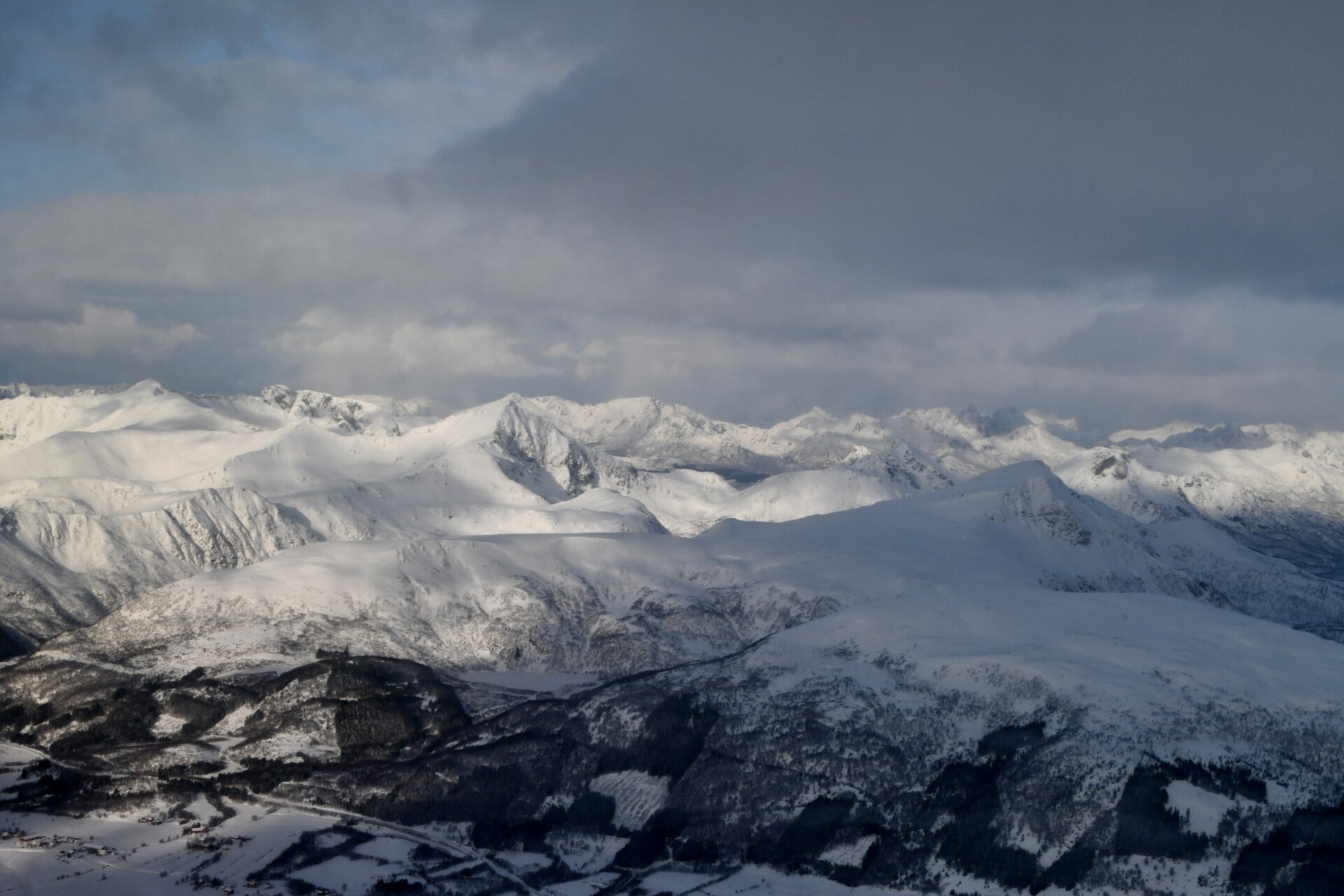
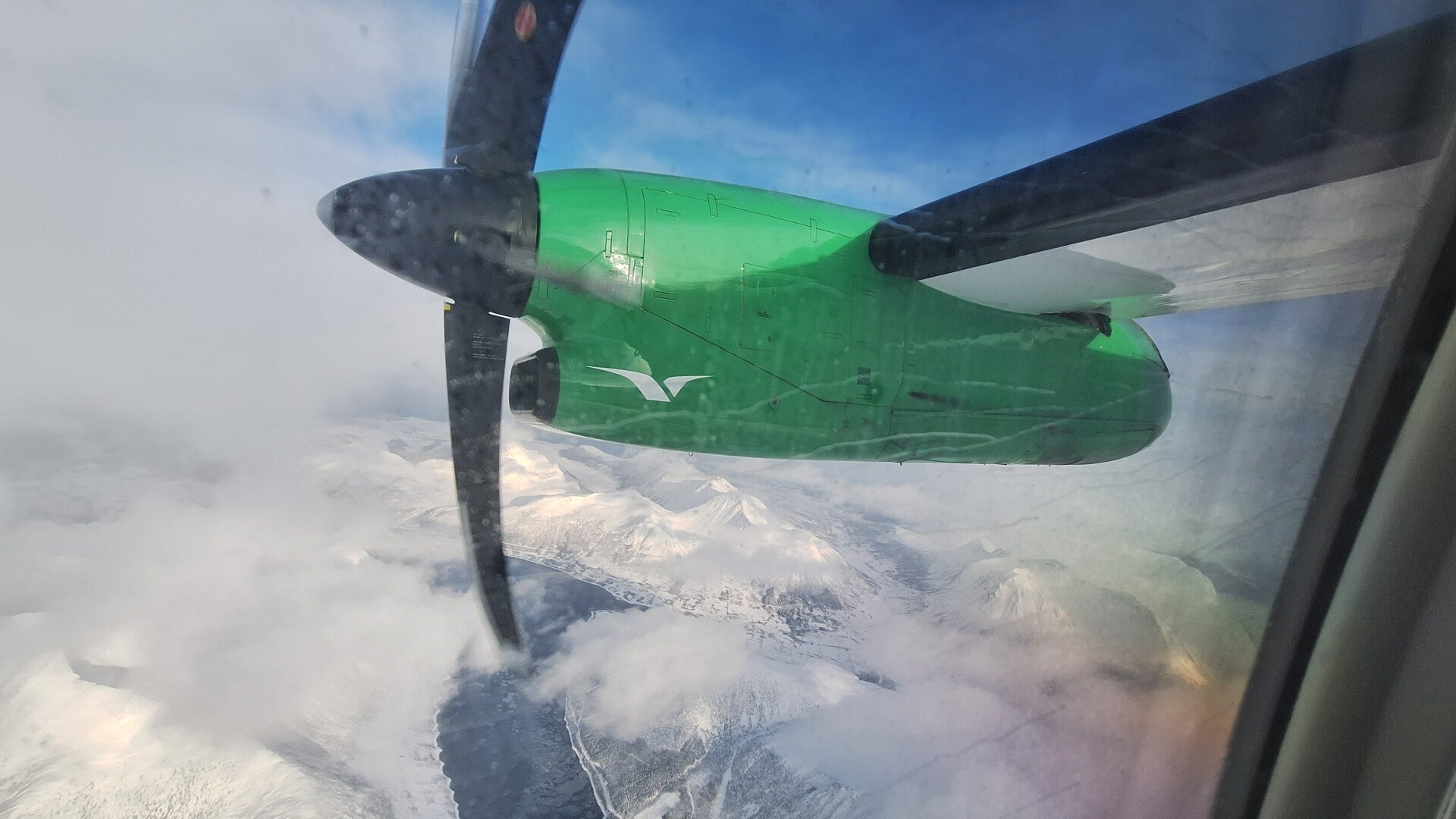


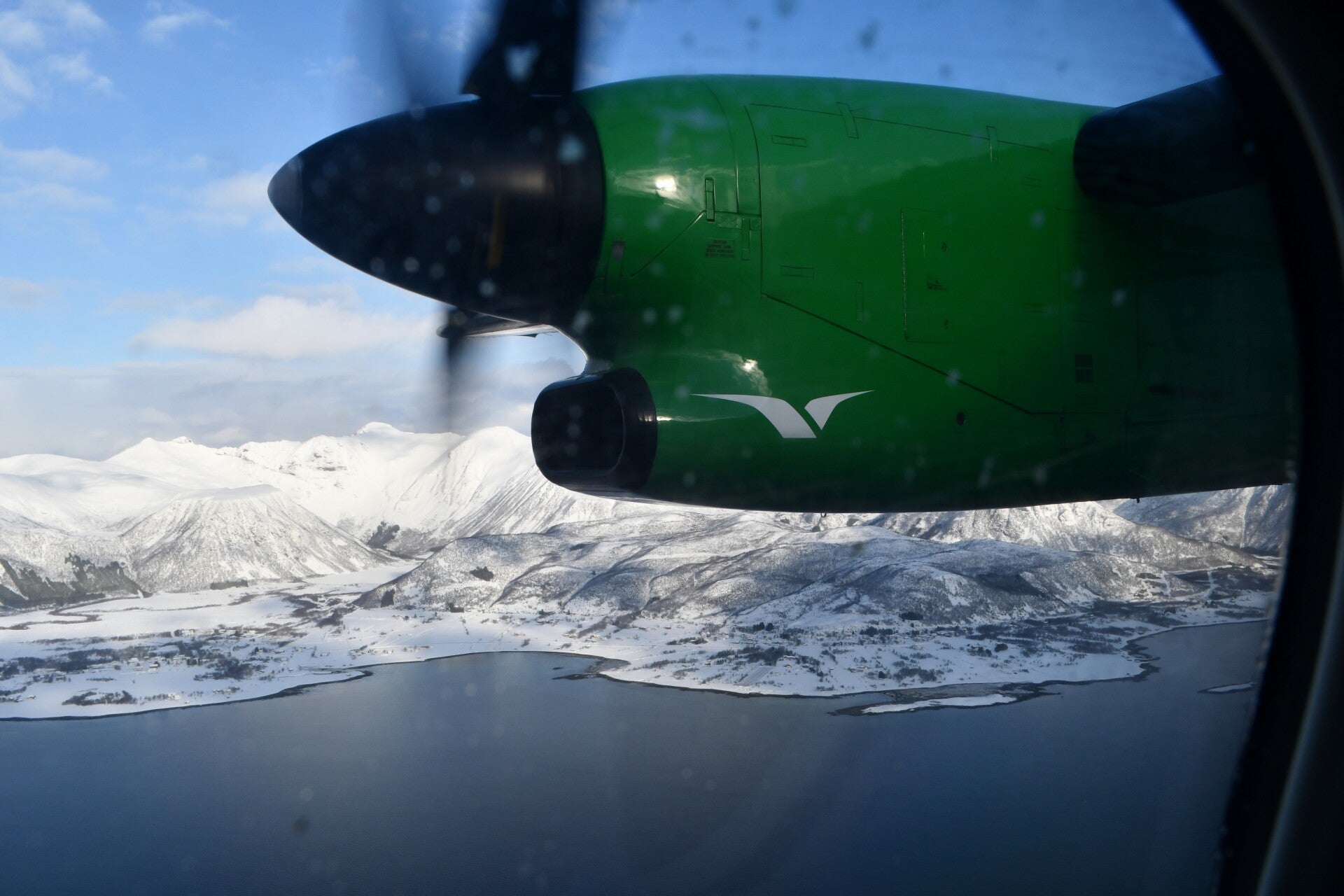

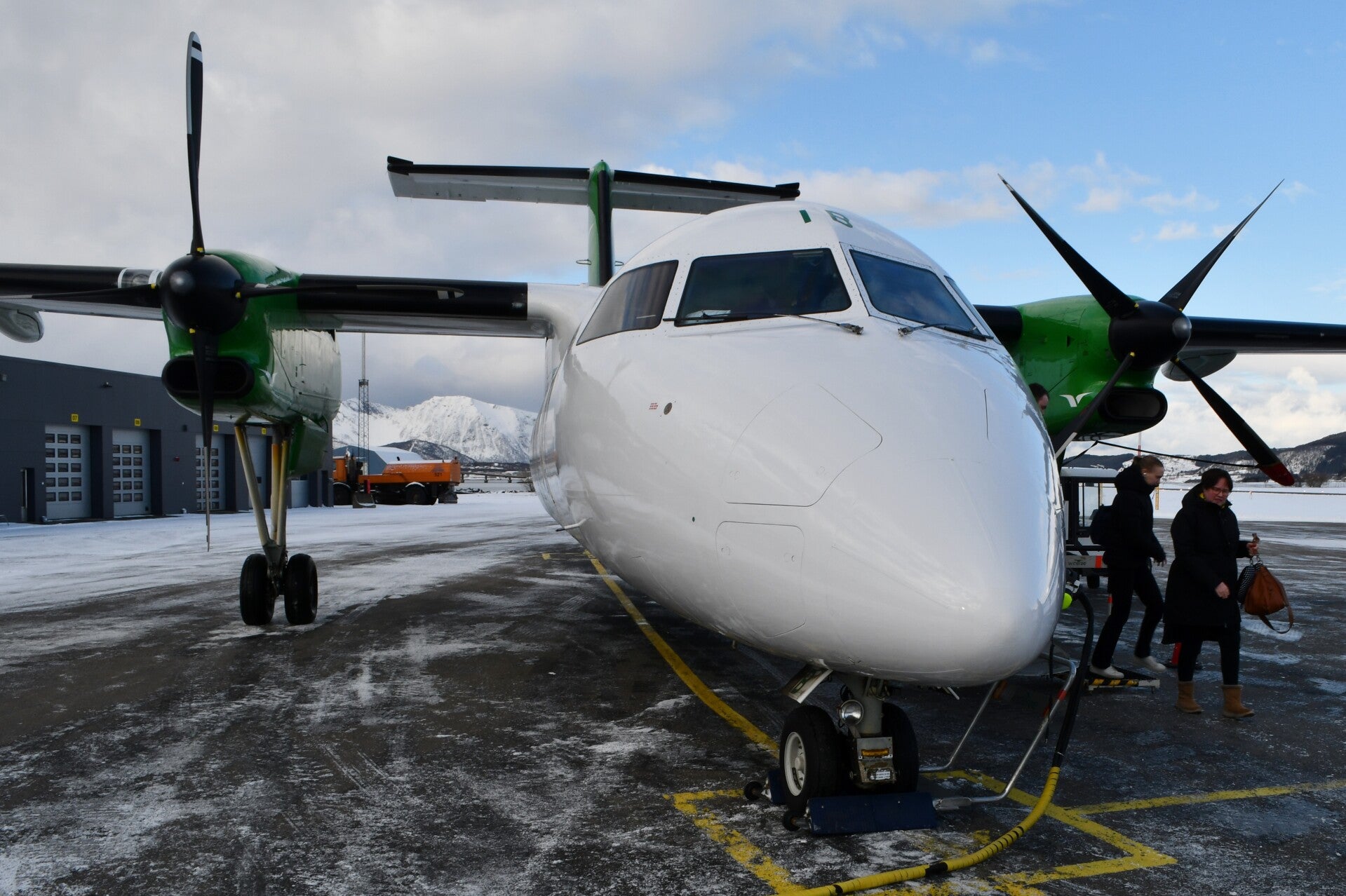
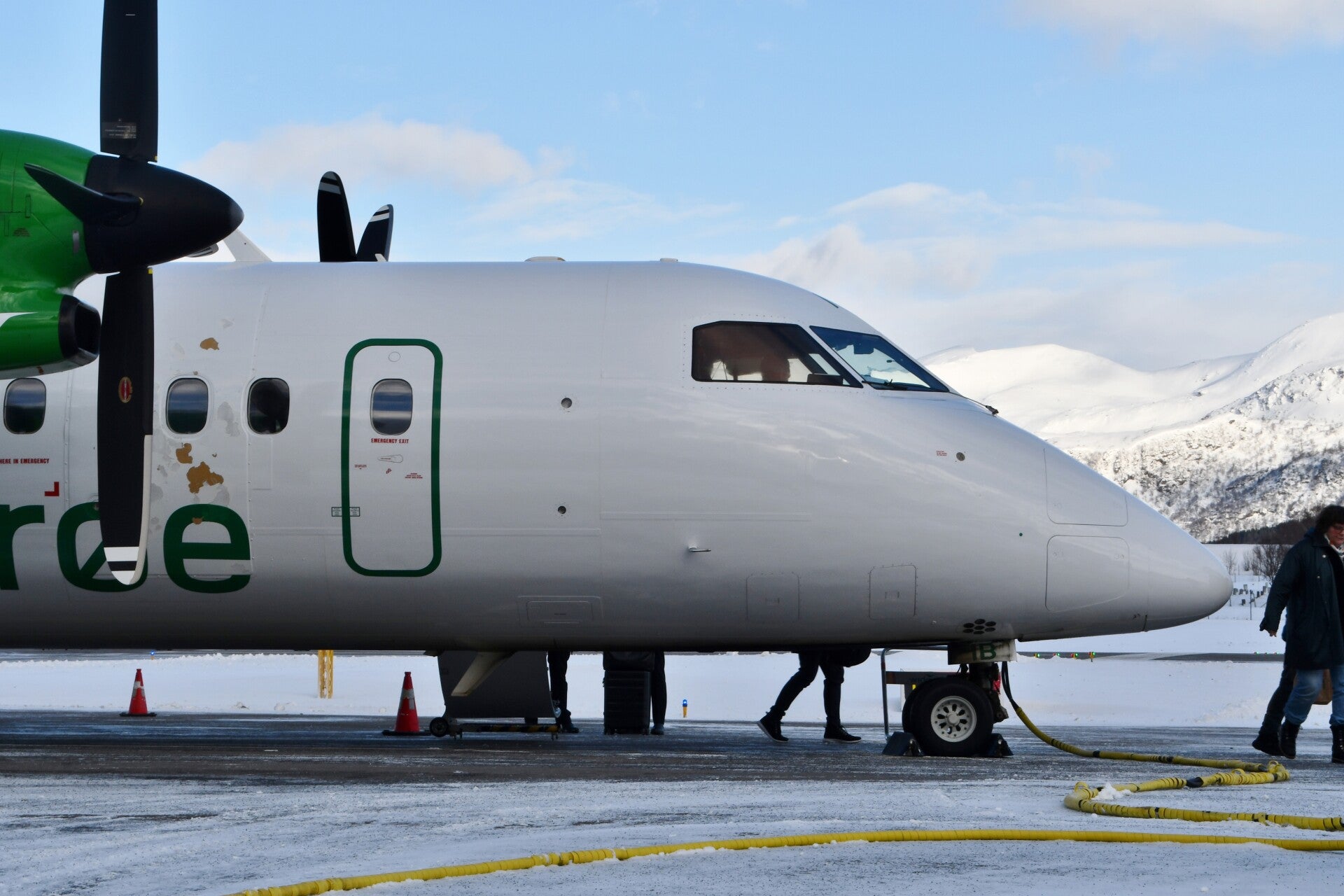
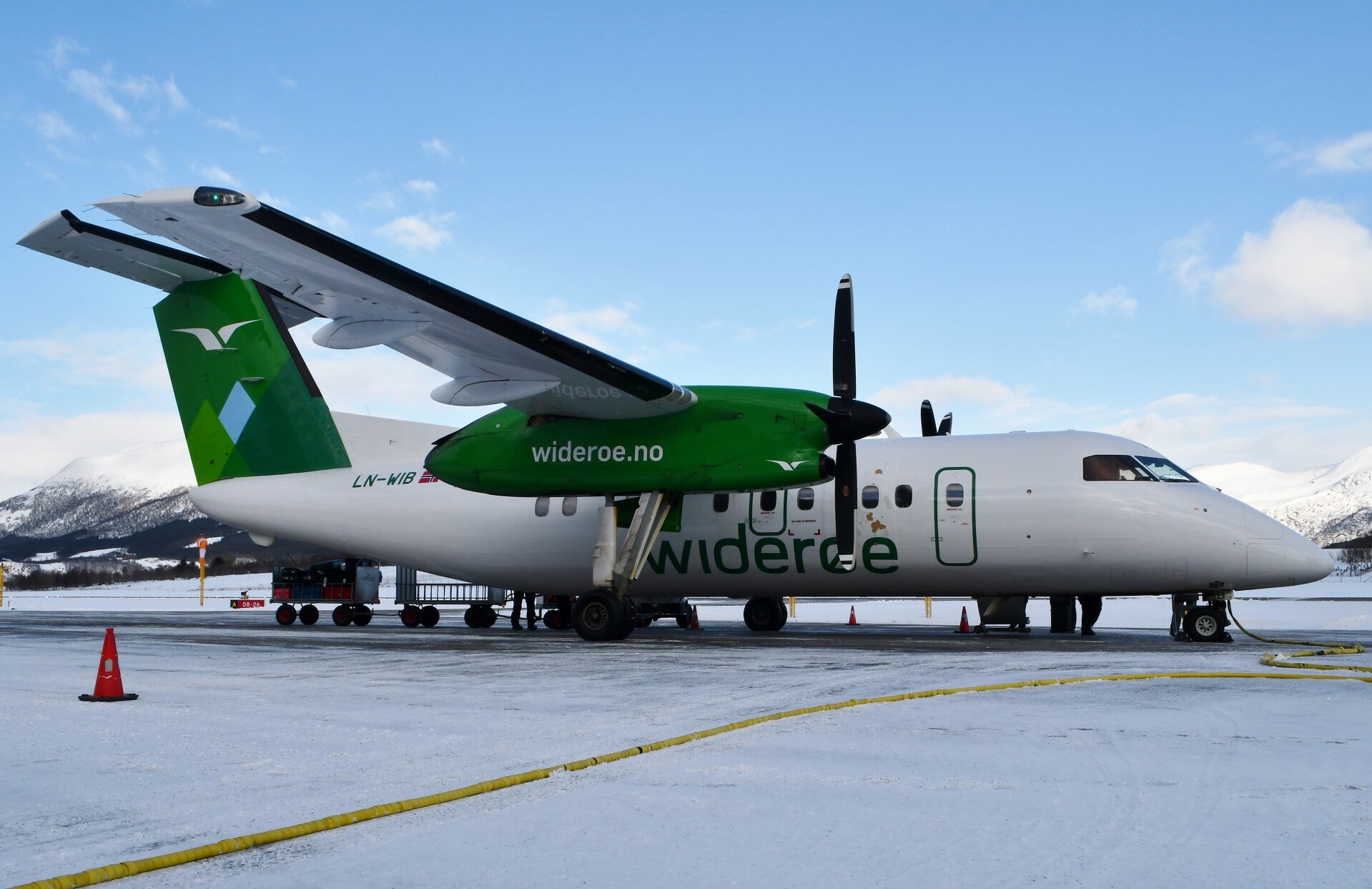
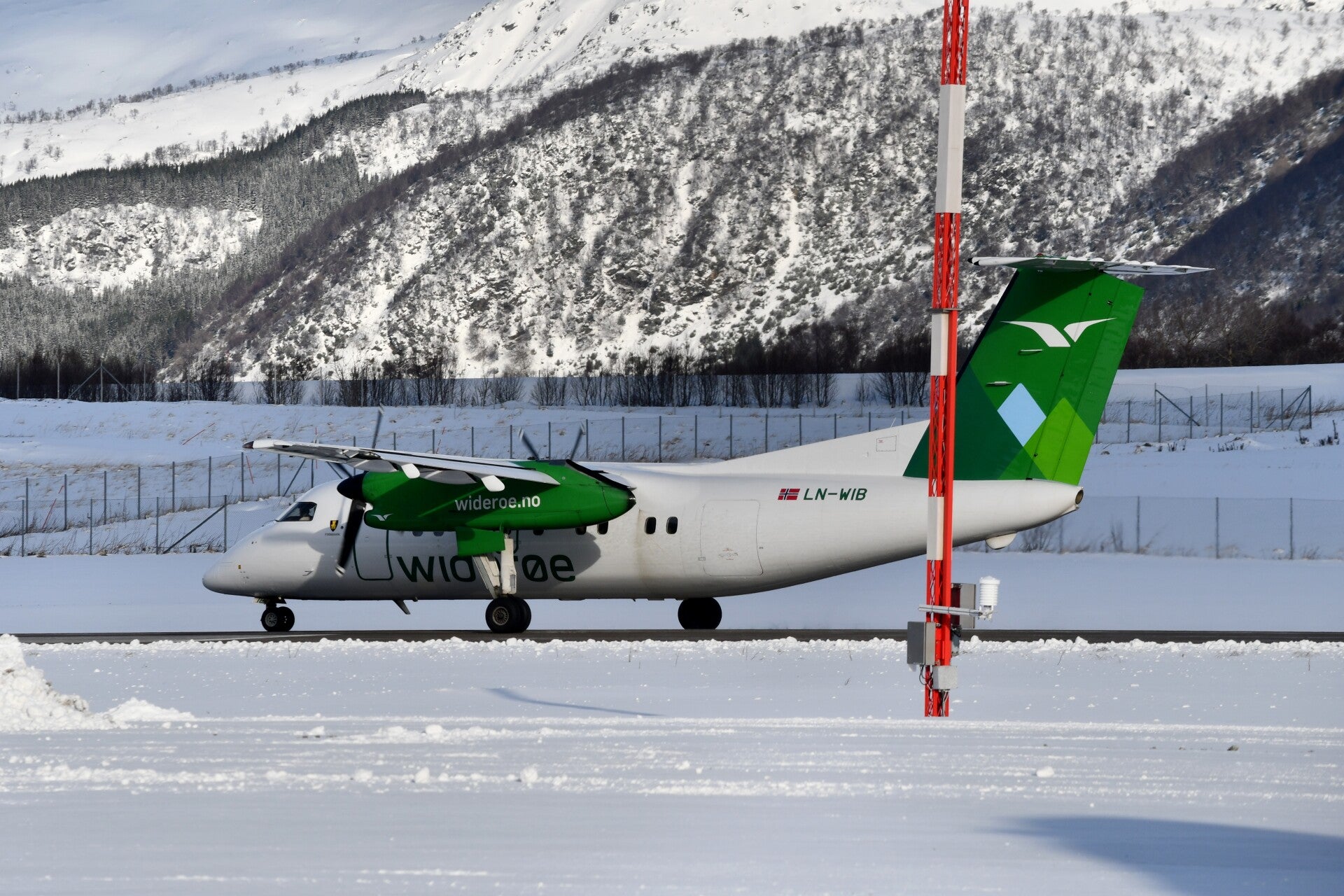
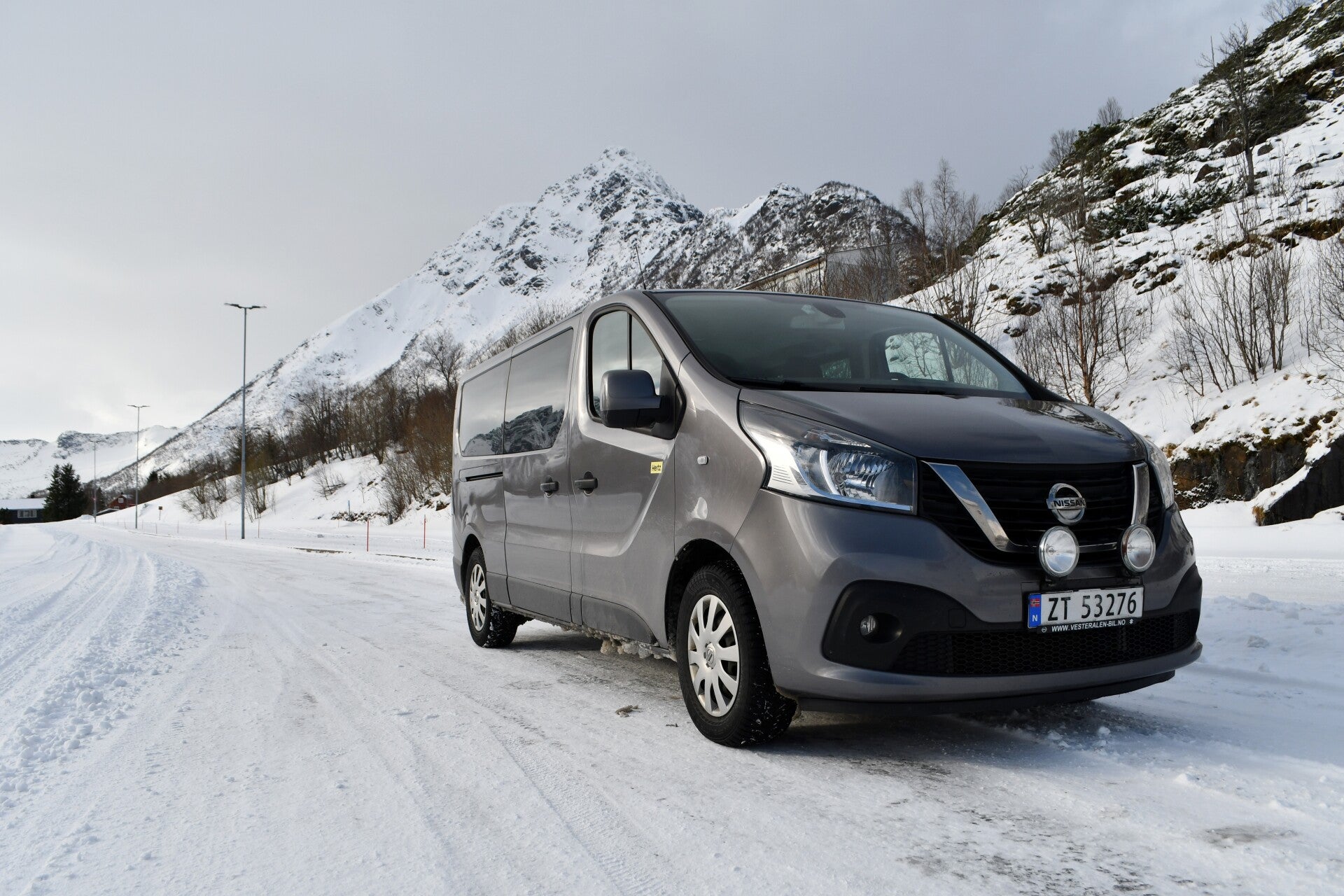
Not many passengers have to be here, as most continue on to the larger city of Bodø. We, on the other hand, gave ourselves a five-hour layover, which gives us the perfect opportunity for a scenic drive. Although we had booked a small rental car for the day, Hertz decided to grant us a full Nissan Primastar van. After recovering from laughter over our ridiculously oversized “small” car, we wave goodbye to LN-WIB as it takes off and set sail on our own adventure.
Our plan was to drive southbound, take the ferry, then drive around the fjord northbound and return to the airport. Due to the deicing delay, however, we had already missed our ferry, so we opted to reverse the route.
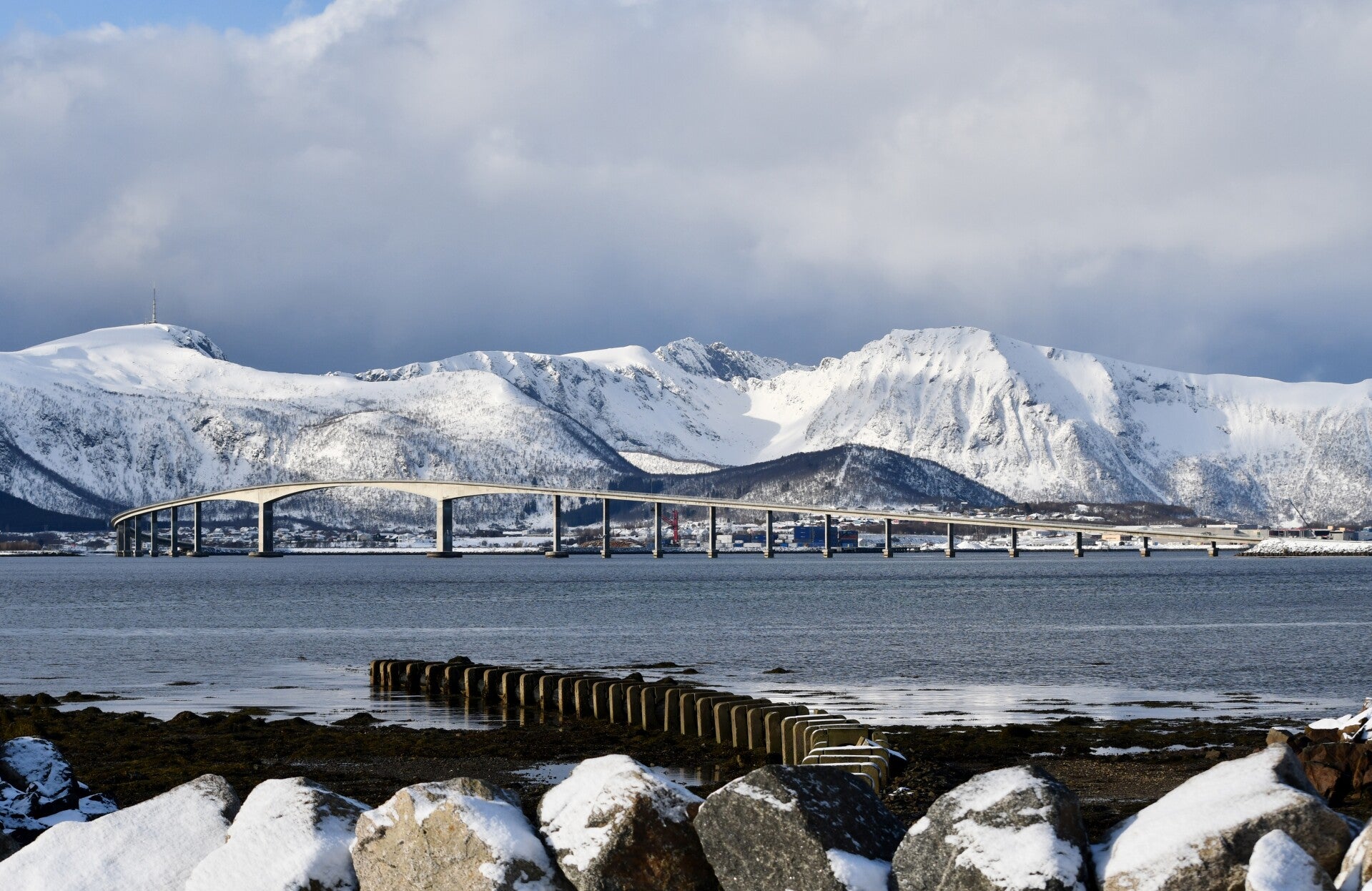
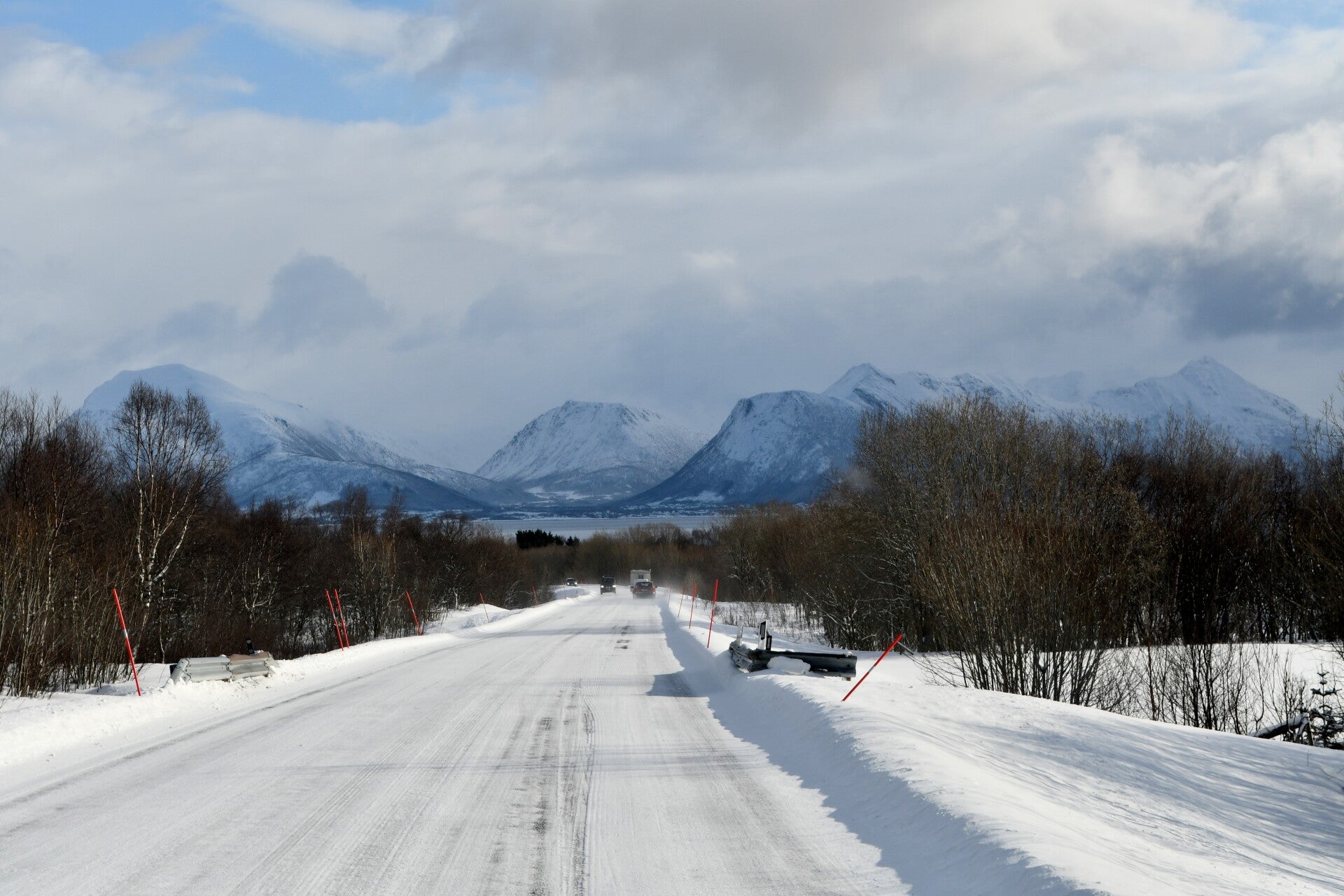
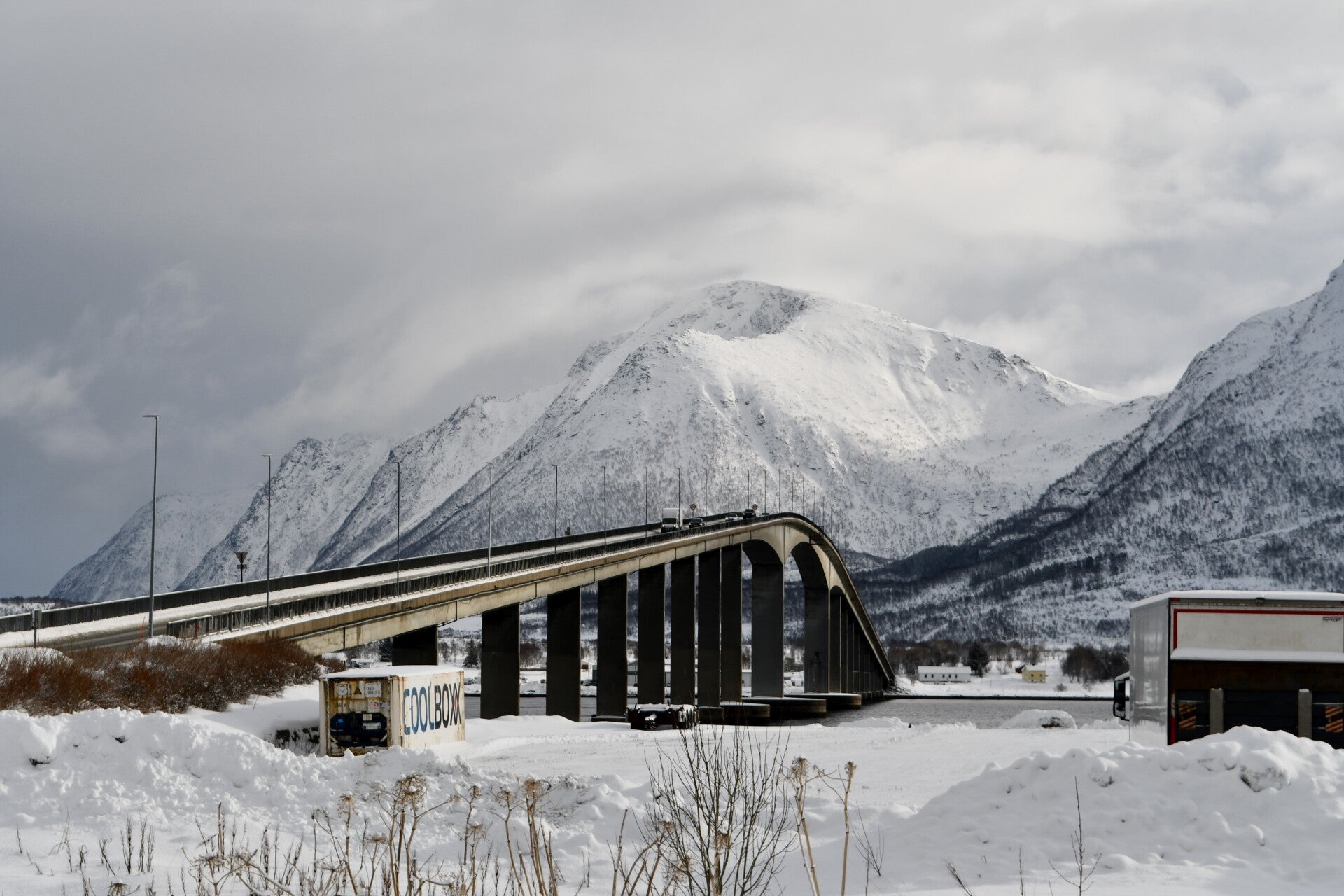
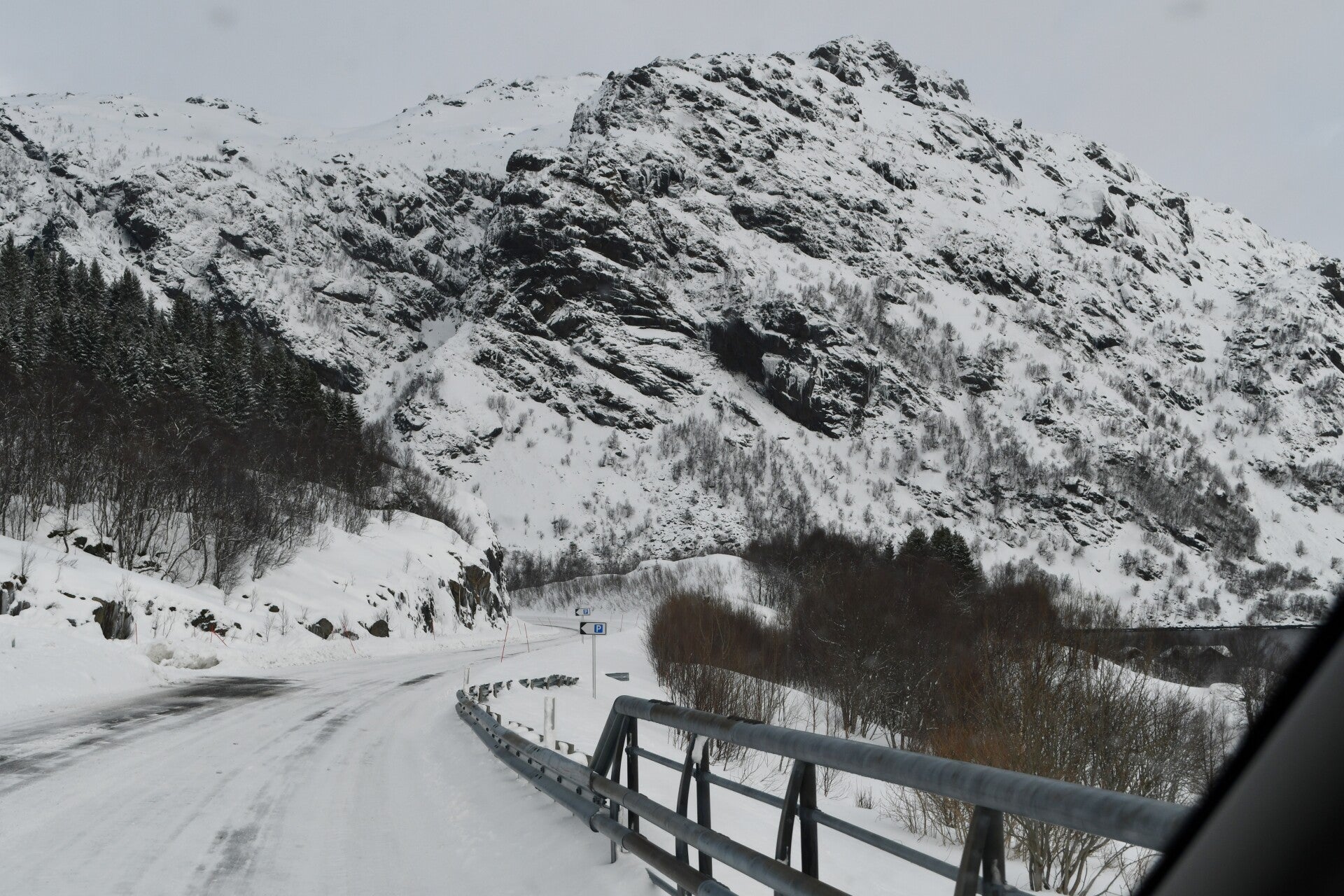
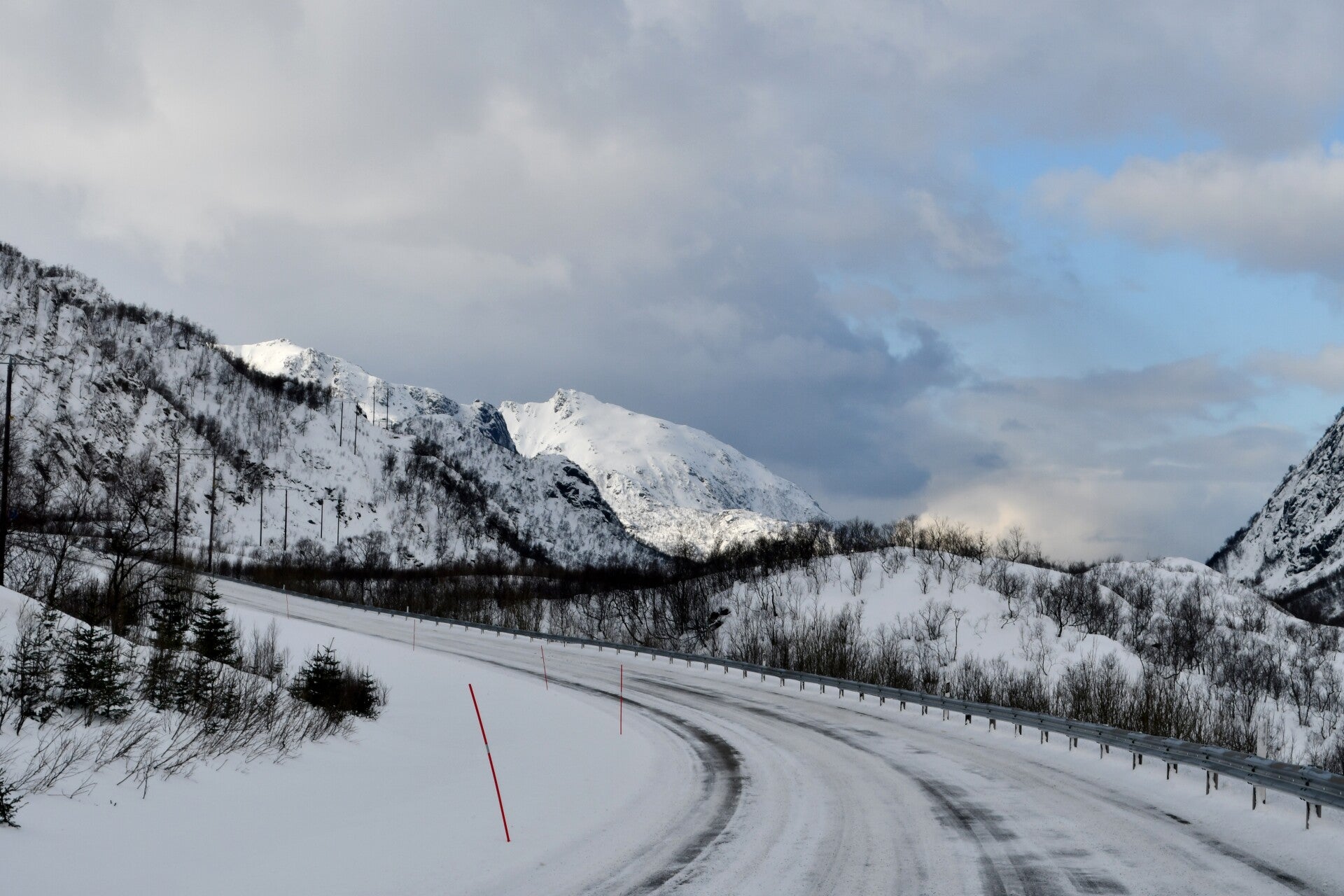
We quickly get used to the icy roads and make our way northbound along the water, passing several small villages until we reach a larger town called Sortland. Known as the “Blue City” of Vesterålen, Sortland’s iconic blue-painted buildings stand out beautifully against the surrounding greenery and fjord waters. Here, we cross the Sortland Bridge from Sortland to Strand, taking in sweeping panoramic views of Sortlandssundet and the nearby islands.
Next, we turn south toward Fiskebøl, where we plan to catch the afternoon ferry. We have to make this one, or risk missing our flight! To be safe, we set a “point of no return” on the map, a location beyond which we must continue, ensuring we can make it back in time, assuming the roads and traffic remain manageable.
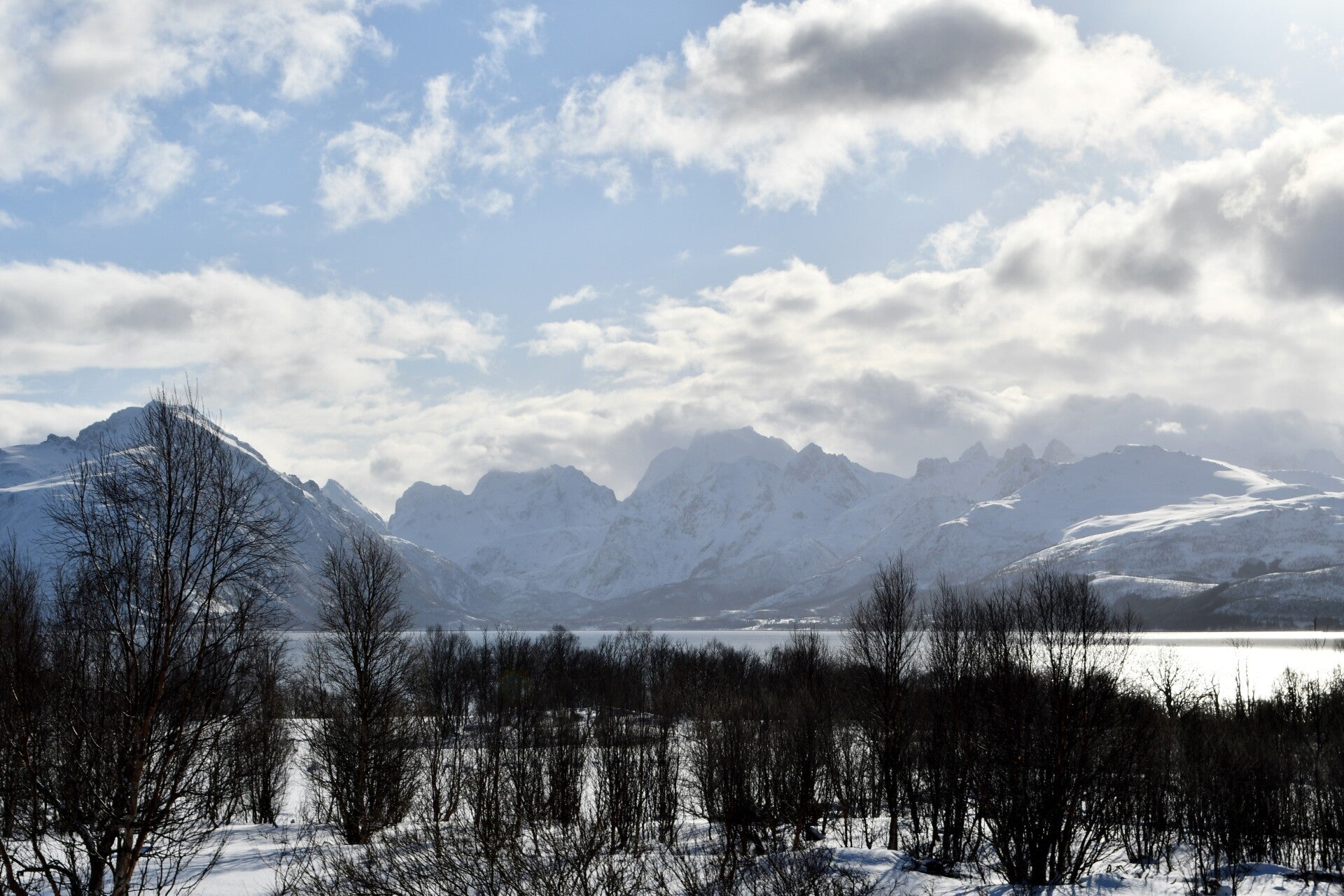
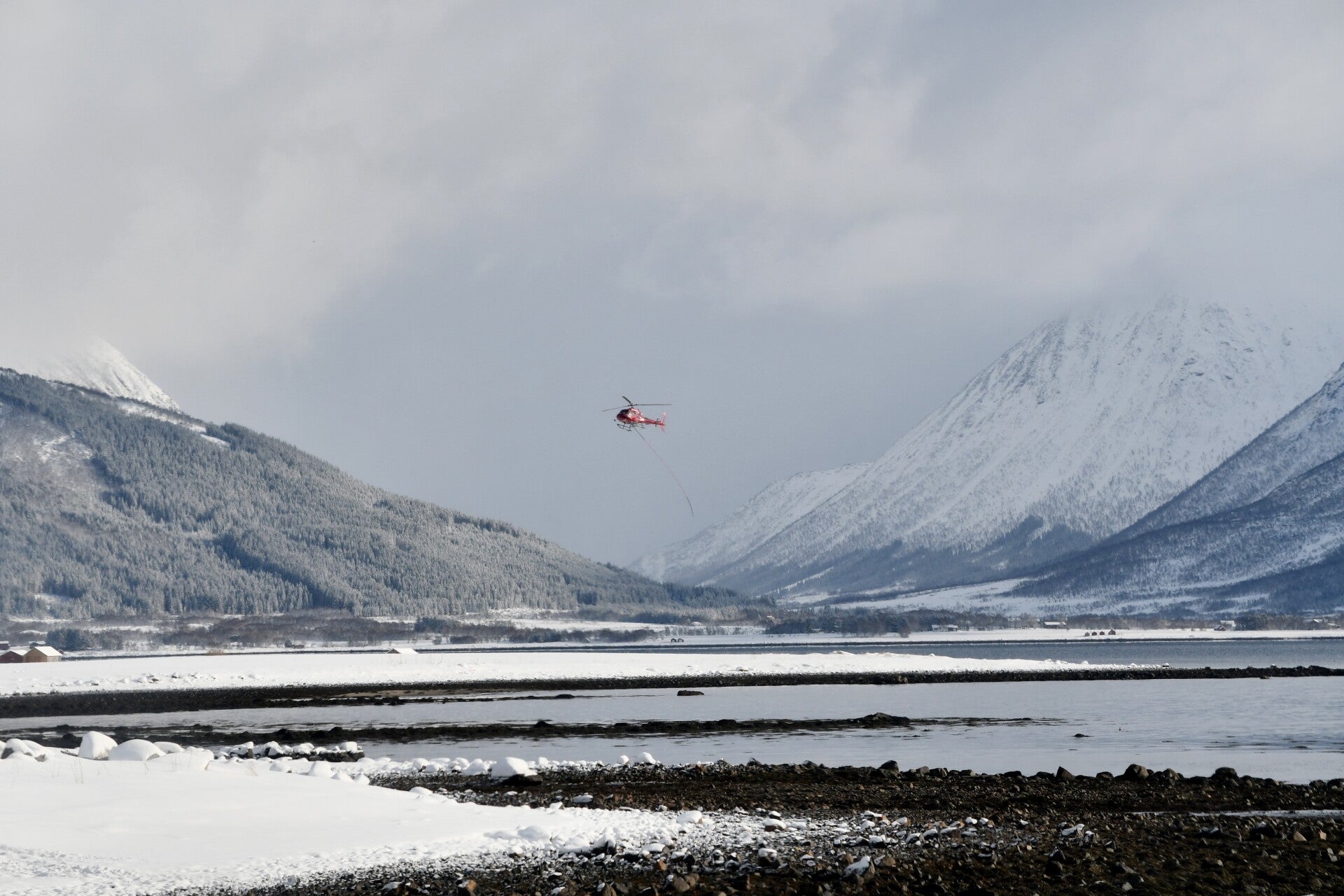
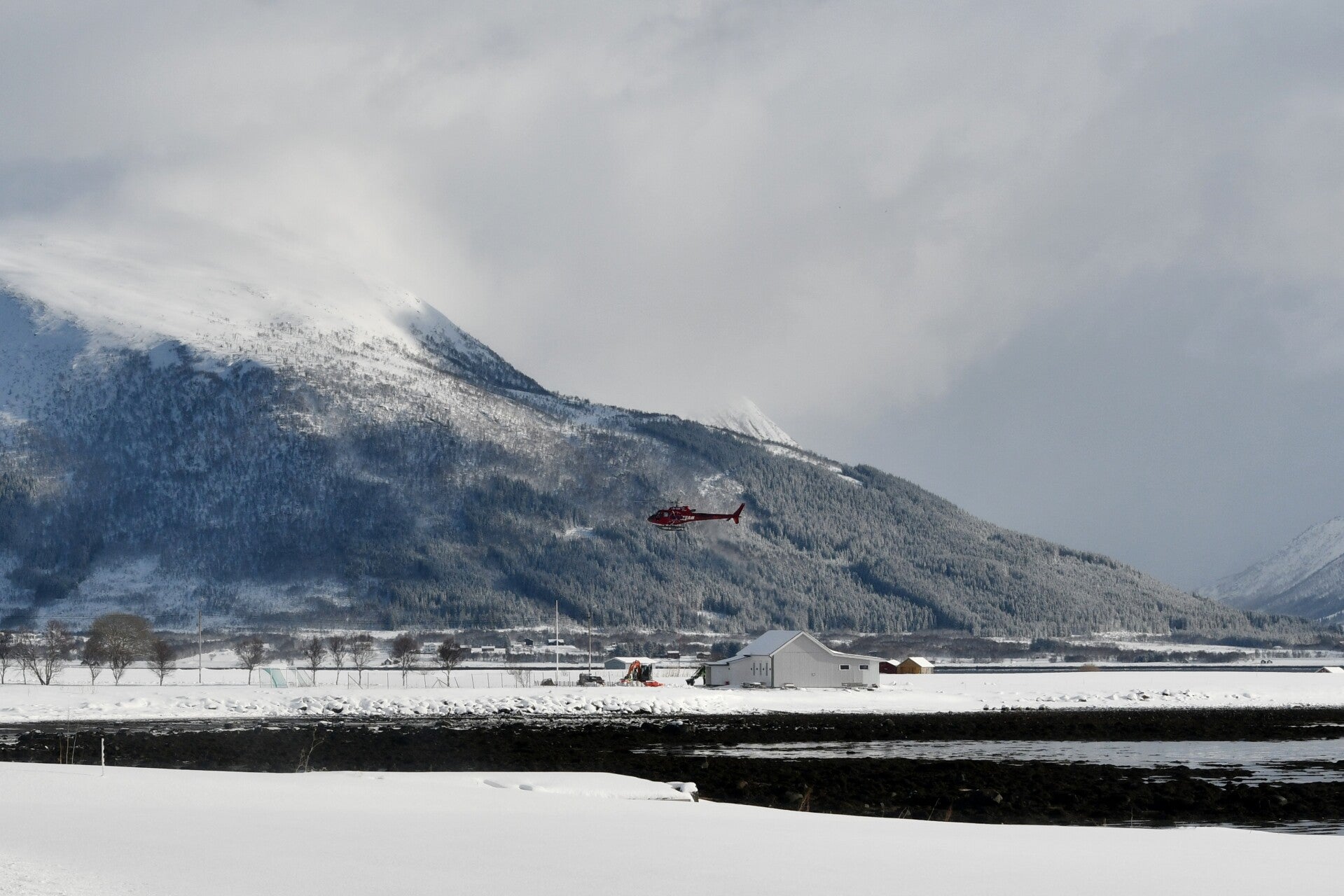
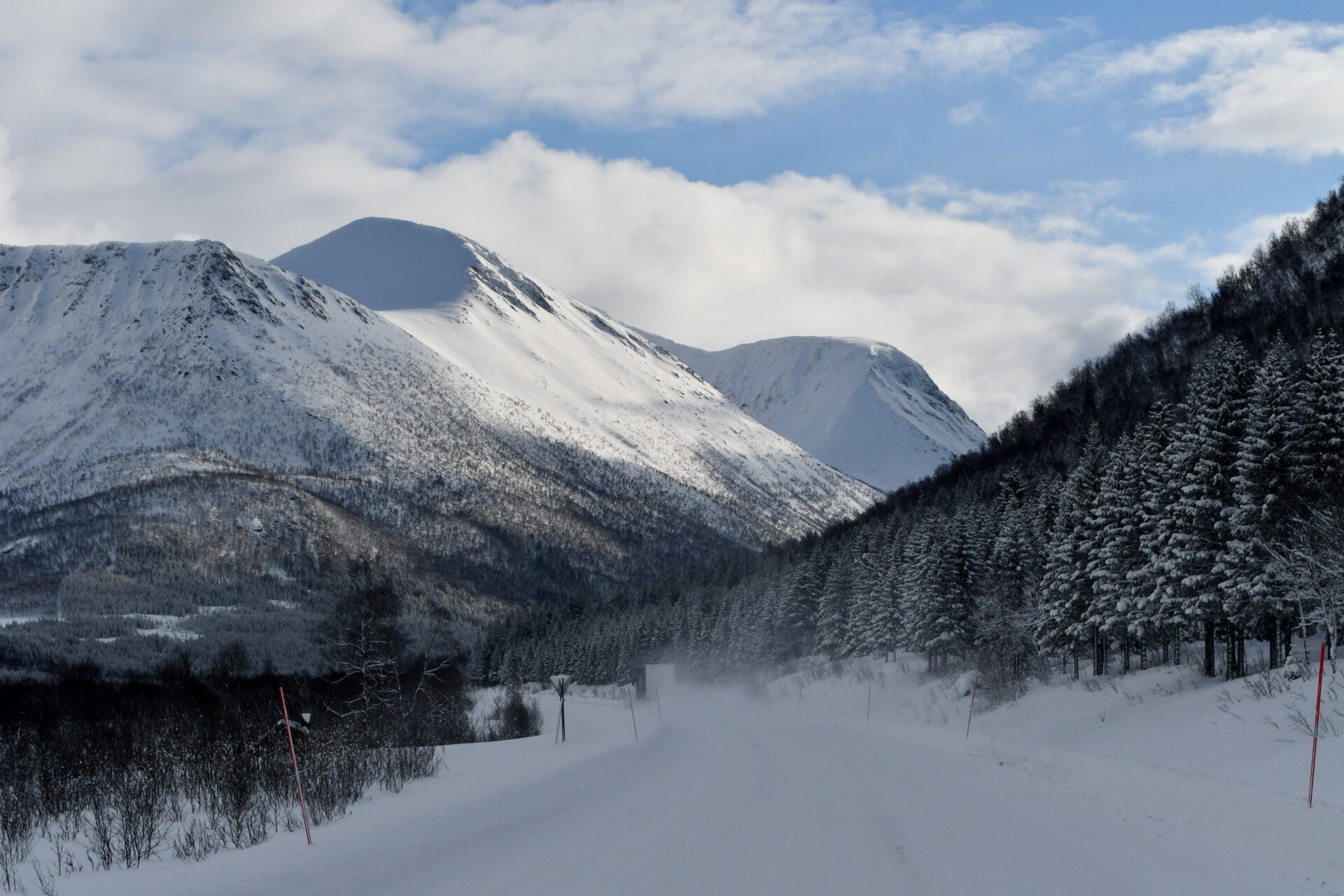
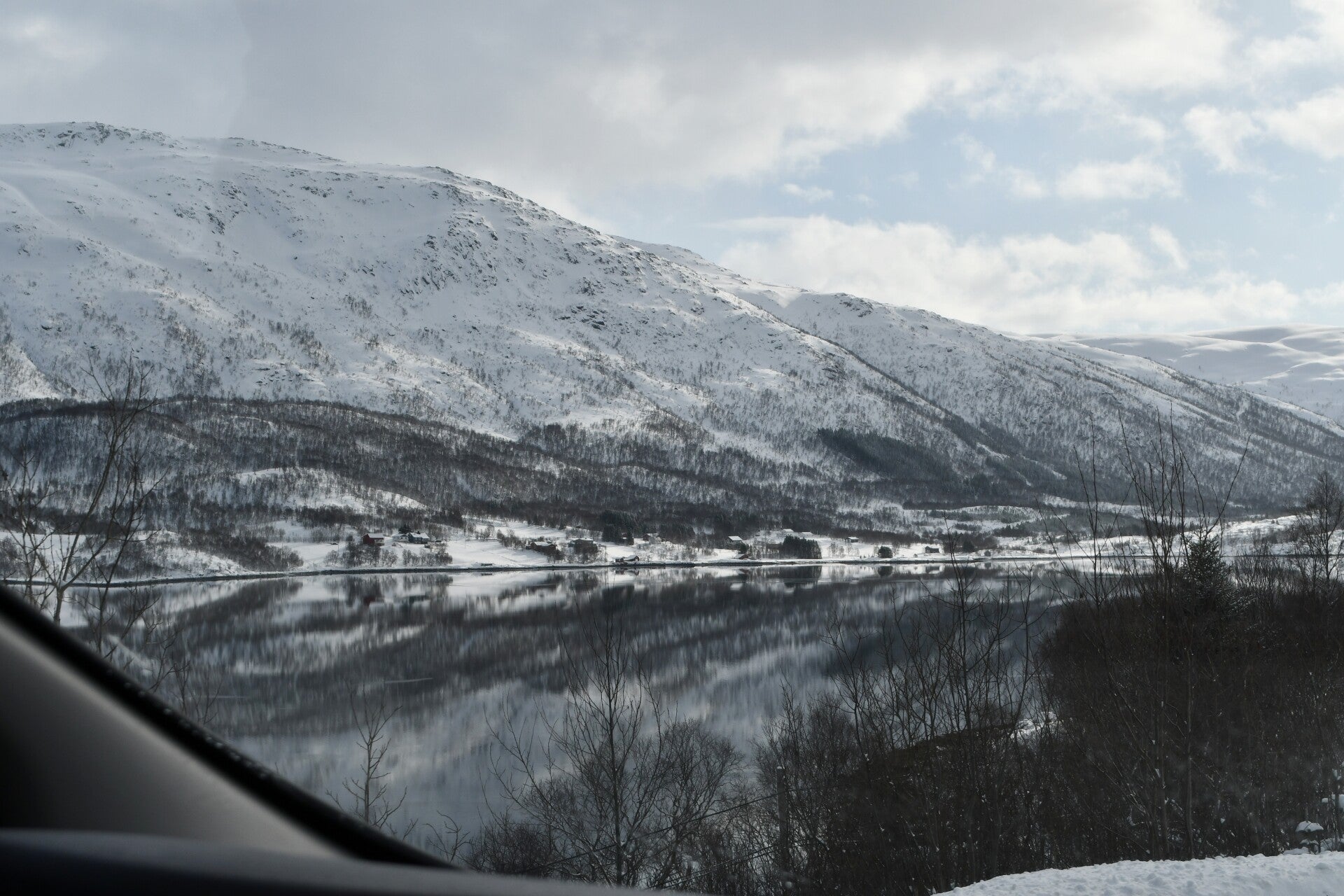
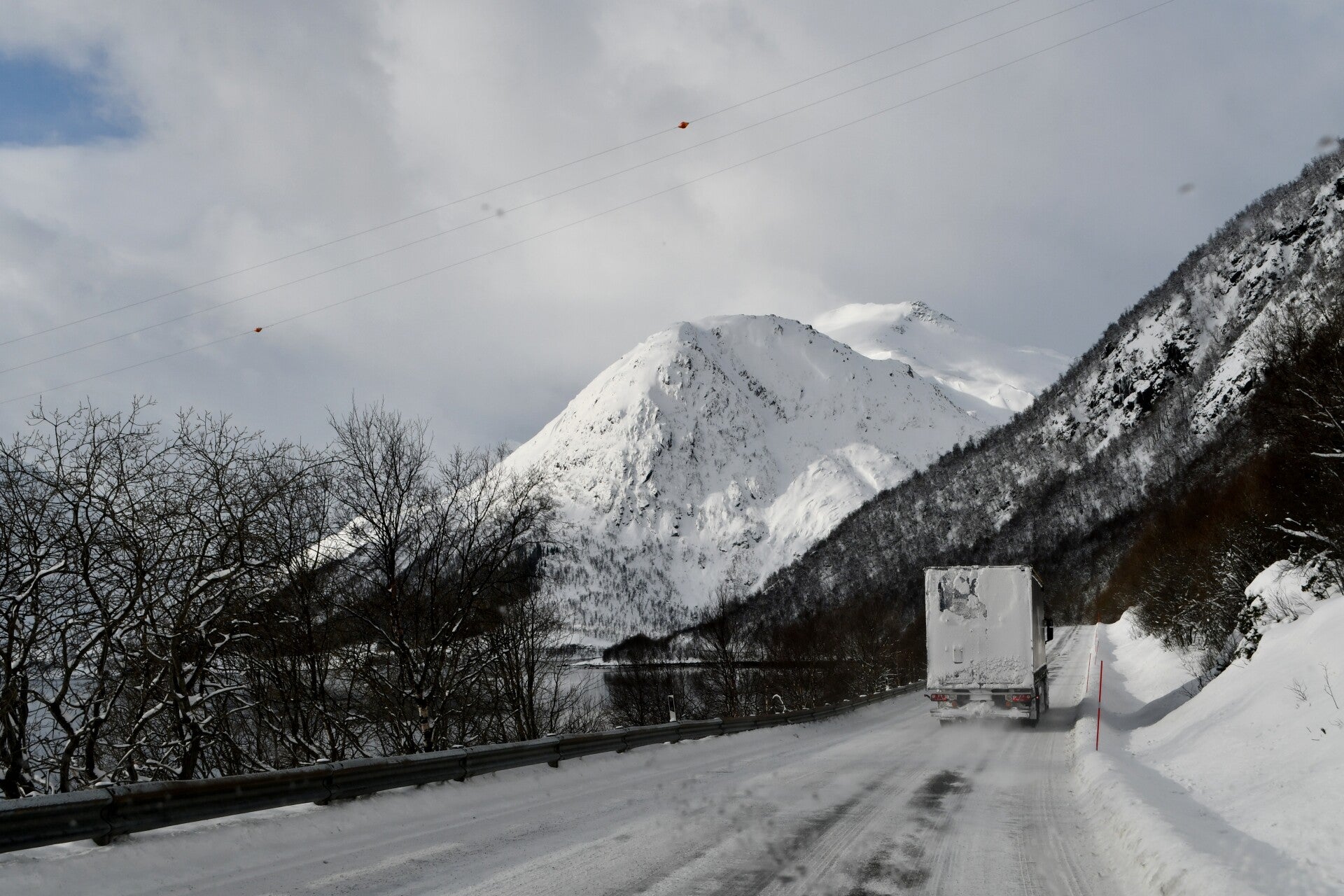
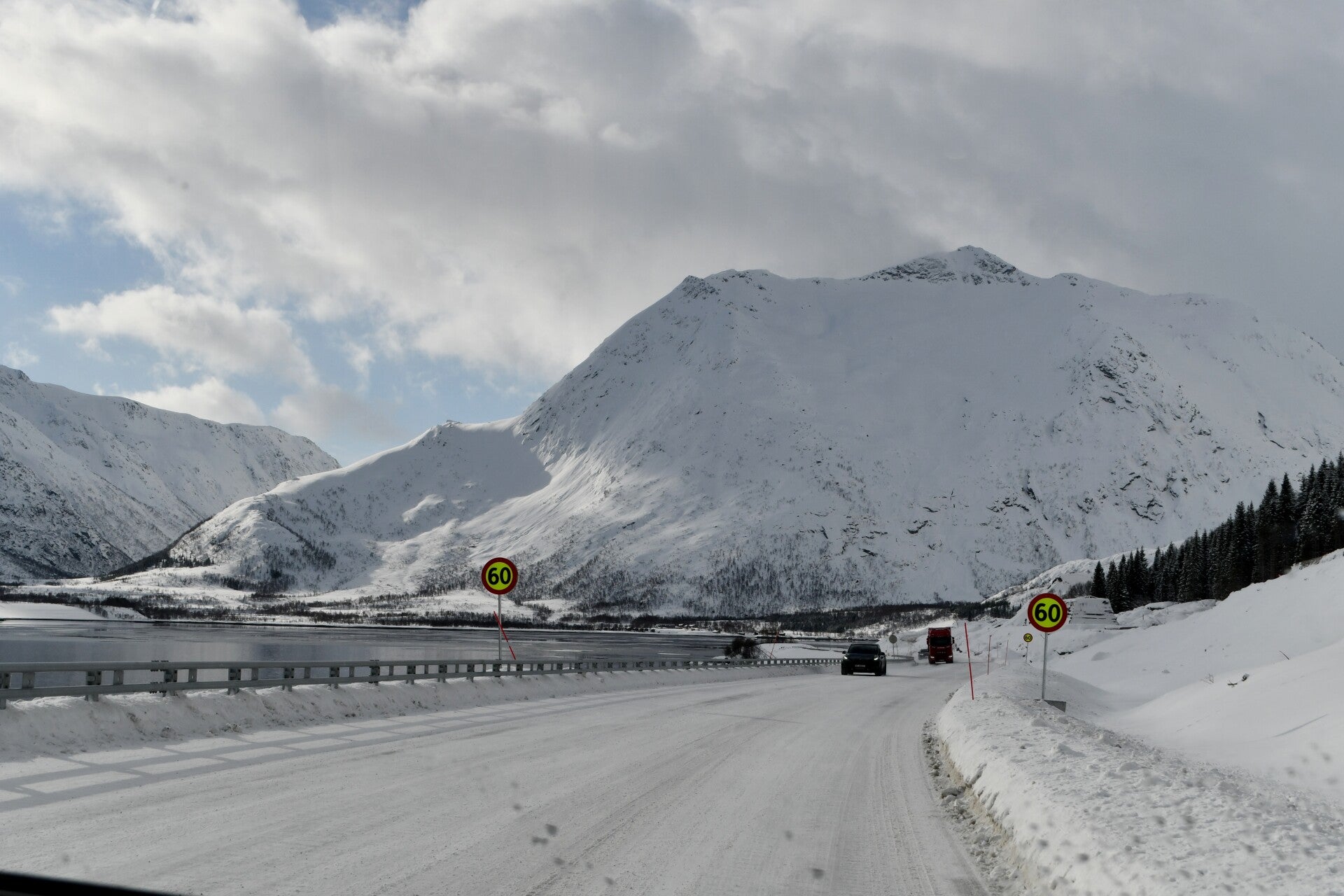
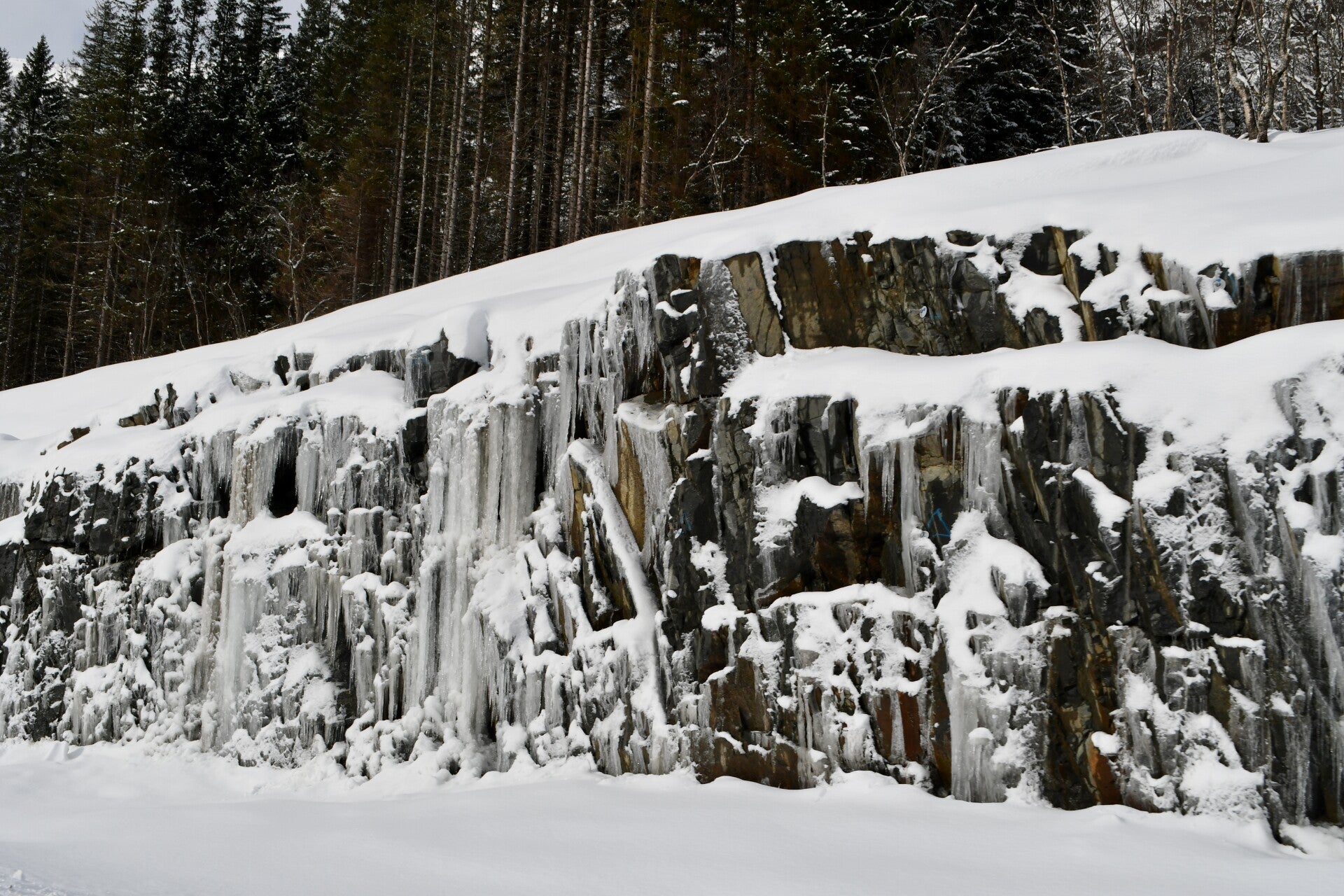
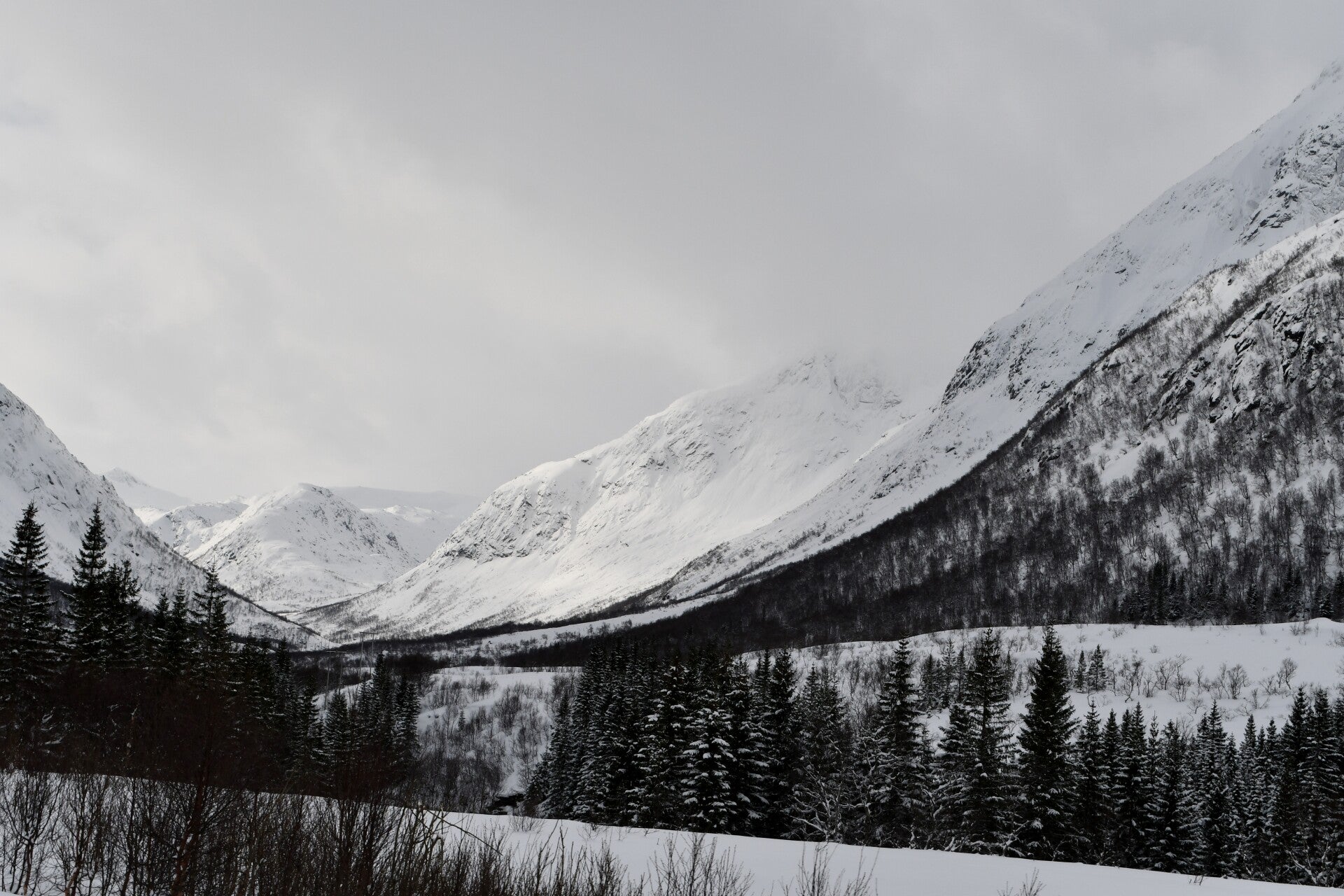
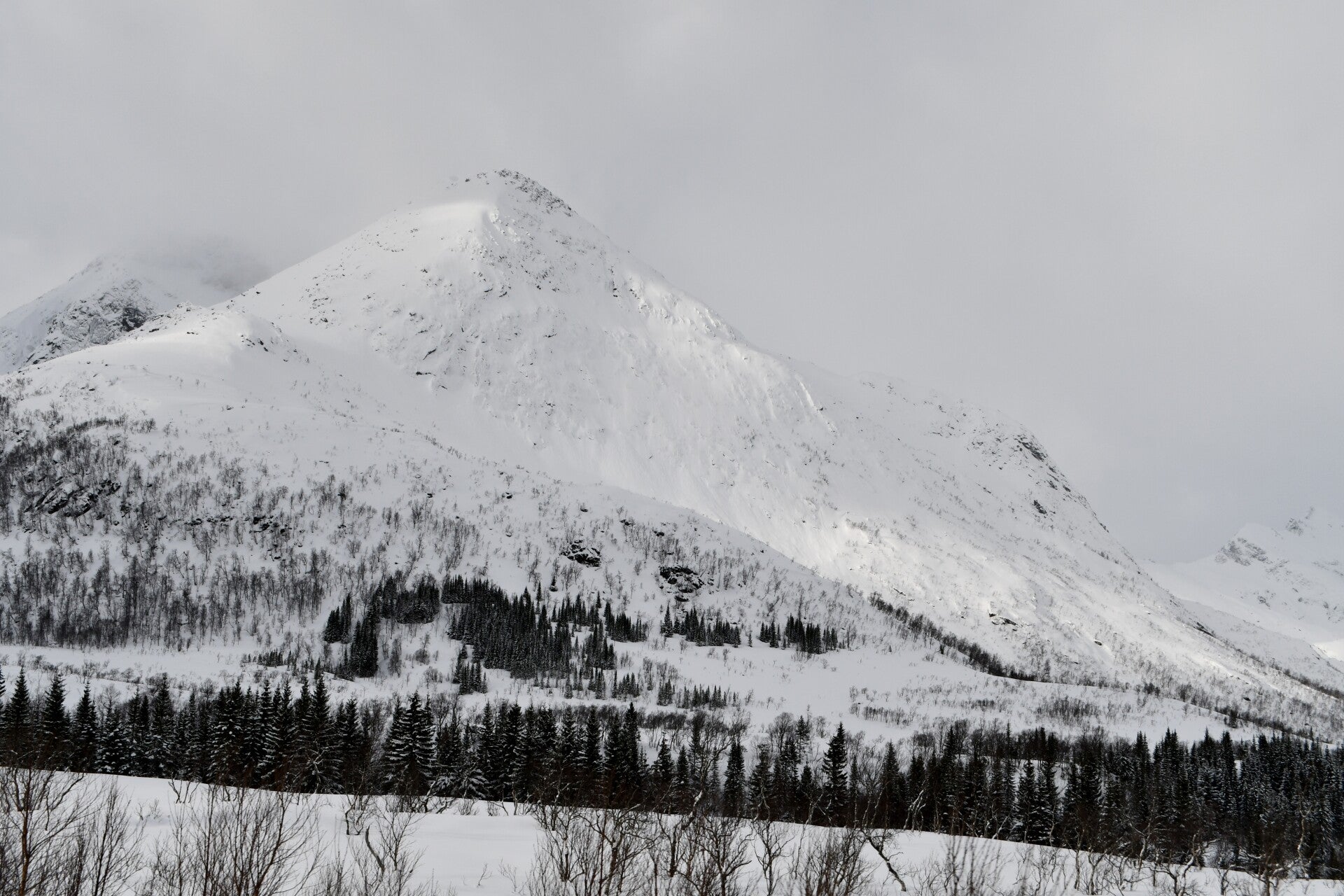
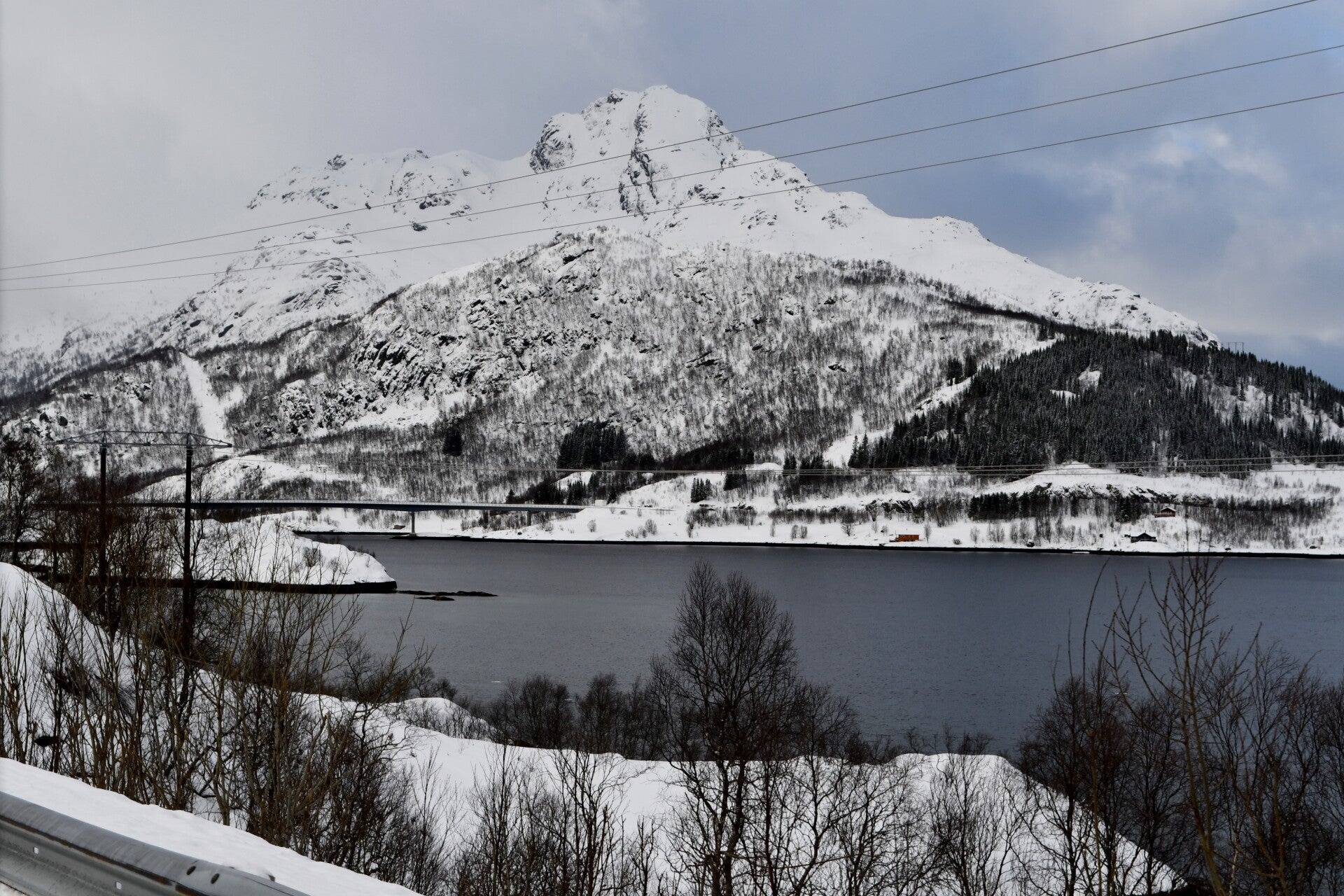
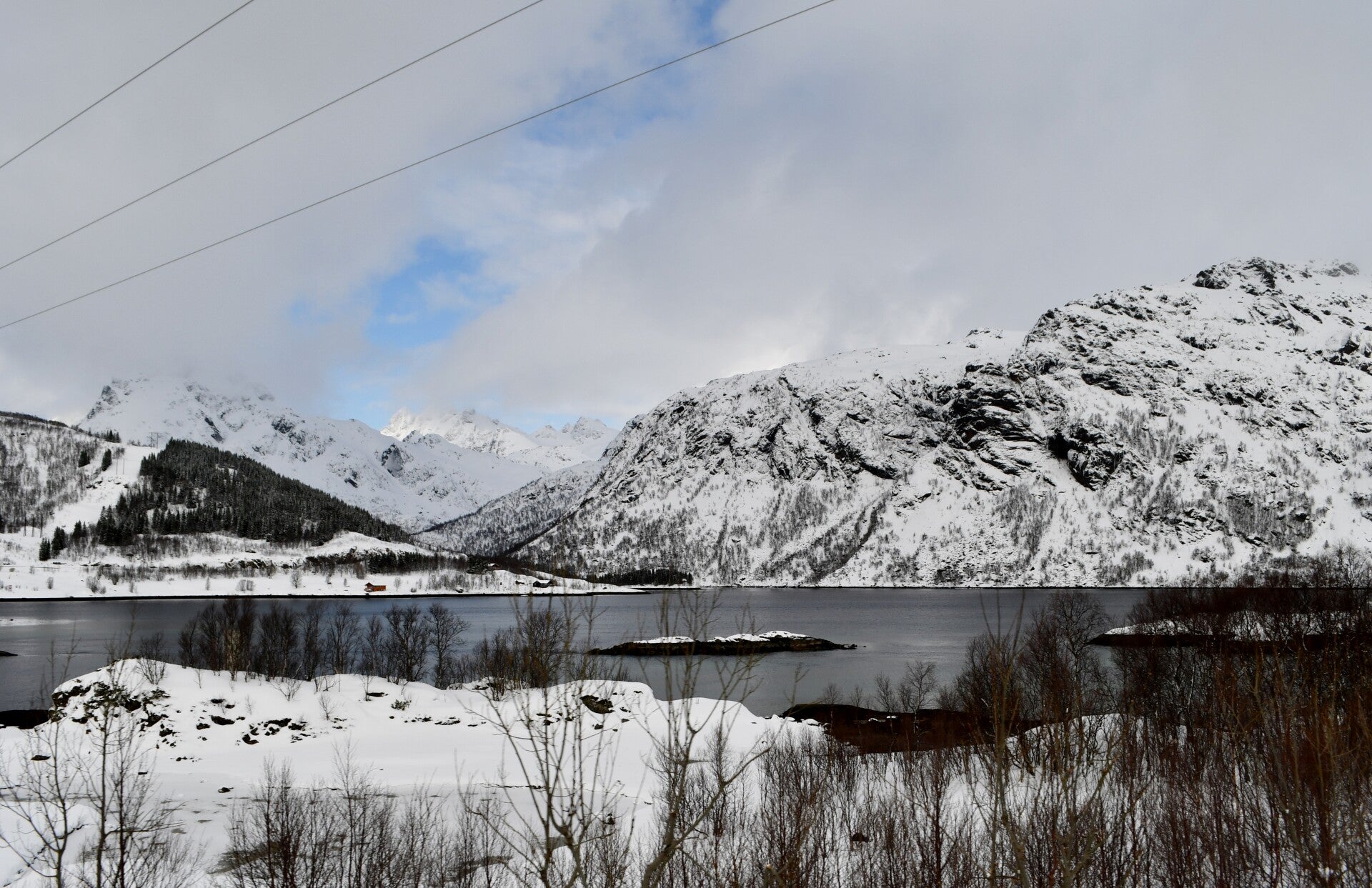
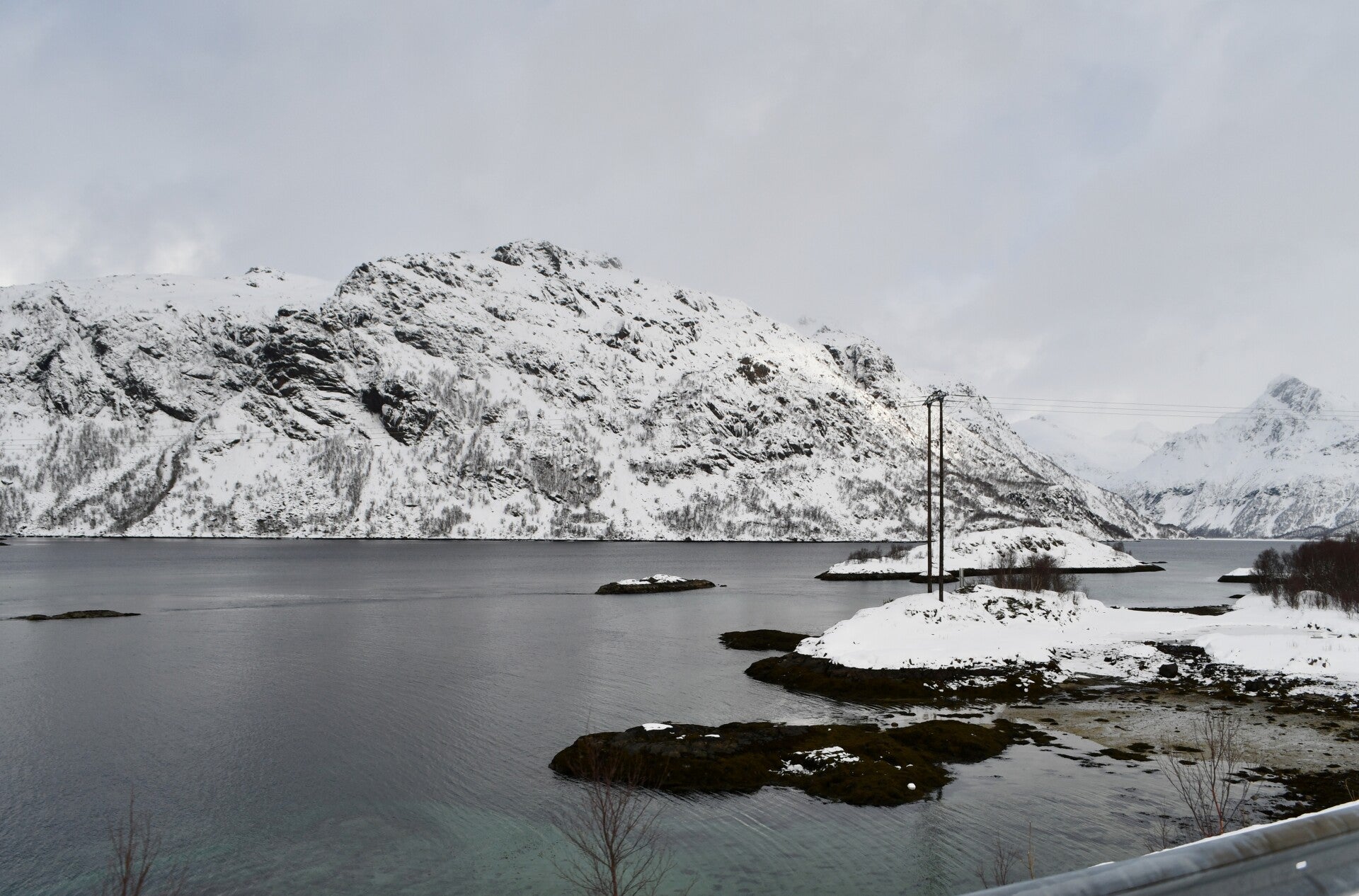
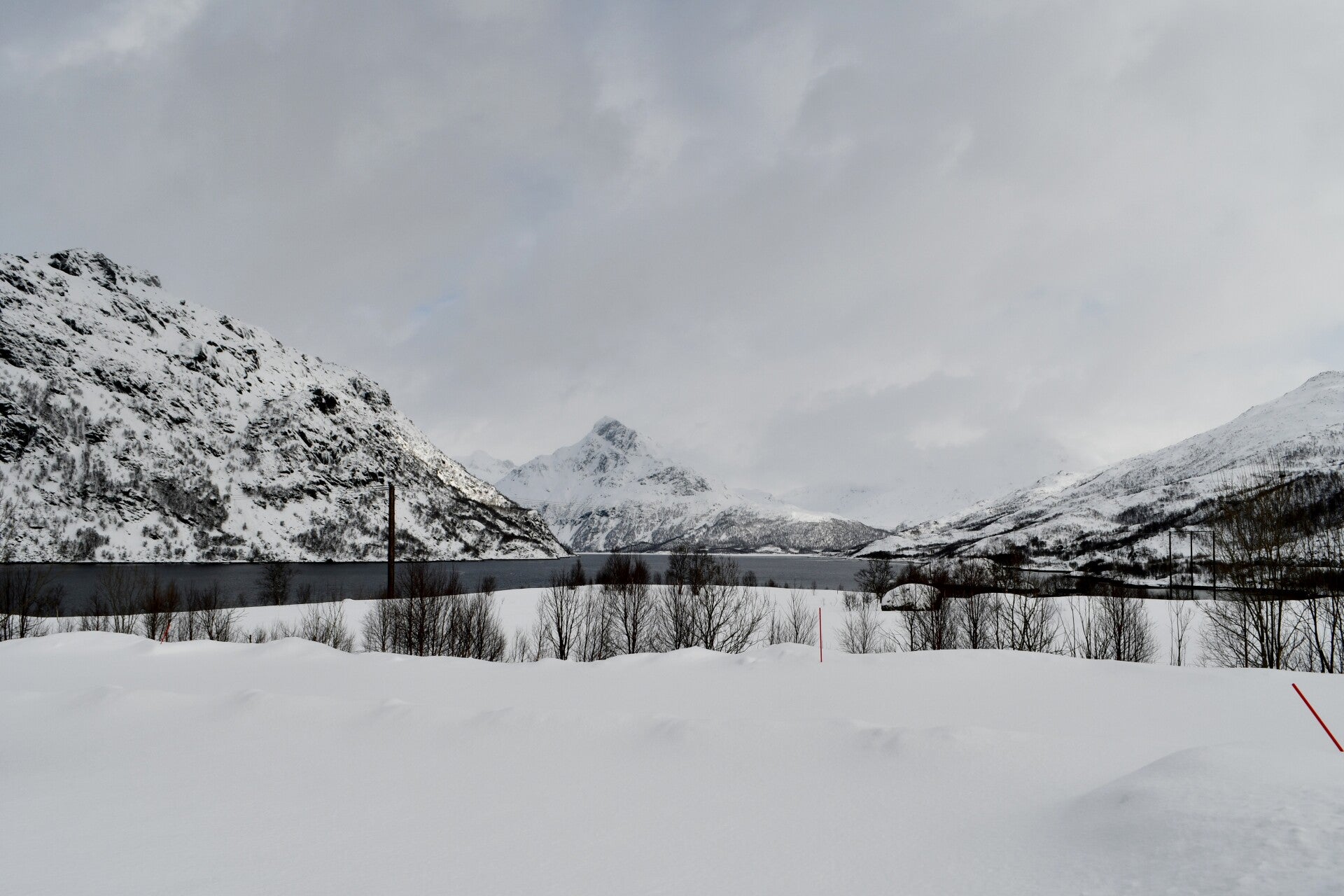
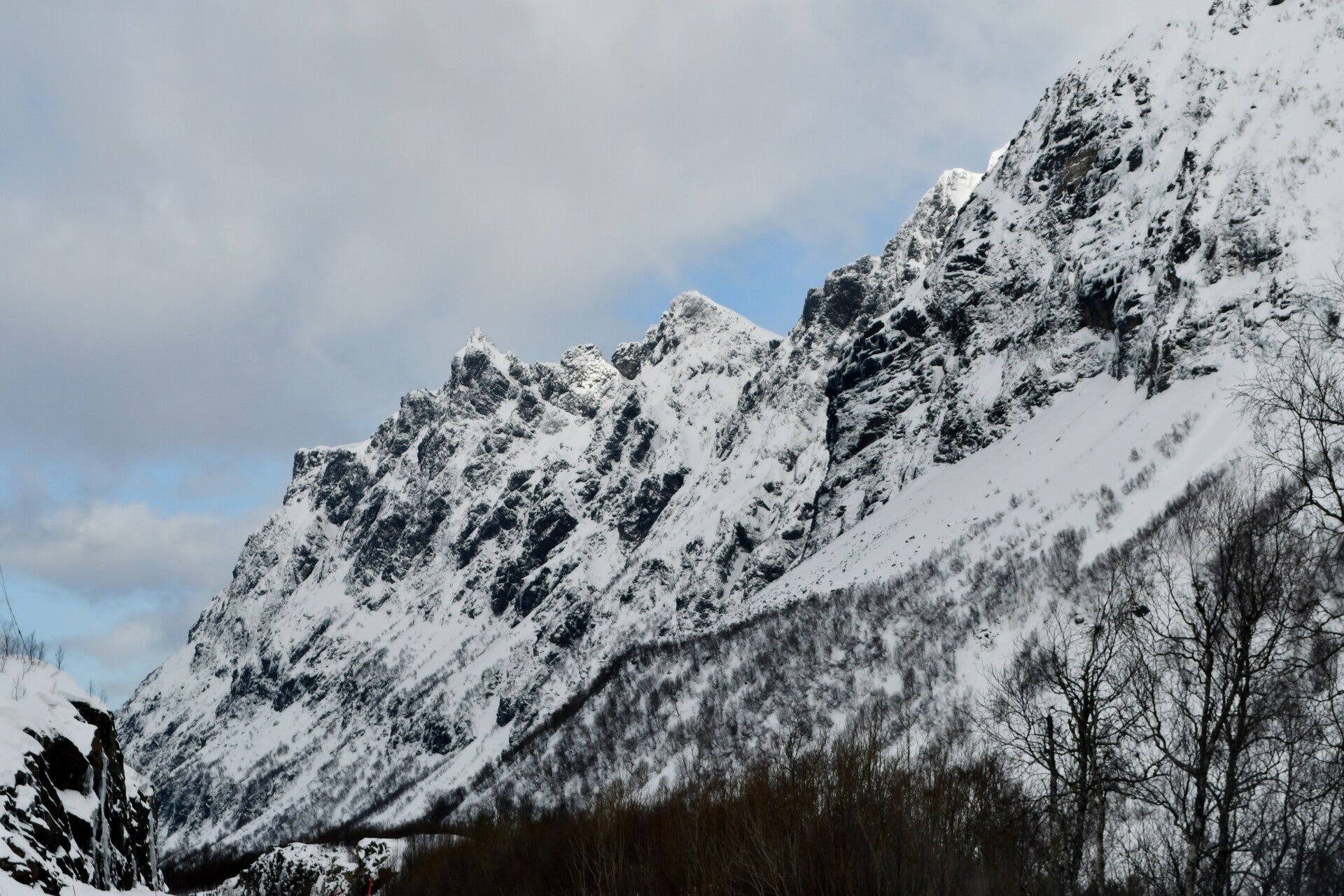
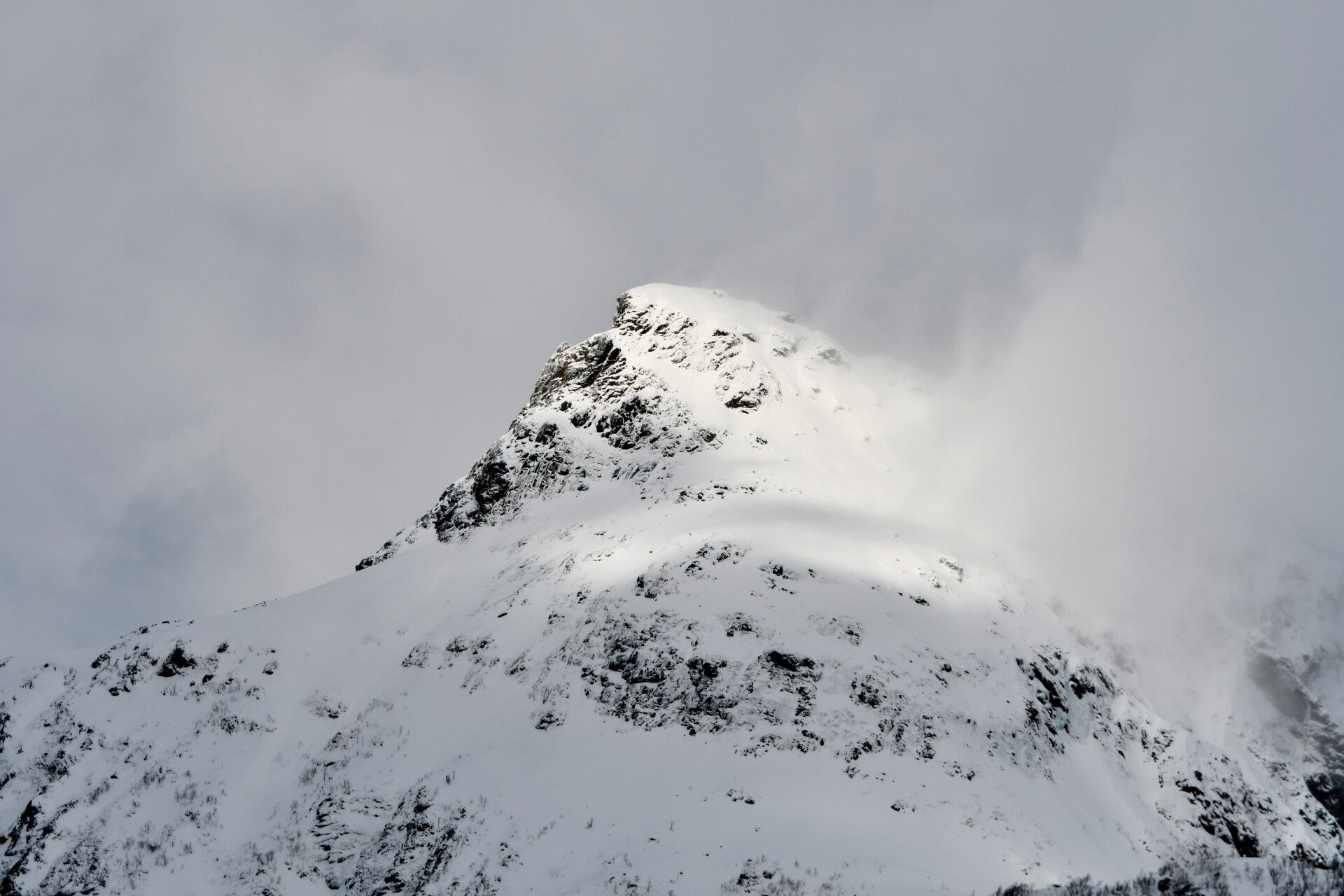
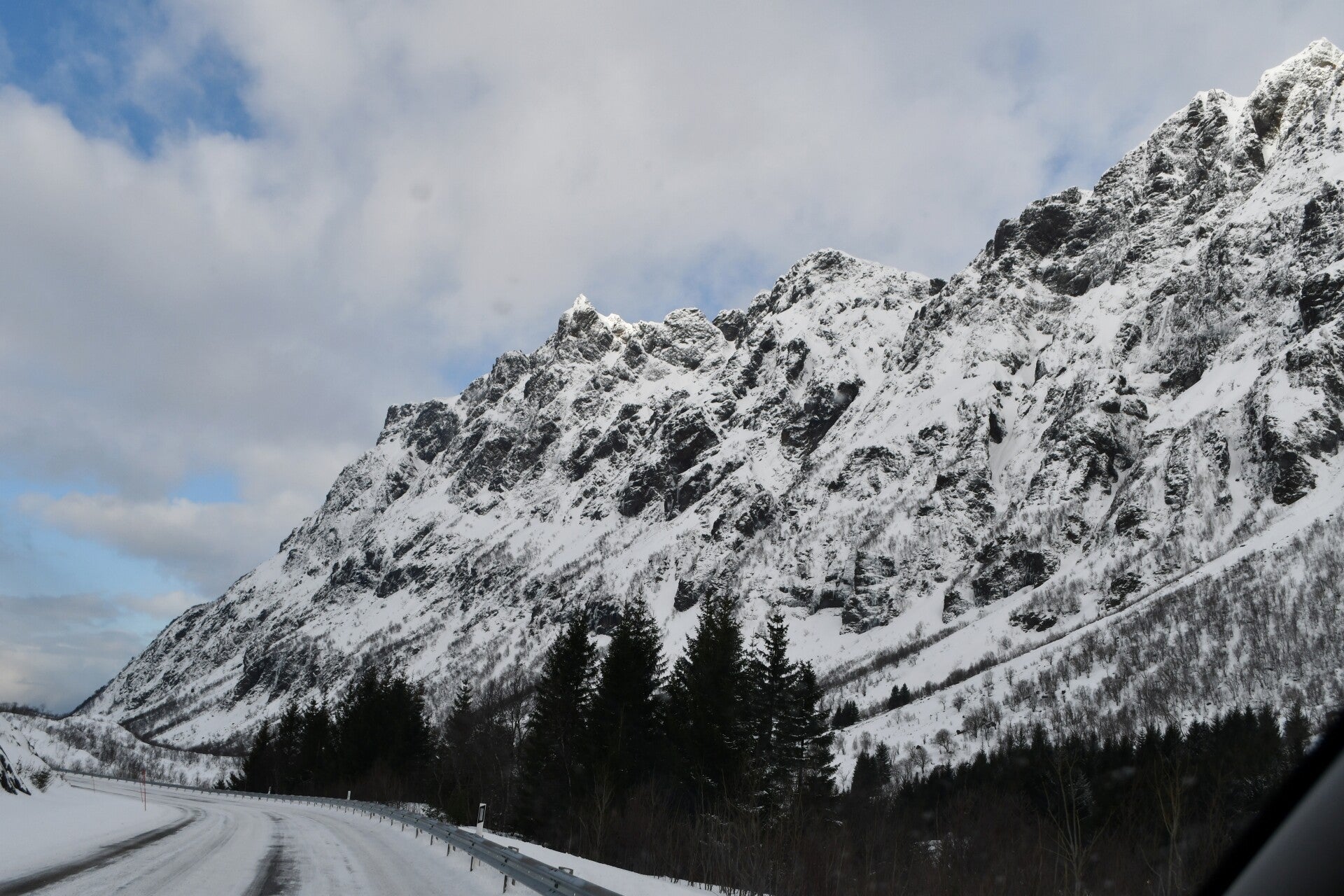
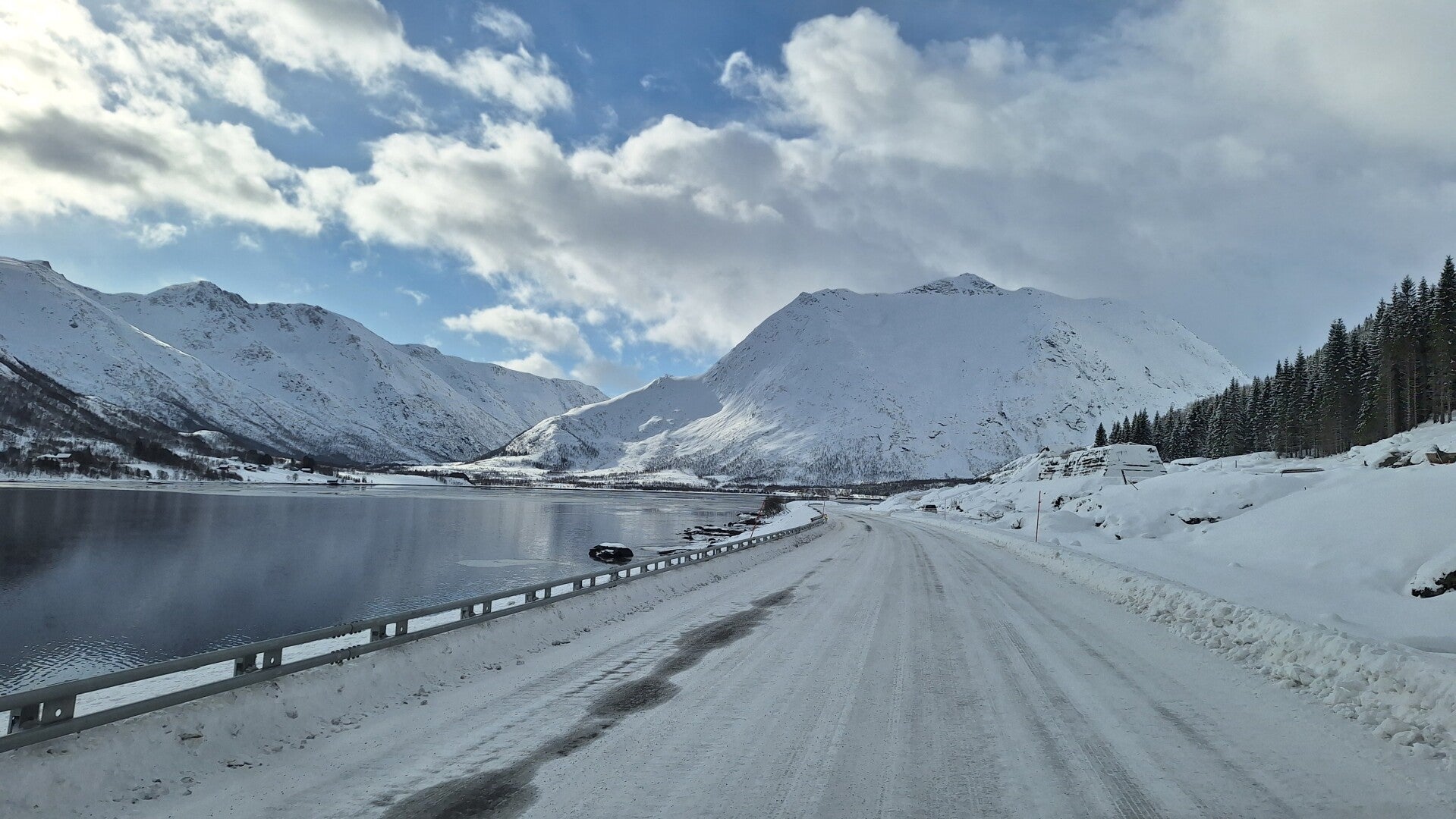
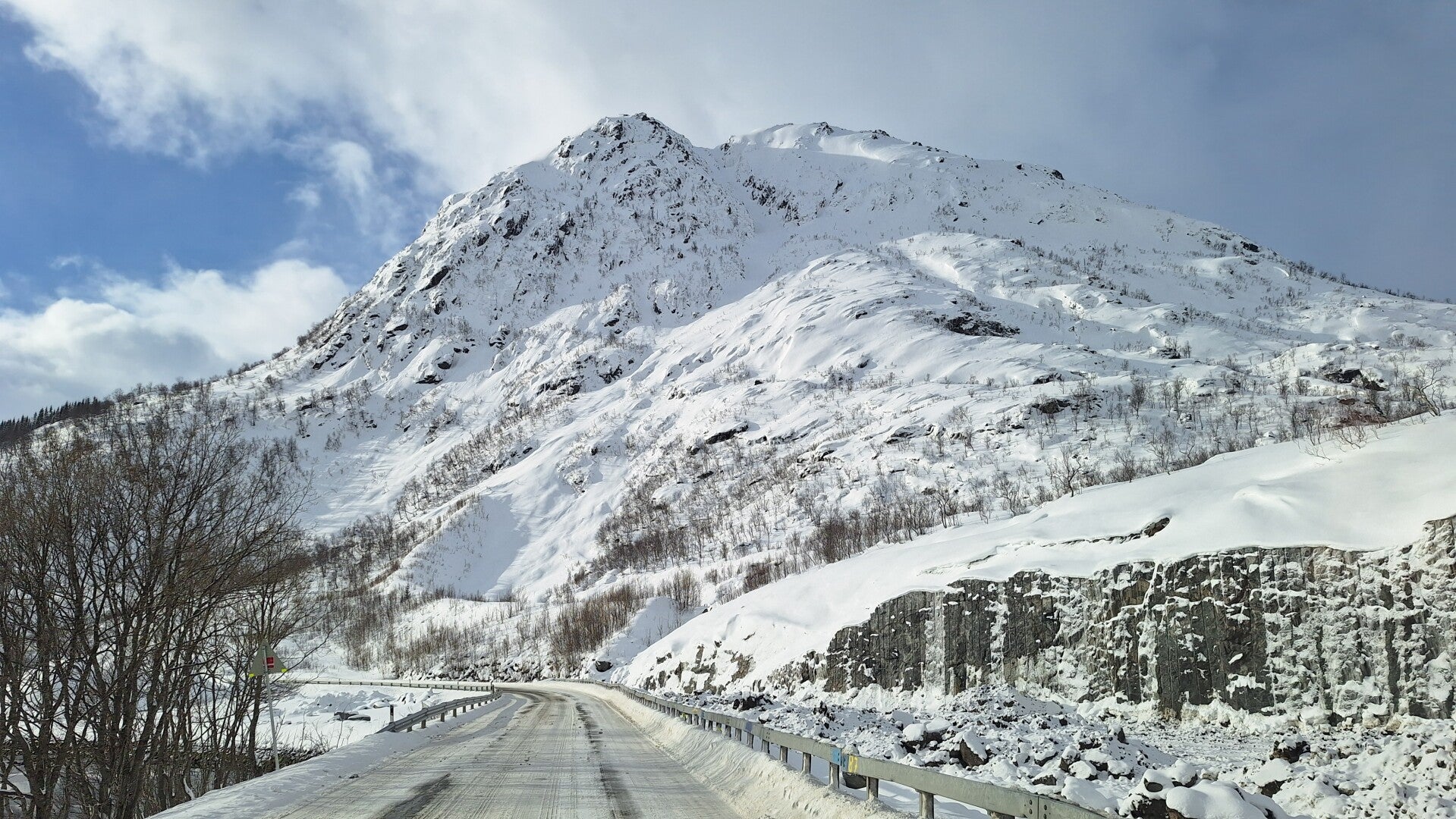
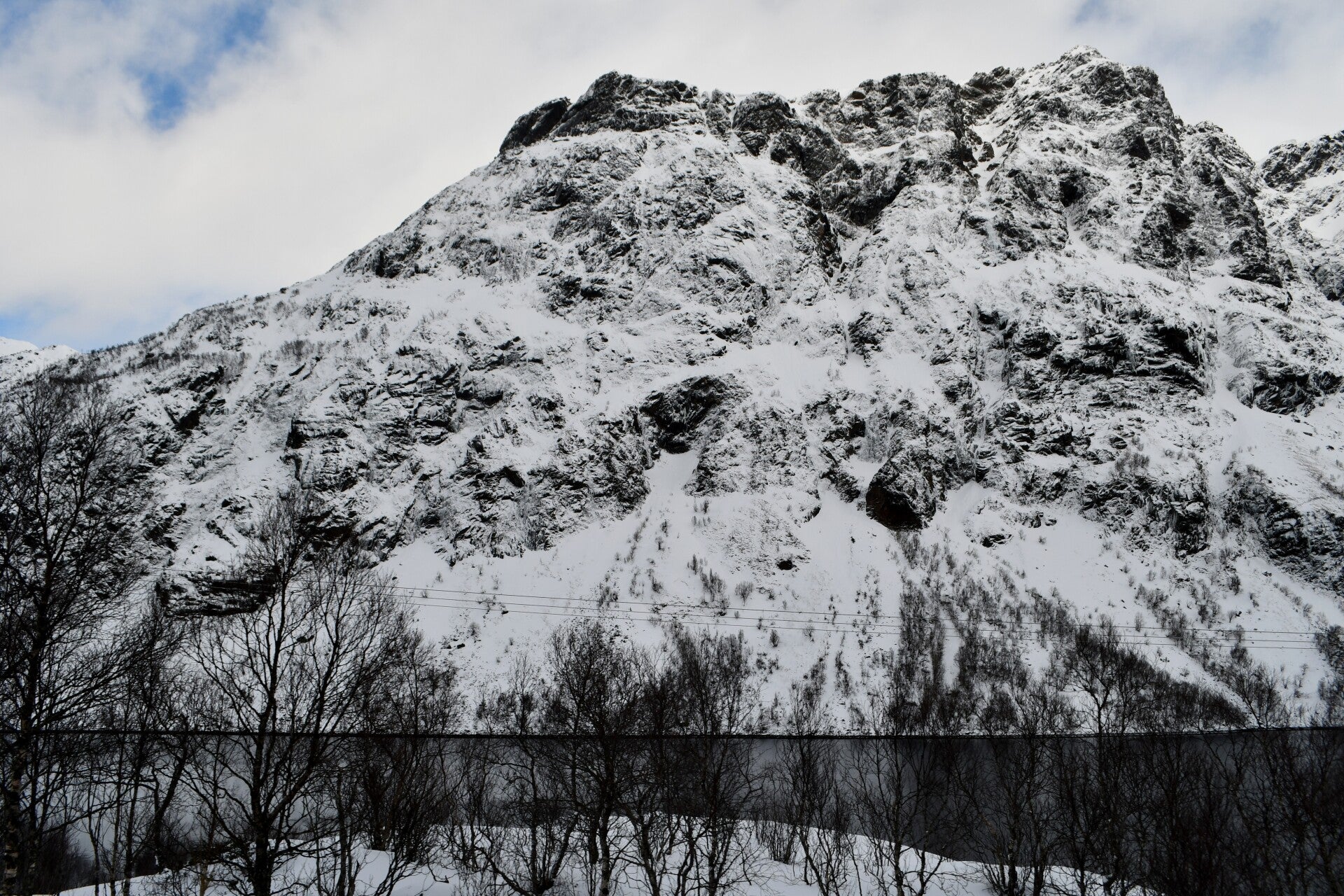
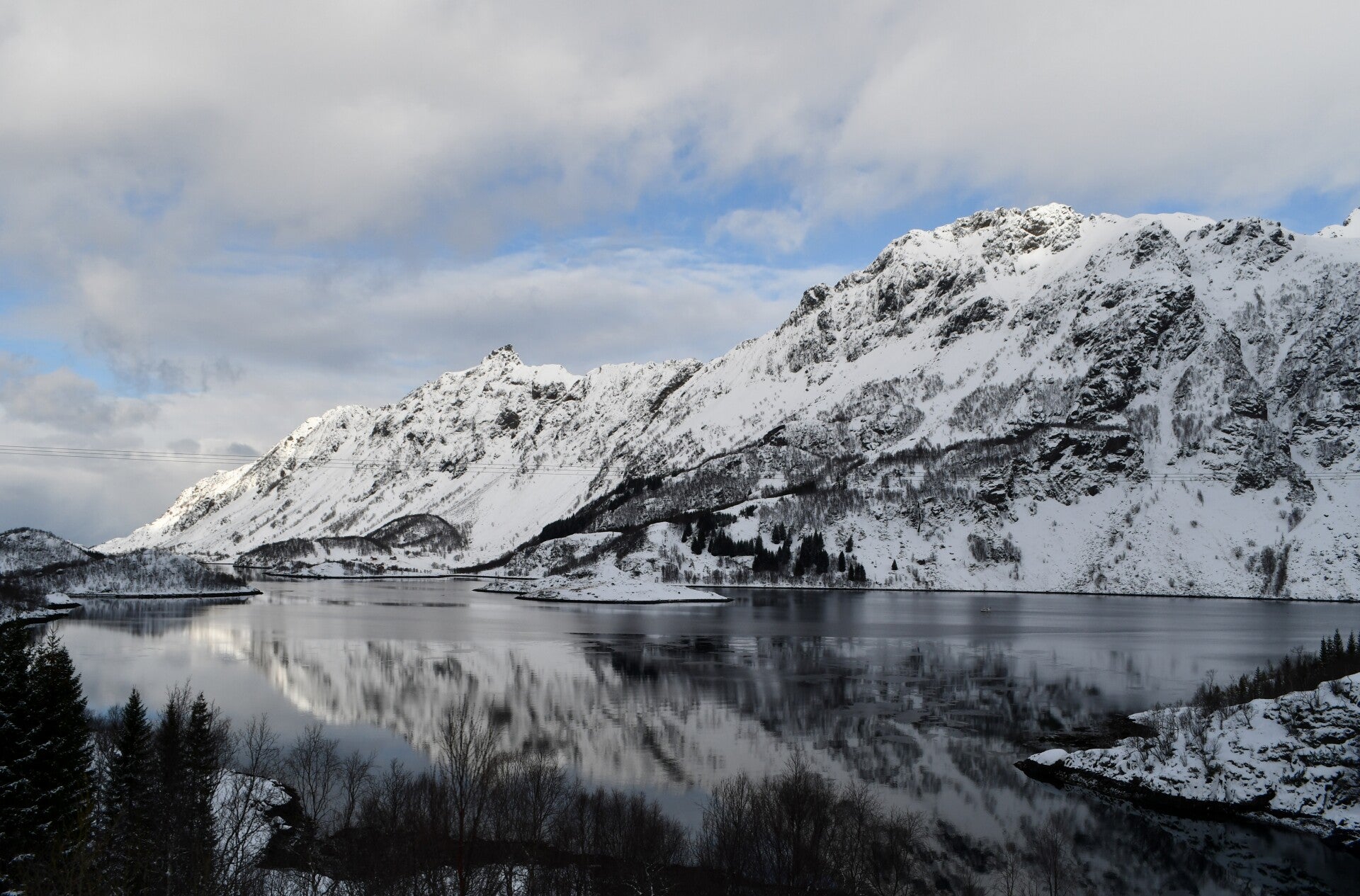
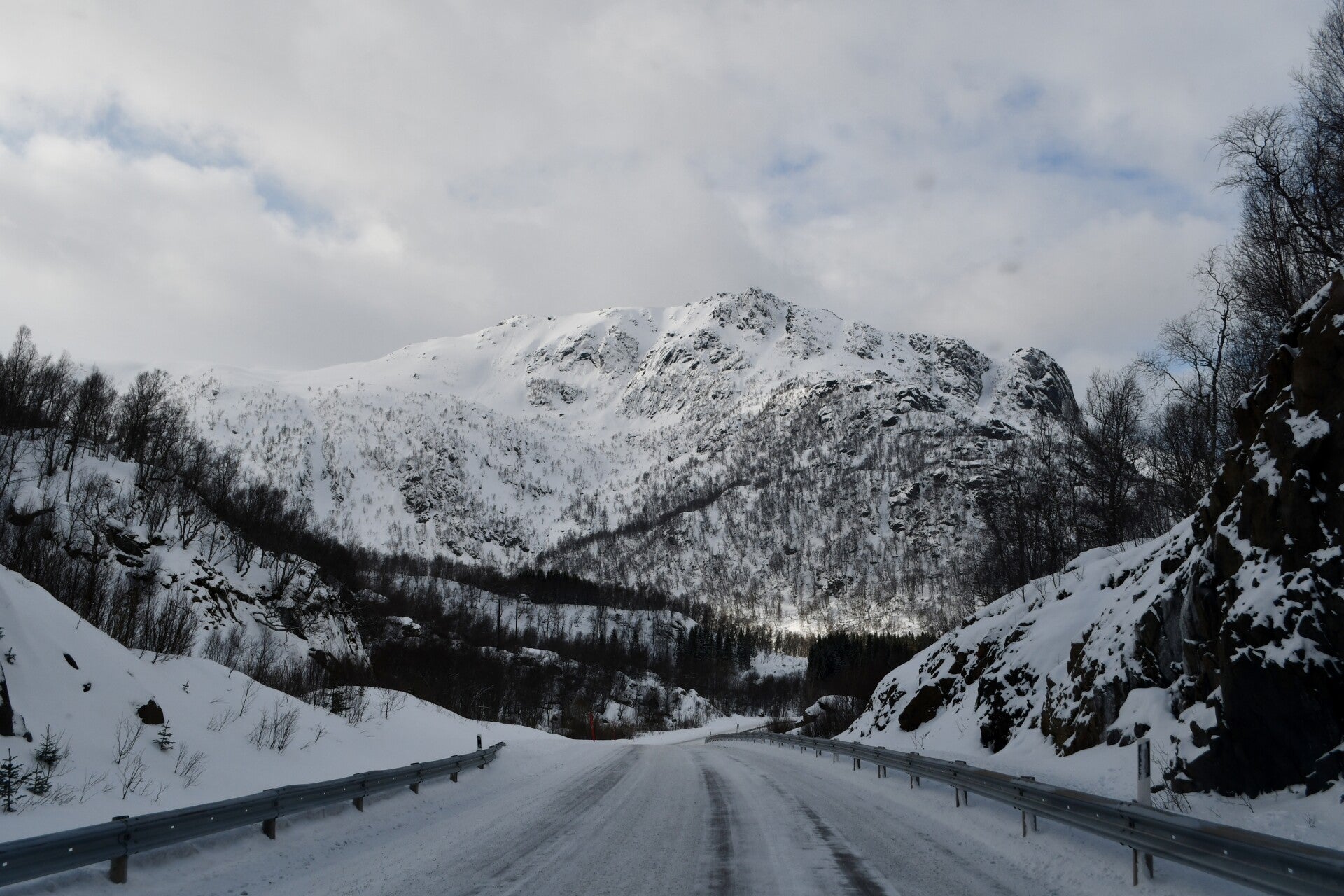
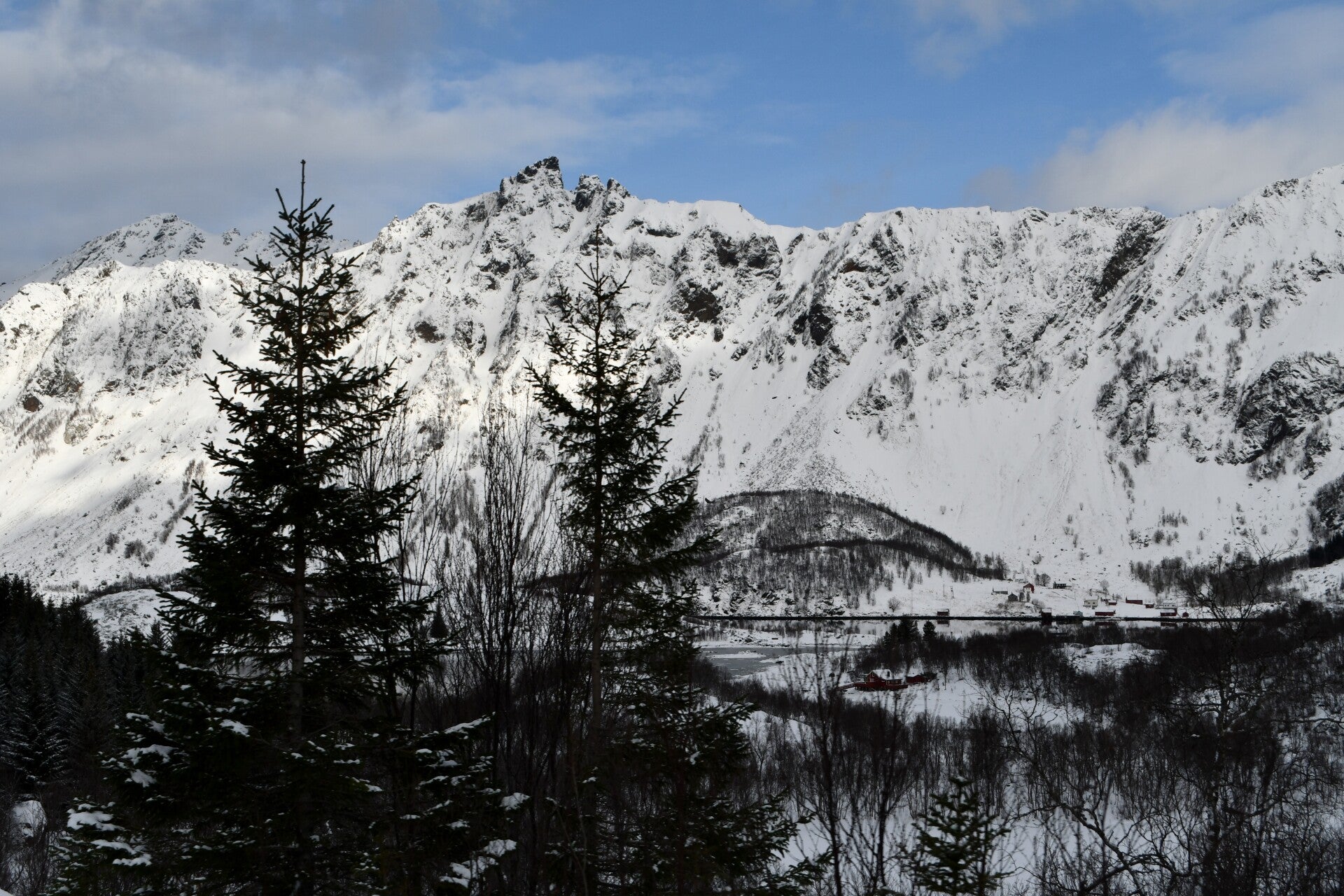
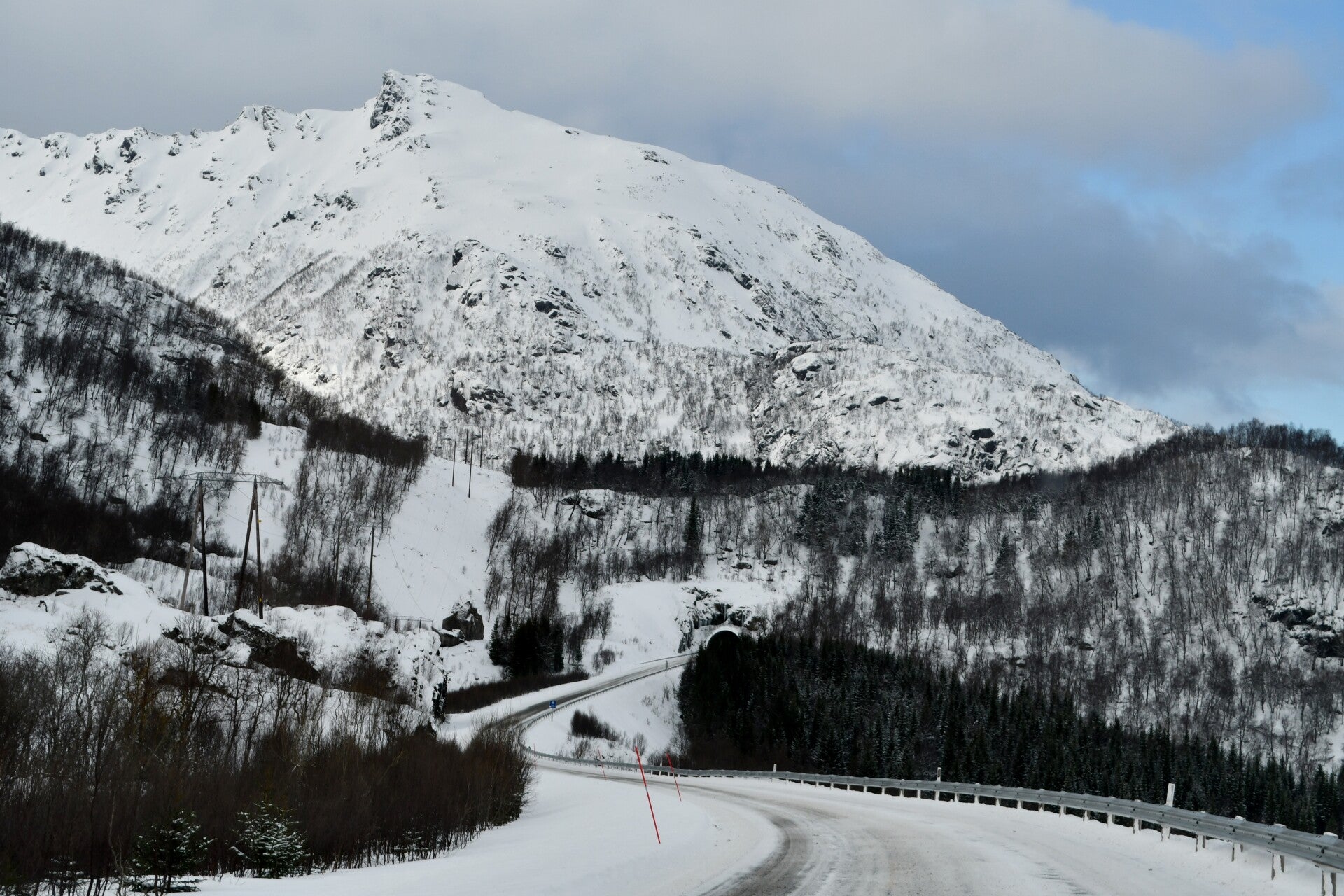
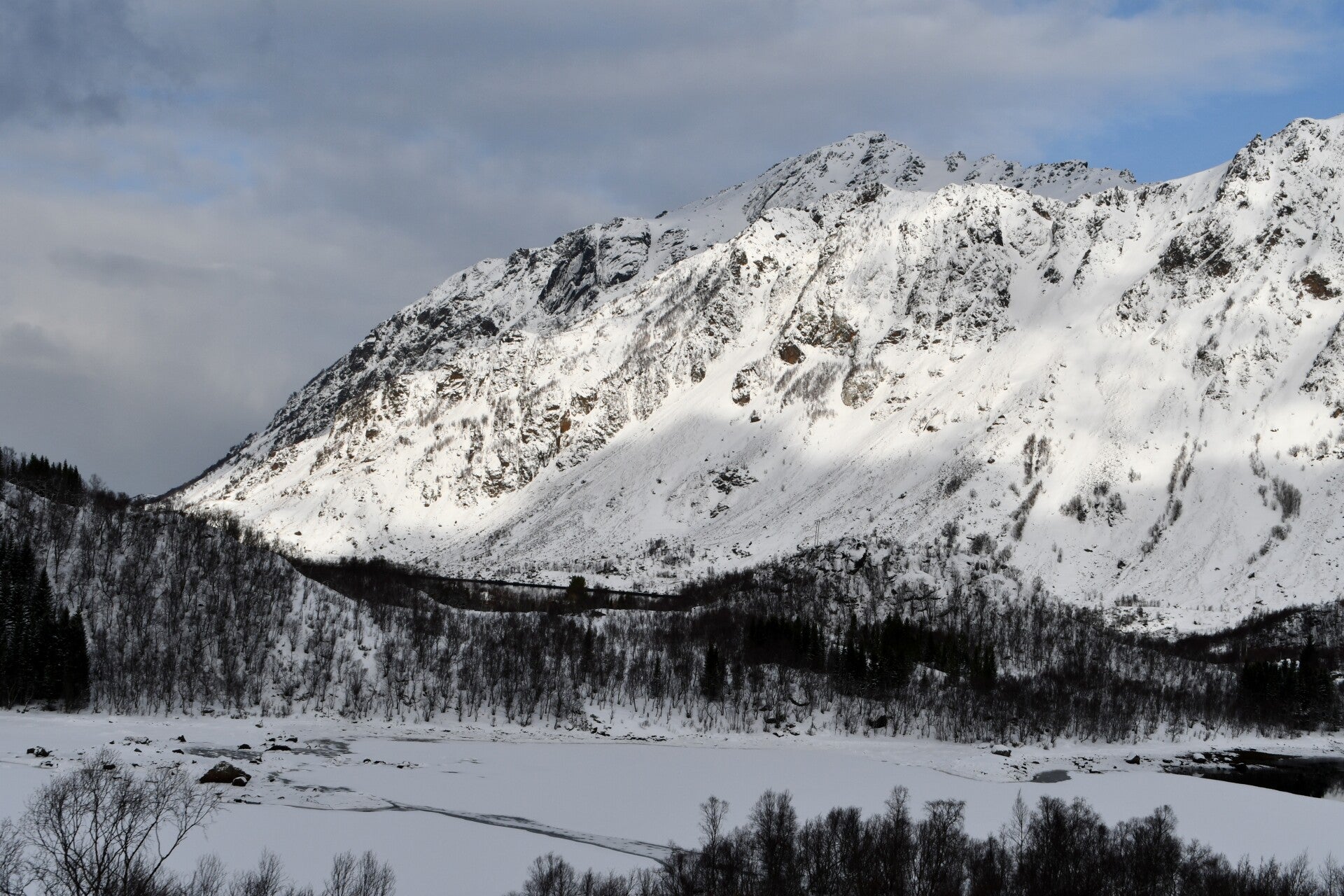
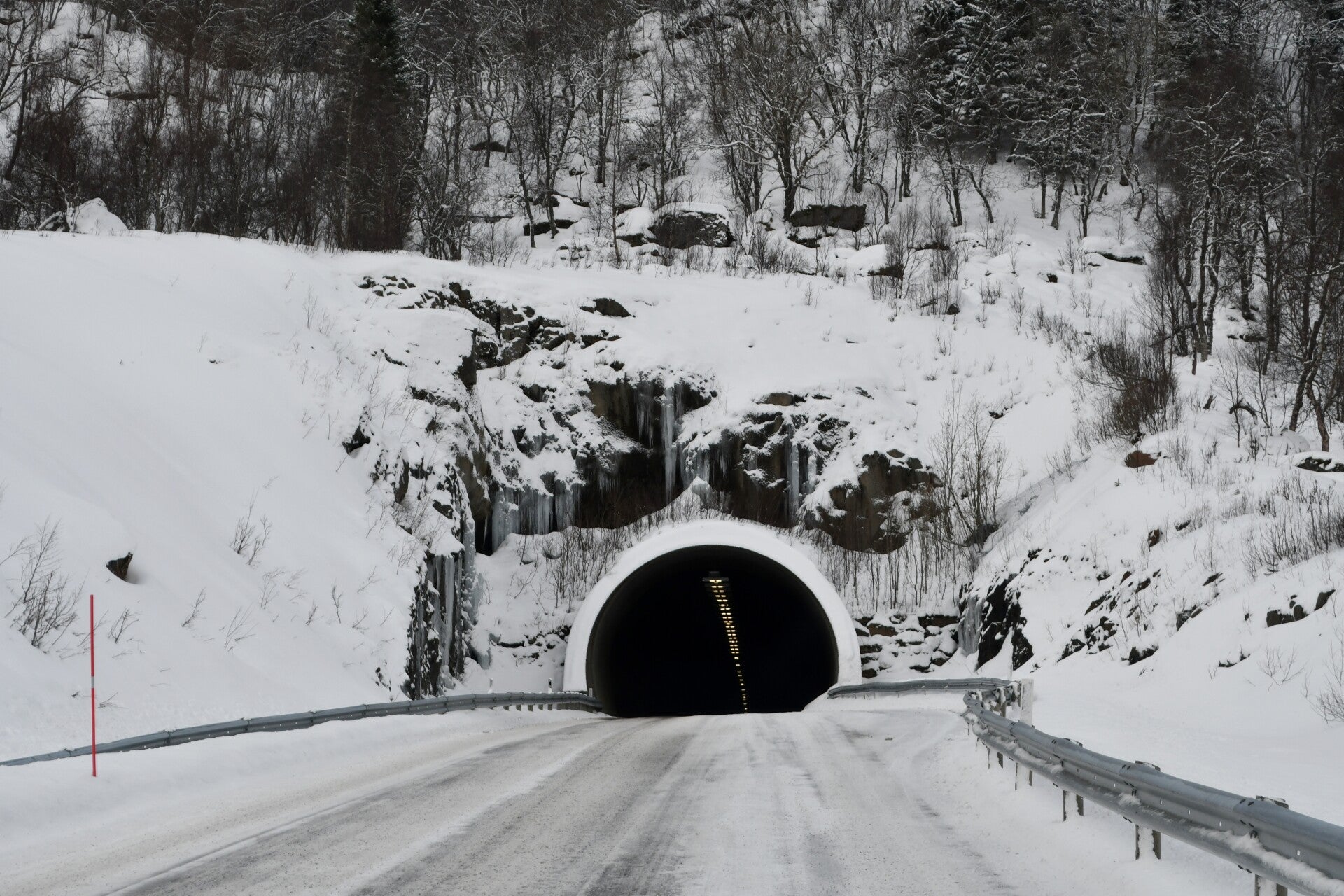
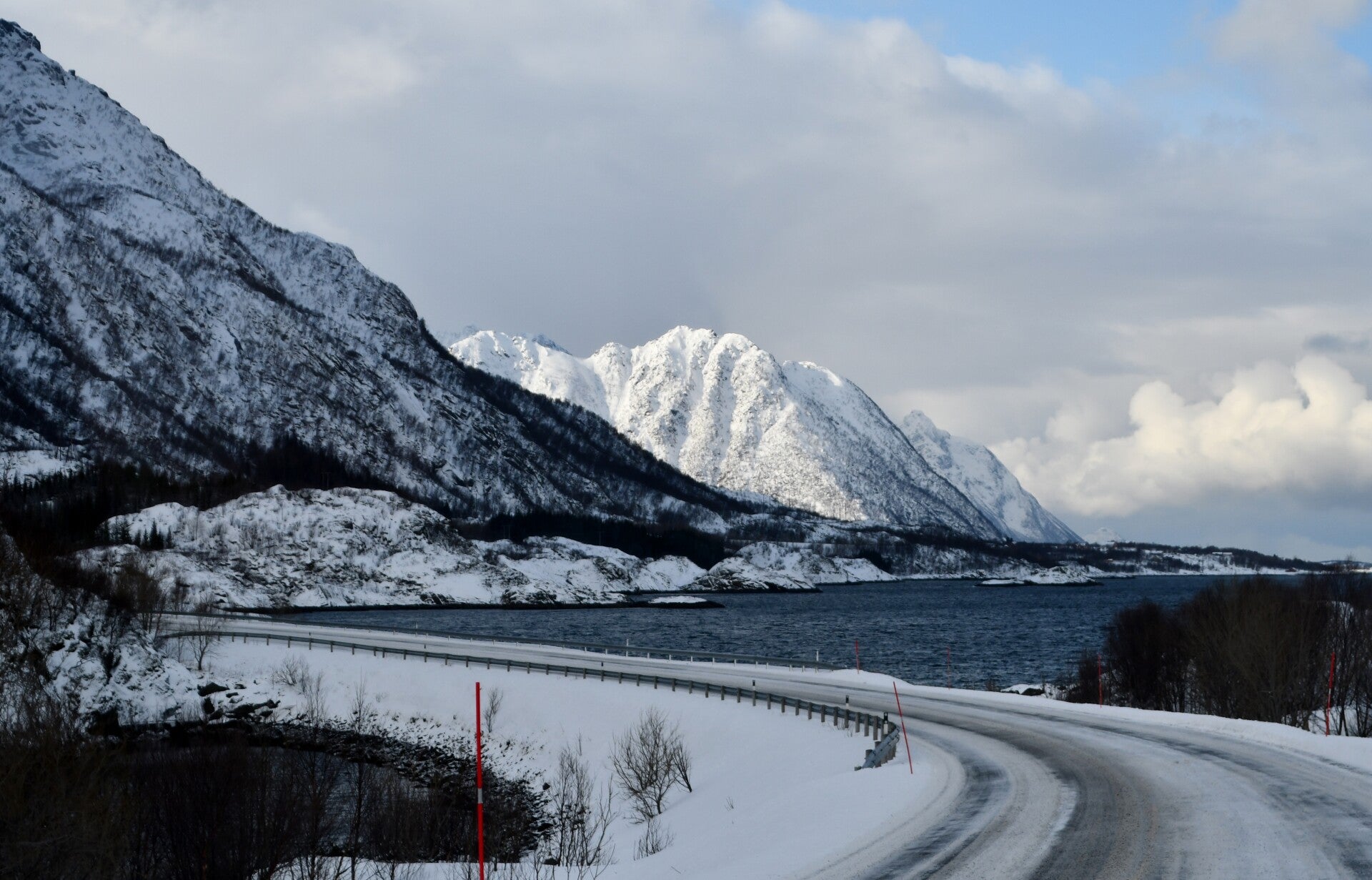
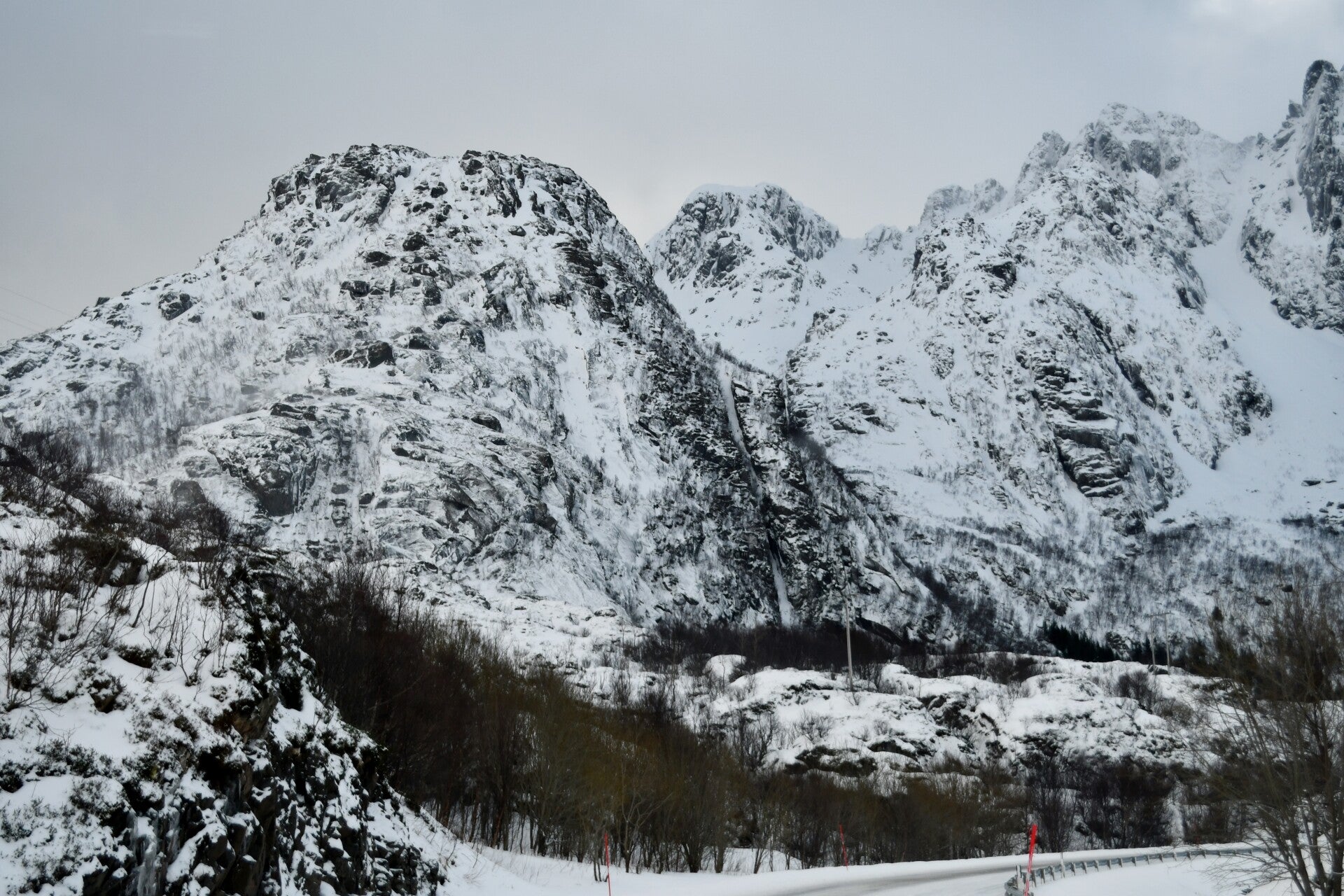
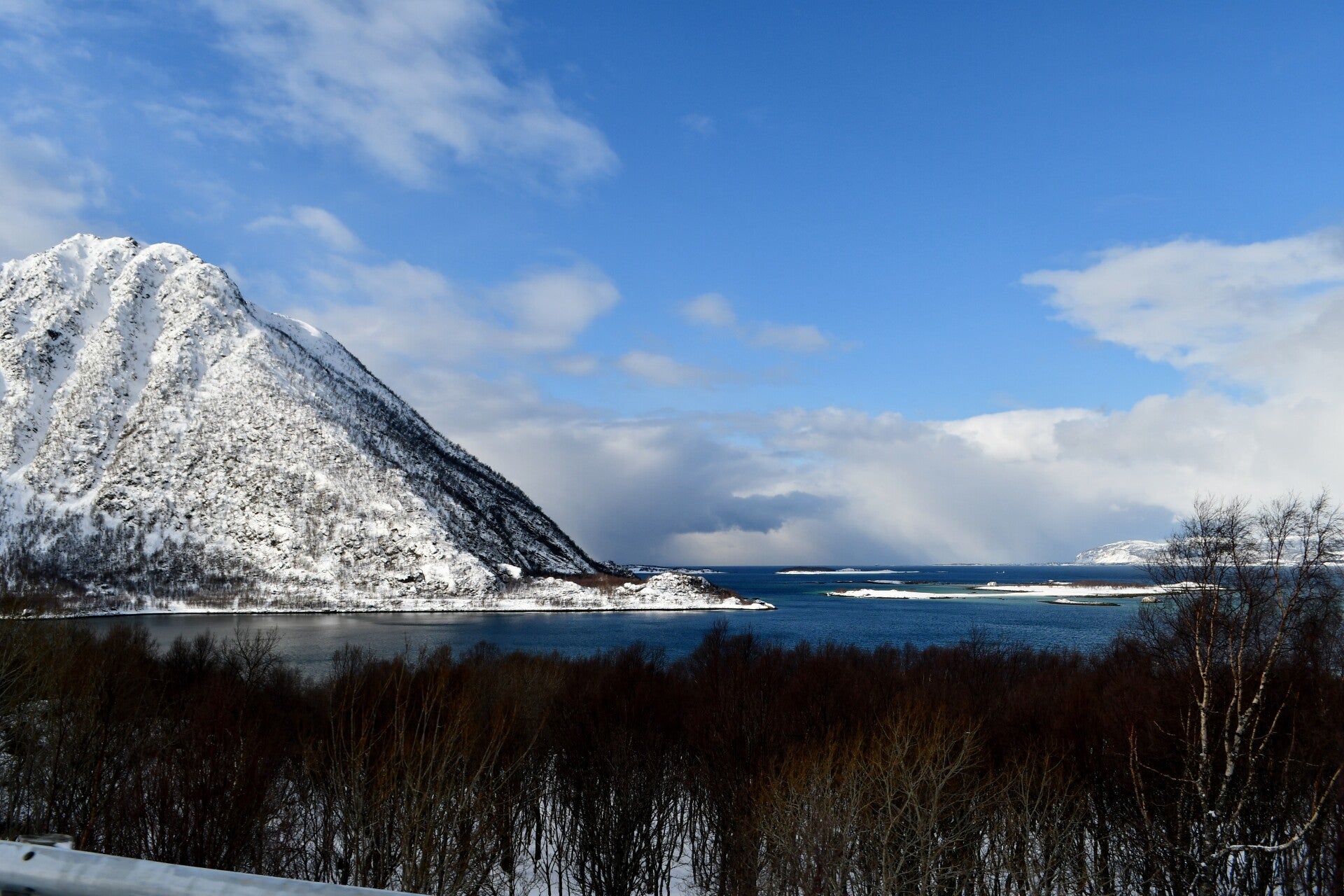
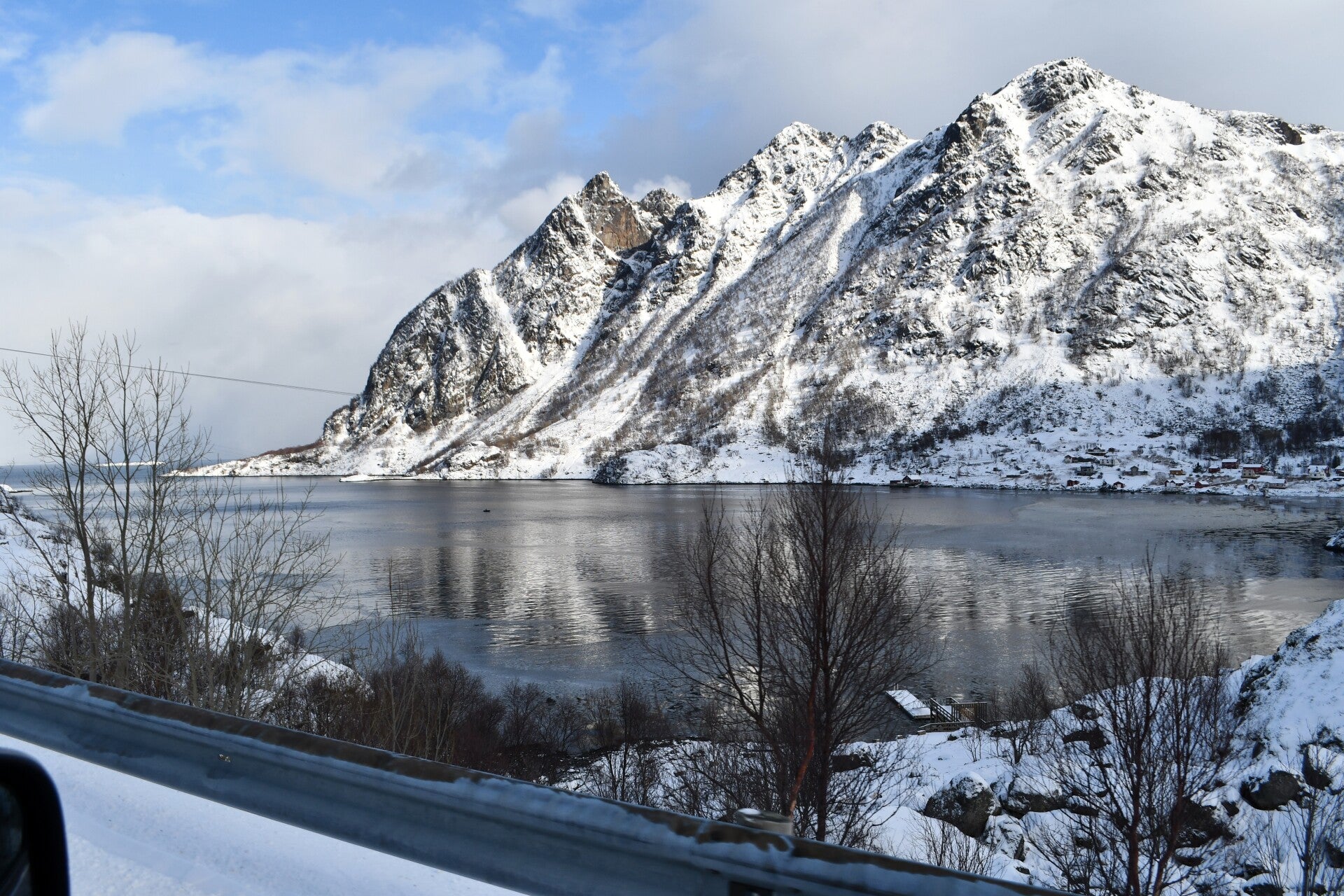
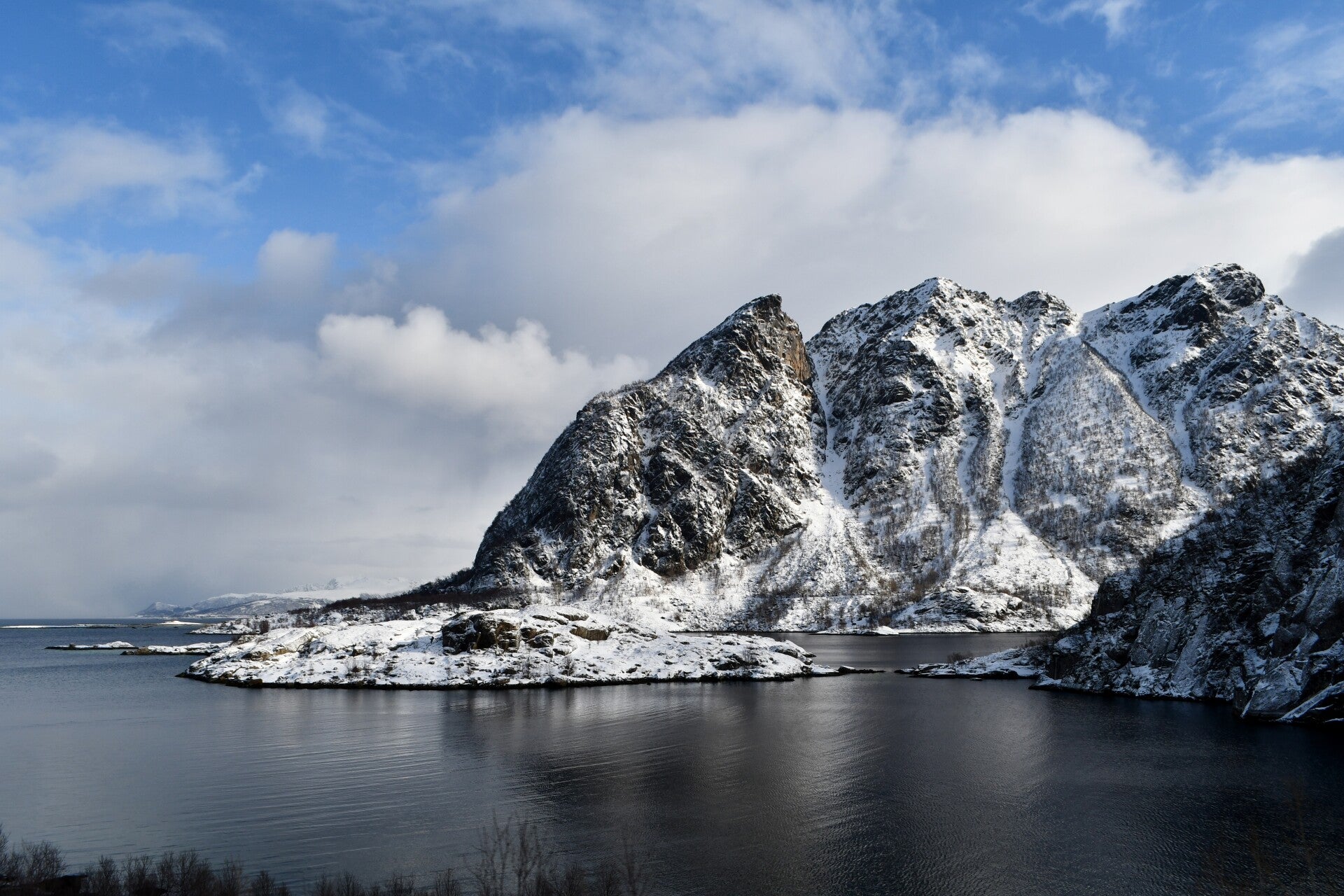
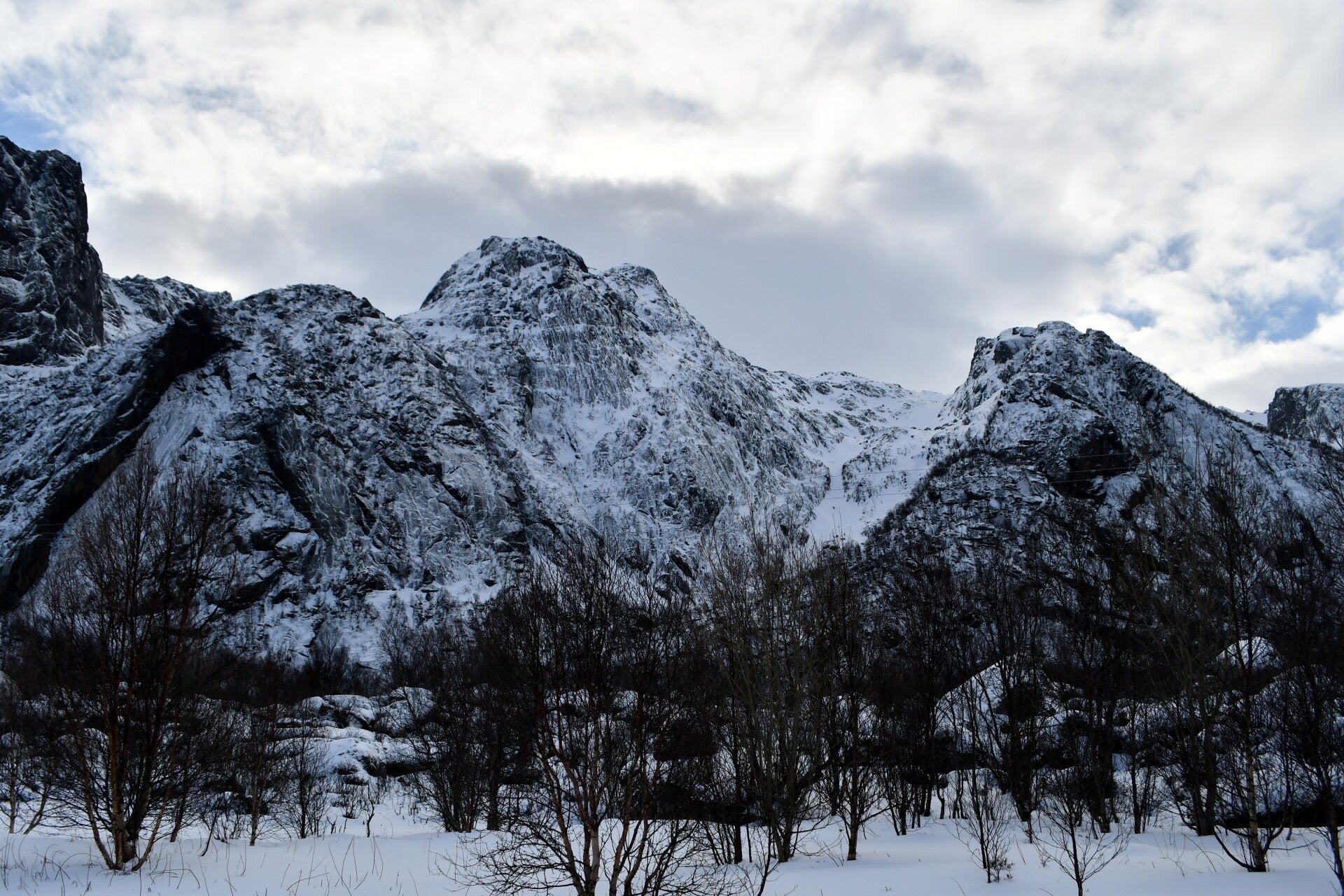
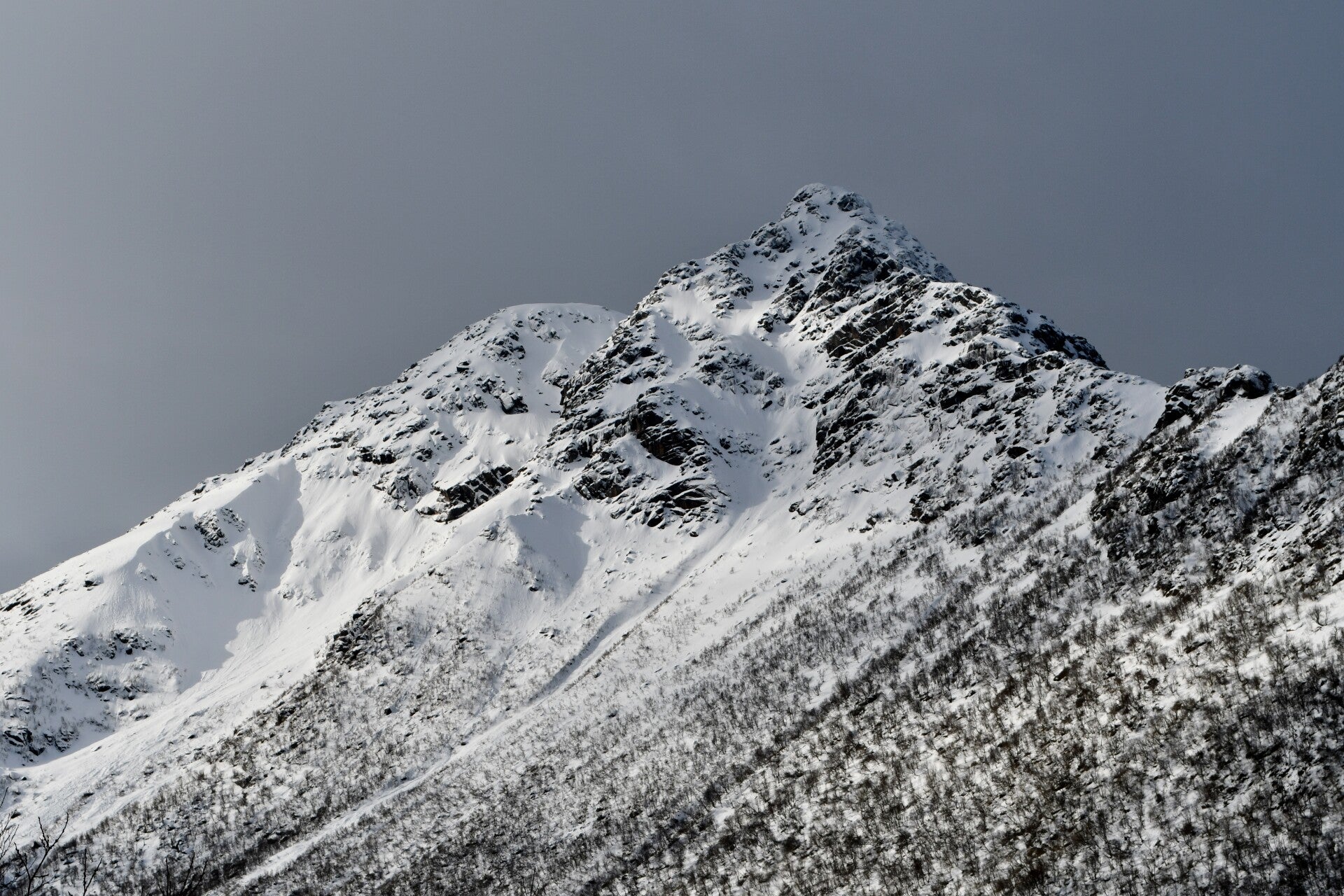
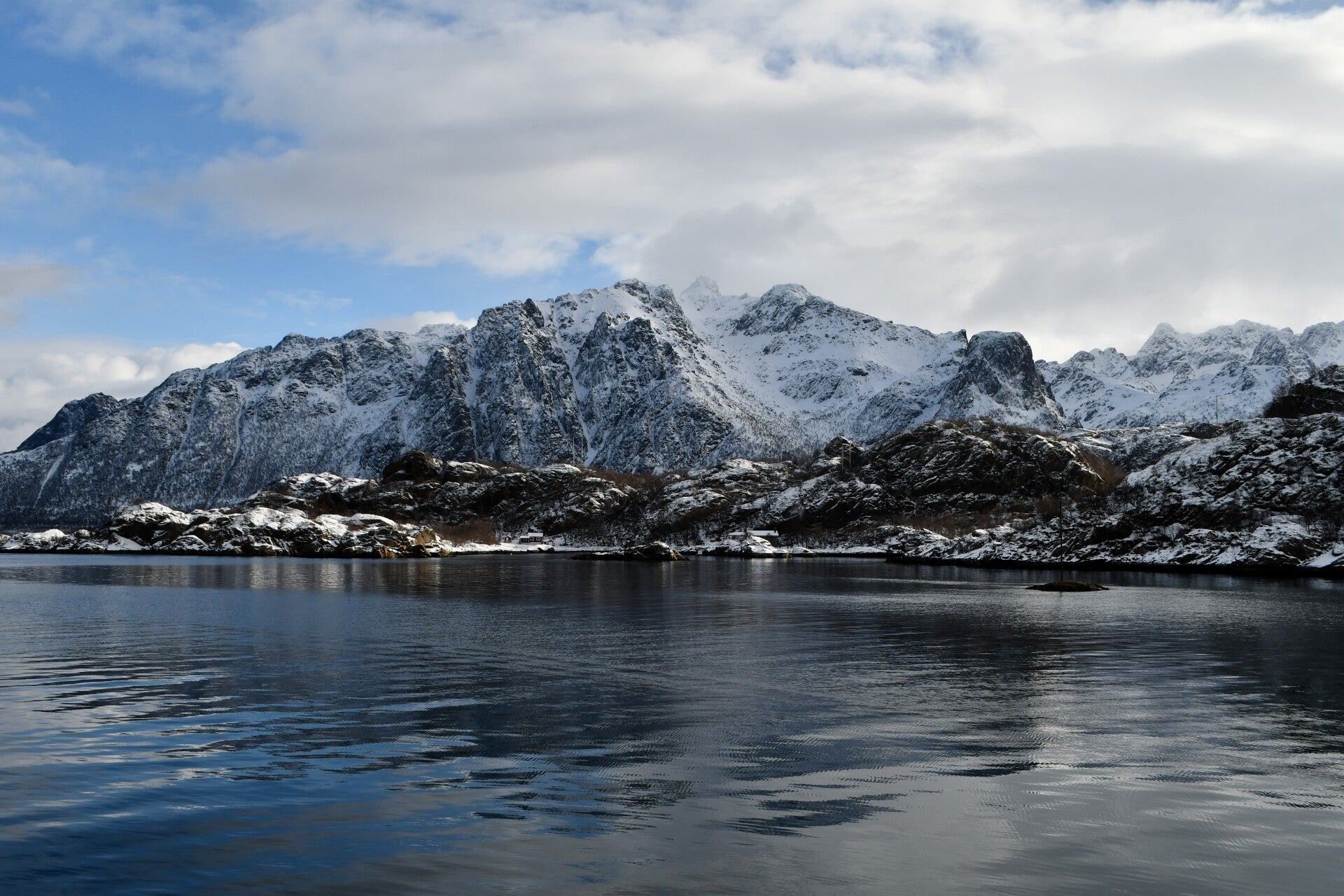
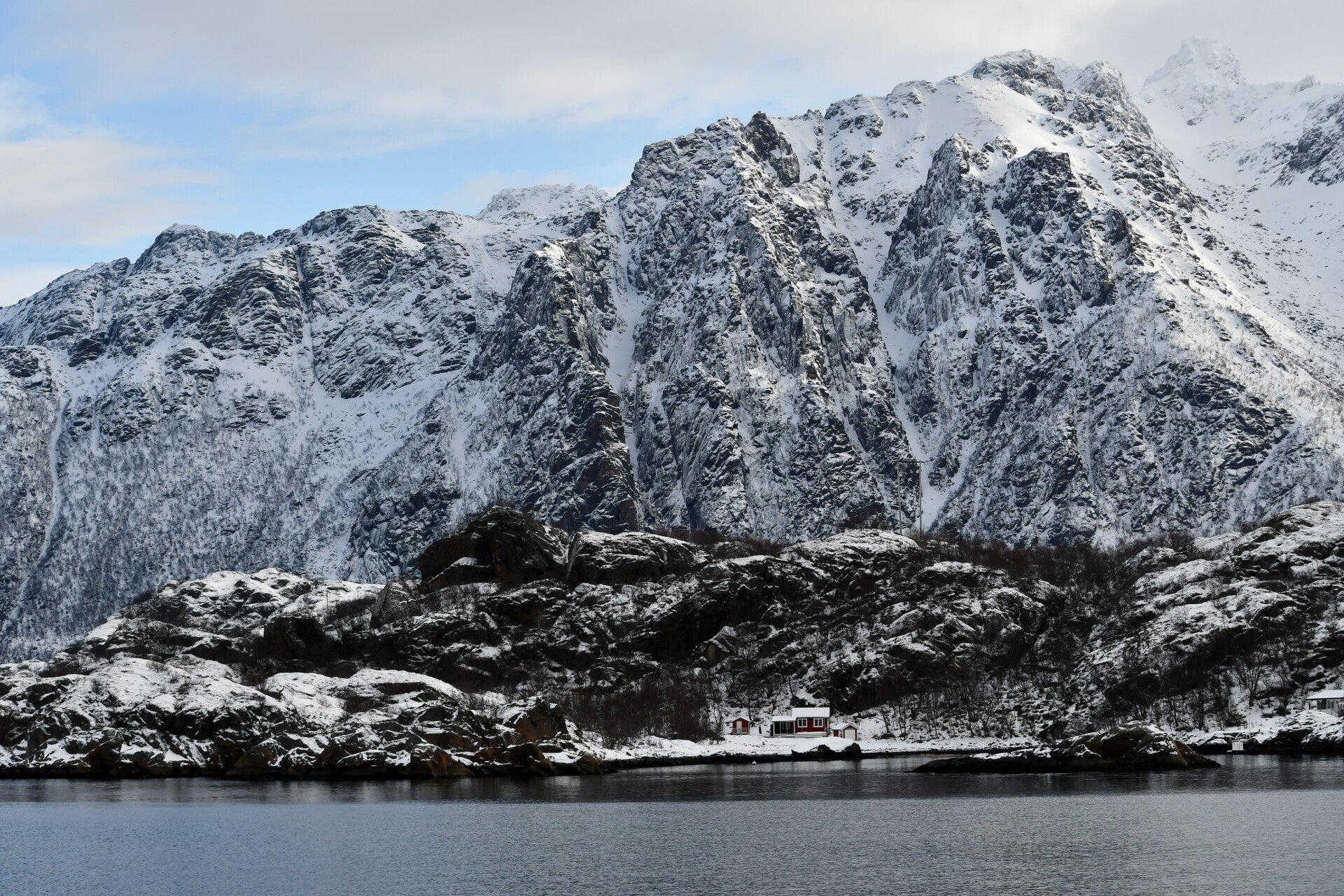
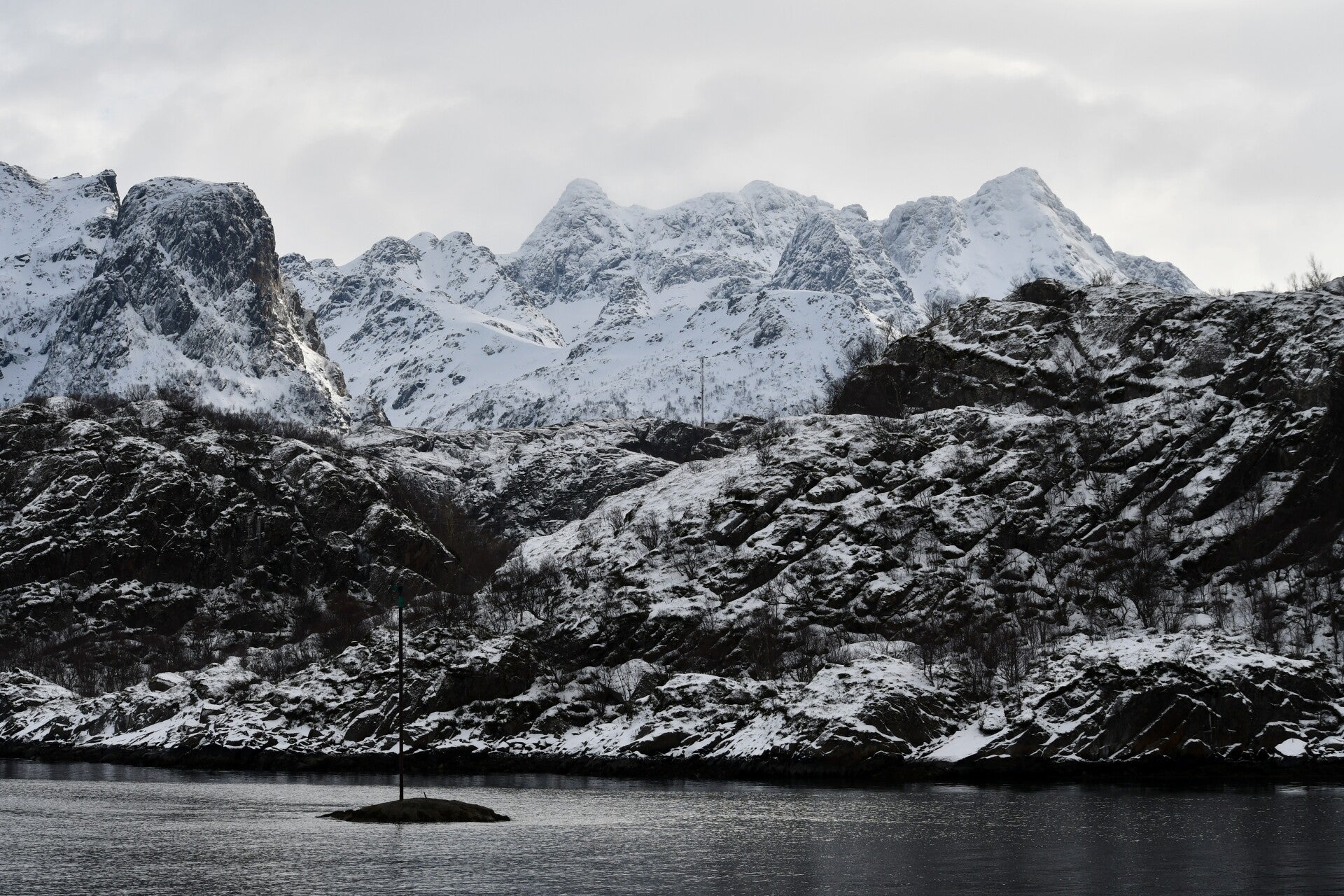
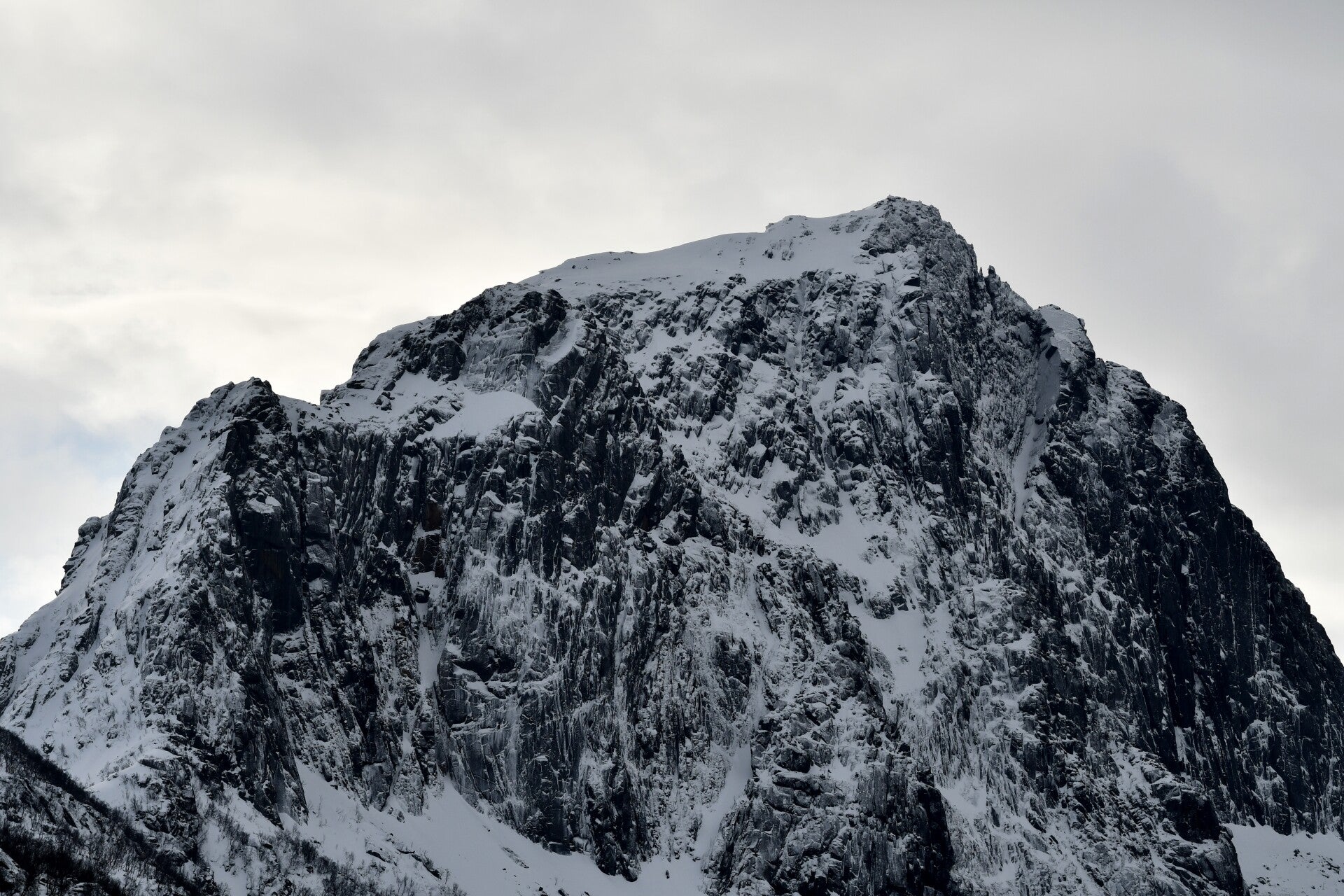
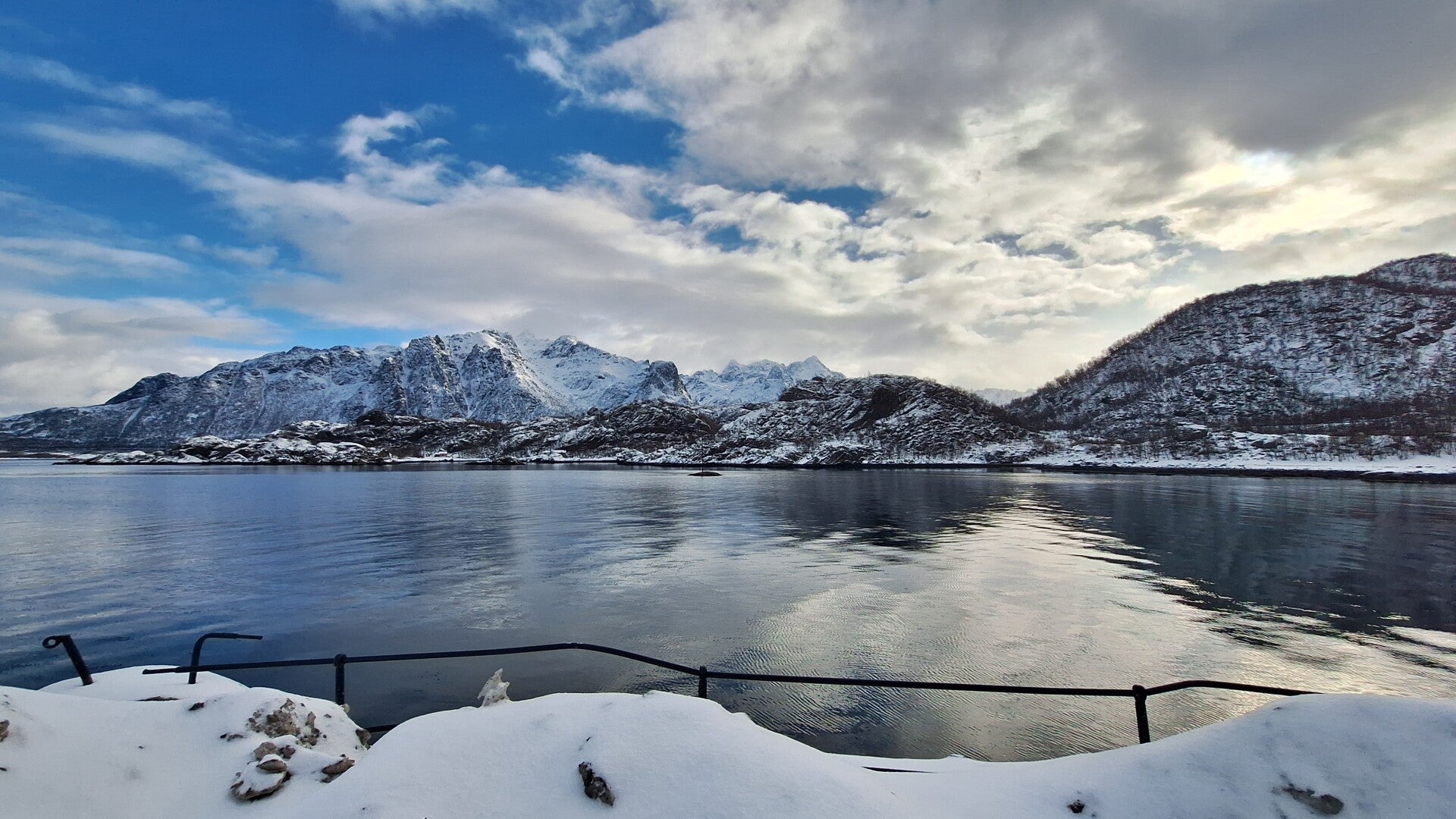
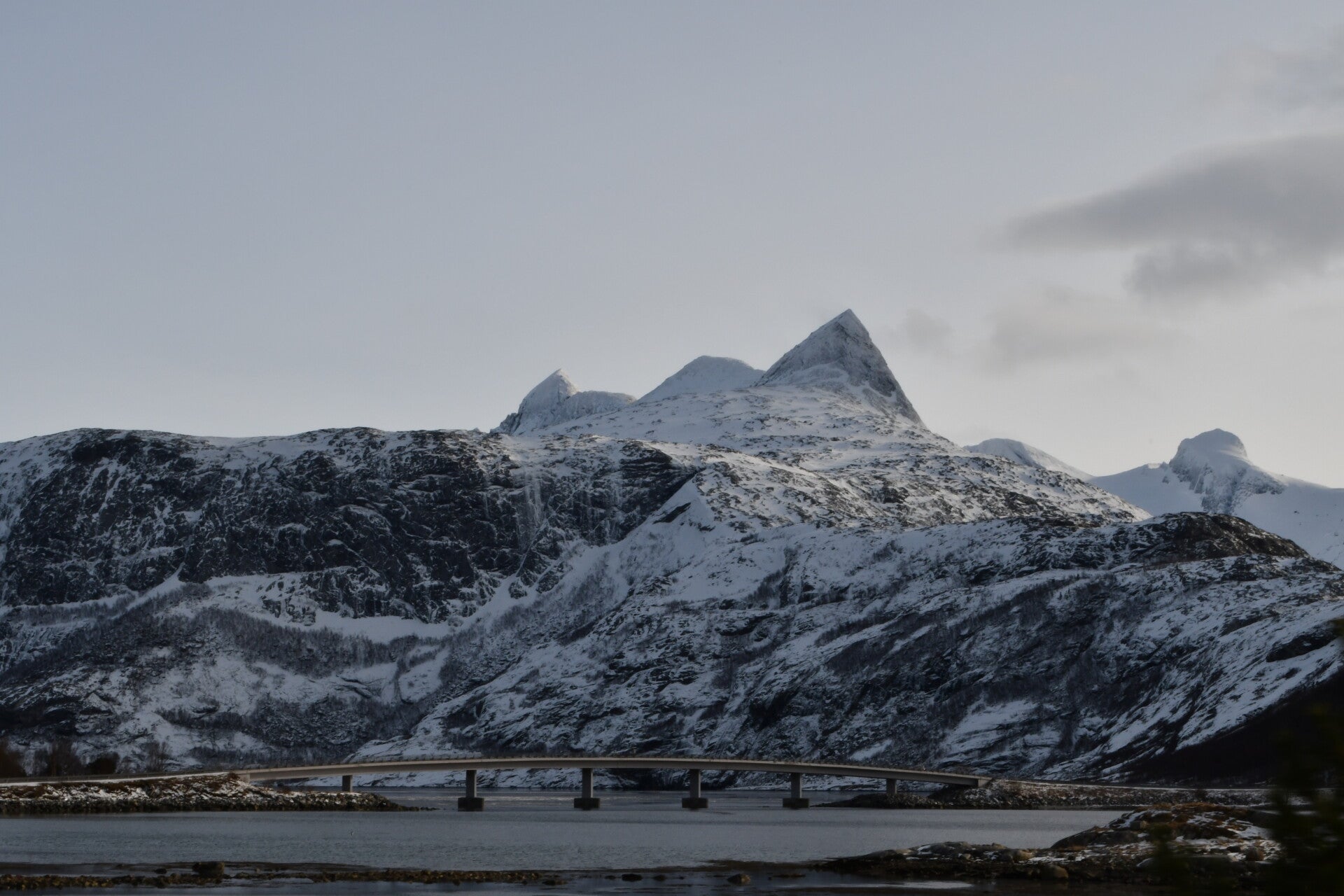
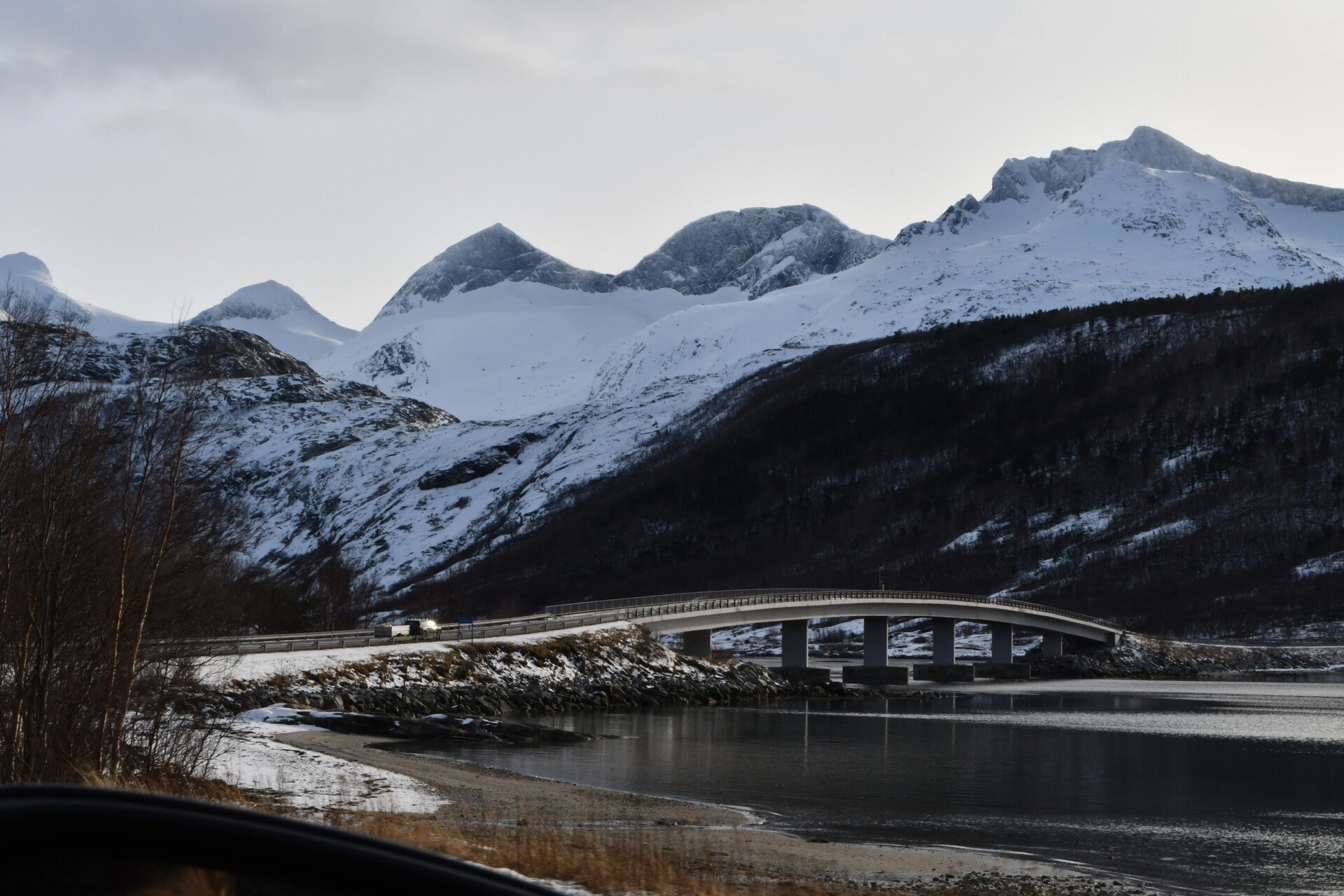
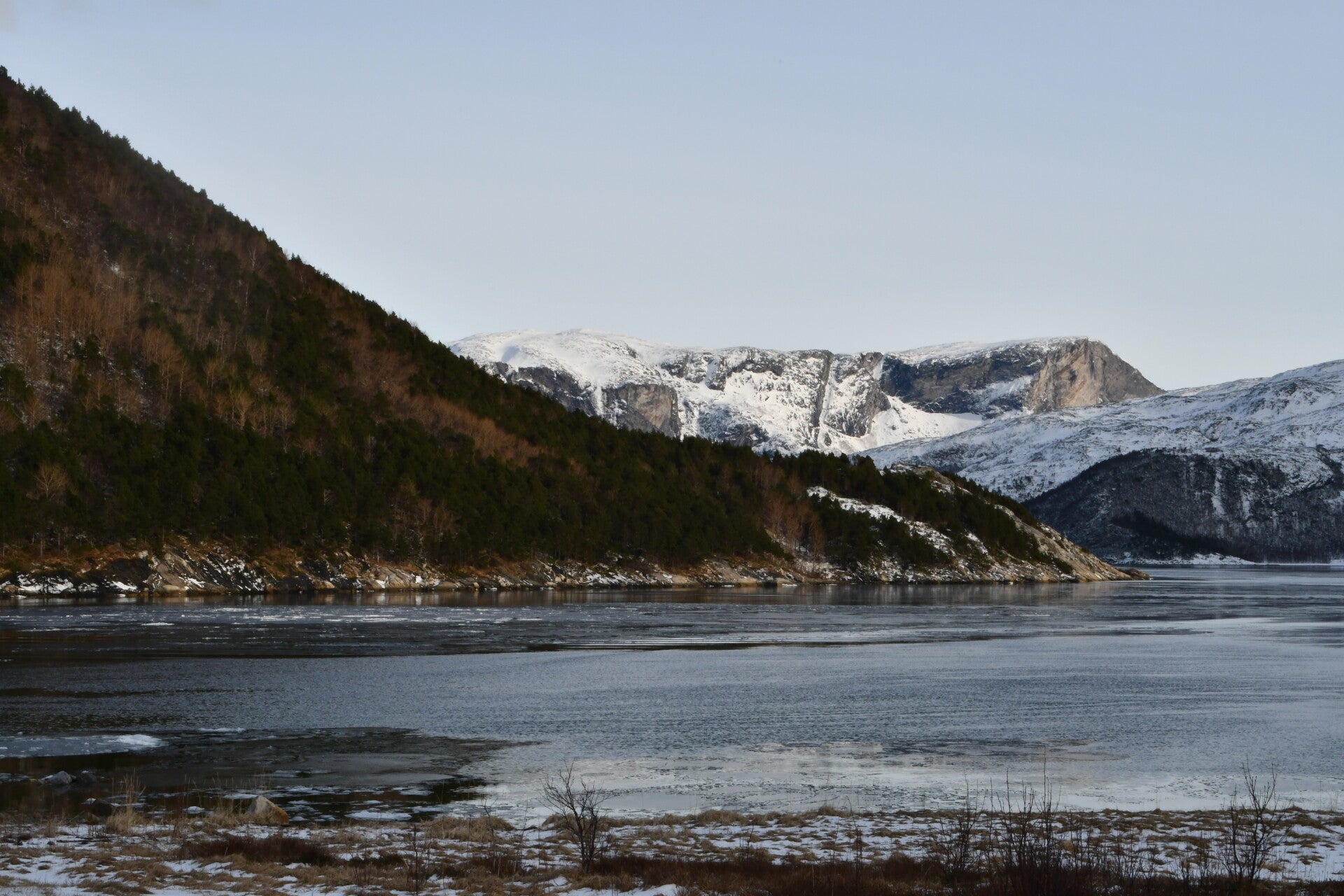
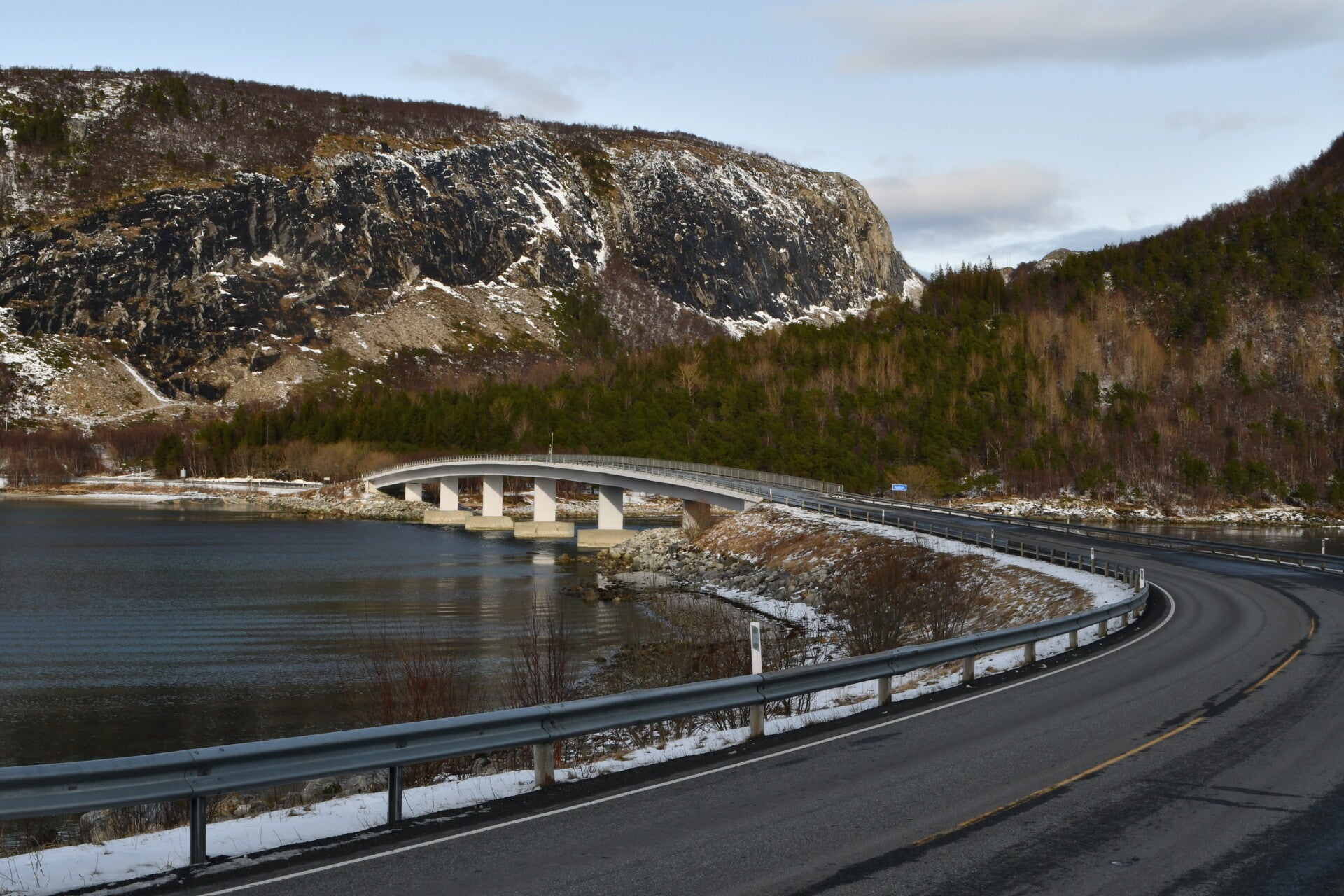
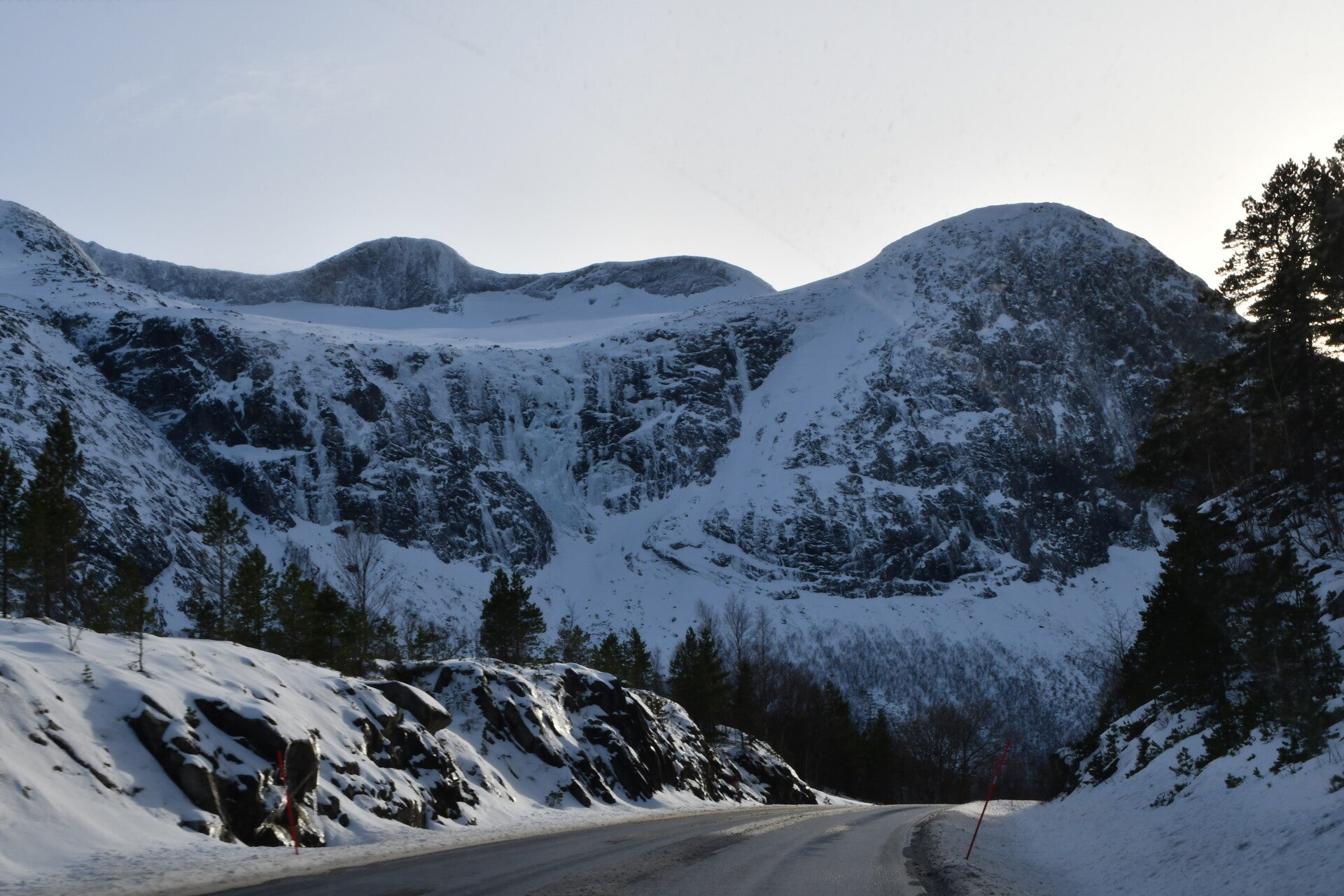
The road winds along the coast, skirting fjords and passing through tunnels and bridges that connect several small islands. Towering mountains rise dramatically around us, while mirror-like lakes provide stunning reflections. It’s impossible to wipe the grin off our faces as we drive through these breathtaking landscapes.
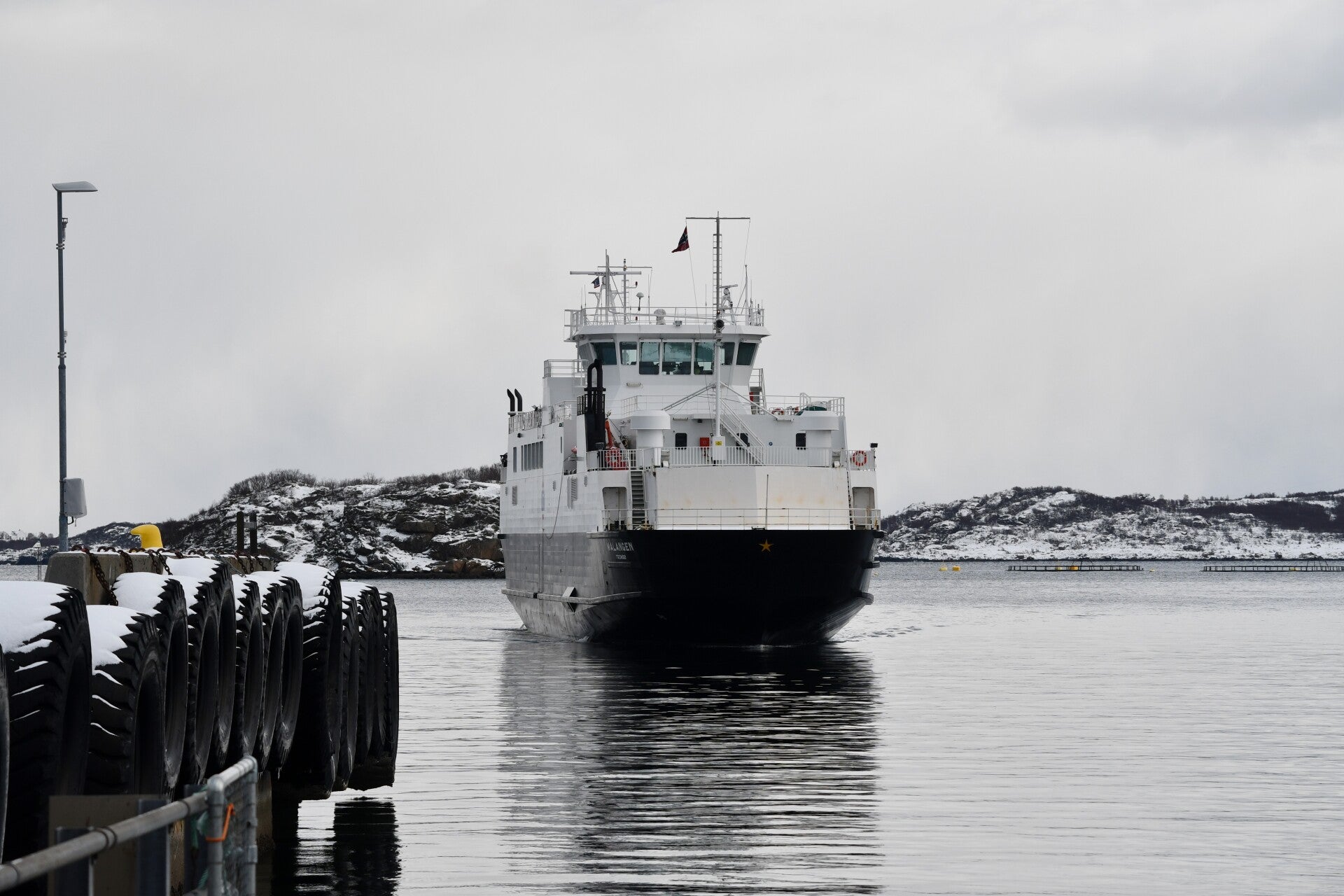
Eventually, we reach Fiskebøl, a key ferry point linking Vesterålen to the Lofoten Islands via the Hadselfjord and Raftsundet. We arrive just in time to catch the ferry to Melbu, back on the correct side for the airport. After entering the queue, we step outside to get some fresh air while waiting for the ferry to arrive.
The fresh air is nice, until we realize something smells particularly fishy. It turns out the truck parked in front of us is transporting fish, and the red-stained snow clinging to its doors is enthusiastically spreading its odor across the harbor. Yuk.
Before we can recover, the ferry arrives and we start our engine to board. We park our van on the car deck and head up to the passenger deck. Almost immediately, a heavy snowstorm rolls in, completely obscuring the view for the entire crossing. The ferry rocks violently as it pushes its way toward Melbu.
Once docked, we hop back into our “touring bus,” only to discover, of course, that the fish truck has been parked right next to us. The entire car deck reeks of dead fish. We start the engine, do our best to cope with the smell, and continue driving.
Like a small miracle, and as if nothing had happened at all, the skies clear again as we pass through the town of Melbu, heading northbound toward Stokmarknes.
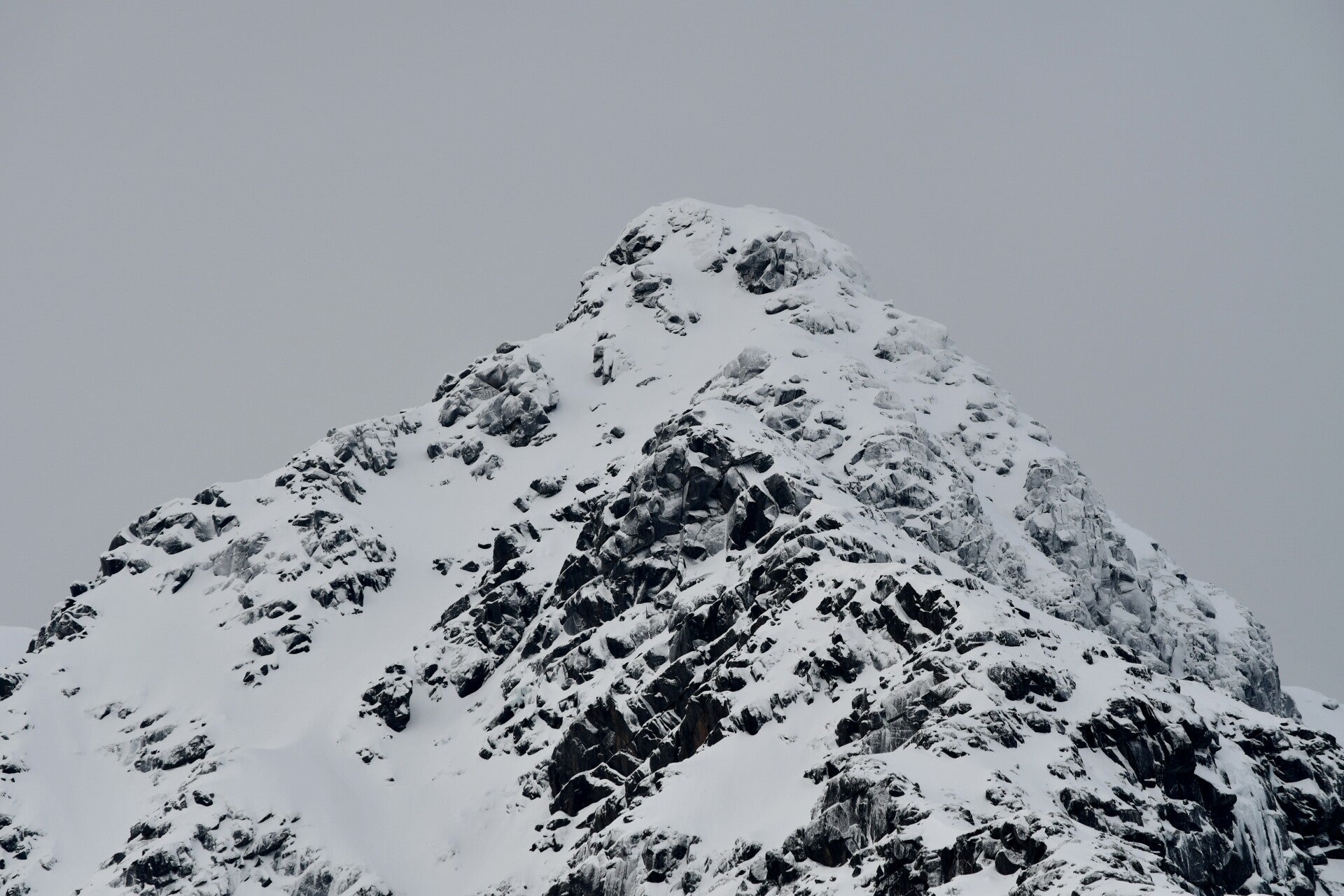
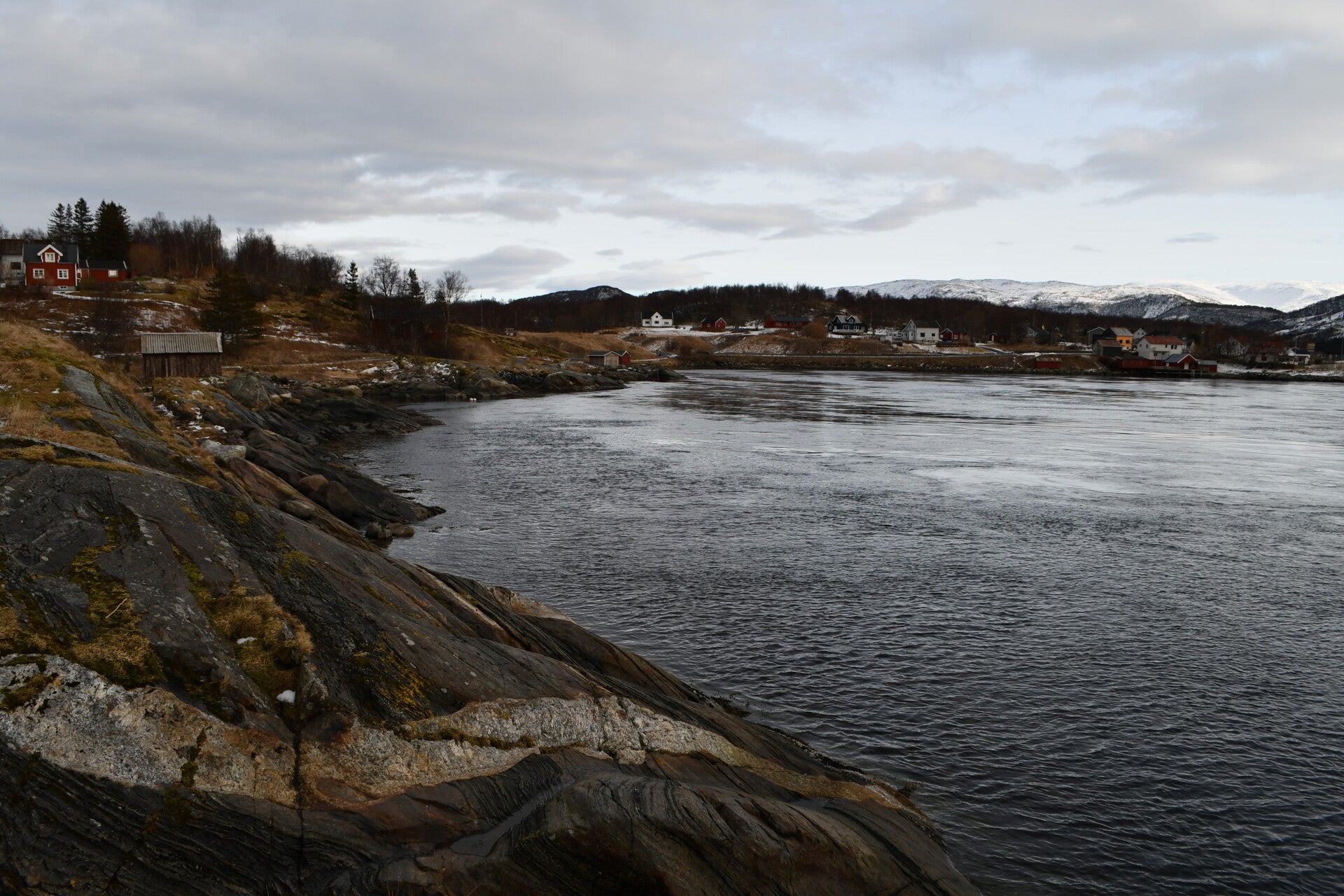
Words can hardly do this drive justice, and photos barely capture the experience. Still, we hope you enjoy the following set of pictures as we tried to document this unforgettable journey.

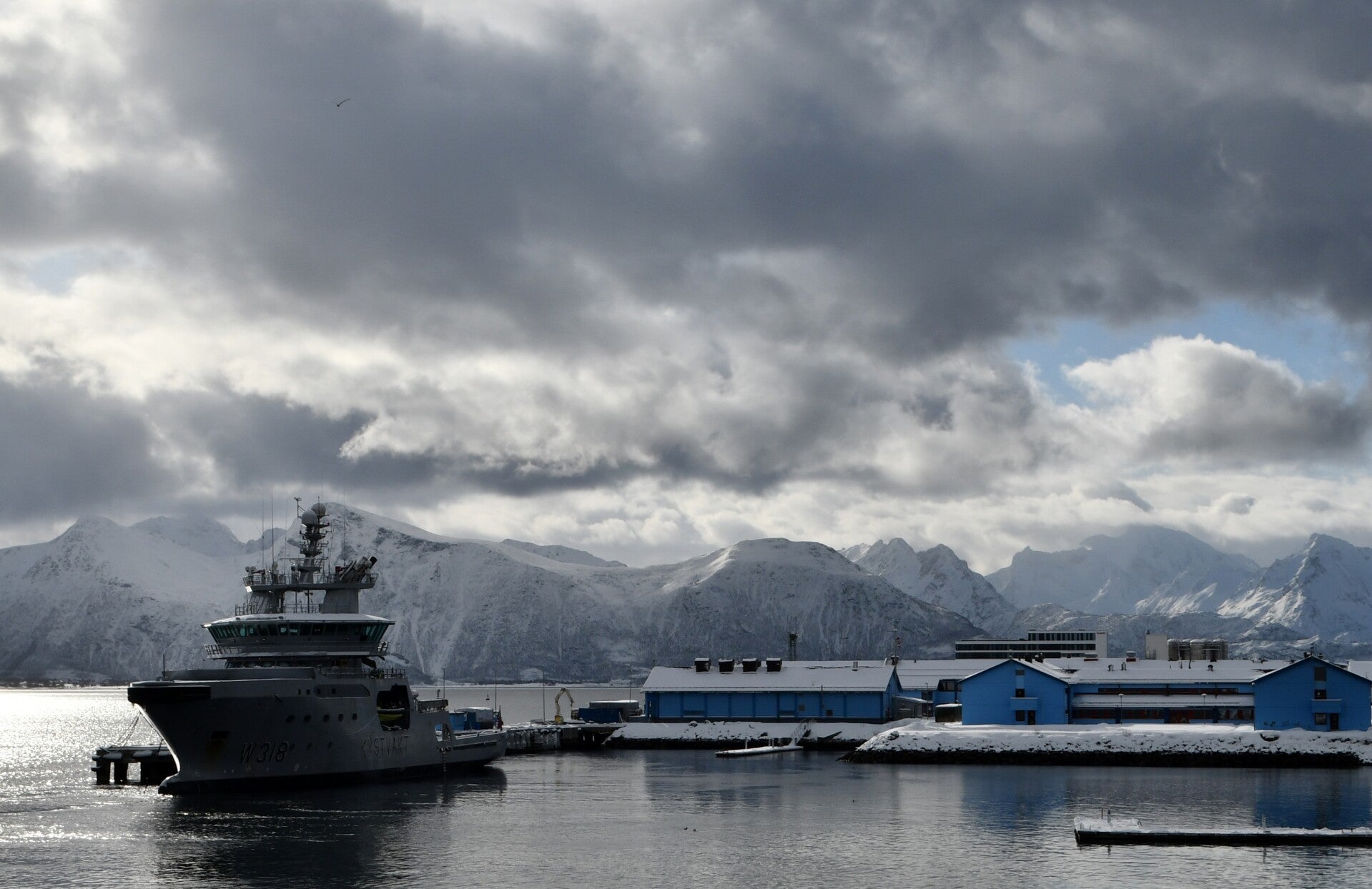
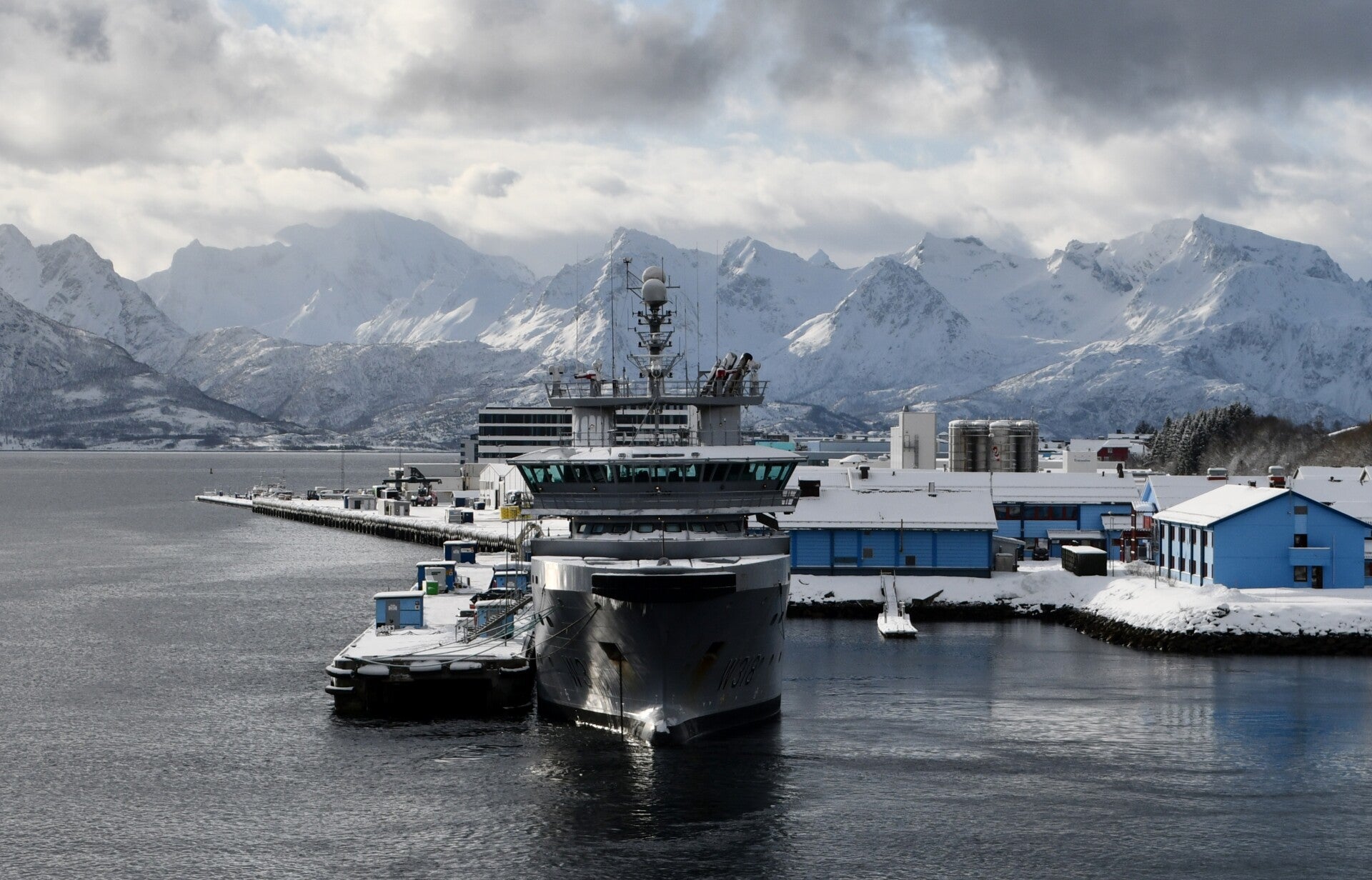
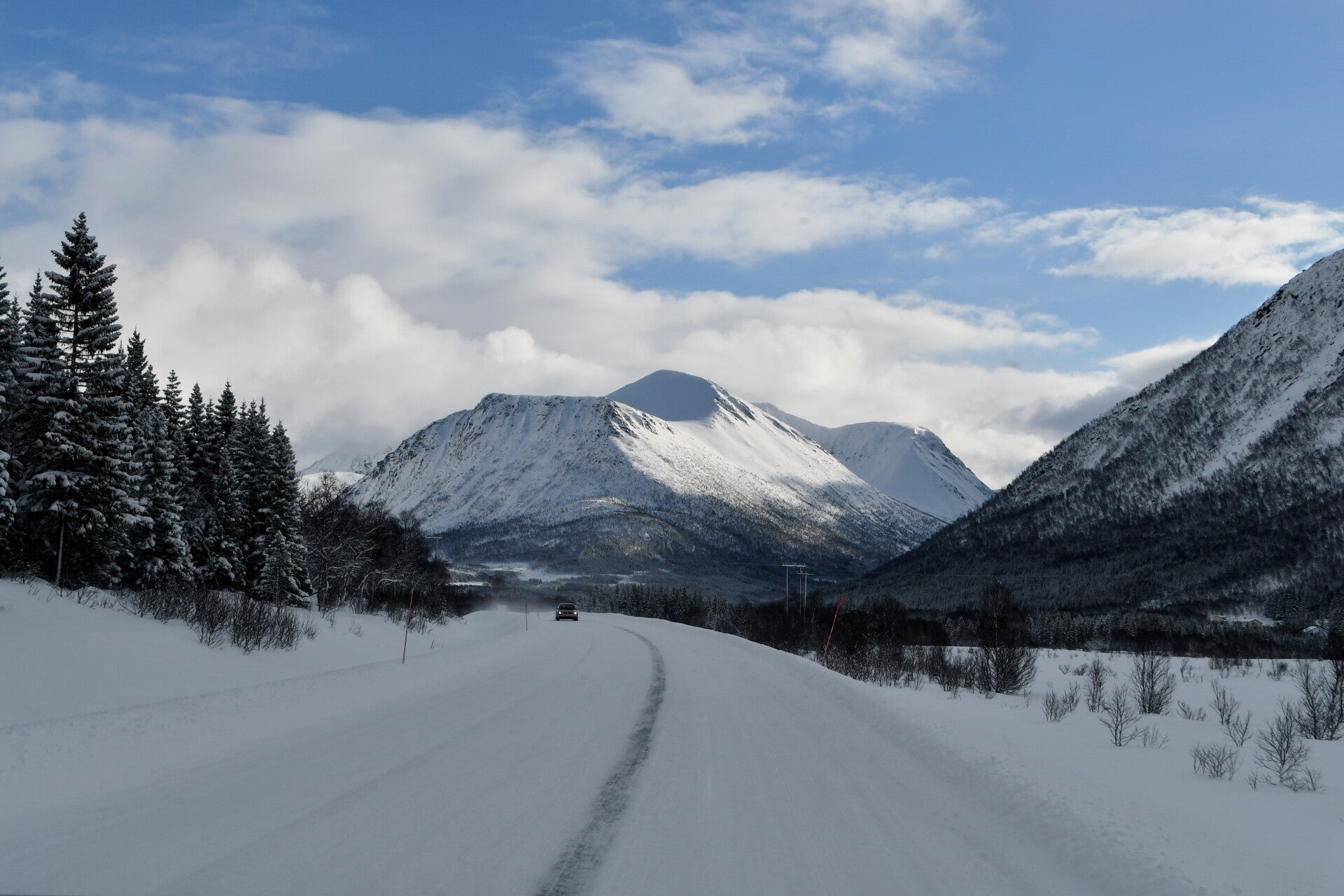



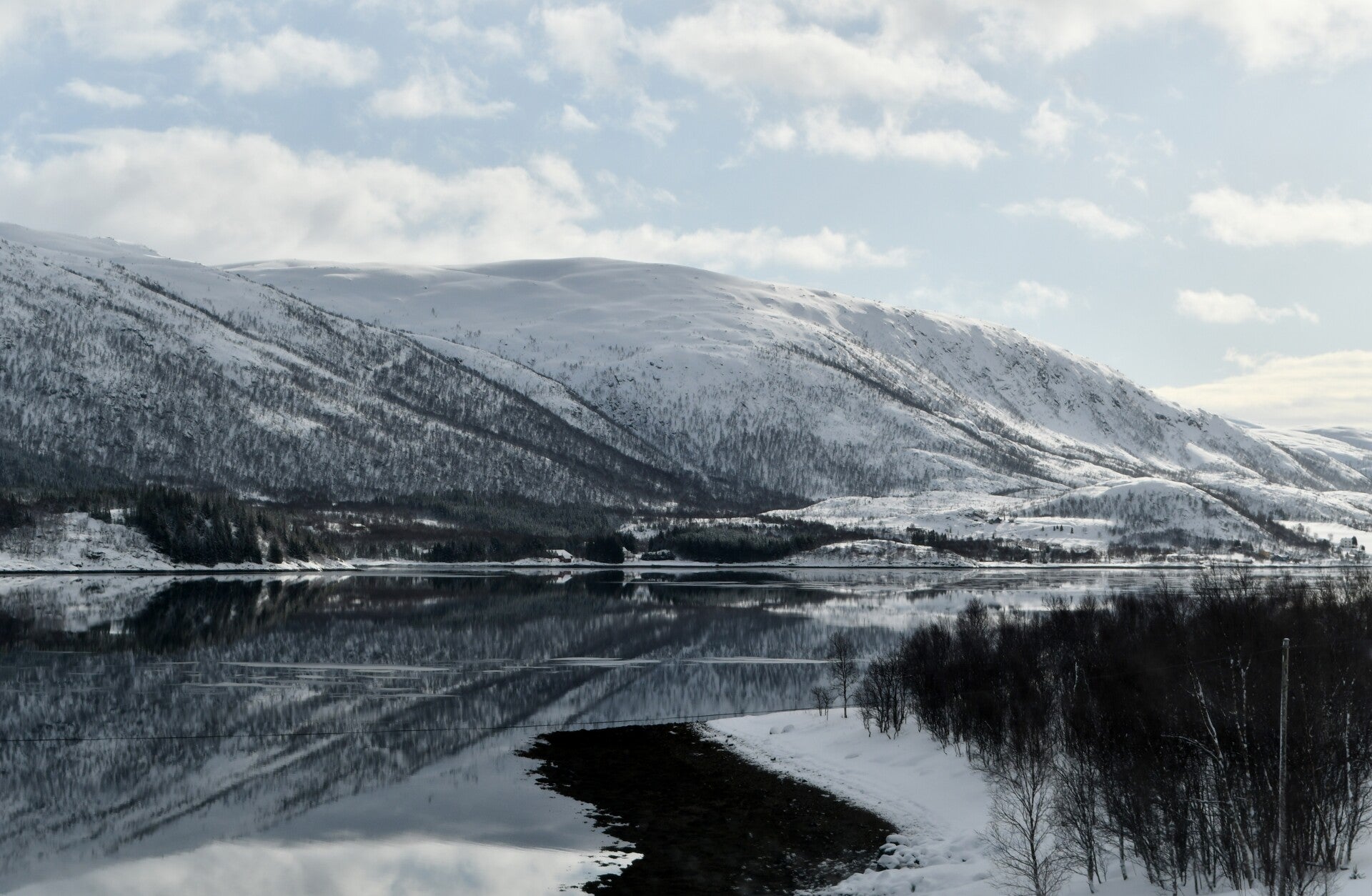






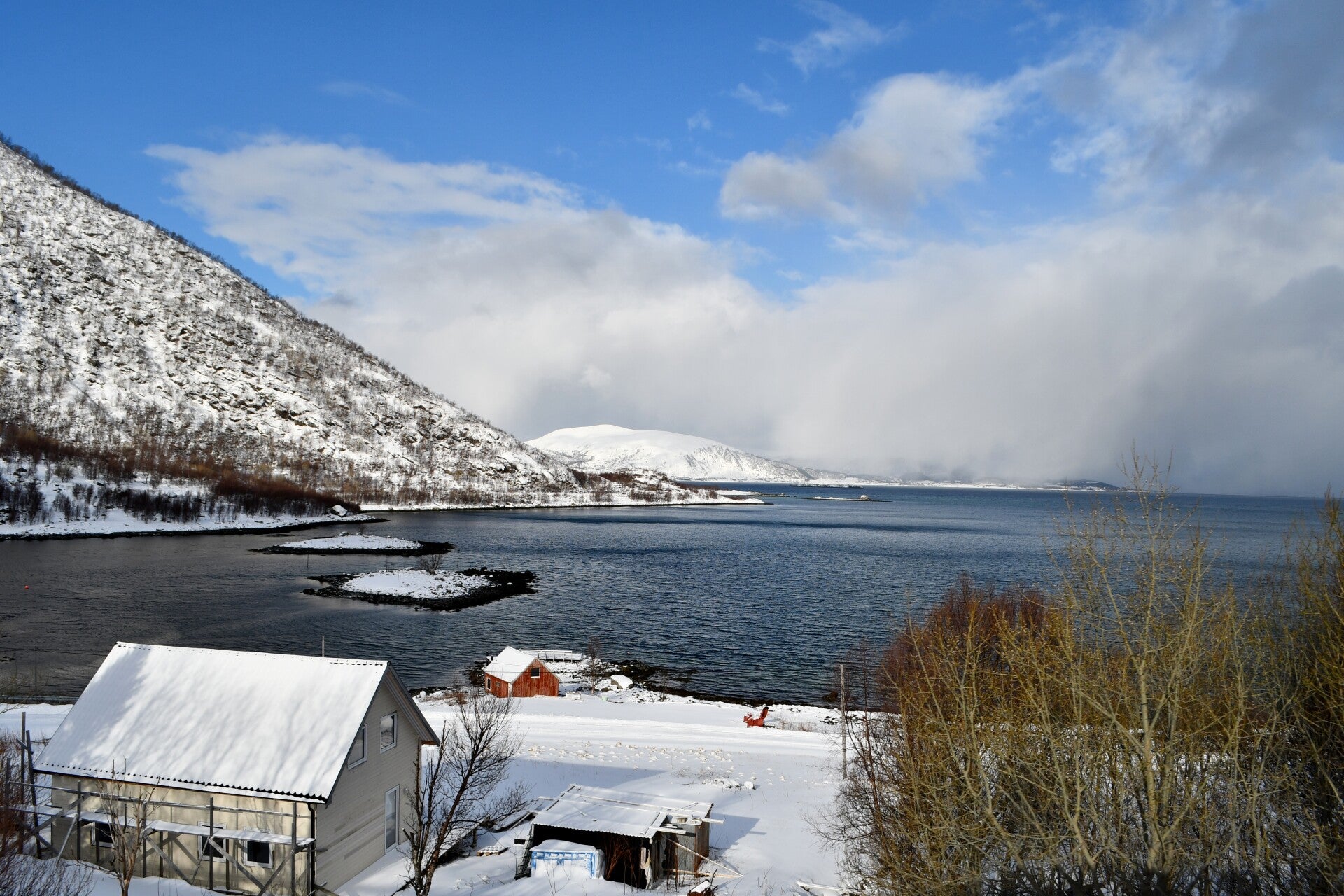
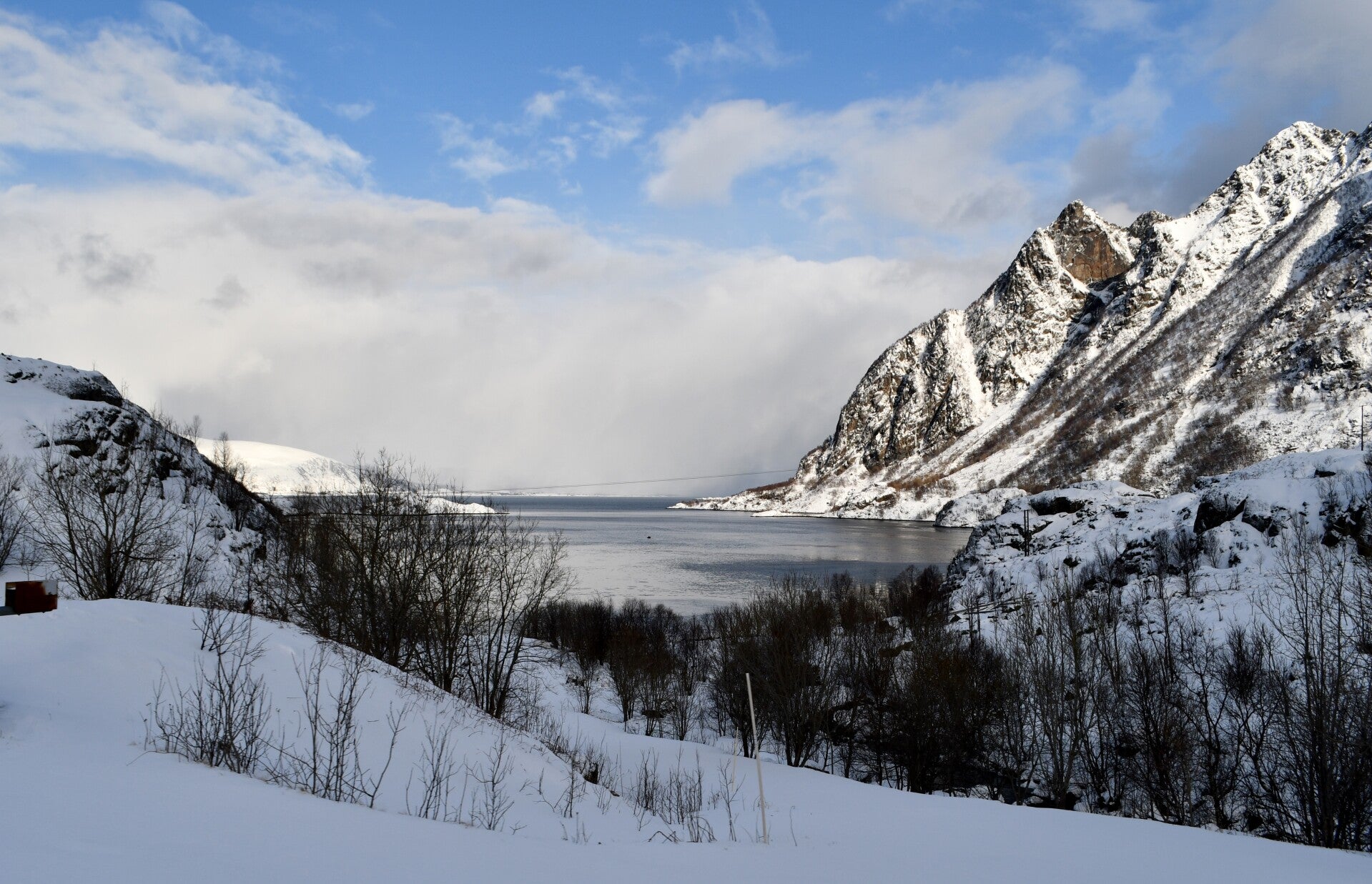
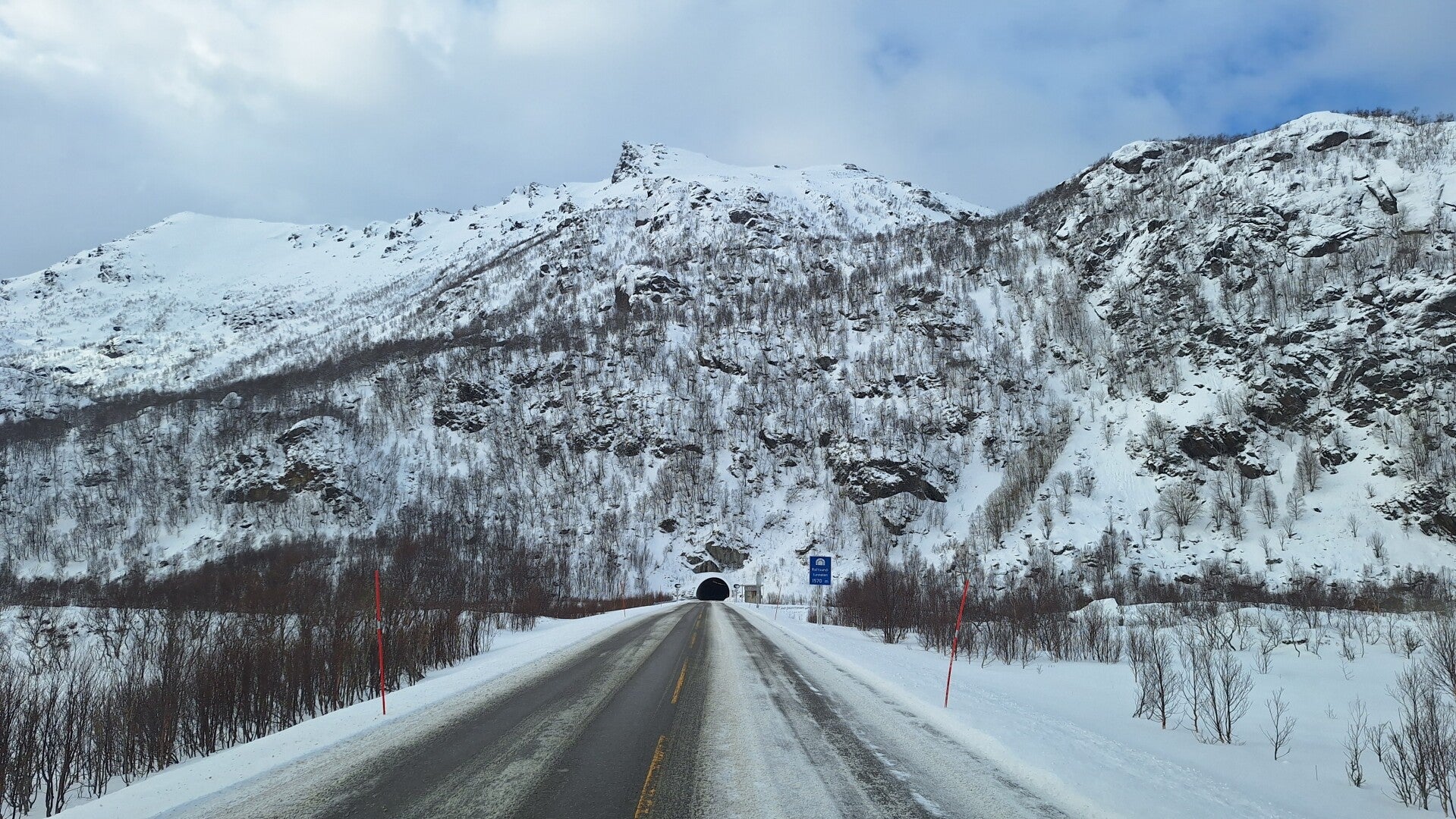
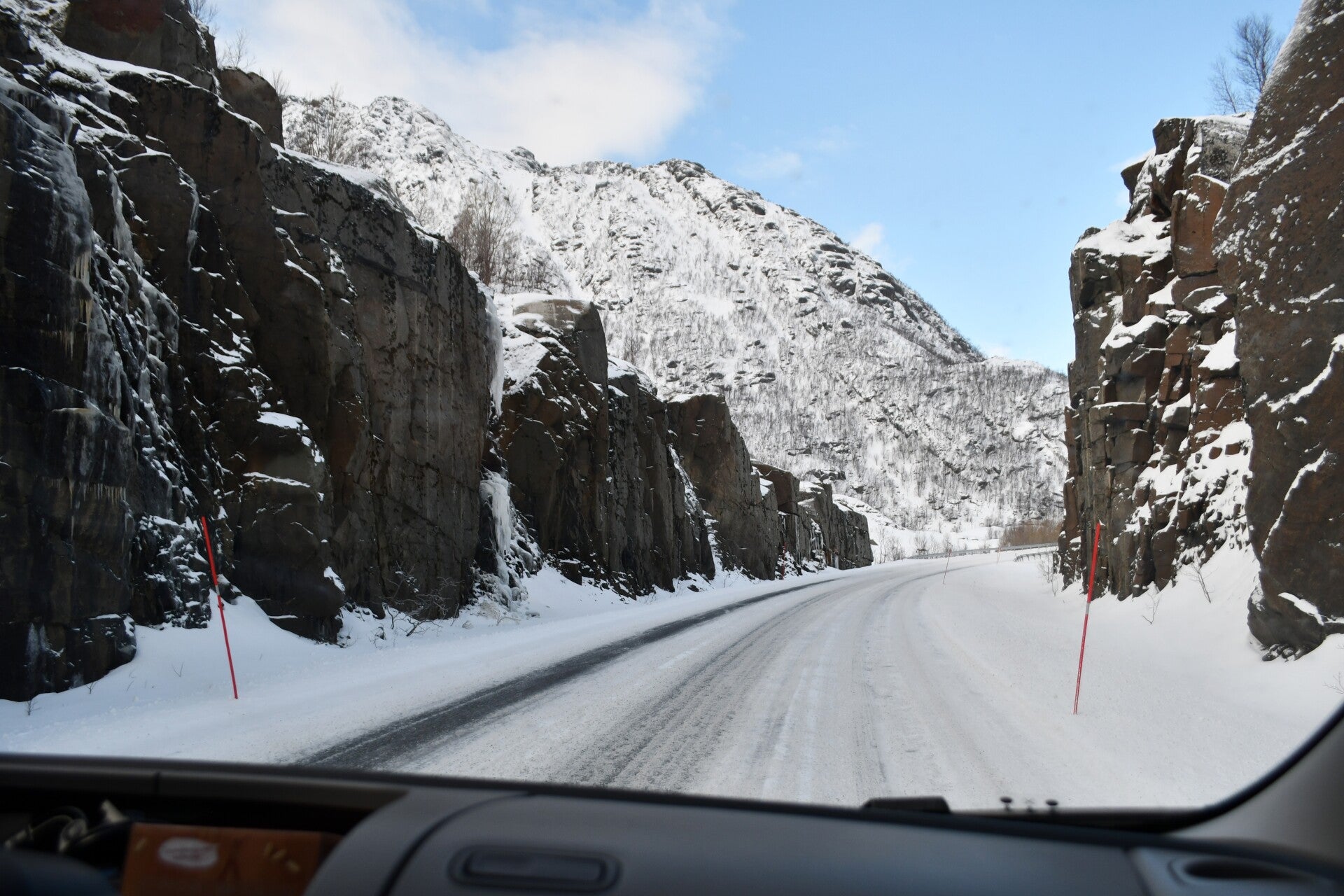

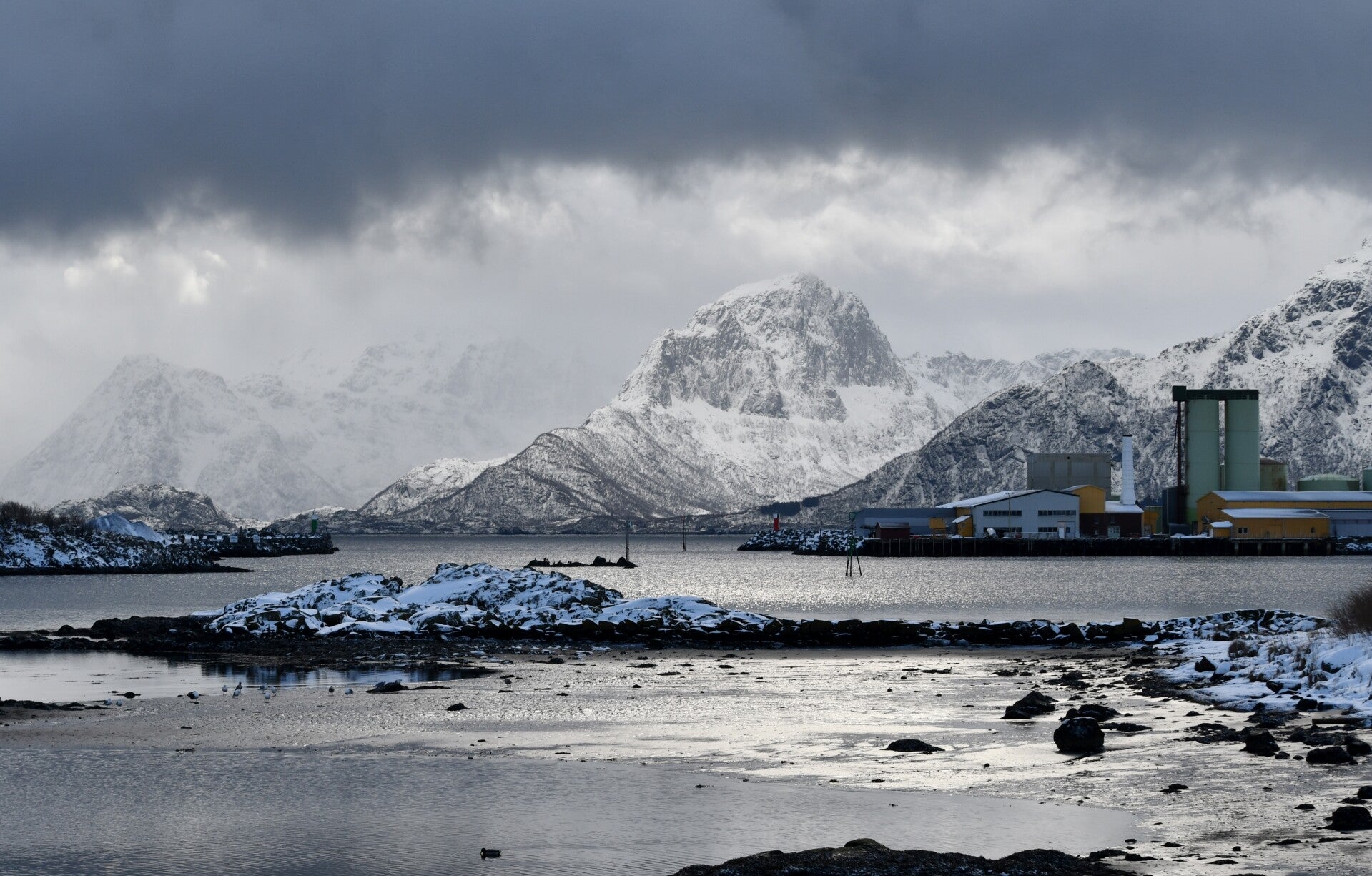
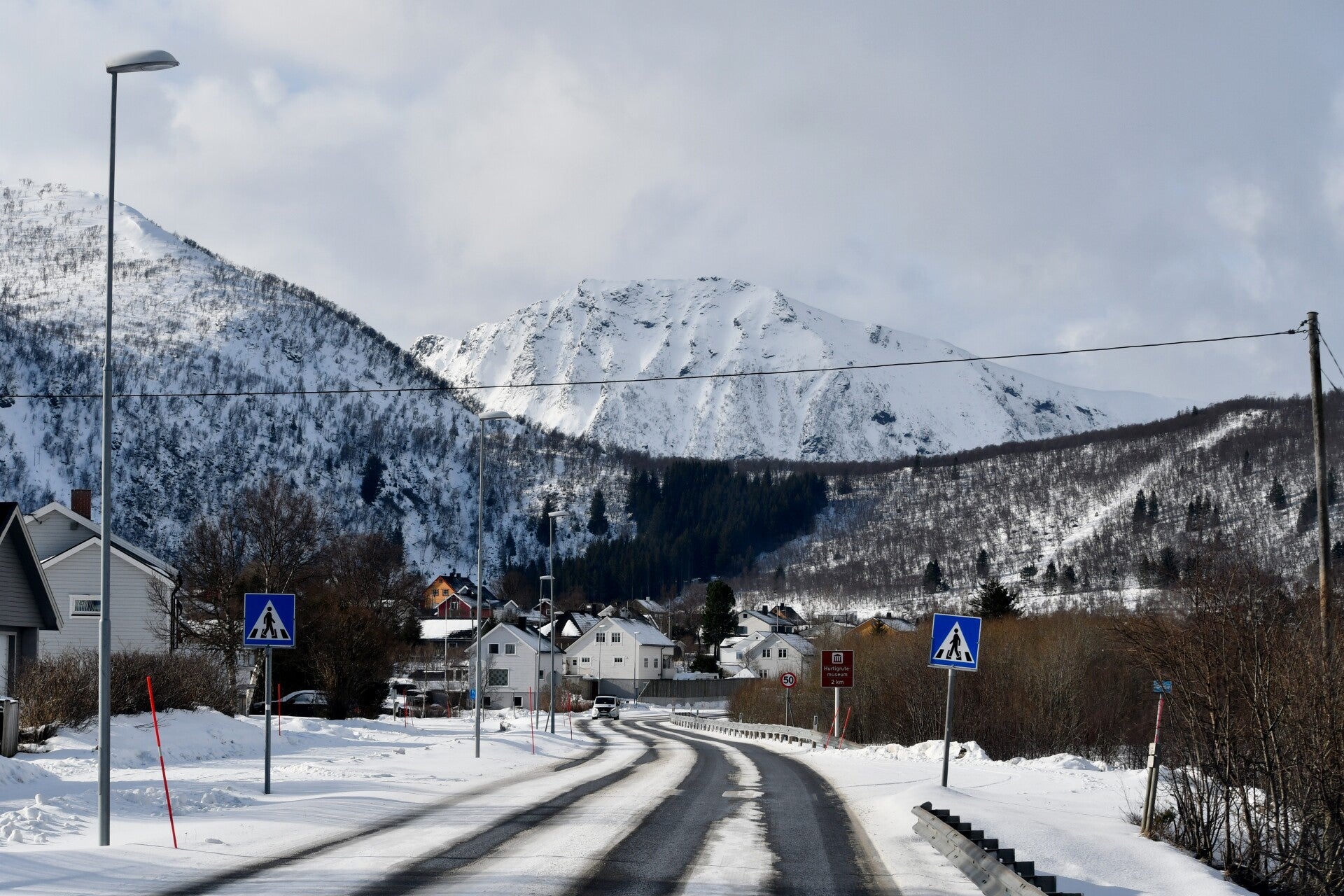
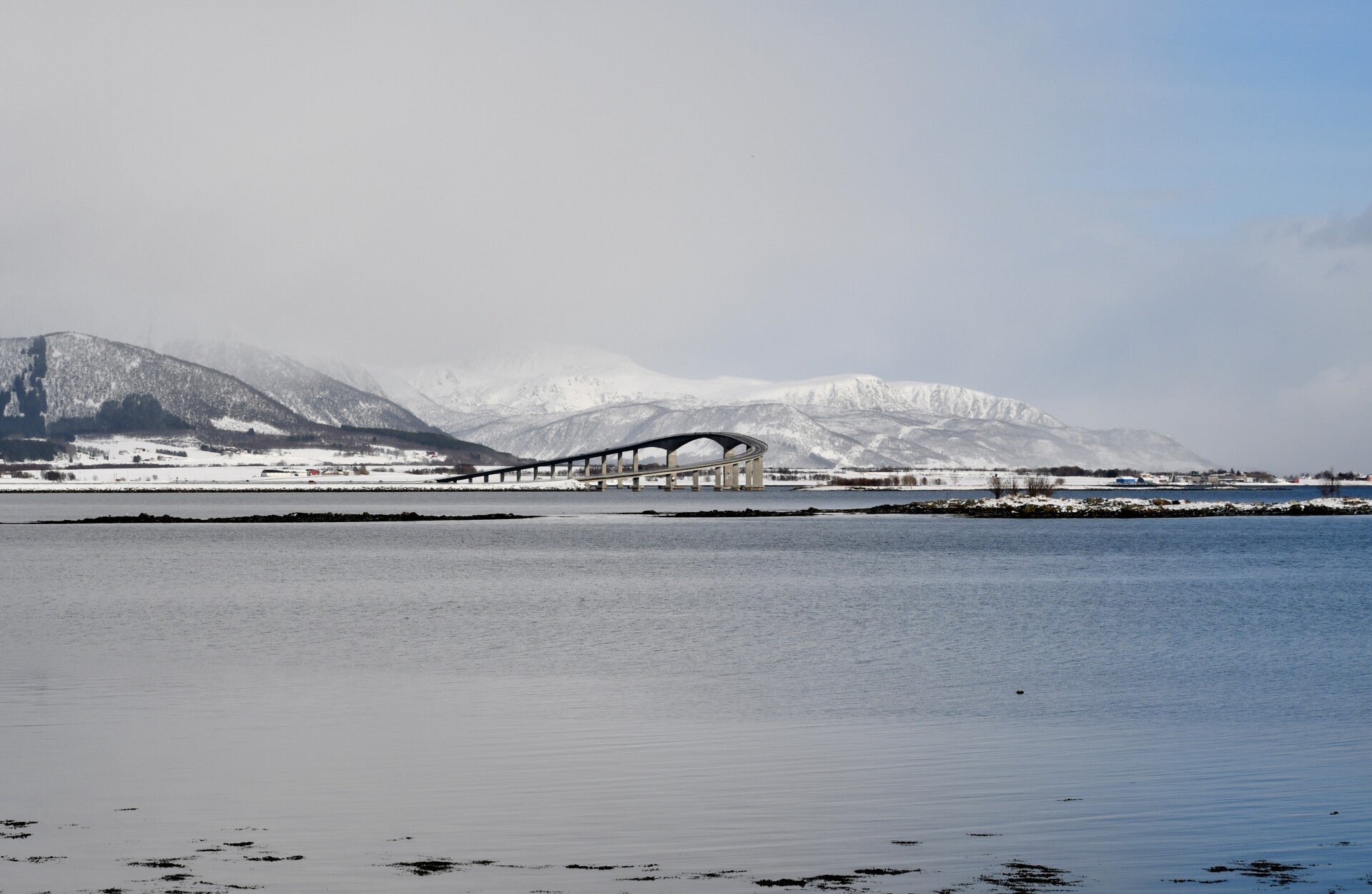
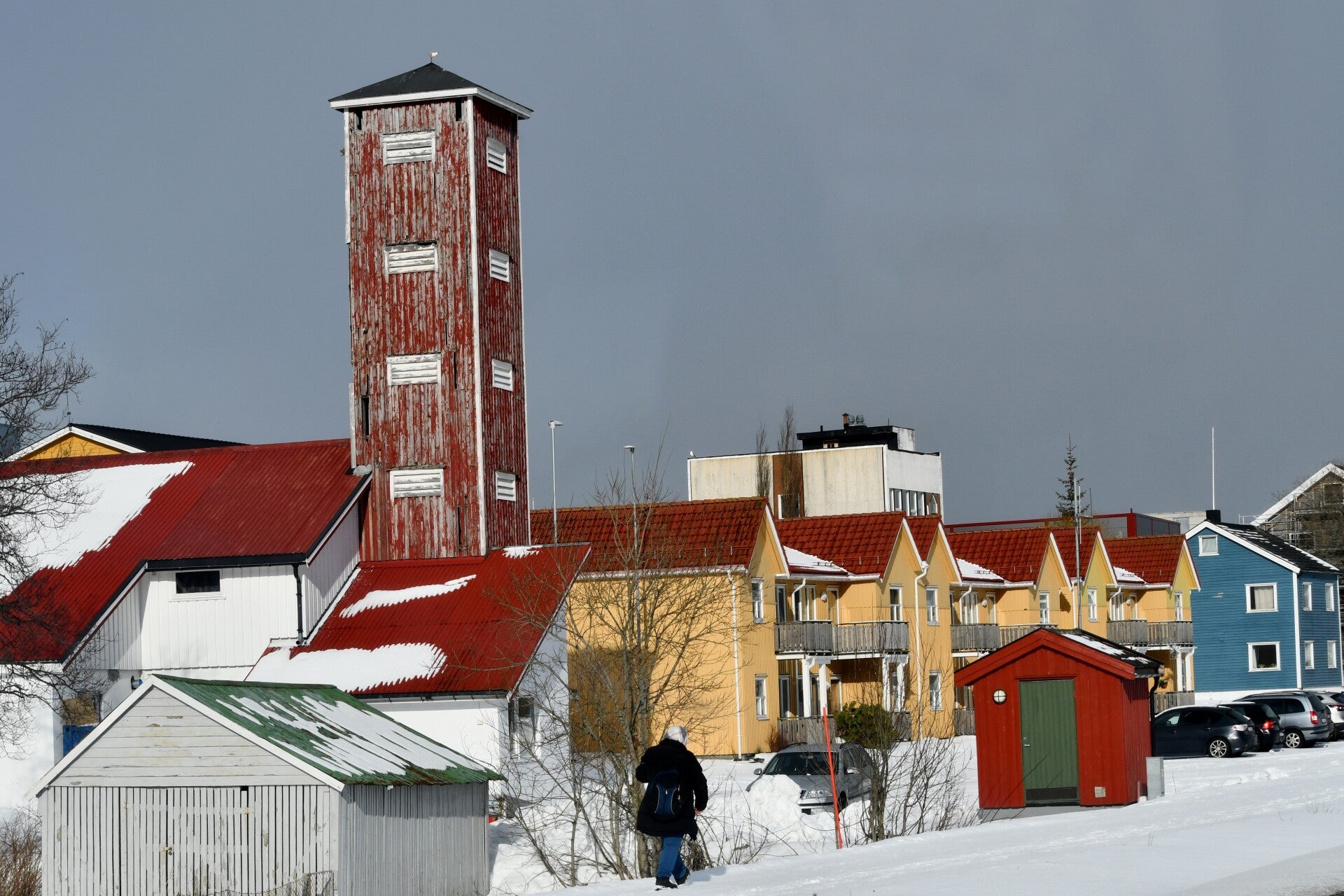
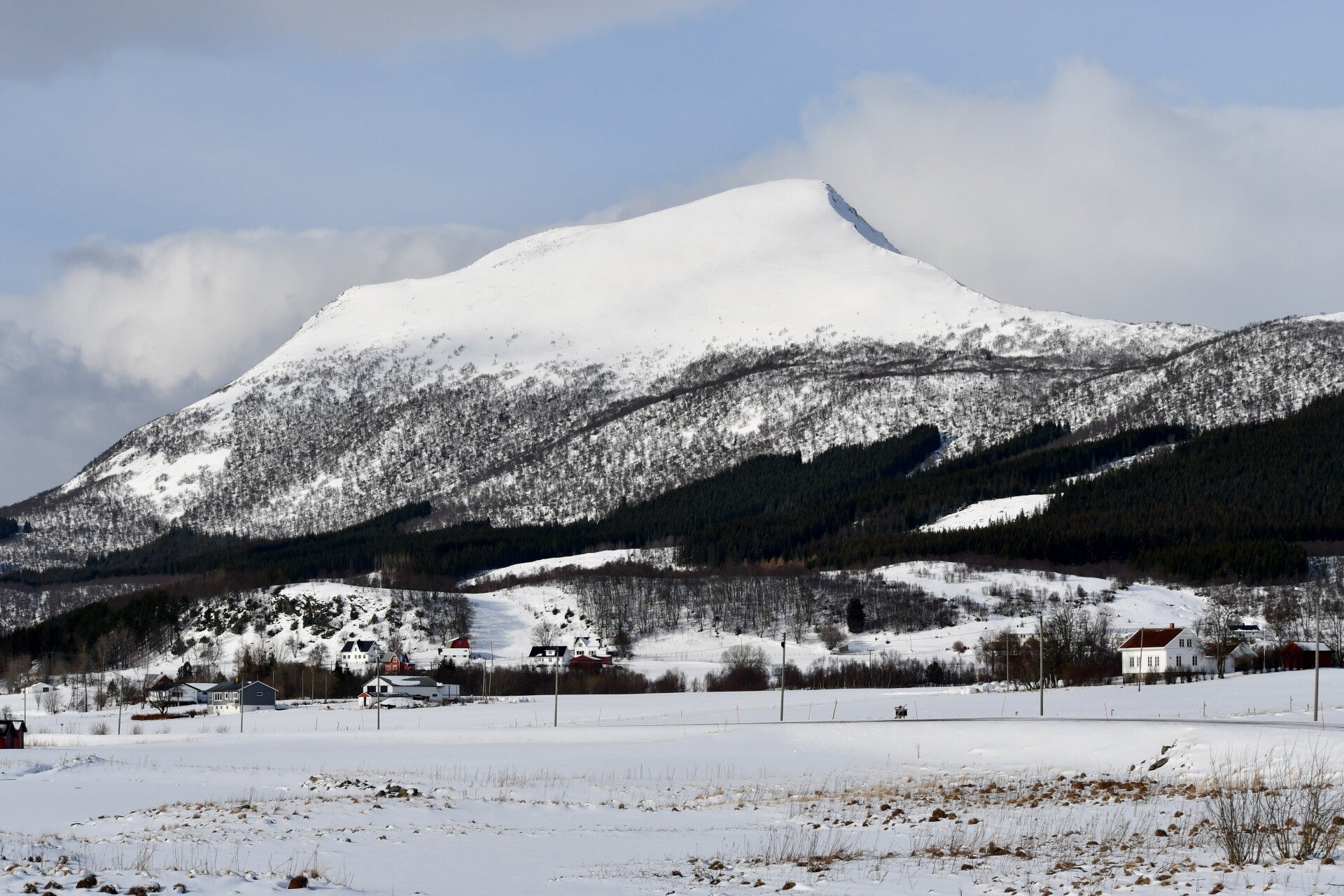
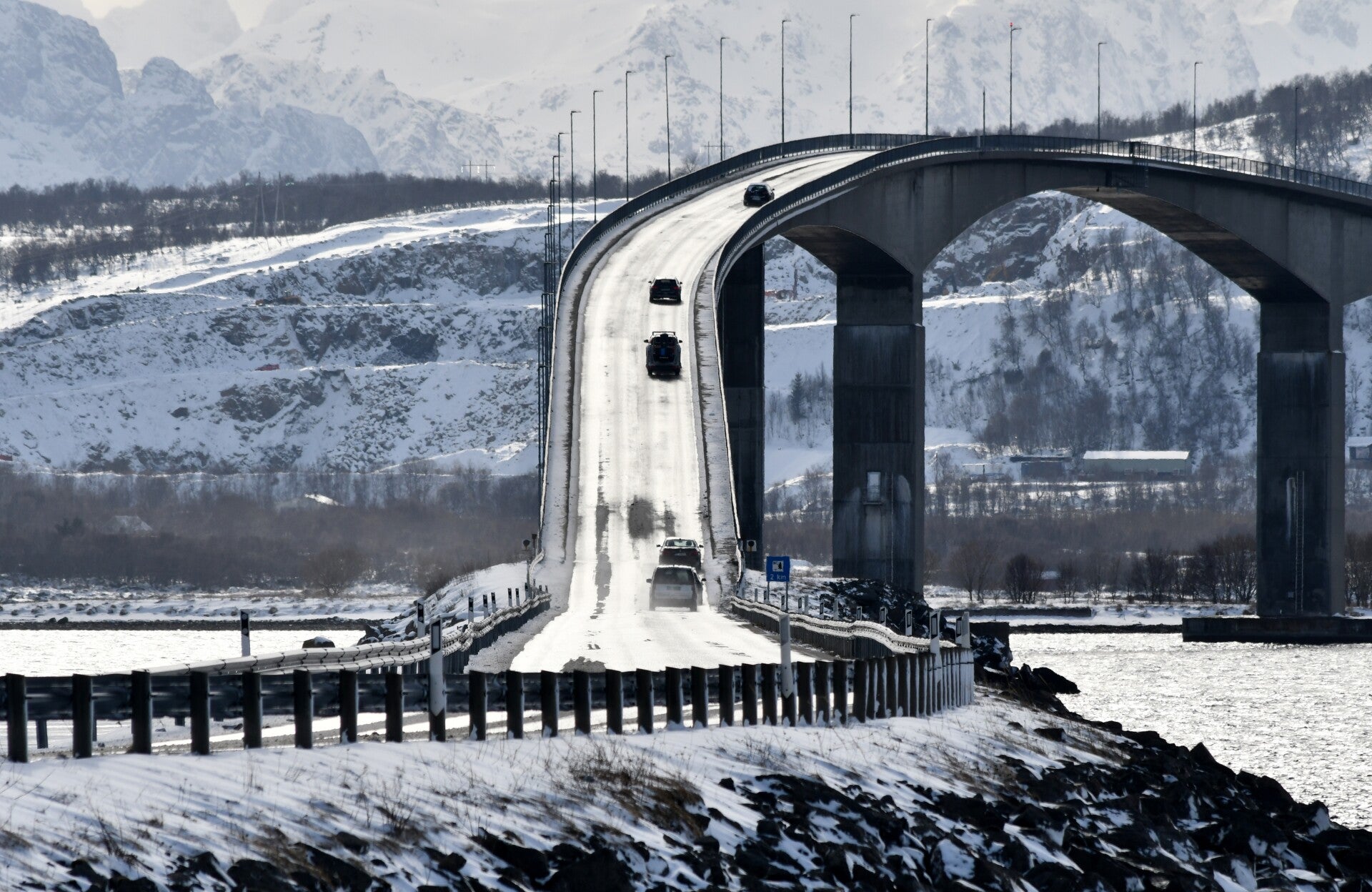
Once we’re back at the airport, we park our van, drop the keys into the same machine that handed them to us, and head to security, which has just opened for the handful of passengers flying this afternoon. The terminal itself is small, but far roomier than we expected. It even features an elevated, lounge-like area with a children’s corner, some reading material, and—most importantly—big windows overlooking the runway and ramp.
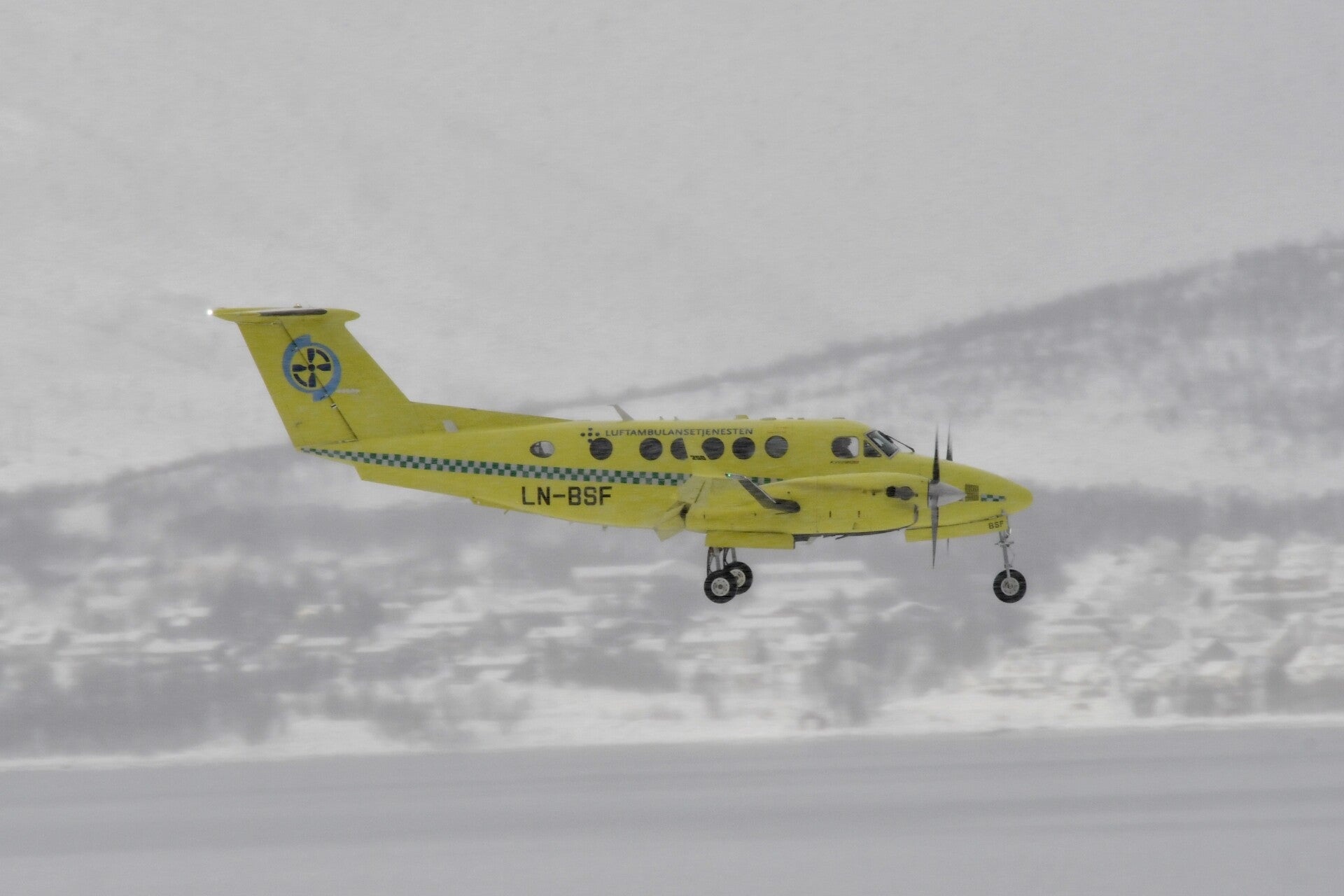
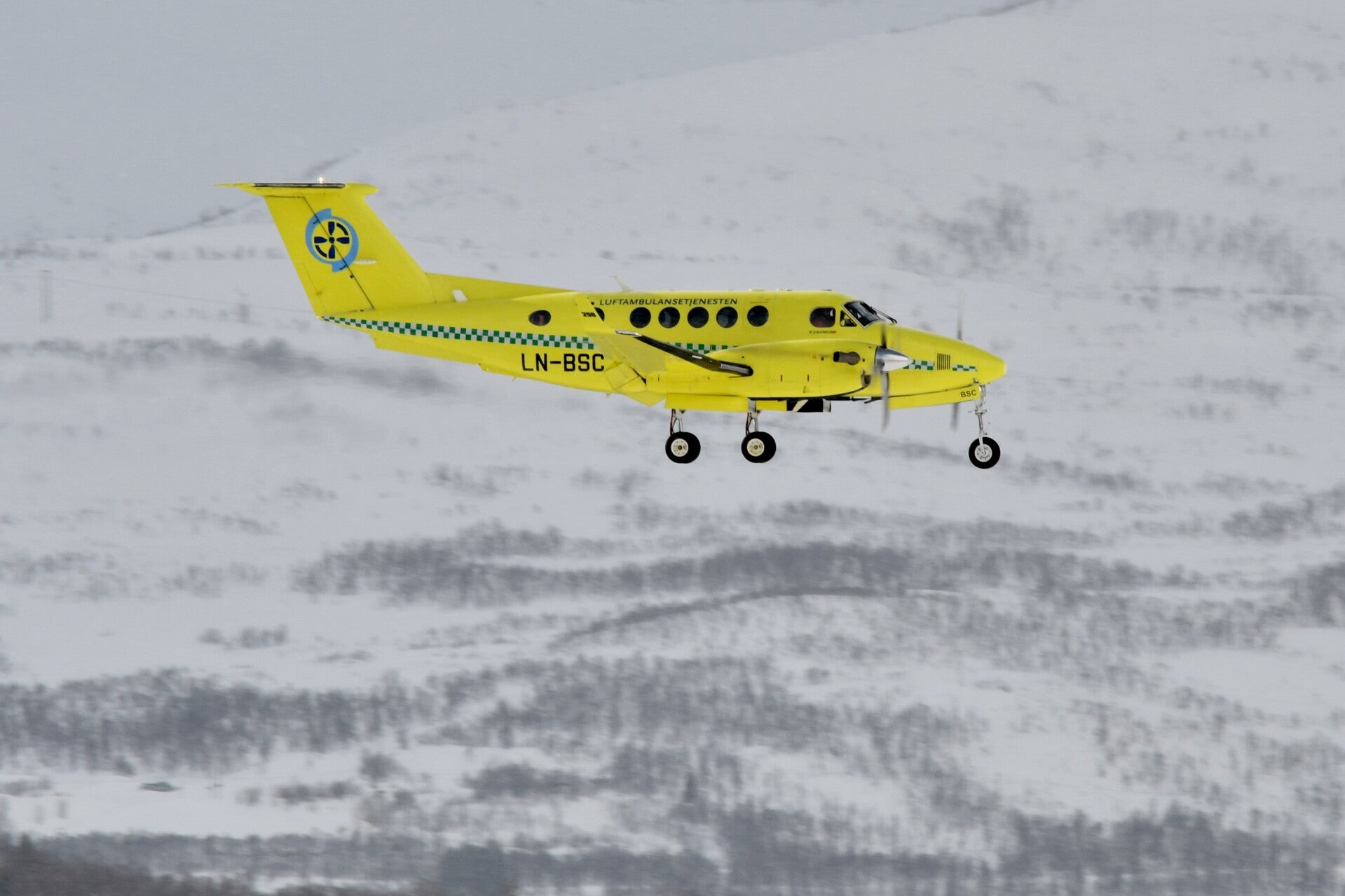
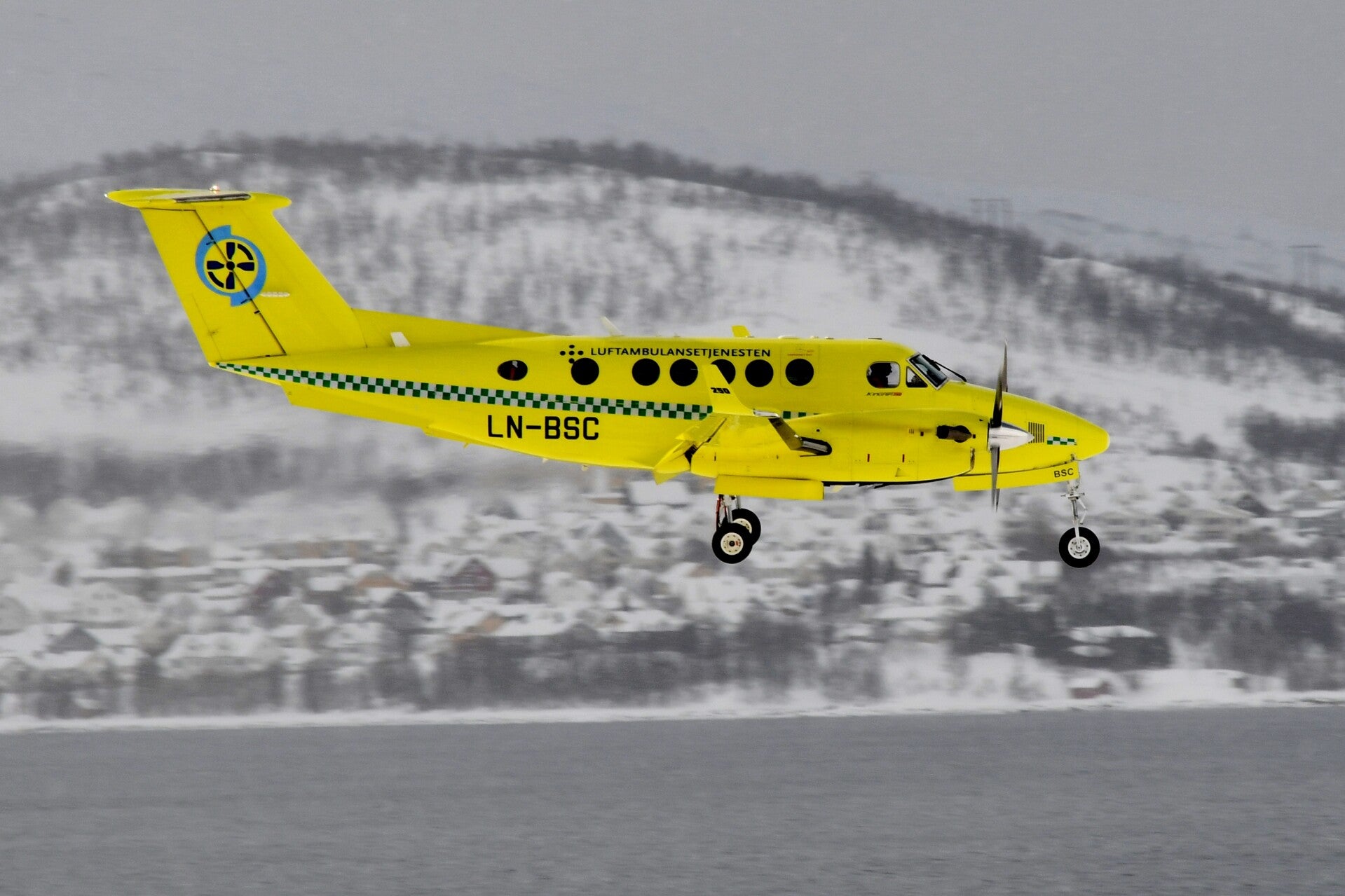
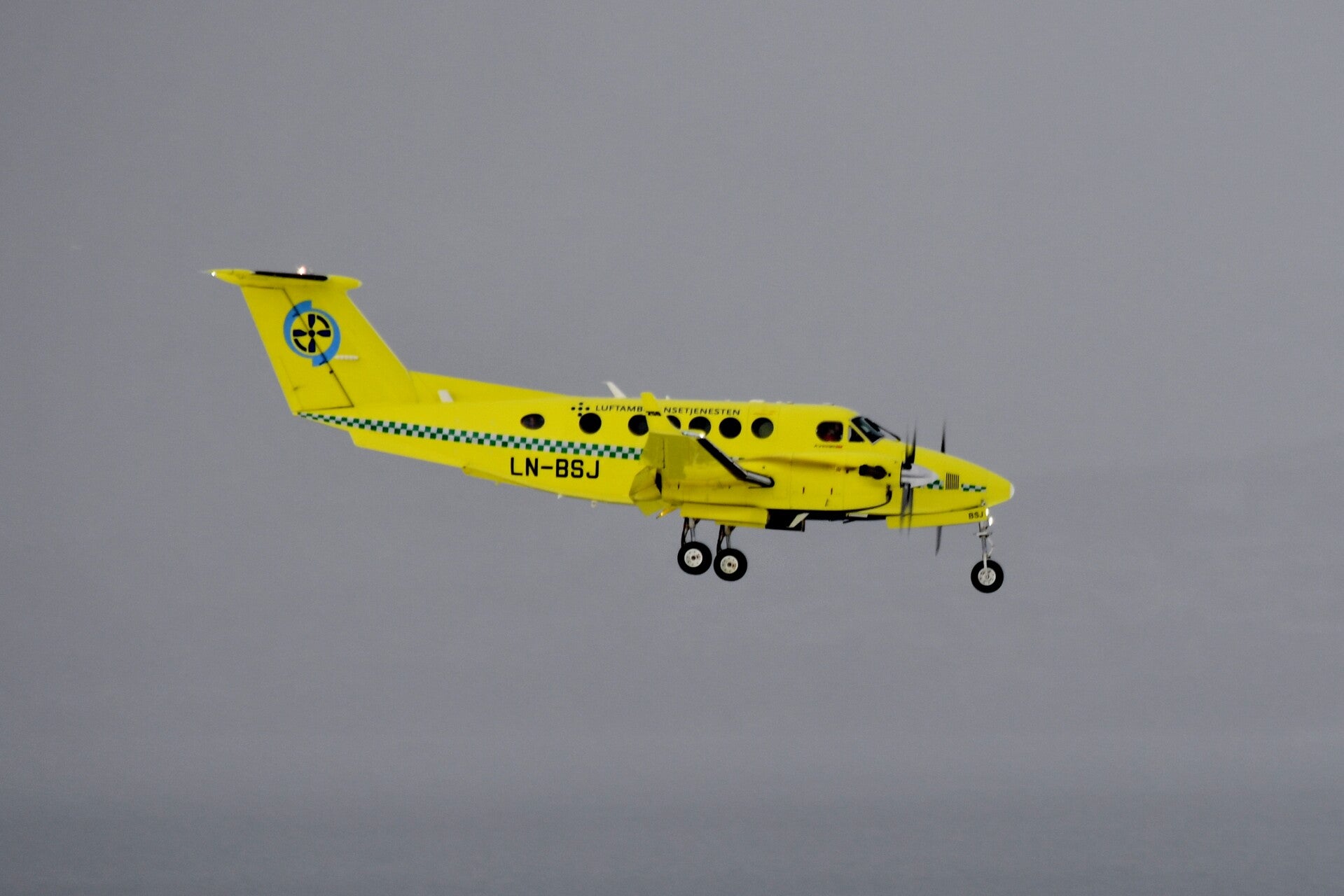
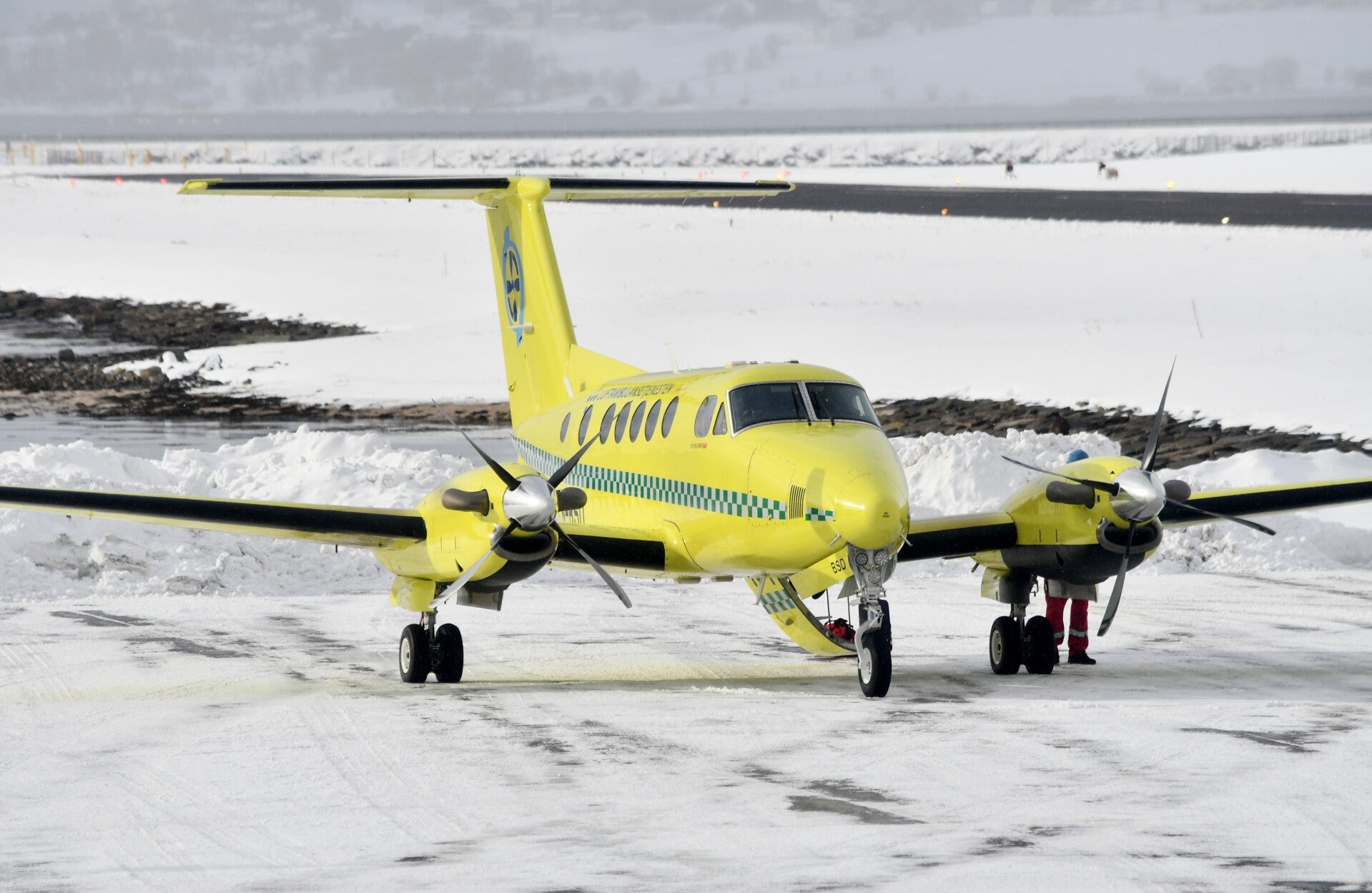
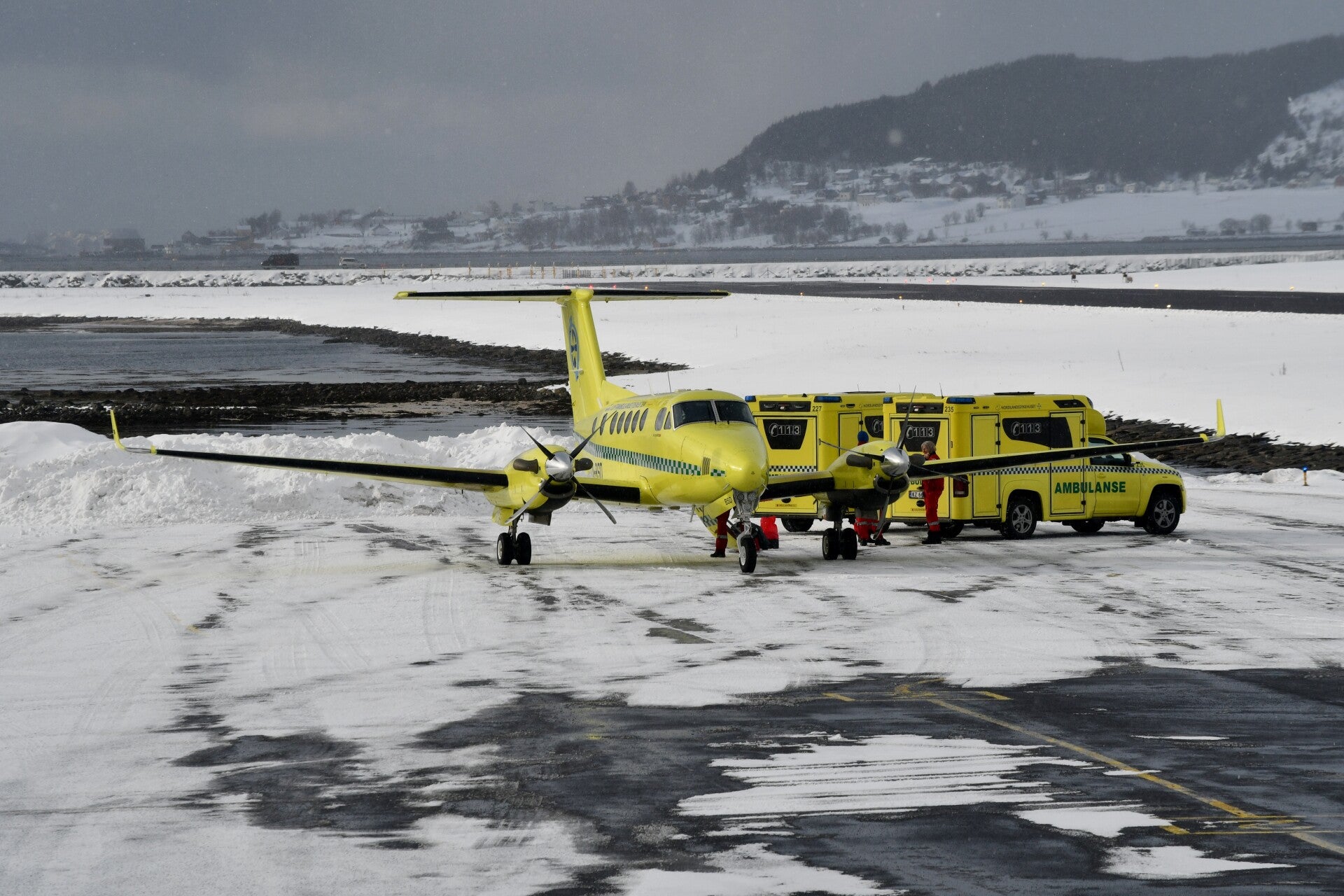
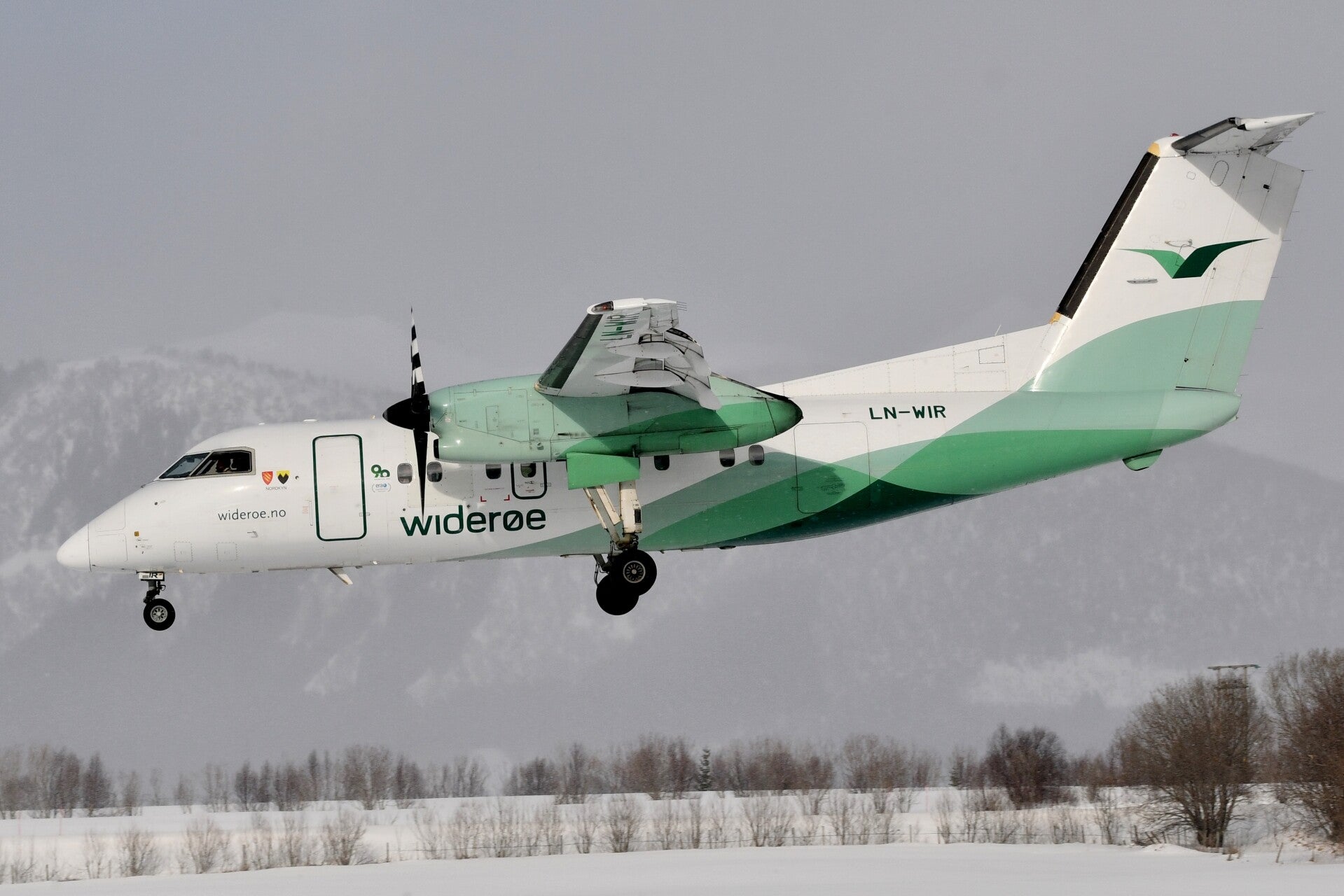
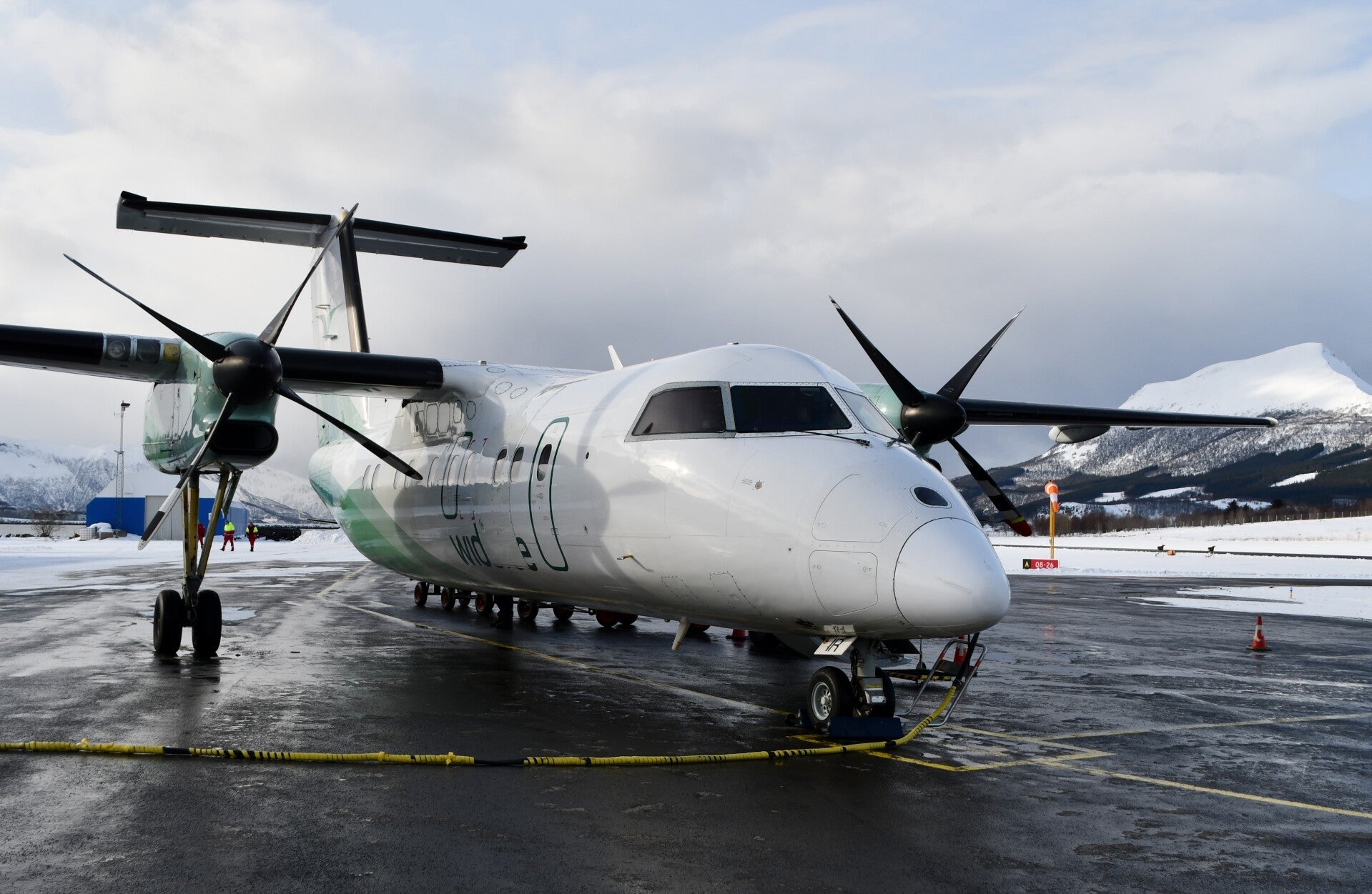
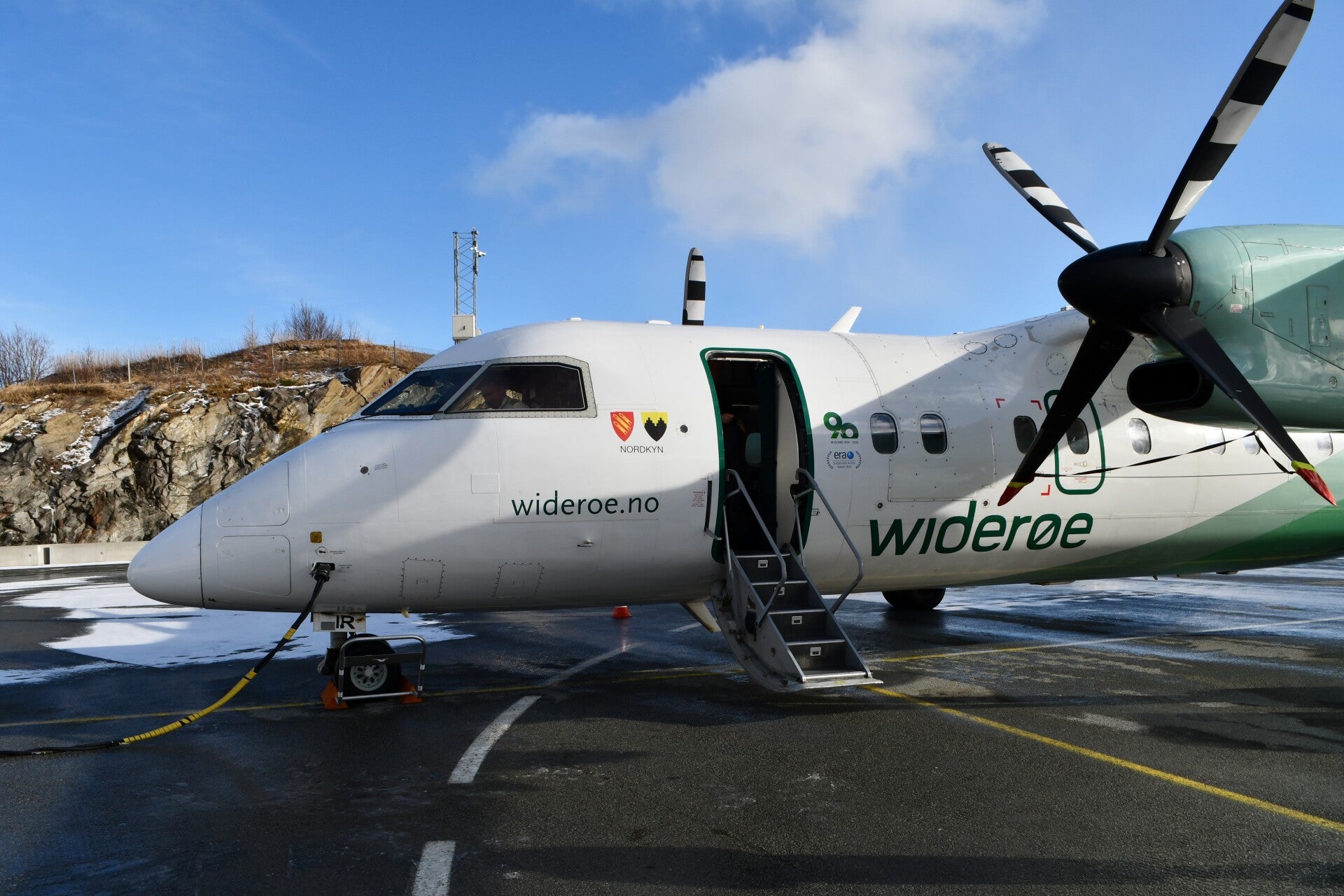
We’ve just missed the landing of a bright yellow Beechcraft King Air used as an air ambulance here in Norway, but we do catch it taxiing in. Thankfully, we don’t have to wait long for our next ride to arrive. Although we were hoping for the rare -200, today’s flight is operated by Widerøe’s oldest child: the 34-year-old DHC-8-100, LN-WIR. She still wears the old livery, which we actually prefer over the new one. The little Dash turns around and taxis onto the ramp, where, once again, only two passengers disembark.
We make our way to the boarding area (calling it a “gate” still feels a bit generous, given our spoiled standards), and it doesn’t take long before the doors open and we walk out to the aircraft. As we board, we notice that rows 1 and 2 are still empty, so we immediately make ourselves comfortable there.






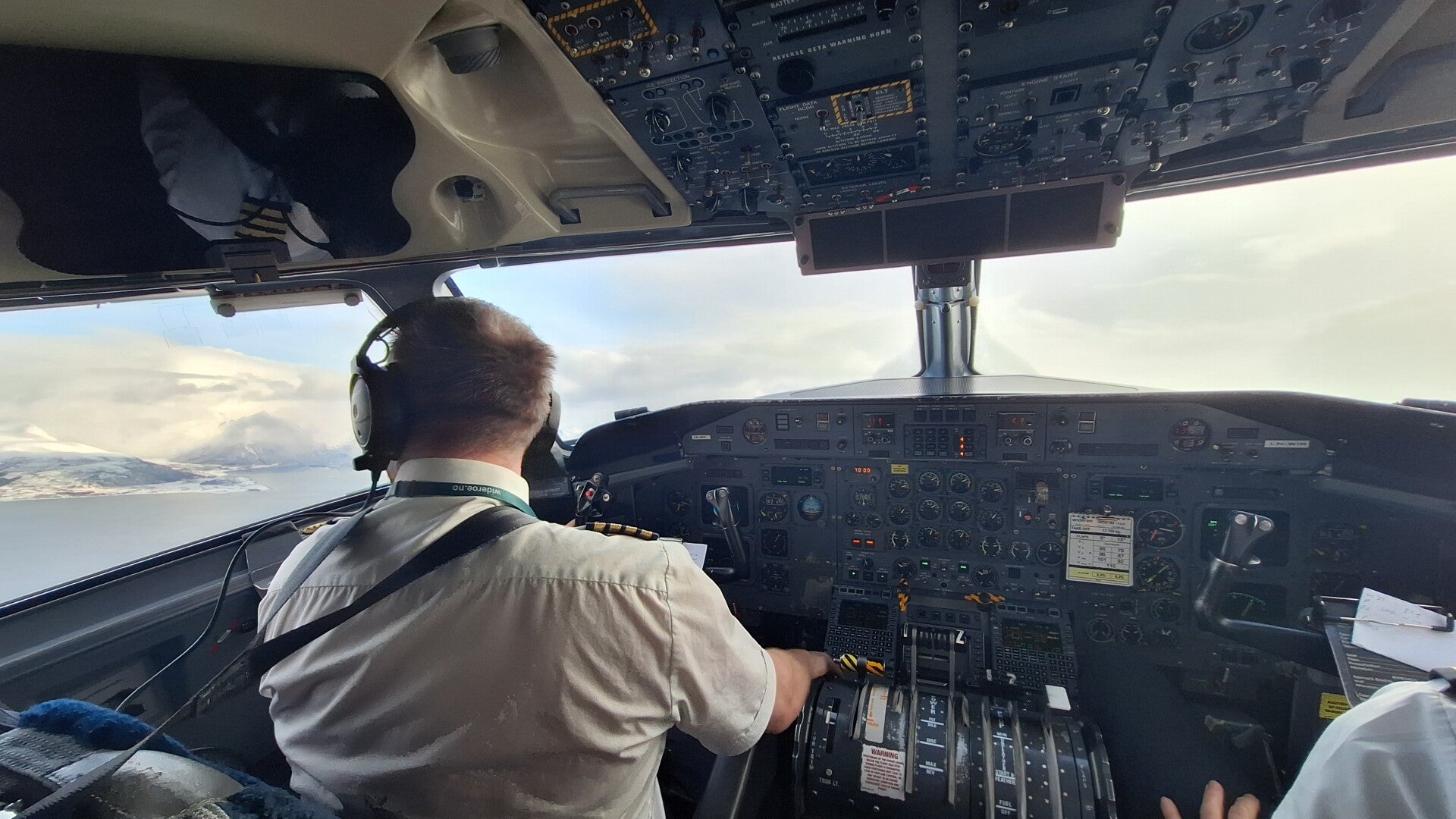
With a few minutes to spare before our scheduled departure, I (Lars) ask the cabin attendant if I might be able to take a quick peek into the cockpit. He says he’ll ask the captain and heads off. When he returns, he tells me the pilots would actually like to meet me and asks if we’re YouTubers of some sort, referring to all the camera gear we’re carrying. We explain that we run travel blogs (like the one you’re reading now) and a YouTube channel, and he enthusiastically goes back to tell the captain.
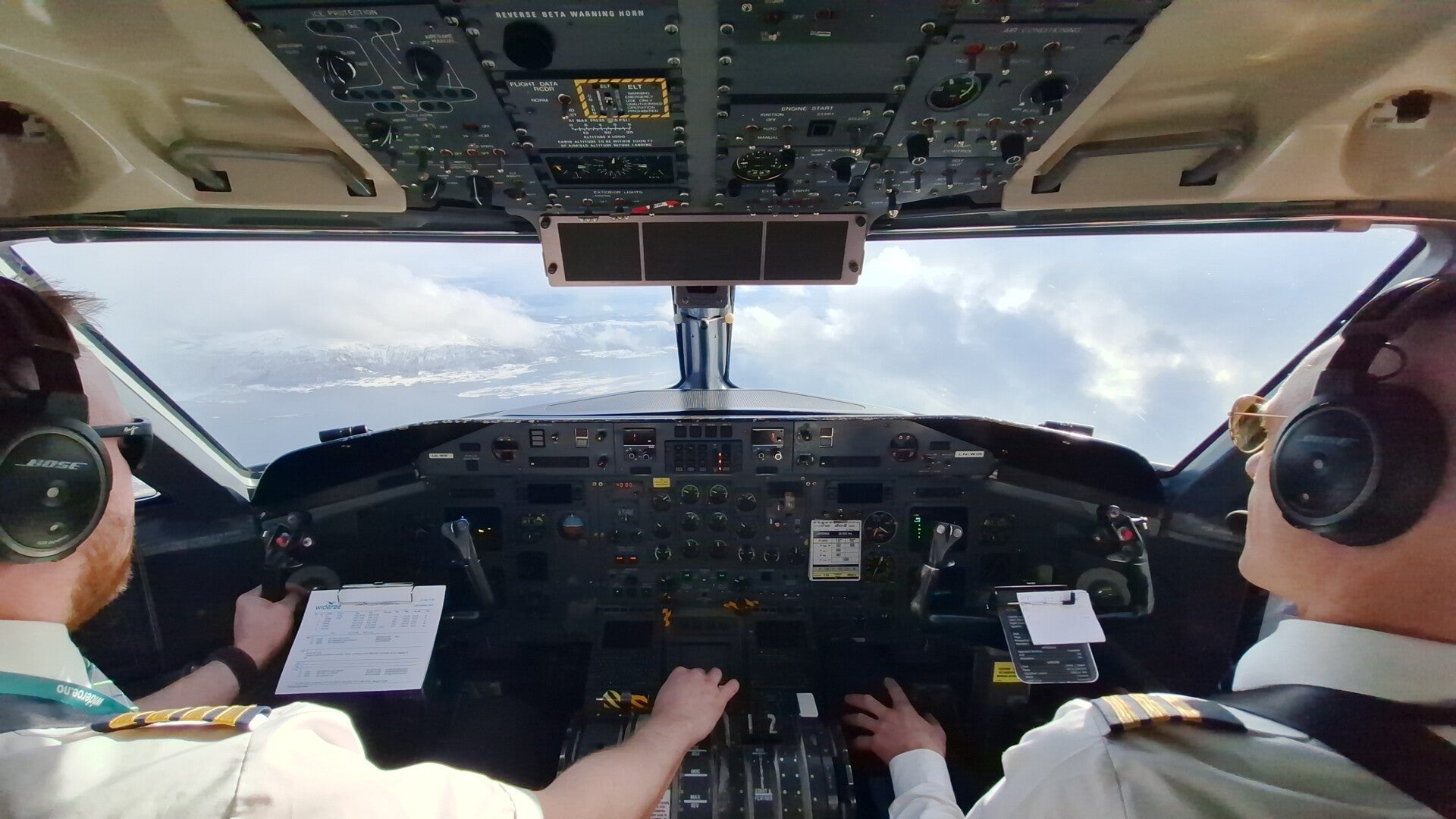
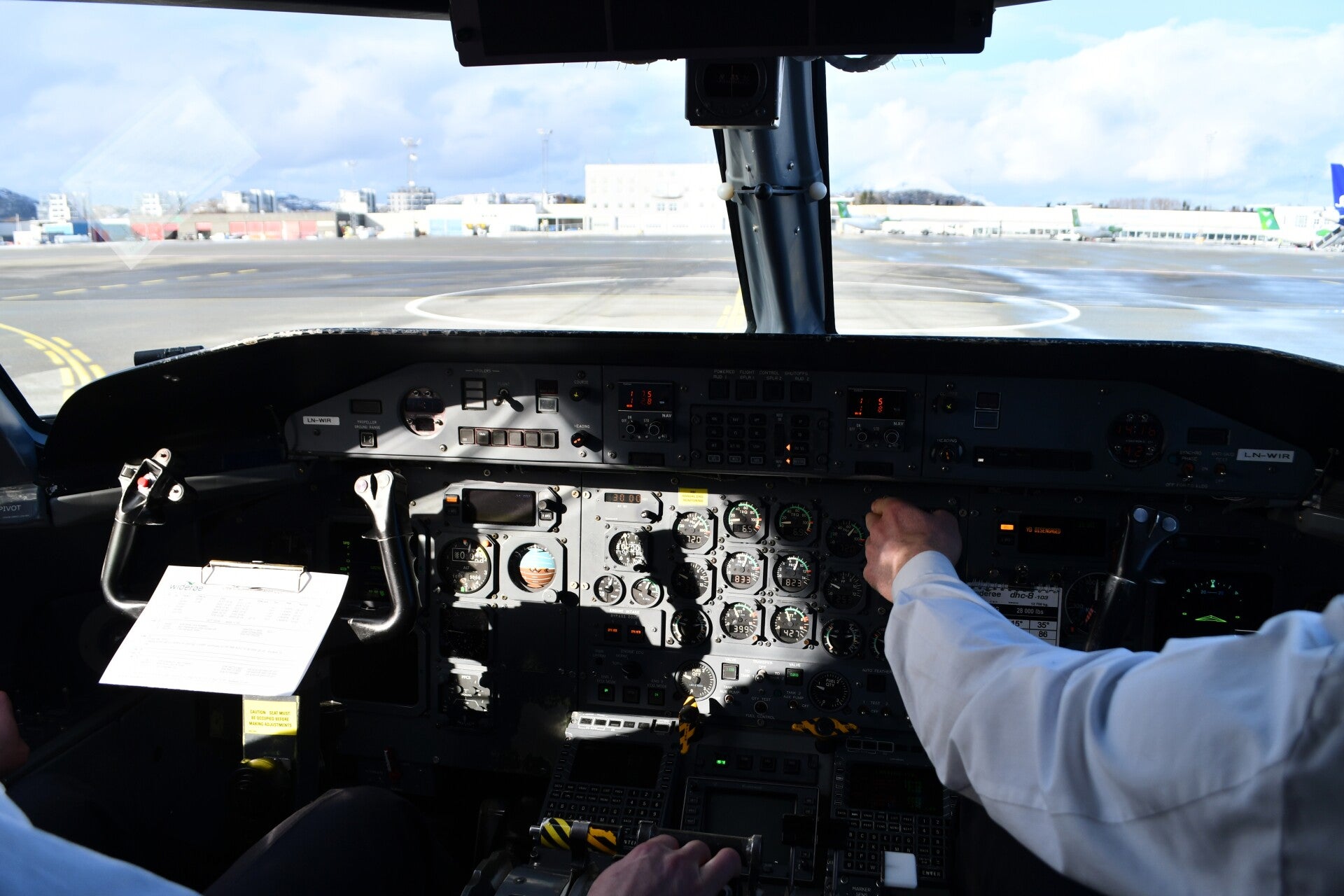
I follow, and to my absolute surprise, the captain enthusiastically asks if I’d like to ride the jump seat for this flight. How could I possibly refuse an offer like that?! I grab all my gear and head to the flight deck, where the first officer has already prepared an extra headset for me. Due to the shift in weight toward the front, Marieke is asked to leave the roomy four-seat area and move to the last row, Row 10. She doesn’t mind at all as she gets the entire row to herself.
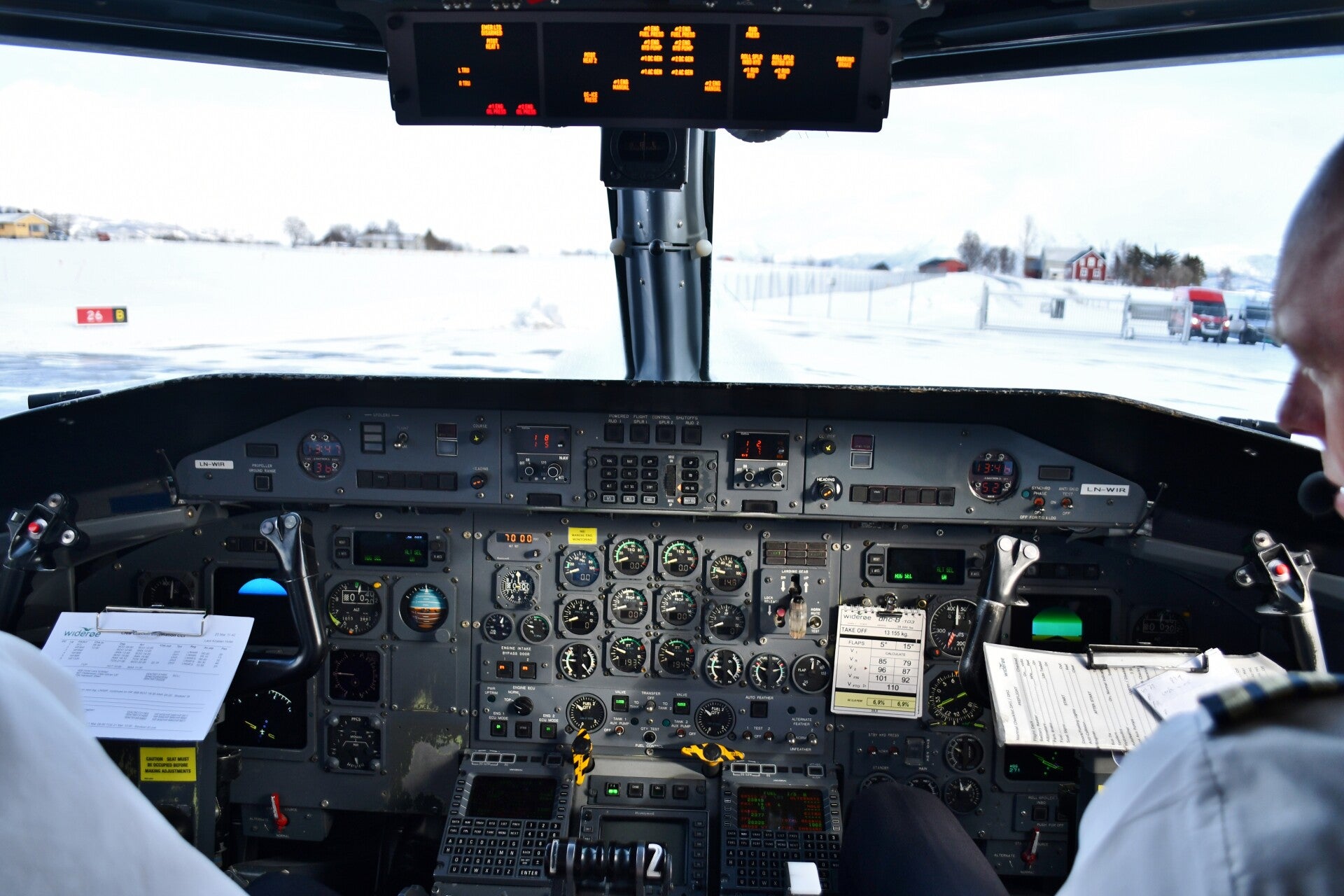
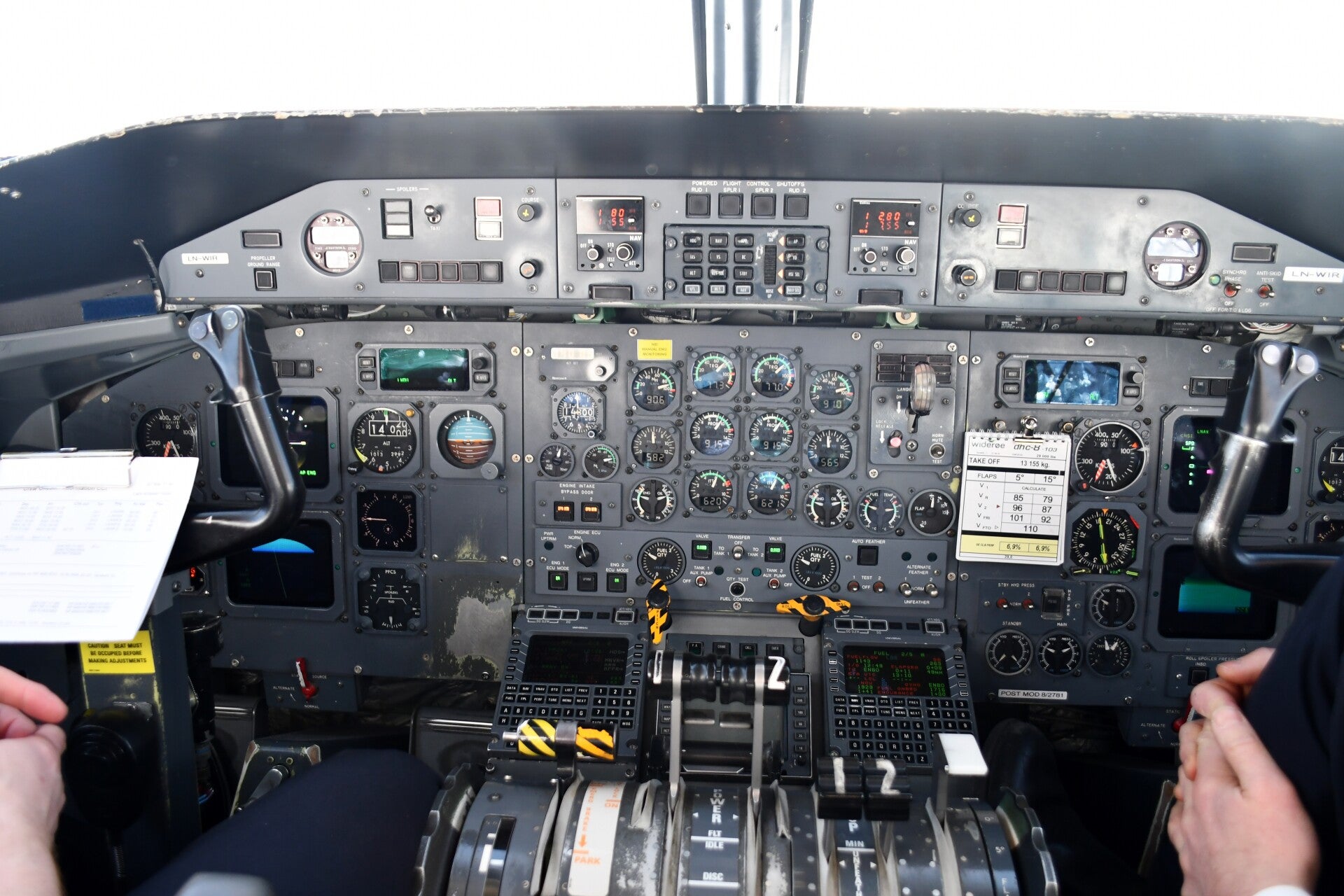
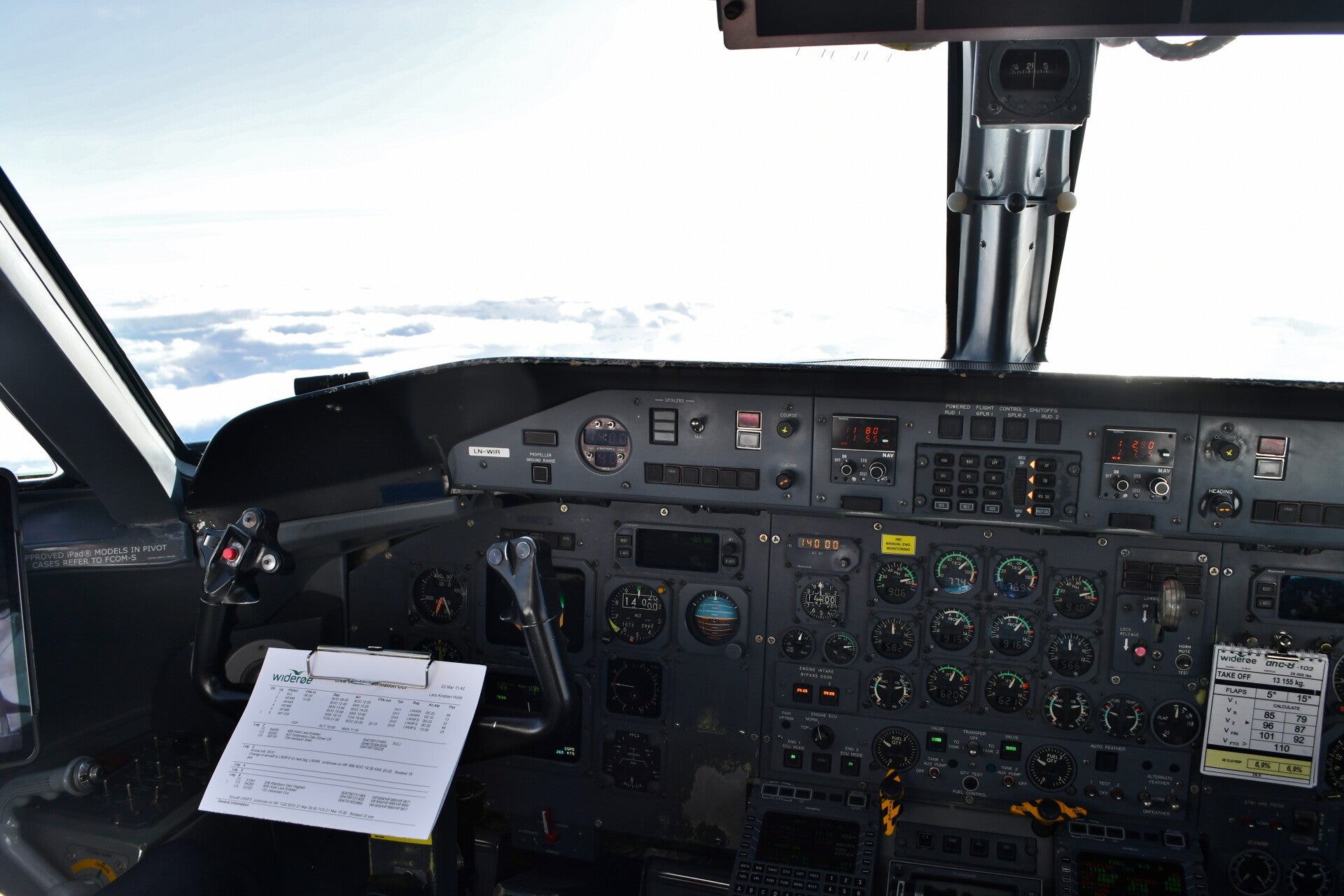
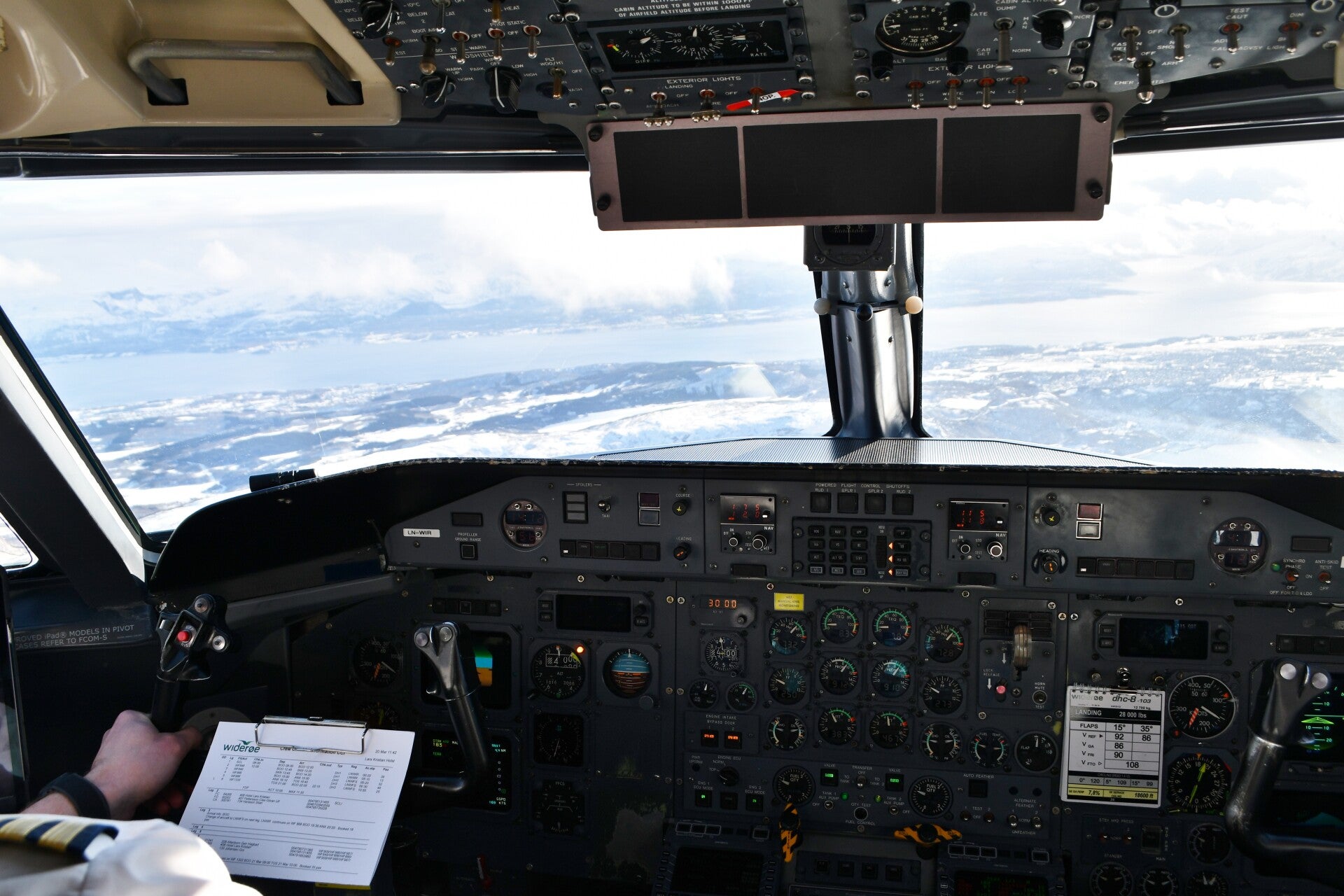
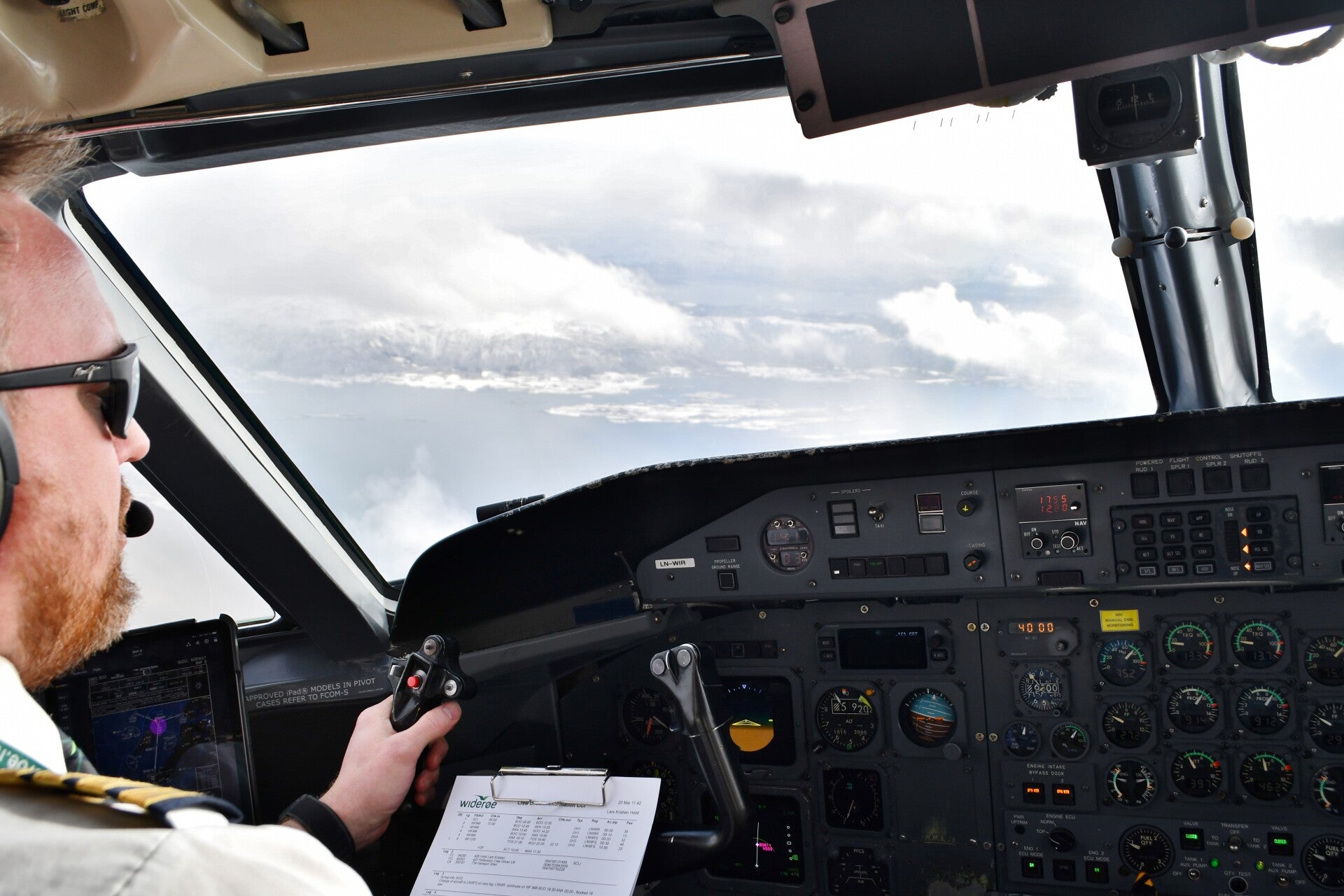
Meanwhile, my jump seat is unfolded, resembling a foldaway ironing board. I make myself comfortable and prepare my cameras while the pilots run through their checks and ready the aircraft for departure. The first officer walks me through the engine start procedure. The cockpit hasn’t been modernized yet and is still filled with gauges, knobs, and dials everywhere. Honestly, that’s exactly how I like it. It feels old-school and breathes pure airmanship and raw aviation. I love it.
Hearing ATC through the headset is an absolute treat as well. It reminds me of my previous cockpit flight last year on the mighty Fokker F28 Fellowship in Argentina. On that flight, all communications were done via handheld microphones and speakers, and I had to stand the entire time from startup to shutdown because the jump seat was already occupied. This time, I’m fully strapped in, wearing a headset, sitting on the very best seat in the plane.
With both engines running, we taxi a short distance to Runway 26. Clearance comes quickly, and the captain advances the throttles. The old Dash 8 begins to roll and immediately demonstrates her STOL (Short TakeOff and Landing) capabilities as we rotate very quickly. The landing gear retracts, and we make a left turn, revealing the iconic bridge to the village of Stokmarknes below.
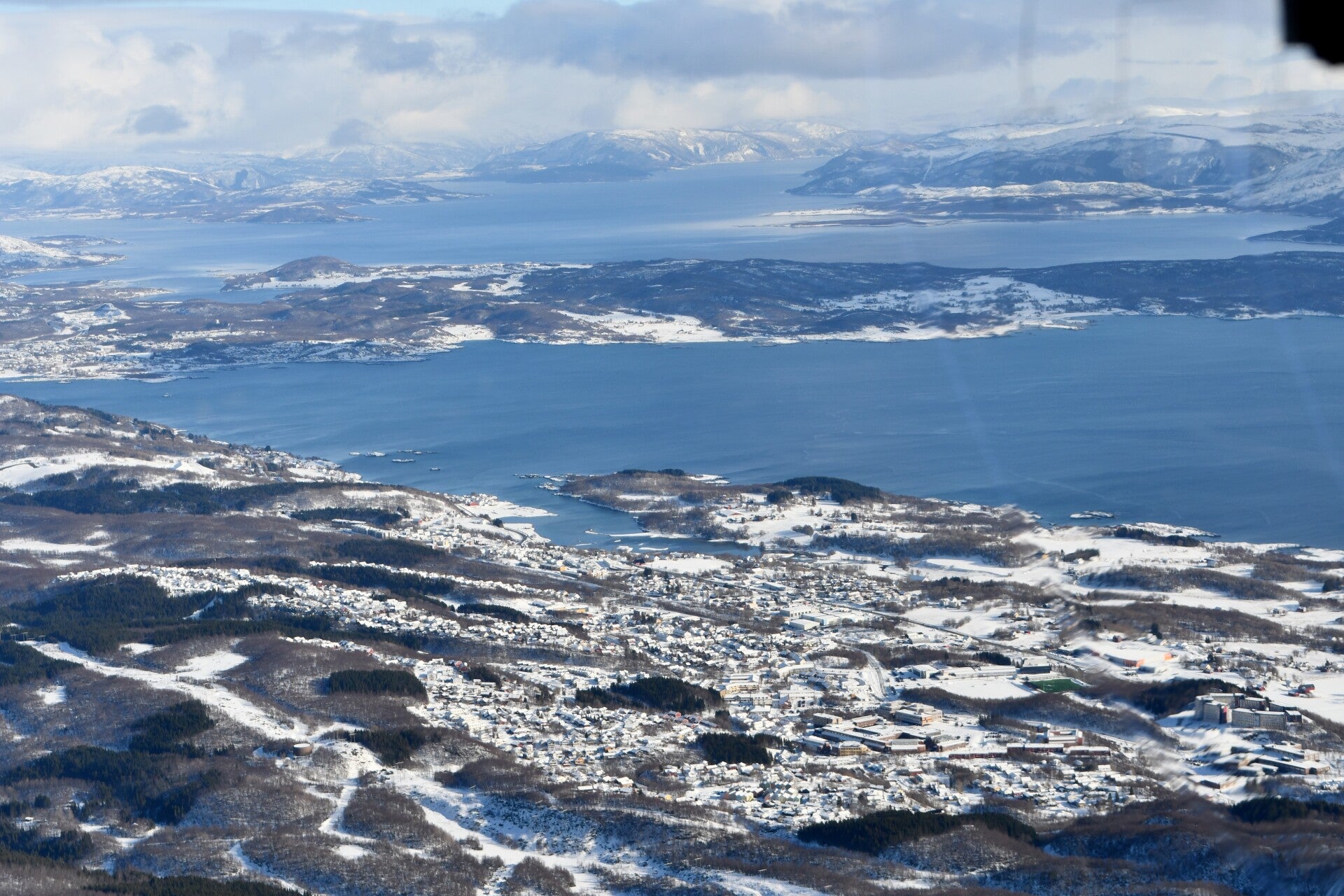
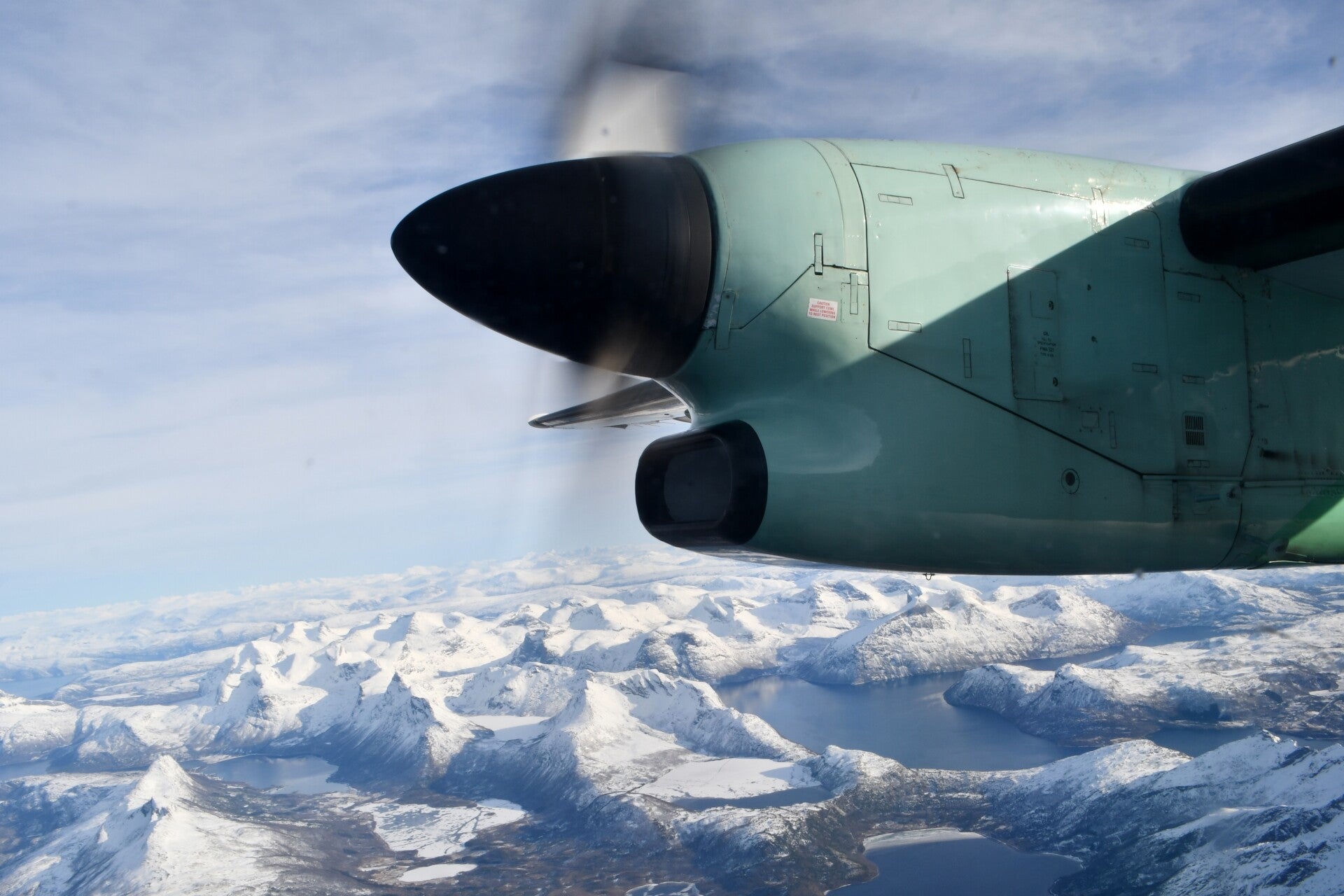
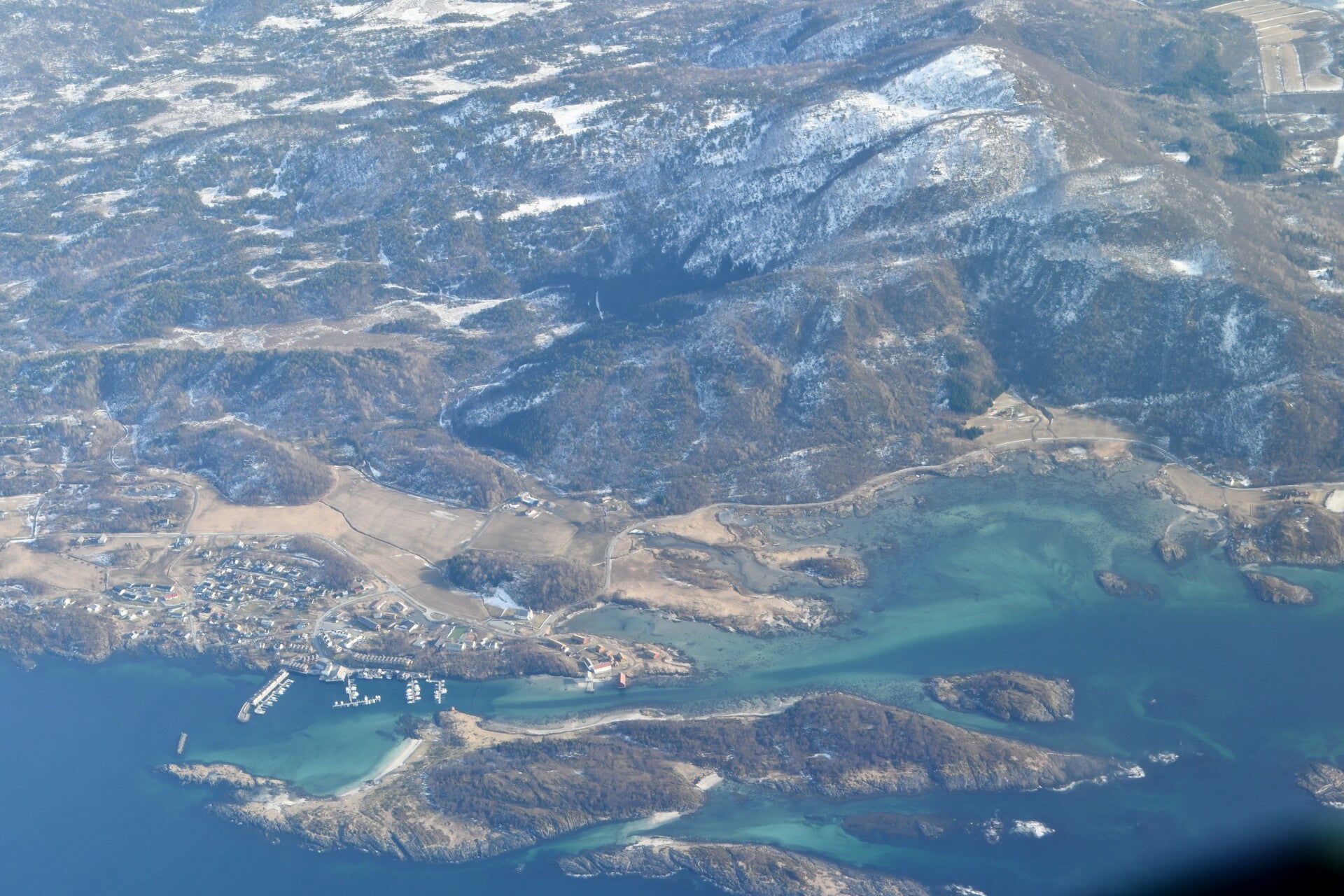
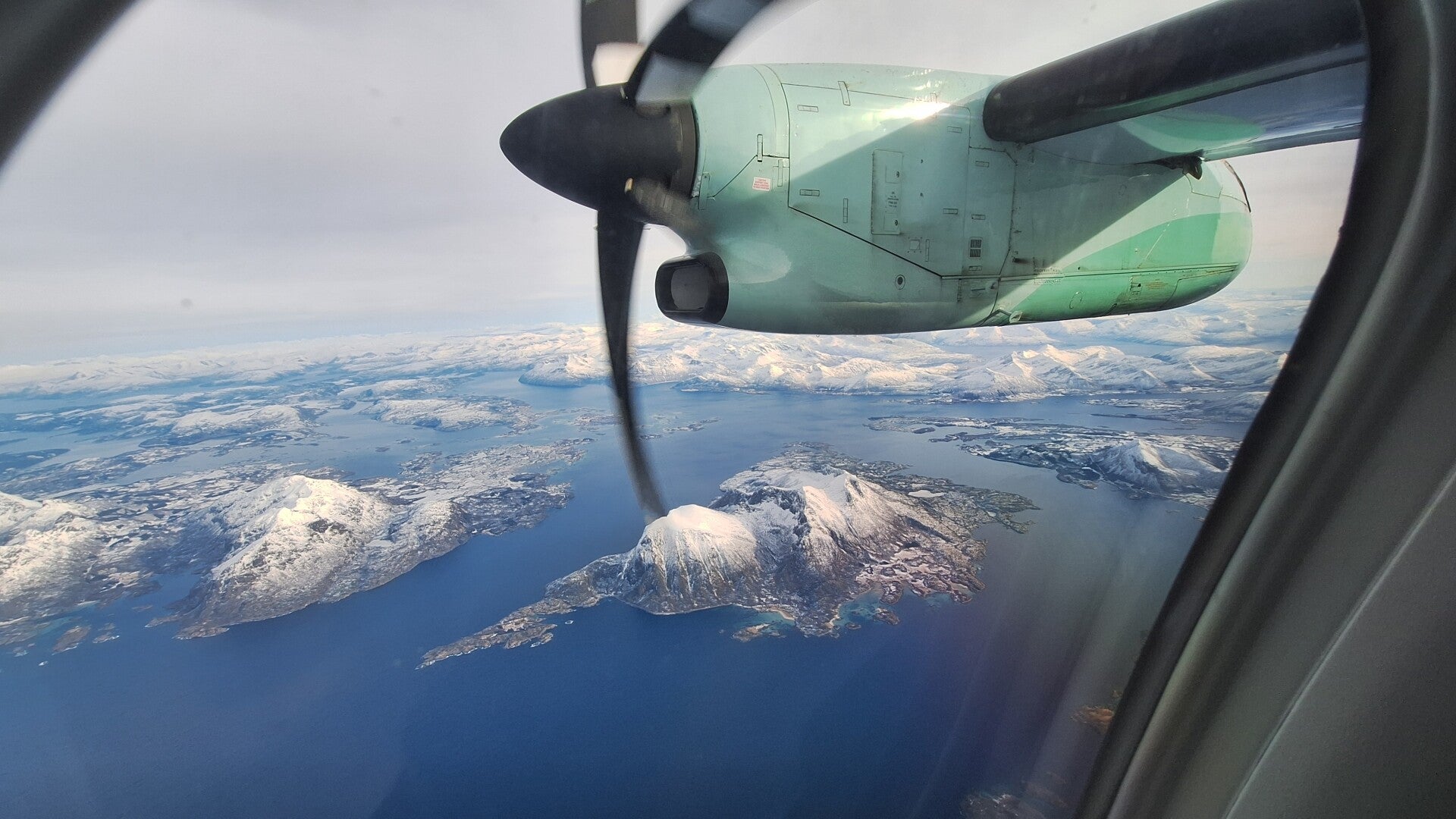
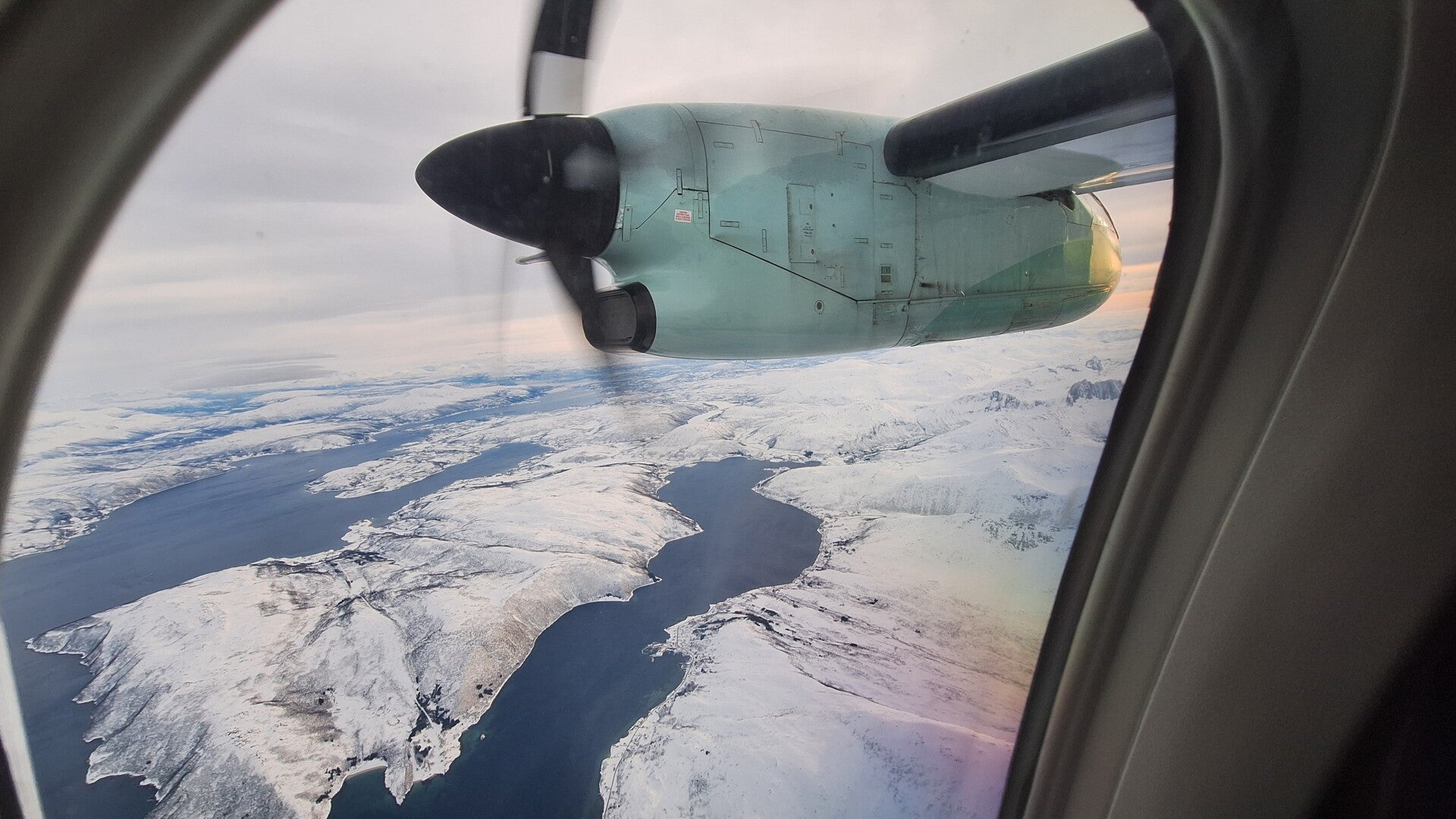
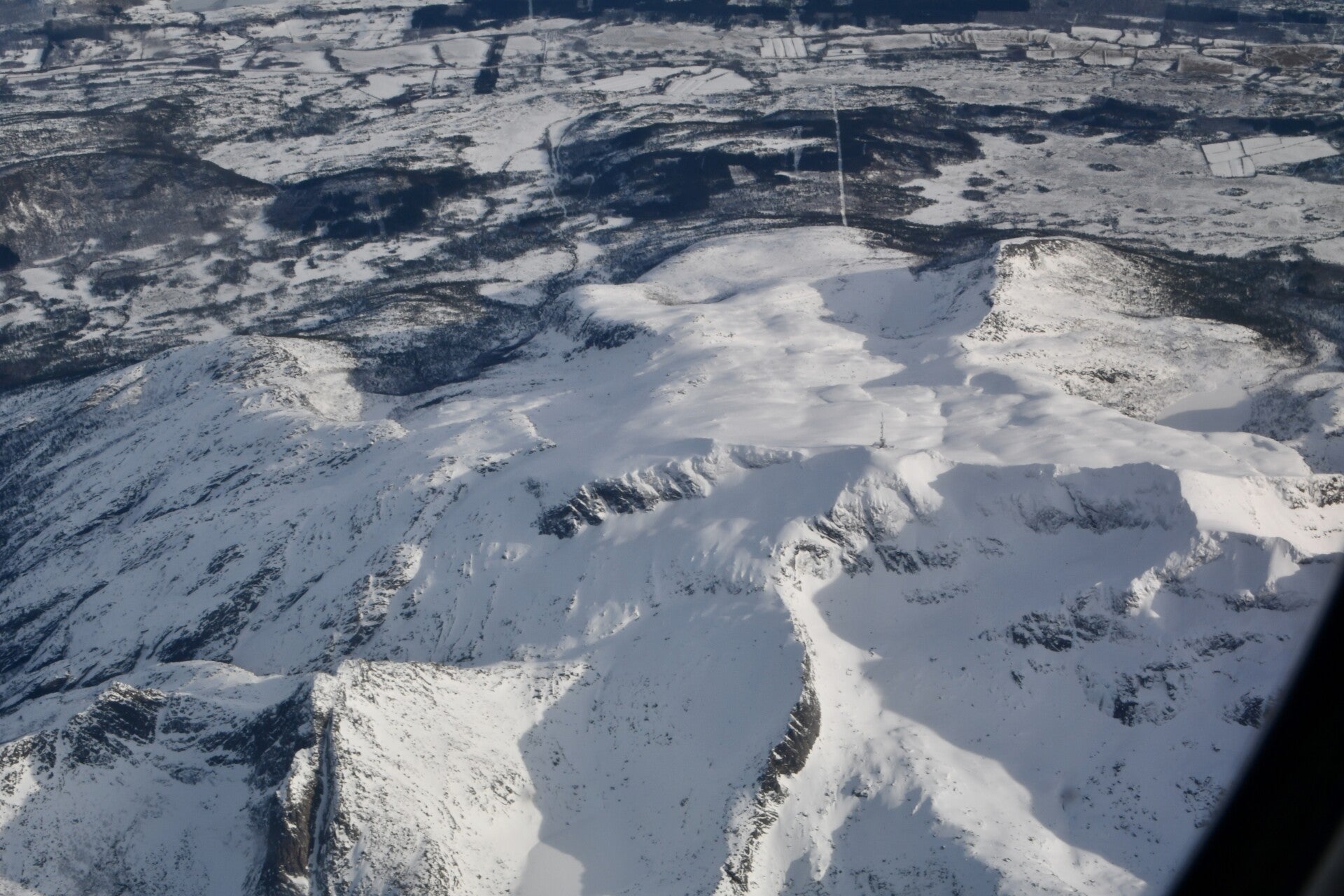
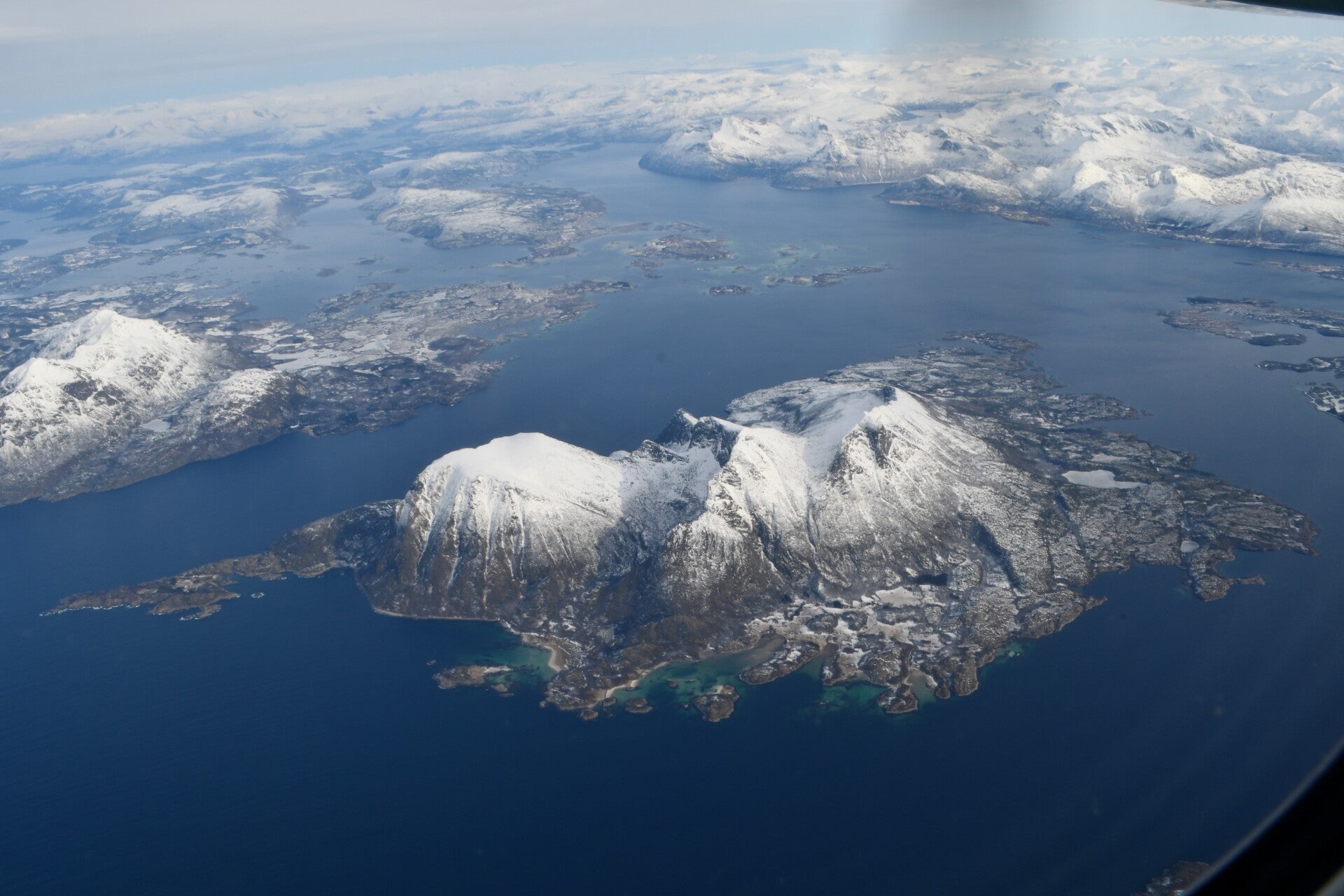
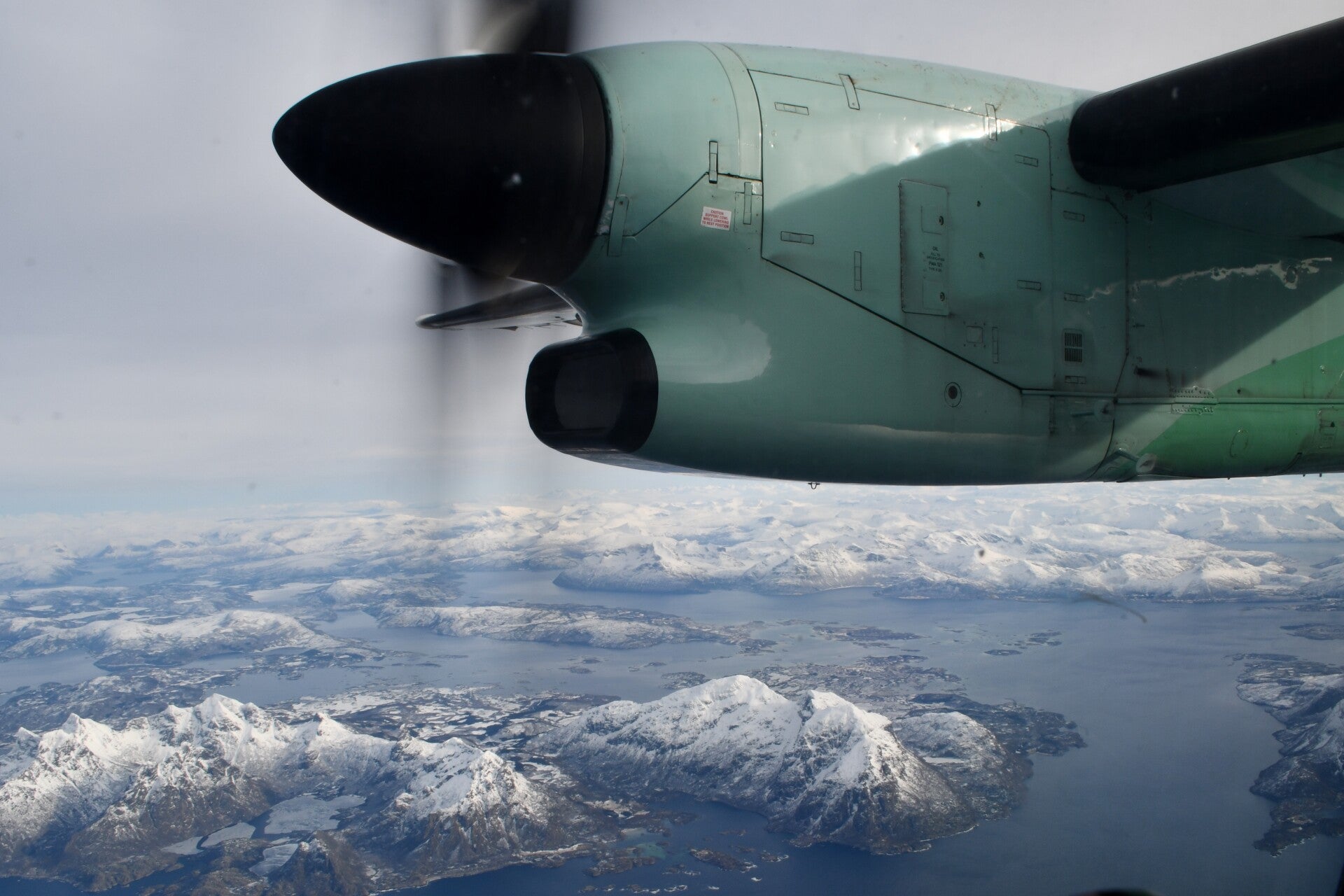
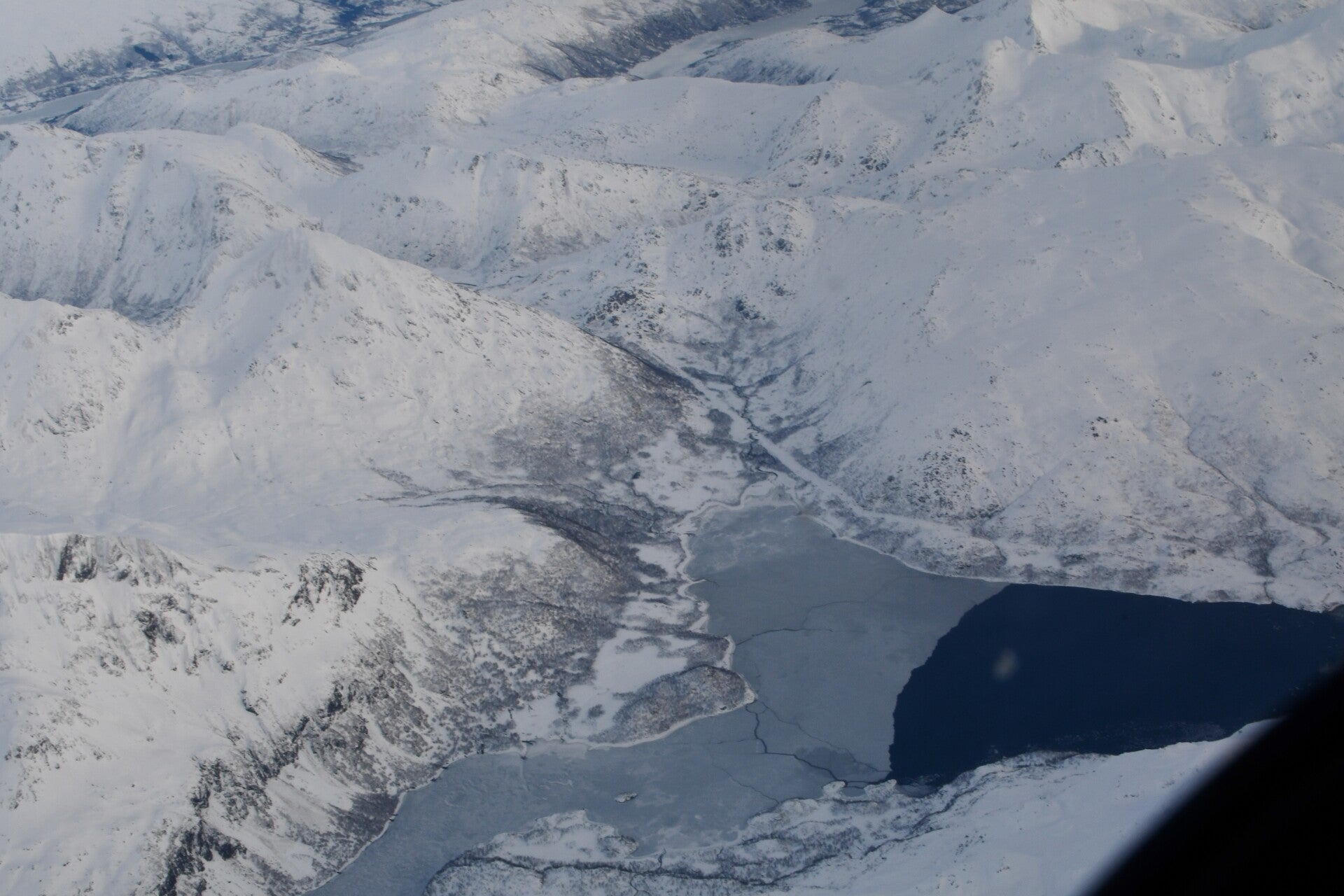
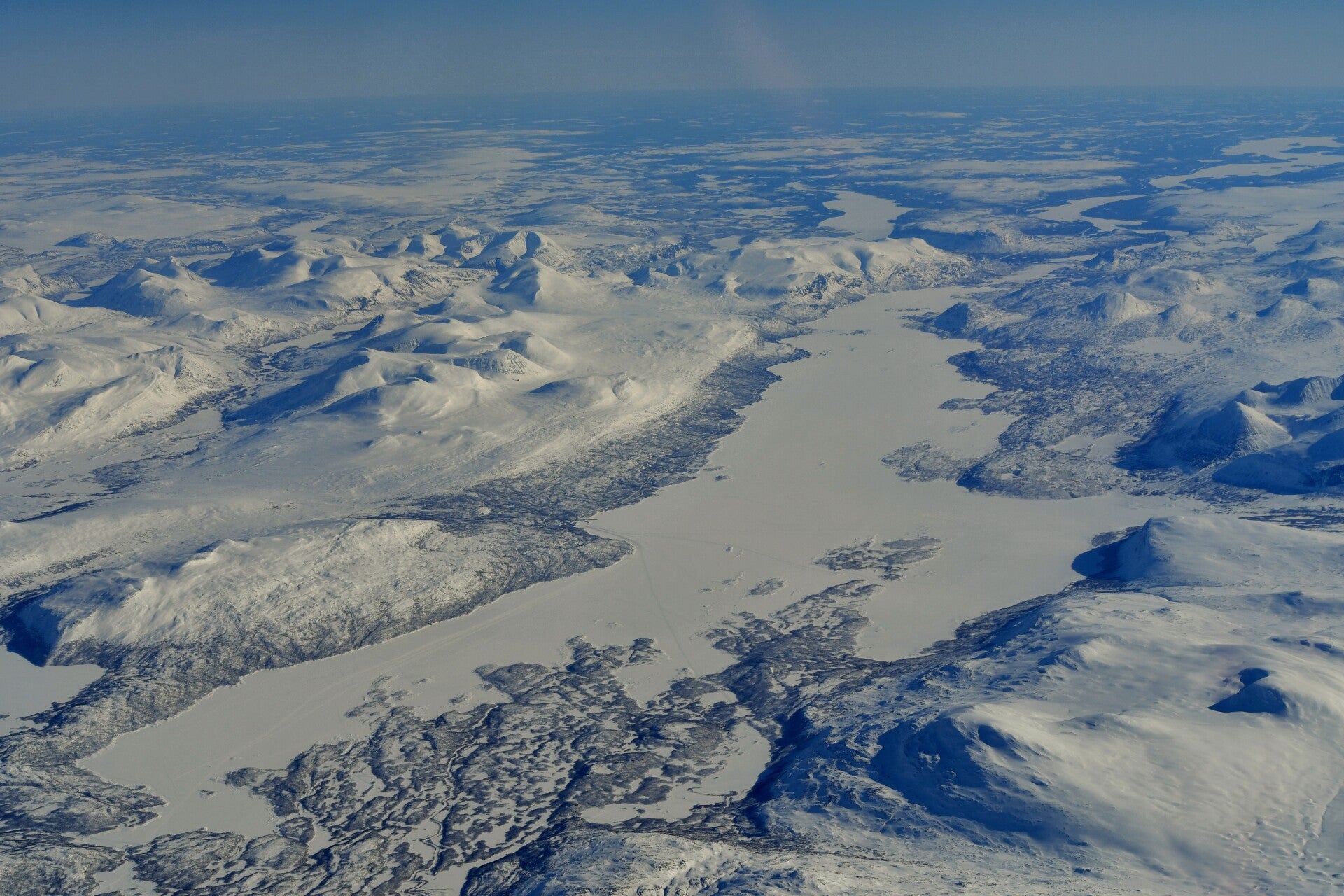
We continue climbing southbound over the Lofoten Islands toward the Vestfjorden. The scenery is nothing short of spectacular: towering mountains, frozen lakes, tiny villages, and endless snow. Because the Dash-8 doesn’t cruise very high, the views are absolutely phenomenal.
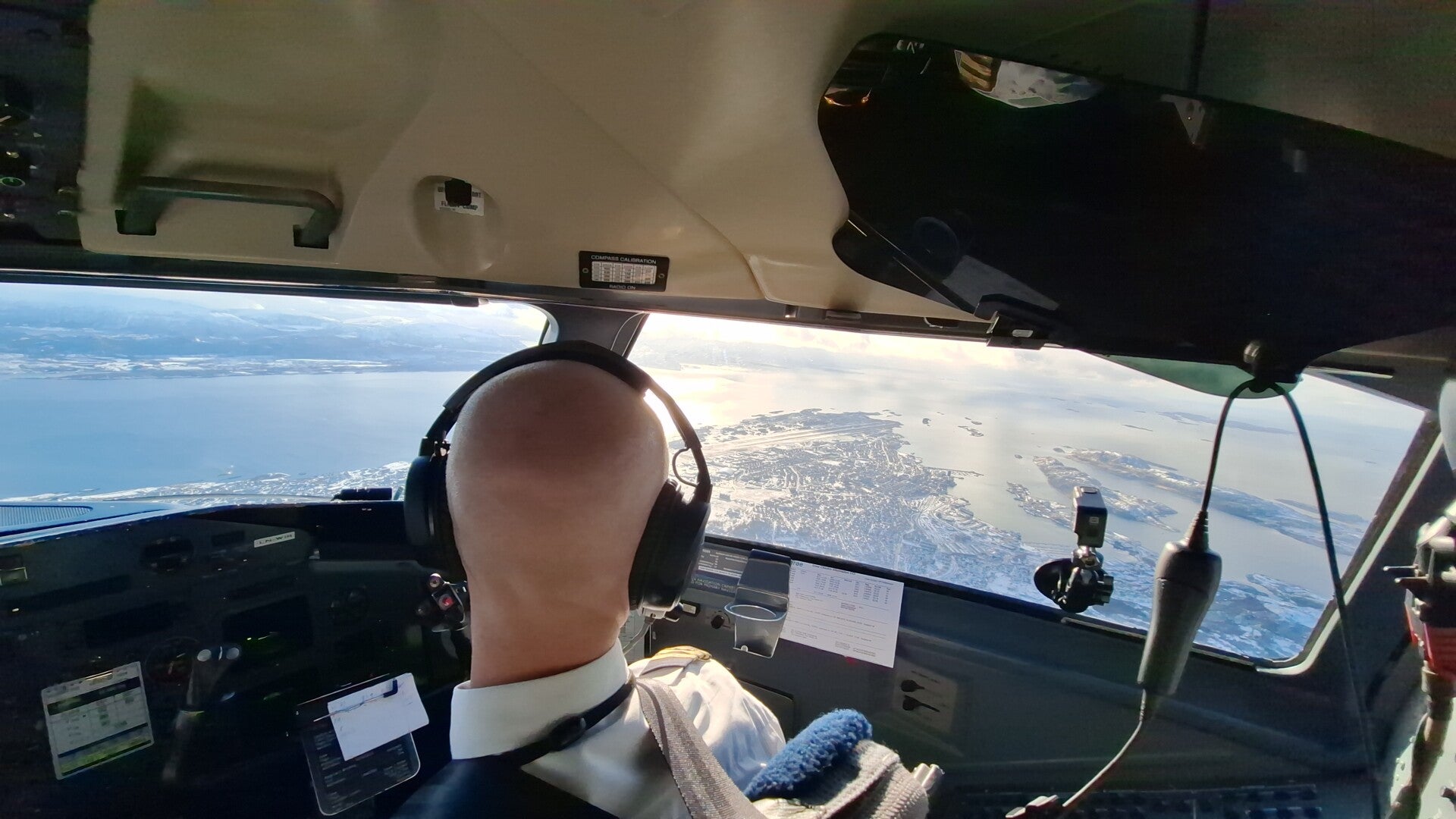
During cruise, the pilots and I chat about the airline, what it’s like flying the DHC-8, the transition to glass cockpits, and even LaMa Aviation. I’m having an incredible time. Eventually, we begin our approach into Bodø, descending slowly through the clouds over countless islands. Soon, the city comes into view, with its large harbor and clearly visible airport.
The pilots explain that Bodø lufthavn used to be a military air base, which was in the process of being decommissioned. It previously hosted F-16 fighter jets, but with the Norwegian Air Force transitioning to the F-35, the base was deemed obsolete. However, given current geopolitical tensions, plans are now in motion to reopen Bodø Air Base.
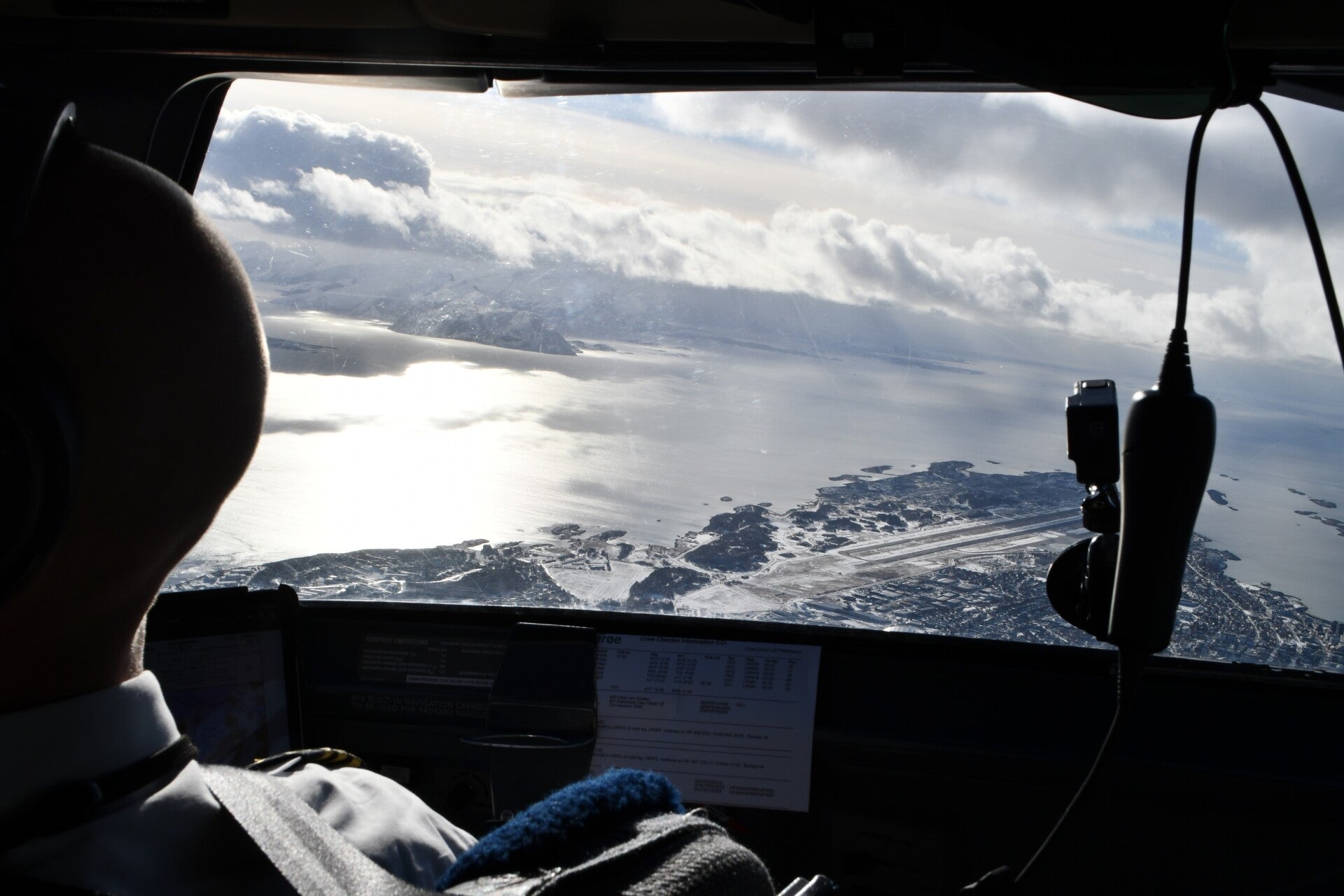
We approach the airport from the north, and based on our altitude and position relative to the runway threshold, I assume we’ll overfly the centerline and make a wide 270-degree left turn to line up for final. I forgot, however, that this is Widerøe and these pilots know their aircraft and their territory exceptionally well. The crew throws the aircraft into a steep right bank, rapidly turning onto final while descending aggressively. The nose points steeply toward Runway 25, and somehow, we’re still slowing down.
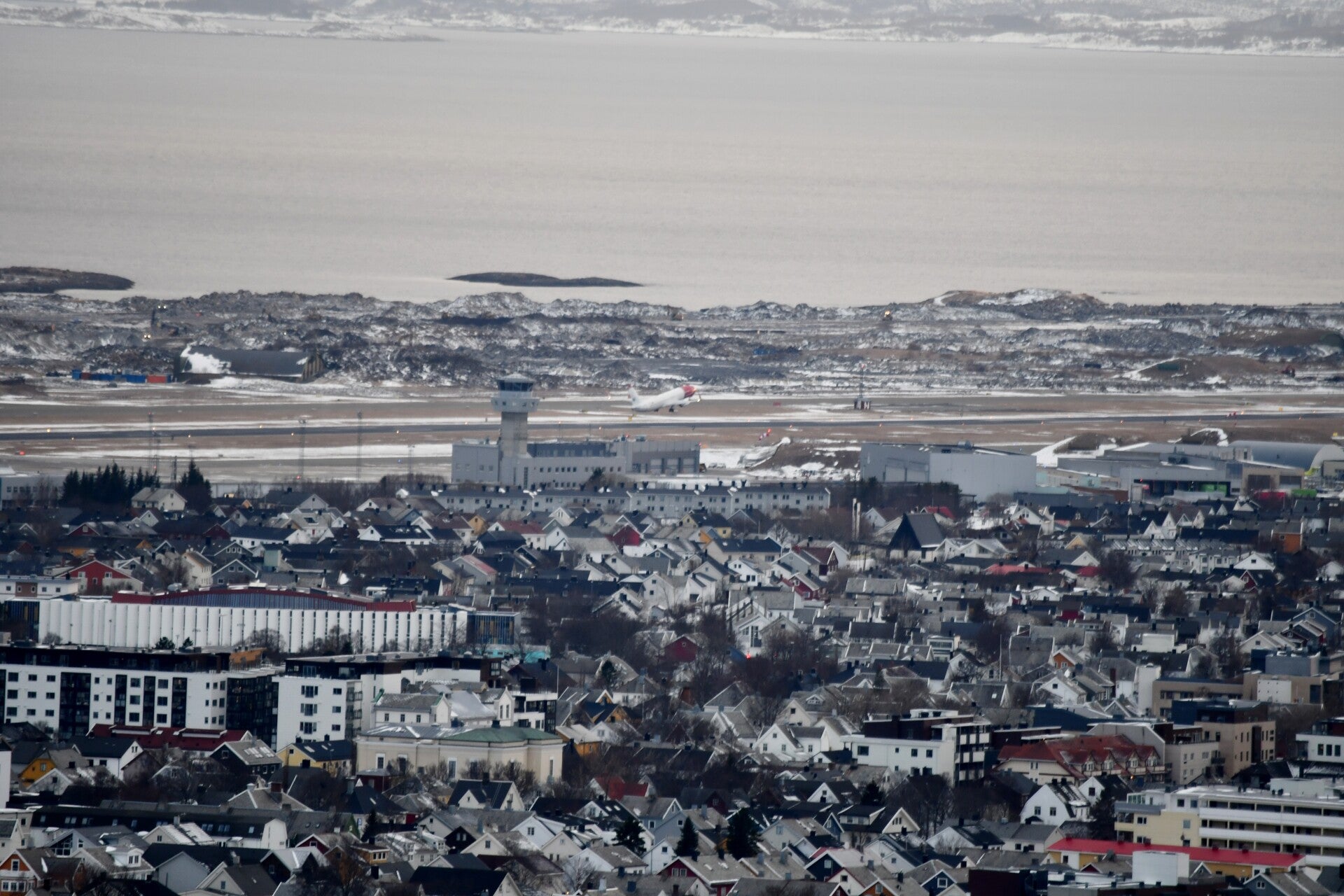
We have an incredible view over the city and the former air base. The aviation museum is clearly visible, along with several preserved F-104 Starfighters on the military side of the field. Moments later, the pilots firmly plant the old Dash-8 on the touchdown zone and slam on the brakes and reversers. In a mind-blowing distance of just 400 meters, the aircraft is slowed to a controllable speed, allowing us to take the very first runway exit.
I’m absolutely stunned by the STOL performance of this airliner. The pilots chuckle at my reaction and casually mention that they could have shaved another 100 meters off the stopping distance if they had wanted to. Absolutely incredible airmanship.
We taxi to our stand and shut down the engines. The weather in Bodø is pleasant, no snow showers and noticeably warmer. The cockpit door opens, I say goodbye to the crew, and I reunite with Marieke. I want to extend a huge thank-you to the crew of Widerøe flight WF849 for inviting me onto the jump seat and making this flight so unforgettable. You guys are awesome, we wish you all the best!
We leave LN-WIR behind and head into the terminal to pick up our next rental car and, after a bit of hassle, our luggage as well. What an incredible ride, absolutely stunning. With some time to spare before hotel check-in, we decide to head out and explore the city a bit.


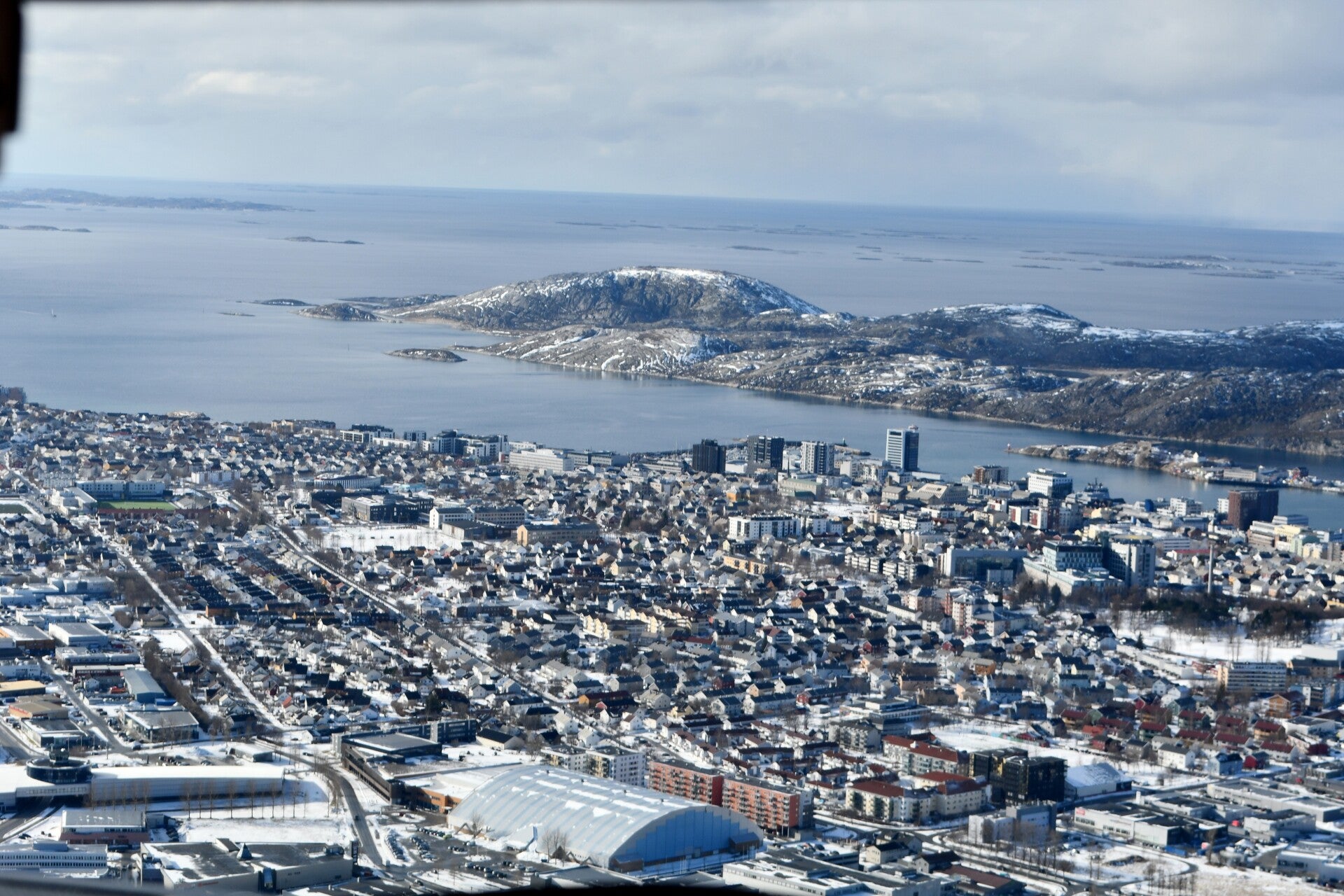

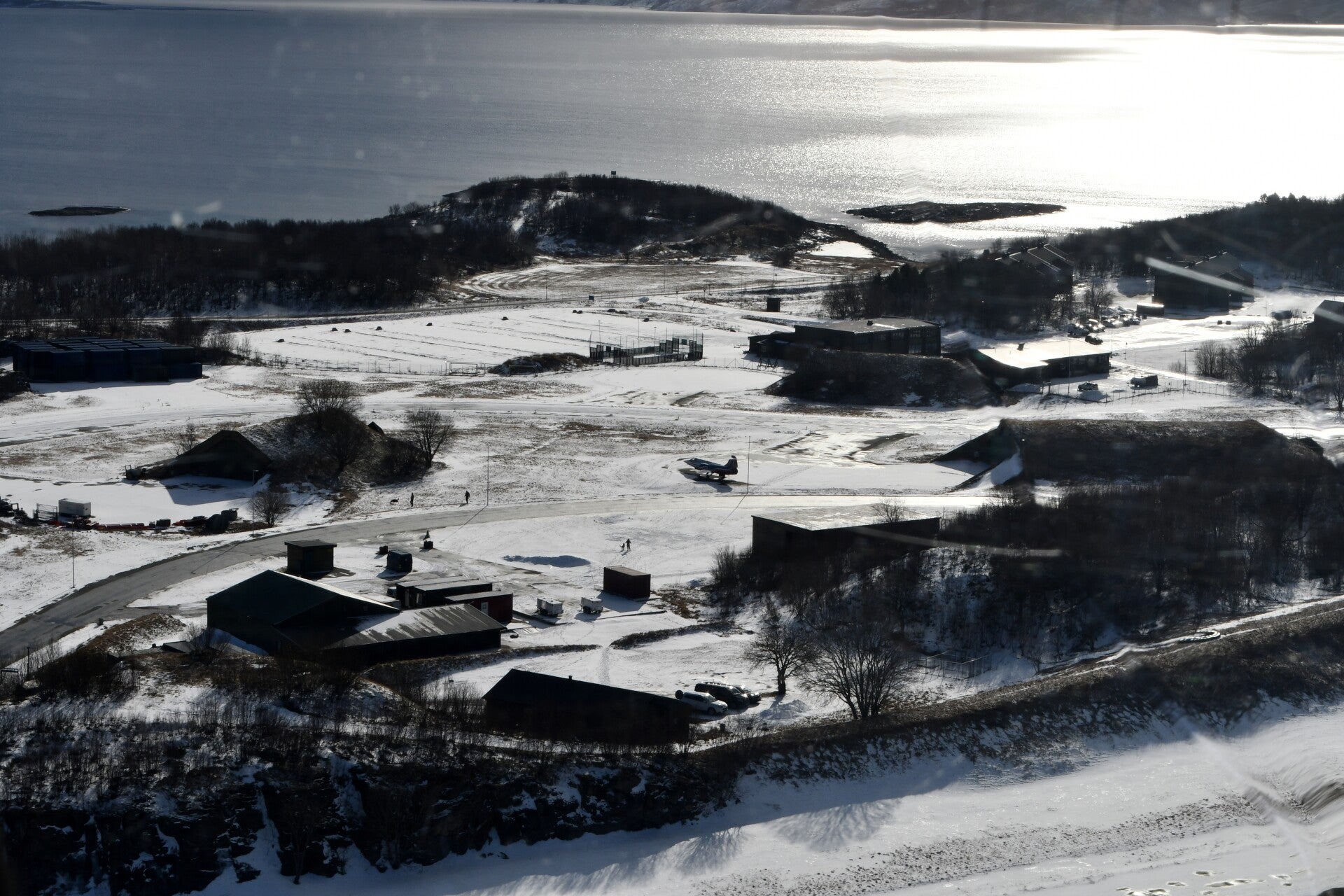
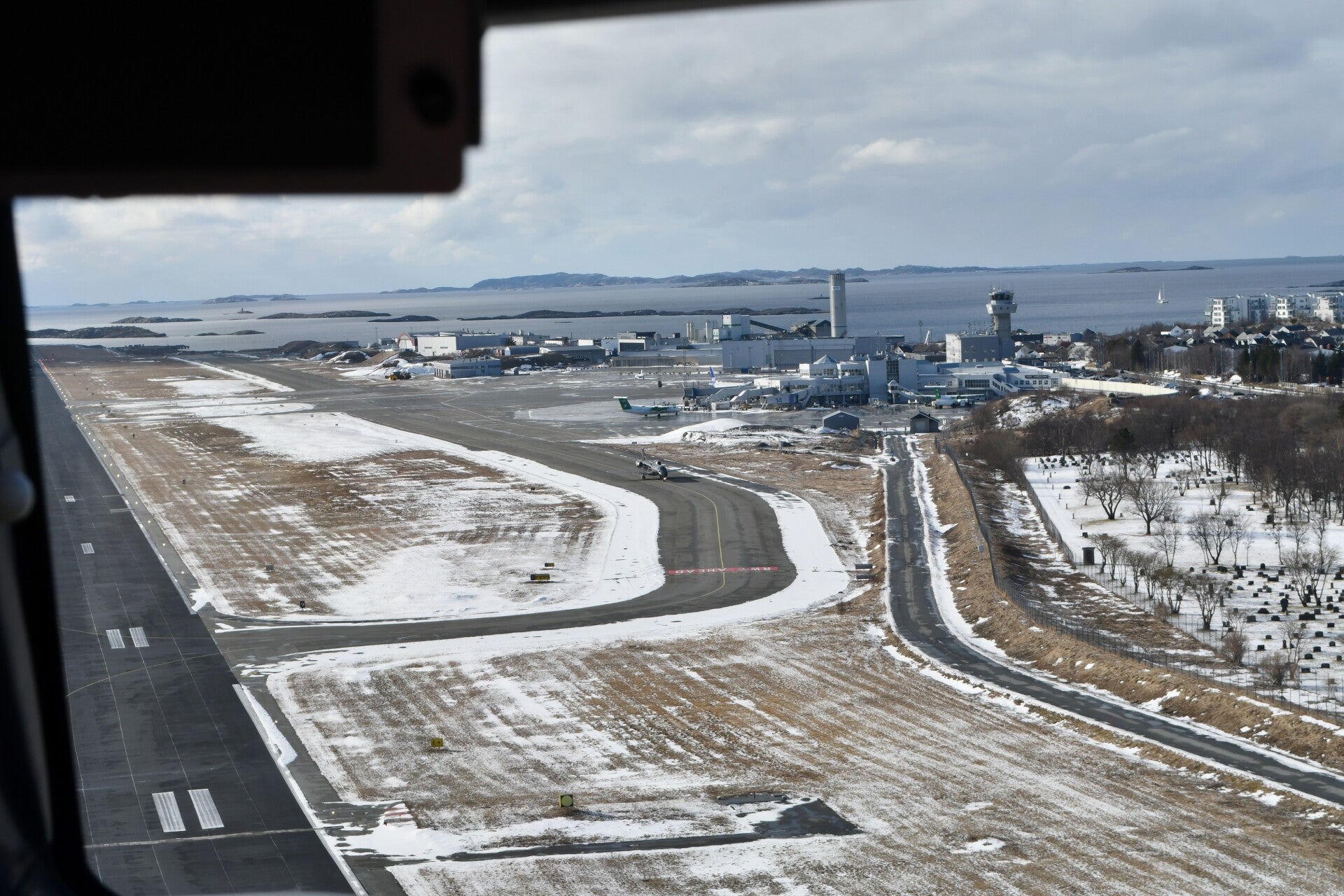
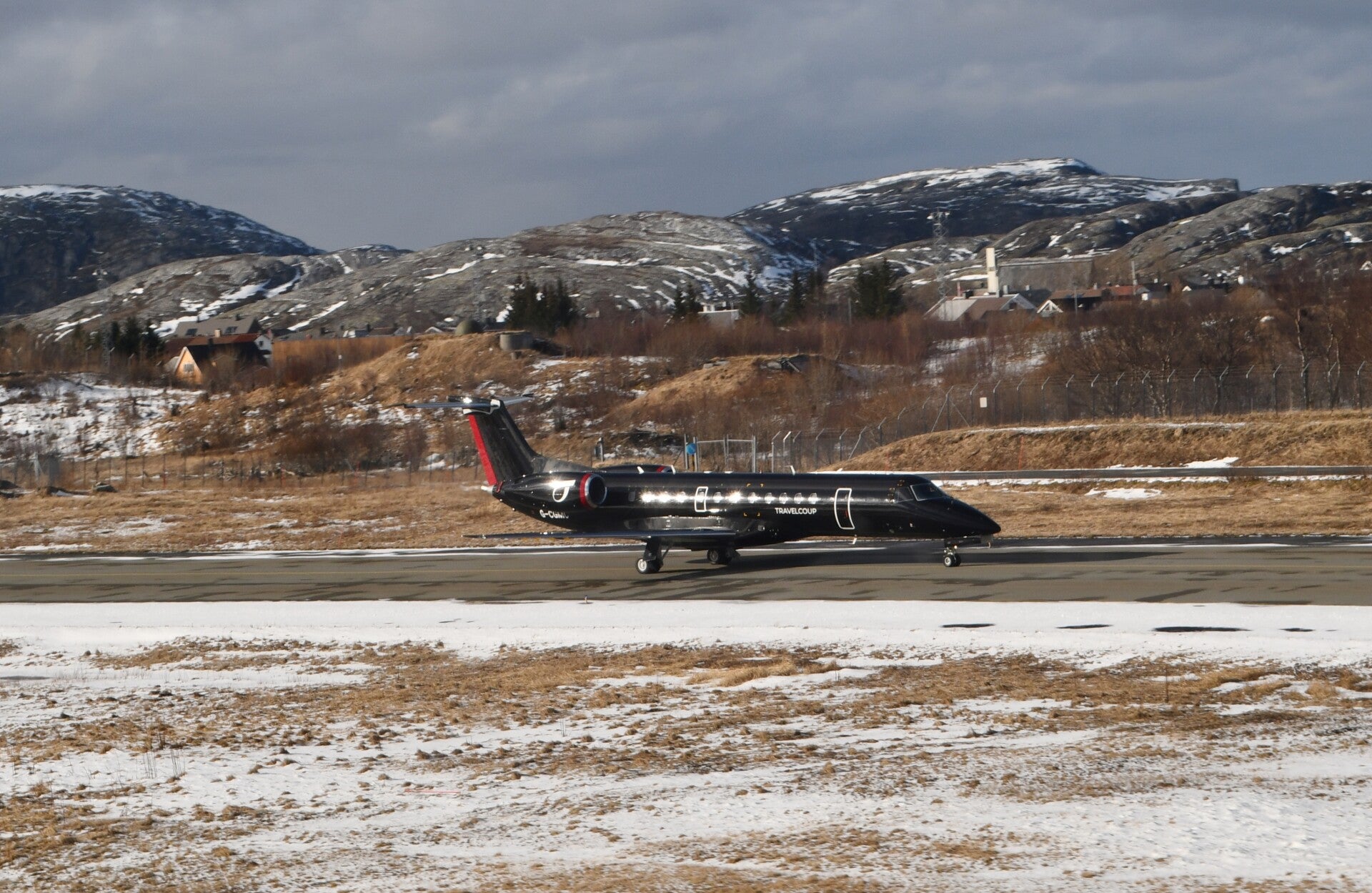

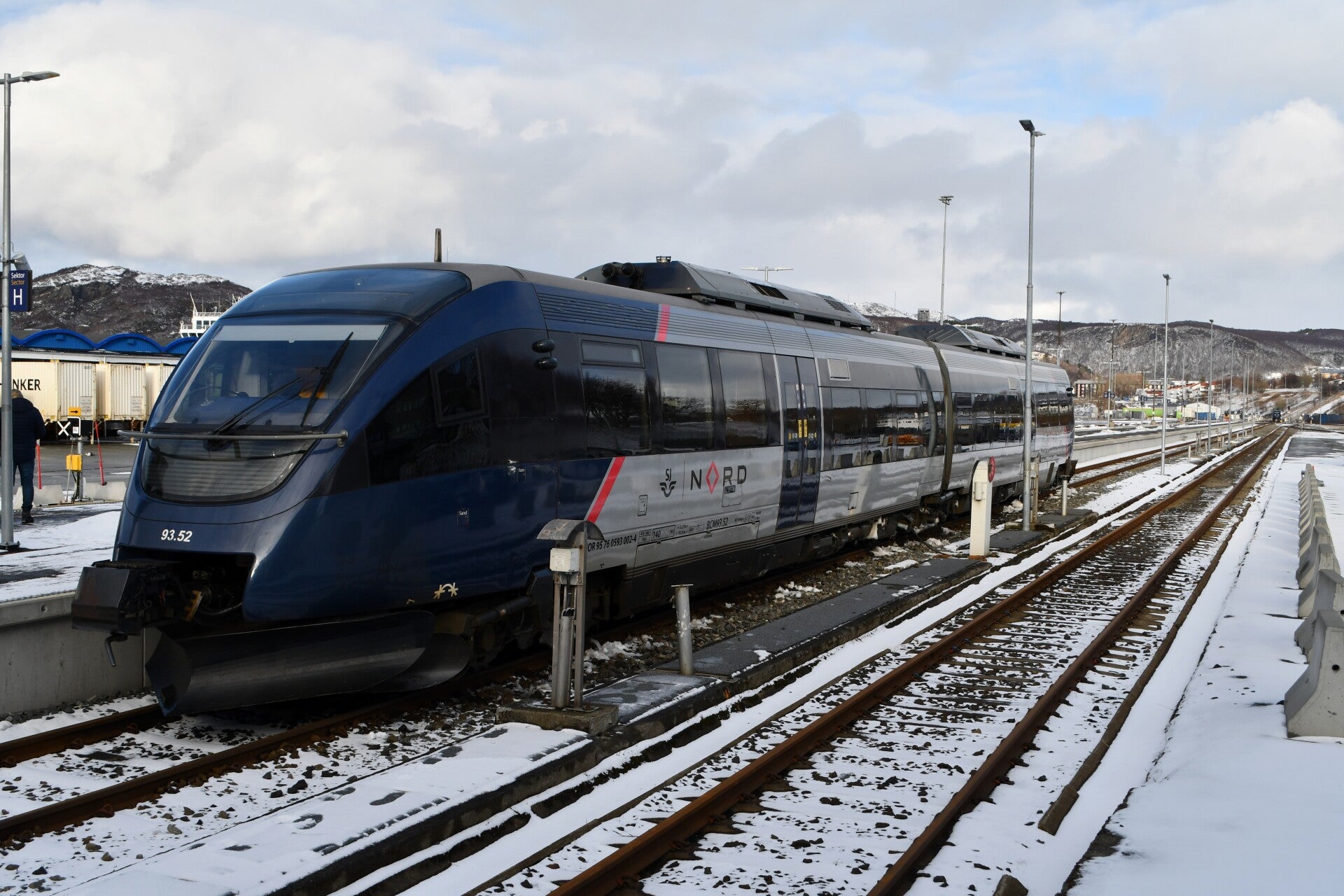
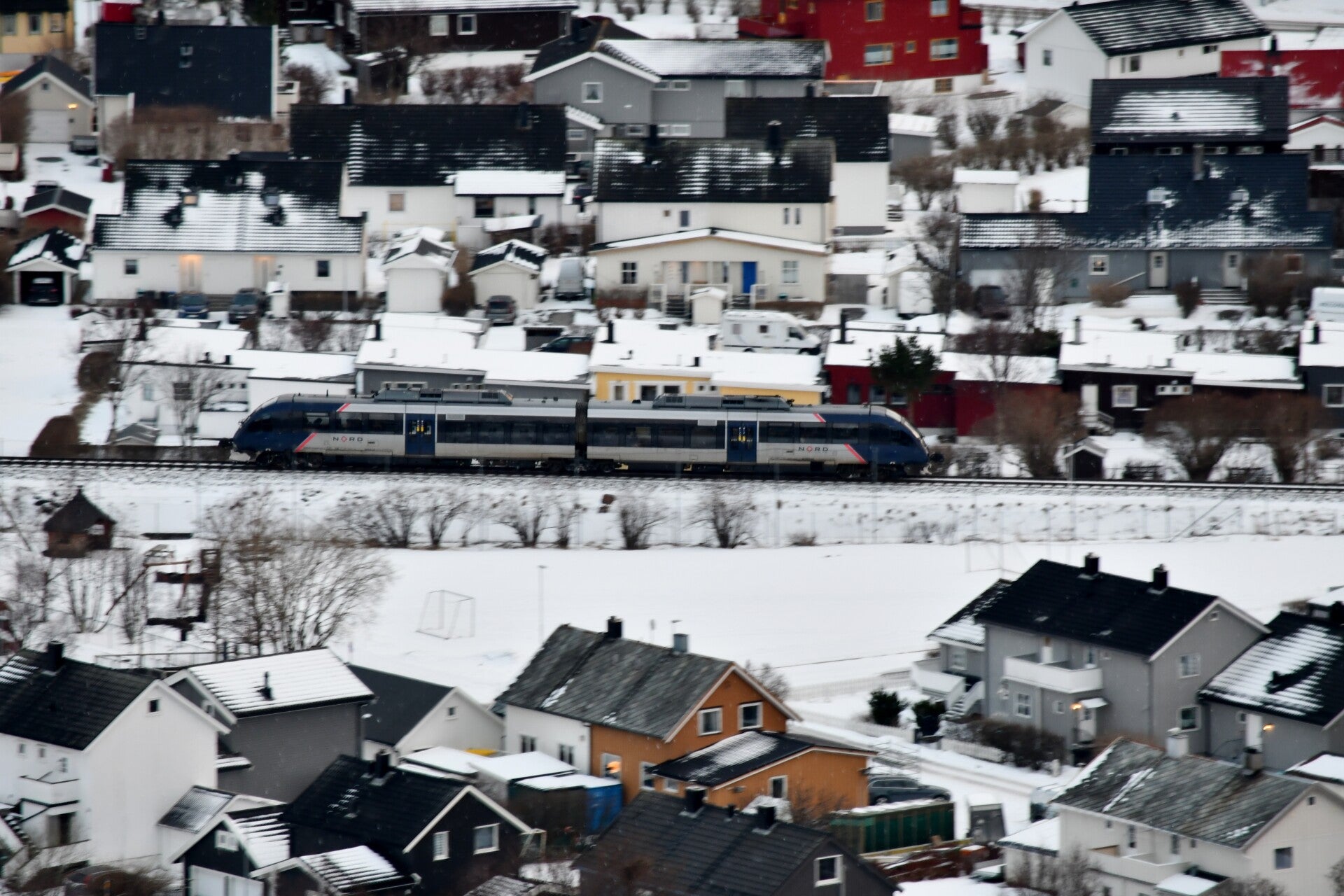
First, we explore the airport a bit, but there aren’t many accessible spots and not much to see, so we decide to drive toward Nyholmen Skandse. On the way, we pass the train station, where a local train is waiting for departure, before continuing on to the island.
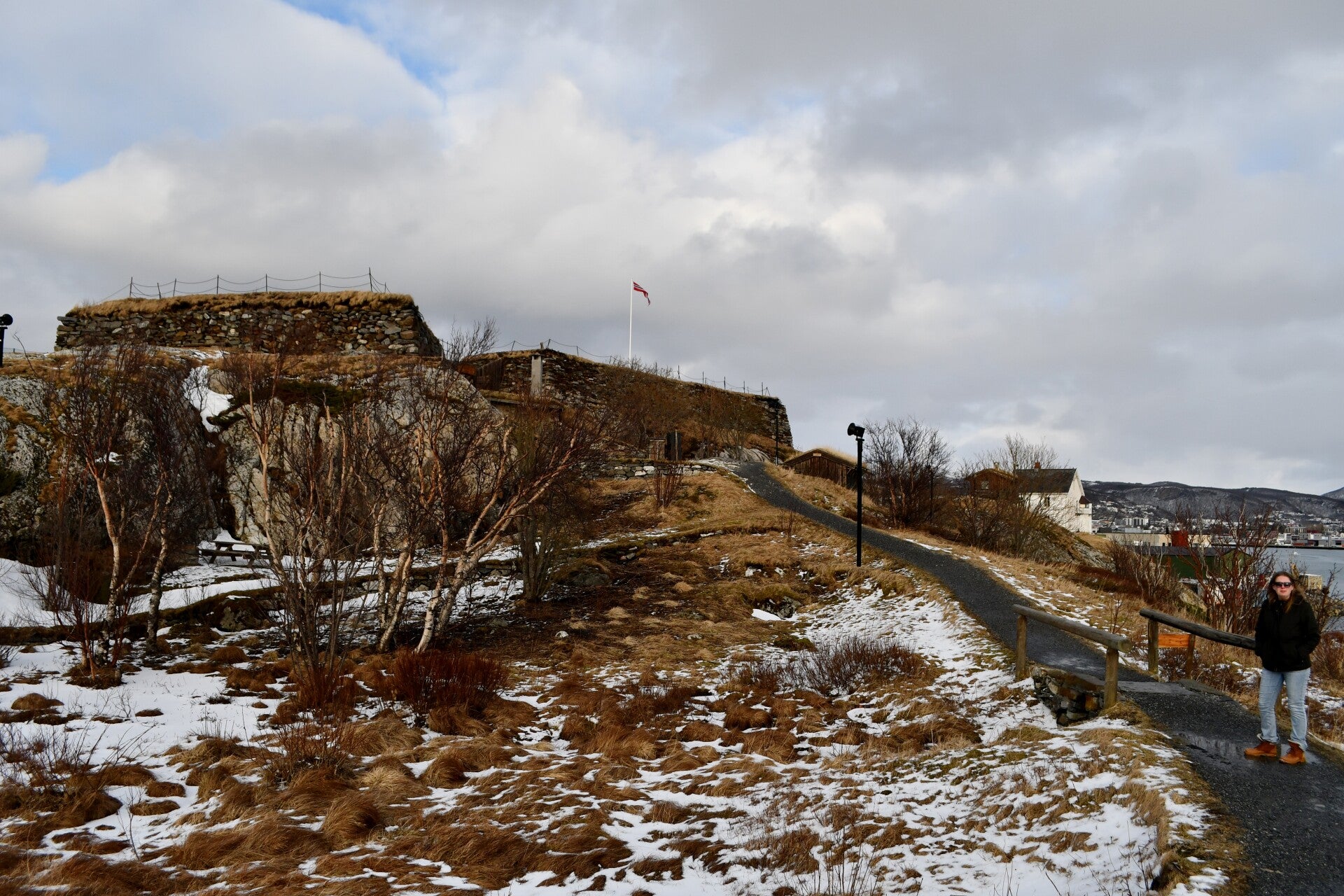
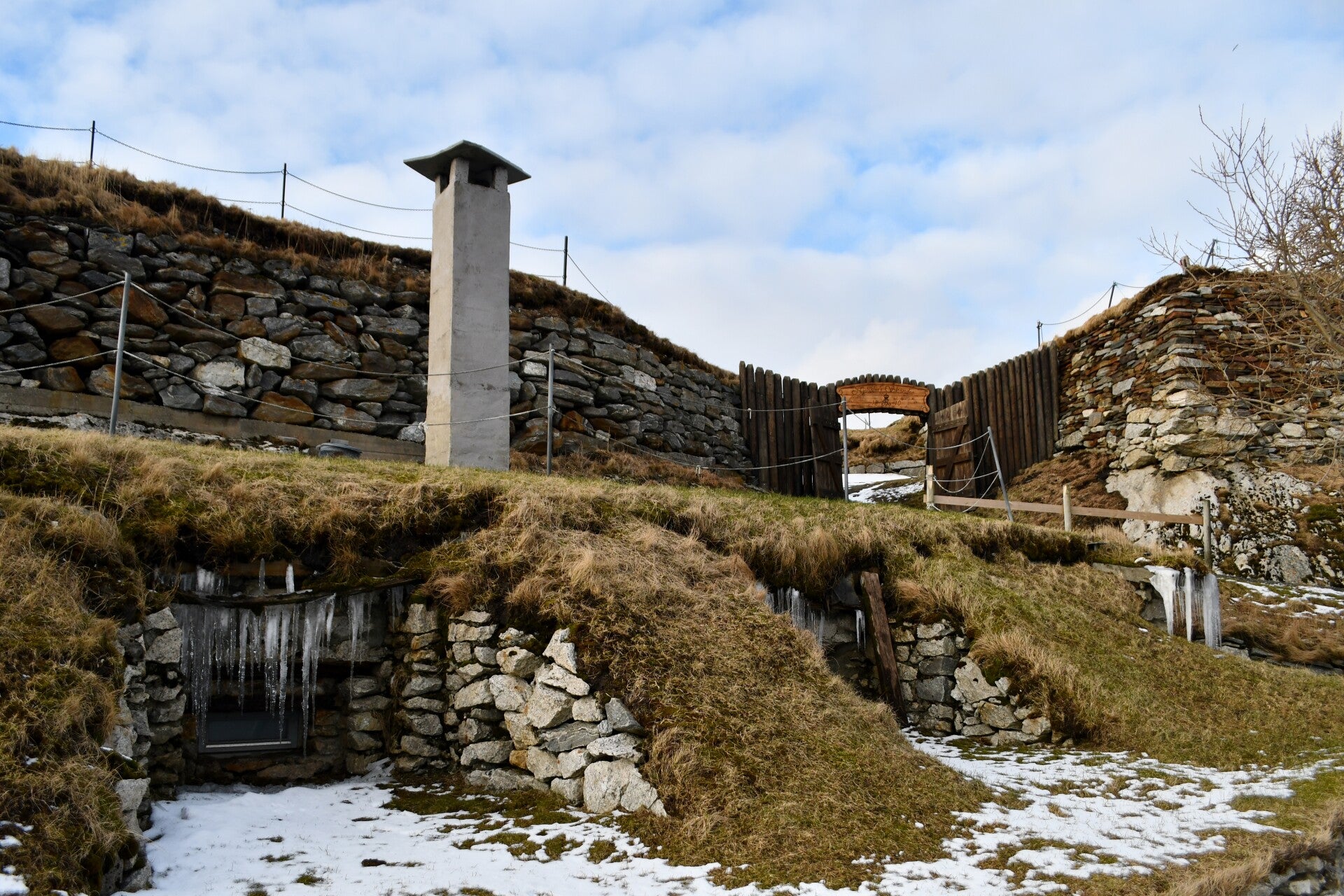
Nyholmen Skandse is a small but atmospheric historic fortification located on a rocky islet just off the harbor of Bodø. Built in 1810 during the Napoleonic Wars, it was part of Norway’s coastal defense system, designed to protect shipping and the town from British naval attacks. We park the car and begin a slippery climb up the hills and rocks. The site includes remnants of stone walls and cannons and is best known as the place where the British frigate HMS Tartar was damaged during an attempted raid, one of the few successful Norwegian defensive actions of that era.
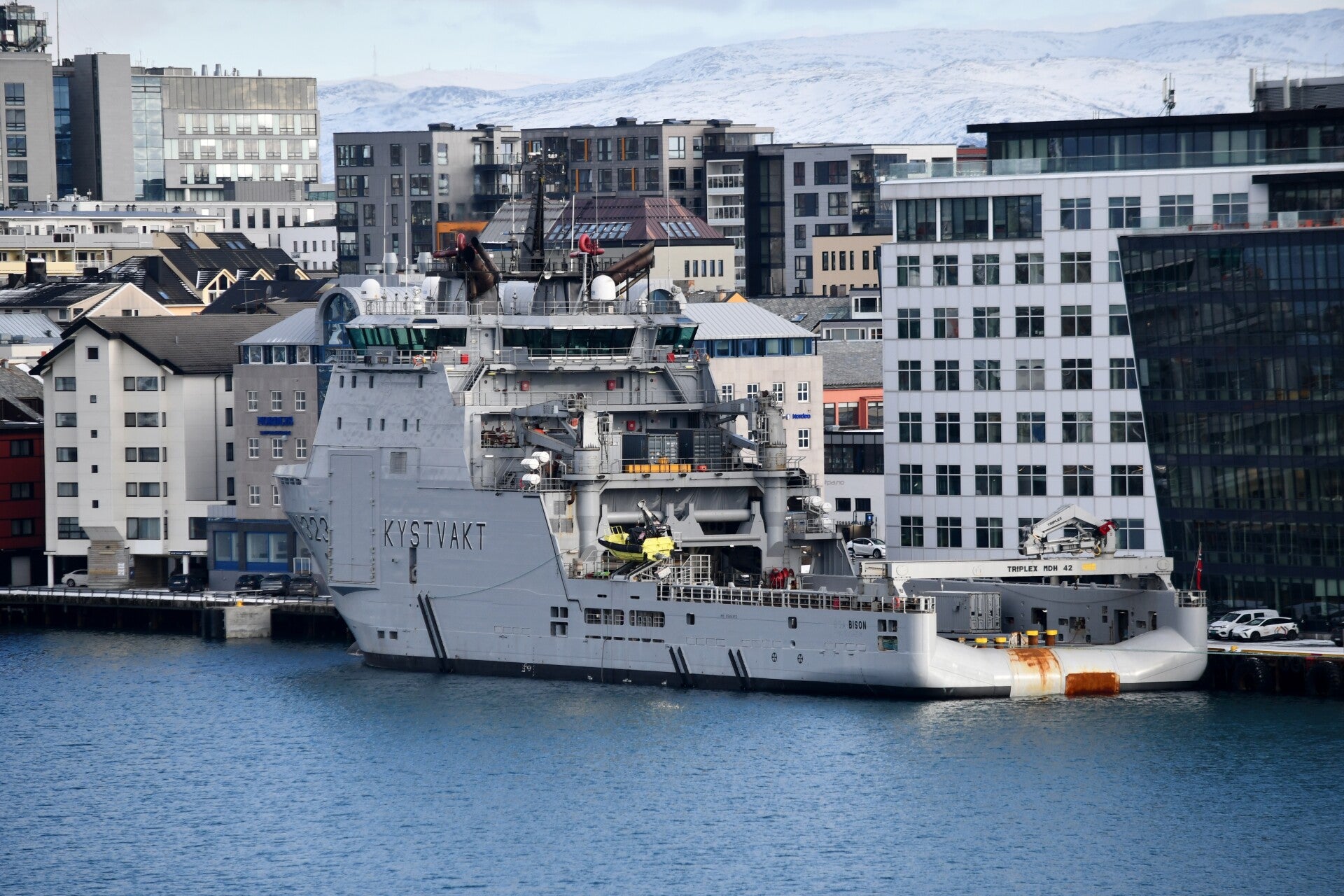
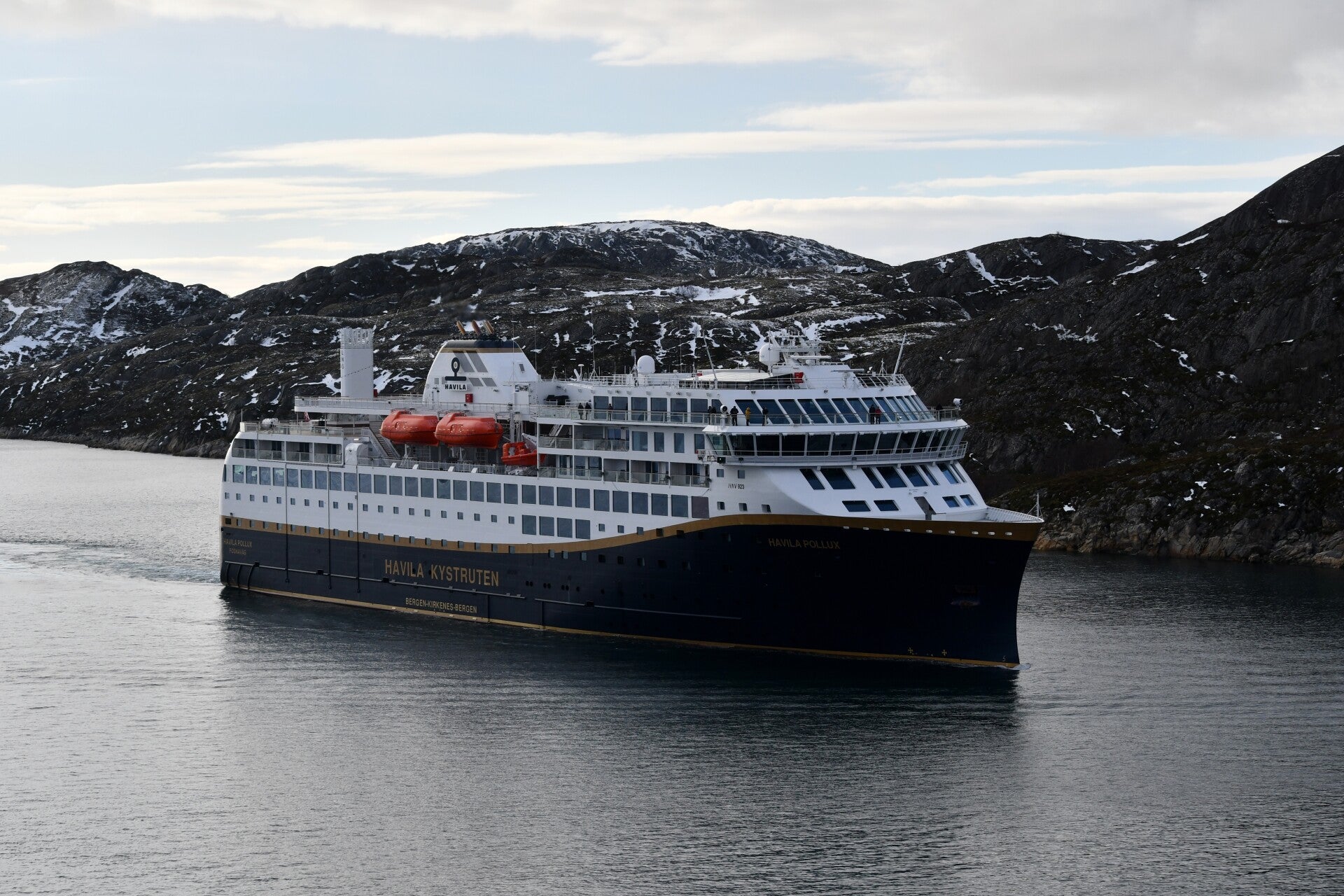
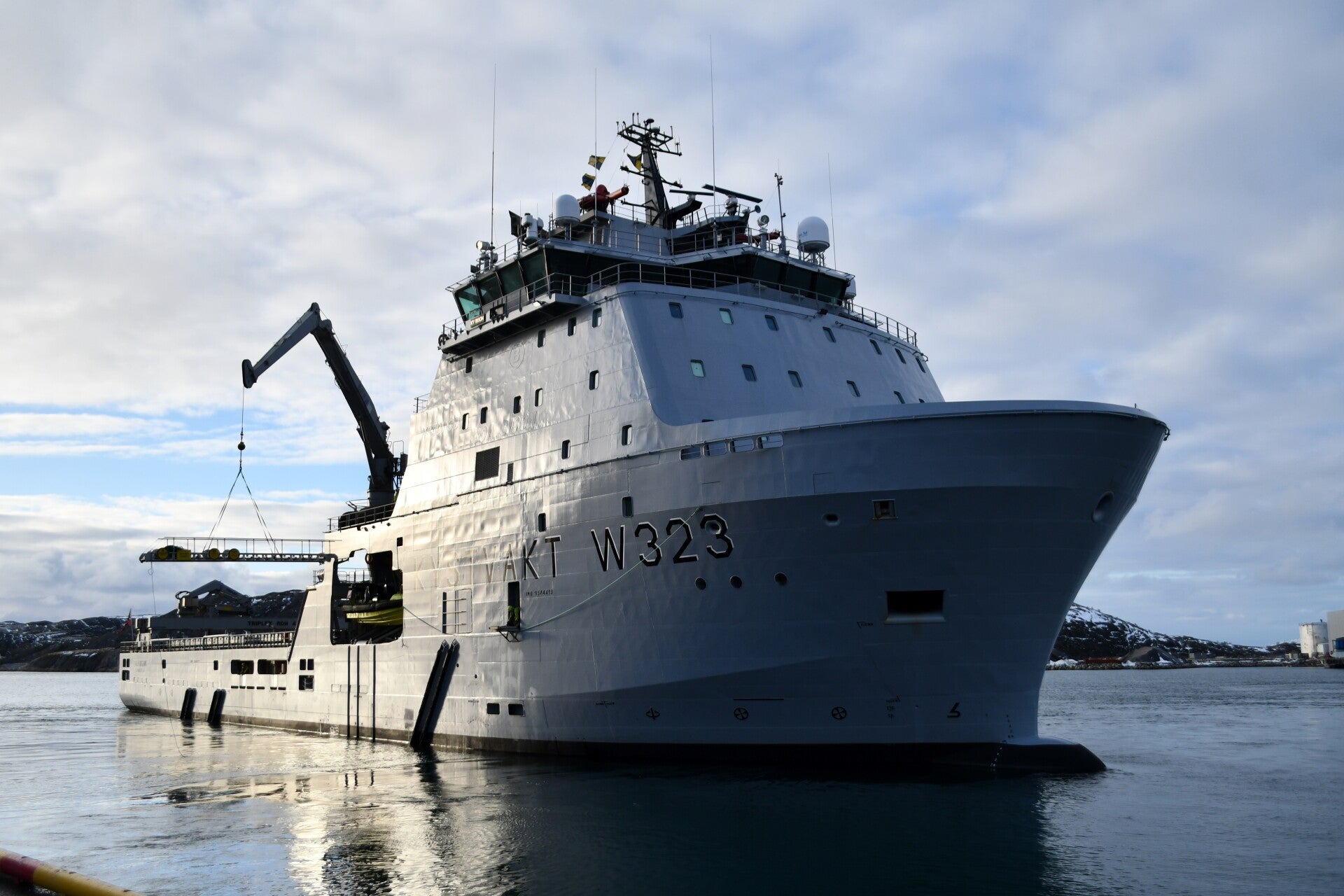
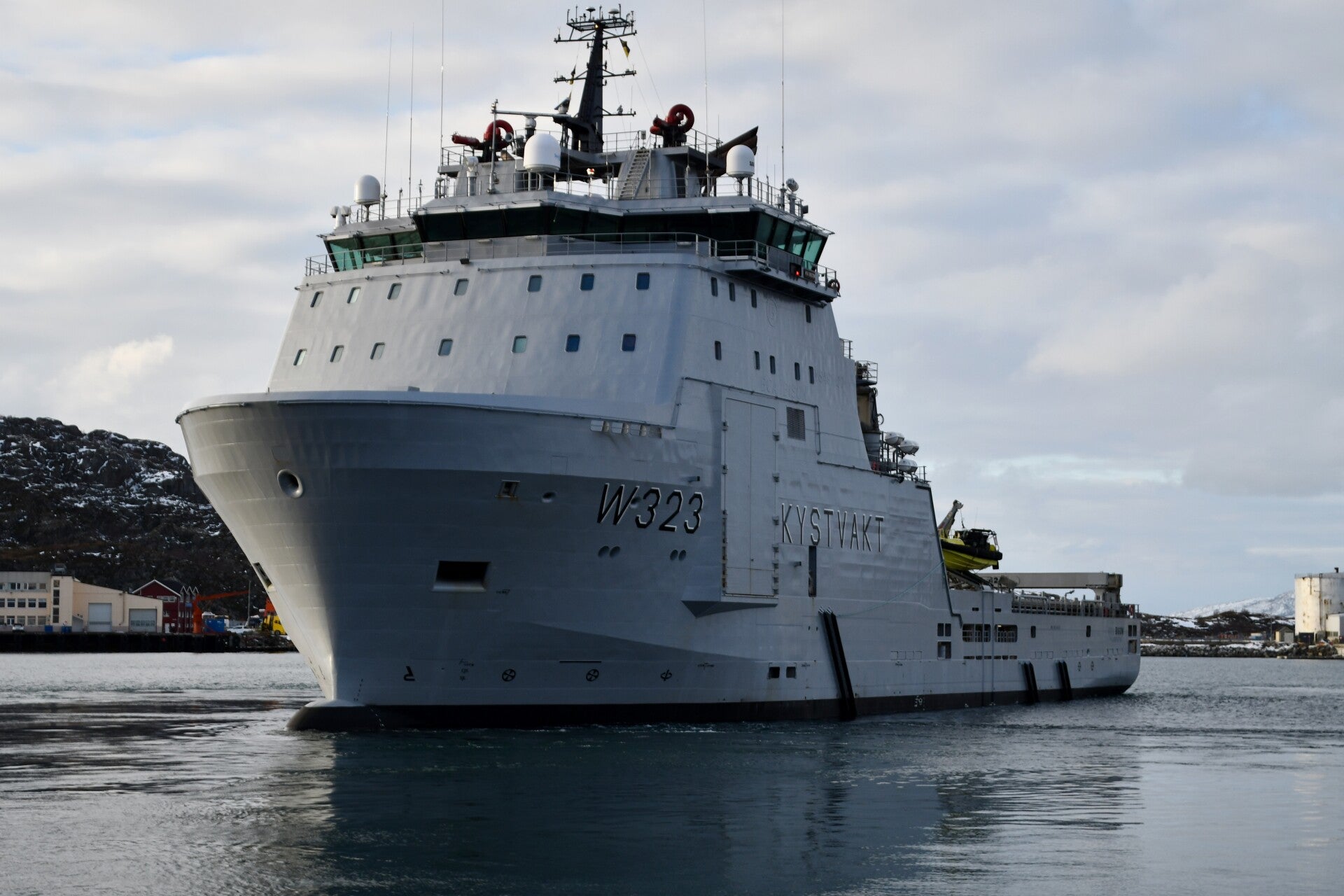
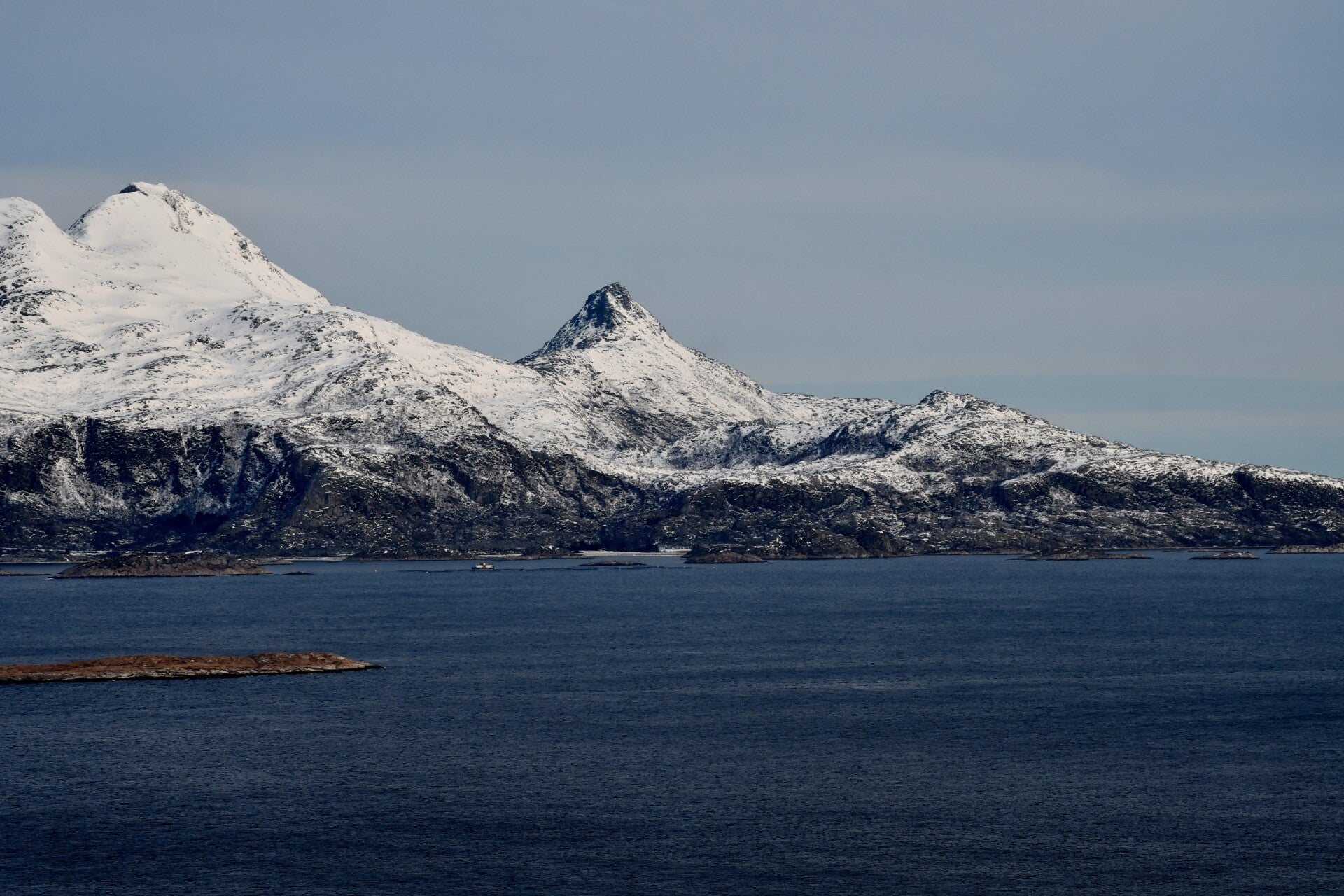
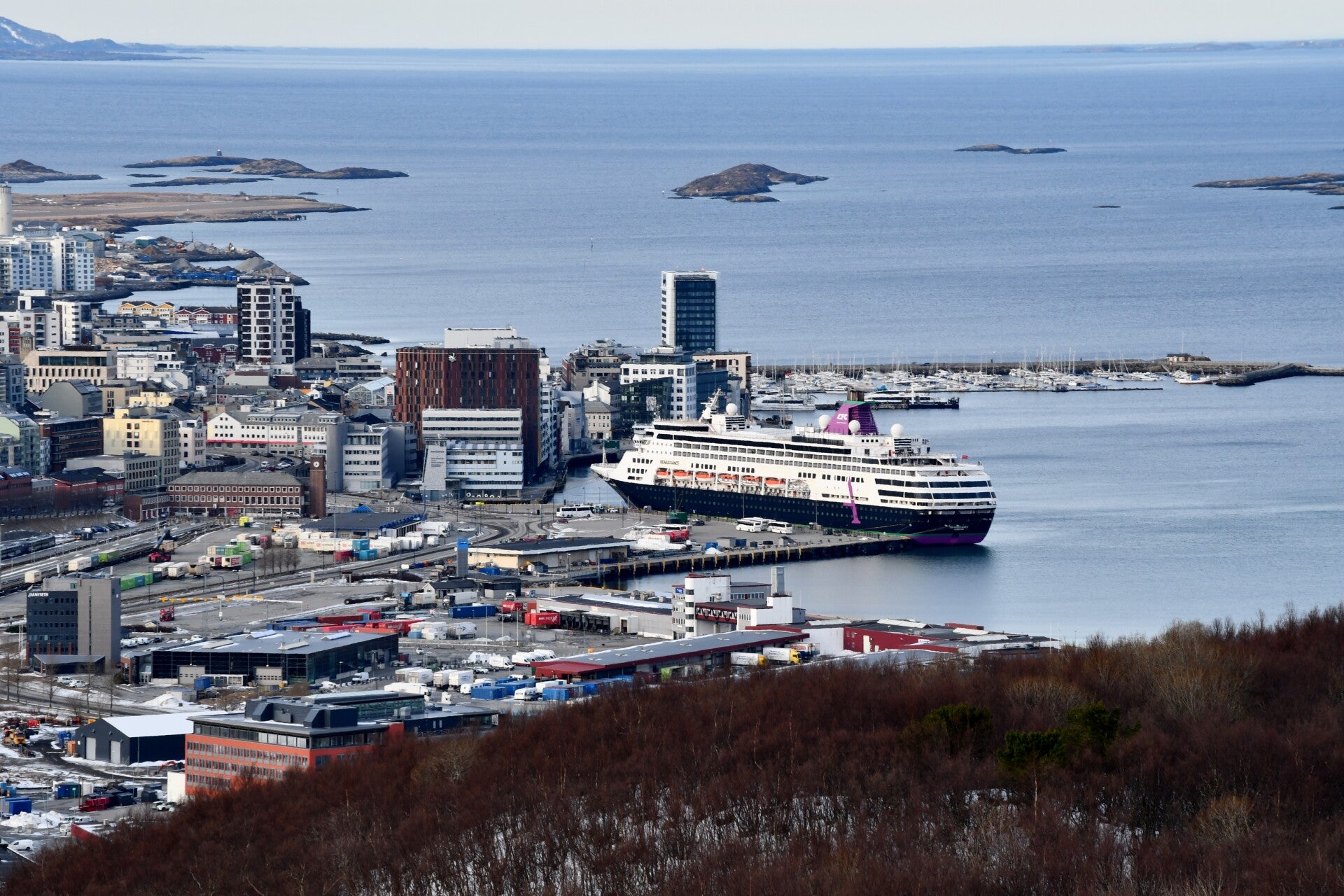
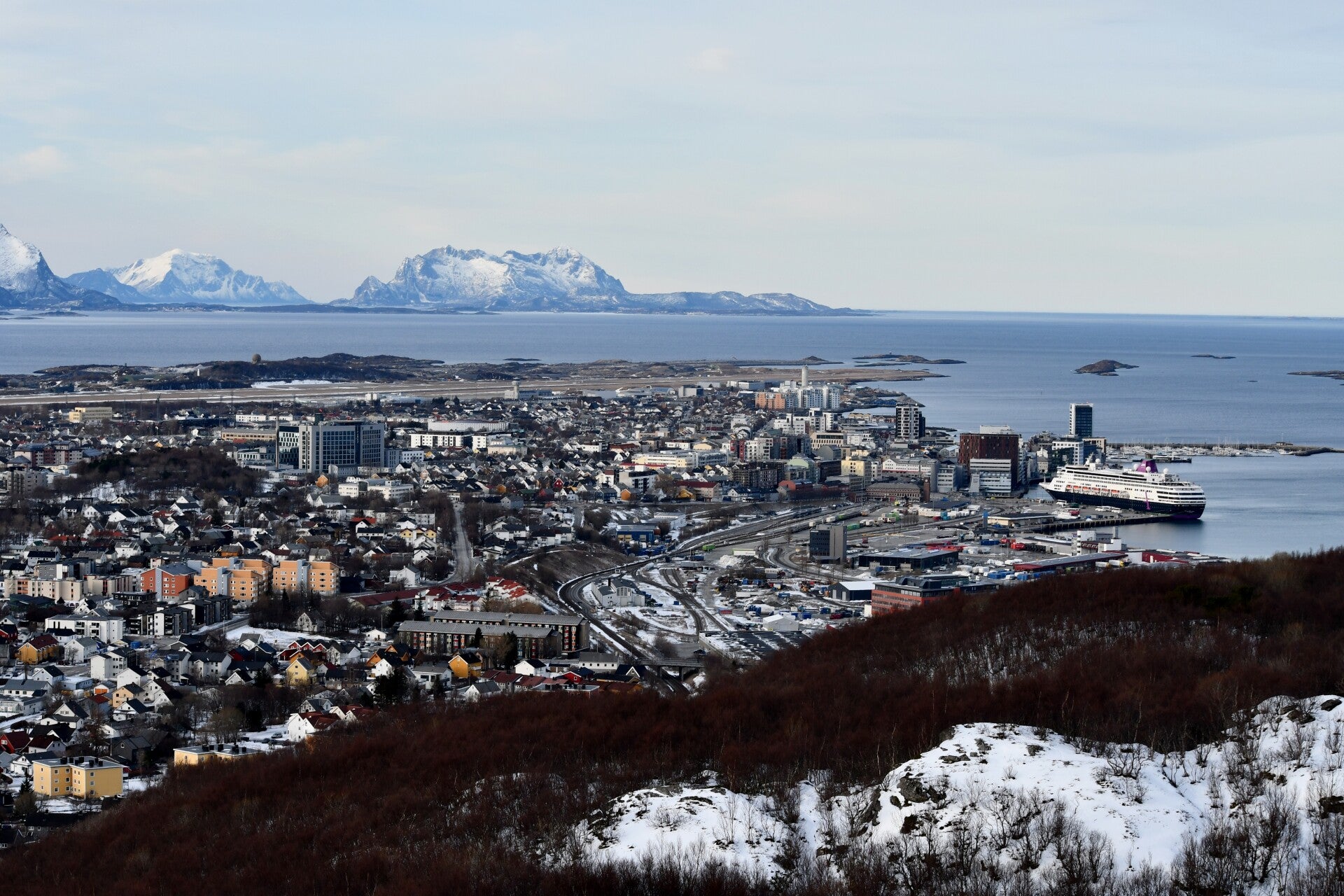
From the top, we’re rewarded with stunning views over the harbor, Bodø, and the distant Børvasstindan mountains. In the harbor below, a large Norwegian Coast Guard vessel is docked, and we watch a scenic cruise ship depart for Kirkenes, far to the north near the Russian border.
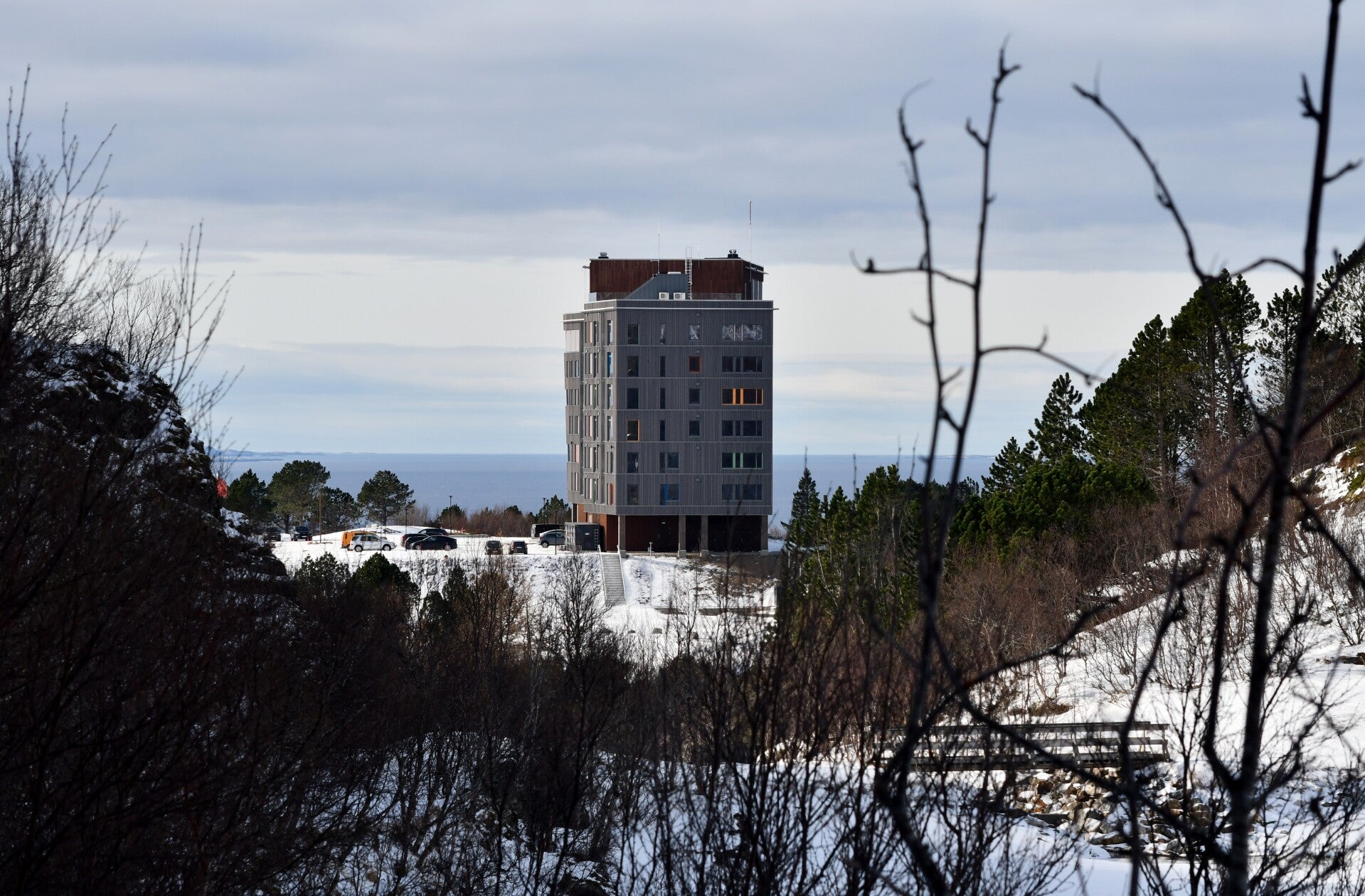
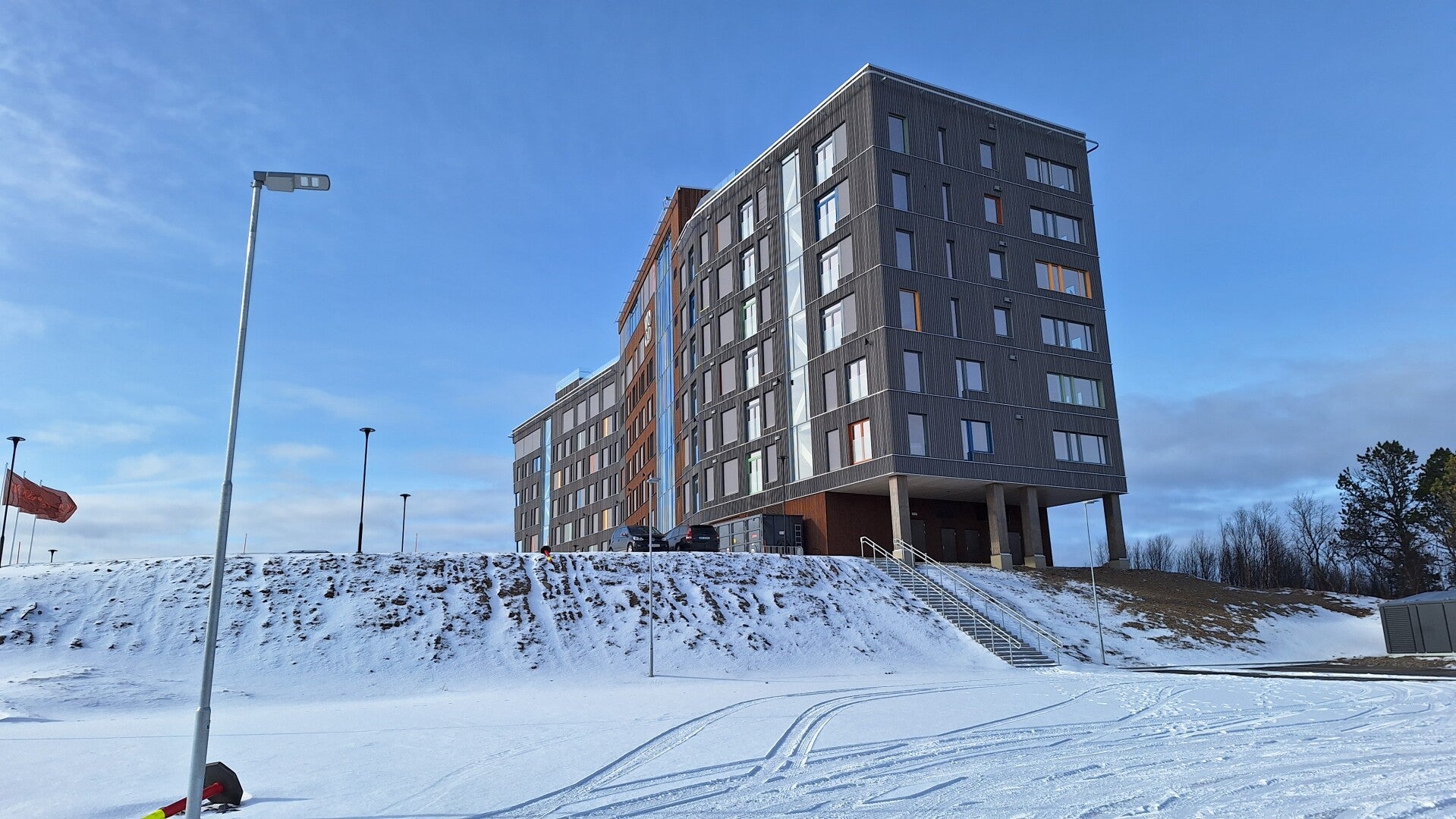
We then make our way down to the harbor itself, arriving just in time to see the massive Coast Guard ship depart as well. With the gray giant out of the way, we head toward our hotel. We pass the aviation museum which we’ll visit tomorrow, and begin driving up the hills east of Bodø near Rønvikfjellet. At the top sits our destination: the brand-new luxury Wood Hotel.
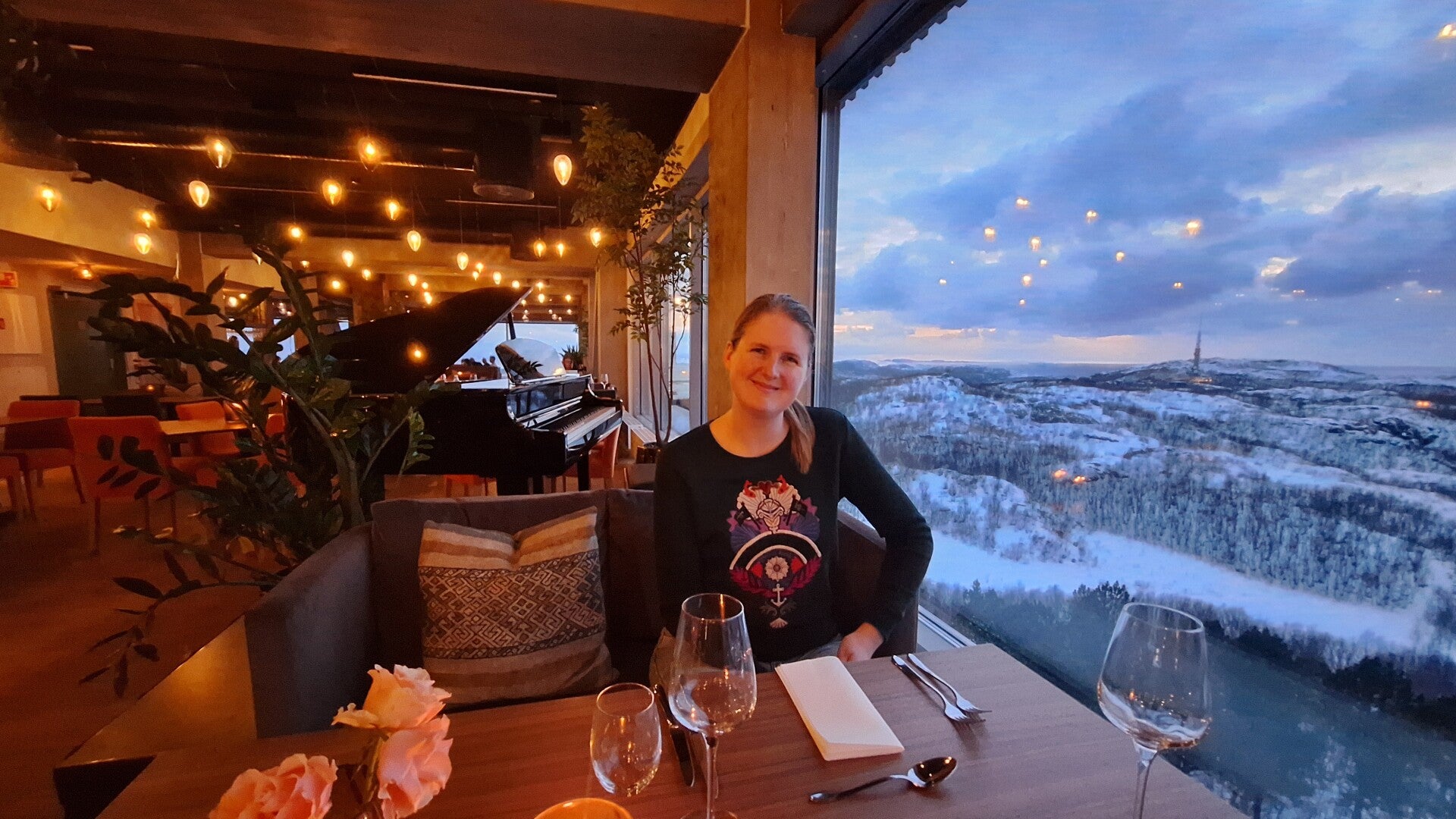
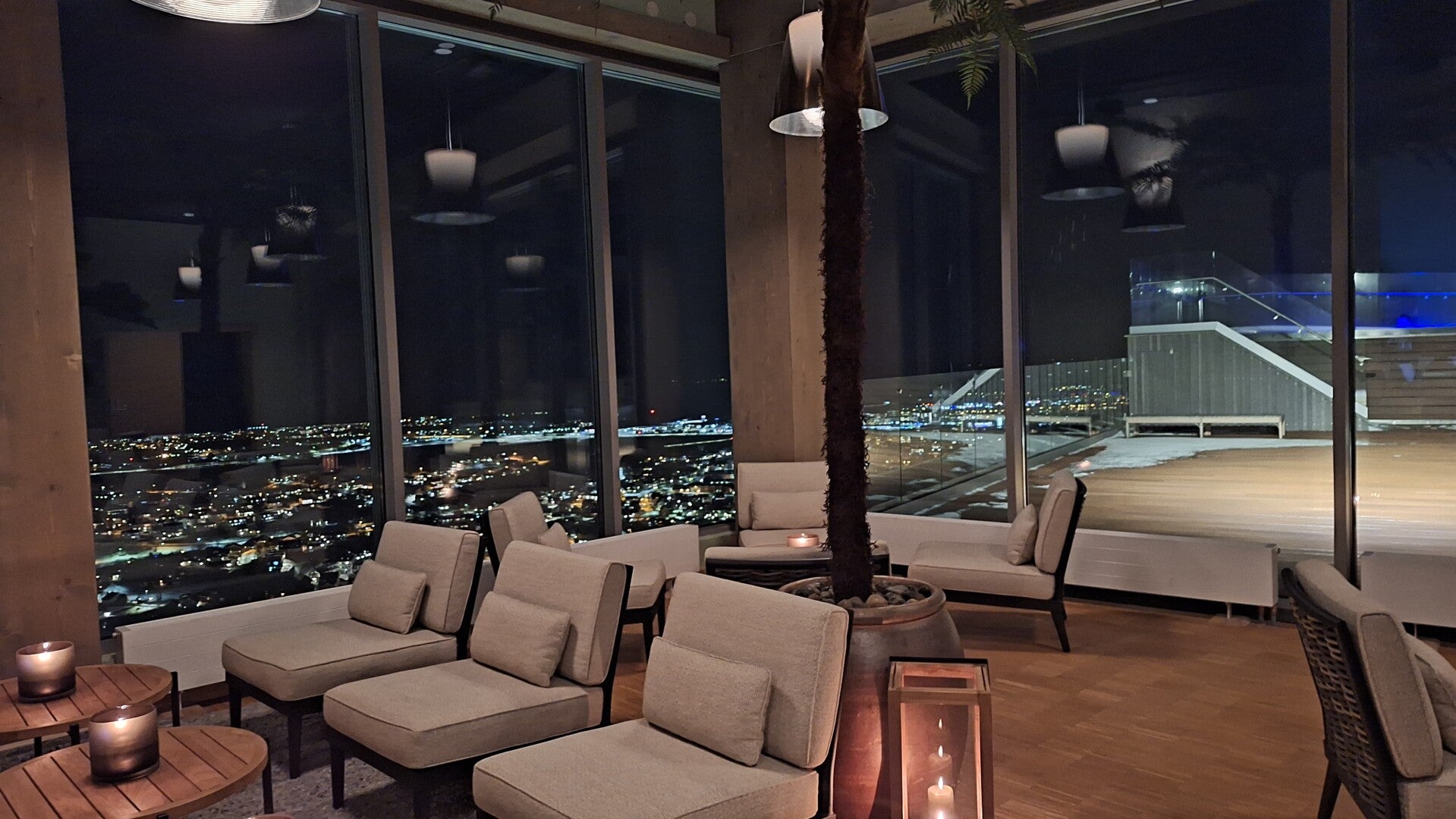
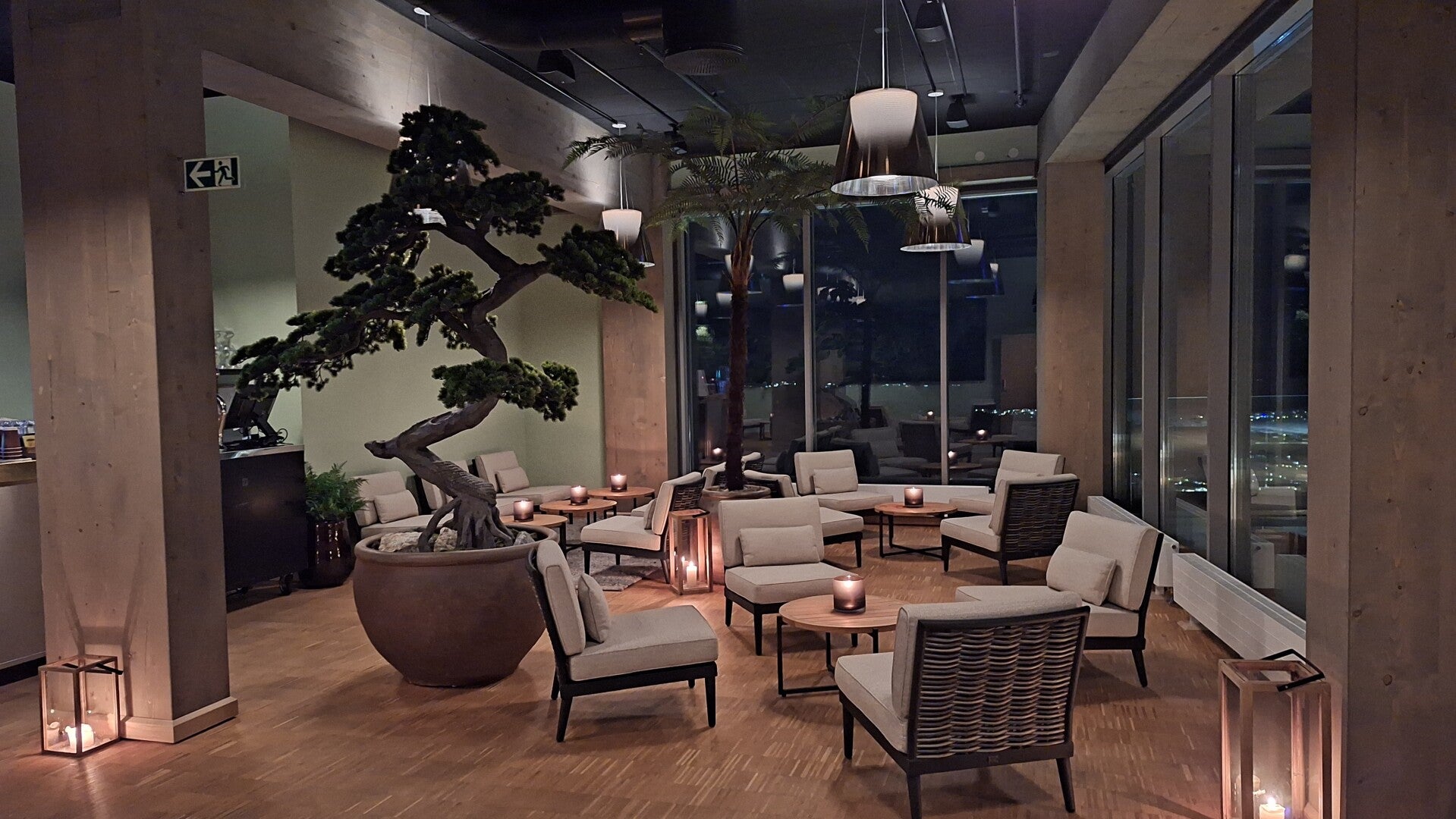
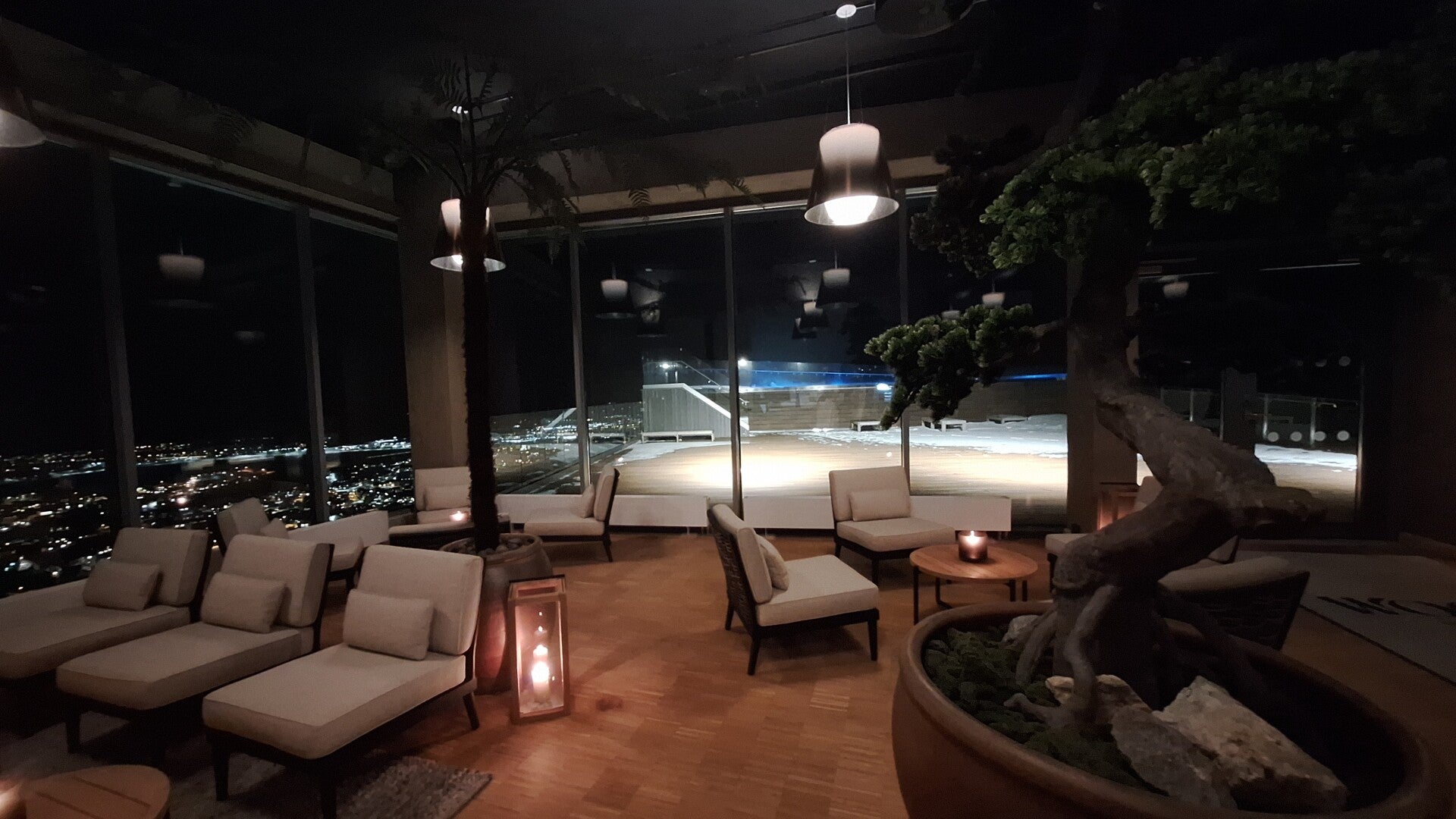
This modern, adults-only hotel offers incredible views over the area, with a top-floor spa and sauna. One floor below is a restaurant and bar featuring a 360-degree panorama of the city and surrounding mountains. The bar has cozy seating areas, a beautiful fire pit, and even a long outdoor balcony extending outward from the building.
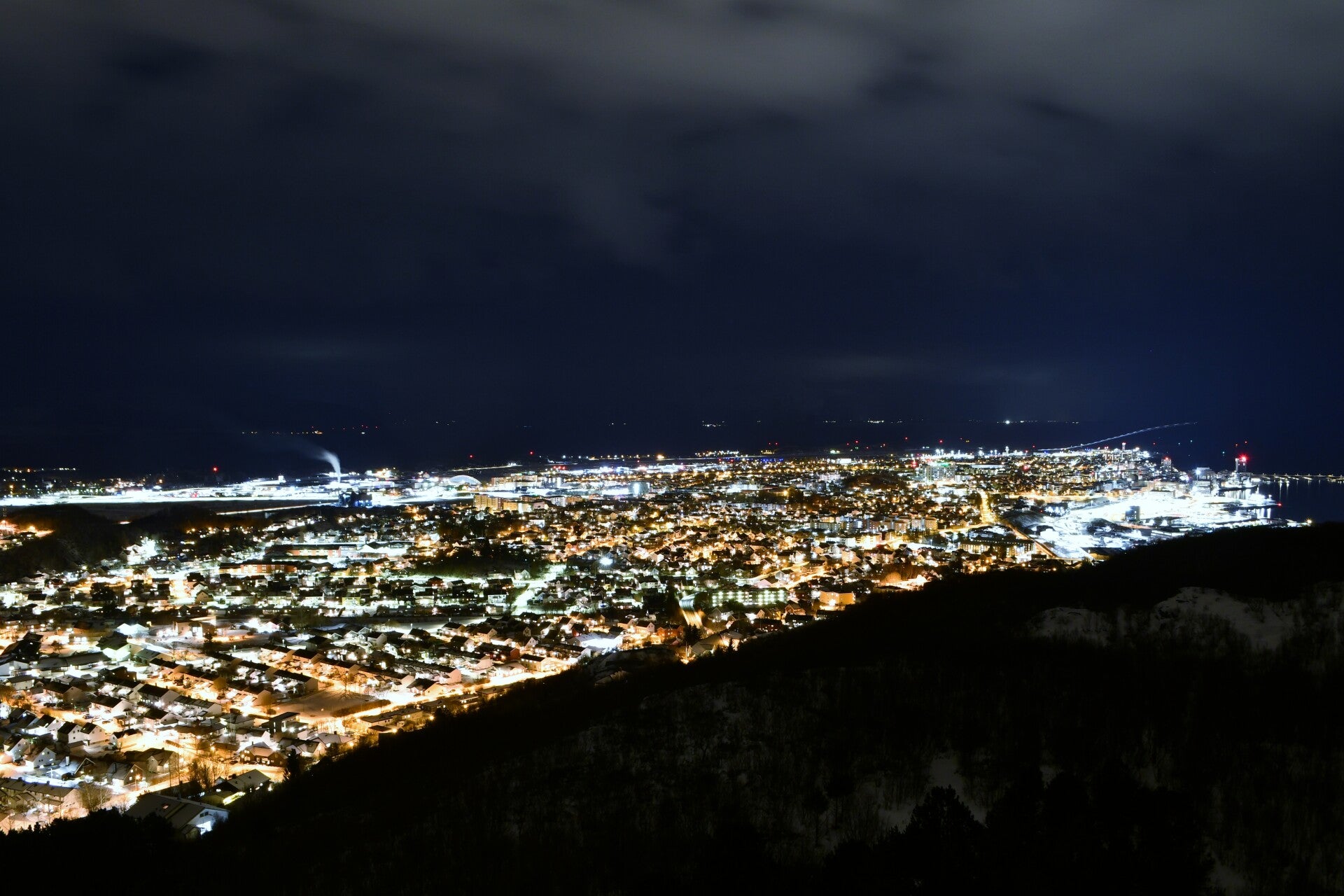
We take our time to relax and soak in the views for the rest of the evening. The restaurant serves outstanding food. It is super fresh and of exceptional quality. As the sun sets, the lights of Bodø slowly come alive below us. The scene is perfectly completed by the northern lights, dancing across the sky and painting bright green strokes overhead.
Good night!




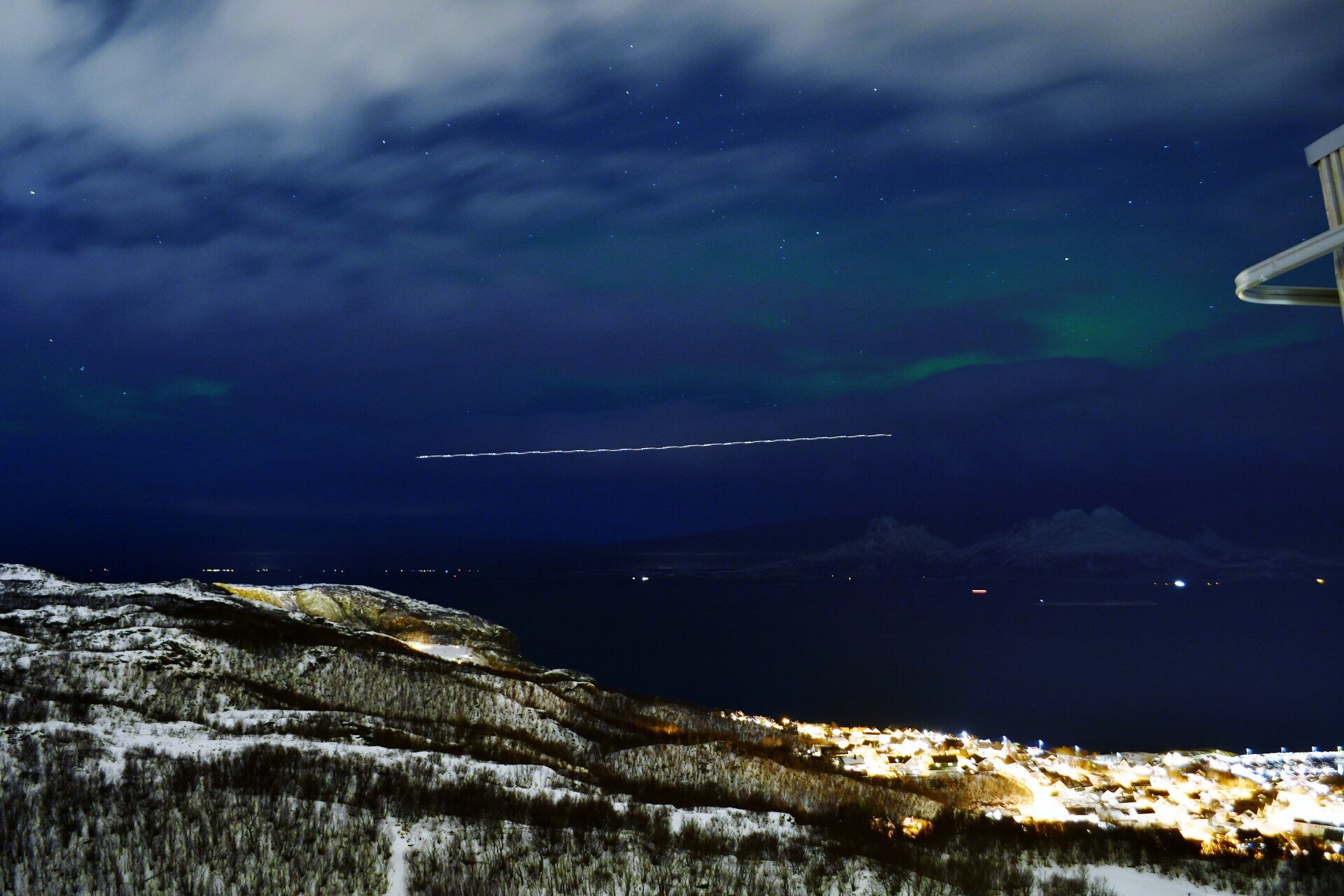
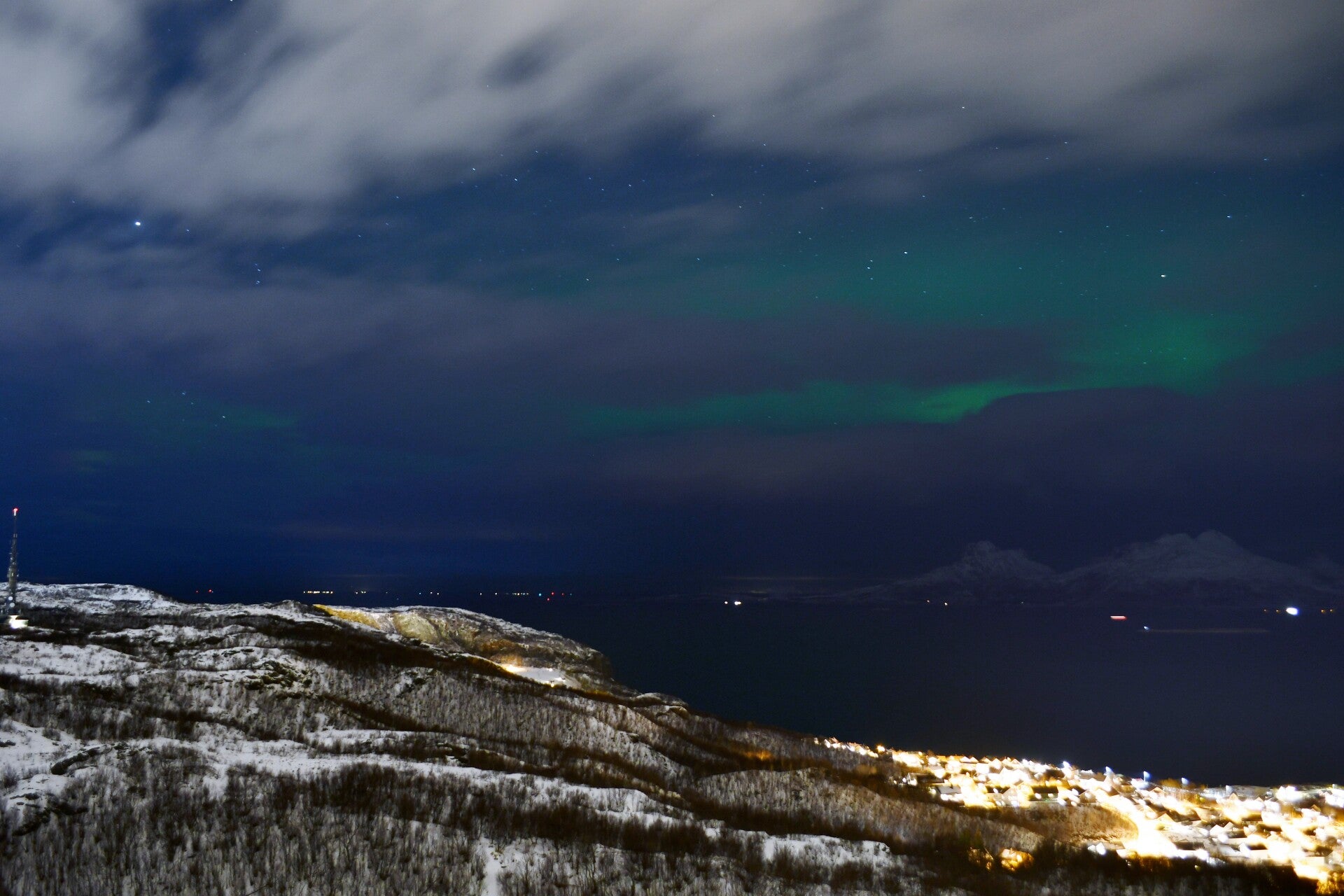
Friday 21 March - Hiking, Museuming, More Hiking & Relaxing
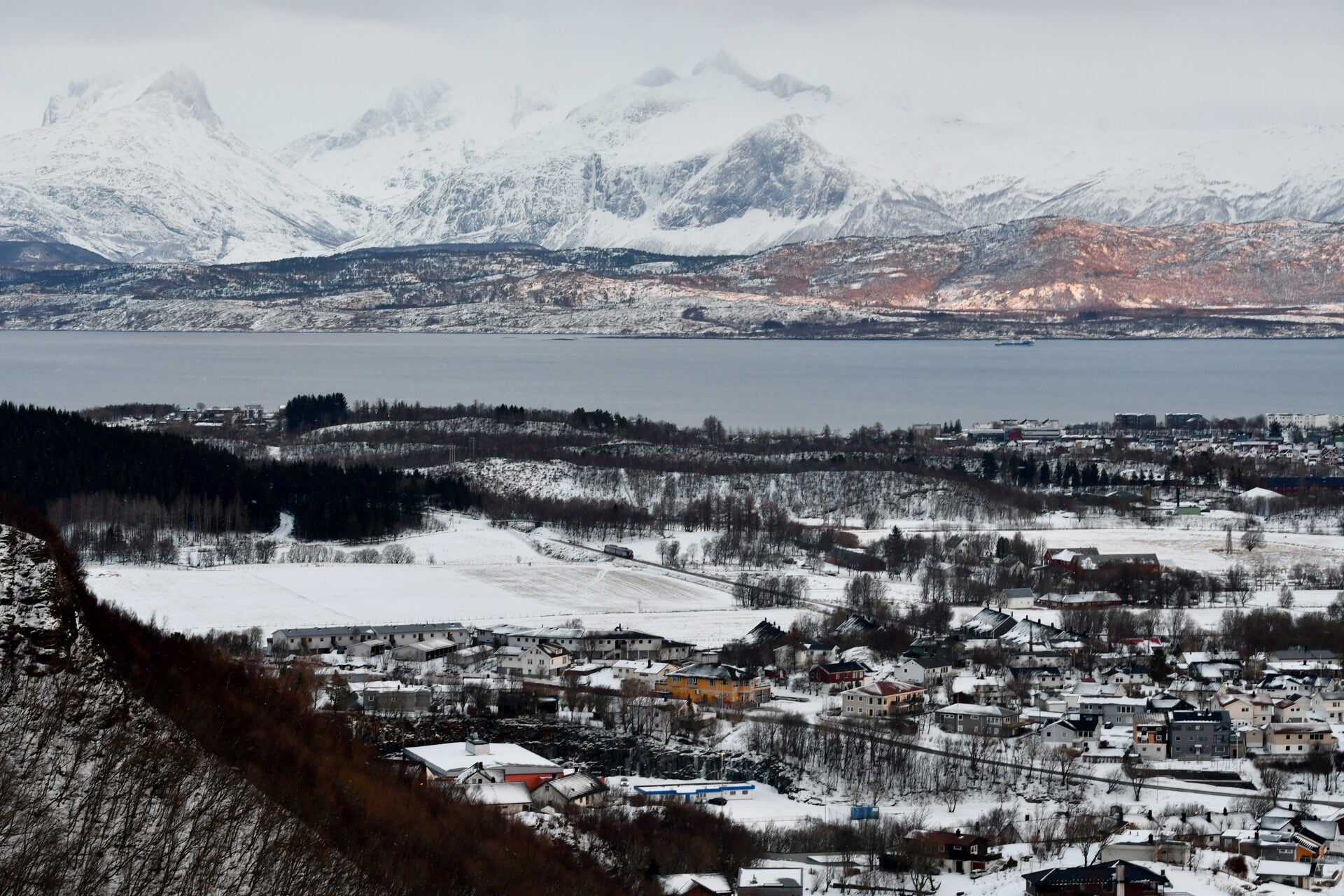
Good morning! We wake up with the stunning view over the island of Landegode with three tall mountains. This hotel is absolutely amazing. The bed is incredibly comfortable, and the entire building radiates luxury and cozy comfort. Breakfast is a wonderful buffet featuring fresh fruits, dairy, and breads, all made with local ingredients. We happily stuff ourselves in preparation for a nice morning walk. In the meantime, we enjoy the views over the city, watching ships and trains come and go below.
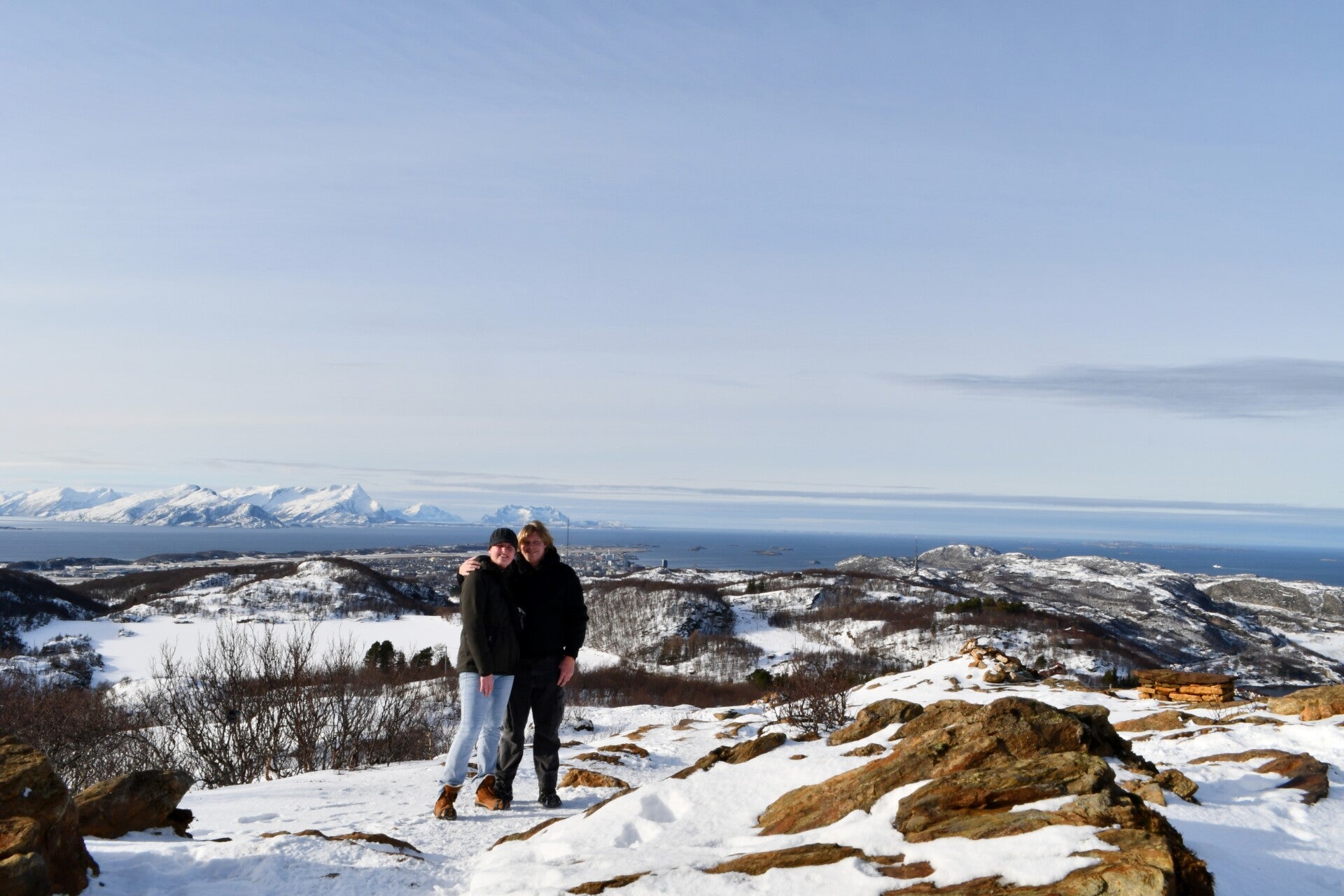
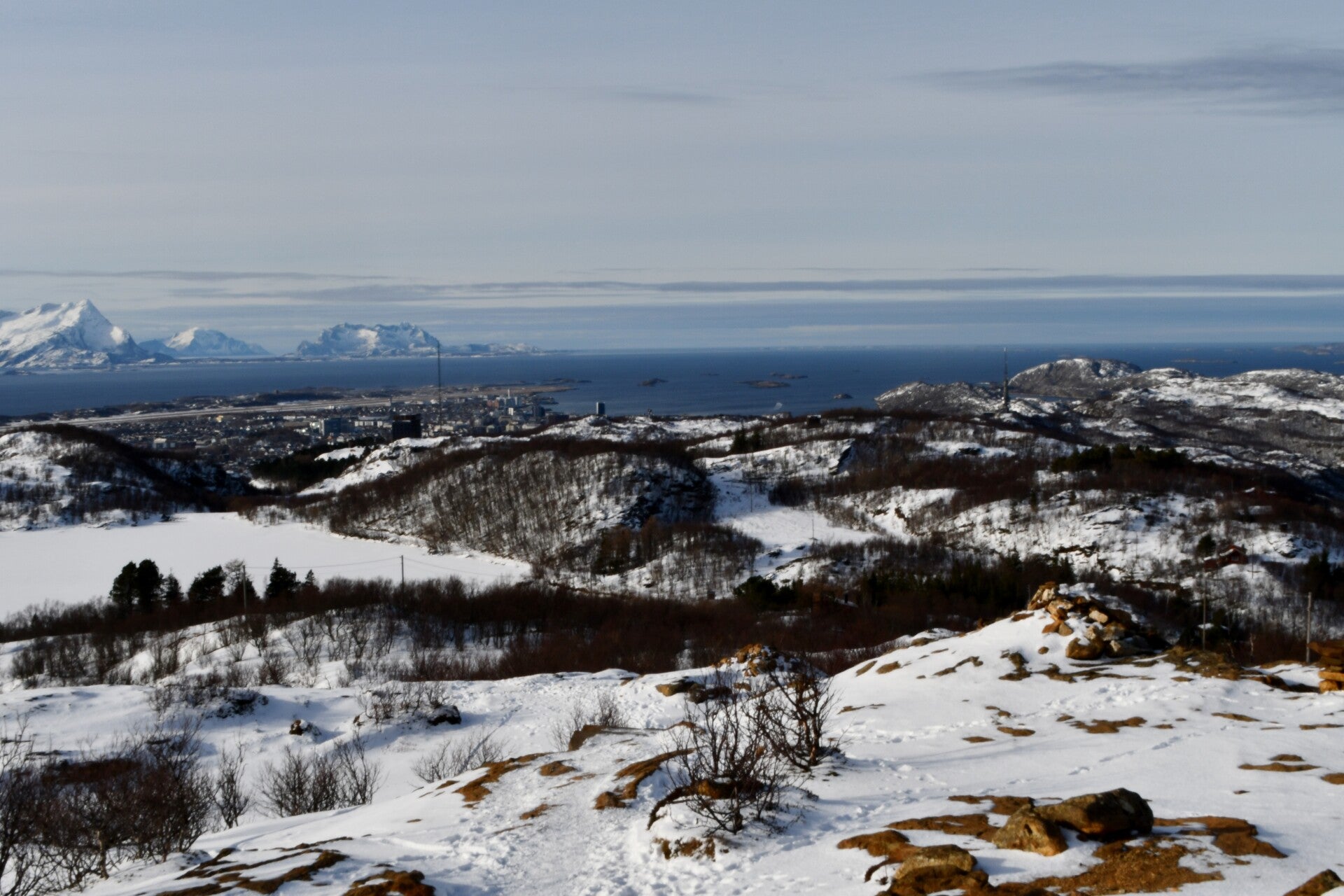
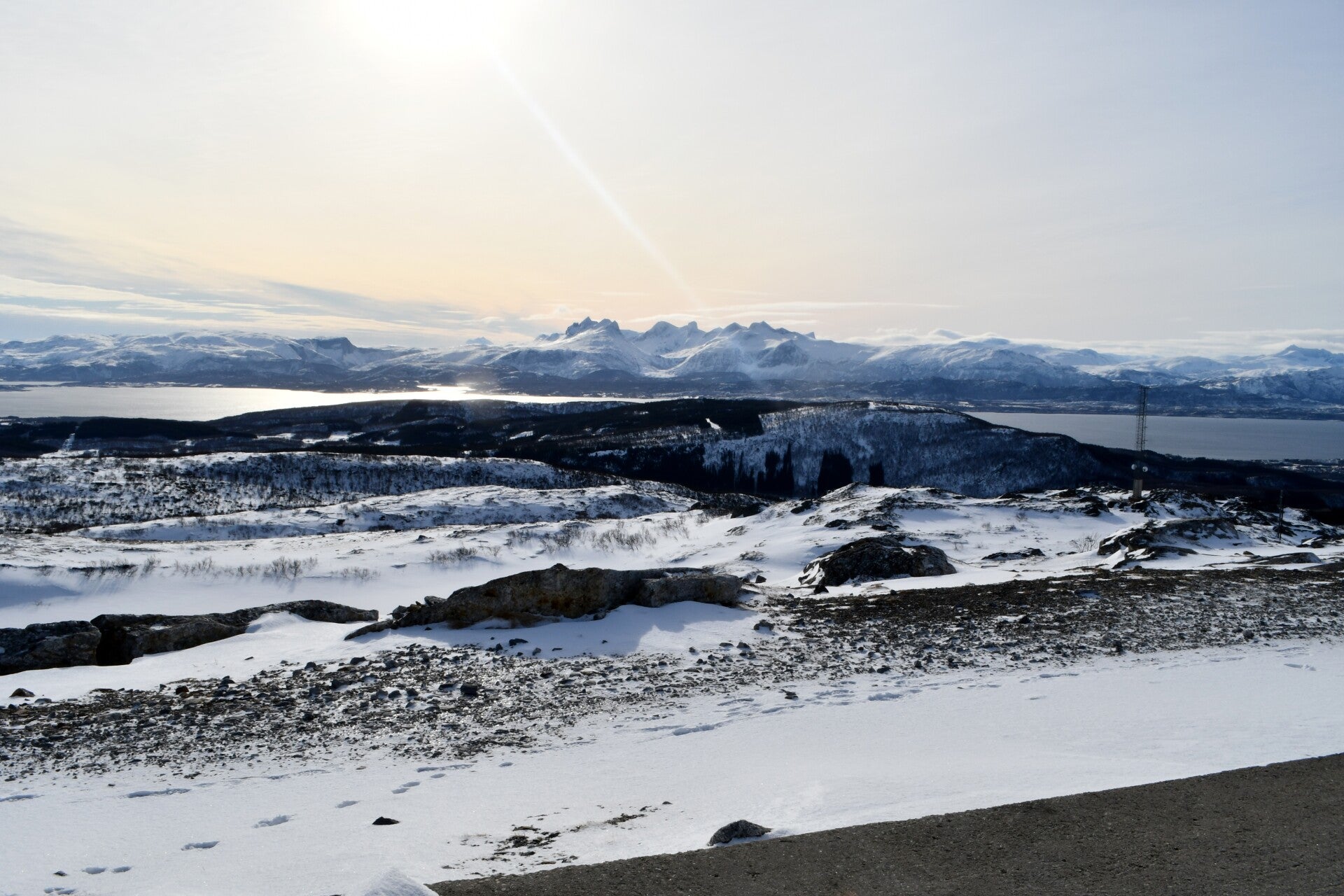
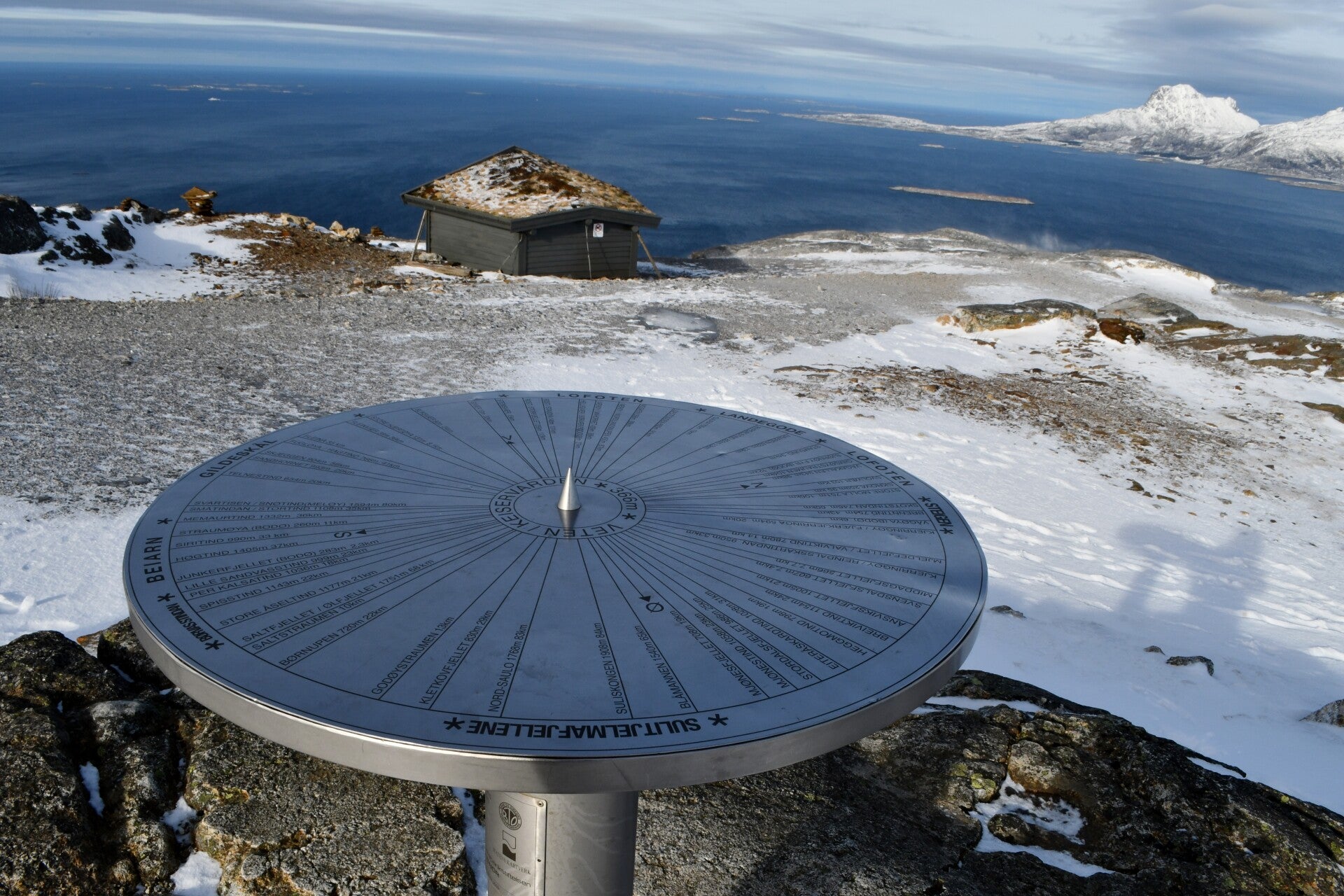
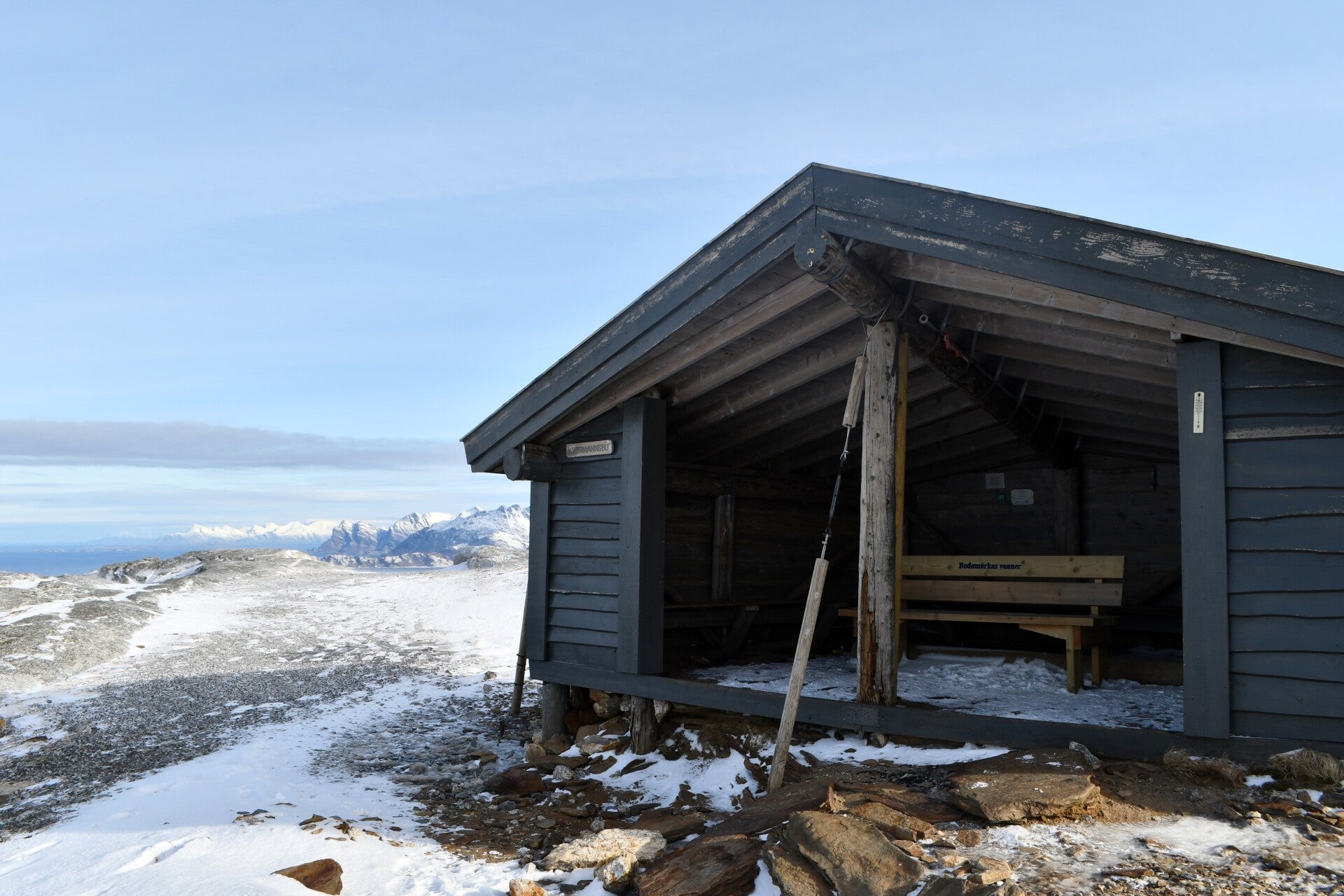
The hotel serves as the starting point for several hiking trails leading toward the summit of Mount Keiservarden. Keiservarden is one of Bodø’s most popular viewpoints, rising to about 366 meters above sea level on a rounded mountain just east of the city. It’s considered a relatively short and easy hike, so we lace up our hiking boots and head out into the snowy landscape.
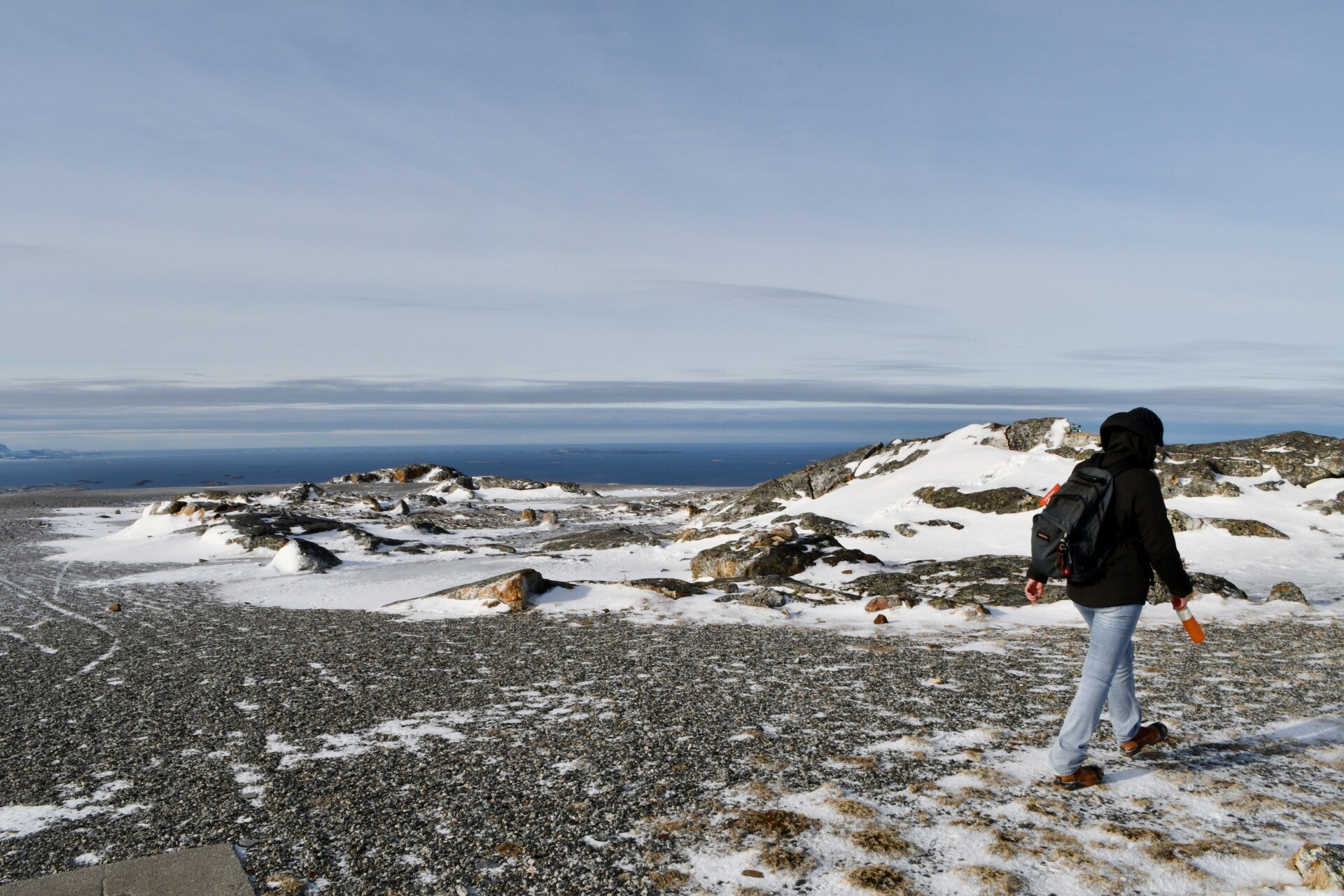
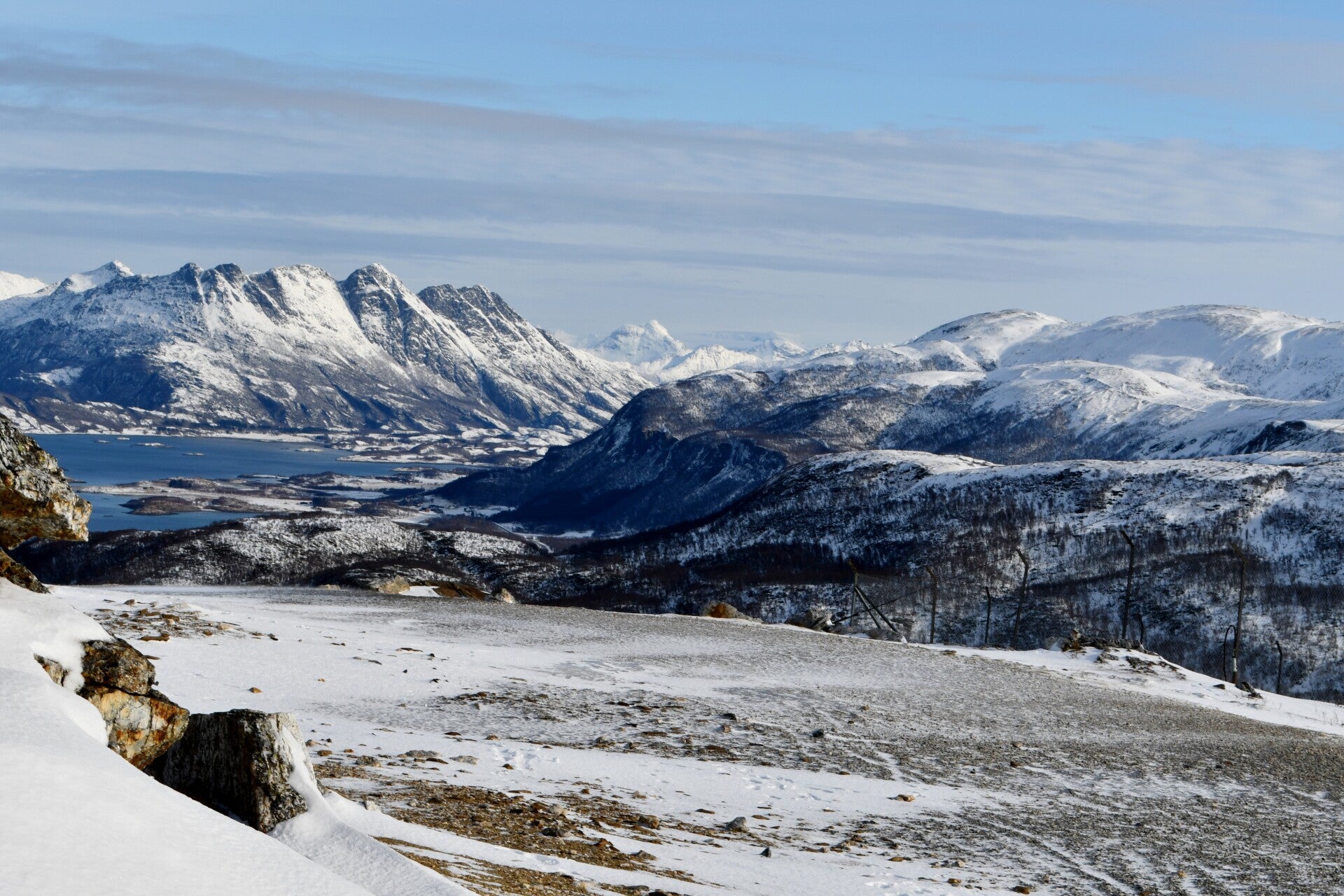
The first part of the trail leads us between two lakes, both completely frozen and covered in a thick layer of snow. The scenery is absolutely stunning, and the weather is lovely today. Gradually, we gain elevation and eventually leave the forest behind, transitioning into open, rocky terrain blanketed in ice and snow. Up here, the wind picks up, sending drifting snow racing across the mountainside. The higher we climb, the colder it gets, but the hike remains enjoyable, and the views only get better.
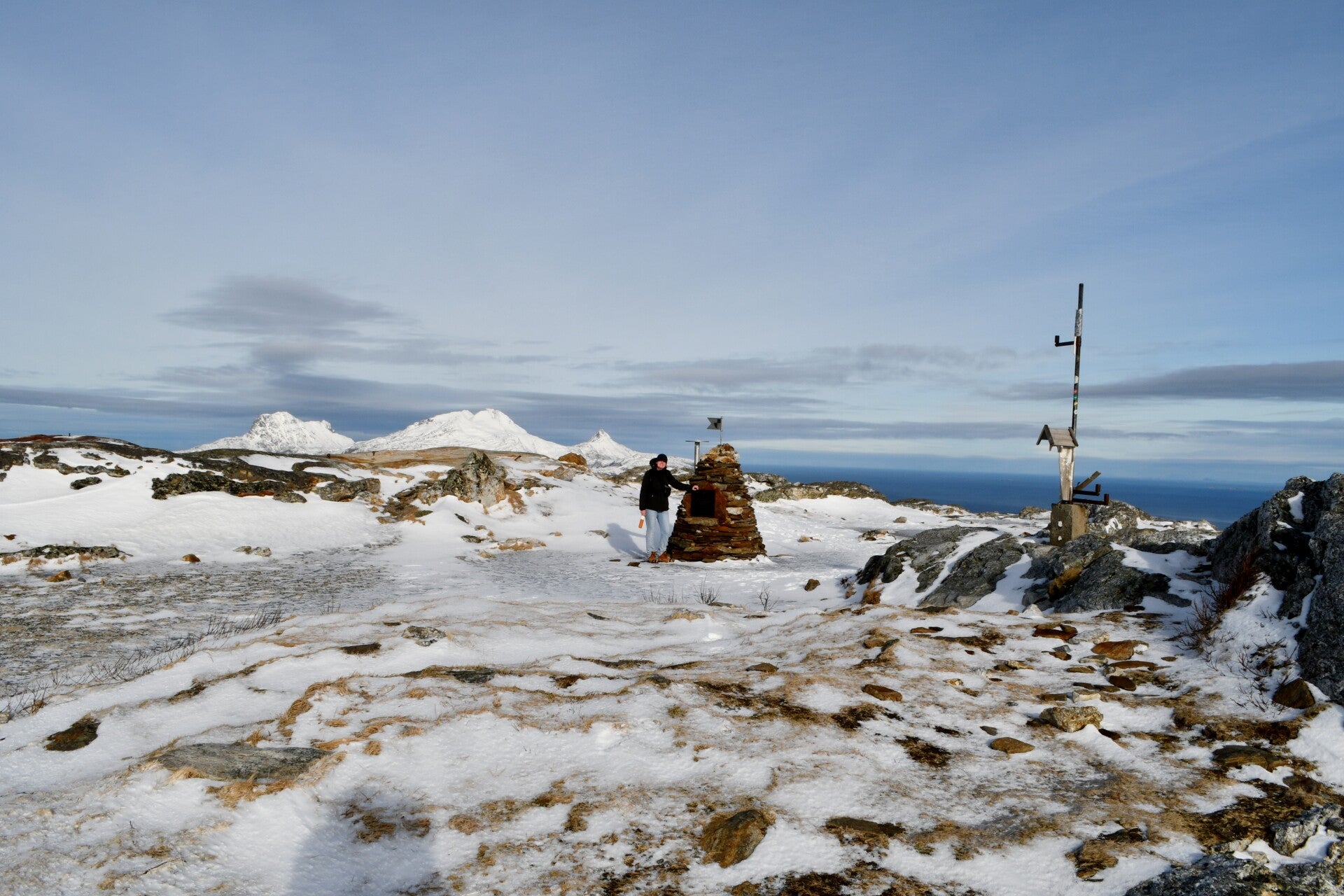
After several enthusiastic “we’re almost there!” moments, we actually are almost there. Carefully navigating slippery frozen rocks and ice patches, we finally reach the summit.
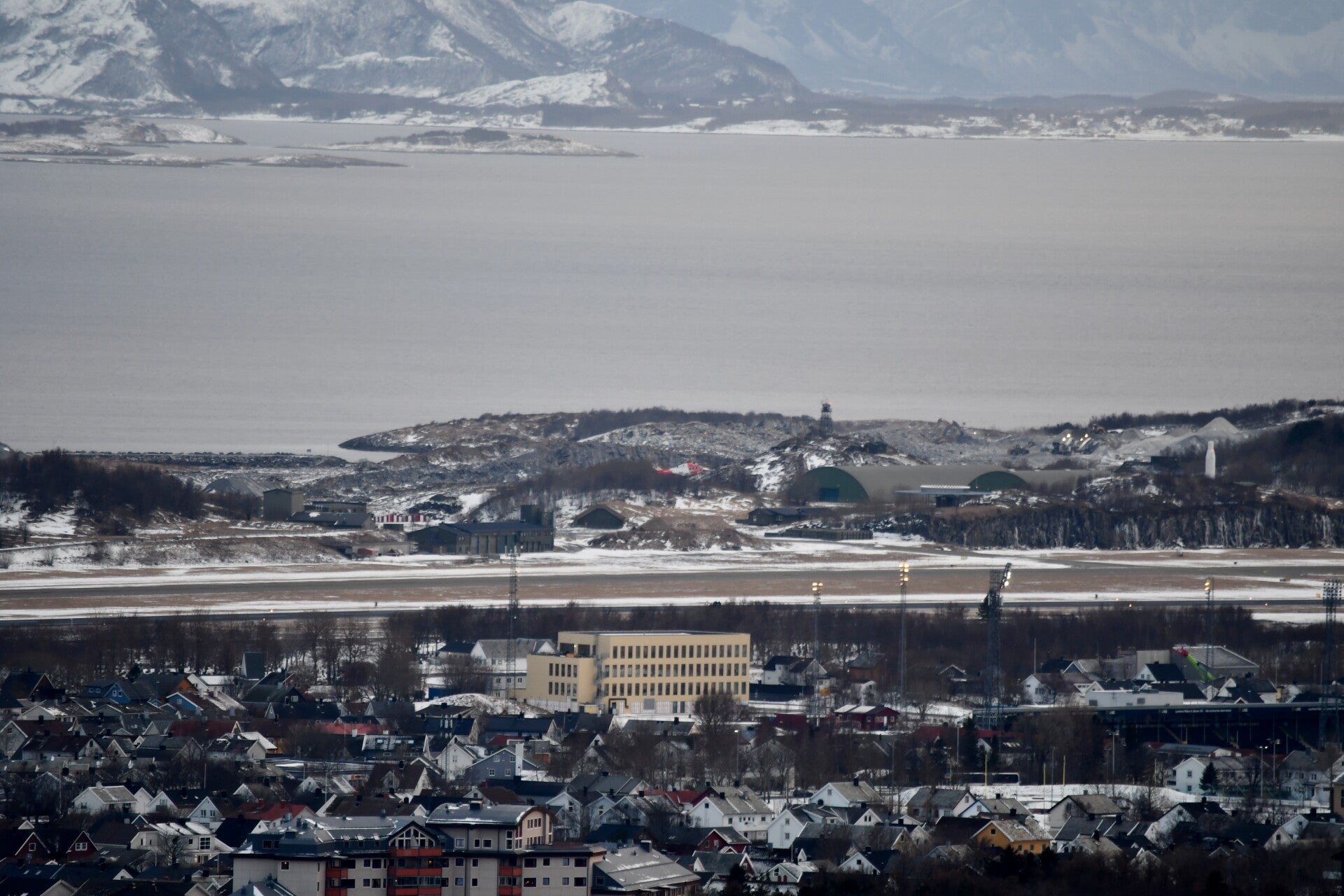
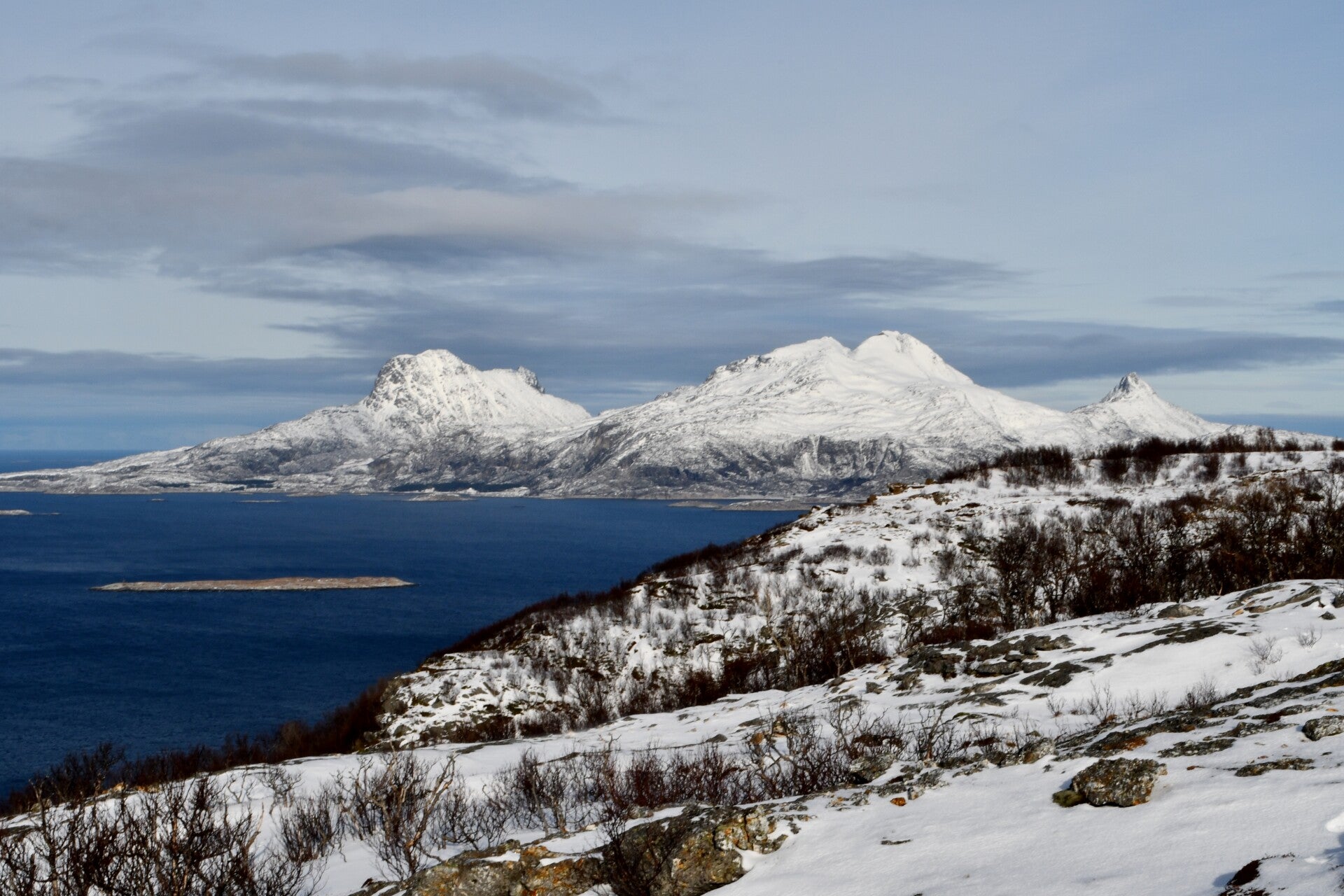
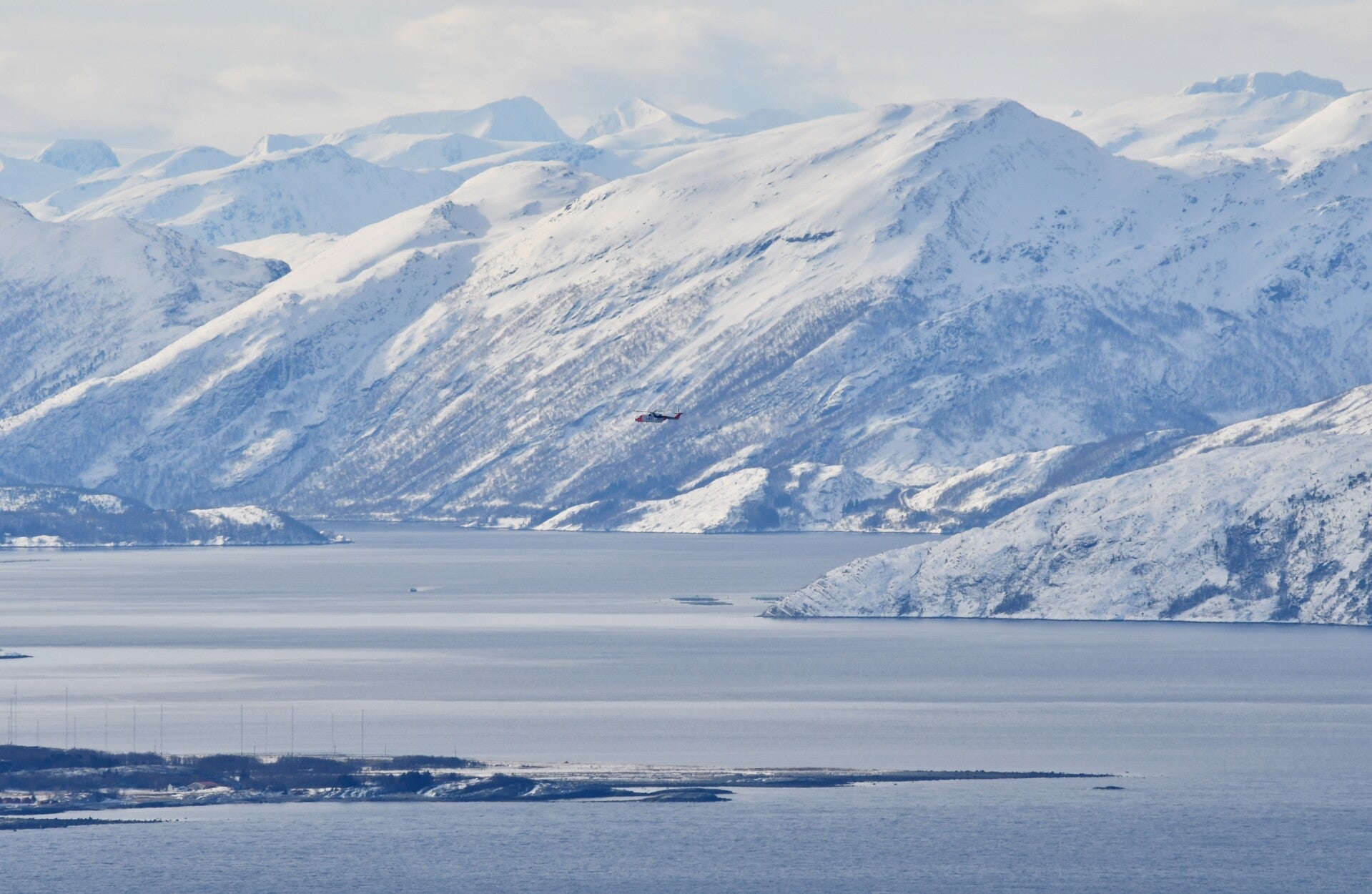
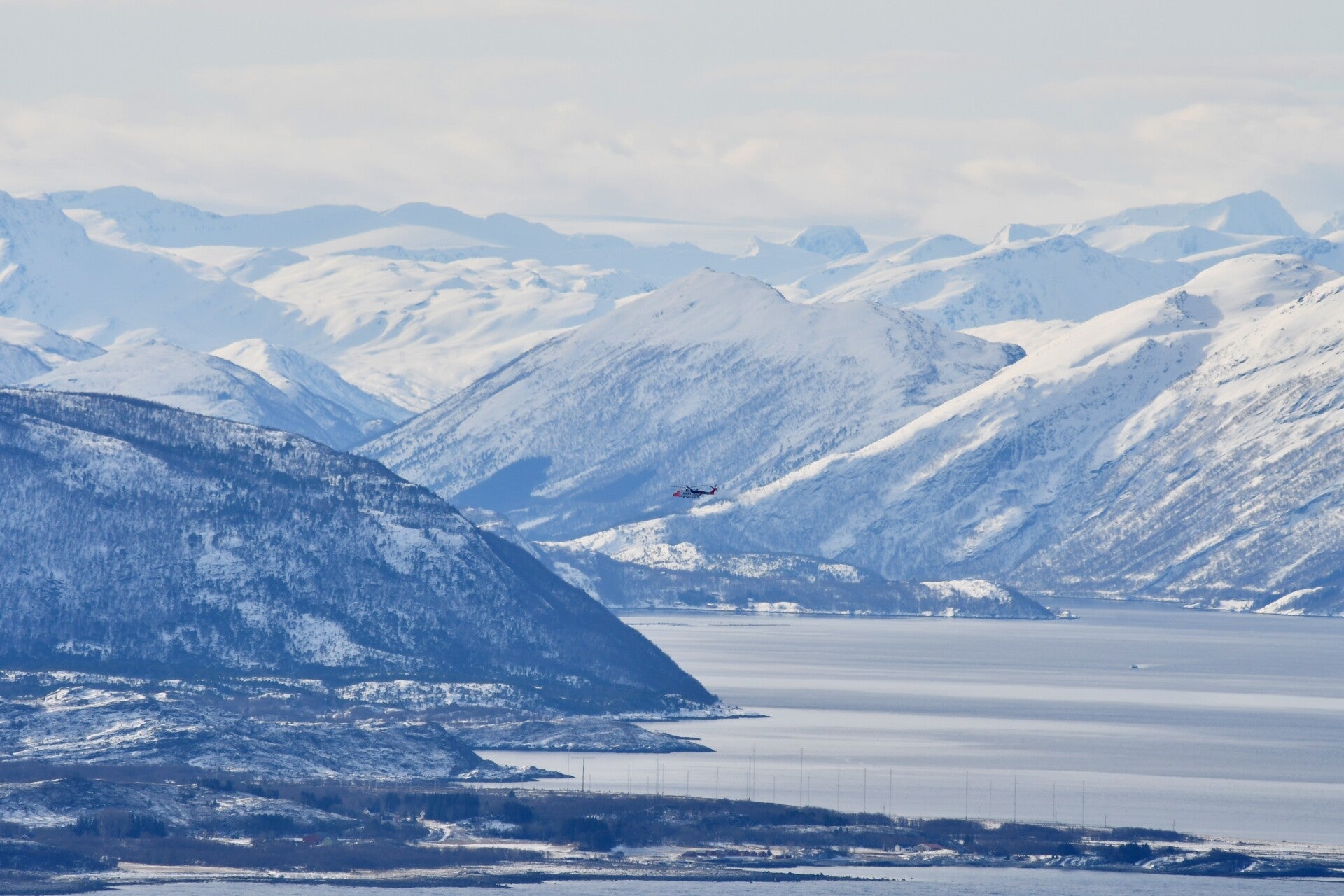
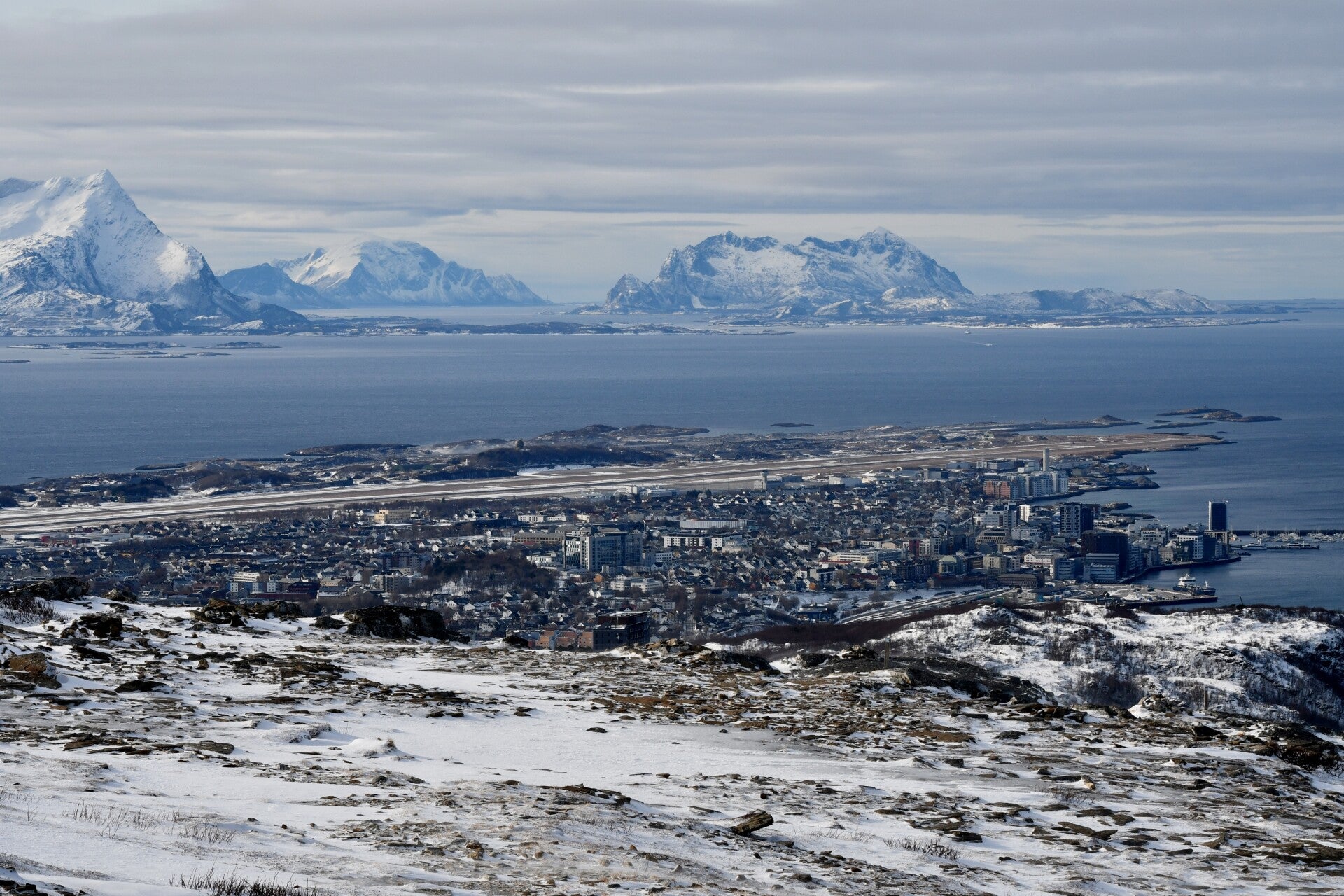
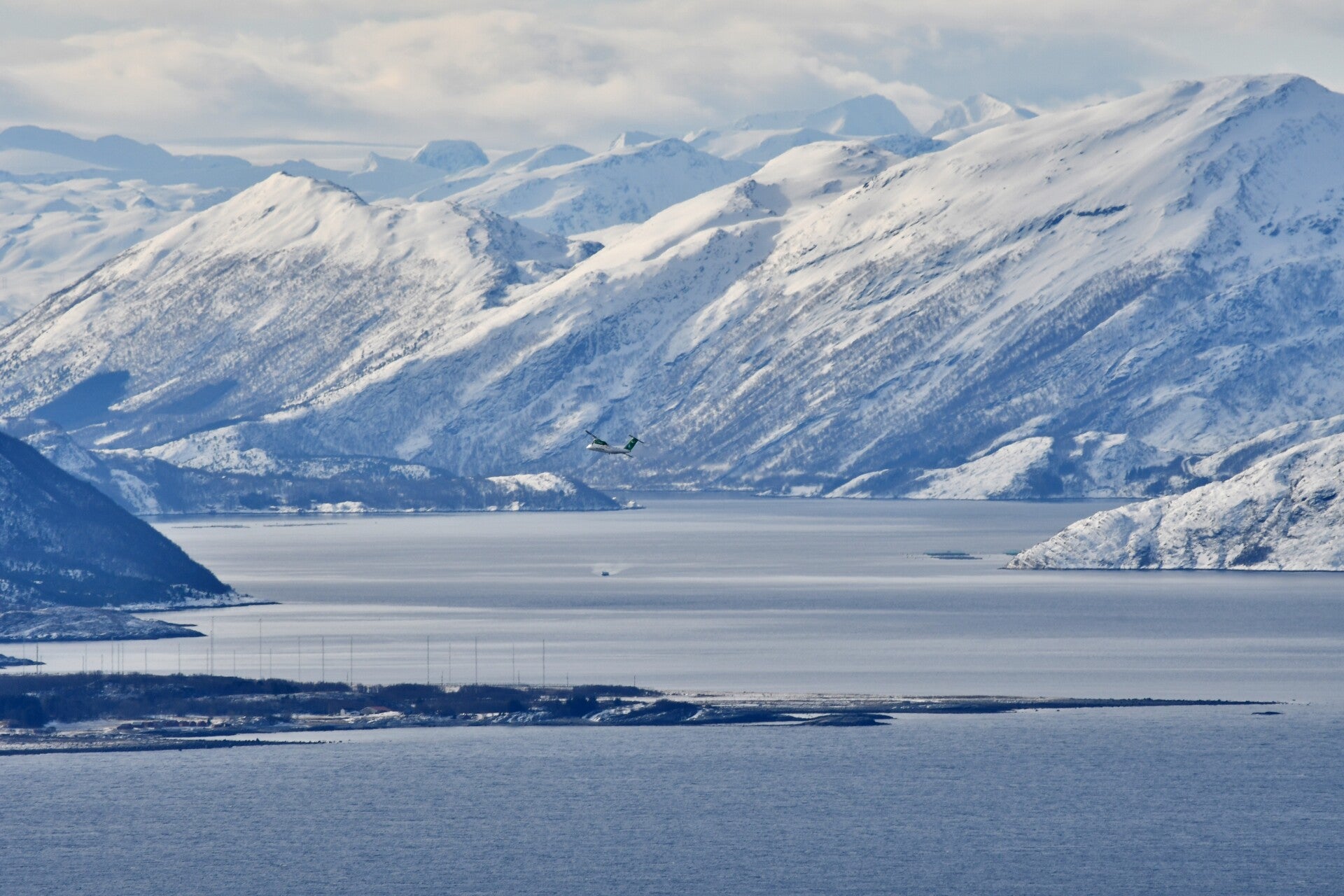
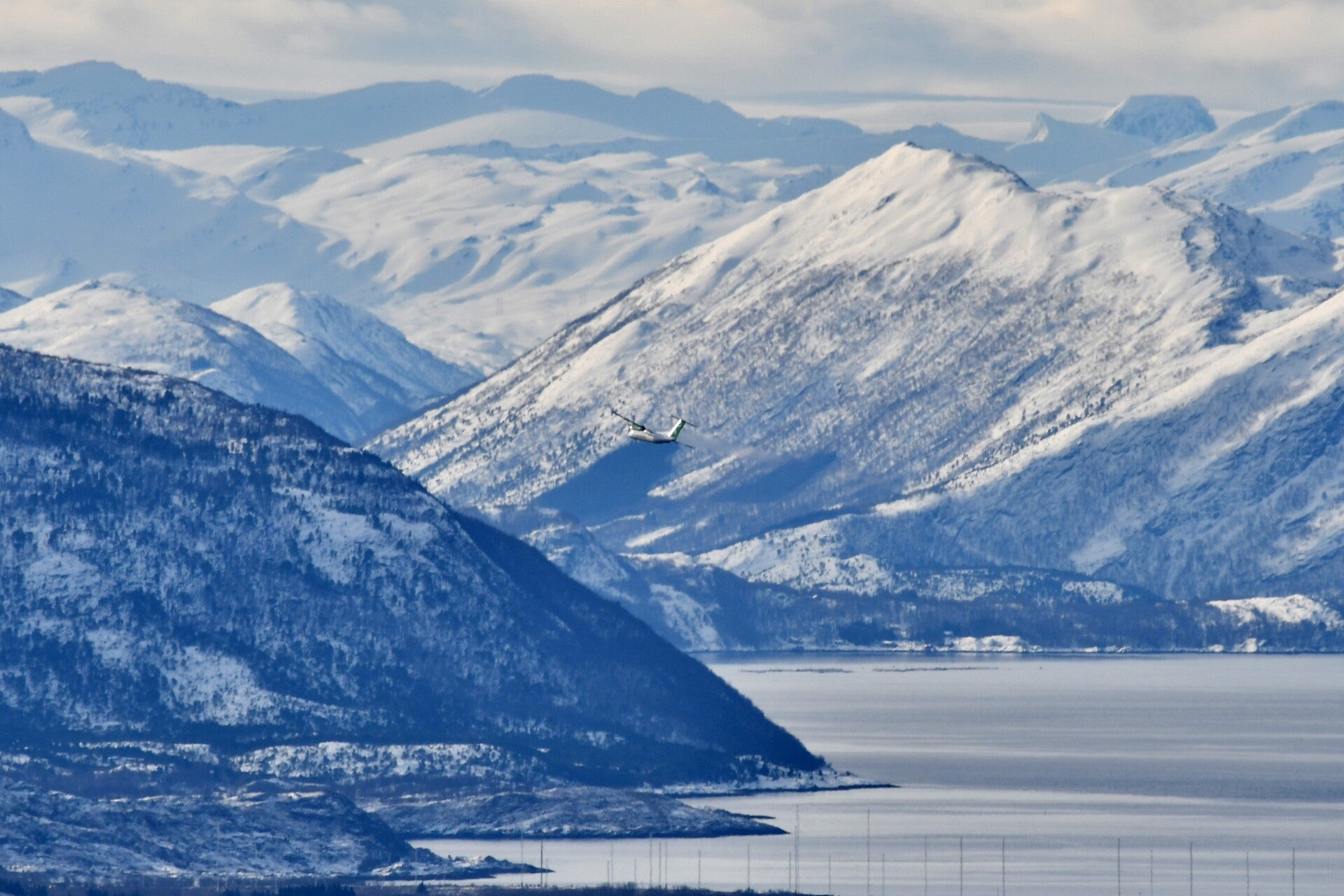
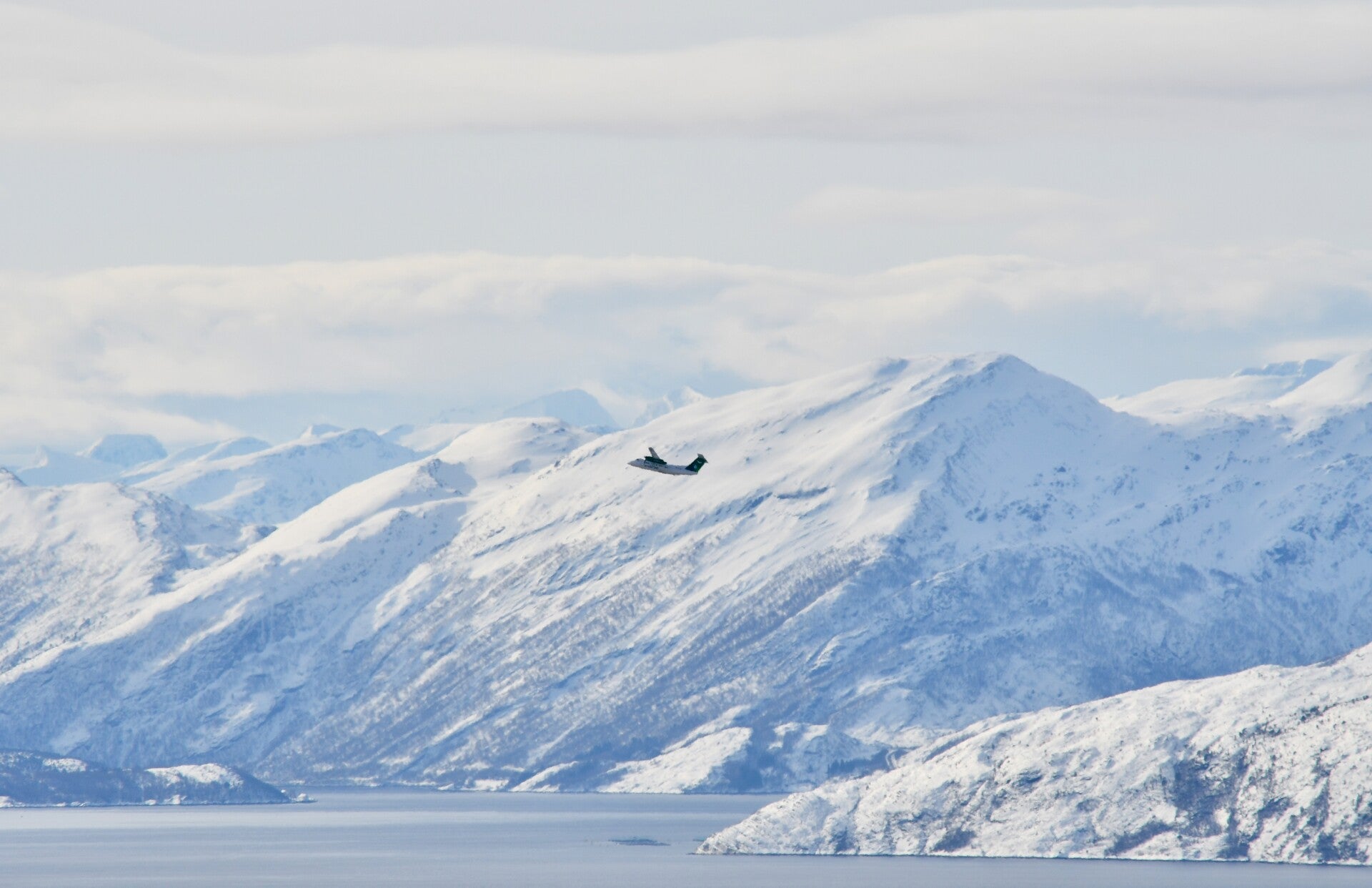
From the top, we’re rewarded with breathtaking panoramic views over Bodø, the Børvasstindan mountains, the Vestfjorden, and the dramatic Lofoten Wall stretching across the horizon. The atmosphere up here feels truly magical. In the distance we even see a Norwegian Air Force EH-101 Merlin helicopter flying through the fjords.
Eventually, we decide it’s time to hike back down toward the hotel, which we can spot in the distance. What an incredible way to start the day!
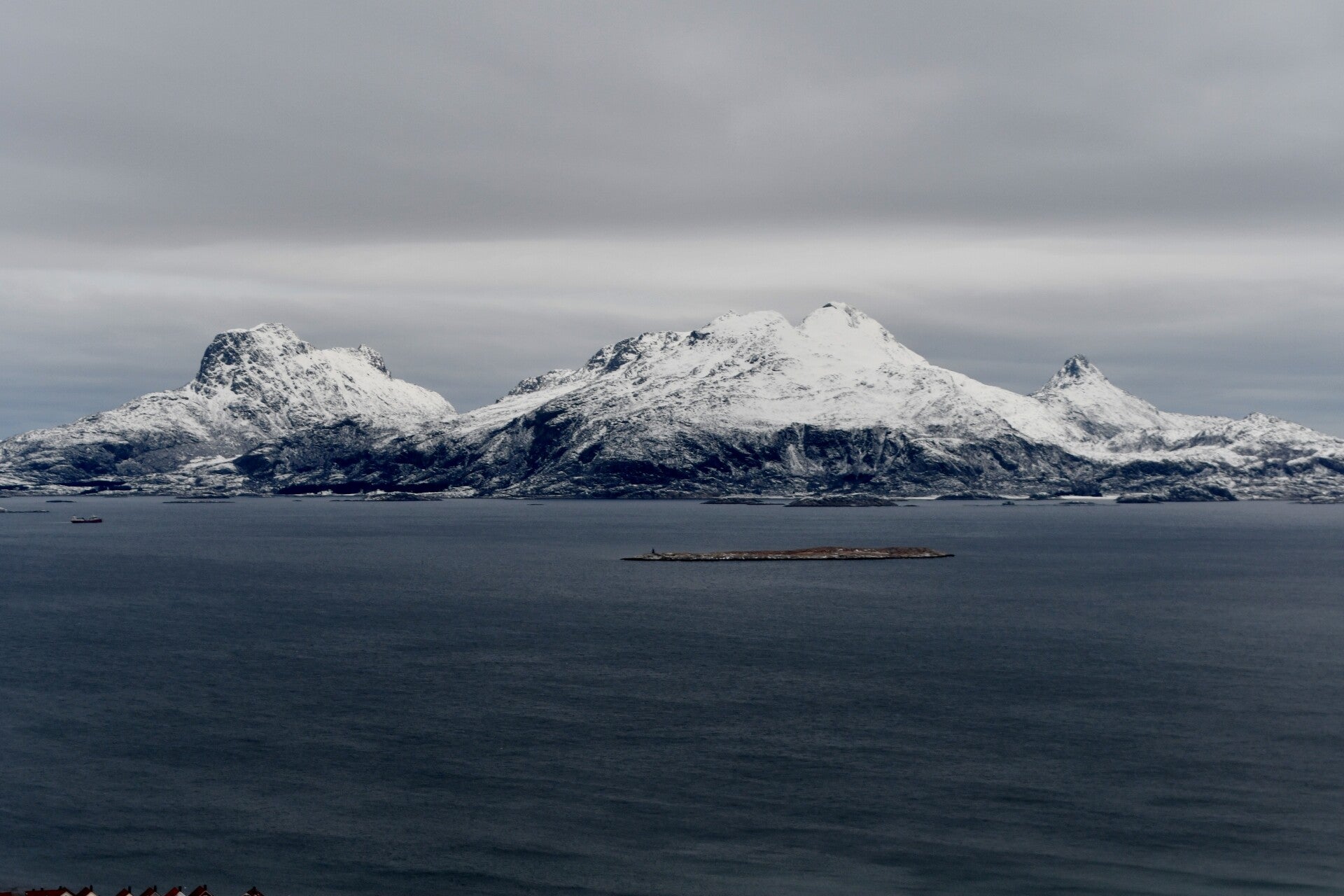


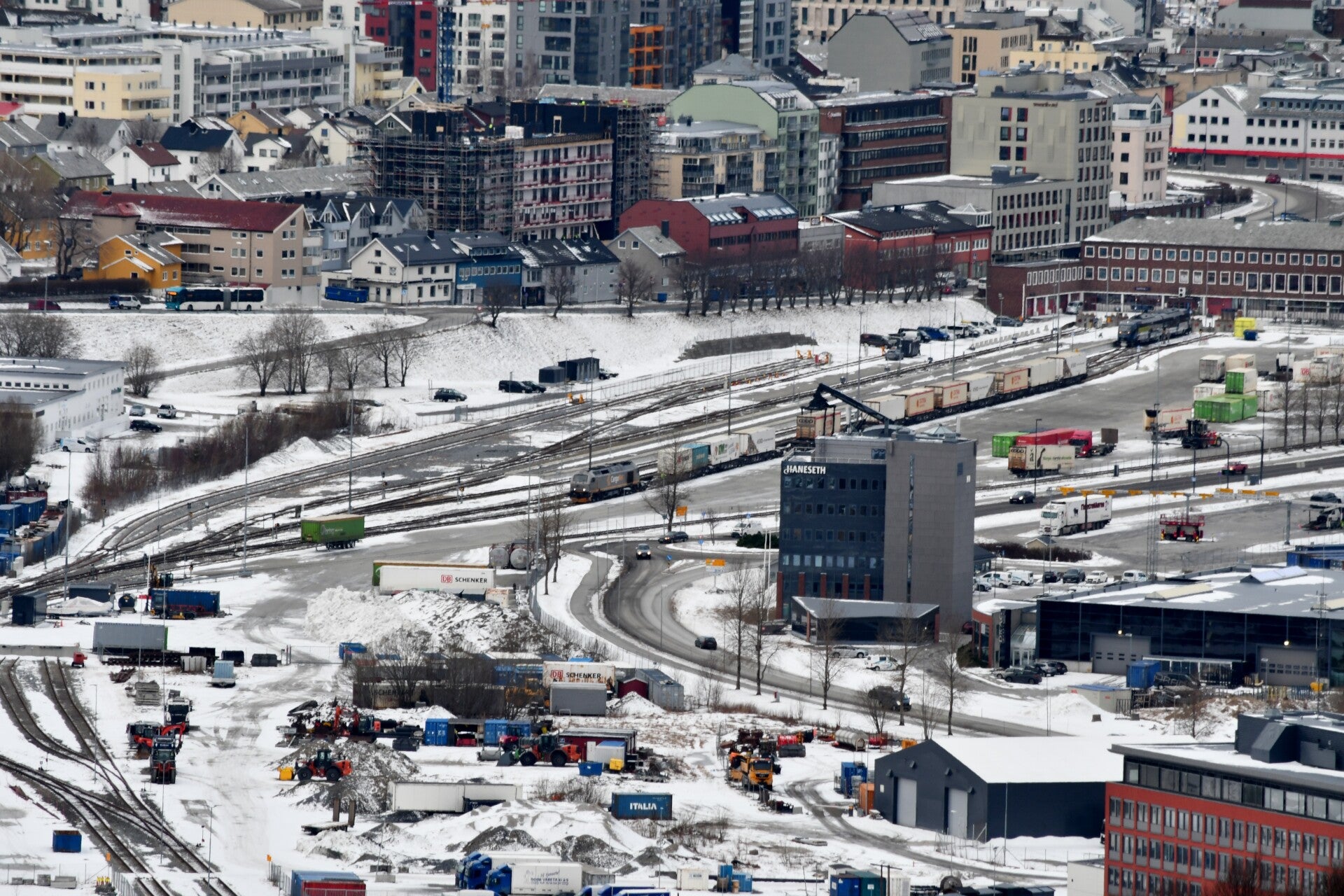
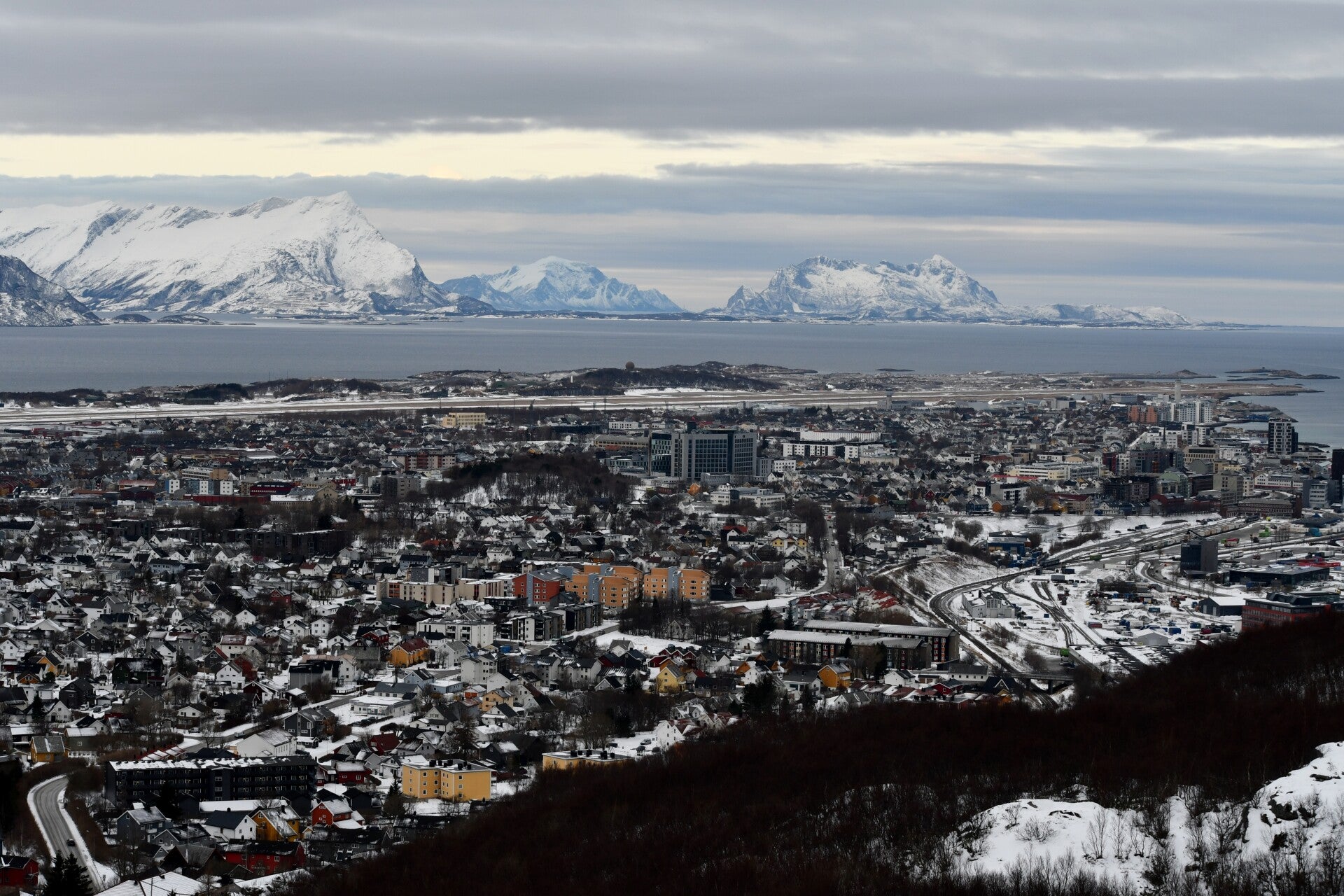


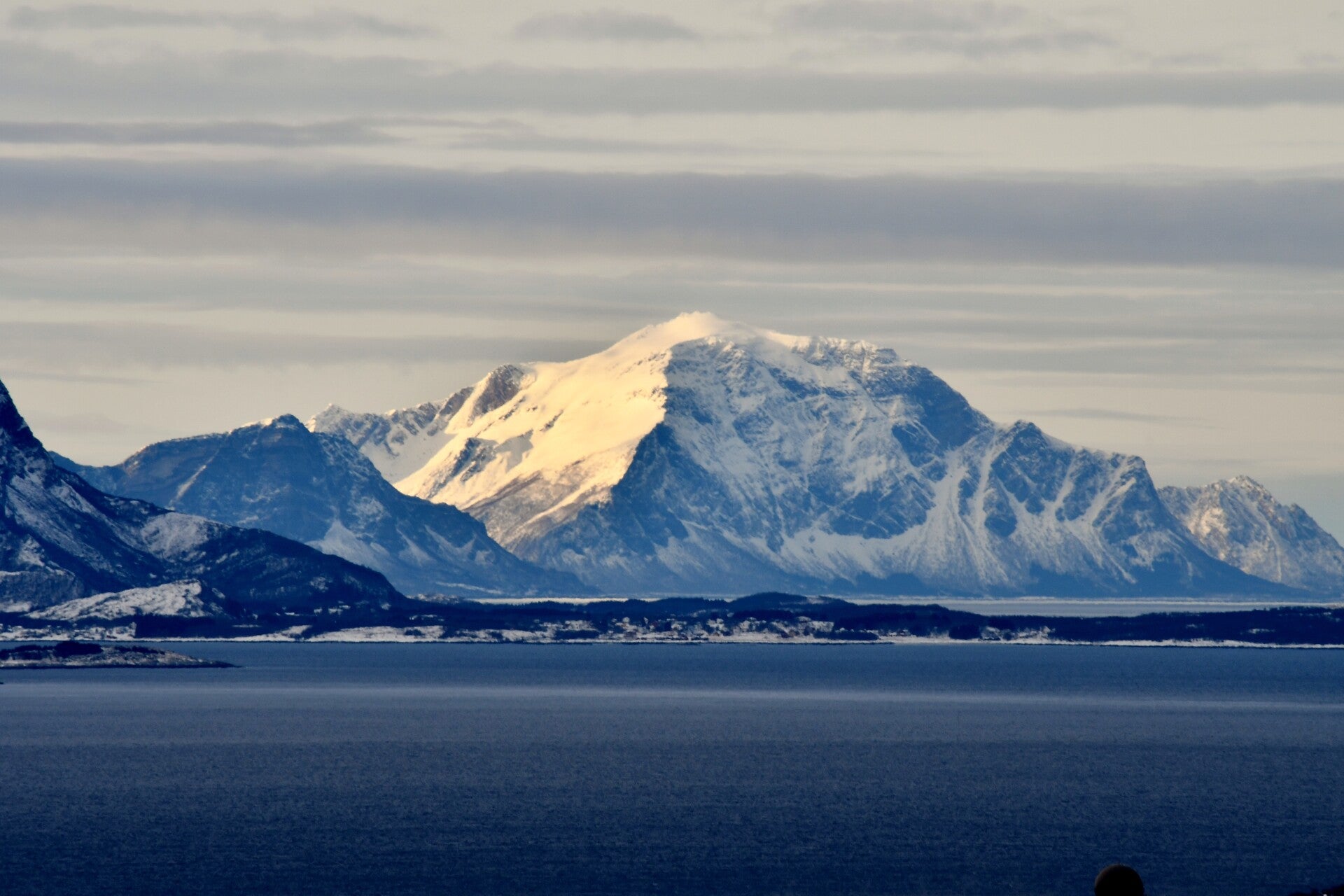
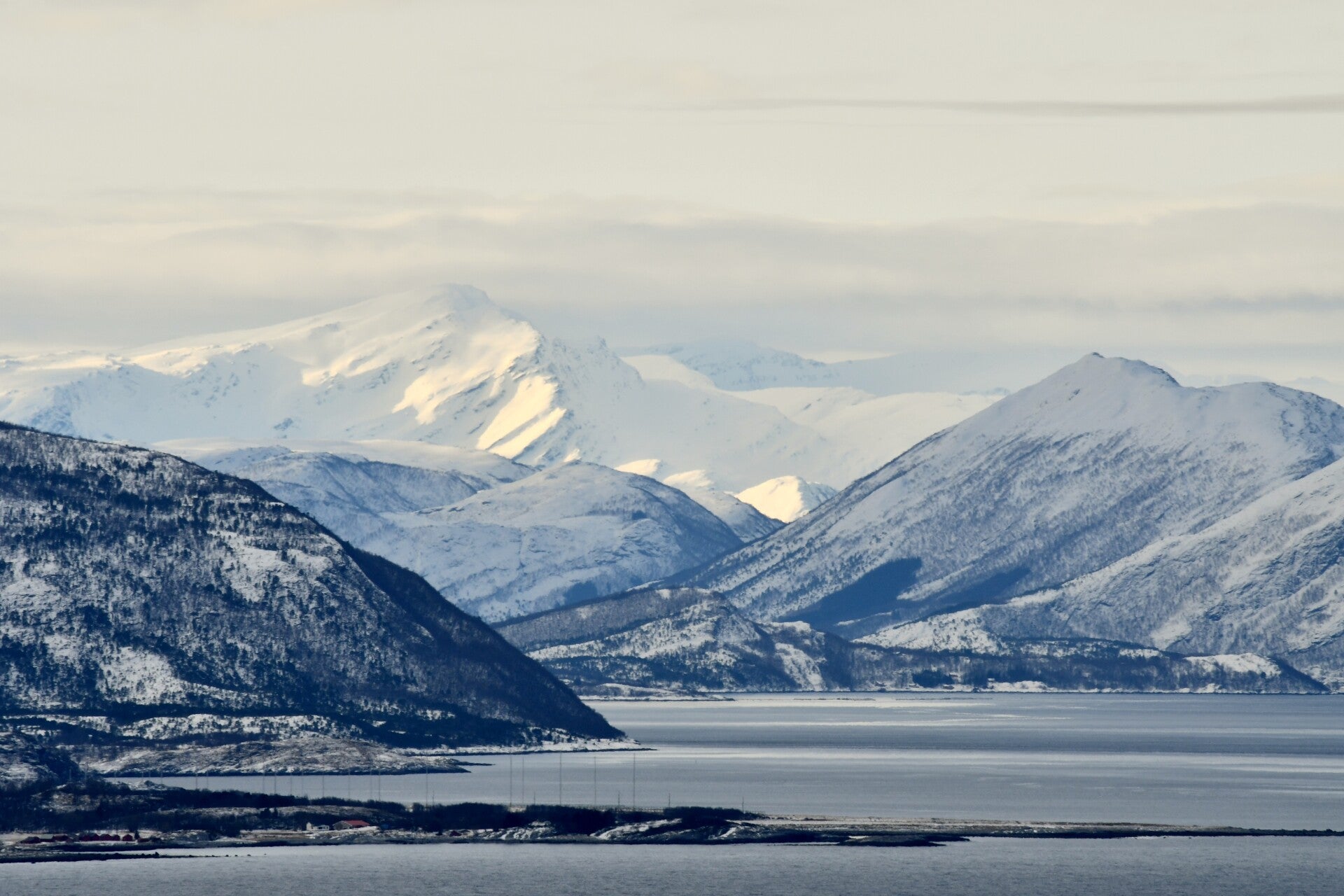
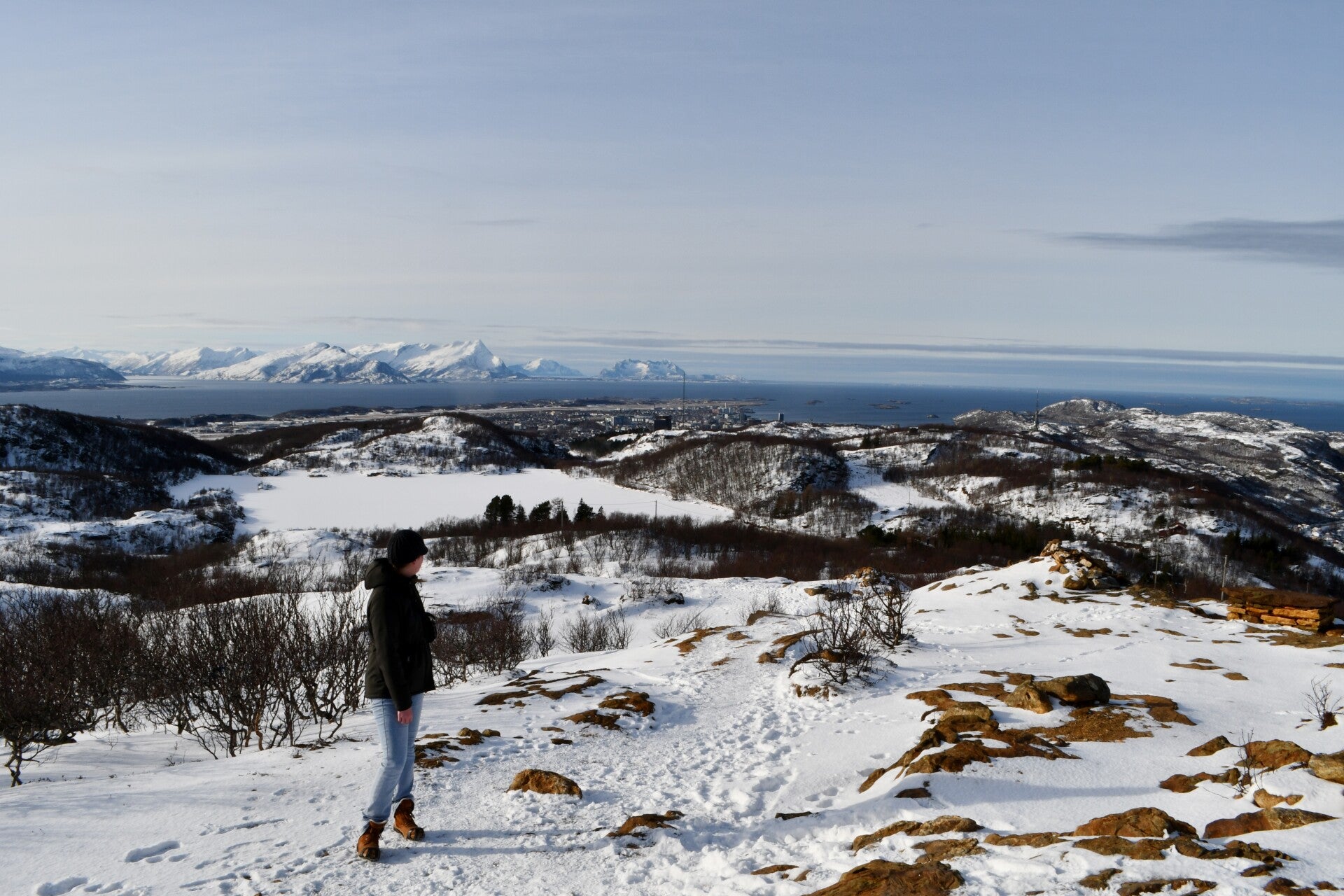




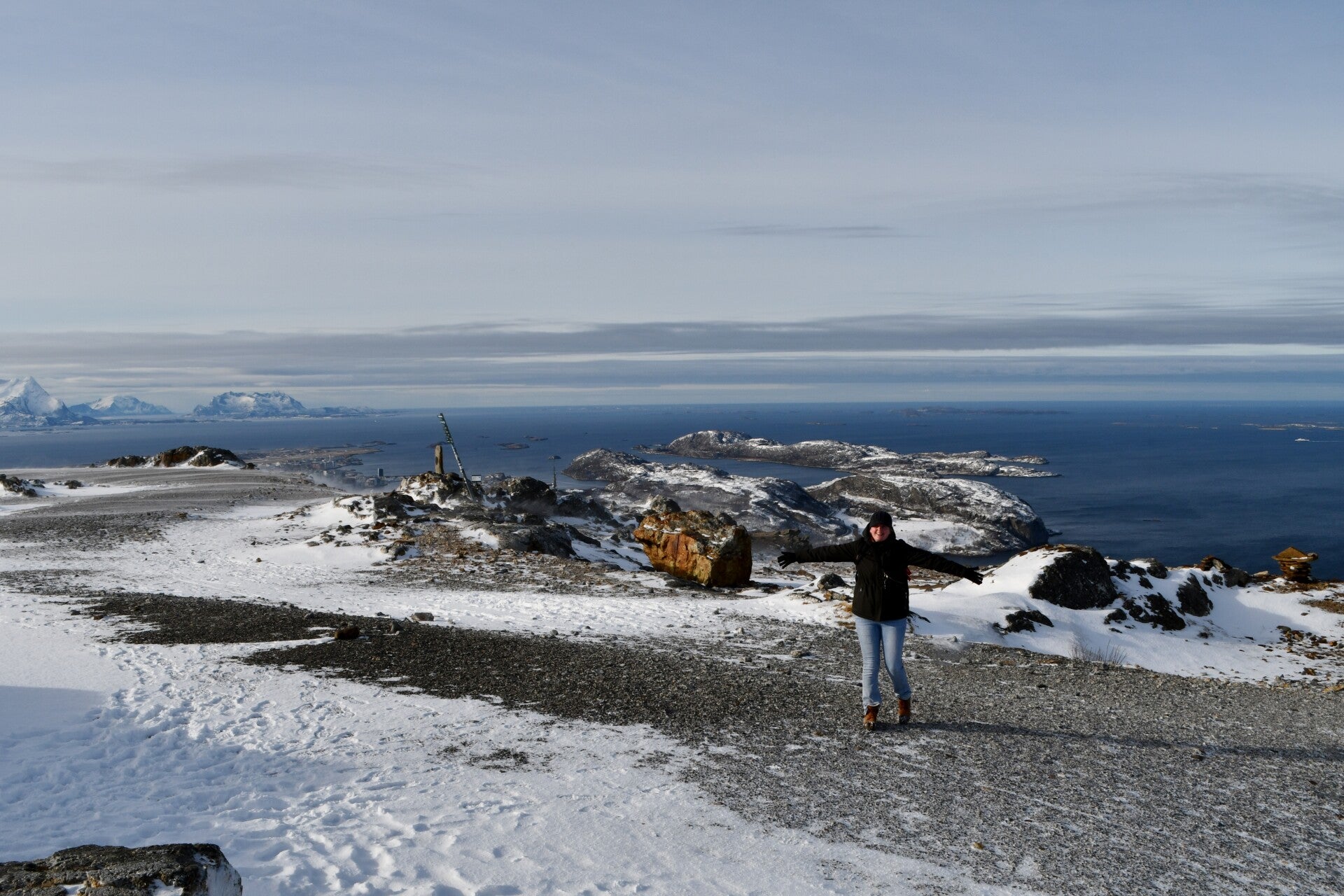
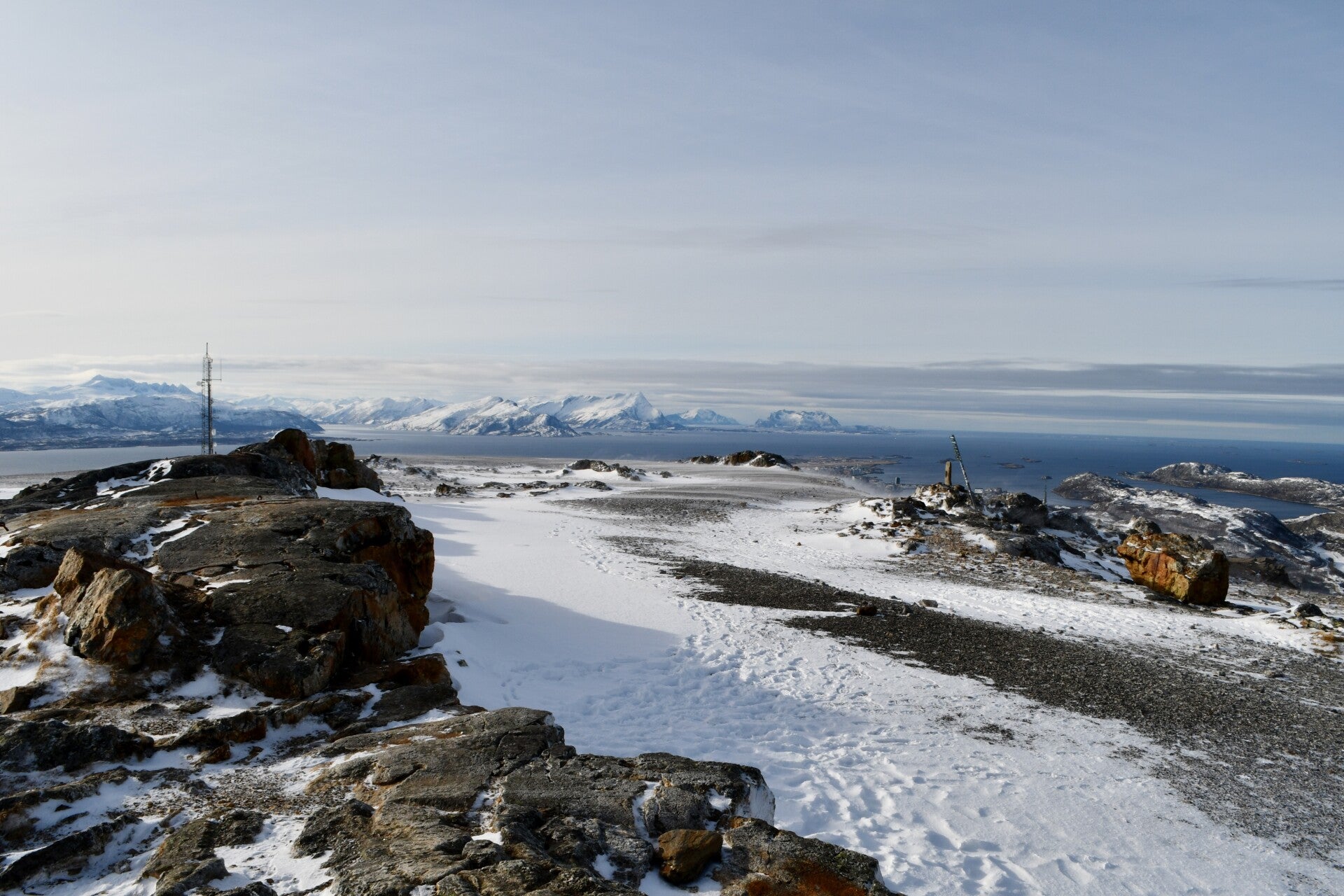
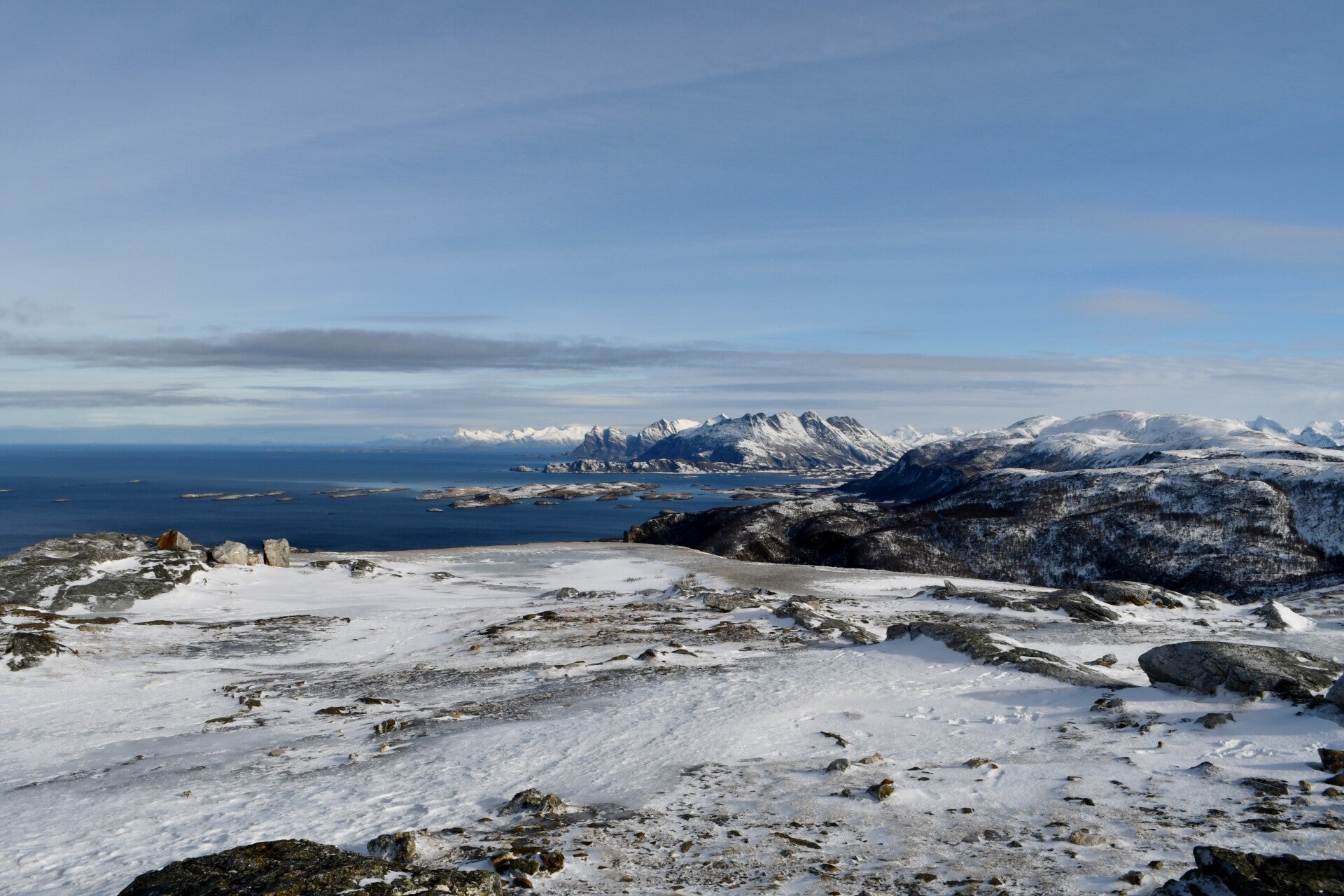
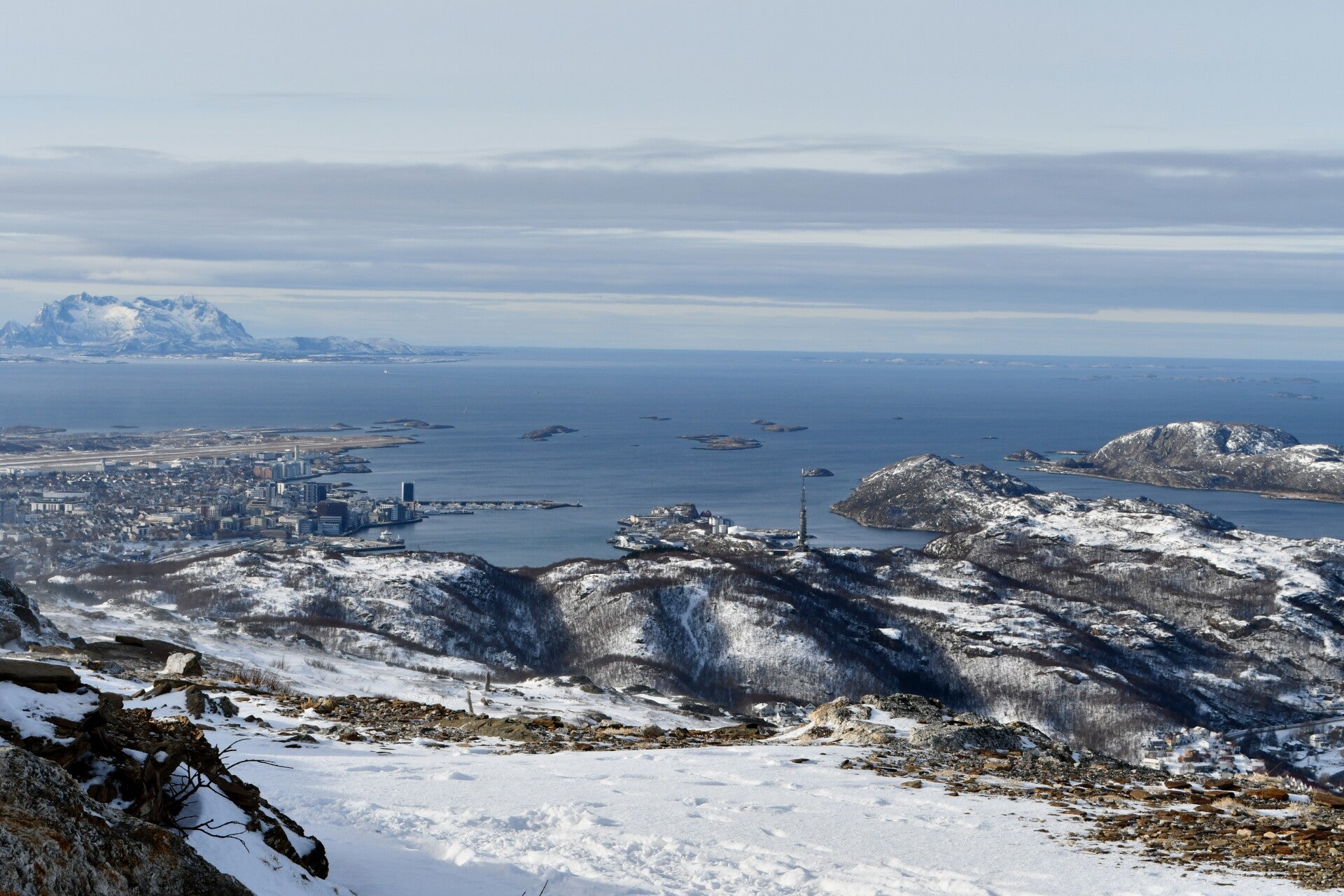



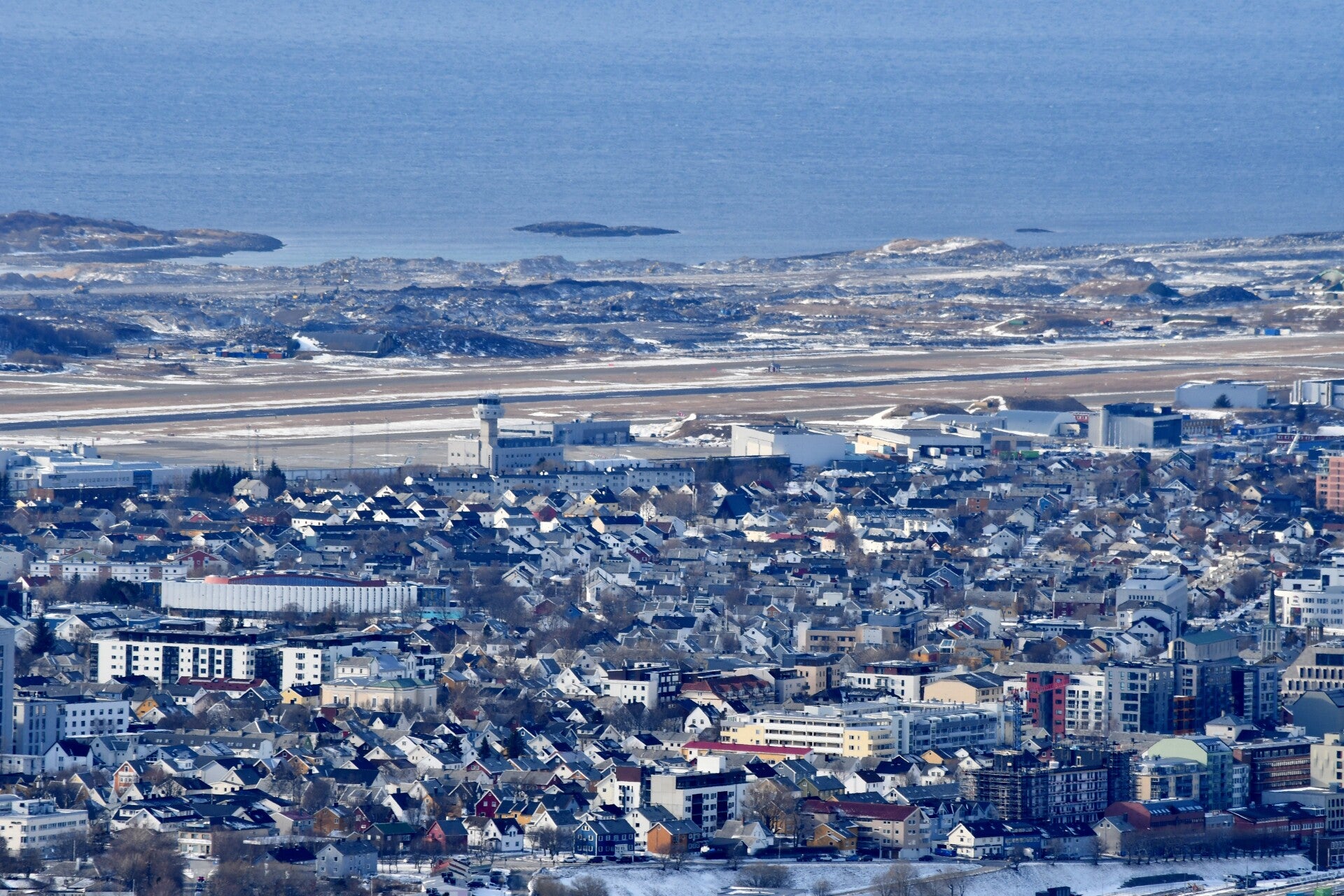
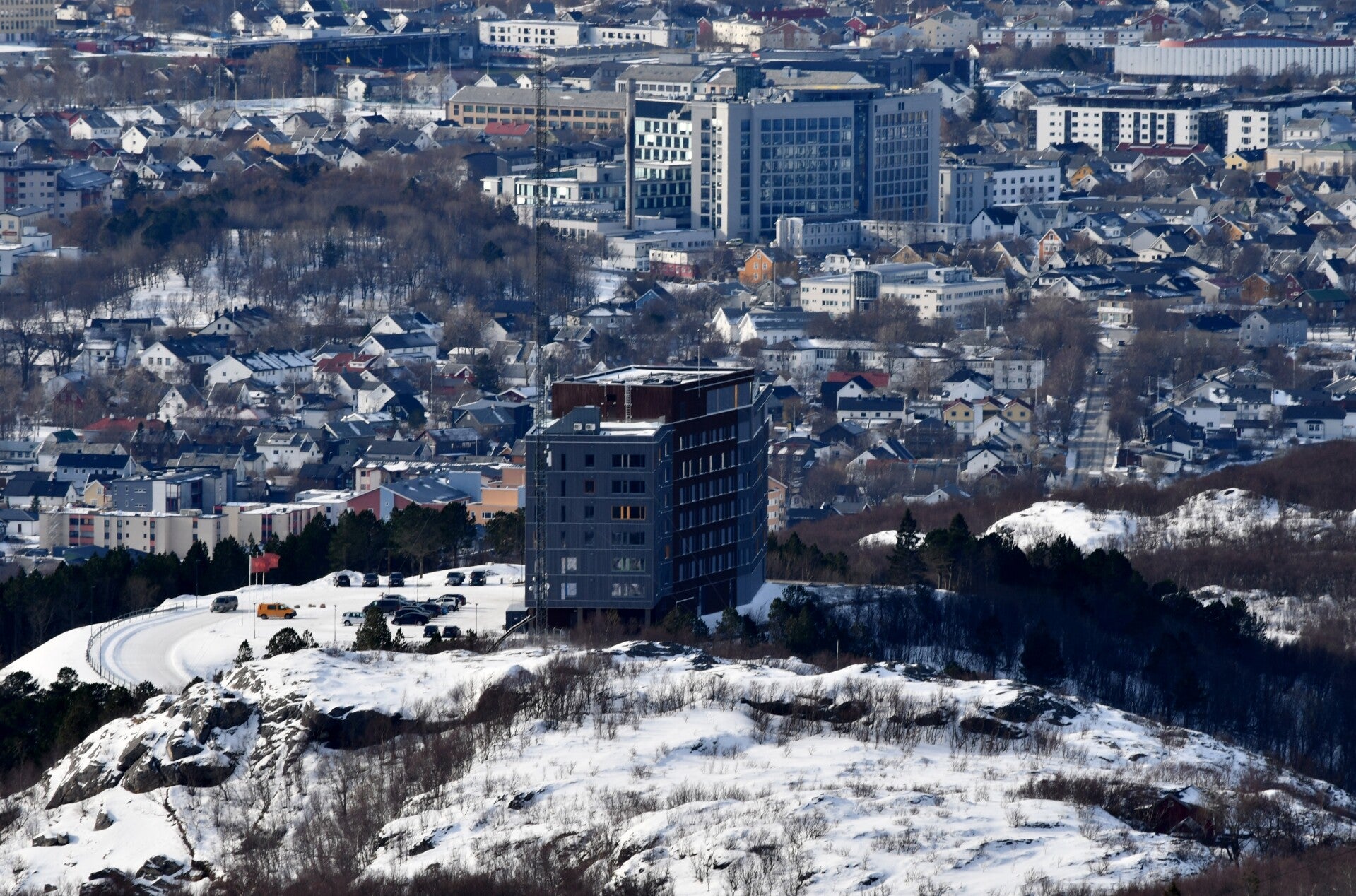
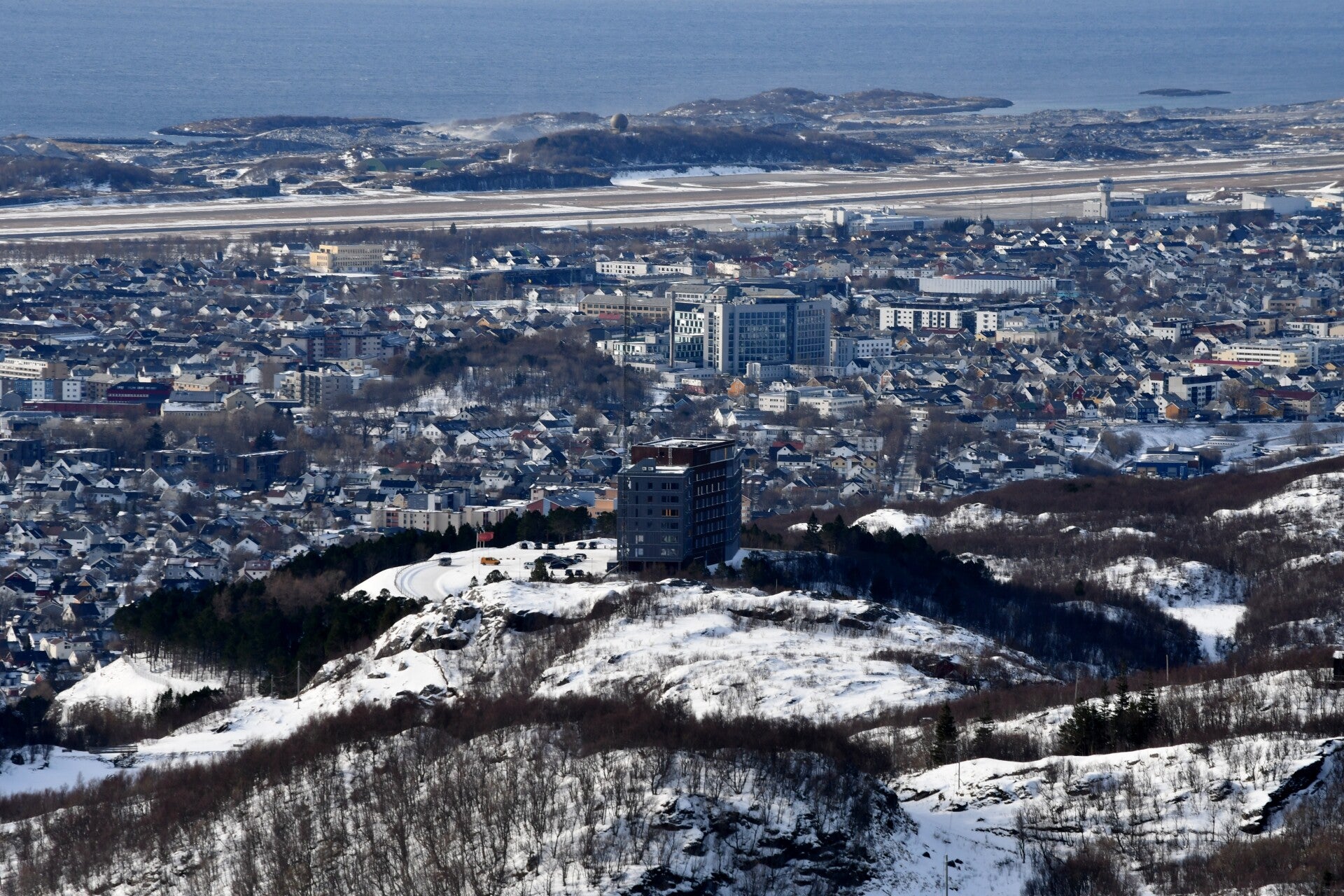
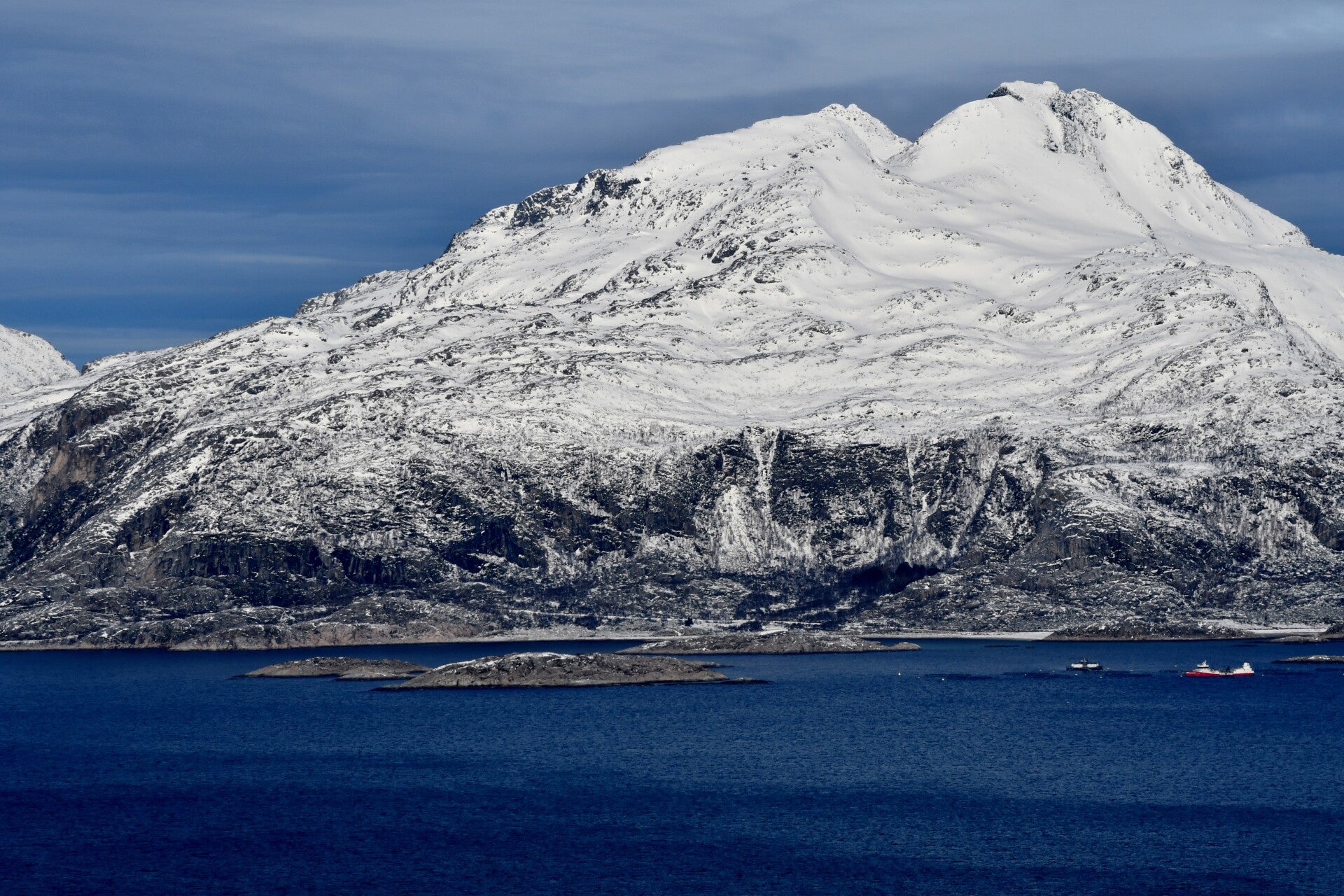
Once back at the hotel, we quickly change and gather our gear for the rest of the day. We hop into the car and head to our first stop: the Norsk Luftfartmuseum, also known as the Norwegian Aviation Museum.
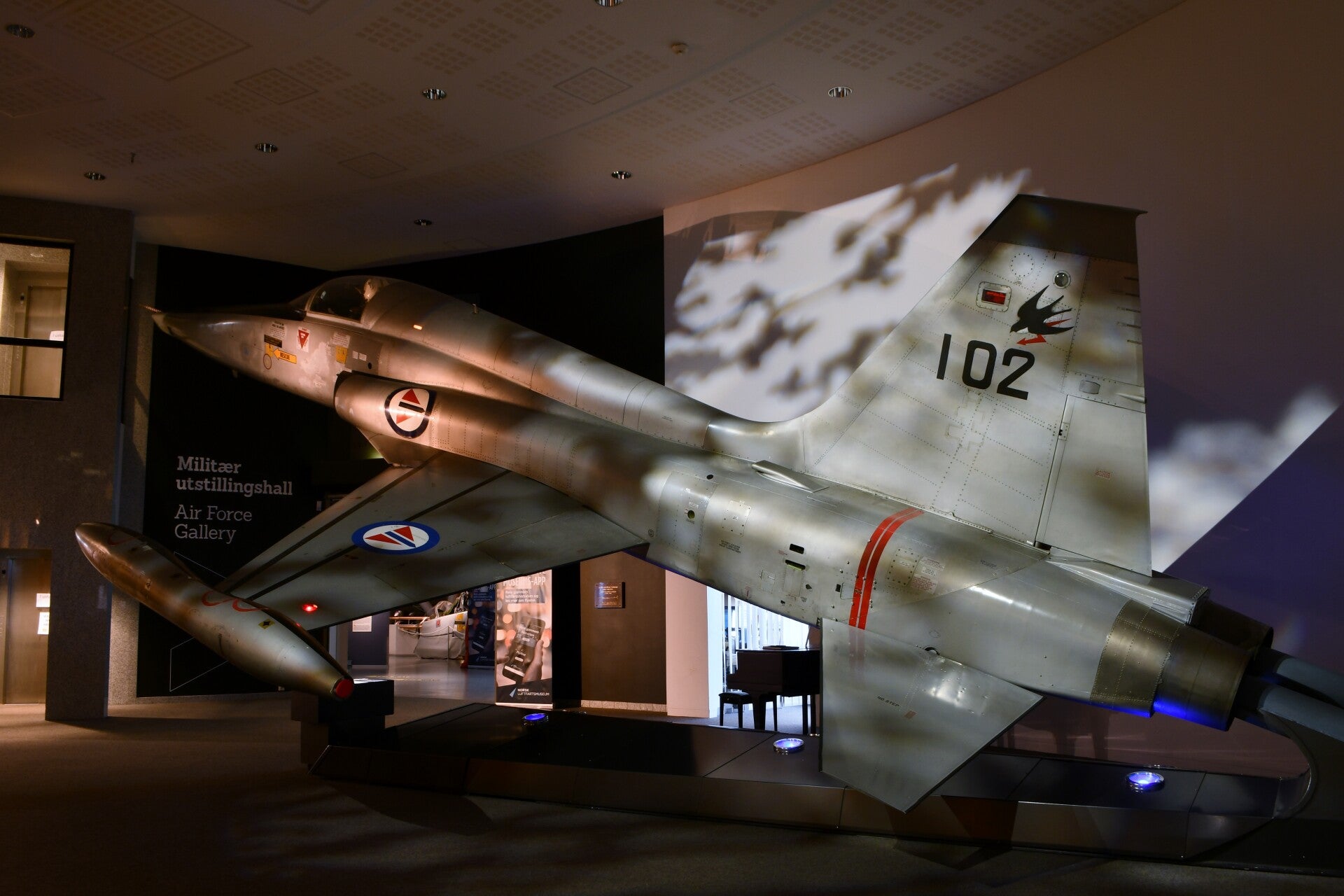
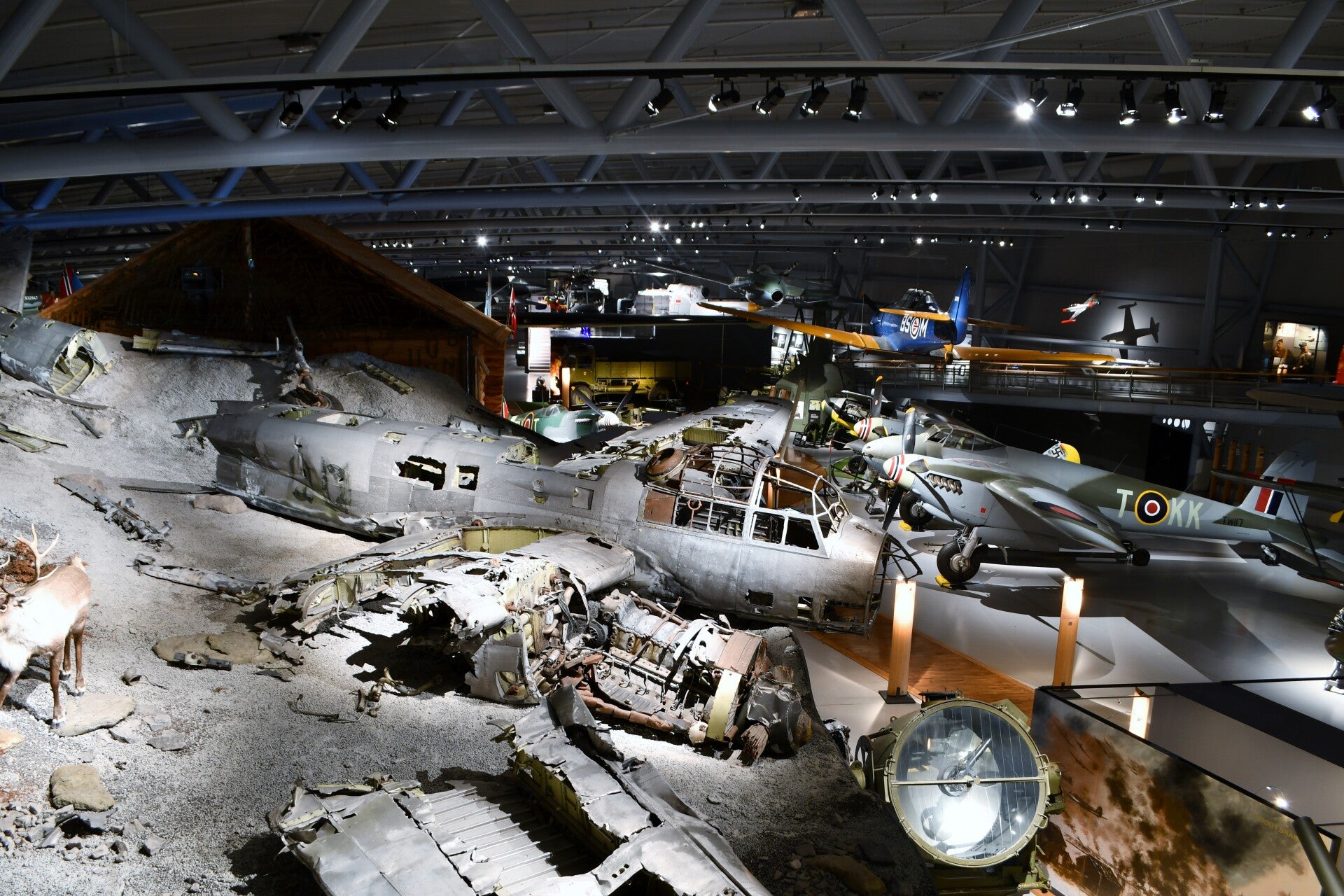
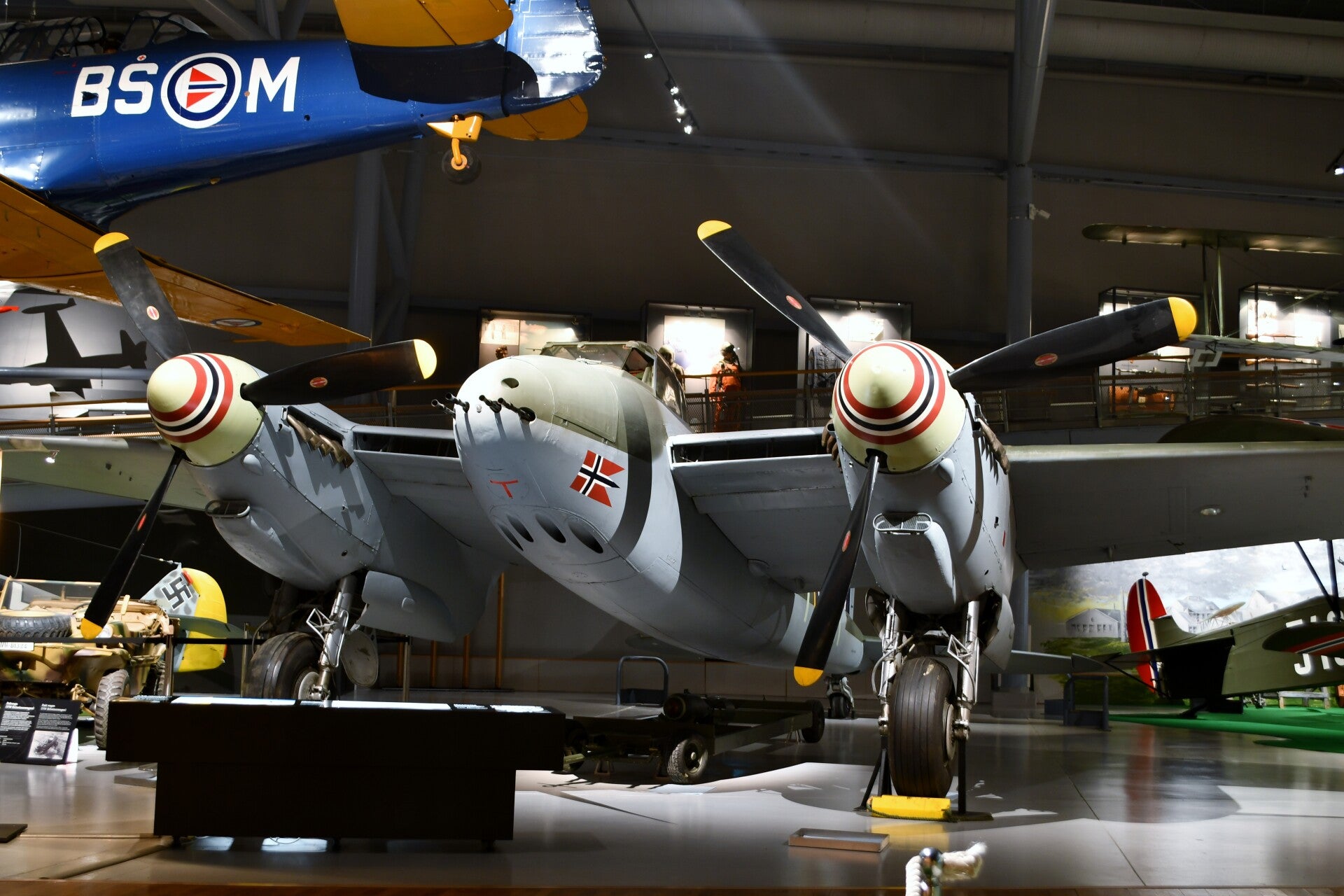
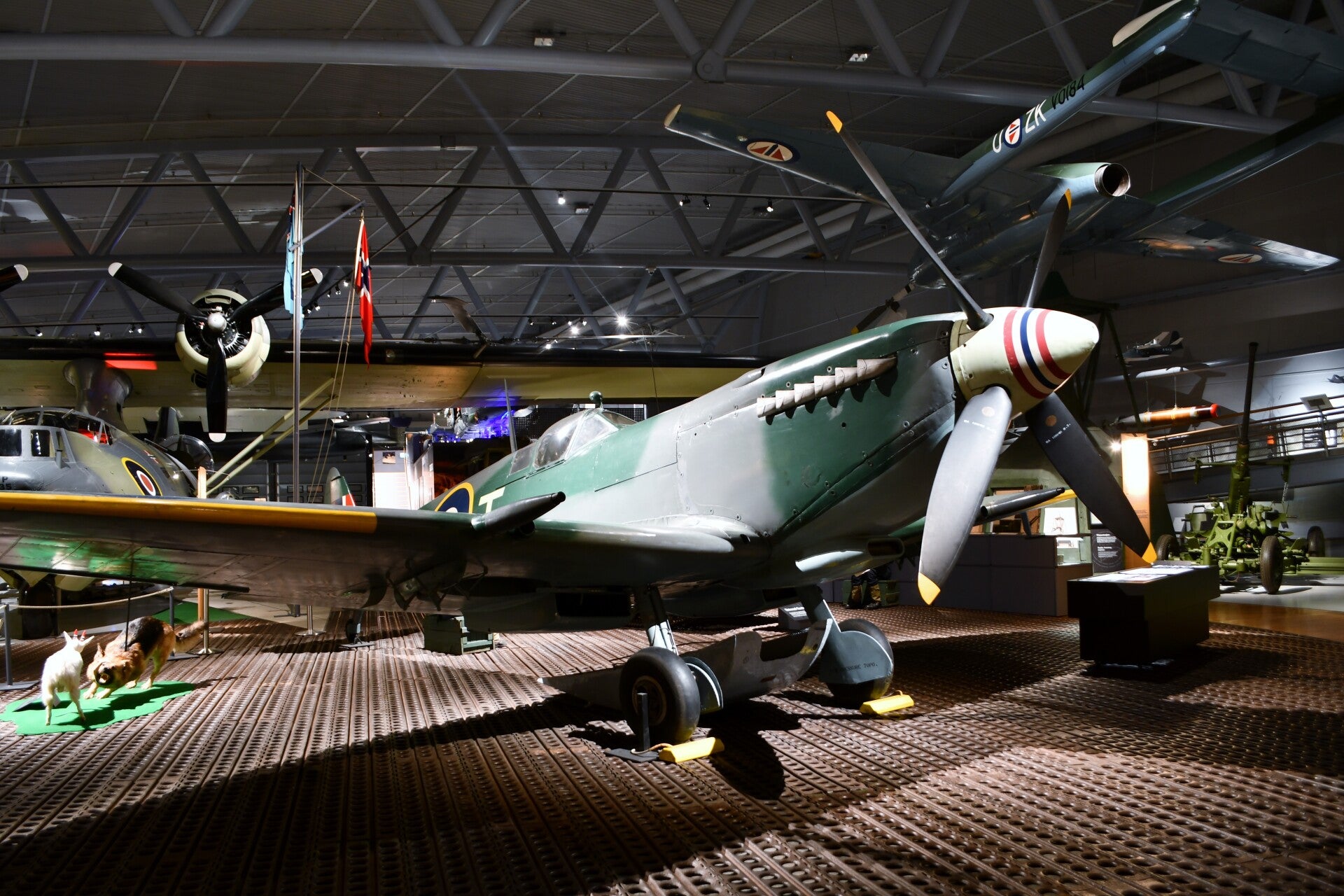
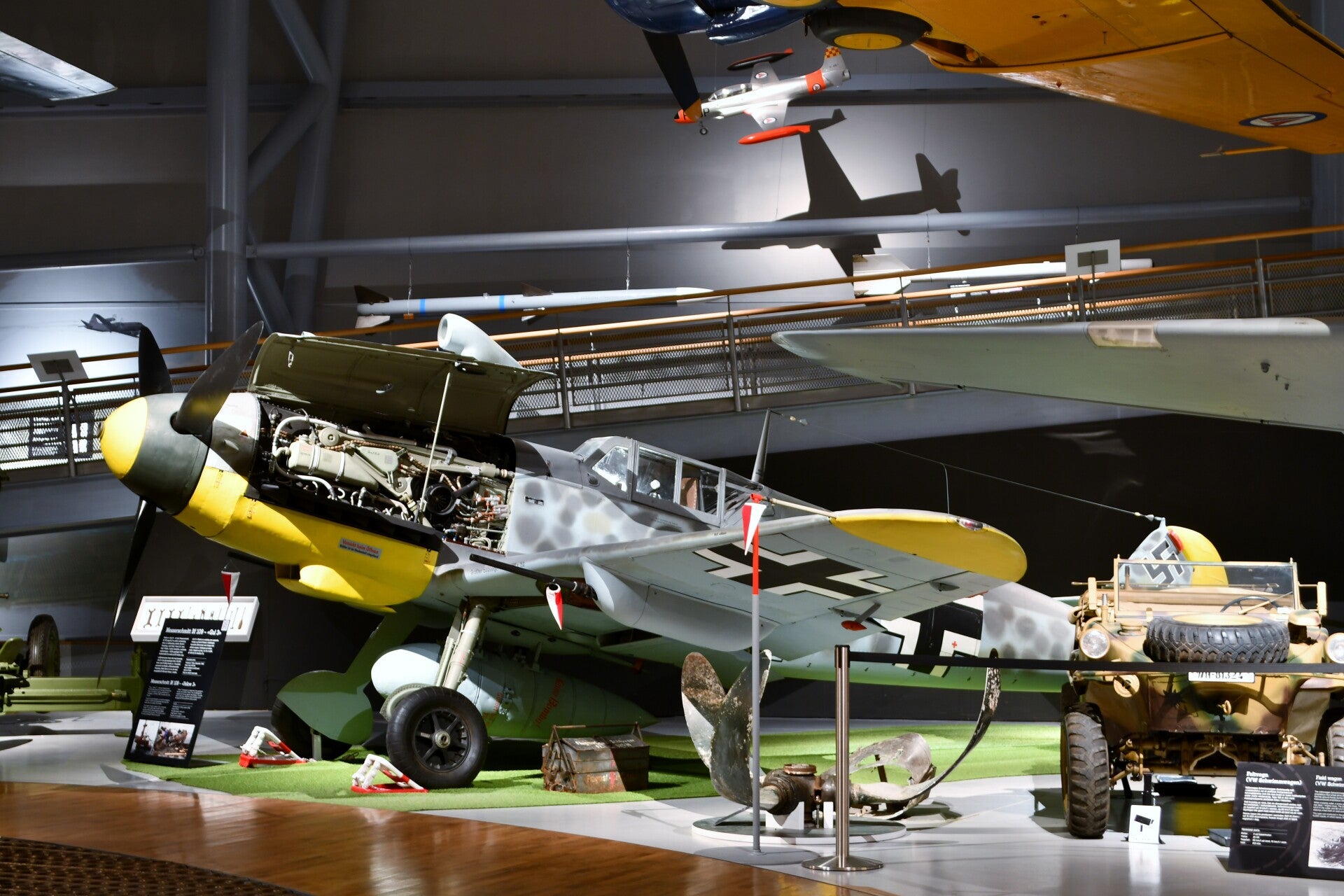
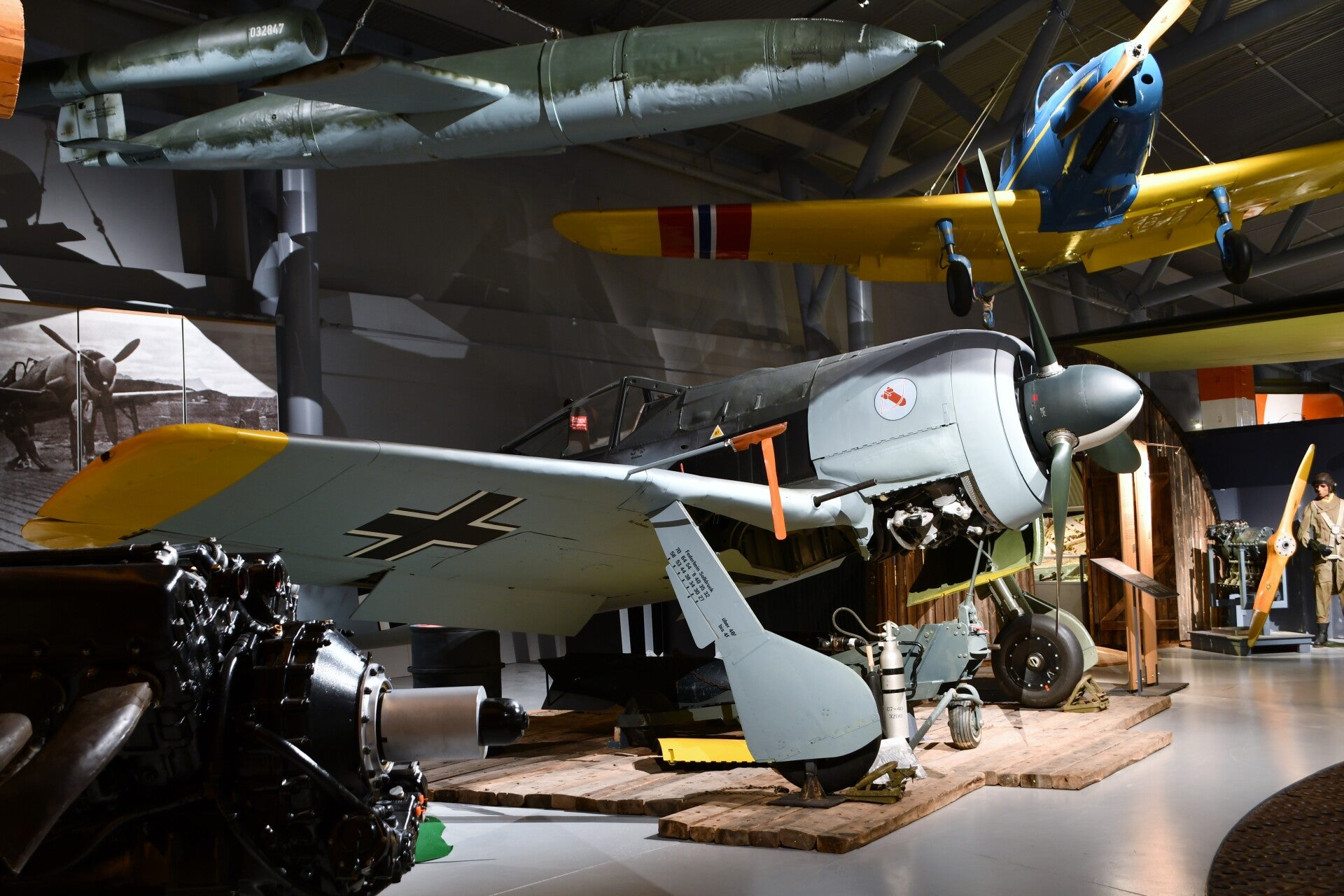
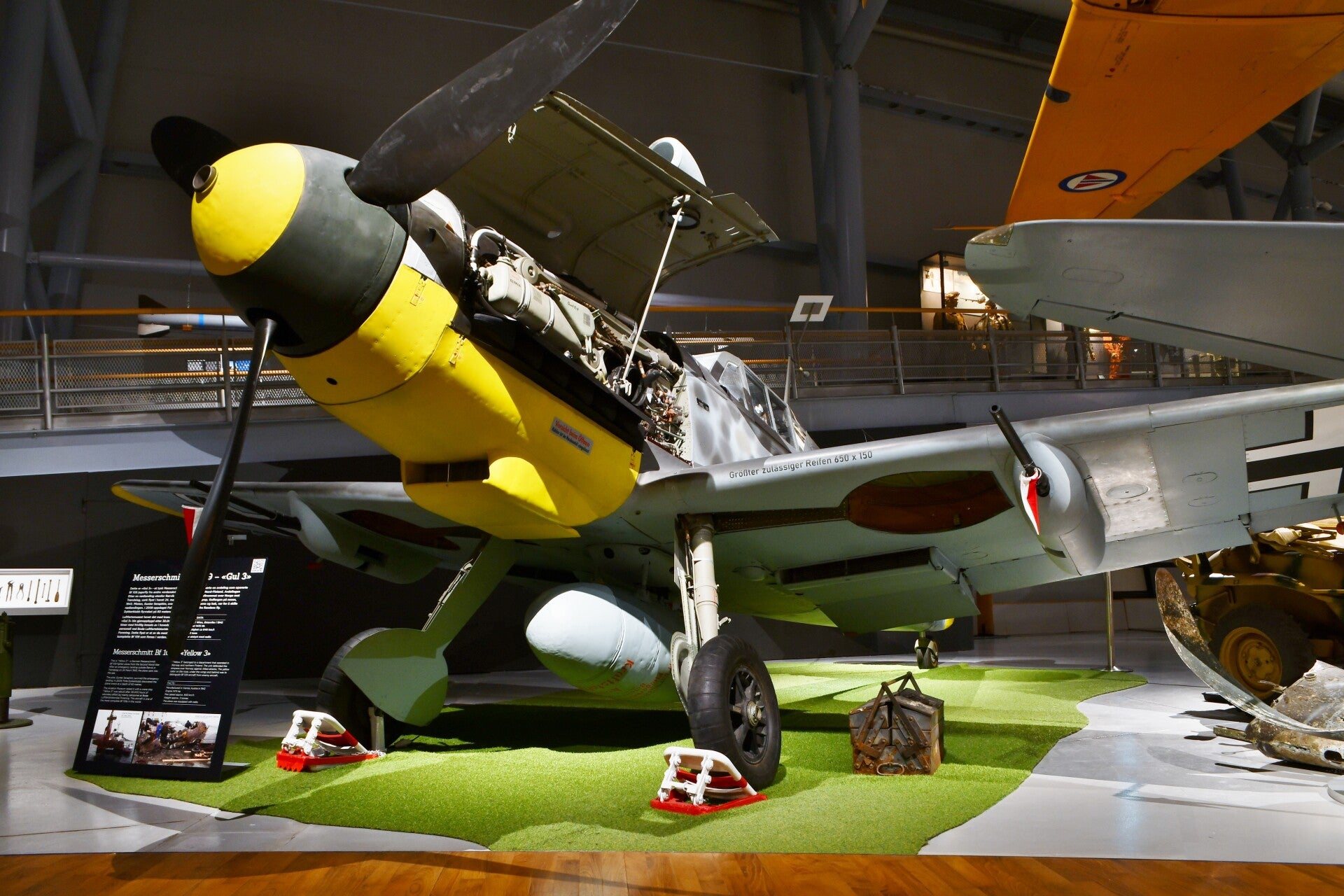
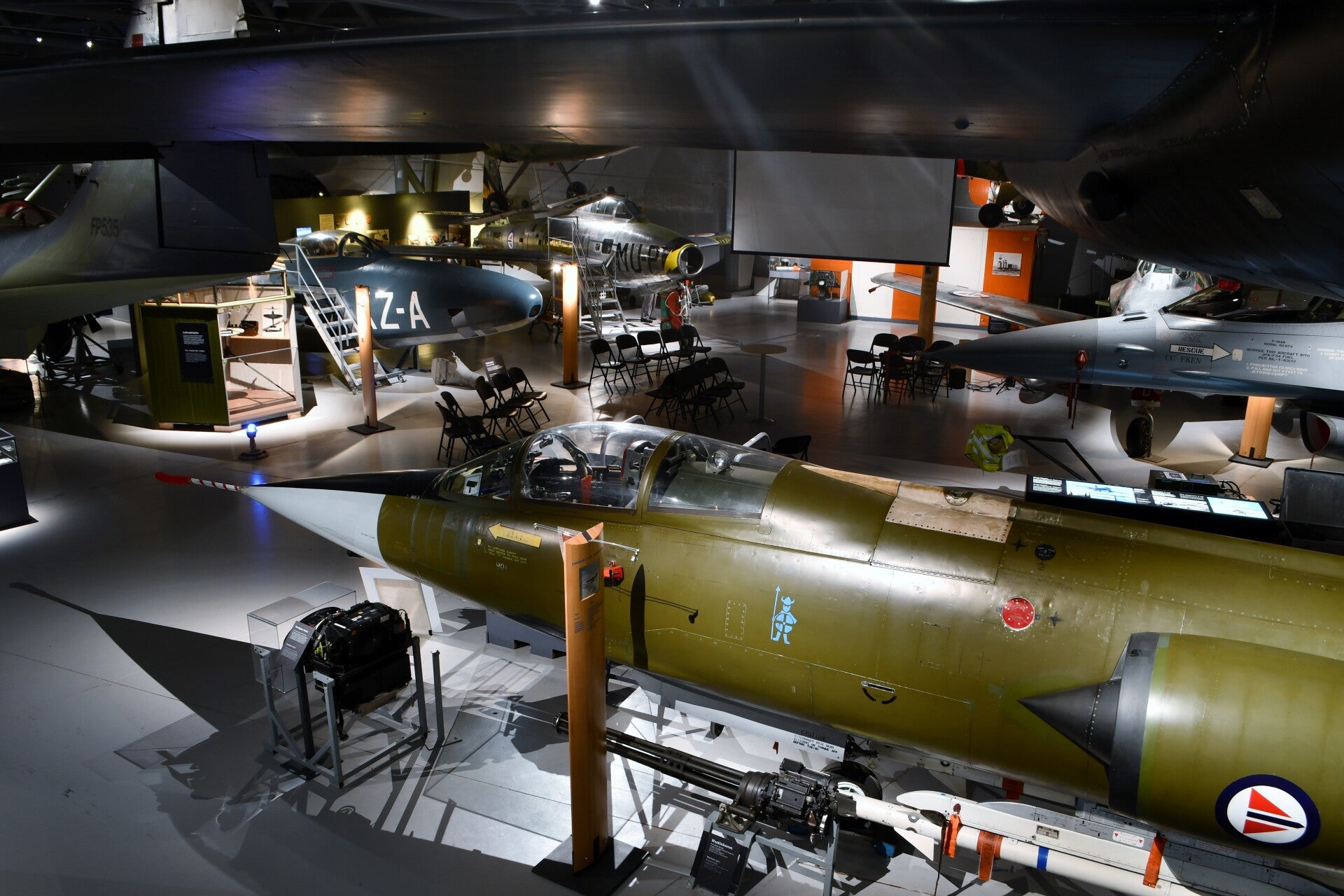
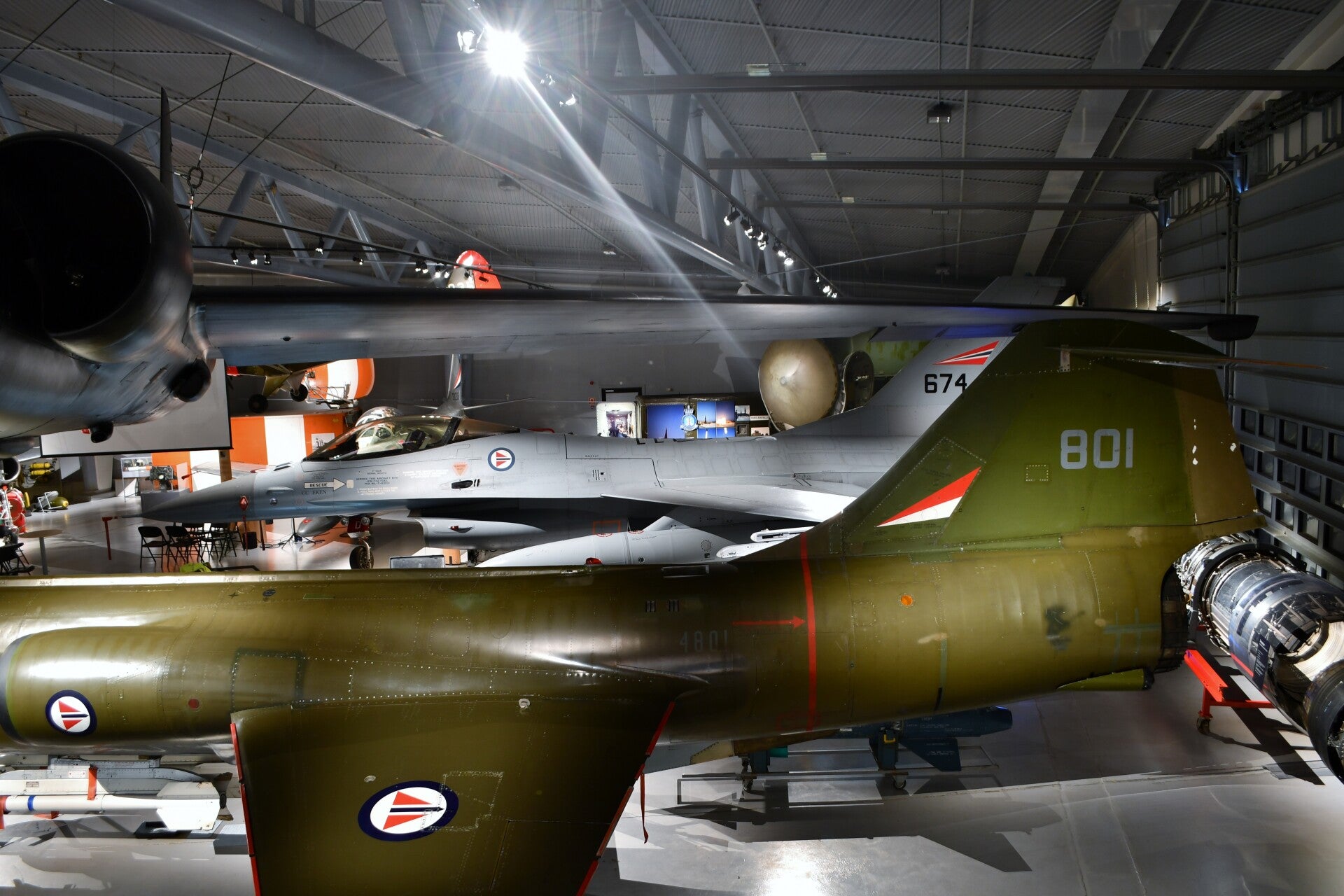
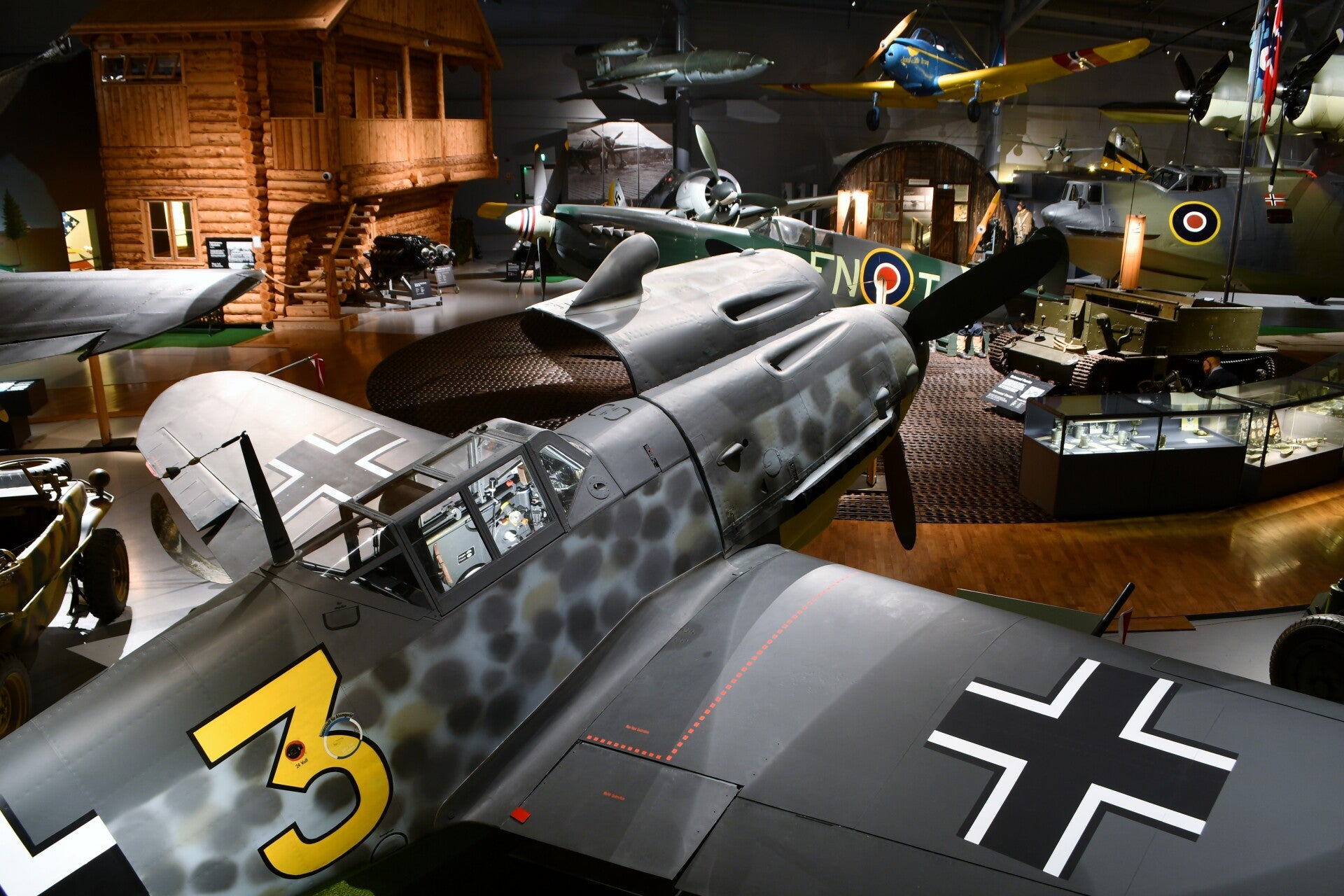
This impressive museum features two large indoor exhibition halls. One hall is dedicated to military aviation and is filled with authentic aircraft rather than replicas. Each airframe is accompanied by an information panel detailing its history and how it ultimately ended up here in Bodø, truly impressive. Highlights include a Messerschmitt Bf 109, a Consolidated PBY Catalina, an F-104 Starfighter, and an F-16 Fighting Falcon. To our surprise, a Lockheed U-2 Dragon Lady is even suspended from the ceiling.
The story behind the U-2’s presence here is particularly remarkable. On May 1, 1960, a United States U-2 spy plane took off from Peshawar, Pakistan, on a photographic reconnaissance mission deep inside Soviet territory. Codenamed “Grand Slam,” the mission was planned to depart from Peshawar, overfly the Soviet Union, and conclude with a landing in Bodø, which at the time served as a base for U-2 operations.
While flying over Sverdlovsk in Russia, the aircraft was shot down by Soviet air defense forces using a surface-to-air missile. The pilot, American Francis Gary Powers, parachuted to the ground and was captured. Initially, U.S. authorities claimed the incident involved the loss of a civilian NASA weather research aircraft. They even presented a U-2 plane wearing NASA titles and fake markings.
However, they were forced to admit the true nature of the mission a few days later when the Soviet government presented the captured pilot along with recovered parts of the U-2’s surveillance equipment, including photographs of Soviet military installations. This incident effectively brought an end to U-2 flights operating out of Bodø.


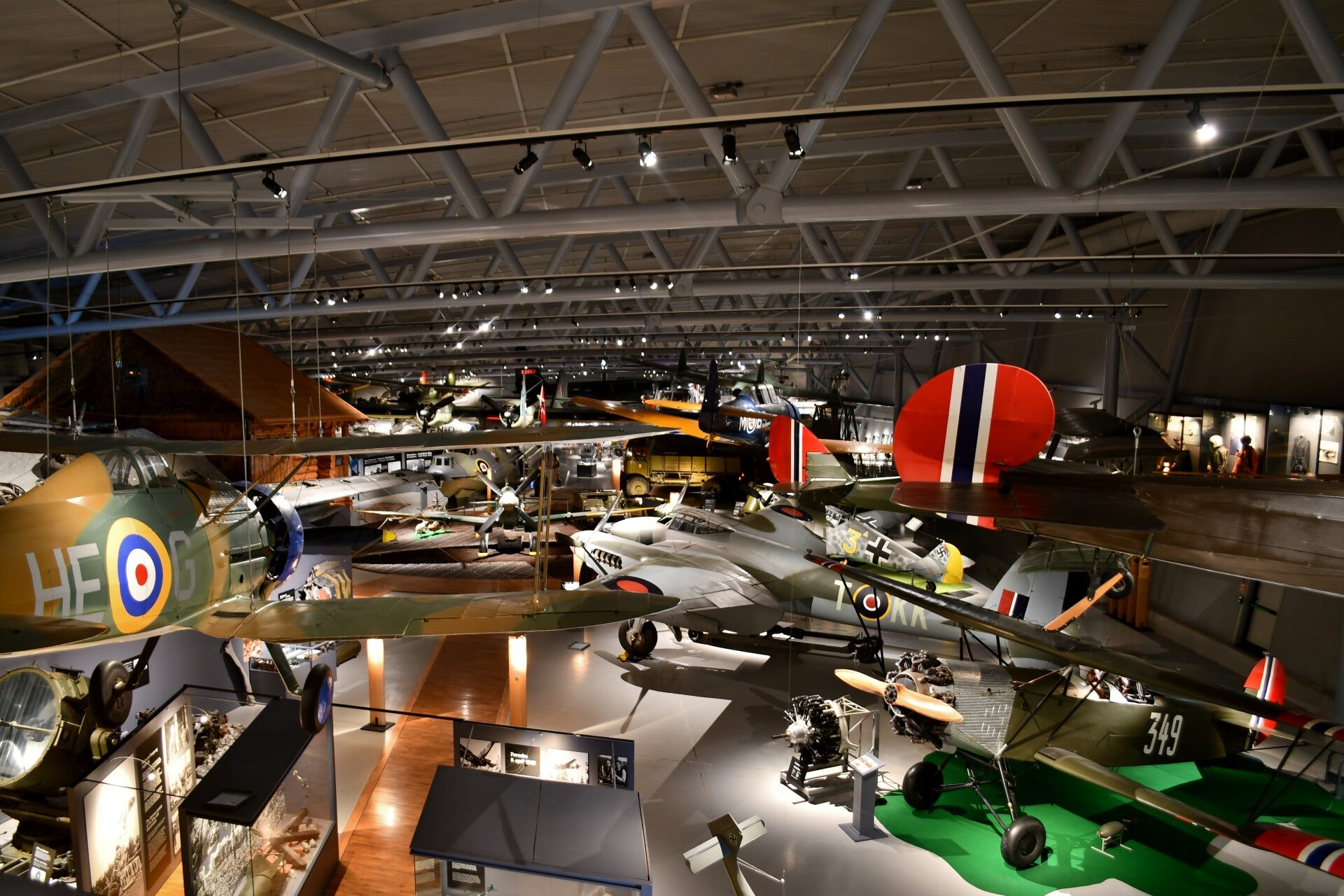

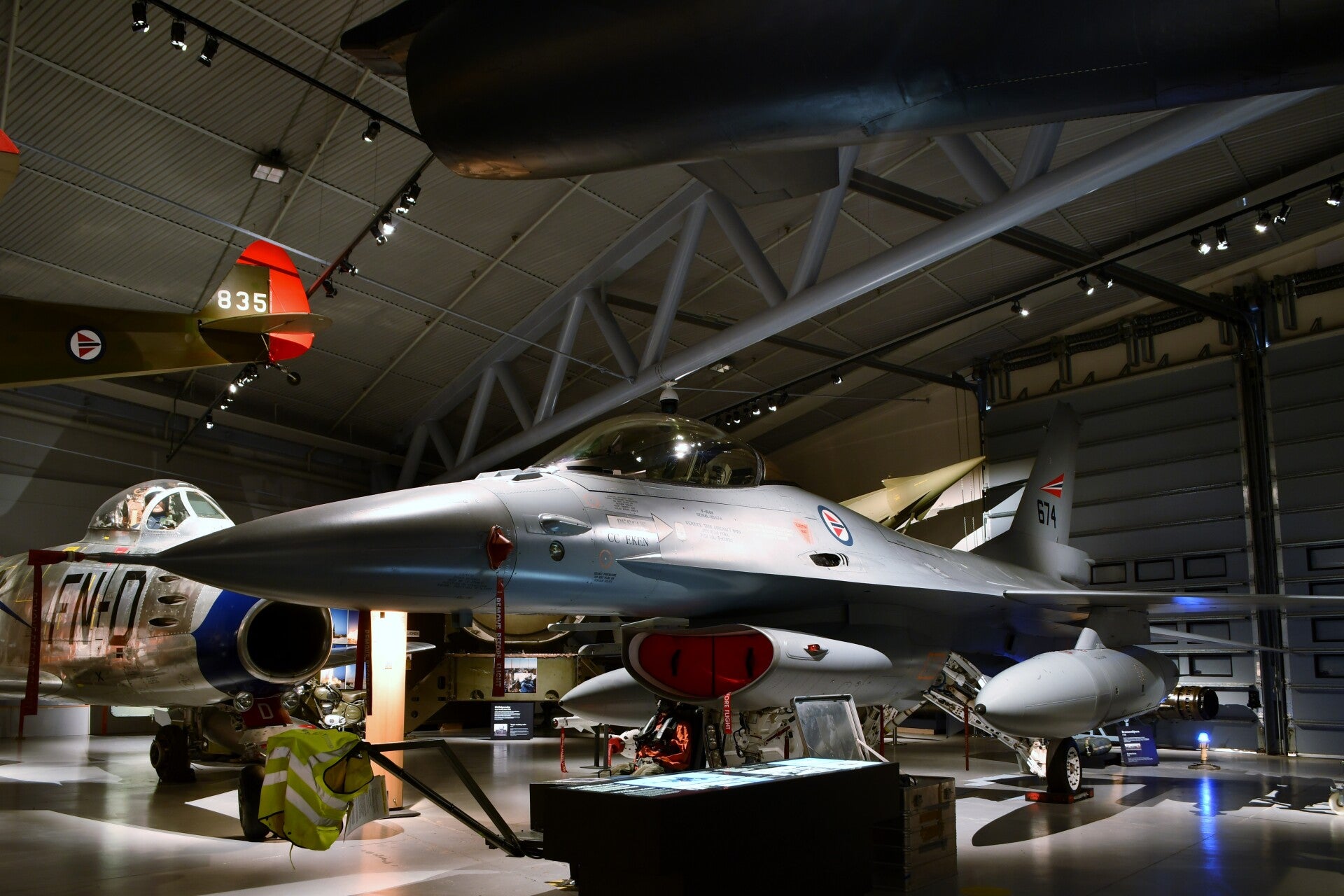
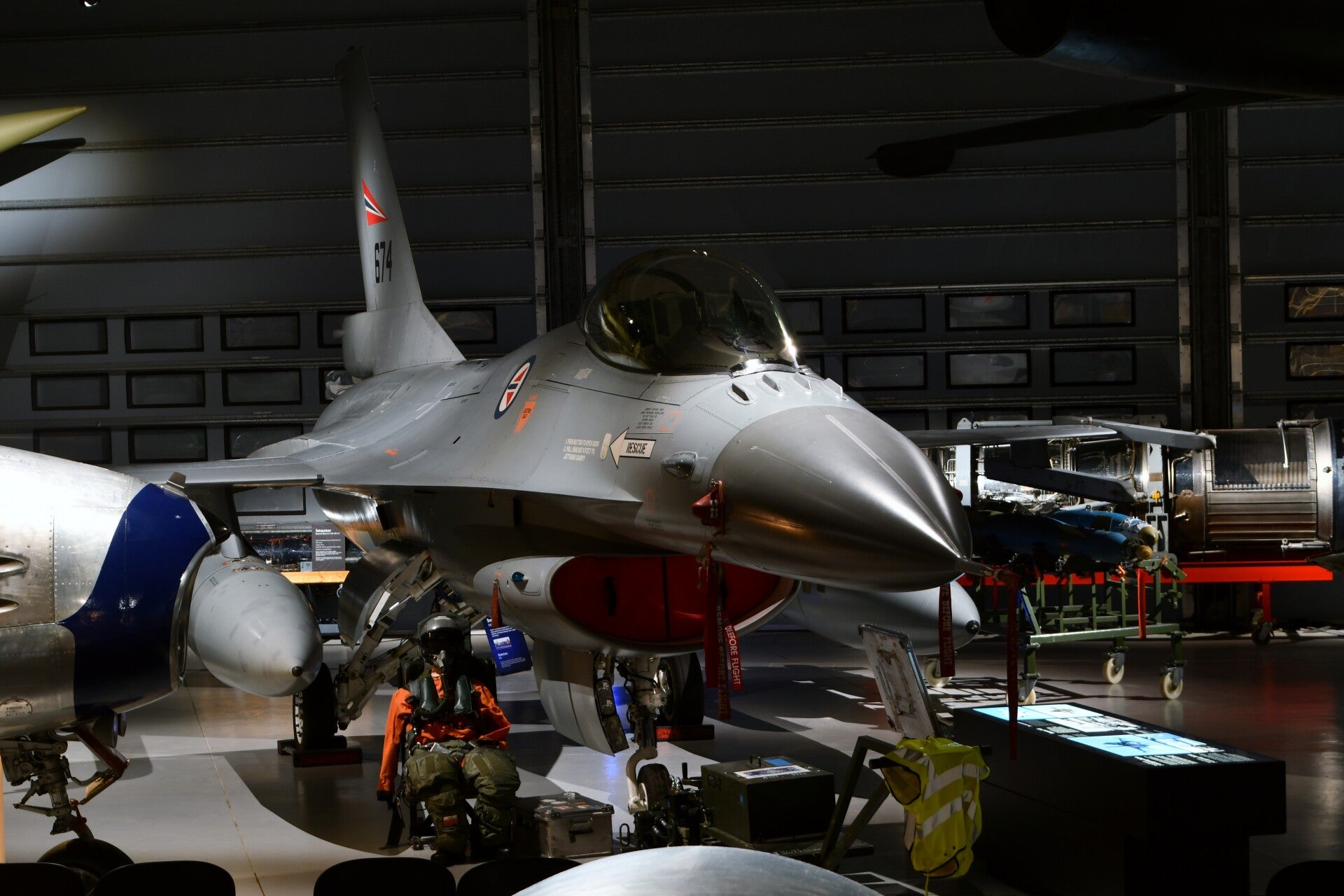
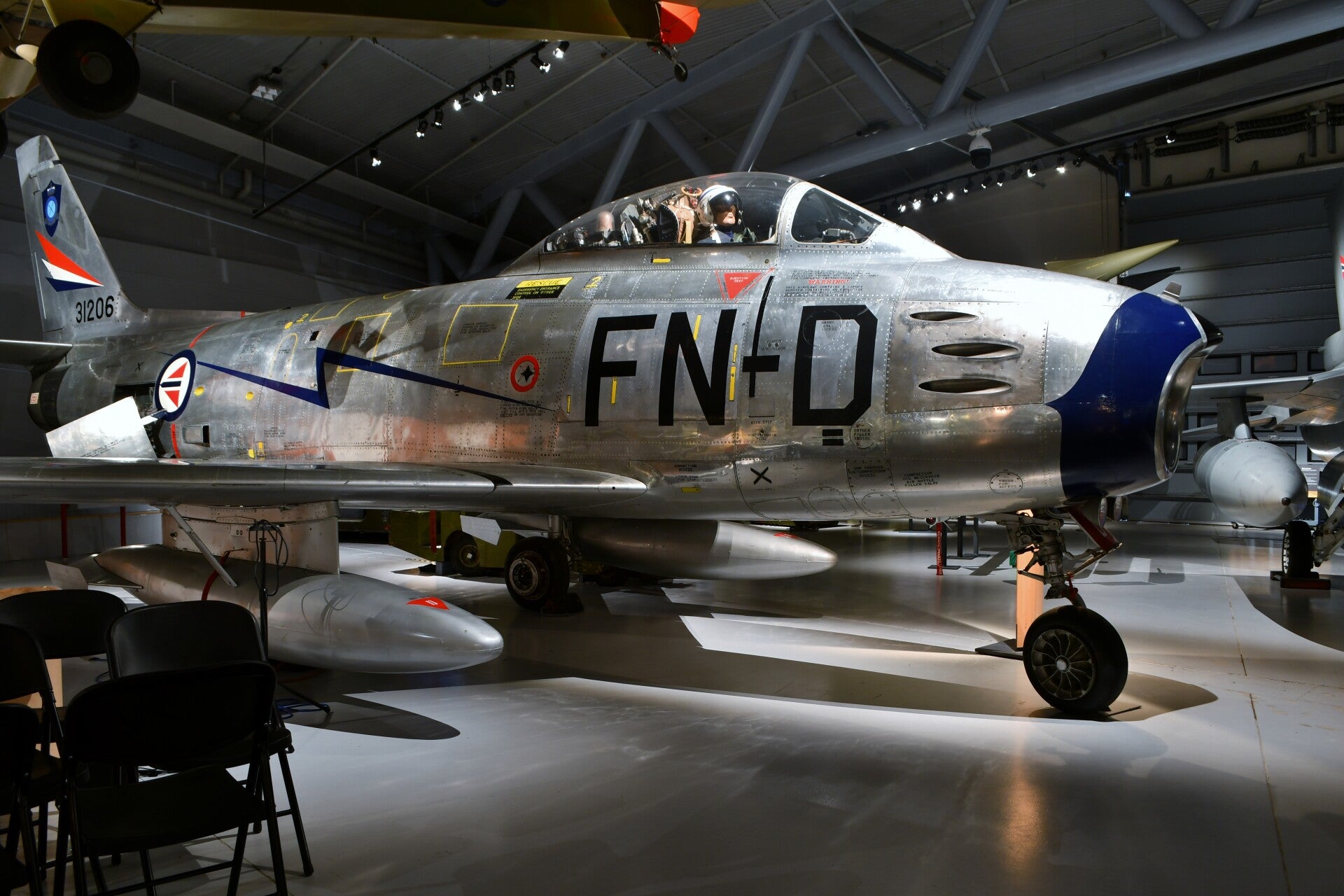

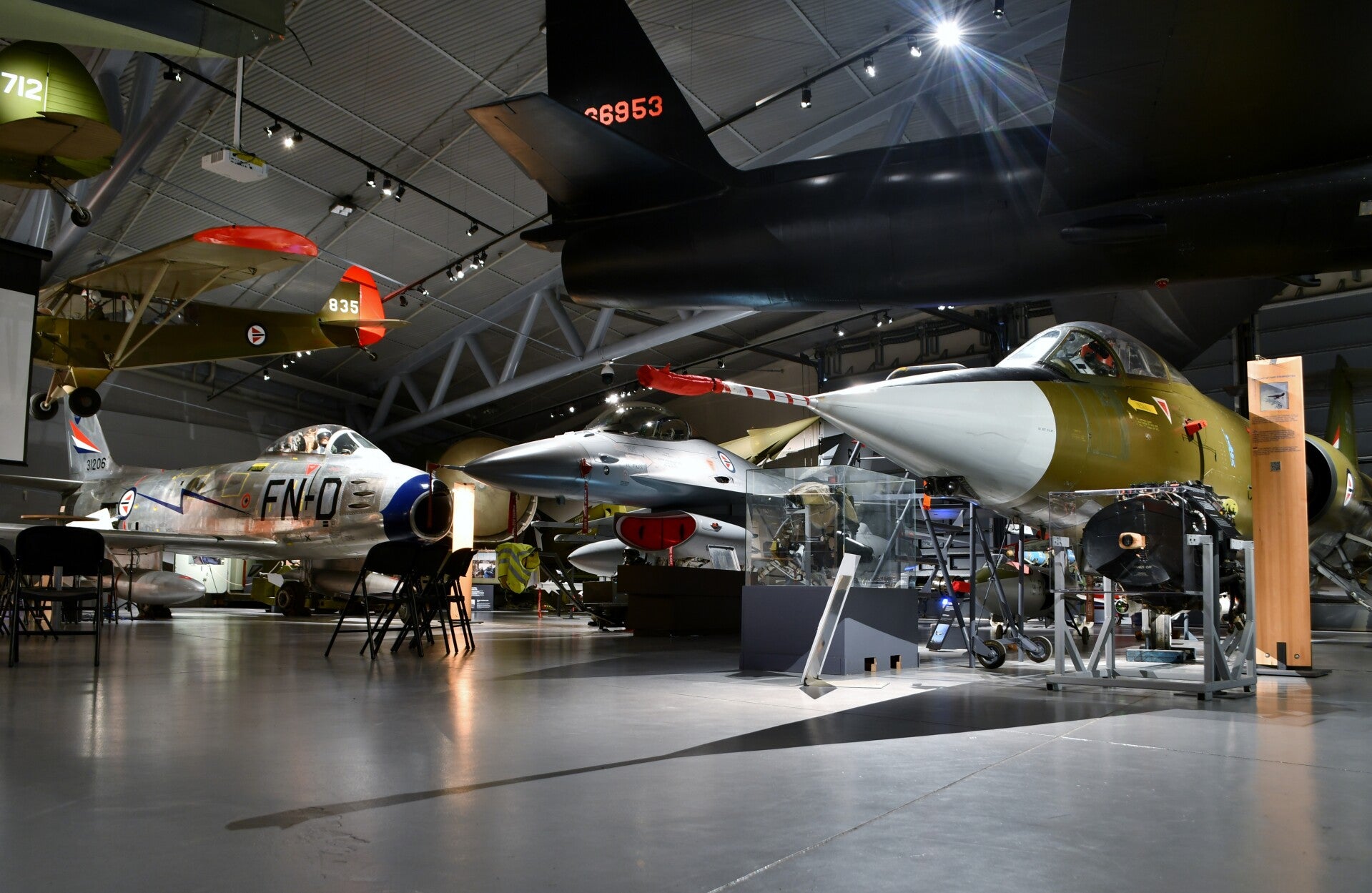

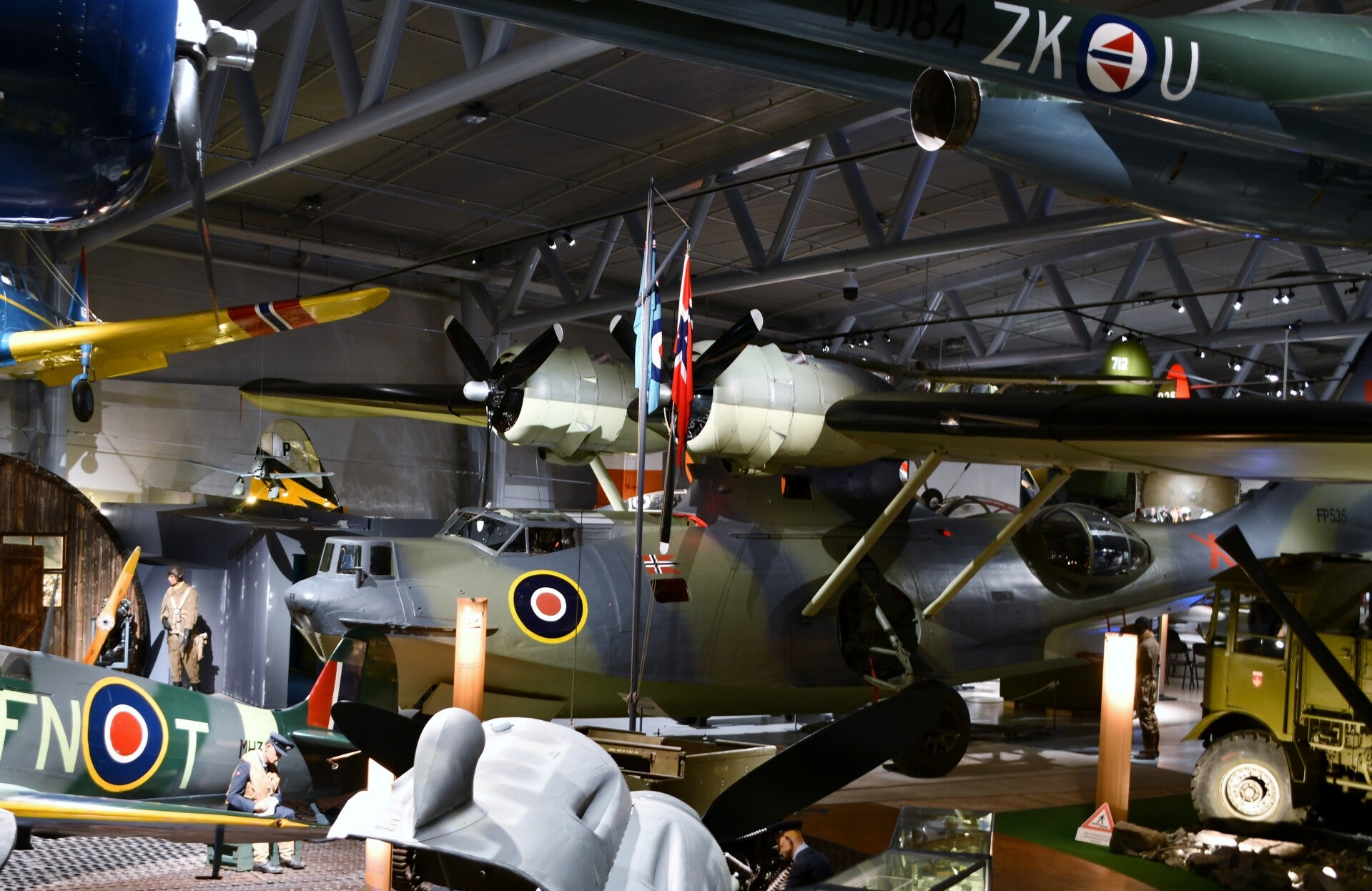
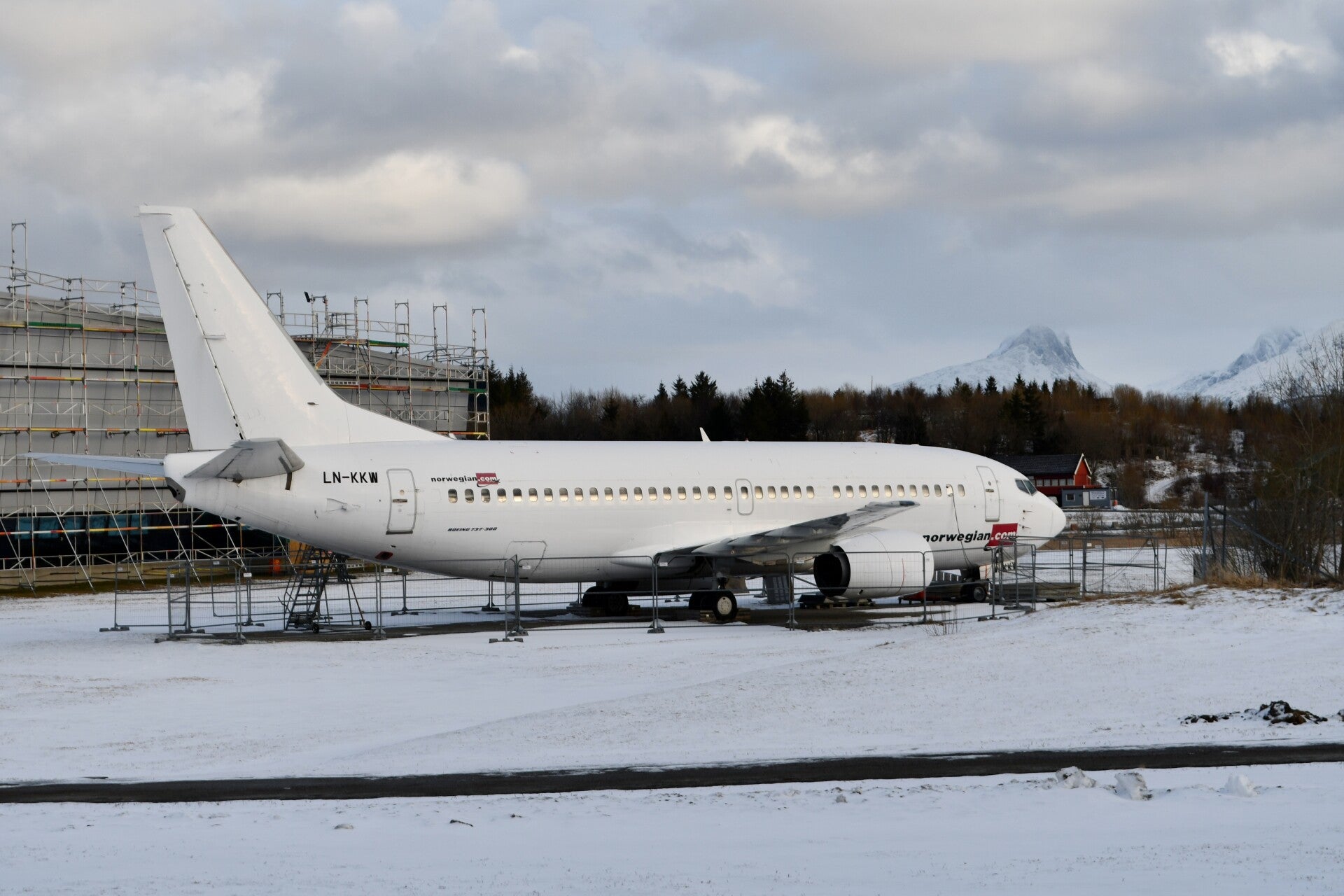
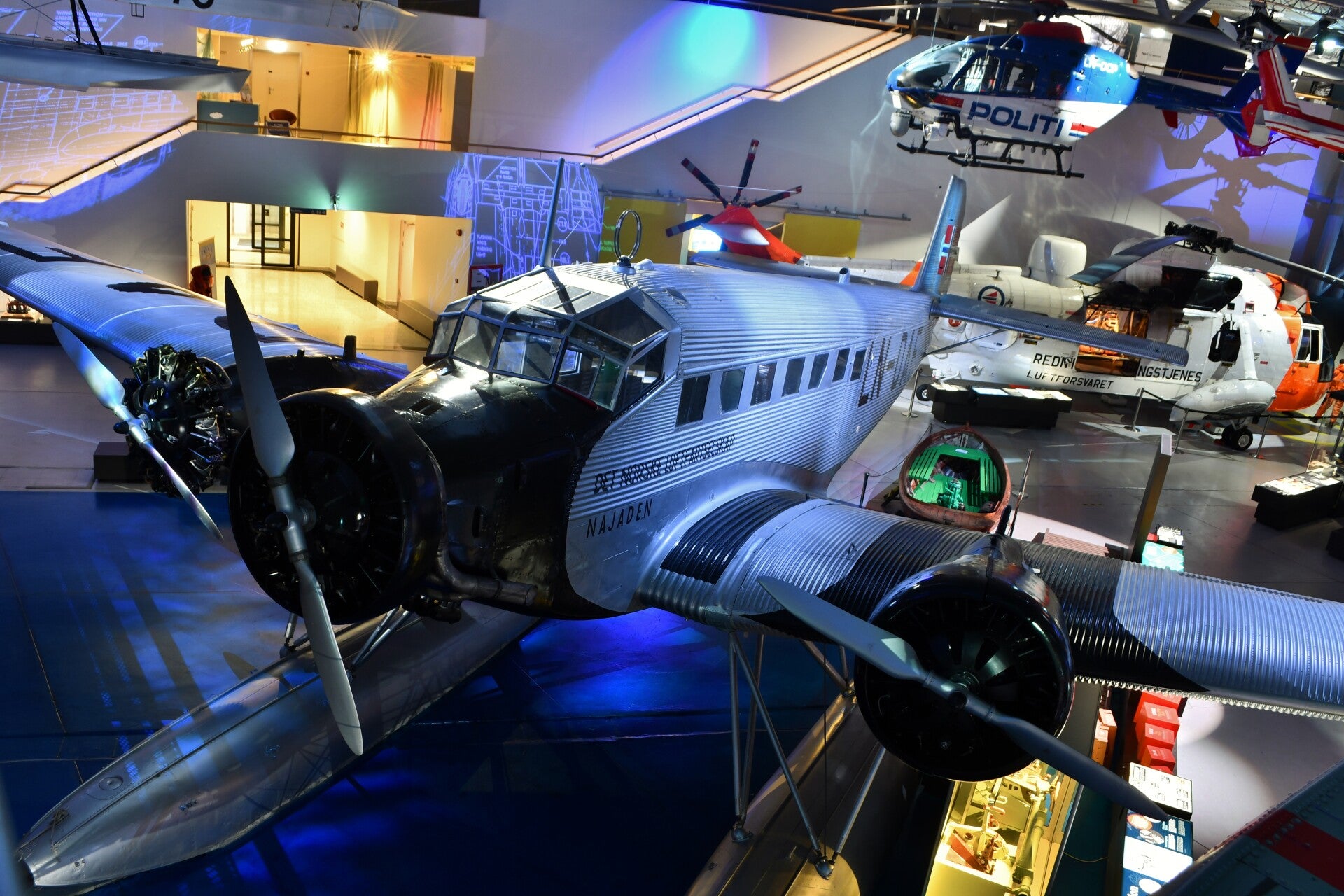
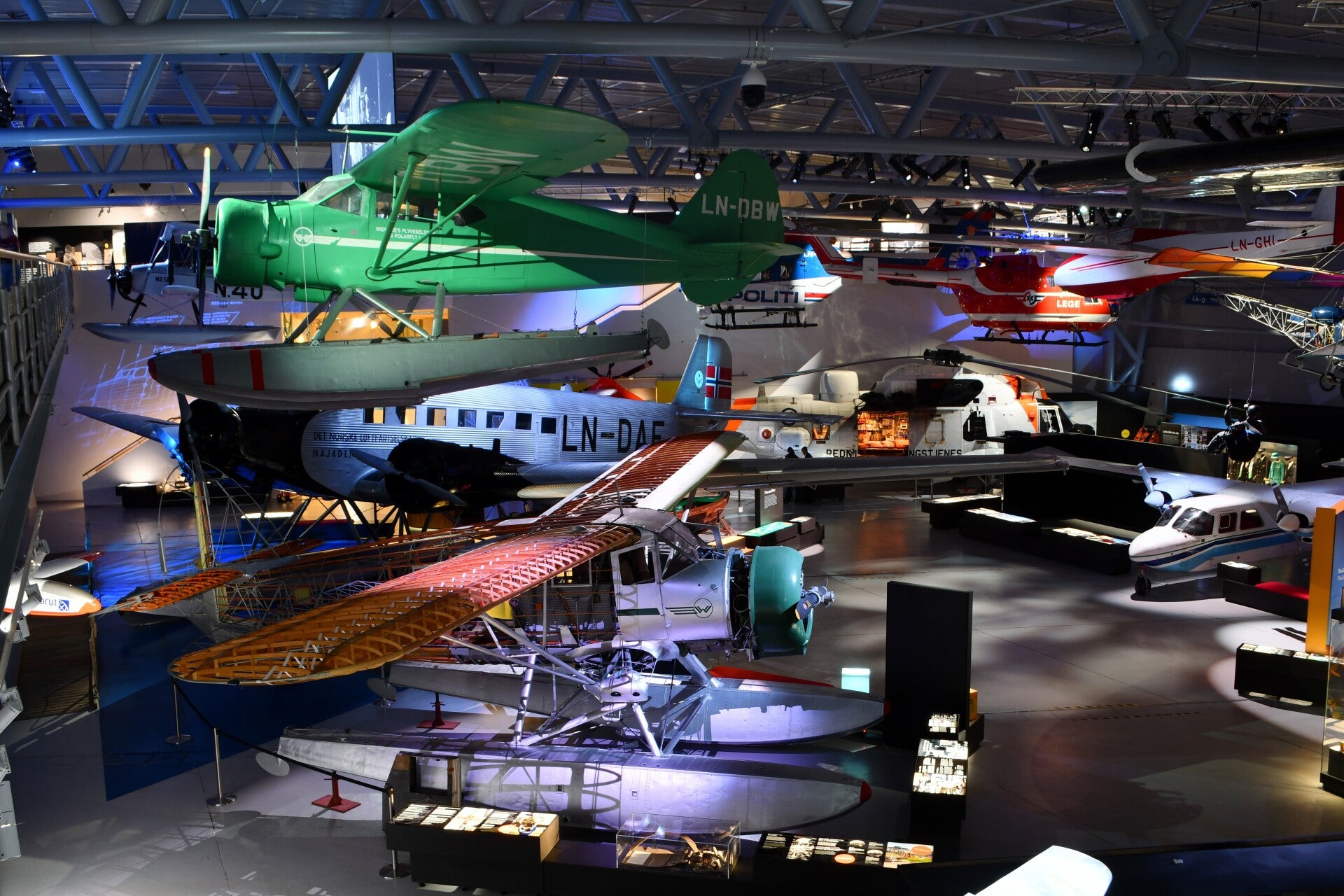
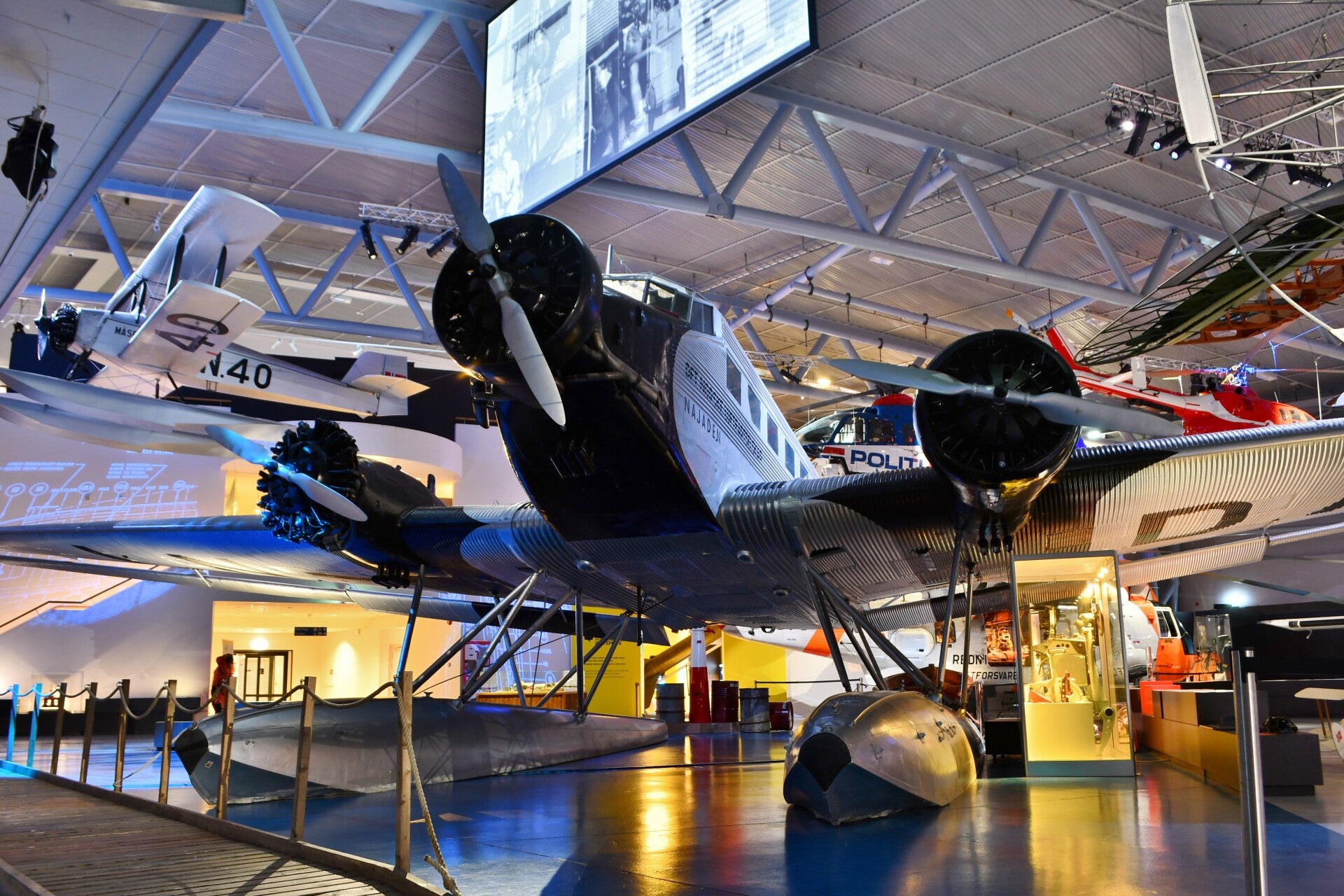
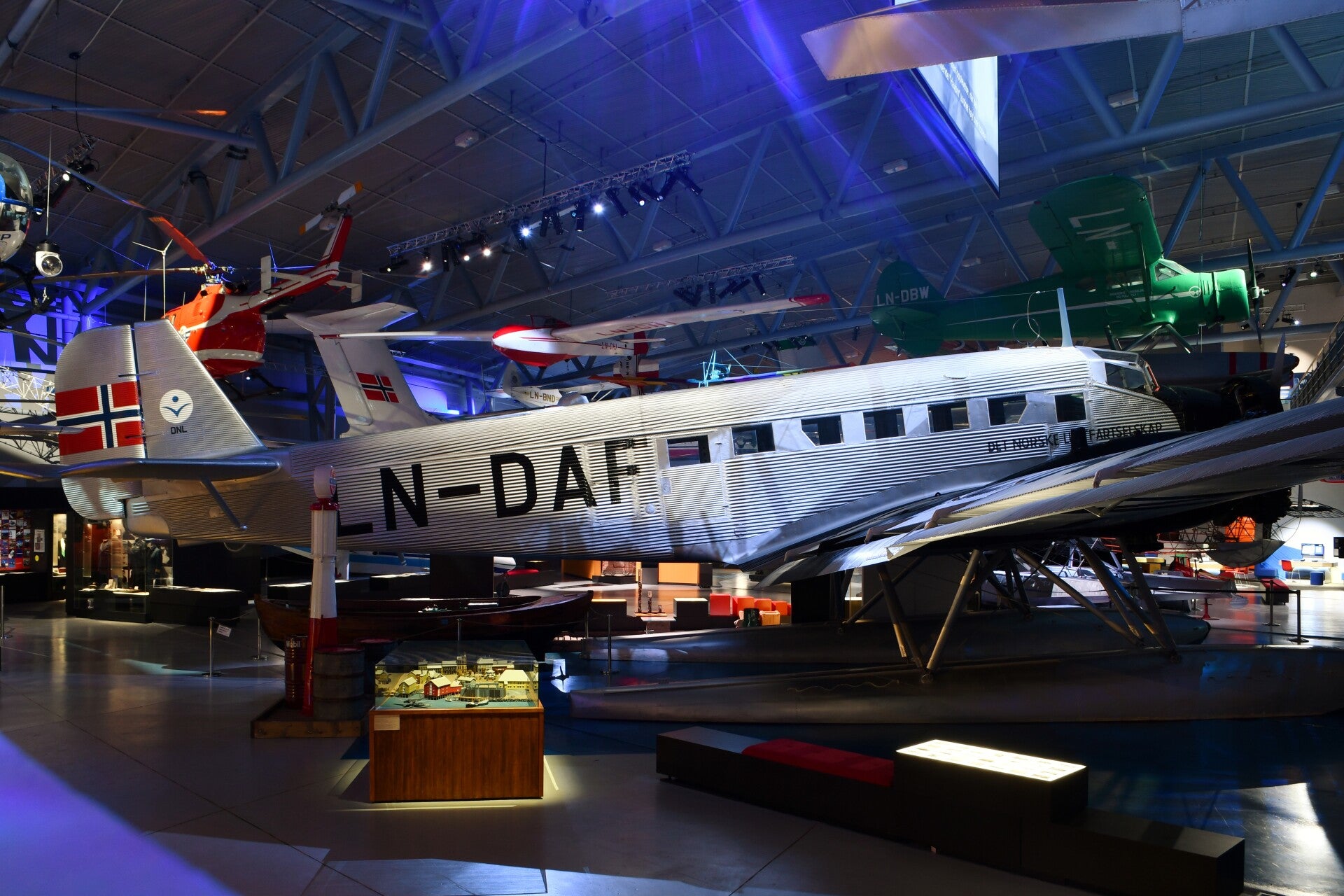
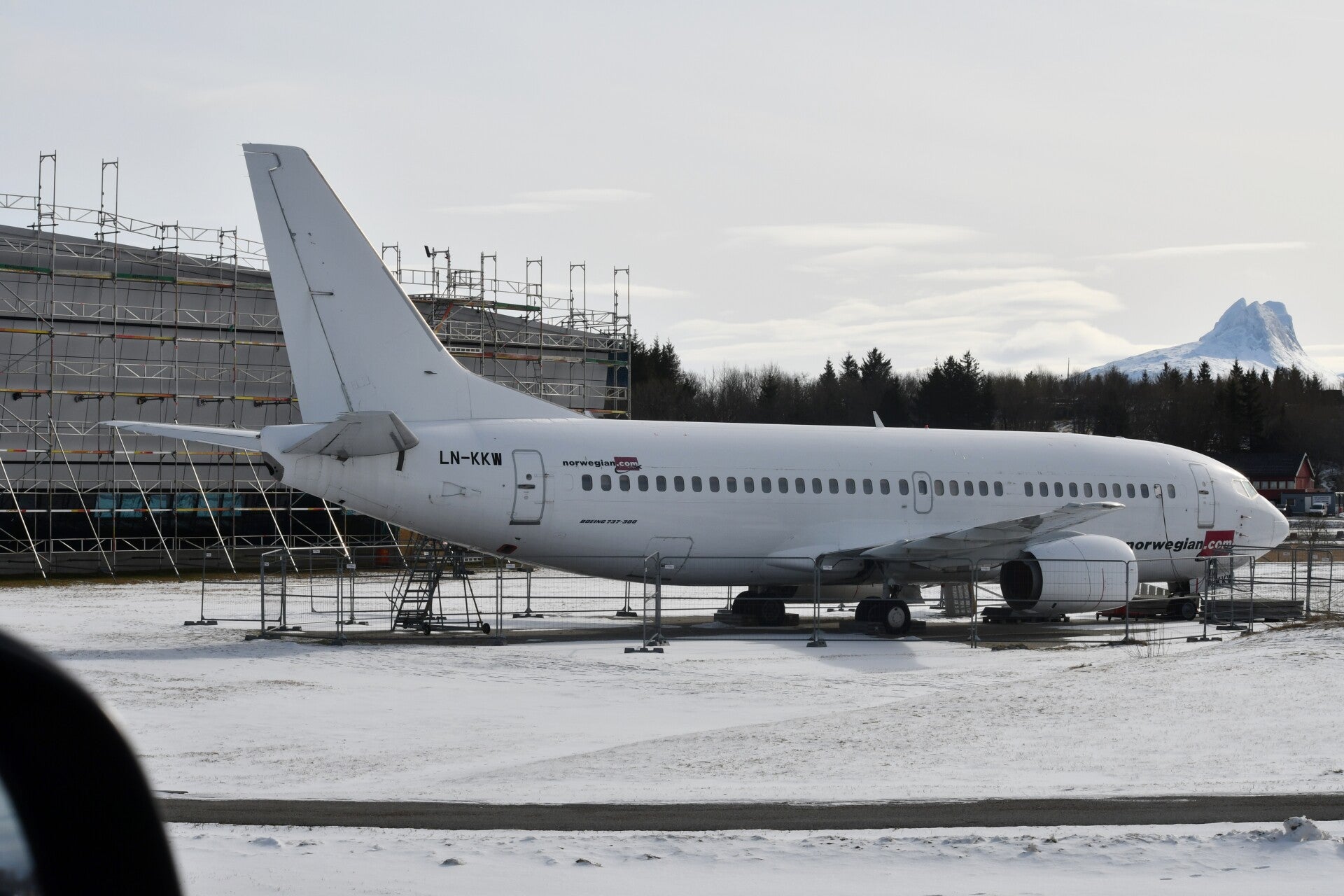
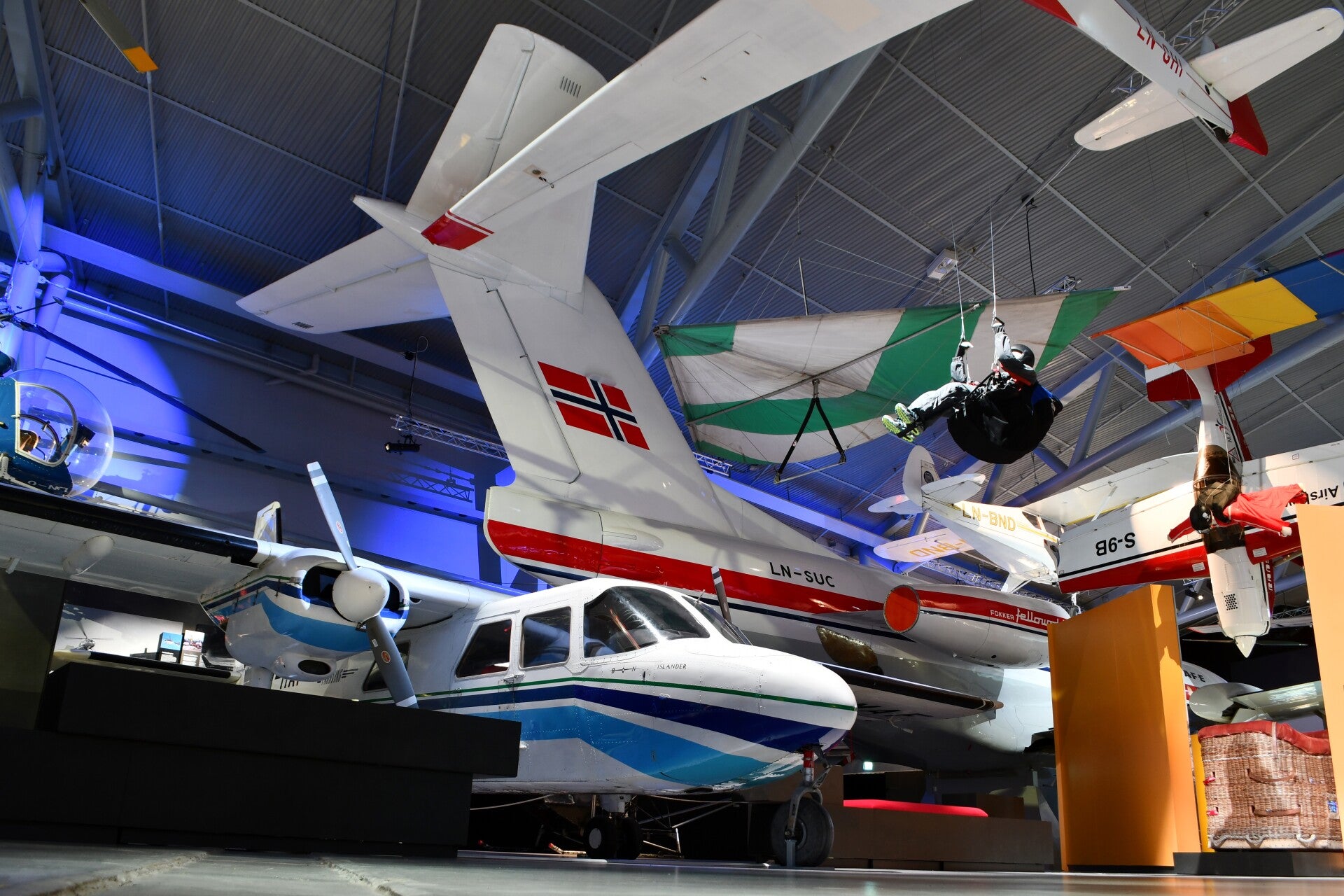
The second hall is devoted to civil aviation. Here, too, there are several highlights, including a Junkers Ju 52 on floats, a C-5 (no, not the massive Galaxy, but the C-5 Polar), and a Twin Otter marking the early years of Widerøe. Outside the museum stands a white Norwegian Boeing 737-300, although unfortunately you can’t get close to it. Hopefully, this will become a more accessible part of the collection one day.
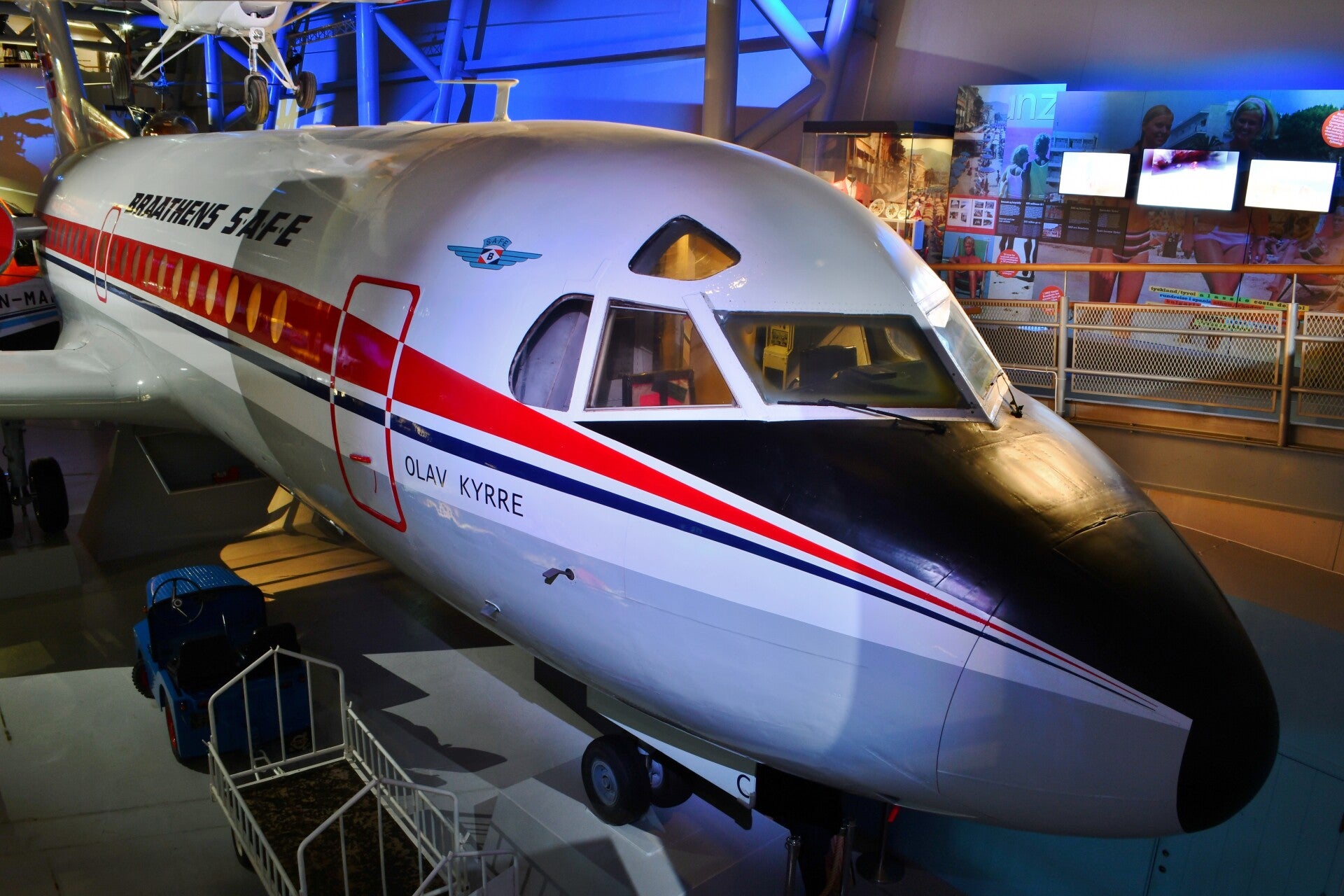
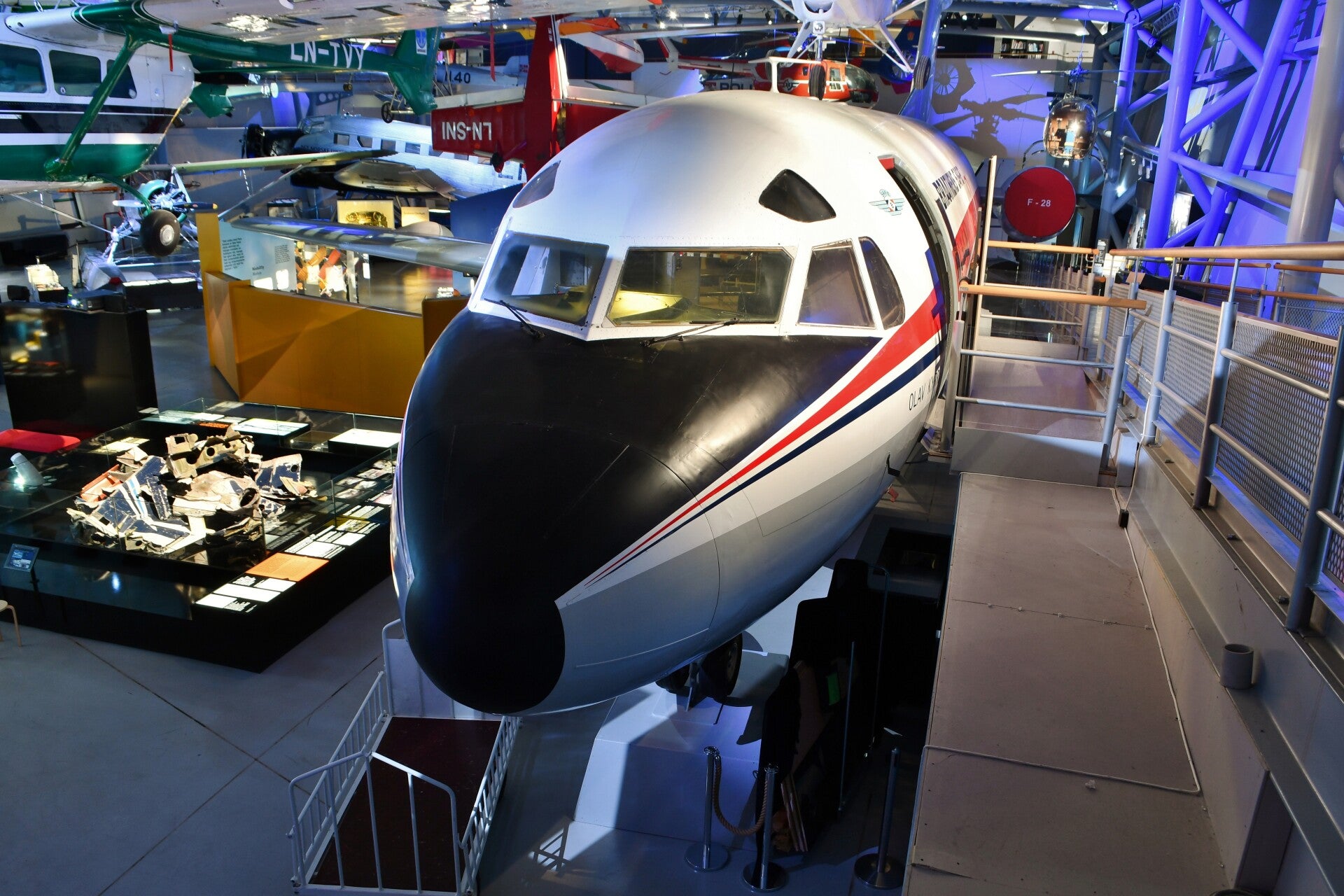
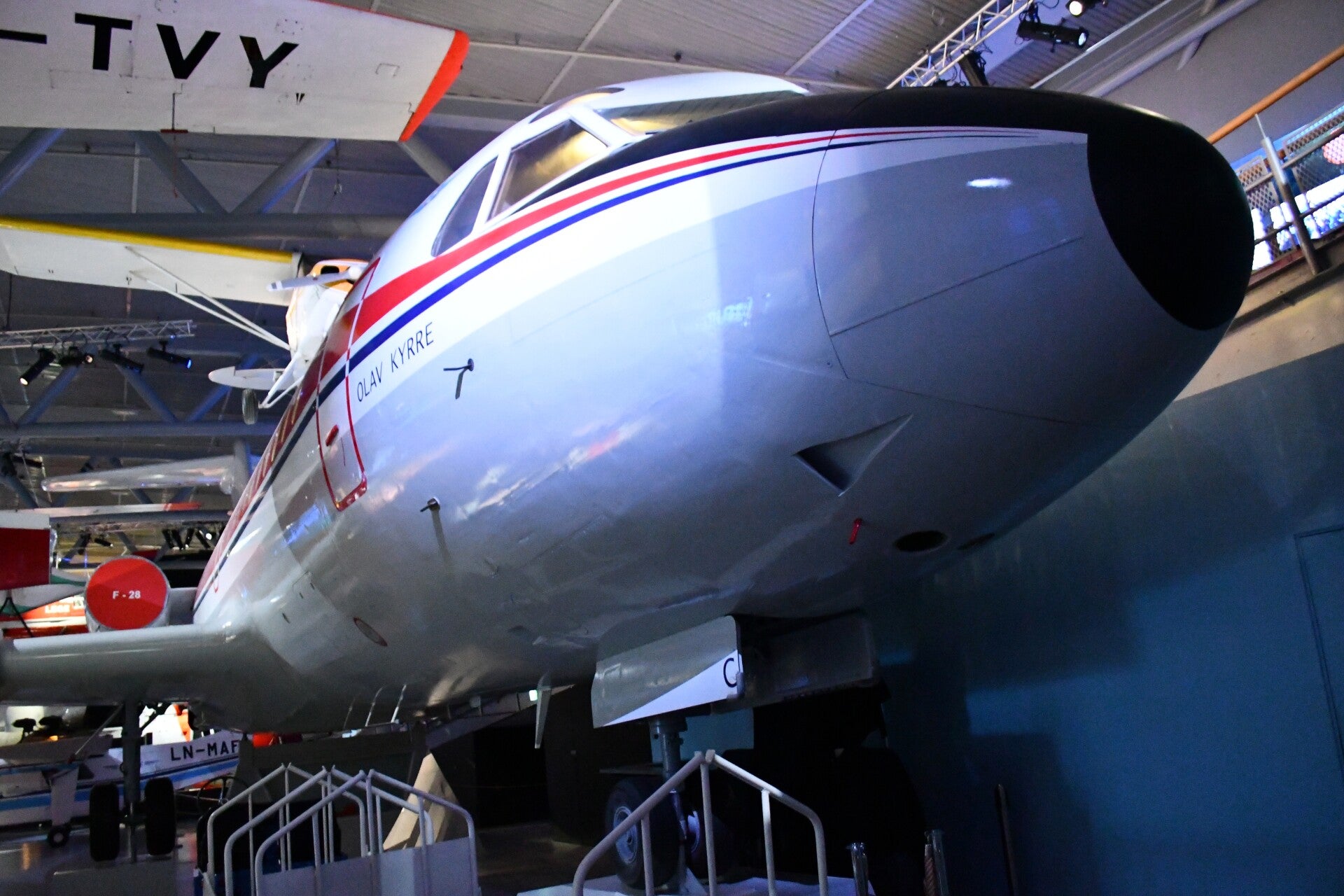
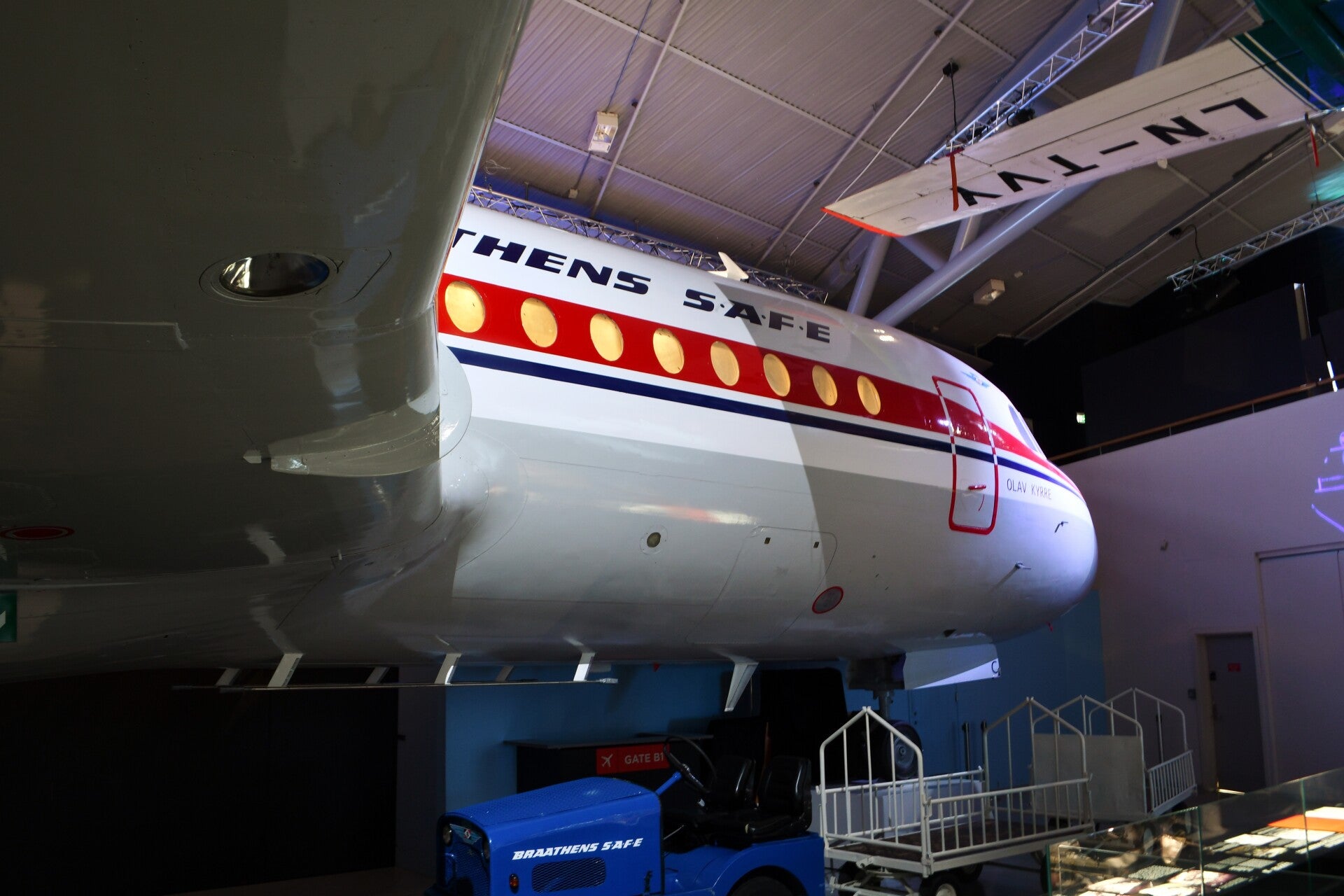
The (literally) biggest highlight inside the museum is an original Fokker F28-1000 Fellowship, the only preserved Fellowship in Europe. This aircraft, registered as LN-SUC, is a fascinating piece of aviation history and a true icon of early jet travel in Norway. Originally built in 1969, it was delivered to Braathens SAFE on March 3, 1969, as the airline’s first jet aircraft, carrying the name Olav Kyrre. Over its career, it flew for several different operators under registrations such as I-TIAP, N37RT, and OB-1636 when it served in Peru before its retirement.
The museum acquired the airframe from Peru in 2006 and transported it back to Norway by sea. It was restored in its original 1970s Braathens livery and has been on display in Bodø since around 2011, where it now stands as one of the museum’s signature exhibits. A particularly fun fact about this aircraft is that it was the first jet to land both in Kirkenes and on Svalbard, marking significant milestones in Norwegian domestic jet service.
Stepping into the cockpit brings back vivid memories of our F28 adventure last year. The cabin interior, however, is a bit less impressive, as it’s in noticeably rougher condition and fitted with a thick wooden floor, which feels slightly out of place. Still, we’re genuinely happy to be back inside a Fokker F28 once again.
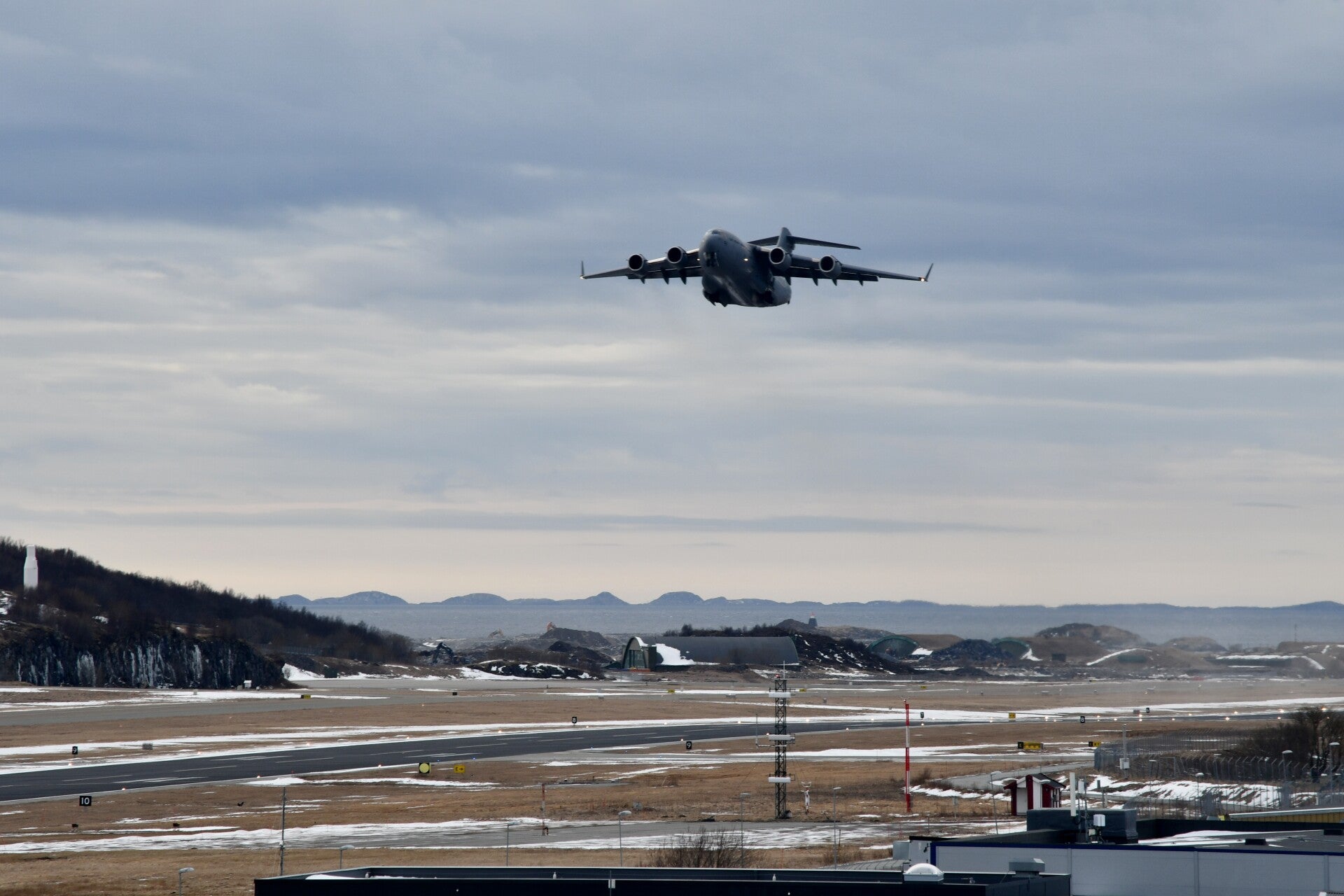
With the exhibits checked off, we grab some lunch and head up to the “control tower,” which offers a great view over the airport. We’re incredibly lucky to spot a C-17 in the distance! We suspect it’s picking up cargo from the decommissioned air base. We don’t have to wait long before the massive jet taxis out and performs an impressive short takeoff. The aircraft itself isn’t unfamiliar to us, it’s one of the three NATO SAC Globemasters. But seeing it depart against this stunning backdrop makes for a perfect ending to our museum visit.
We gather our things and head back to the car, thoroughly impressed by this outstanding museum.













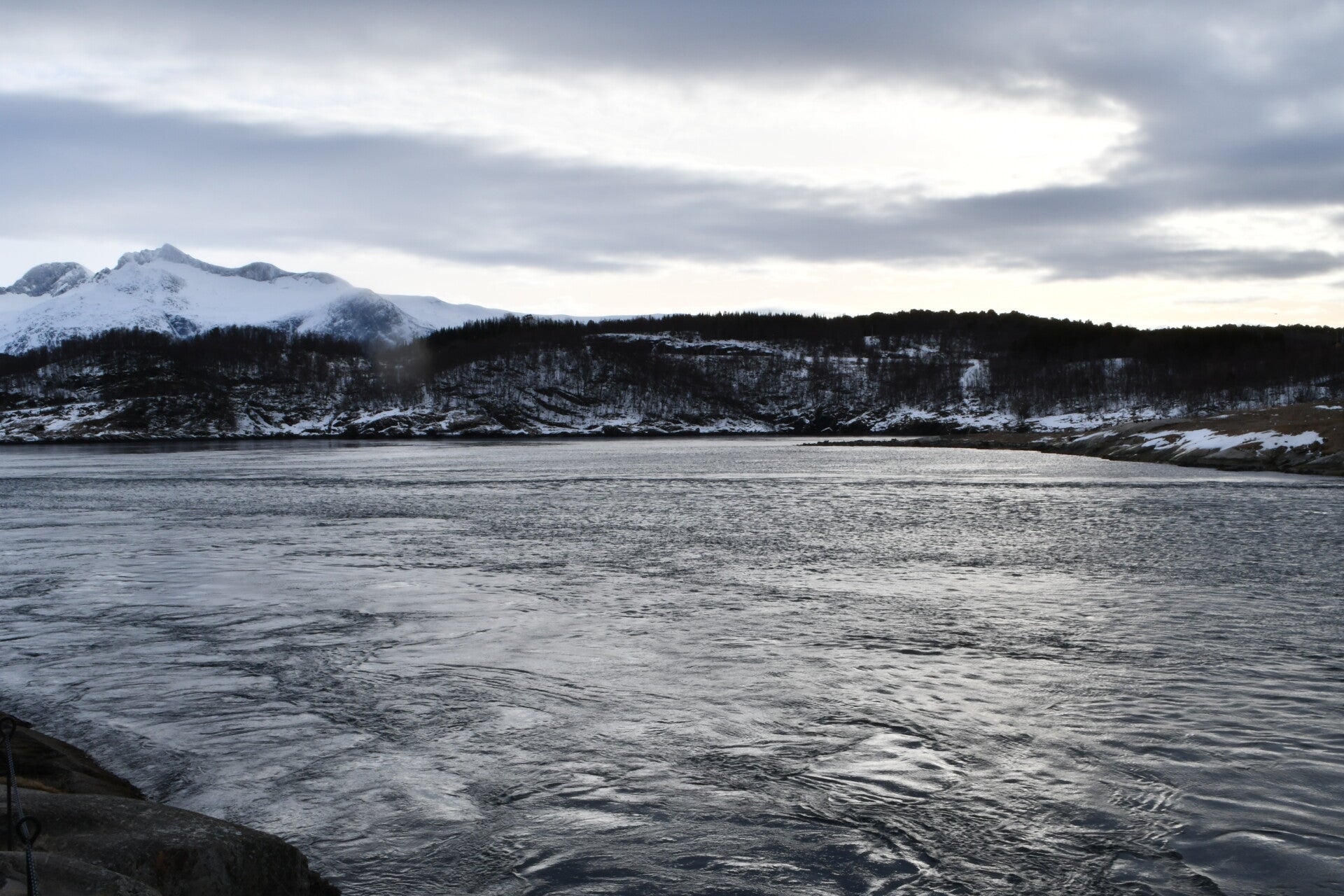
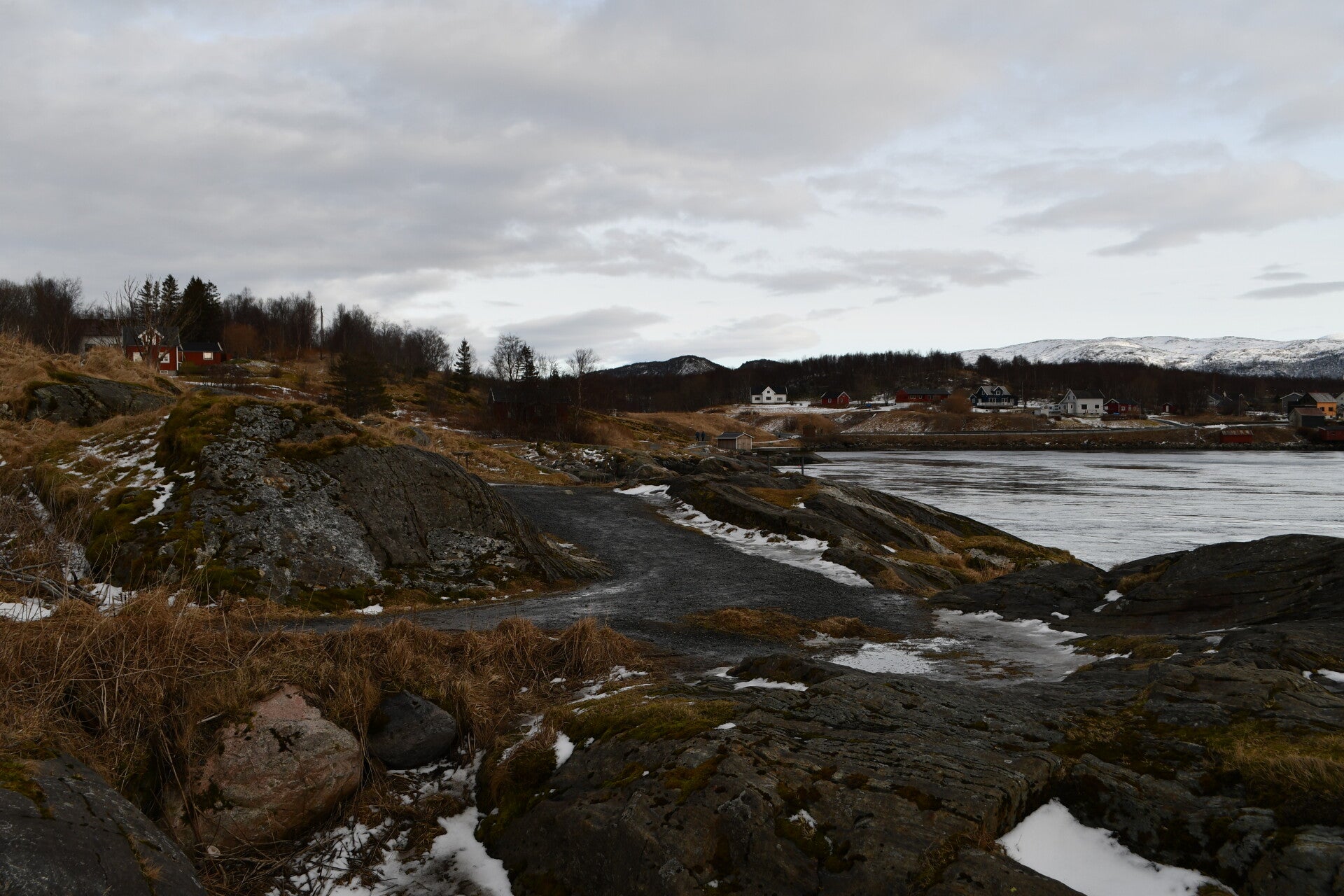
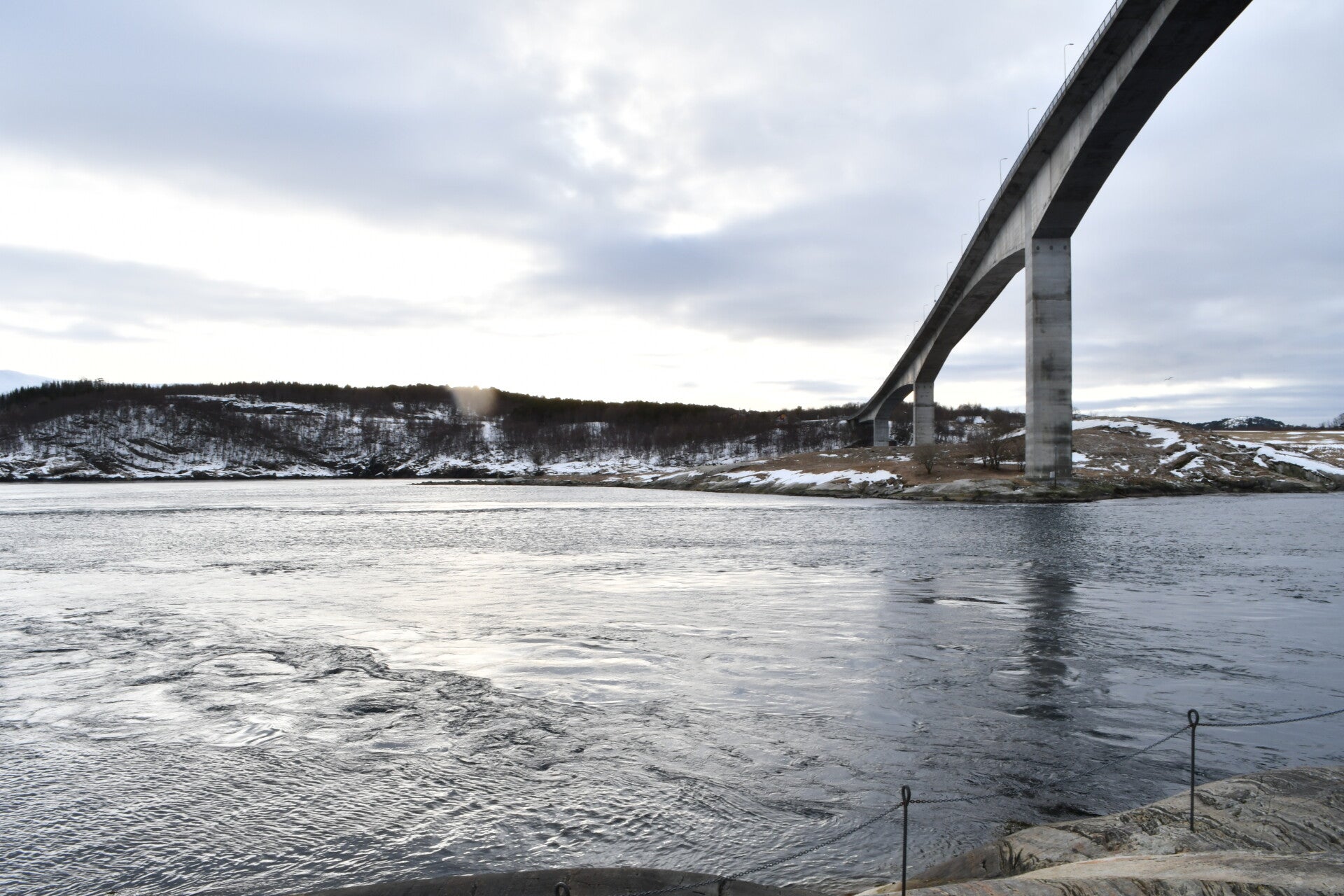
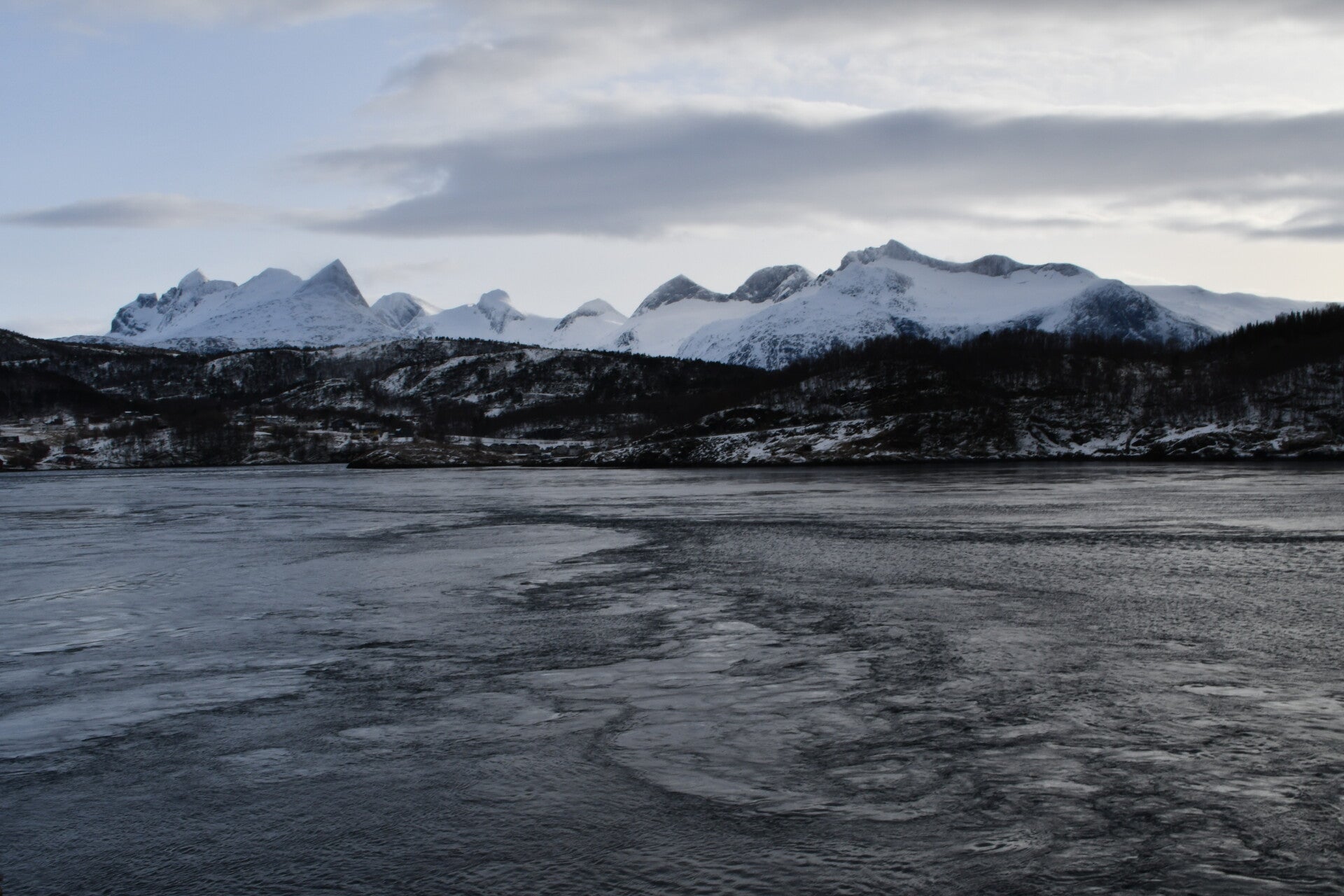
We drive for about half an hour south of Bodø along the Saltfjorden to a natural phenomenon near the village of Saltstraumen. Here, one of the world’s strongest tidal currents can be witnessed, where huge volumes of seawater are forced through a narrow strait between the Saltfjorden and the Skjerstadfjorden. Four times a day, the changing tides create powerful whirlpools, swirling eddies, and roaring currents that can reach speeds of up to 20 knots, making it a truly dramatic natural spectacle.
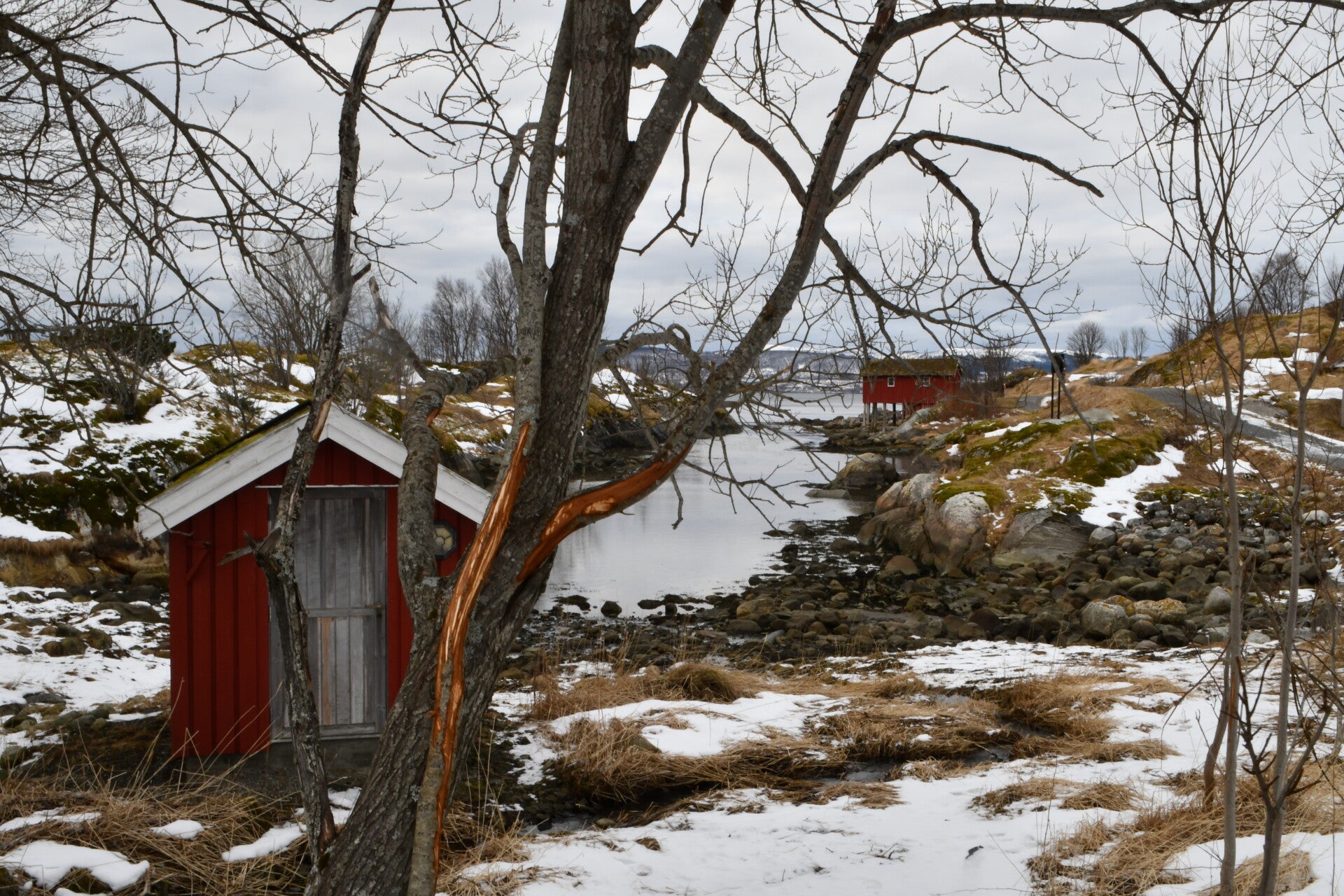
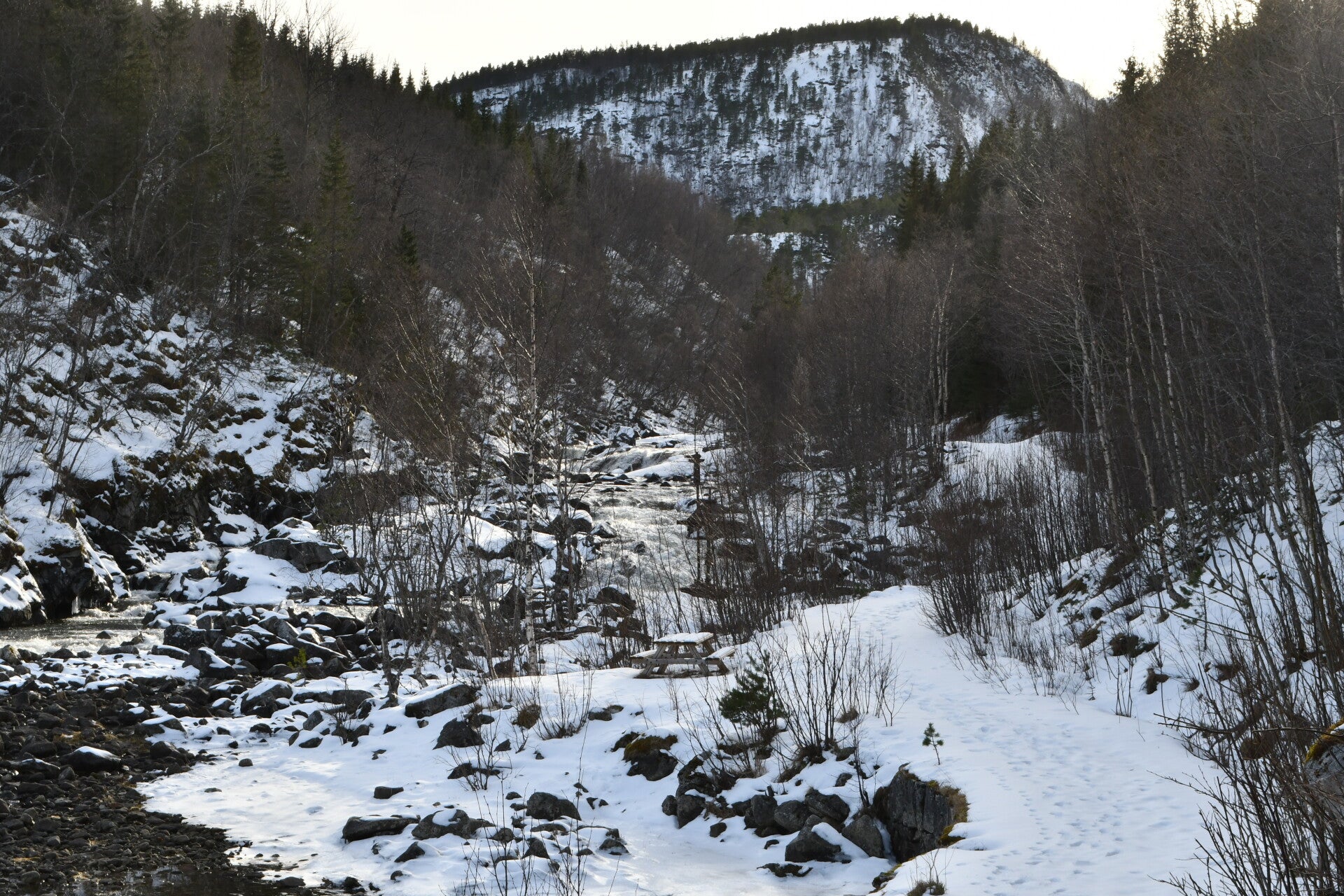
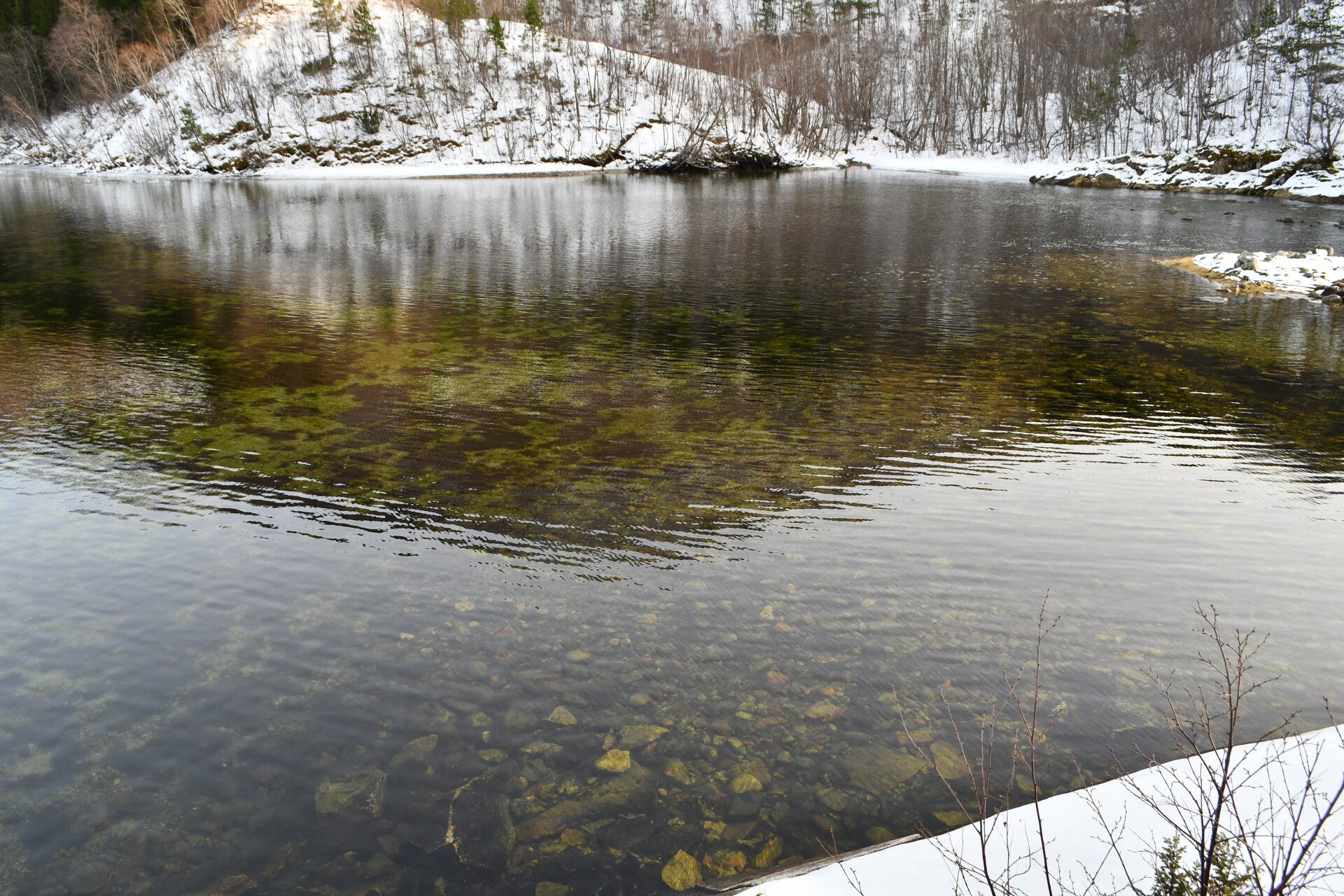
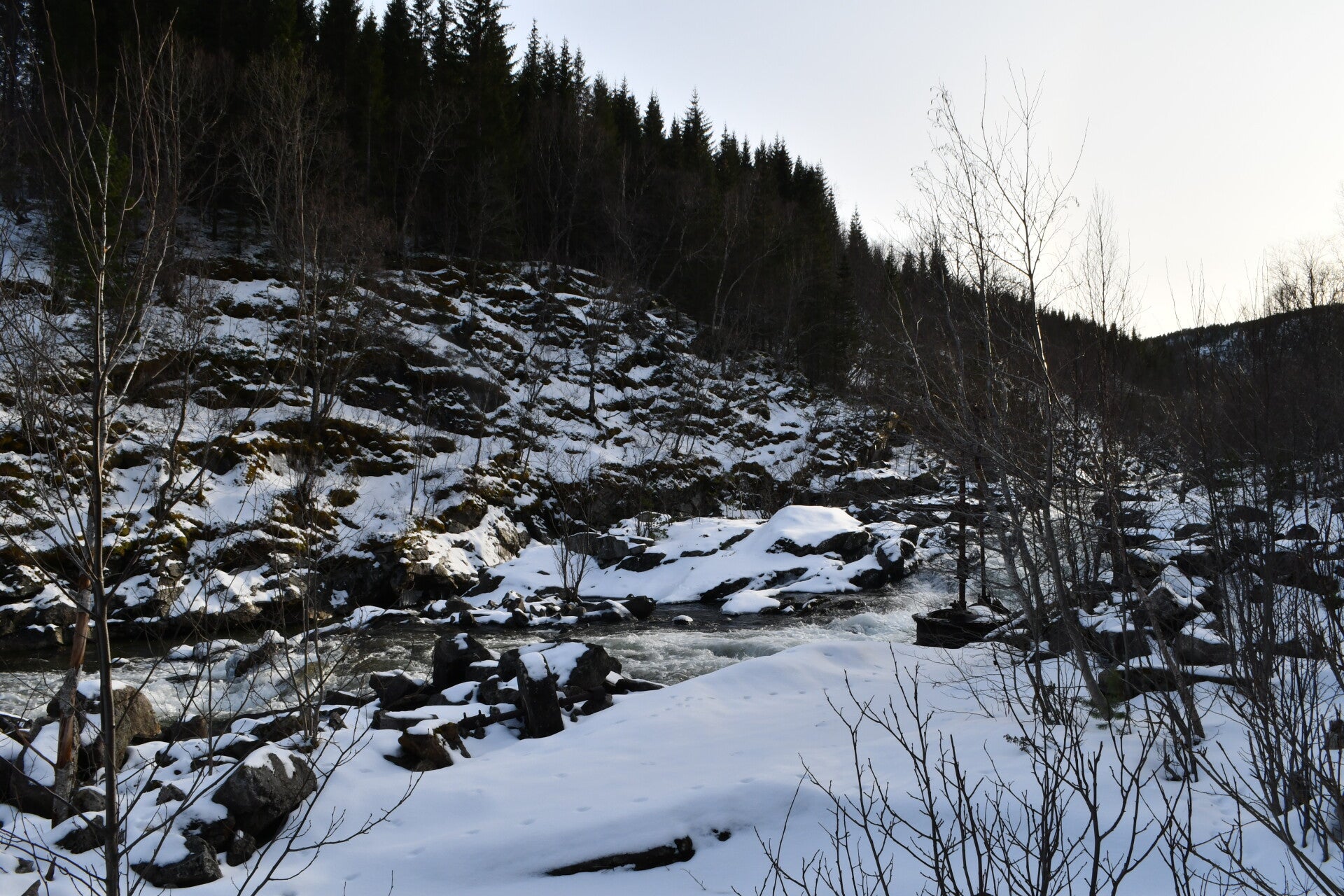
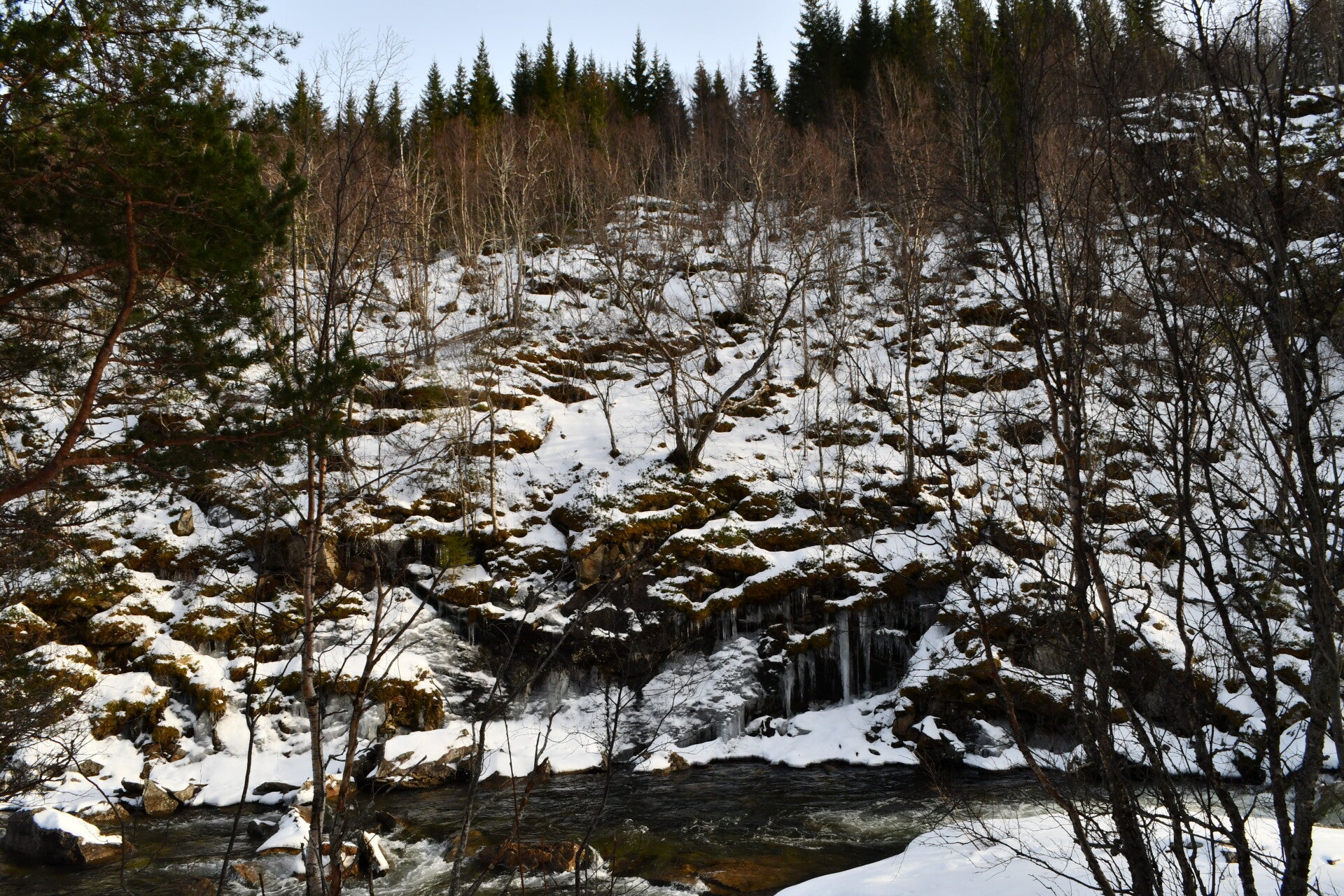
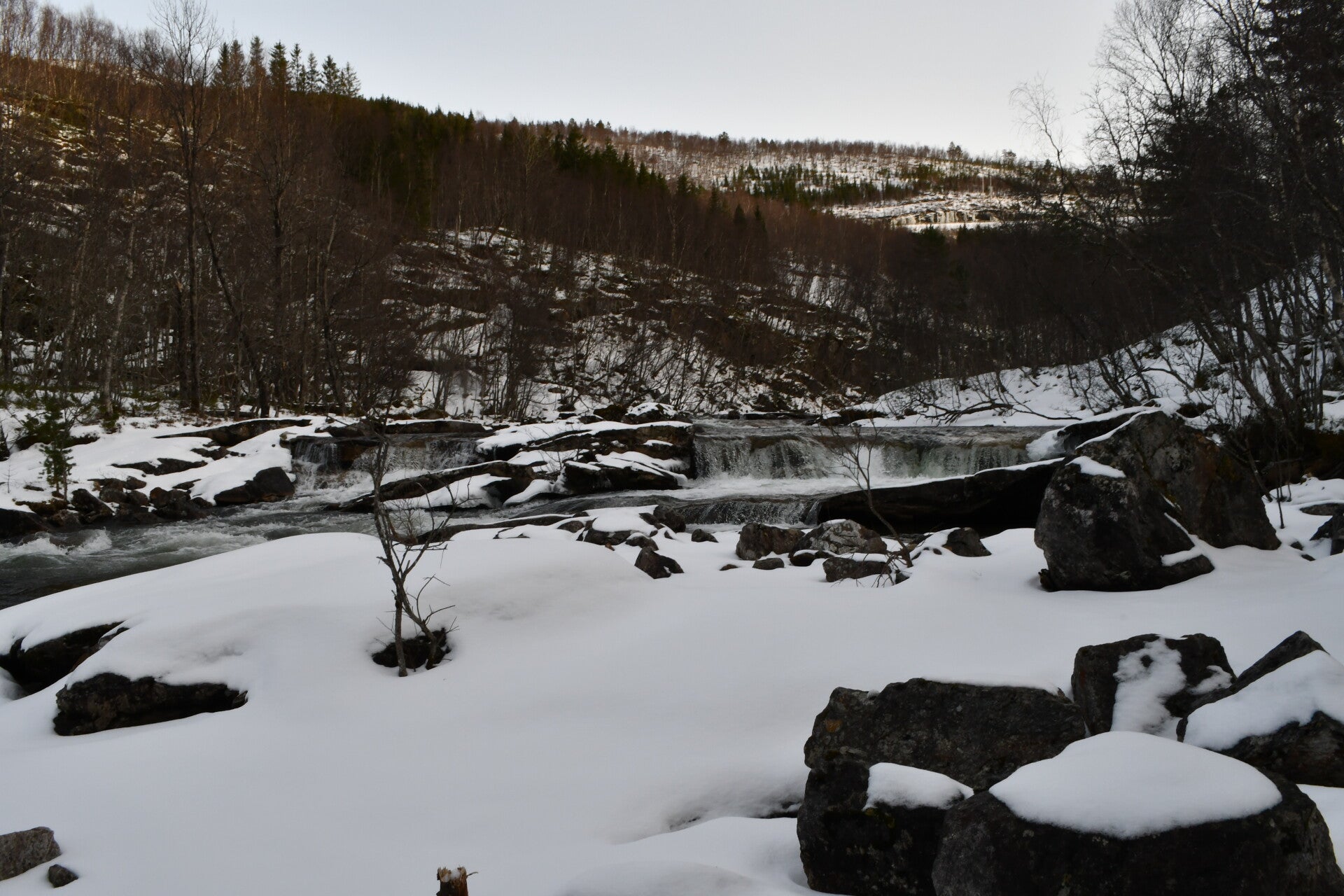
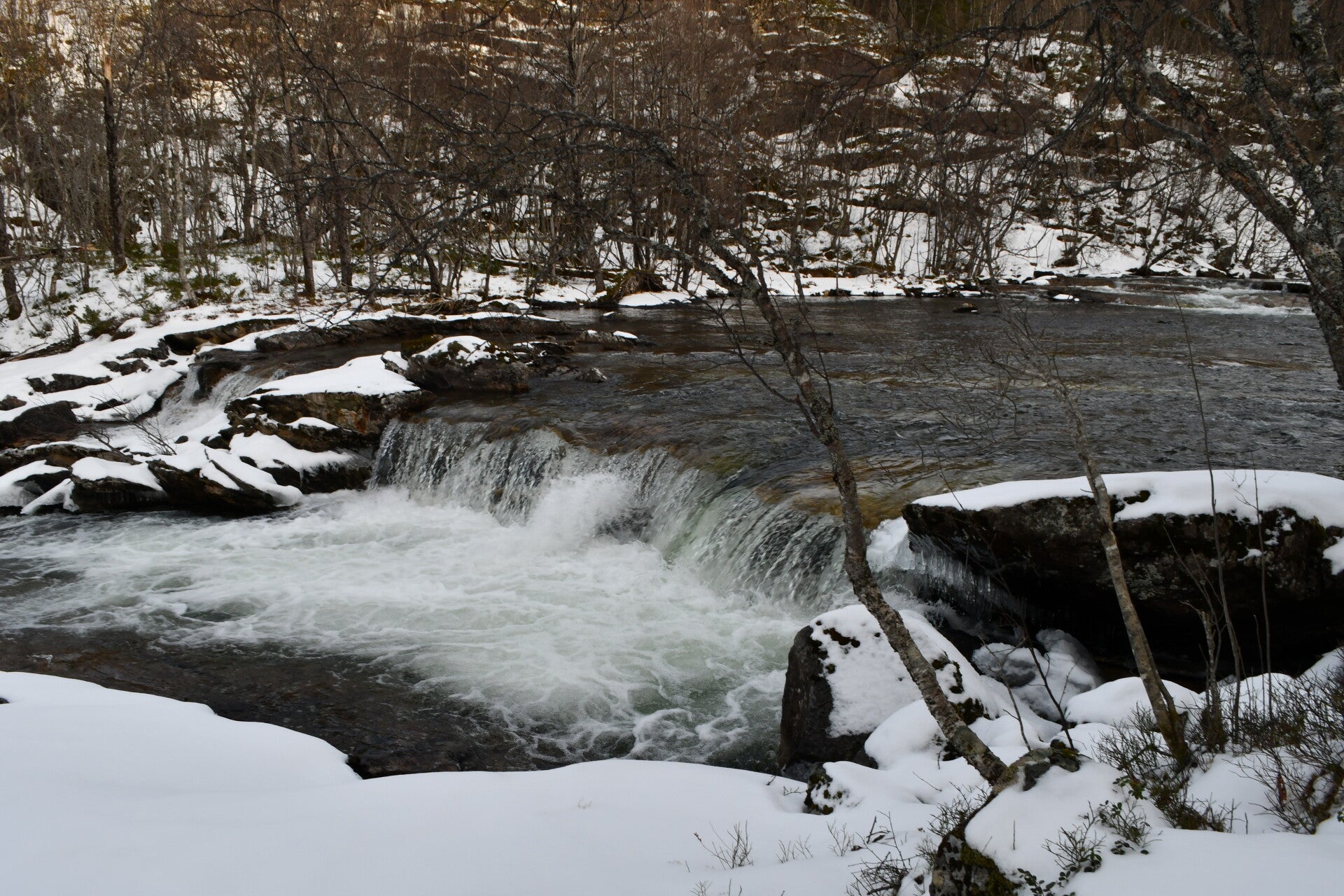
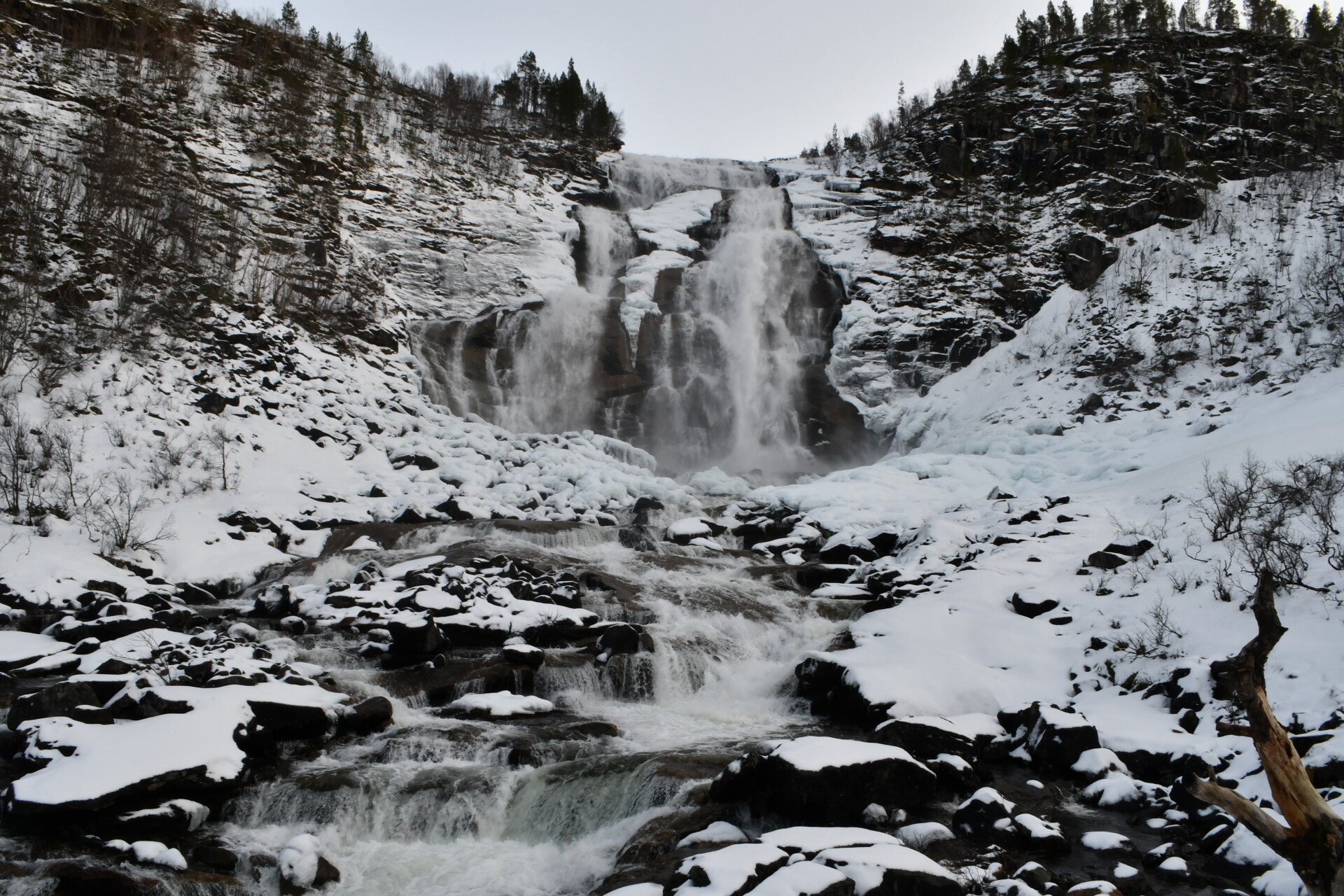
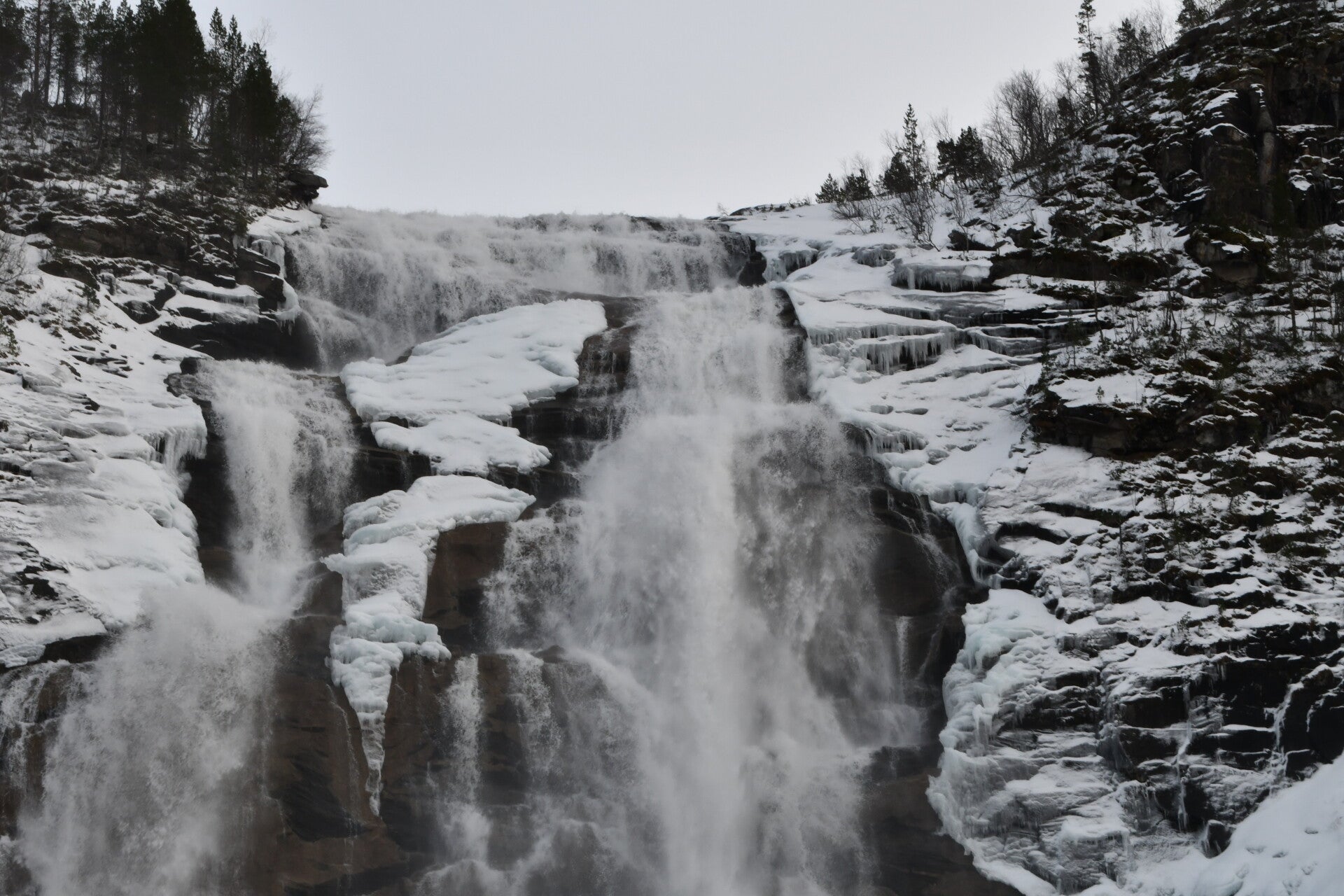
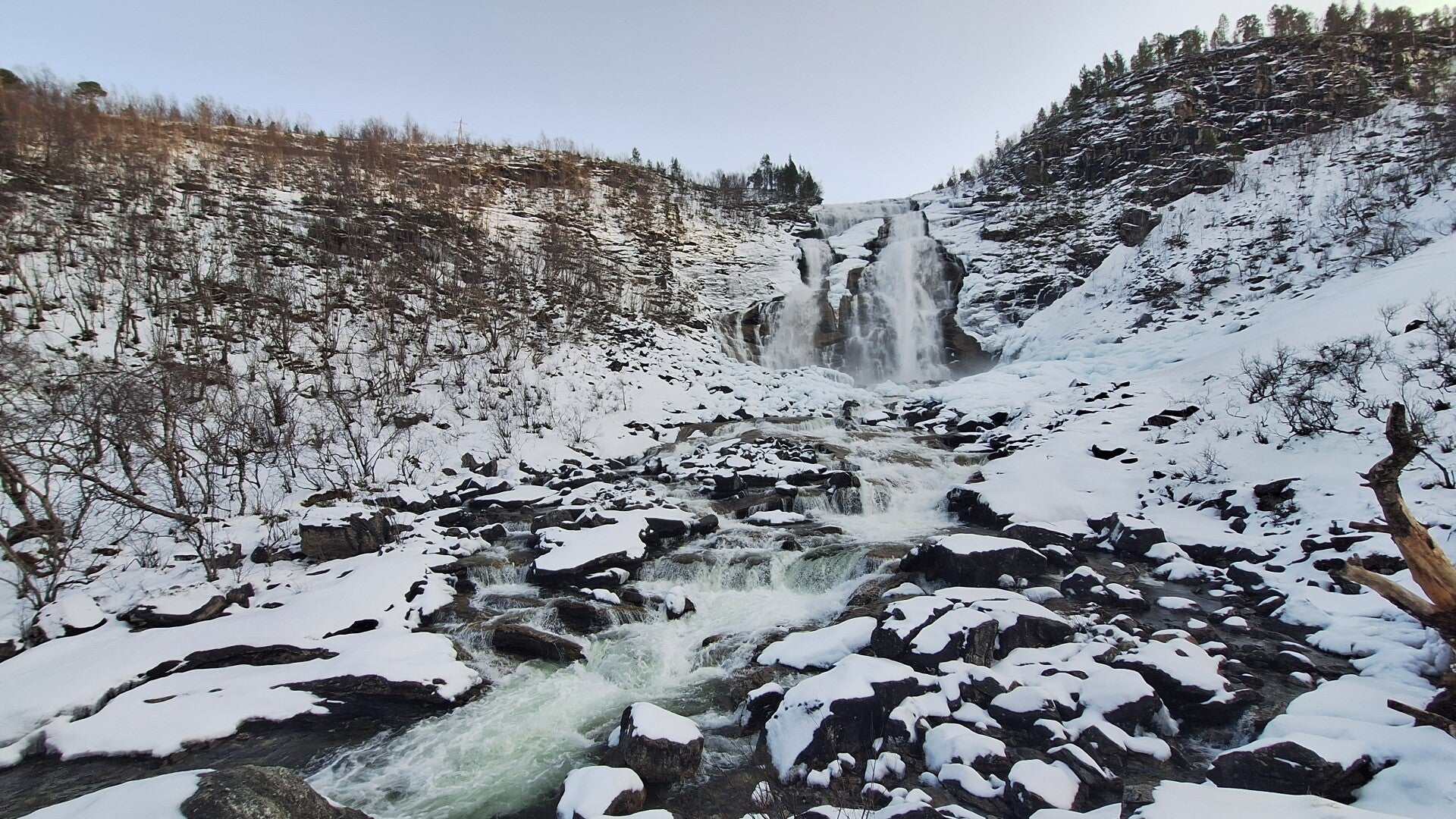
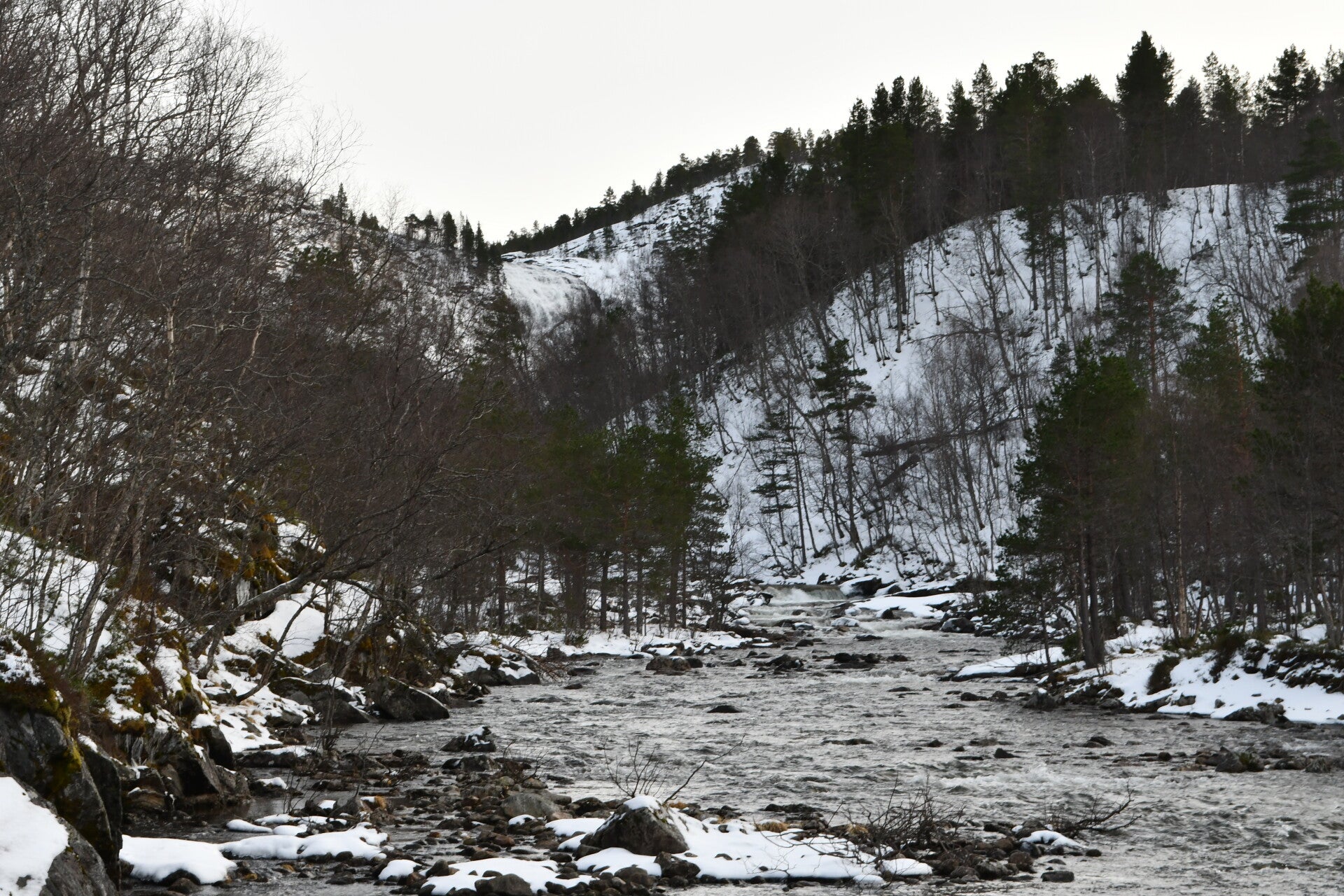
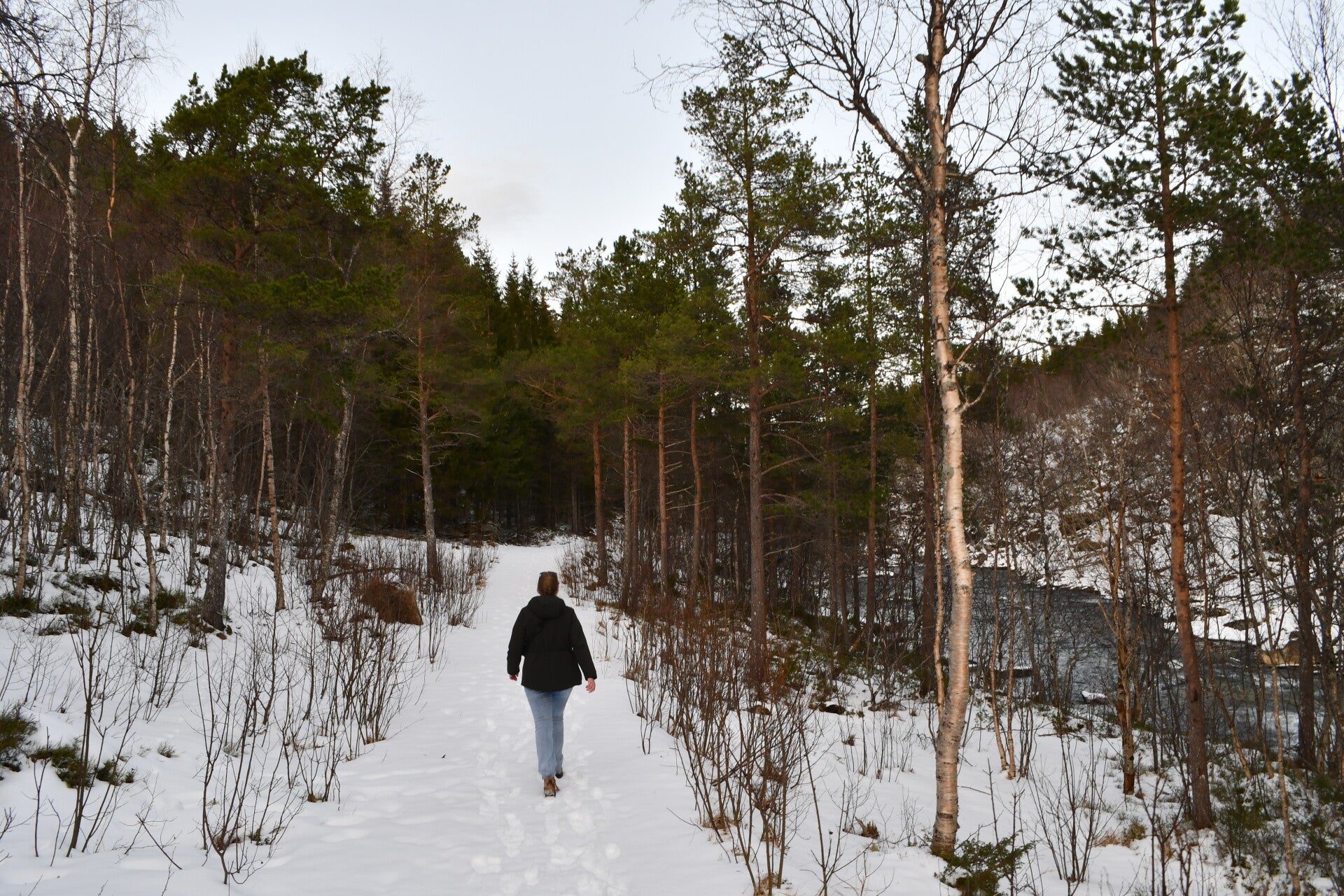
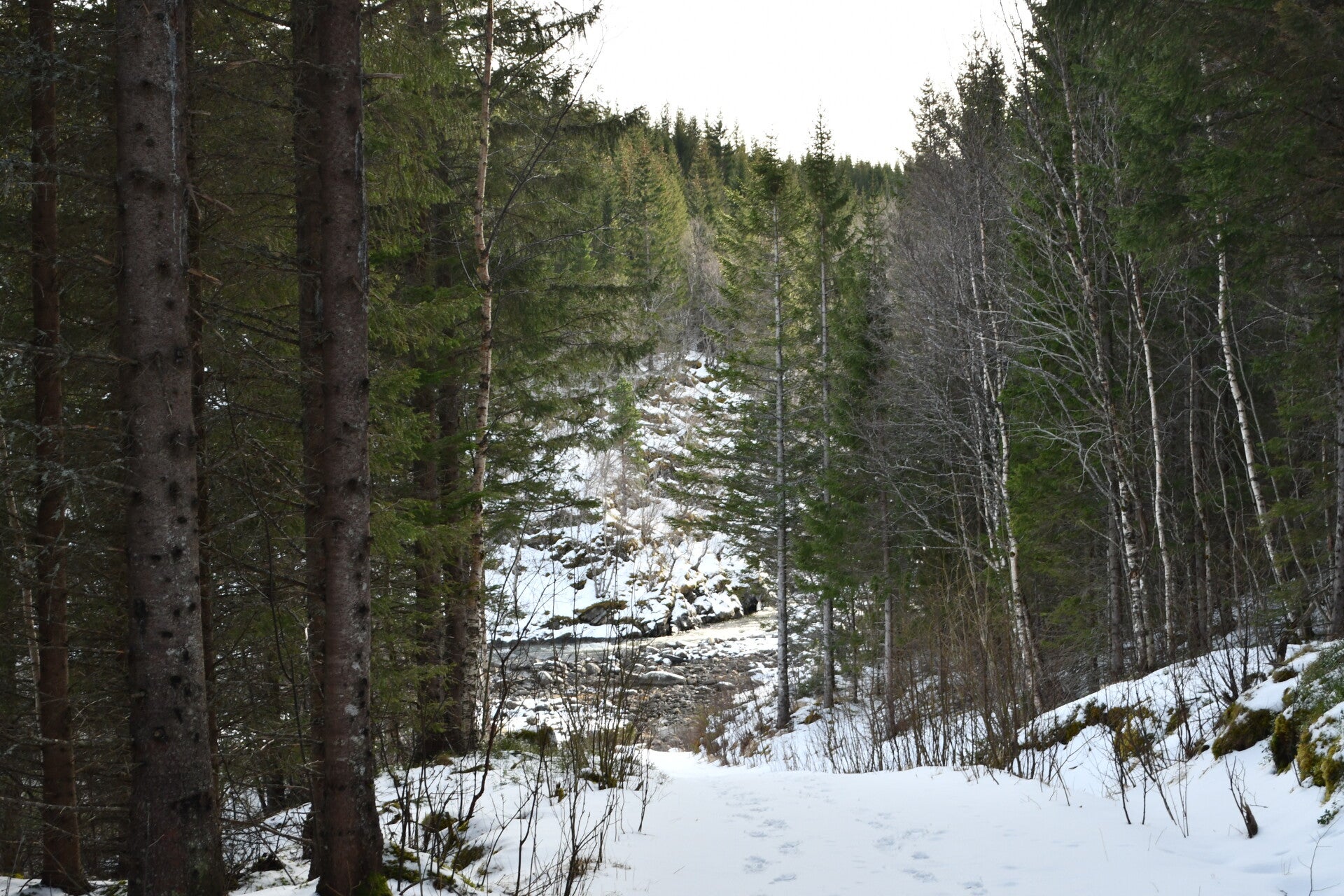
We then continue westward to nearby Valnesfossen, a picturesque waterfall located near Valnesfjord, where water cascades through a narrow rocky gorge surrounded by forest and steep cliffs. We park the car and begin the relatively short, twenty-minute hike to the waterfall. The trail follows the stream downstream from the falls into the lake. It’s incredibly quiet here, we hear only the rushing water, and aside from two other people, the area is completely deserted. It’s surprising, given how mesmerizing both the hike and the waterfall views truly are.
As the sun begins to set, we head back to the car and drive back to Bodø, where we first explore a large shopping mall near the airport. In the evening, we go out for dinner in the city at a luxury steakhouse by the harbor called Roast. The restaurant is on the top floor of a tall hotel, providing a nice view over the city. After a delicious meal, we return to our beloved Wood Hotel for a relaxing evening in the top-floor spa.
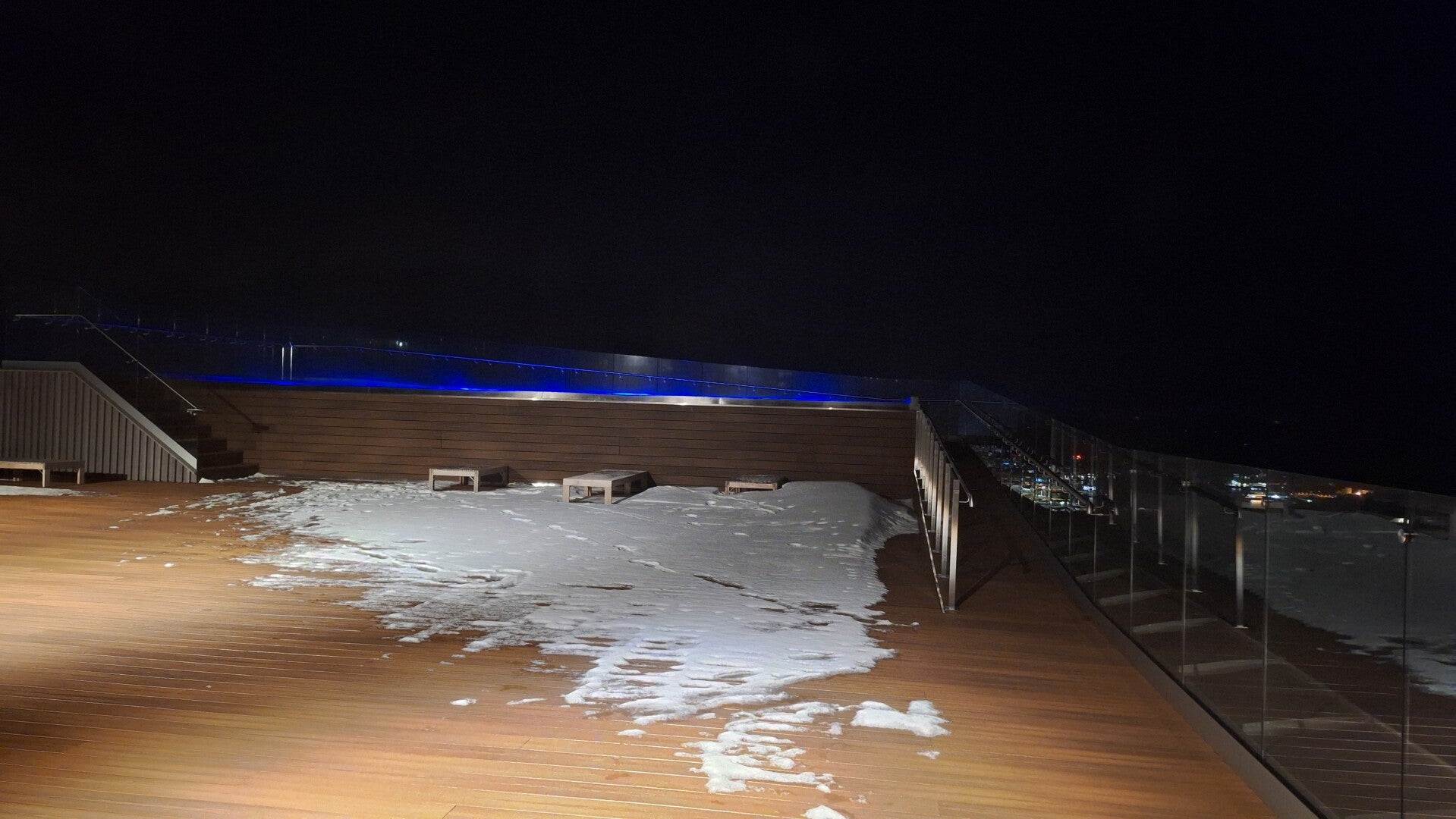
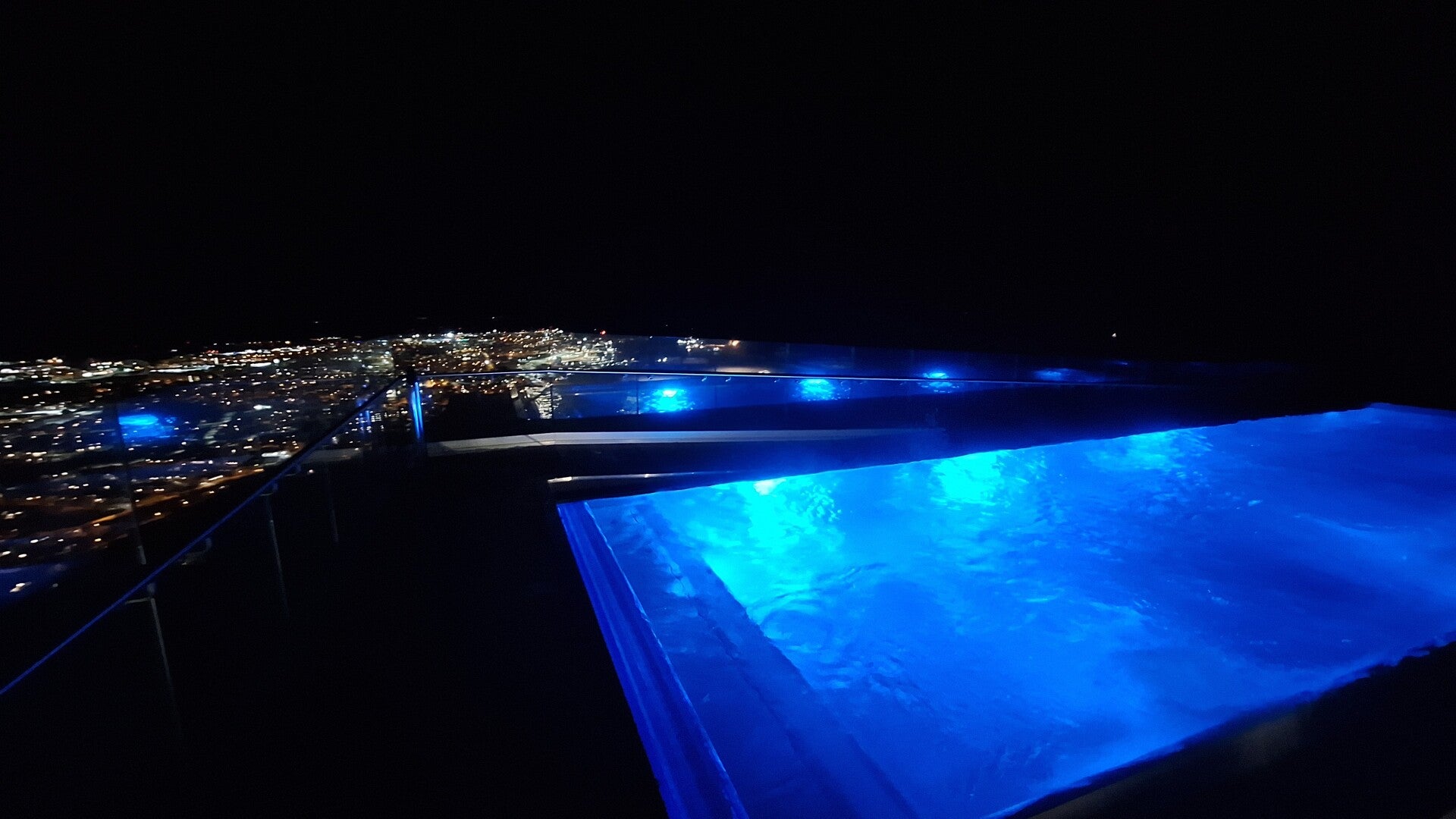
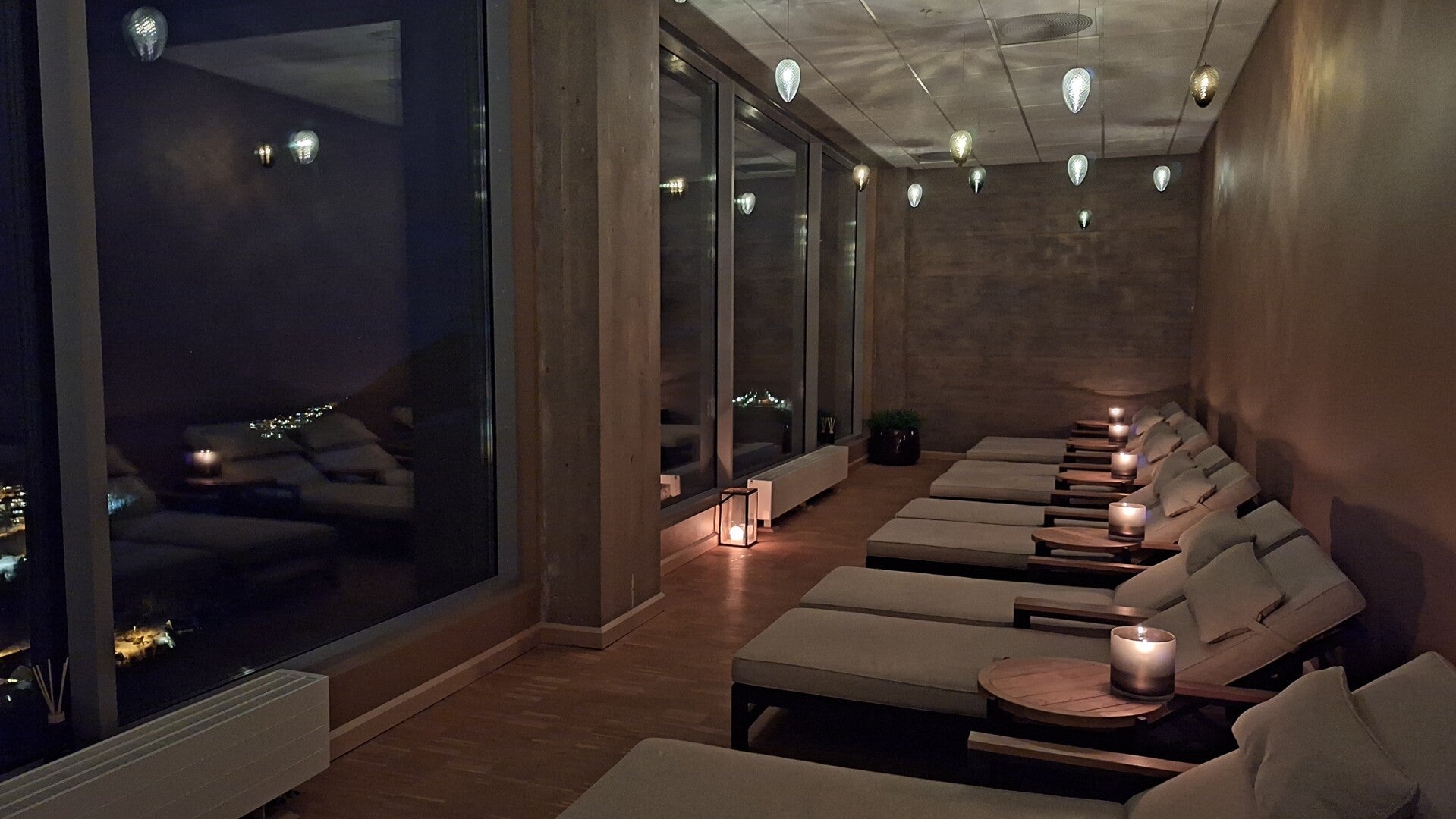
Remarkably, we once again have the entire place to ourselves. The relaxation area, the sauna overlooking the Saltfjorden, and the outdoor hot pool with views of the city below and auroras dancing overhead are all ours alone. The lovely lady in charge of the spa happily treats us to warm tea, dry towels, and anything else we might need, adding to the special atmosphere.
To reach the outdoor pool, you have to walk across the snowy terrace. The spa attendant advises us to leave our slippers inside, warning that they would freeze instantly, and she’s absolutely right. By the time we head back indoors, our bathrobes are completely stiff with ice. The experience itself is quite hilarious, as walking barefoot through the snow in a frozen bathrobe is really cold. Thankfully, the sauna is already heated and hot tea is waiting, allowing us to warm up quickly.
We end the night watching the aurora from the relaxation area. What a perfect ending to an incredible day! We can wholeheartedly recommend Bodø, and the Wood Hotel in particular, to anyone looking for a holiday that combines relaxation with natural adventure.





Saturday, March 22 – Bye Bodø, Back to Tromsø
We wake up with mixed feelings. Sad to leave this wonderful hotel, but happy to be flying again to Tromsø. Today, we’ve booked a flight on the DHC-8-300, the middle variant in terms of fuselage length. First, we enjoy our fabulous breakfast along with the stunning panoramic views over Bodø. Then we pack our things, hop in the car, and drive back to the airport.
After dropping off the car keys and checking in, we’re airside in no time. Interestingly, part of the terminal can be closed off when handling non-Schengen flights, complete with a separate passport control kiosk. Today, however, this area is open and accessible. There’s even a climbing wall near our gate, which is amusing to see in an airport setting.
We enjoy watching the steady stream of Widerøe Dash-8-100s departing. One aircraft is out on a test flight, performing several touch-and-go landings, while a historic Saab 91 Safir is flying patterns nearby.
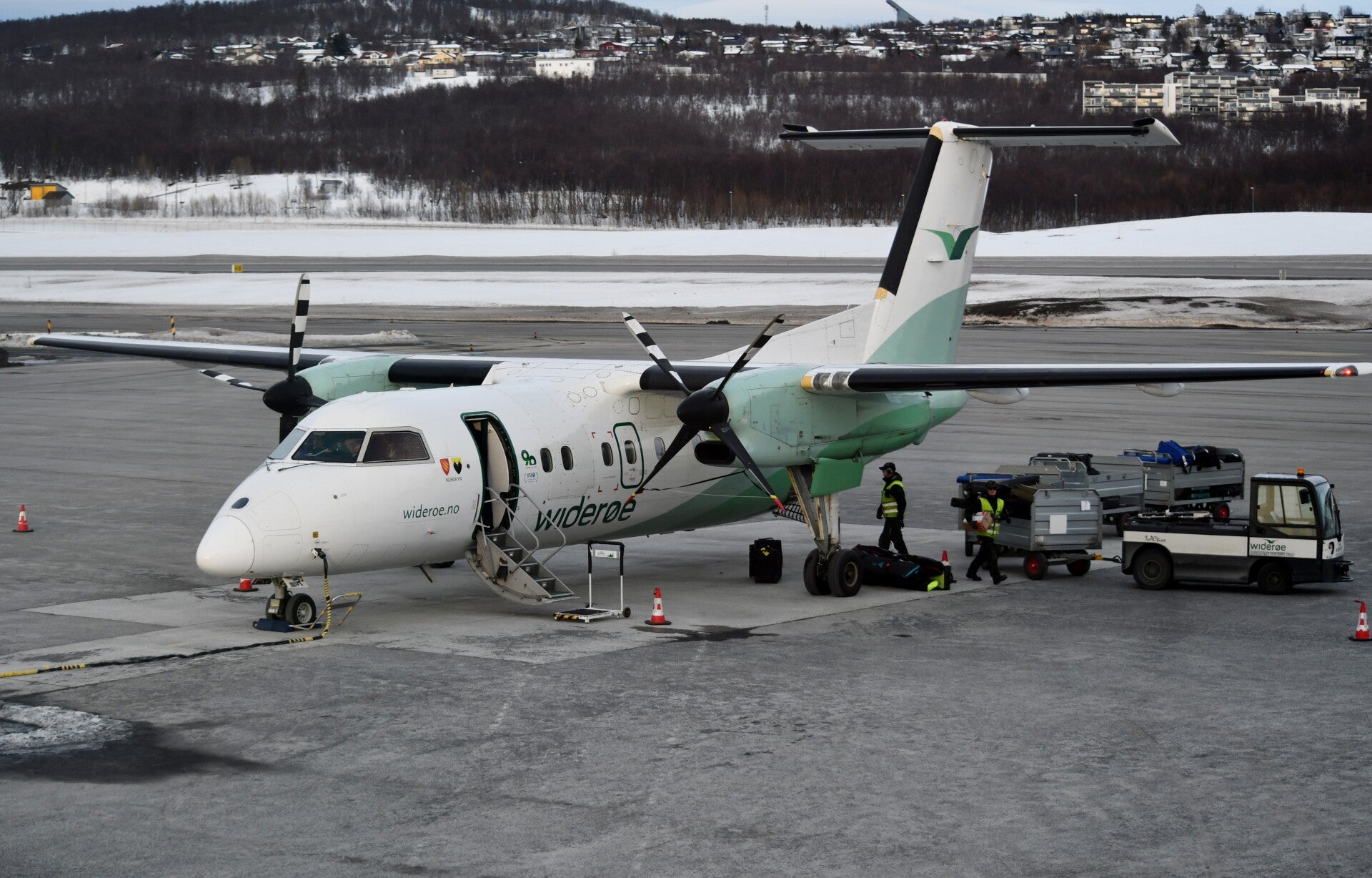
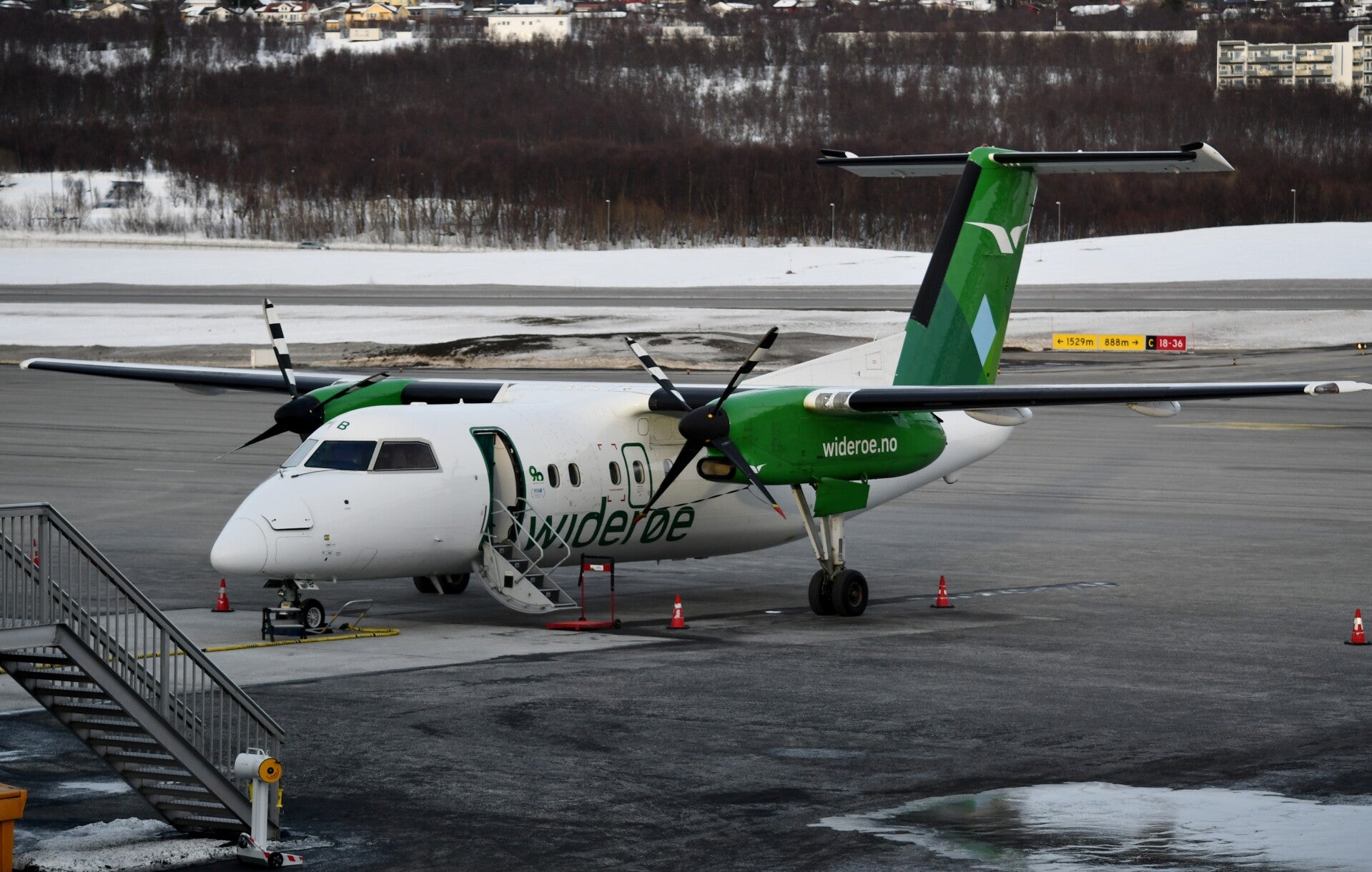
Eventually, our aircraft arrives, and while flying an old Dash-8 is always a treat, it’s a bit disappointing to discover that today’s ride isn’t the promised -300 after all, but once again a -100. And not just any -100: it’s the very same aircraft as before, LN-WIR, the oldest plane in the Widerøe fleet! This time, though, I highly doubt I’ll be getting another jumpseat ride, haha!

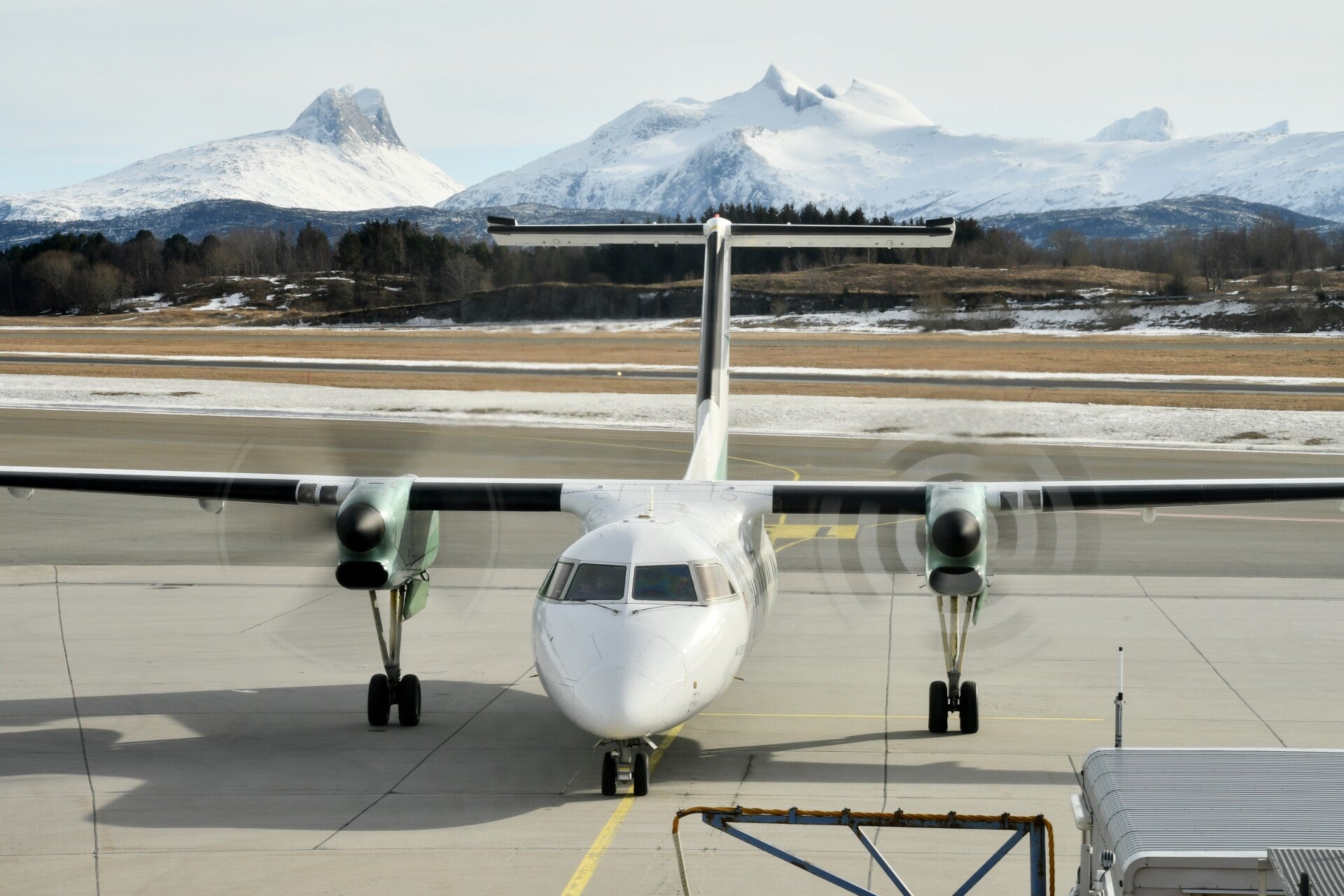
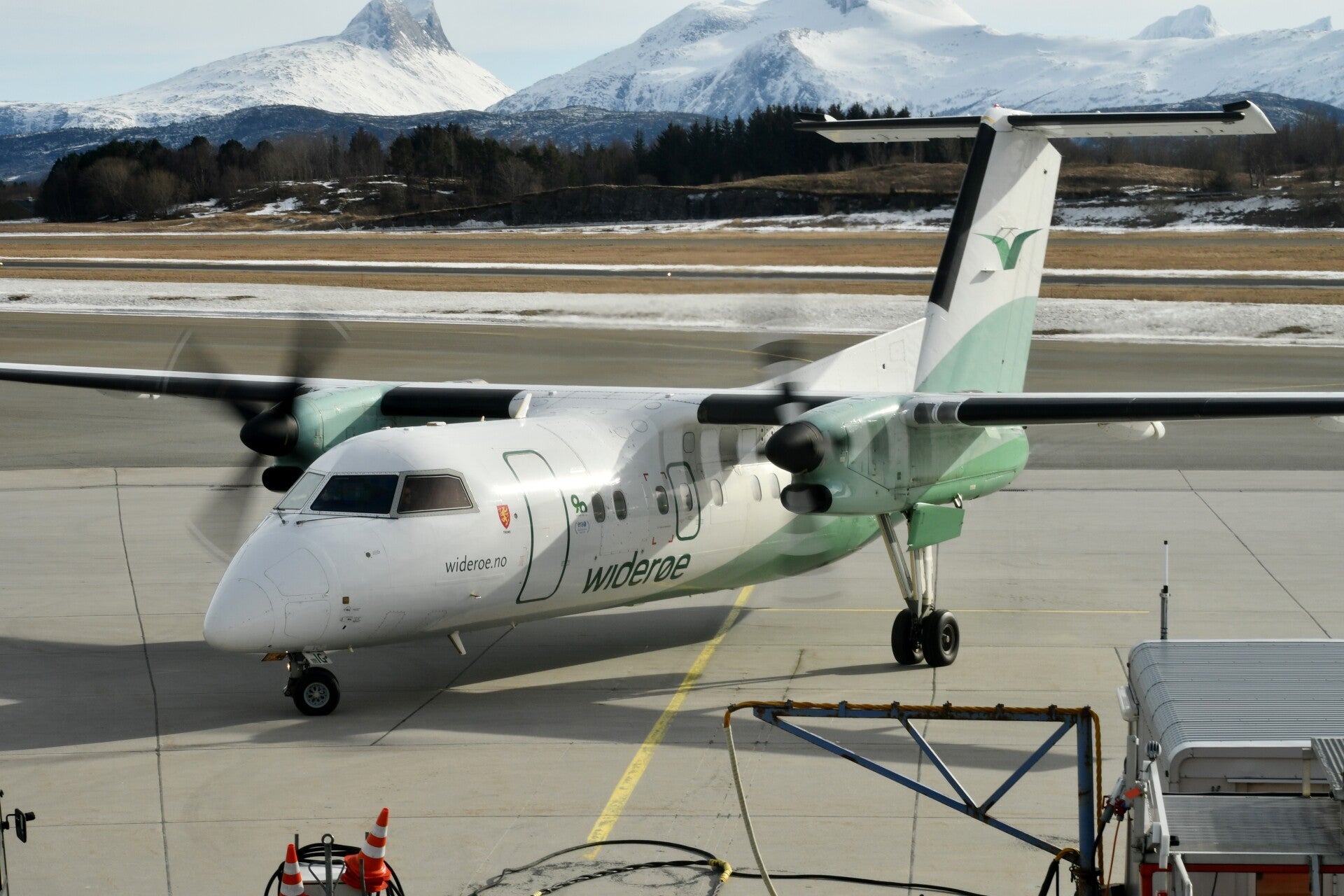
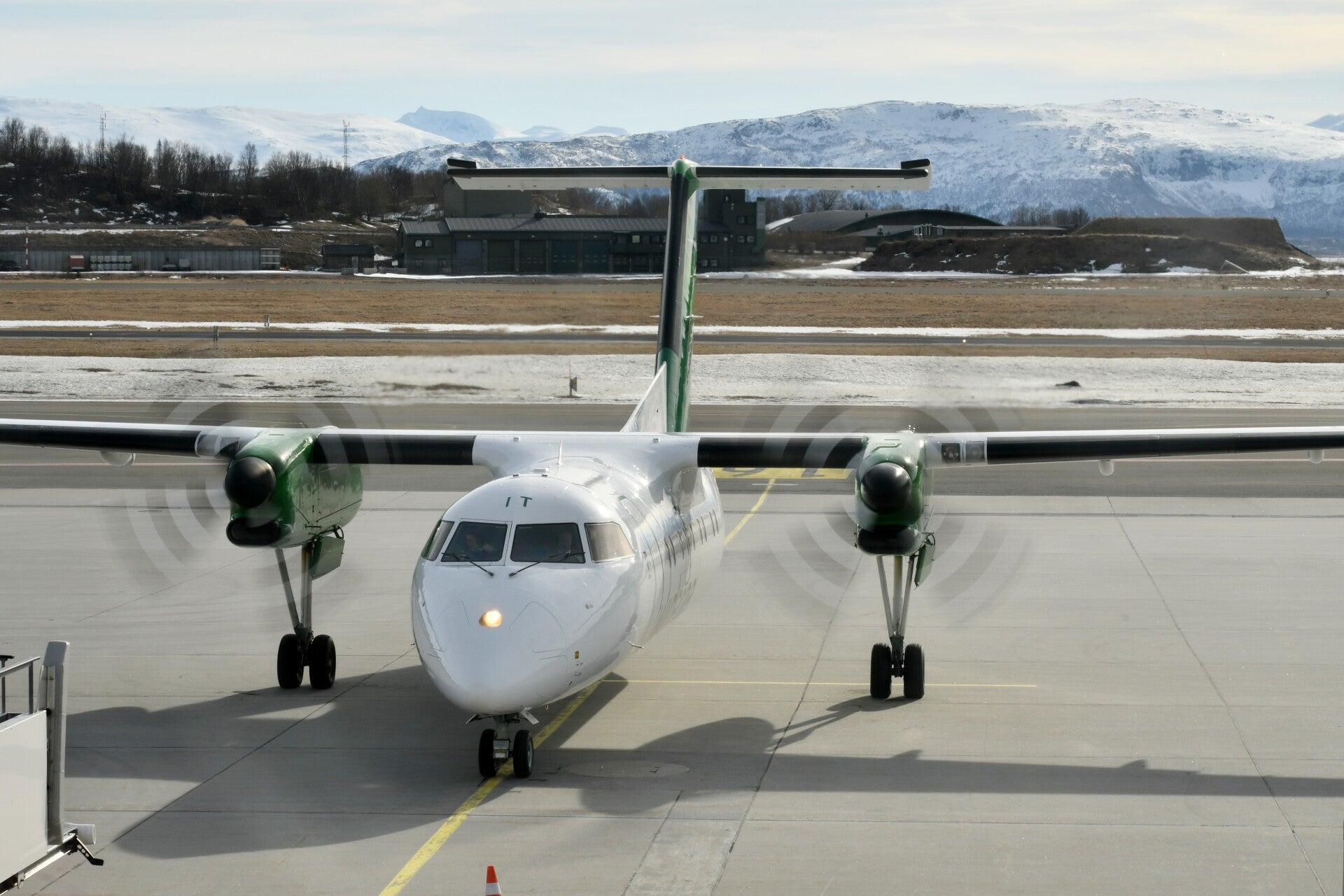
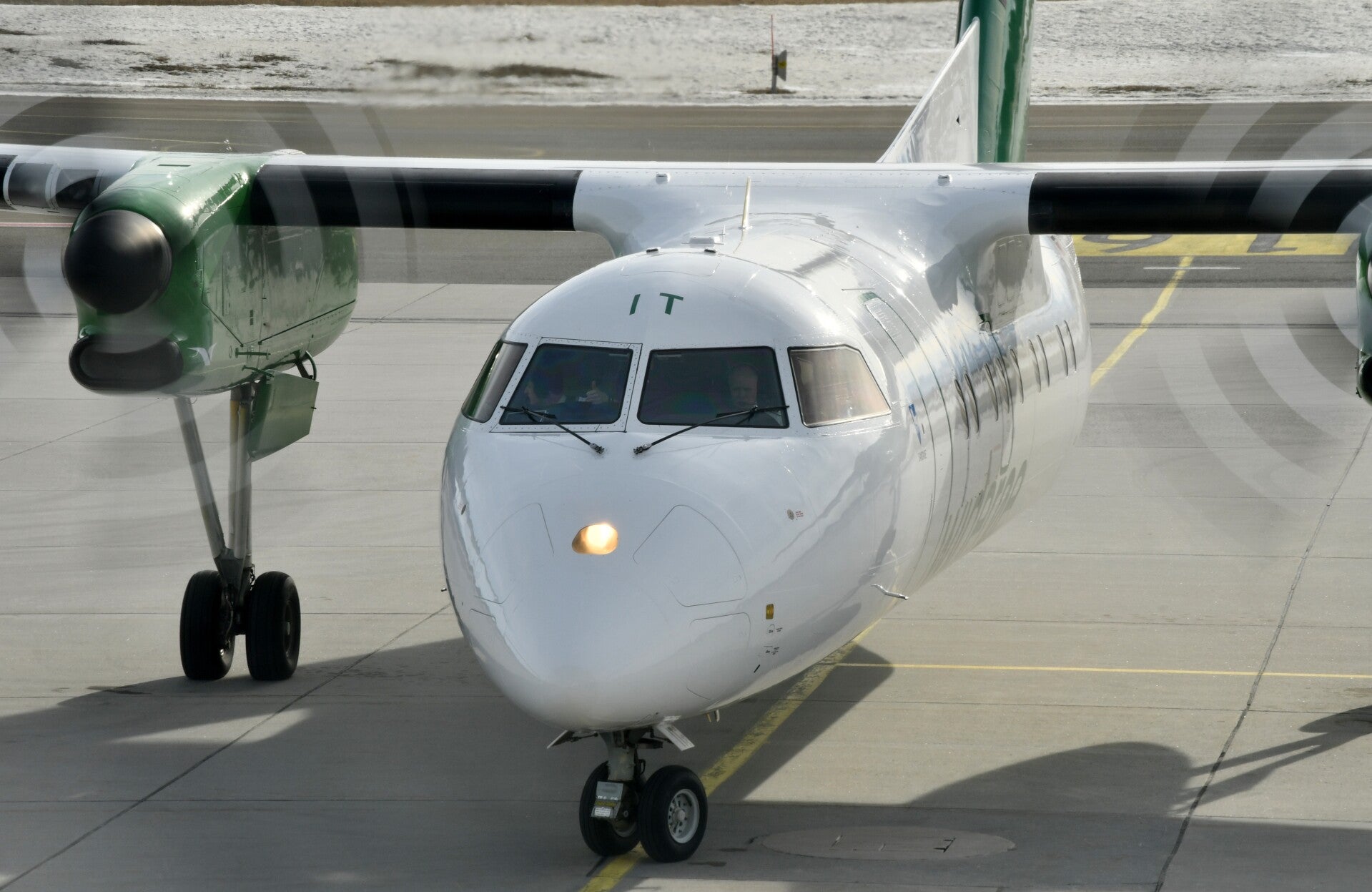
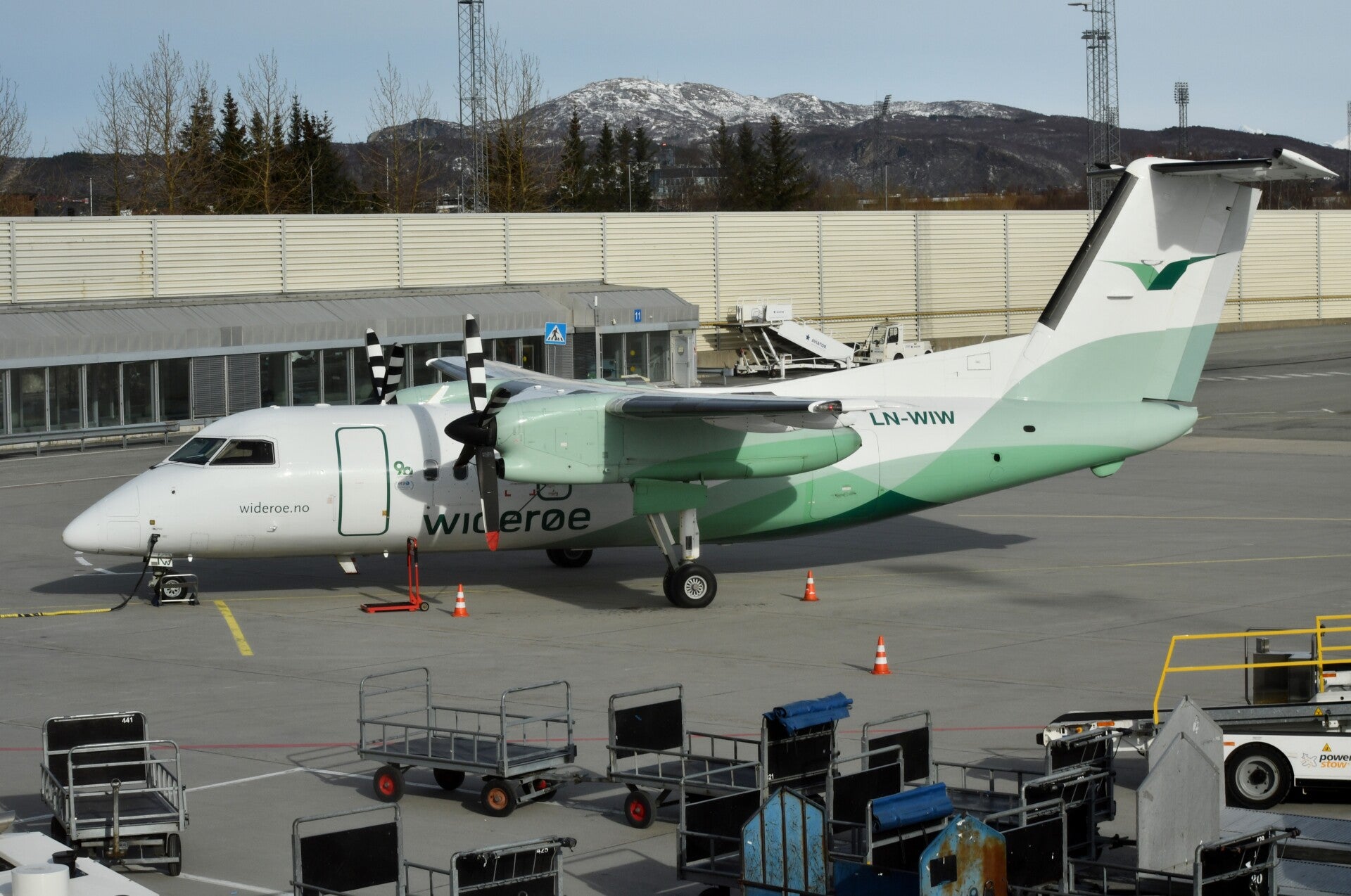
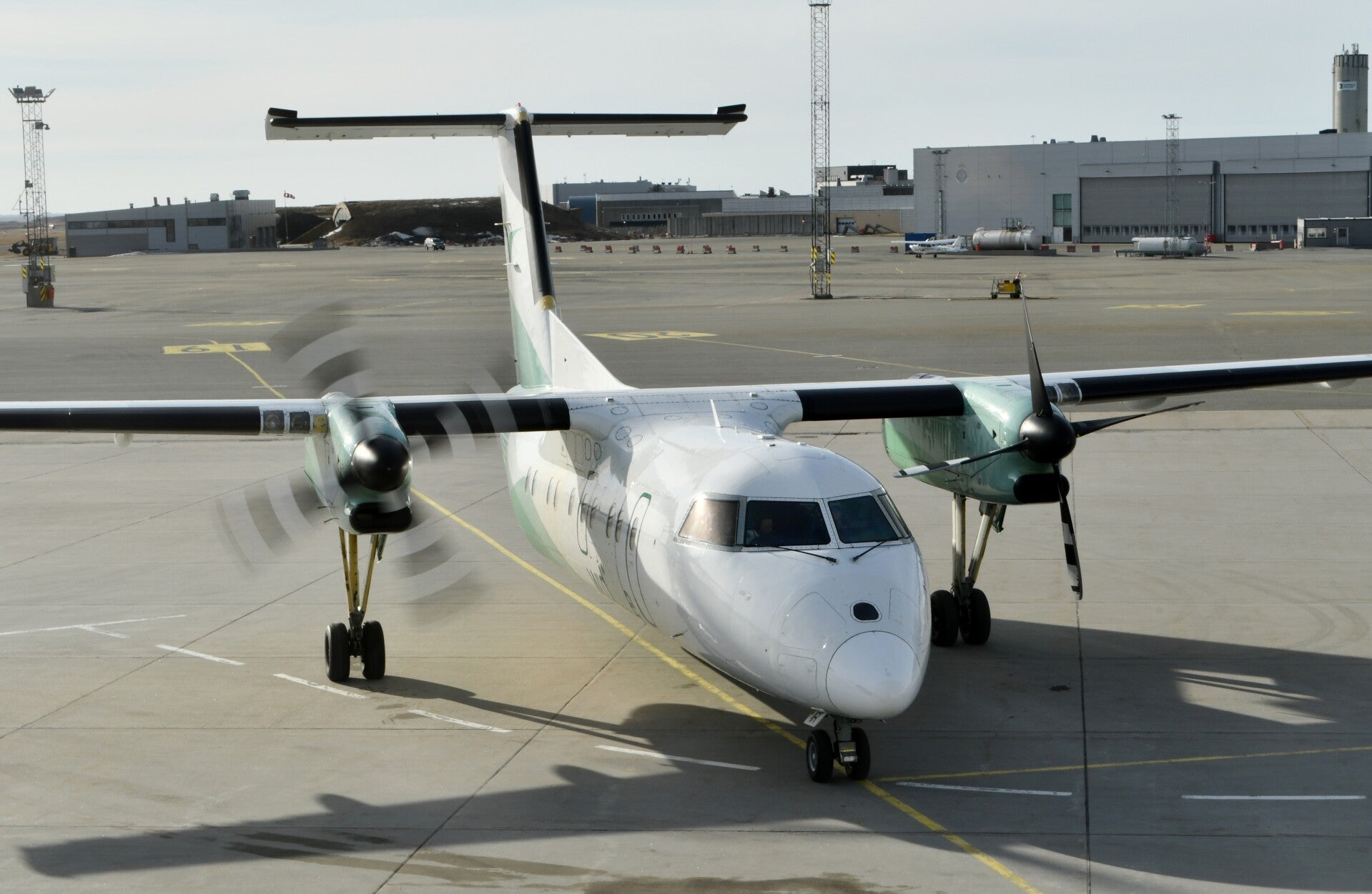
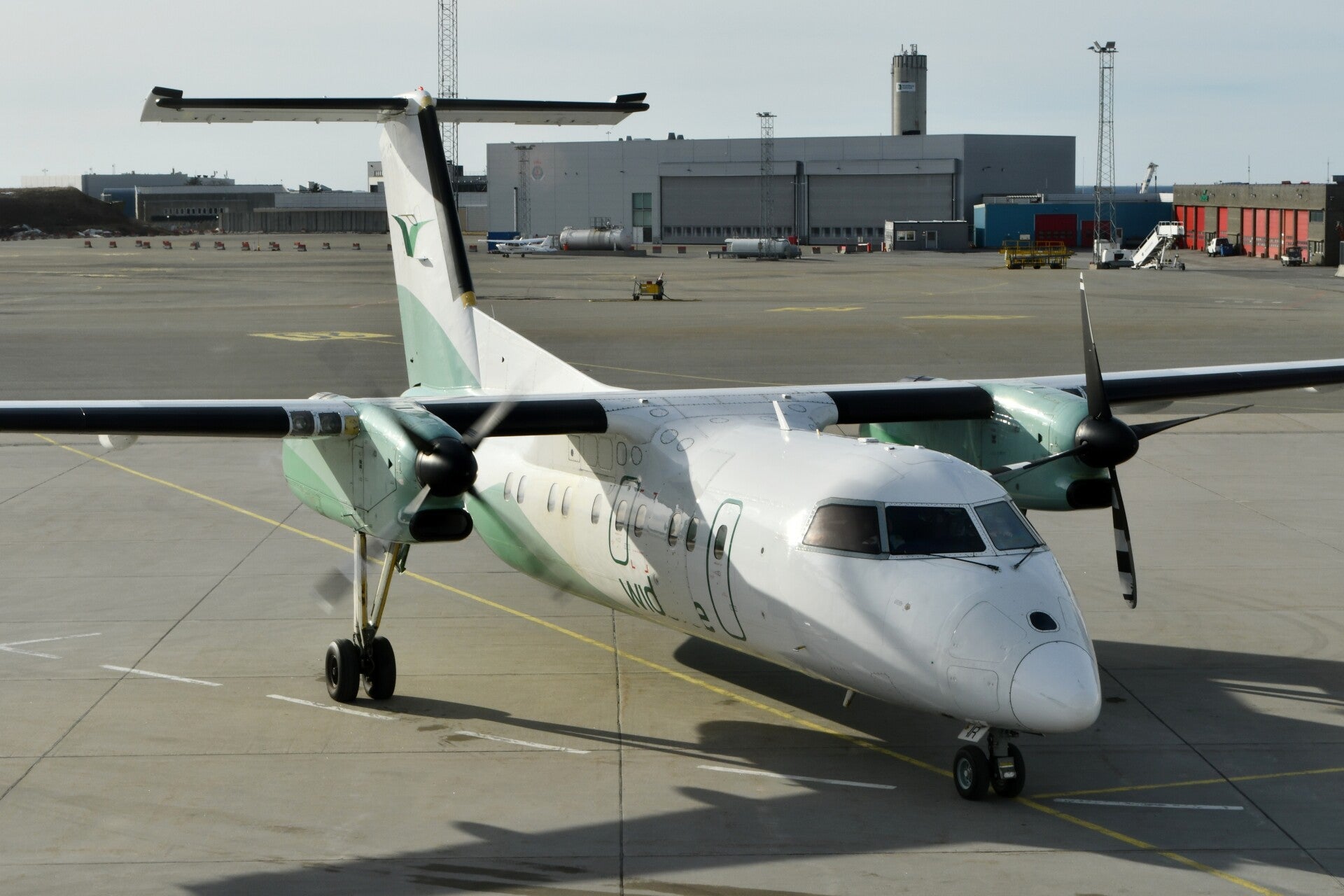
We board the plane, and this time the cabin is packed with passengers. Remarkably, many of them are wearing secretive police- or military-style clothing. We also spot several passengers dressed in SpaceX apparel. Today’s flight takes us northbound back to Tromsø, with a short stop in Andenes (ANX).
Andenes is a small coastal town at the northern tip of Andøya in the Vesterålen archipelago, best known as one of Europe’s top whale-watching destinations. Thanks to the deep ocean just offshore, sperm whales feed here year-round. Andenes Airport, however, also serves as an active military base, and photography in the area is strictly prohibited. The flight and cabin crews repeatedly remind passengers of this, before takeoff, during the flight, on approach, and again after landing.
The flight to Andenes is just as beautiful and scenic as our previous legs. Just before descent, the cockpit crew announces that all photography and videography are now prohibited. It’s a bit of a shame, as the descent and approach into Andenes are absolutely spectacular. The surrounding mountains generate a fair amount of turbulence, resulting in a thrilling, rollercoaster-like approach.
Just outside Andenes lies the Andøya Space Center, a major hub for sounding rockets and atmospheric research. This explains the photography restrictions, which are in place for safety and security reasons, as sensitive infrastructure, launch operations, and military-related research are conducted on site. It also explains the presence of all the “secretive” personnel onboard this flight.
During the short stop in ANX, most of these passengers disembark, while others, equally secretively clothed, board the aircraft, all under the supervision of uniformed, police-like staff at the airport. With all our camera gear, we feel a bit uncomfortable, to say the least. Still, it’s an interesting and unusual experience.
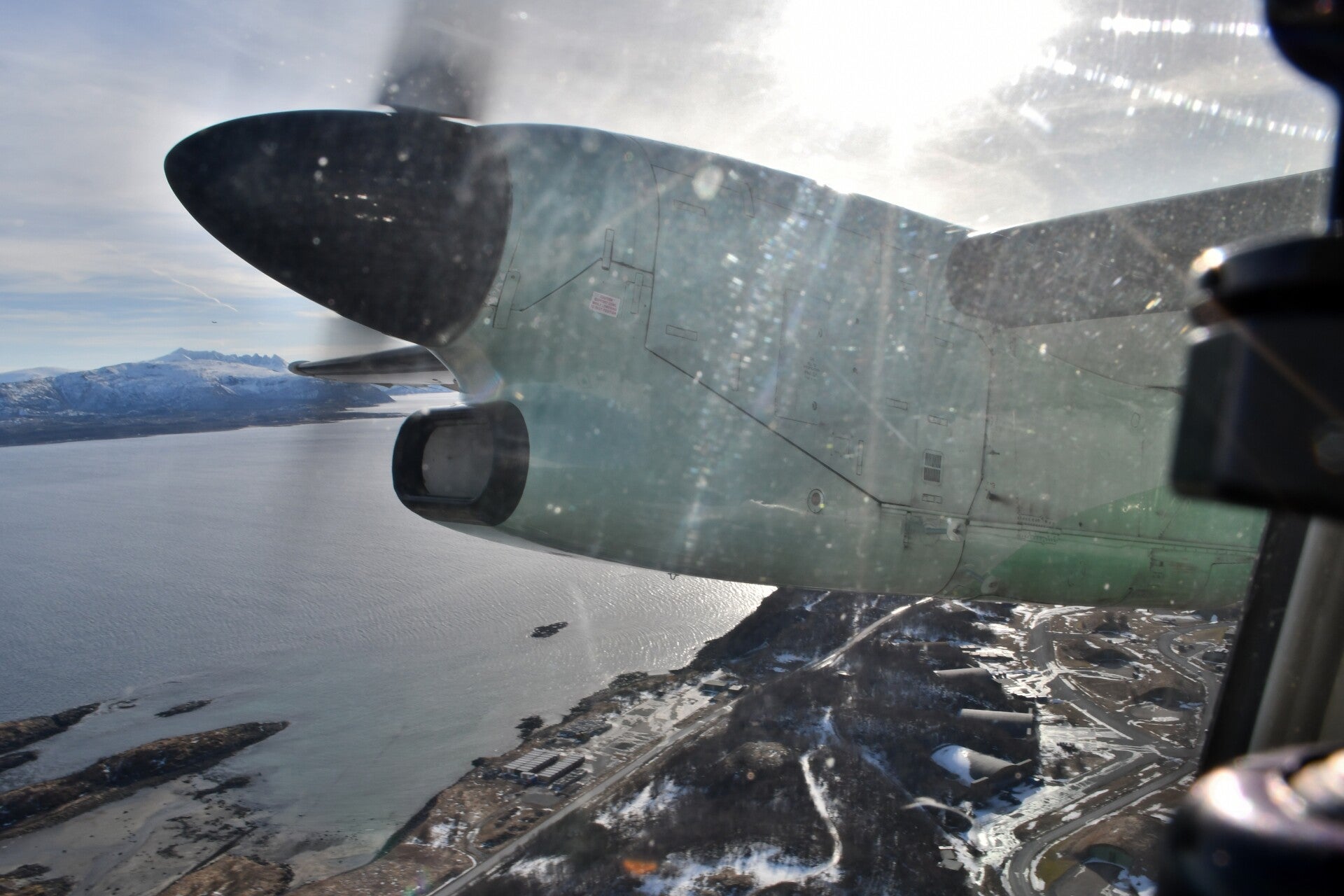
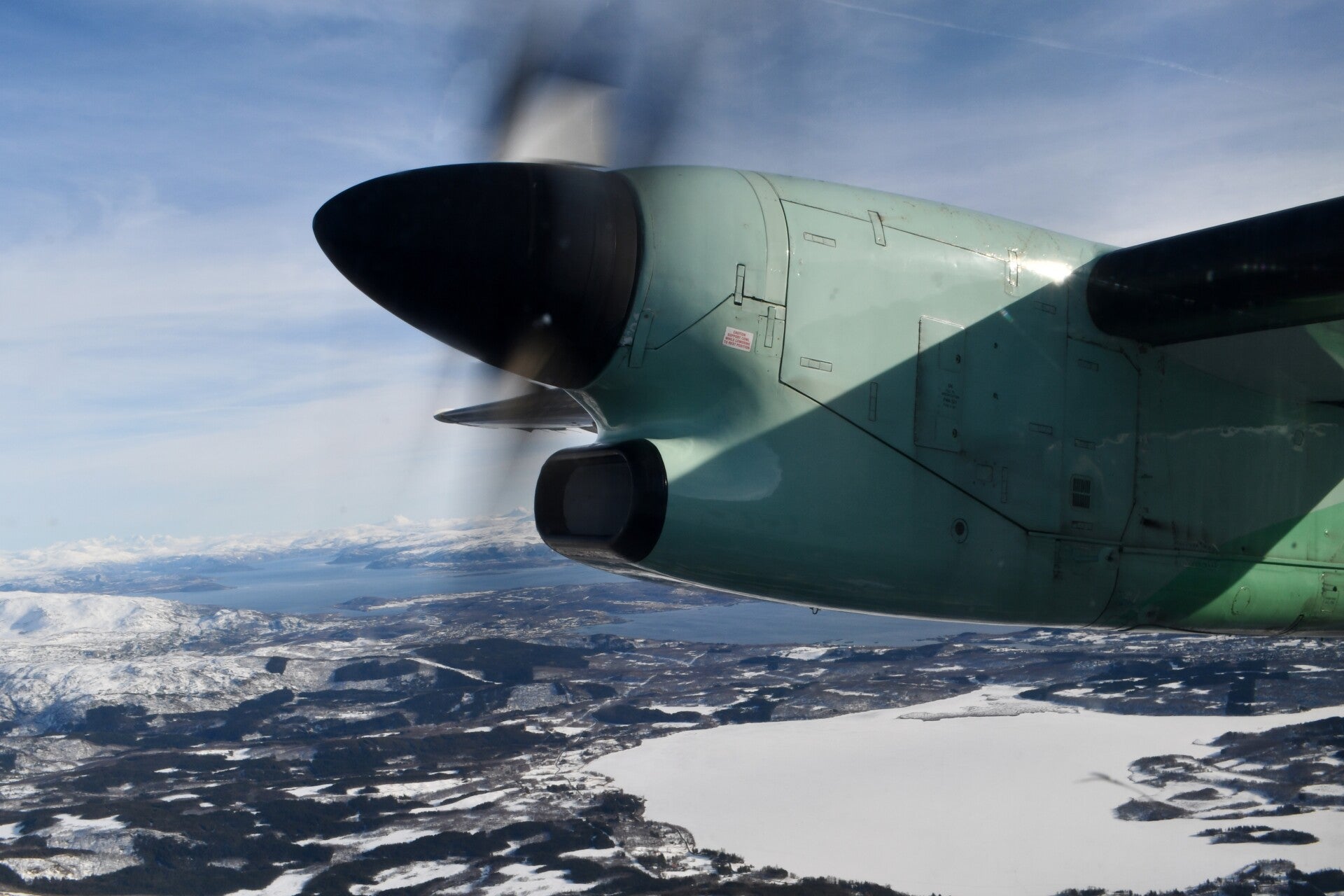
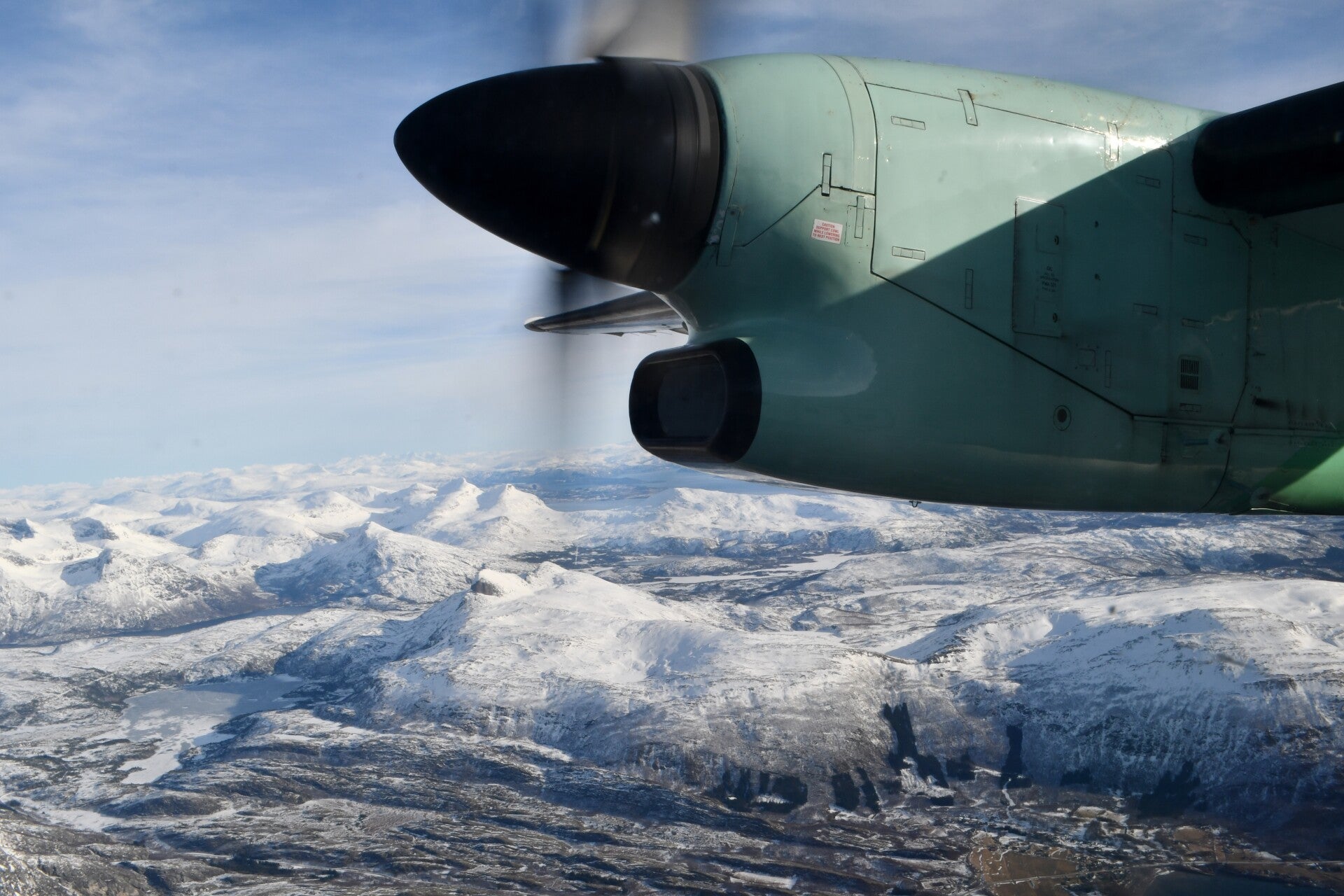
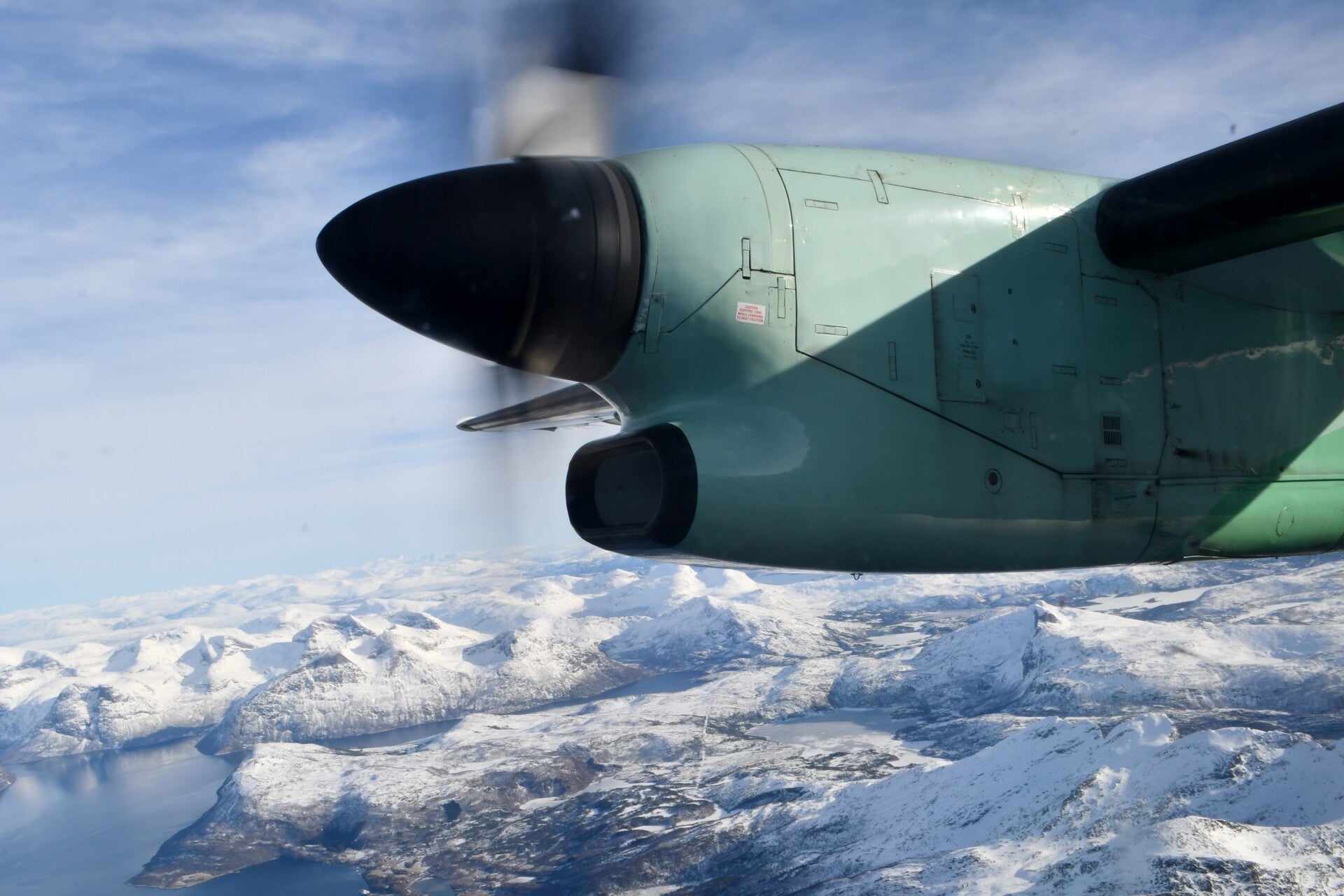
Thankfully, the door closes quickly again, as icy wind gusts make the cabin uncomfortably cold. The engines are restarted, and the little Dash charges down the runway, quickly lifting off into the gusty skies once more. Eventually, the ride smooths out, and we’re informed that we may use our cameras again.
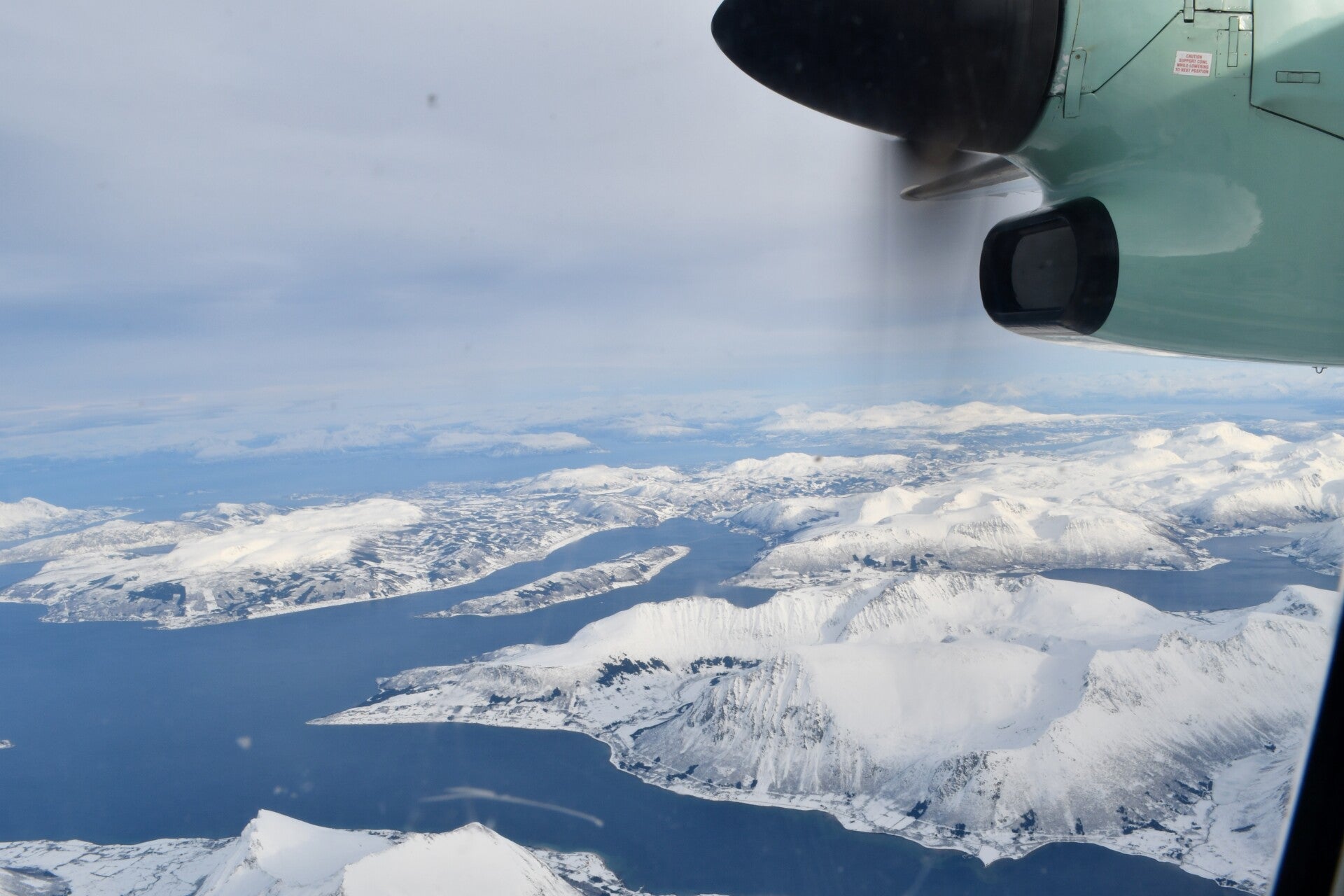
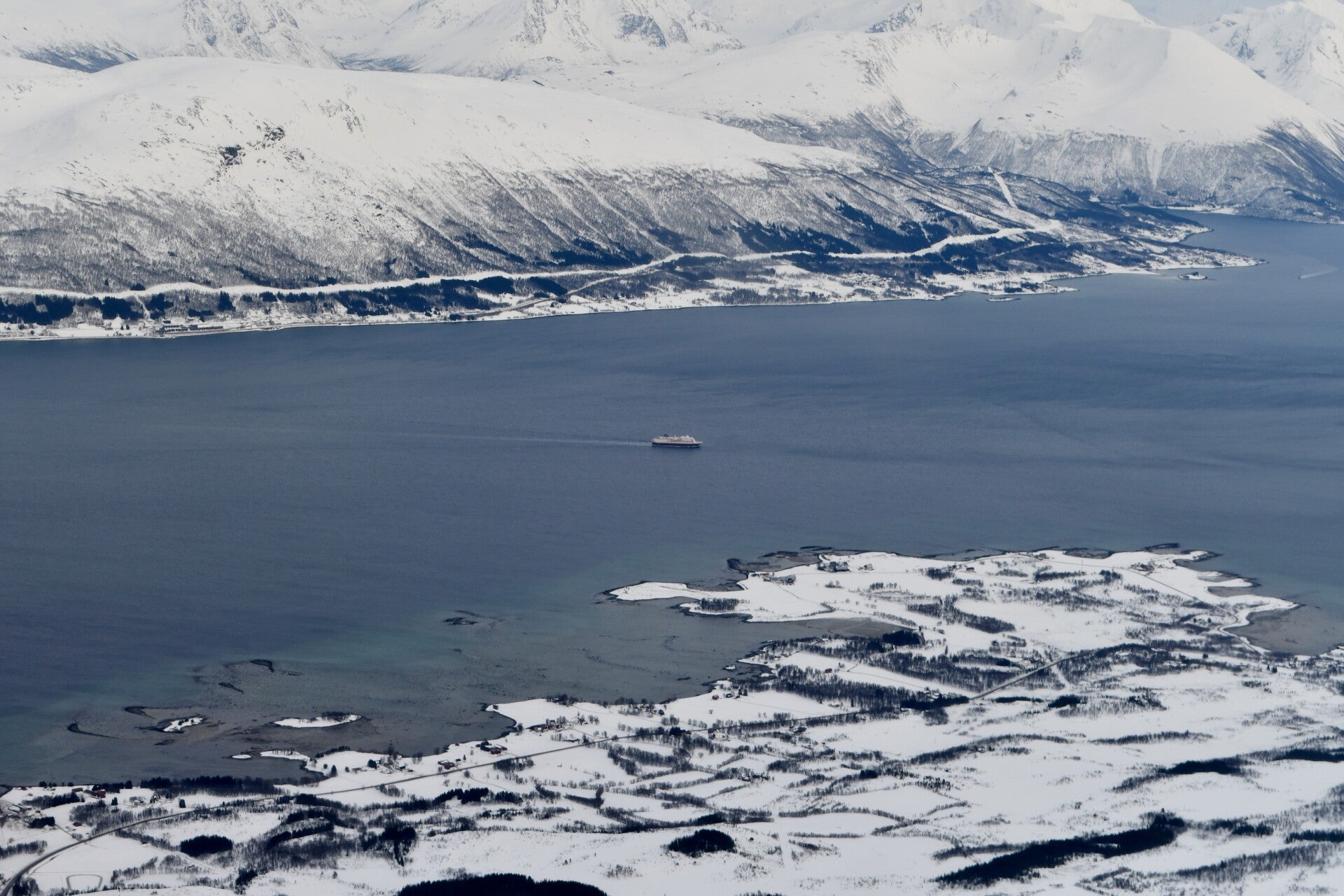
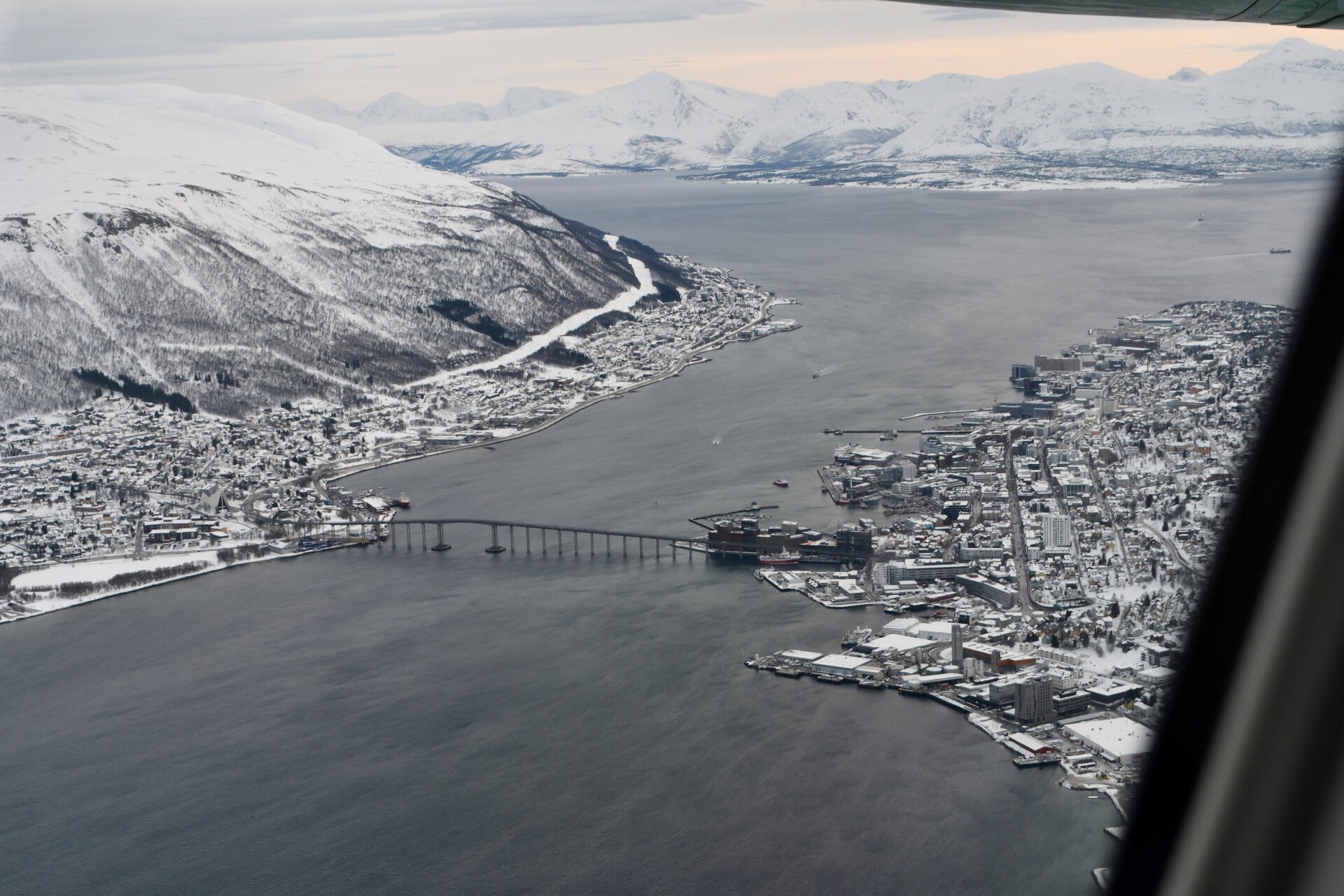
The calm doesn’t last long, though. As soon as we begin our approach into Tromsø, turbulence and strong wind gusts return, tossing the little Dash-8 around quite violently. A heavy storm is approaching the Tromsø area, expected to fully hit the city tomorrow, but its effects are already noticeable. We bump and sway over the city before making a sharp left-hand turn to line up on final for Runway 19.
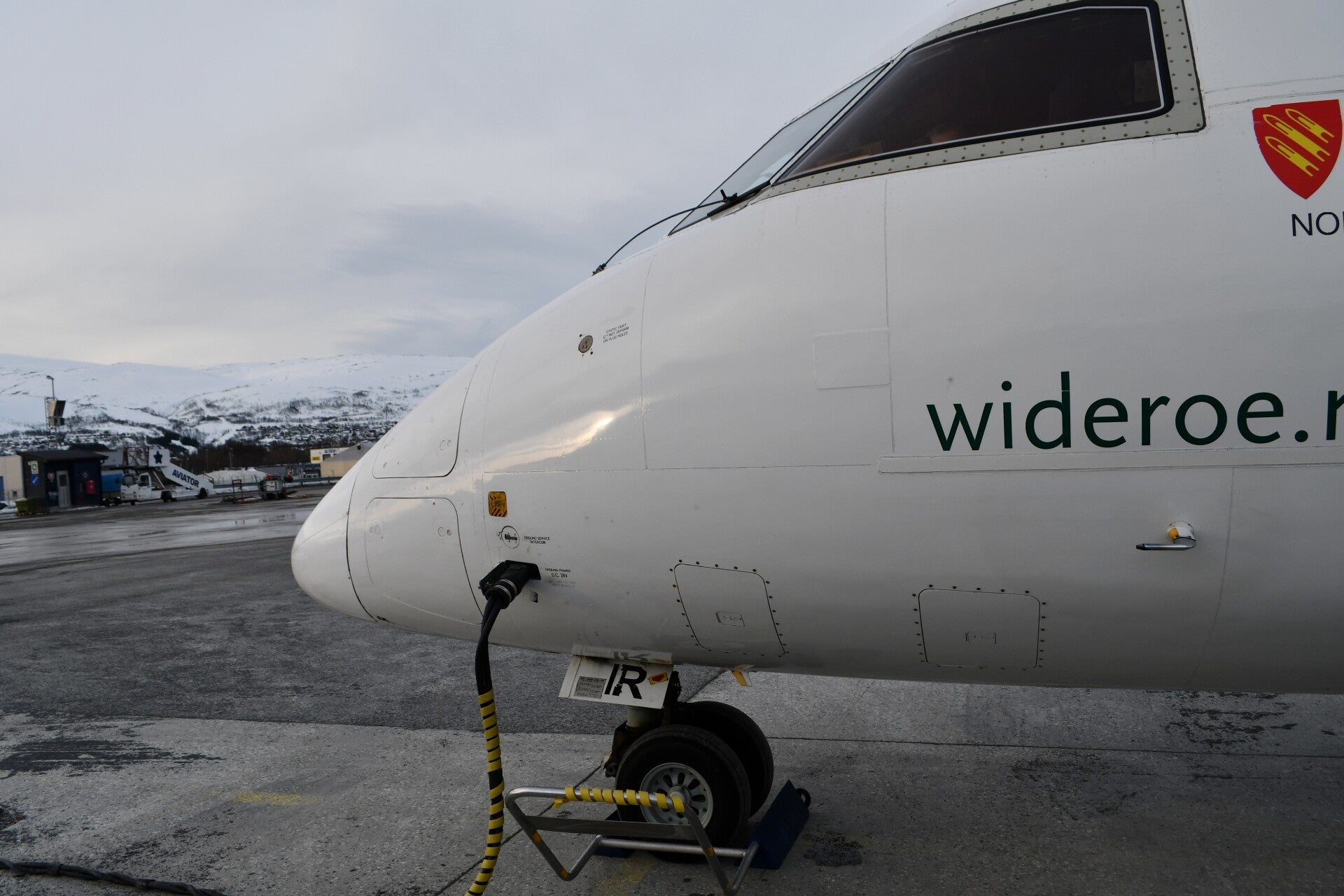
After landing, we taxi quickly to our stand, and once the black-and-white-striped propellers come to a stop, the door opens and we make our way into the terminal. It’s striking how much the landscape has changed in just a few days, as much of the snow has already disappeared, at least here around the airport.


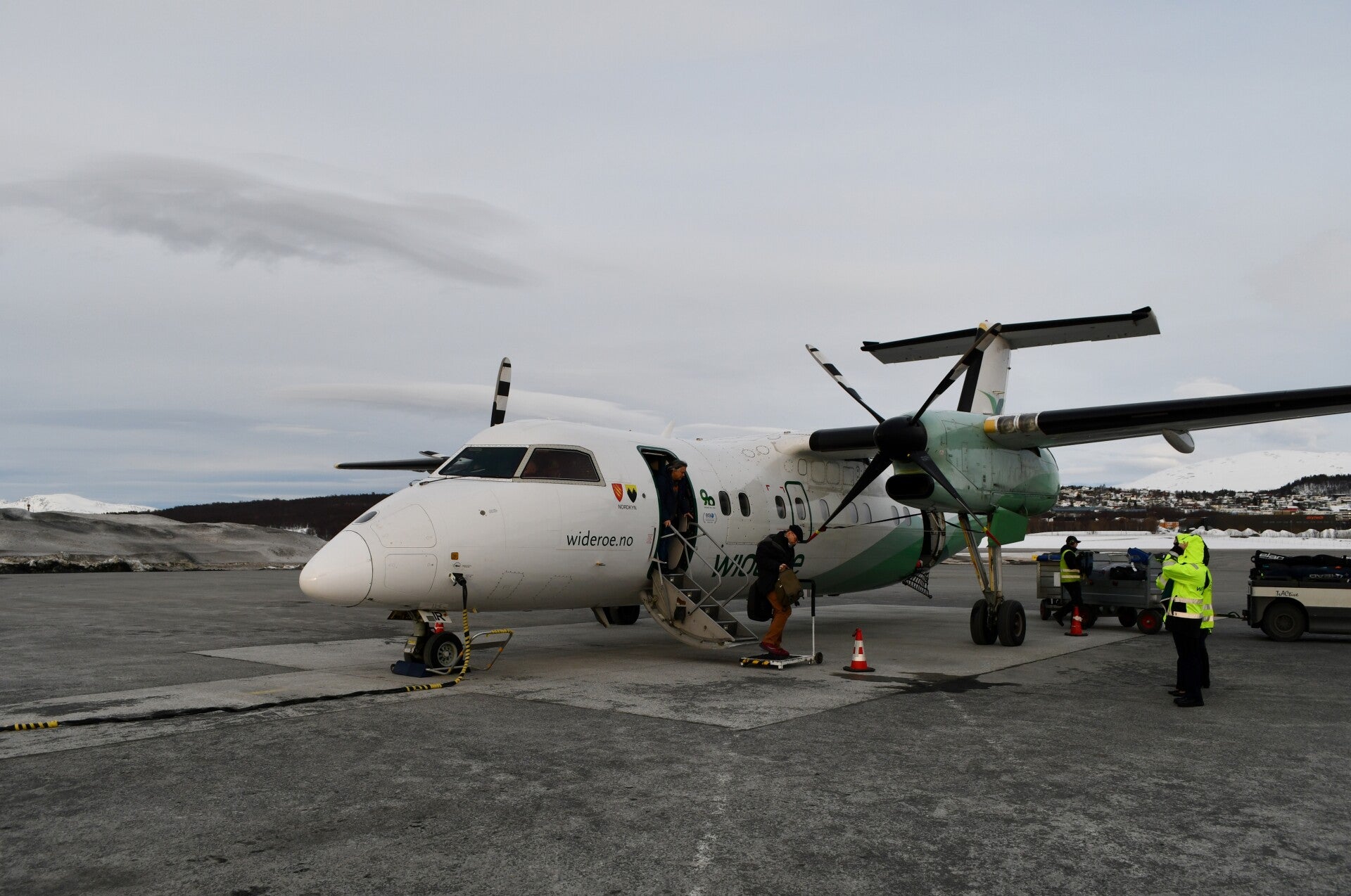
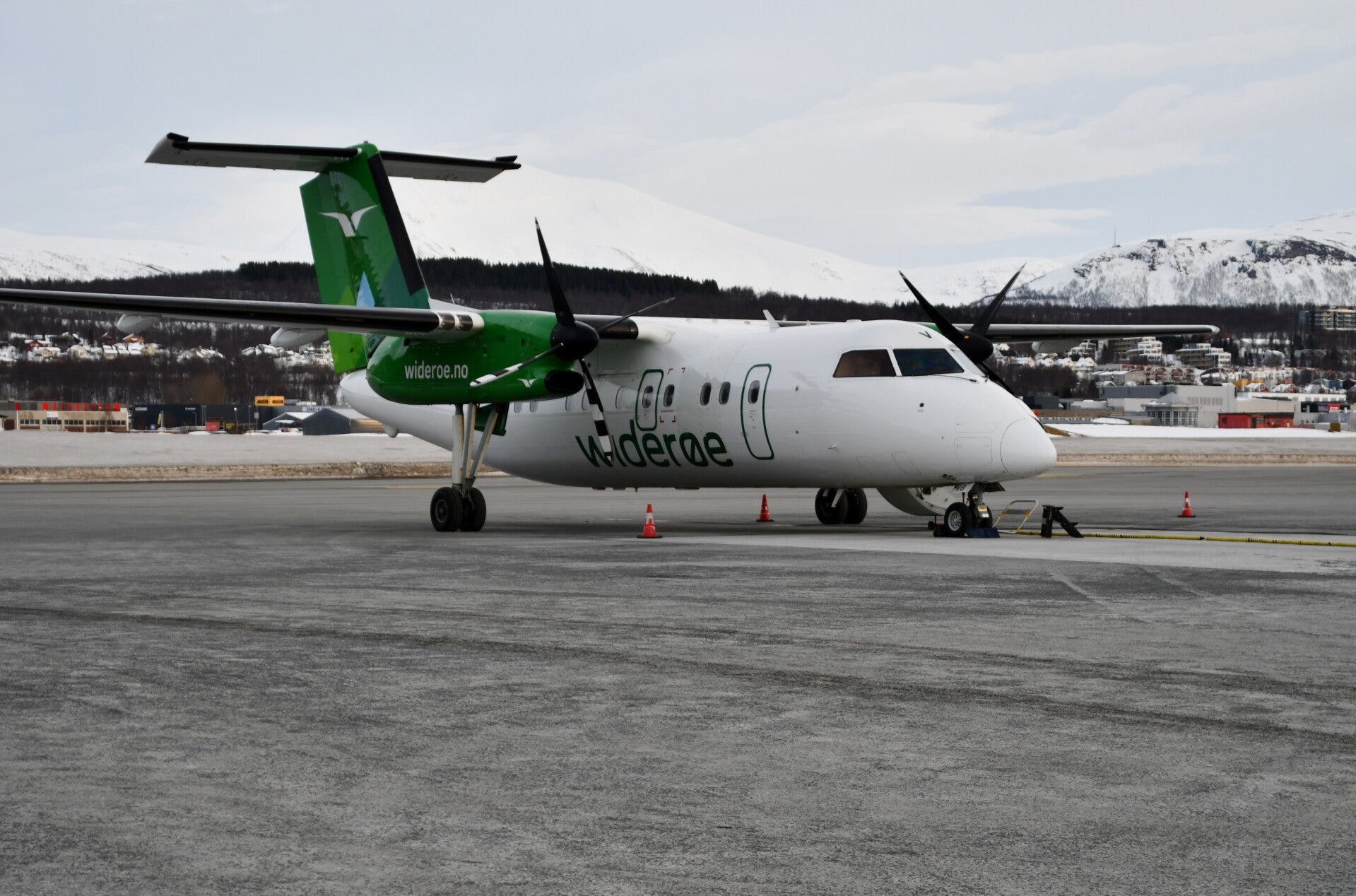
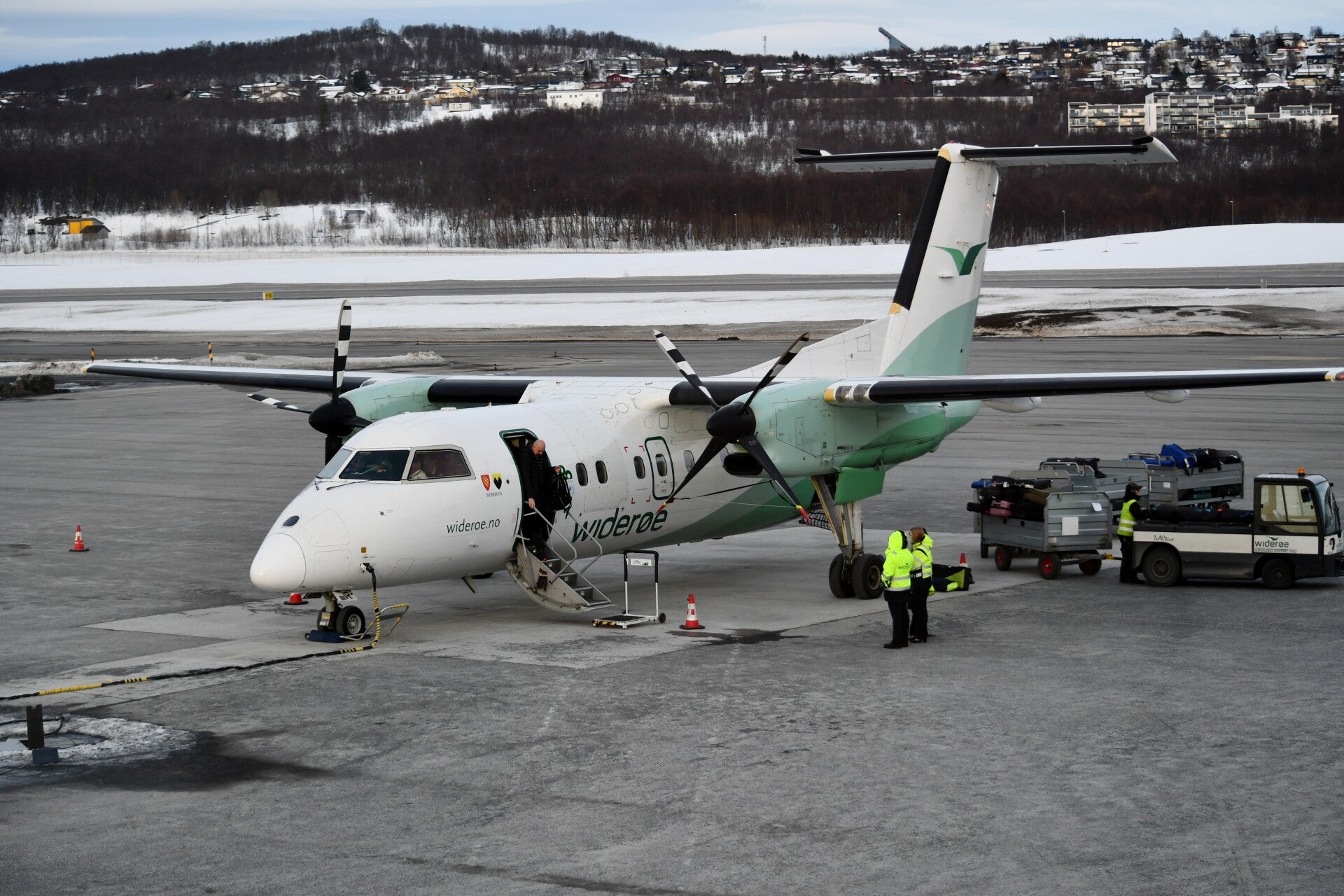
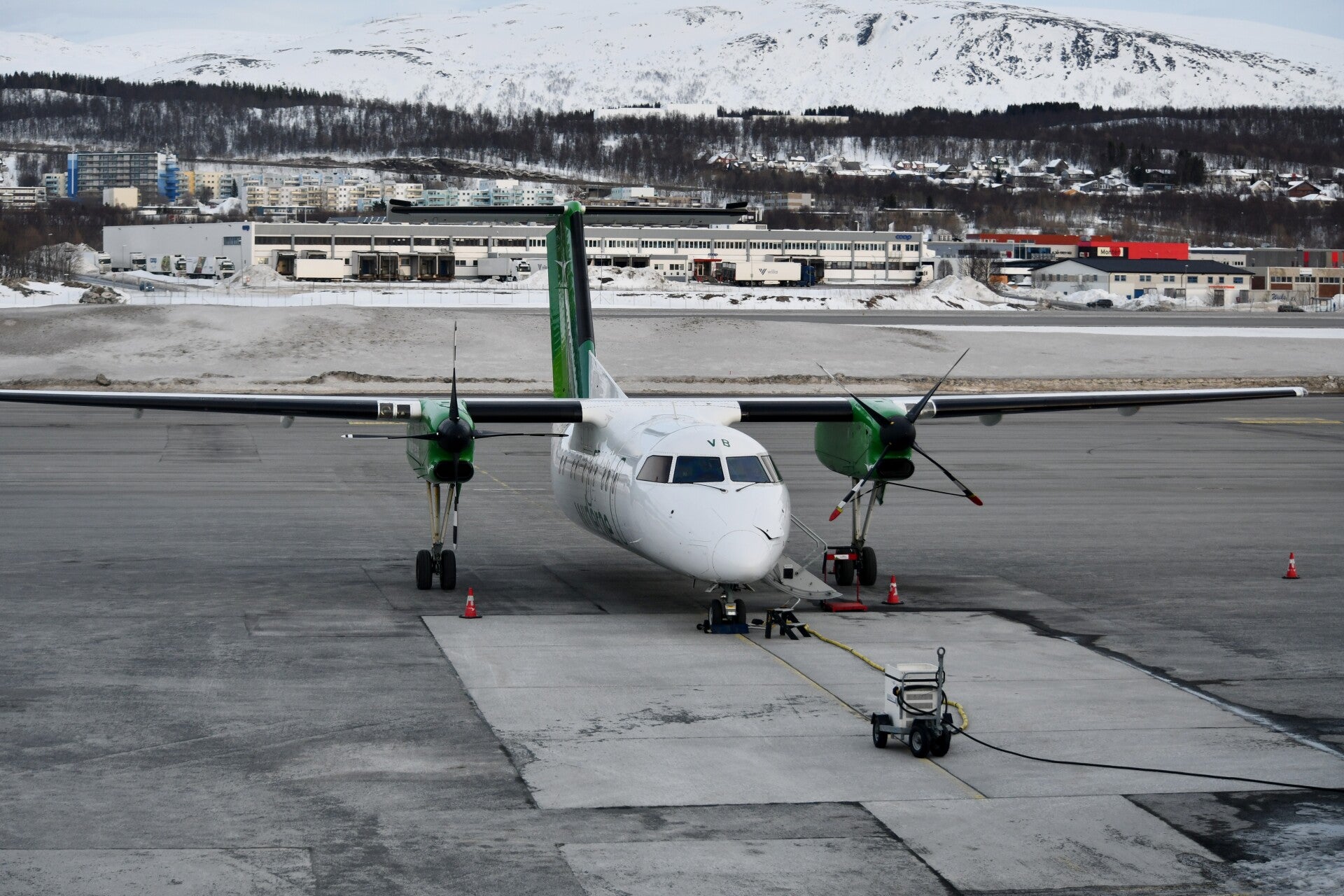
We collect our luggage and call an Uber to take us to the city center and the harbor, where our next hotel is located.
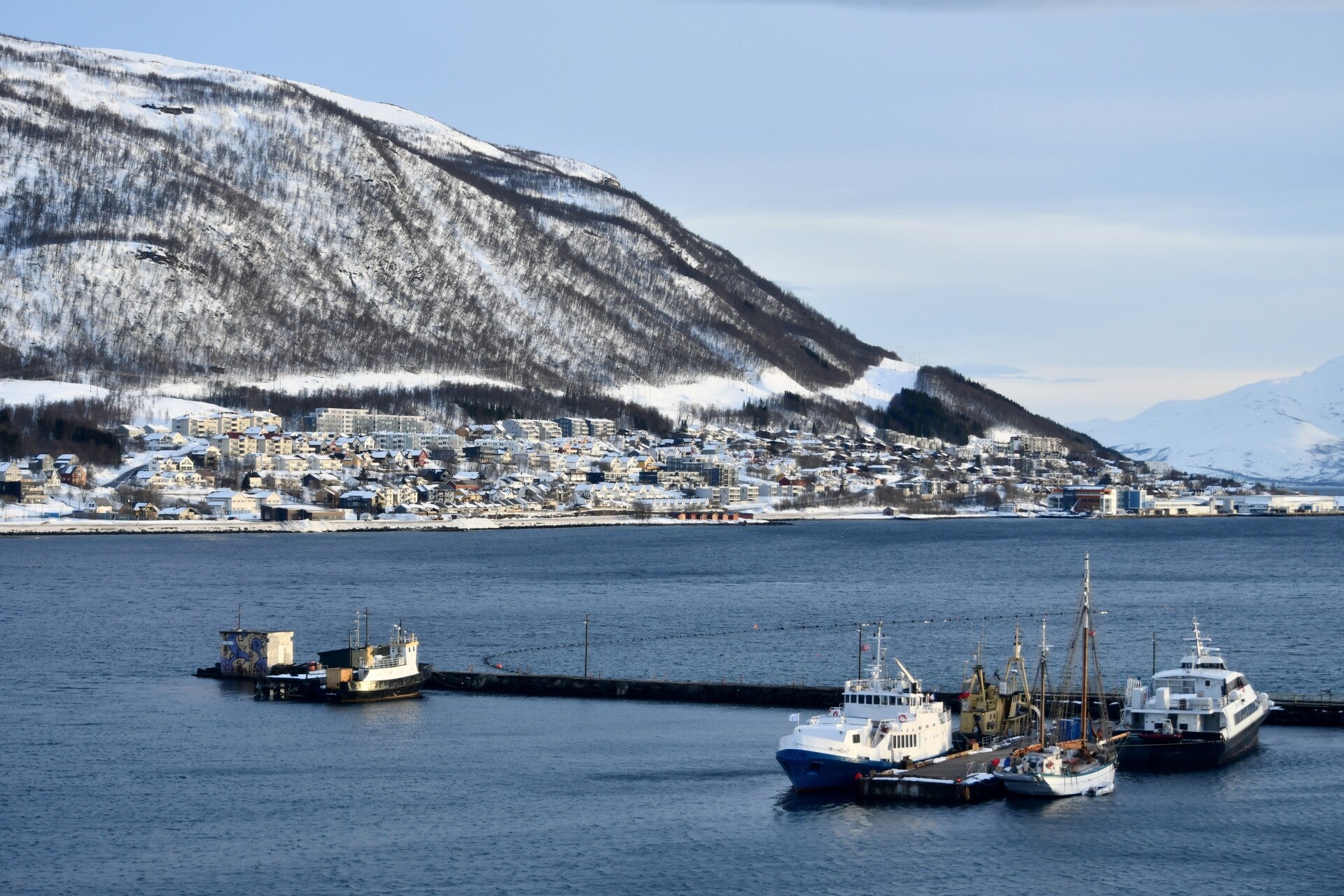
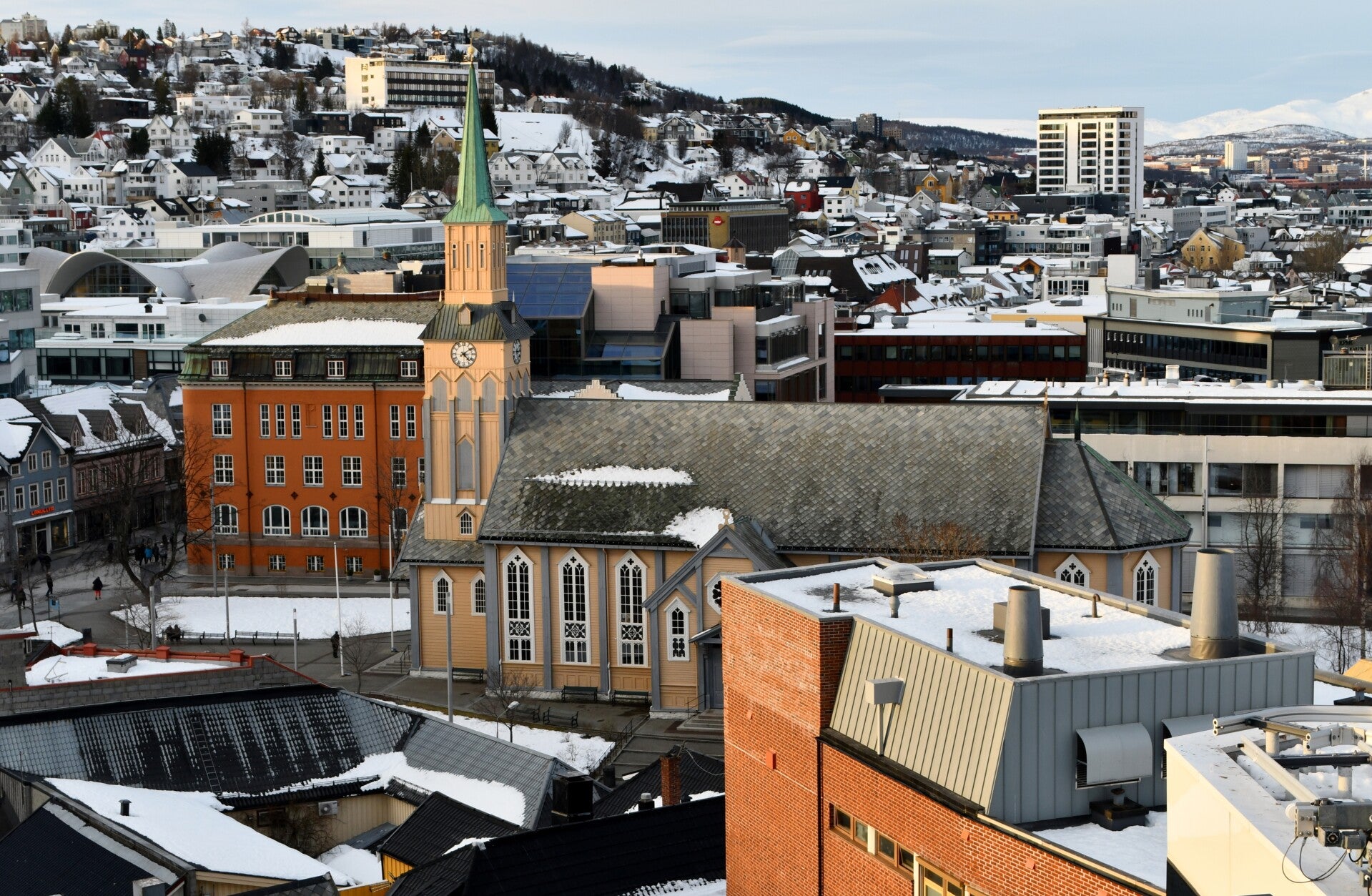
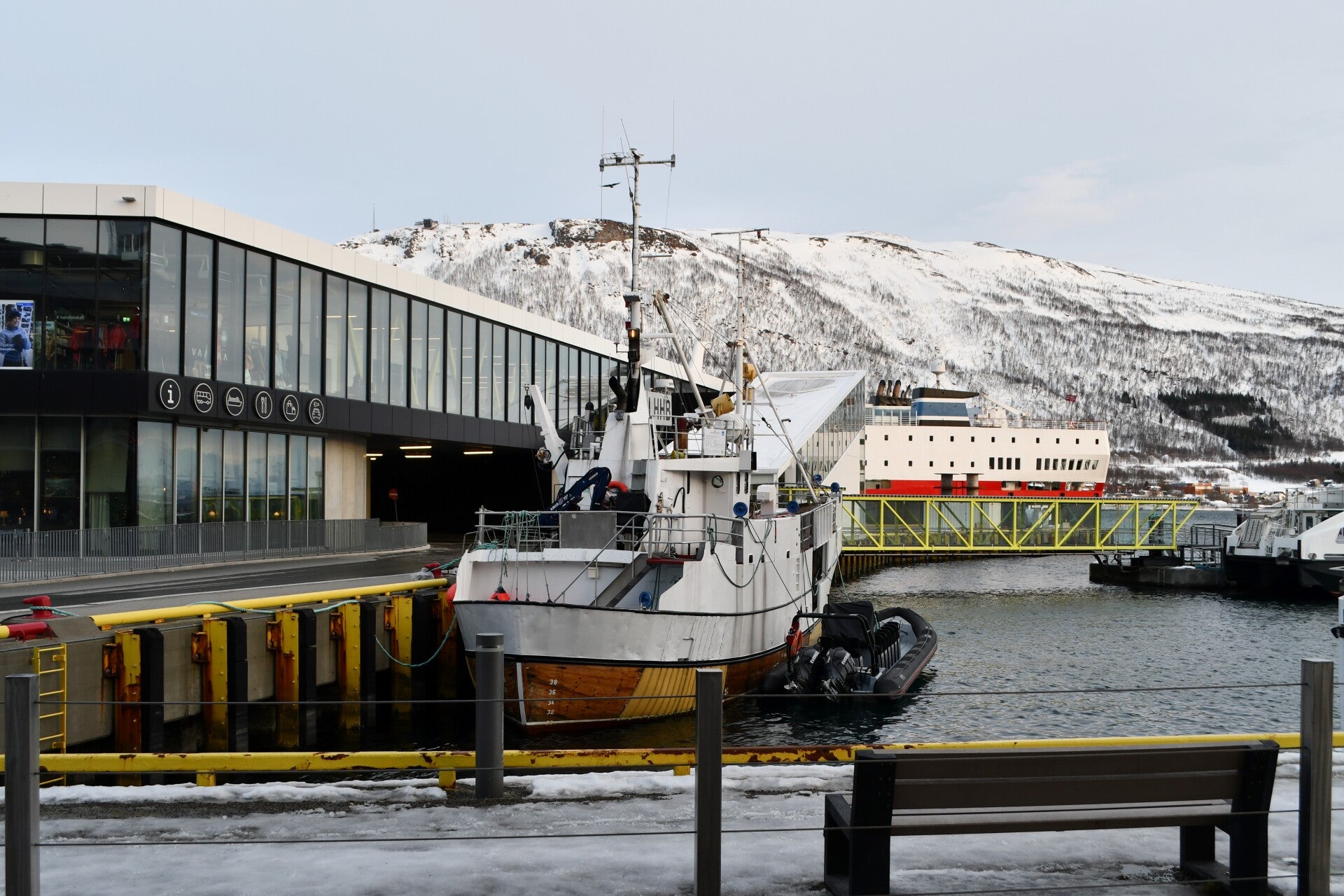
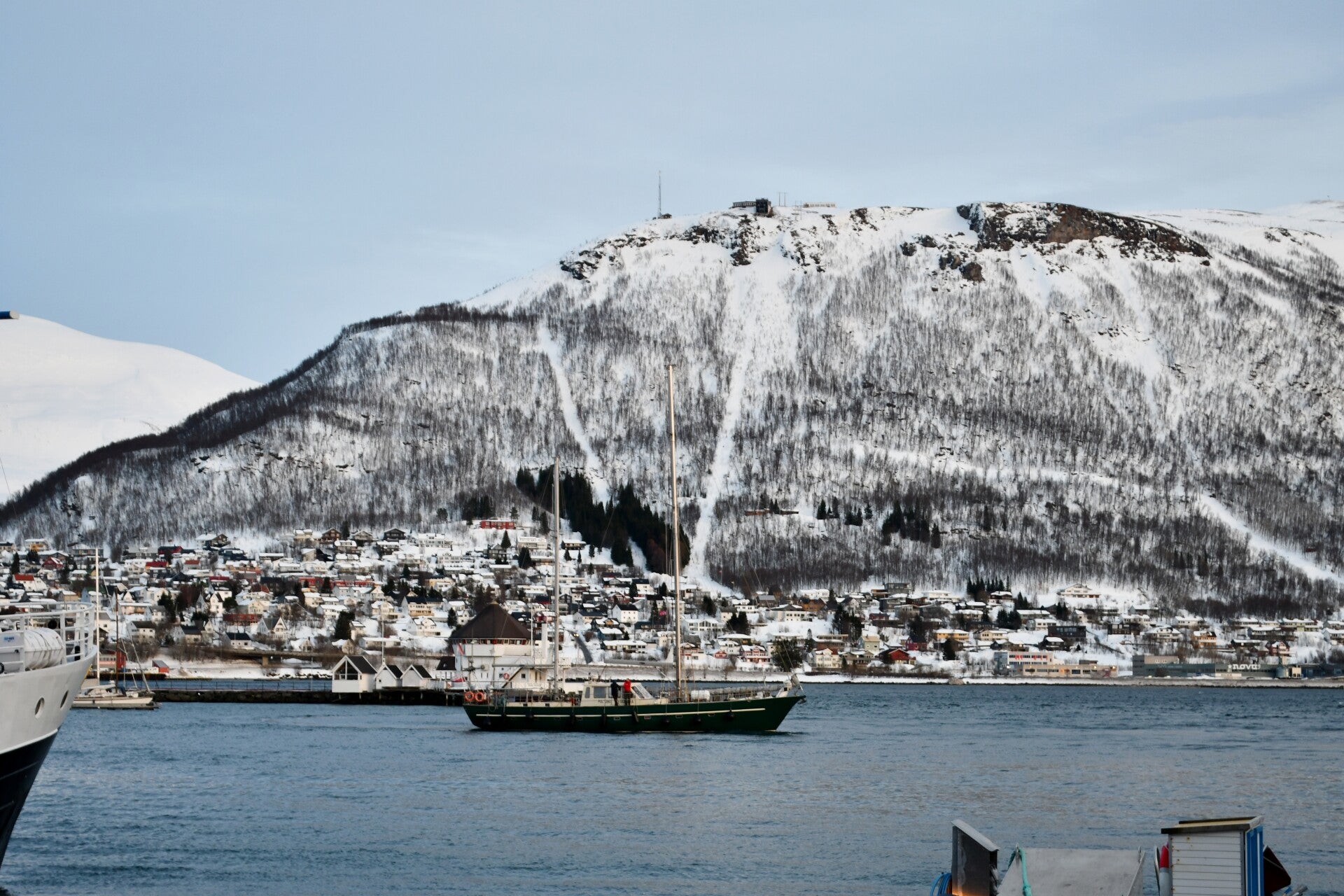
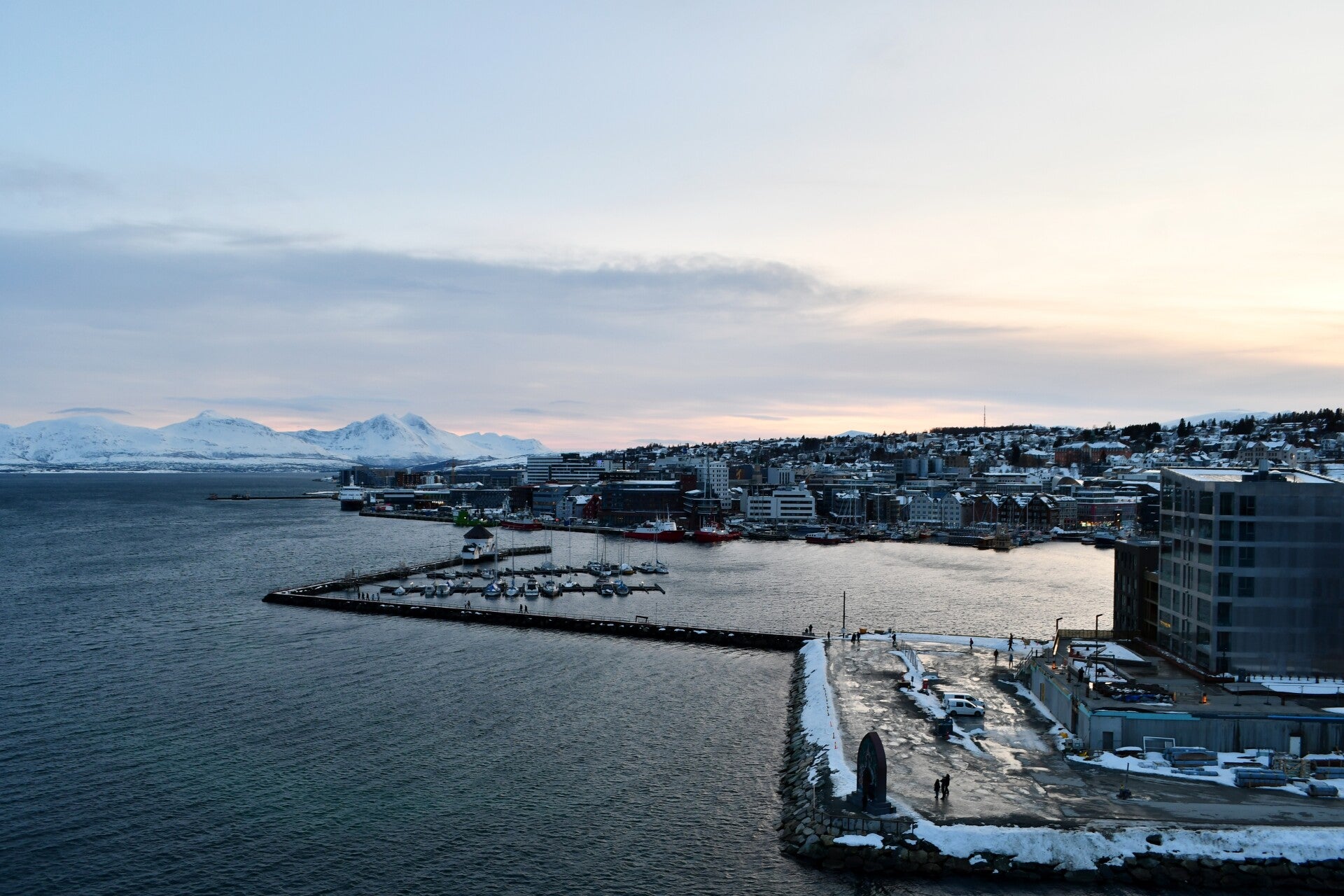
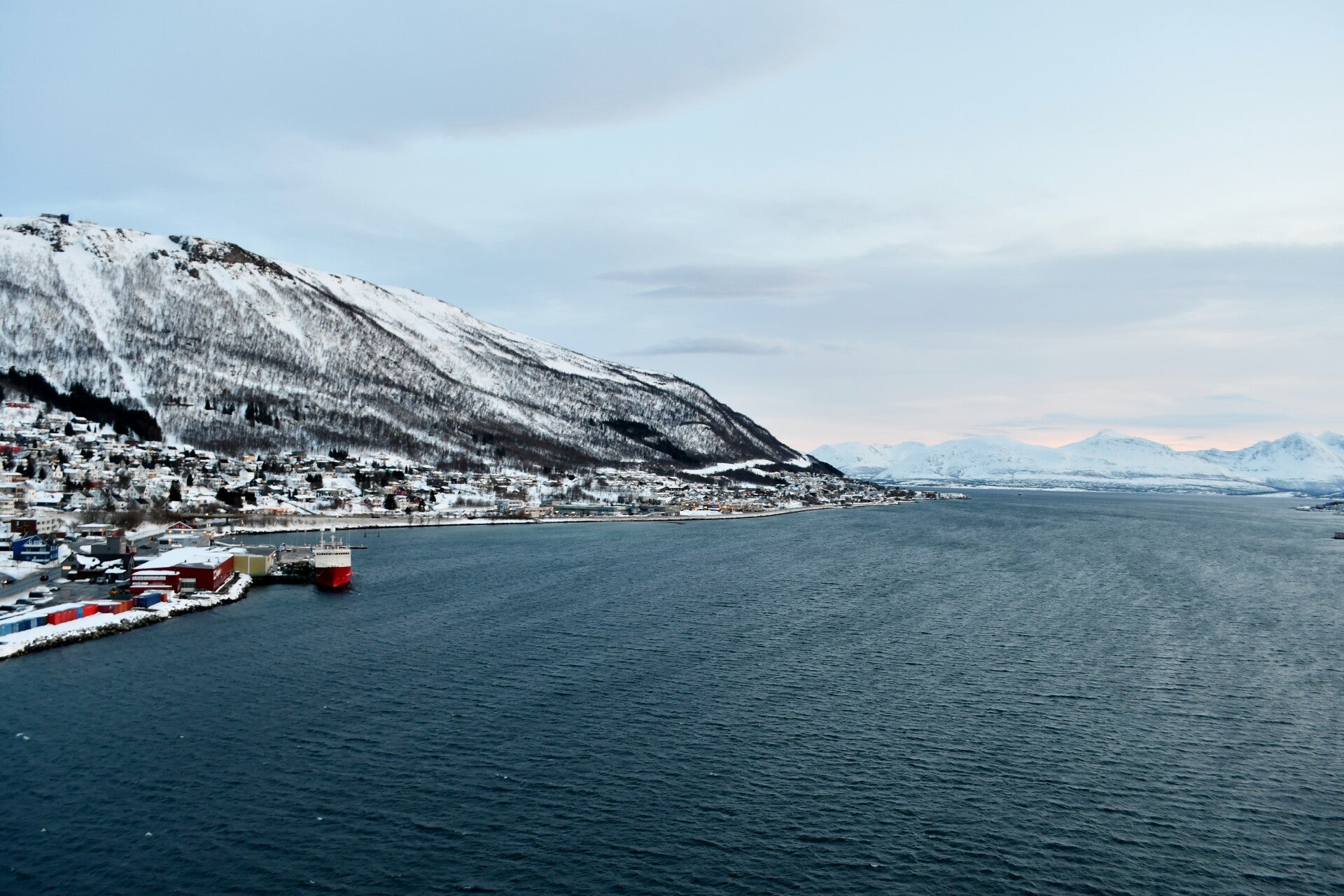
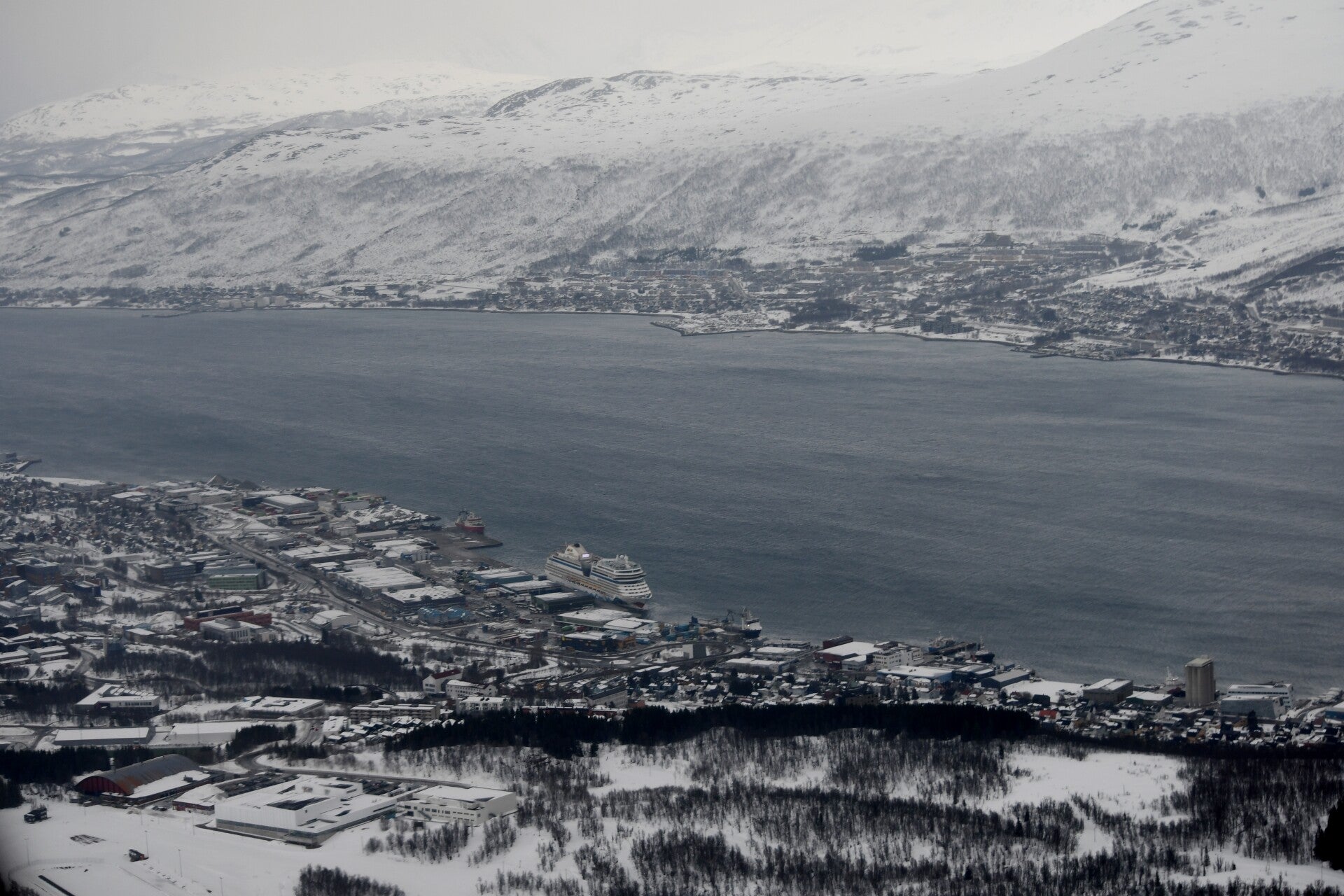
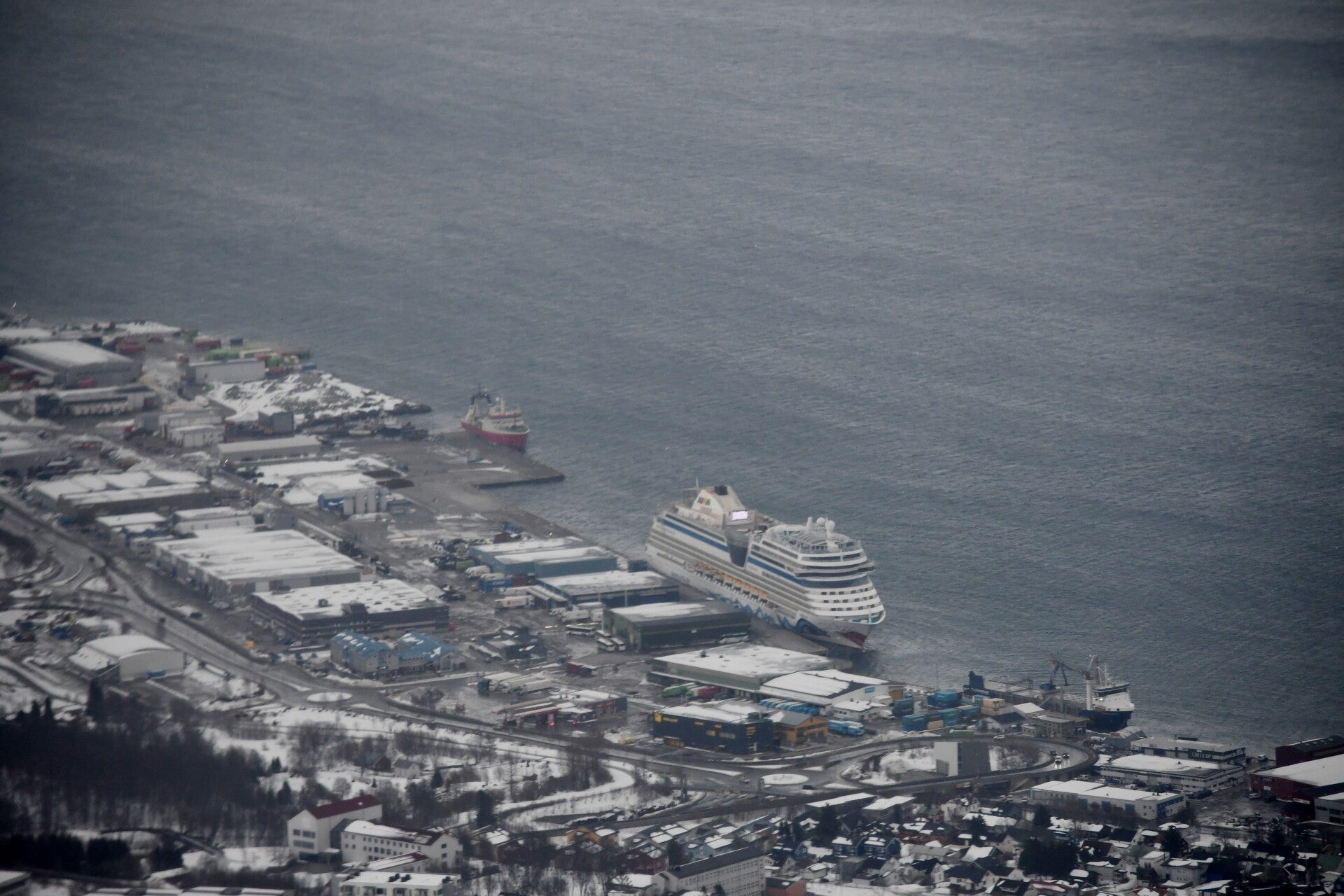
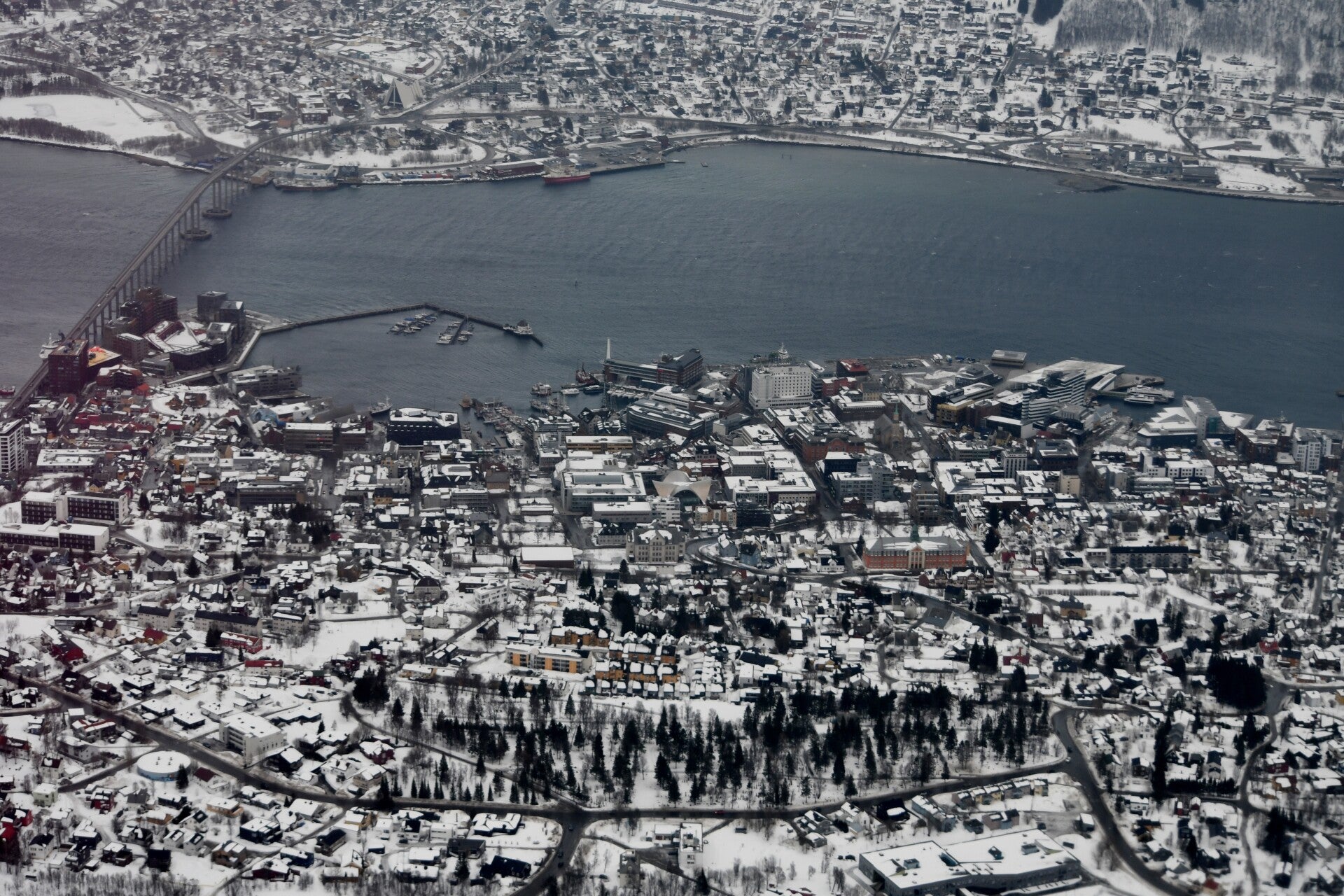
During the drive, we notice that higher up on the mountains, the snow is still piled two to three meters high! Even traffic signs are almost completely buried under the thick snow, absolutely mental. Eventually, we reenter the urban area, and before long the harbor of Tromsø comes into view. Our driver drops us off at the hotel entrance, and we check in.
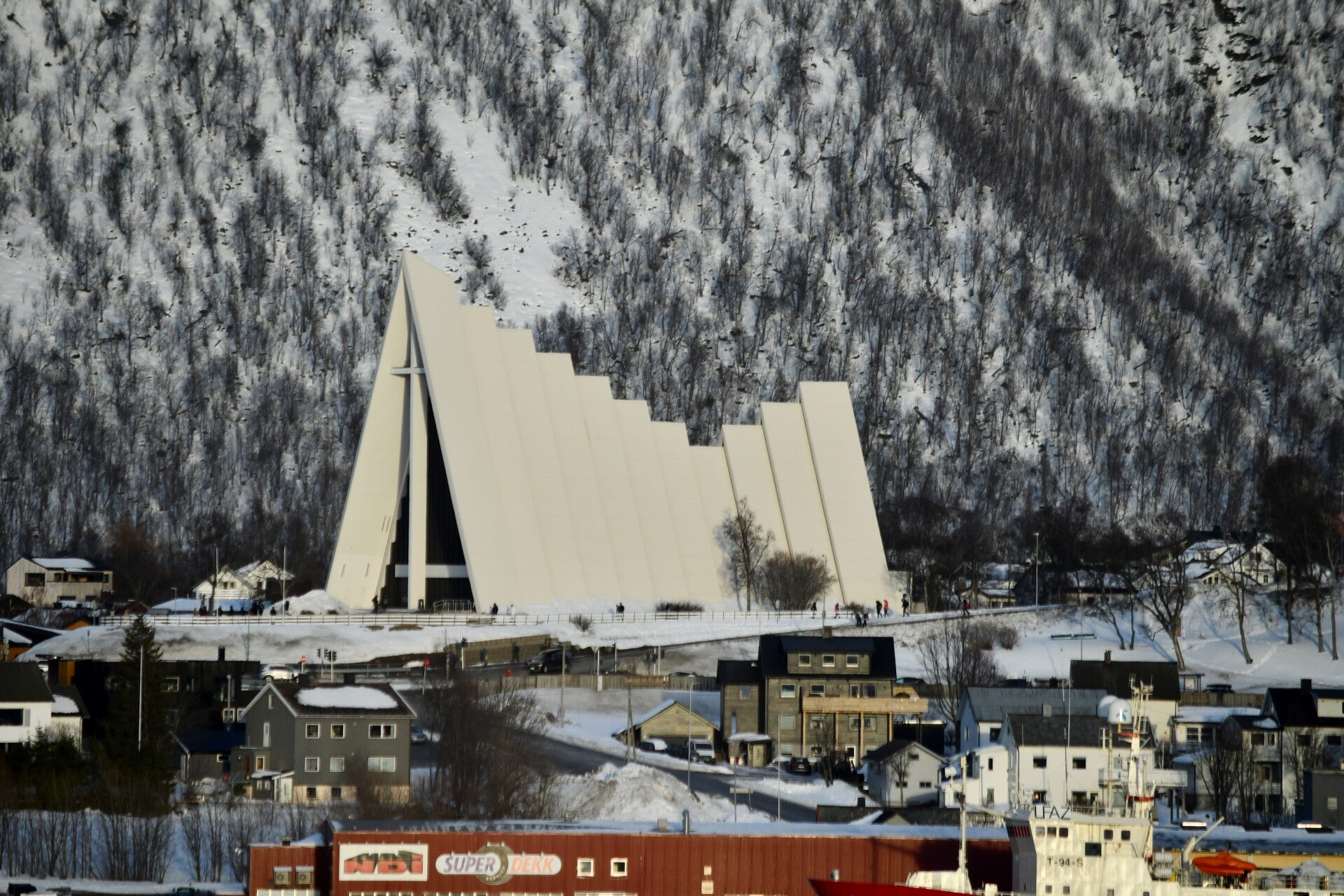
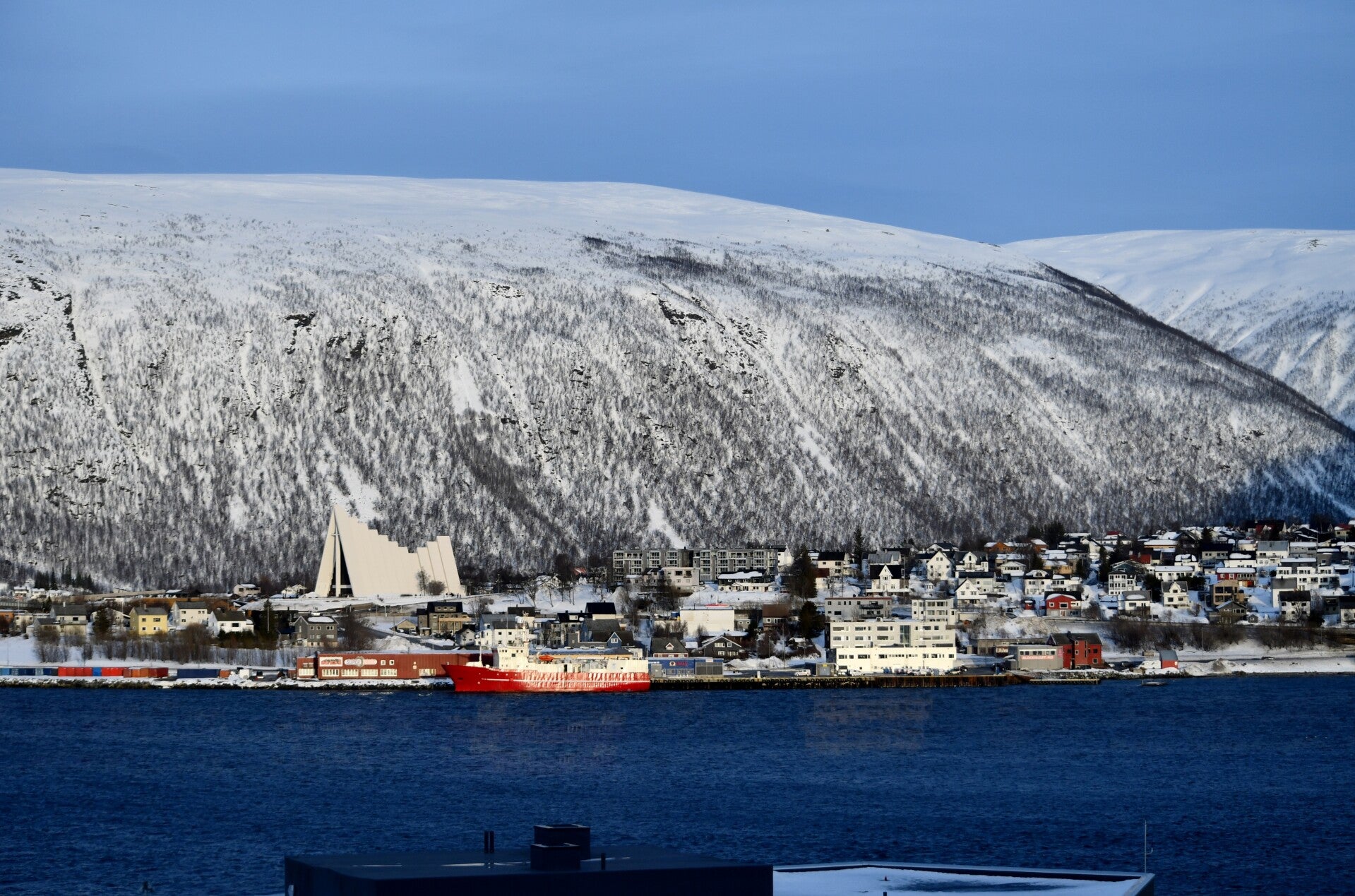
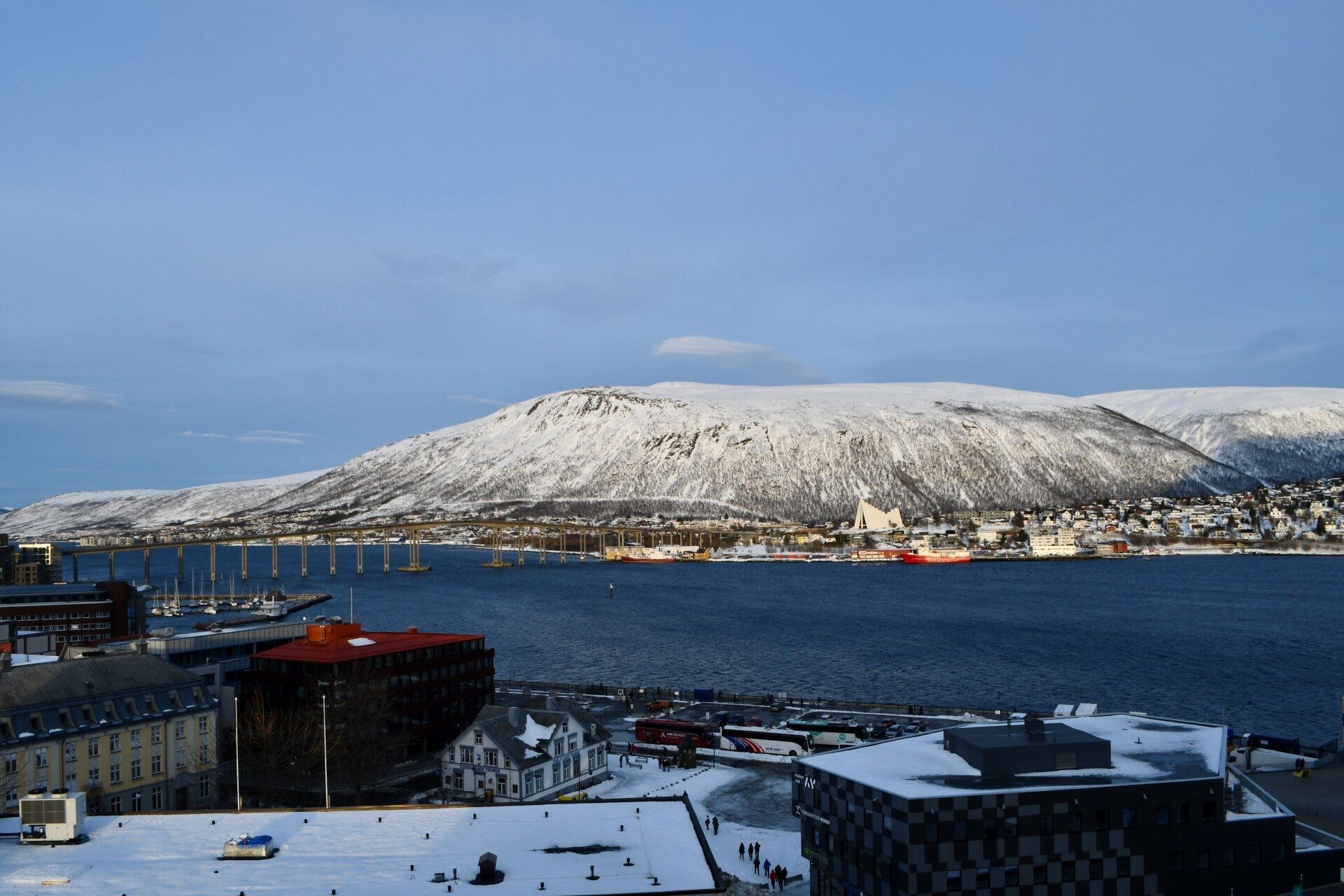
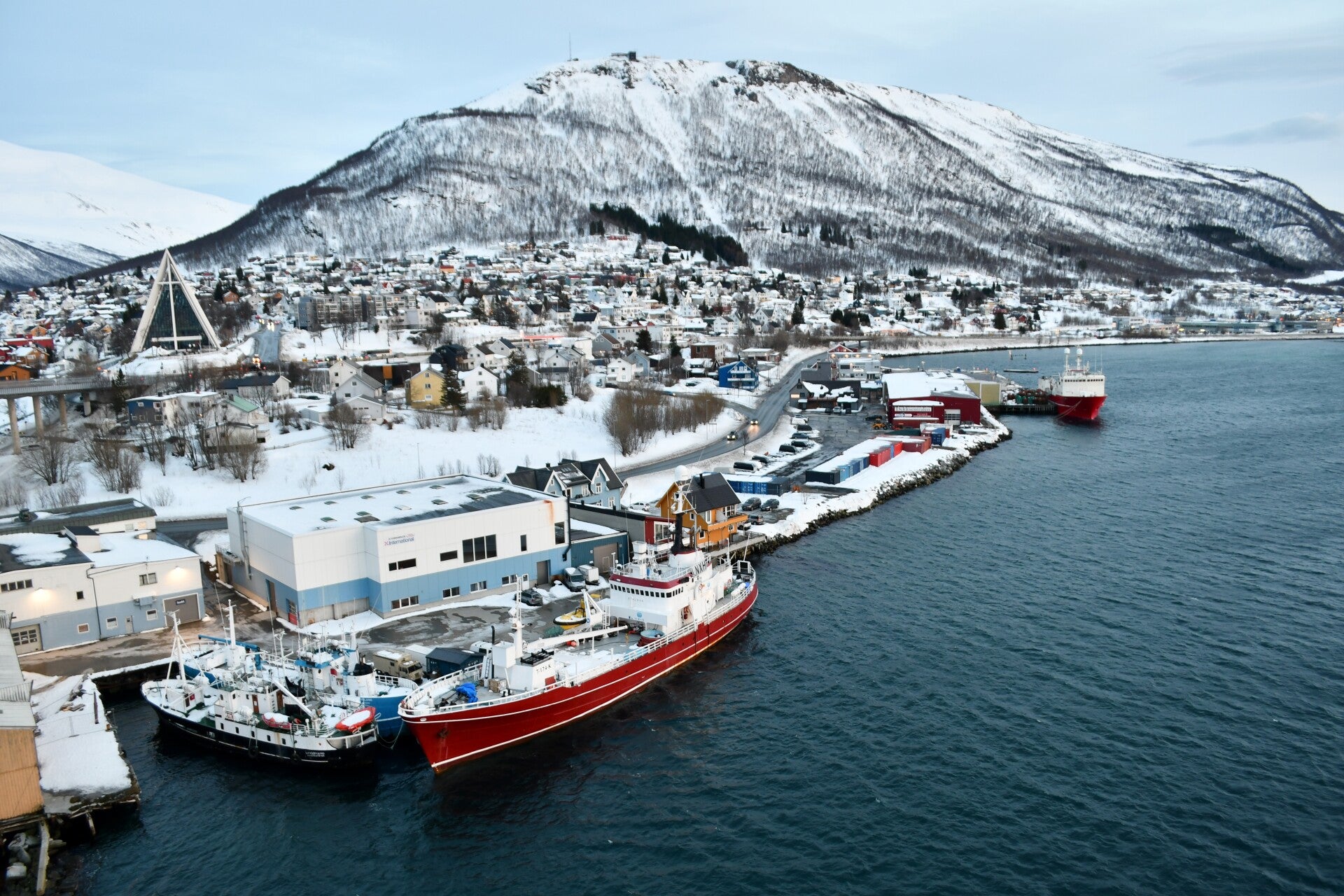
Tonight, we’re staying at the beautiful Clarion Hotel The Edge. This tall, triangular-shaped building offers fantastic views over the city and the river. From our room, we can even see the iconic Ishavskatedralen, or Arctic Cathedral. Absolutely stunning. Best of all, the hotel has a rooftop bar with an outdoor terrace which is perfect for tonight.
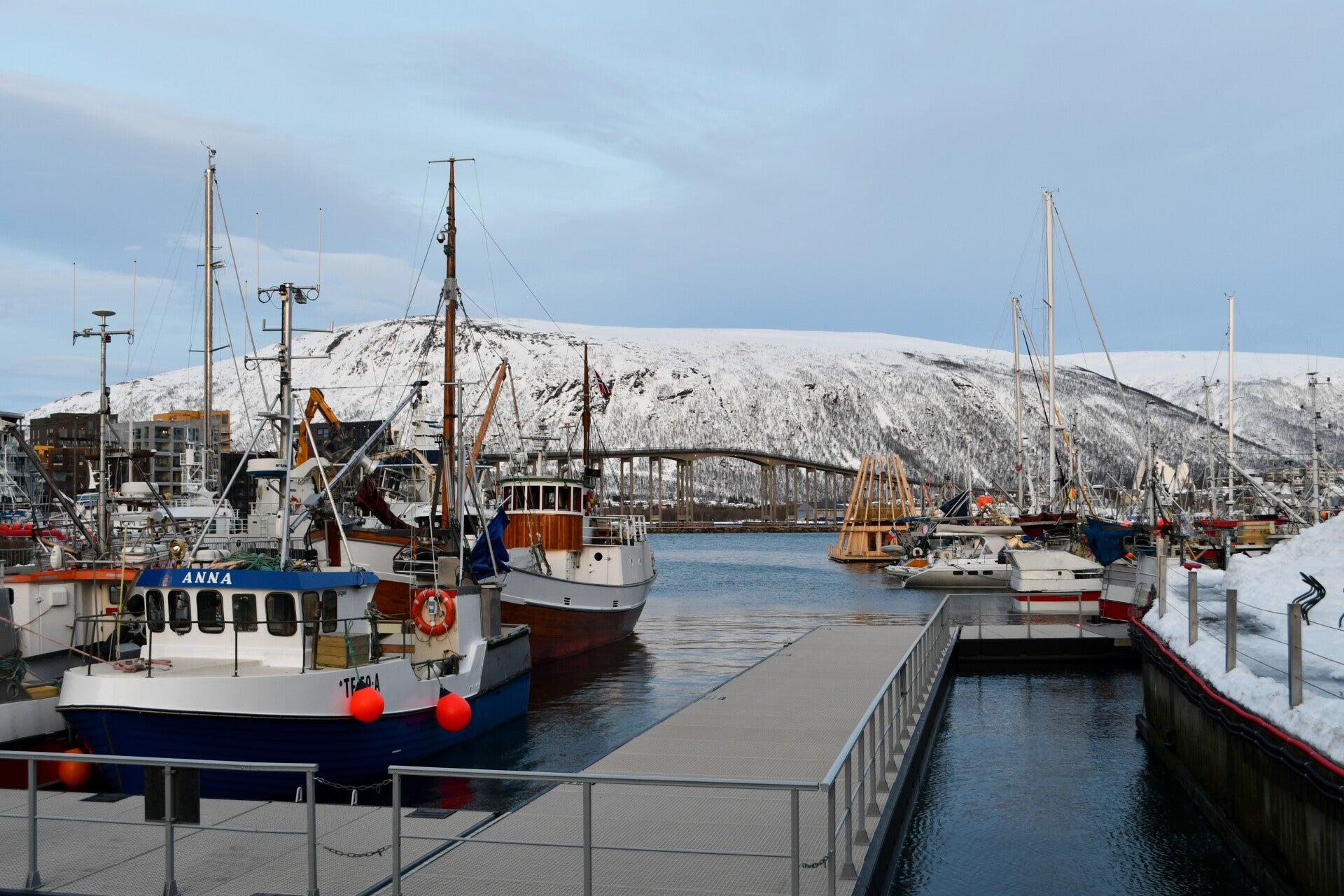
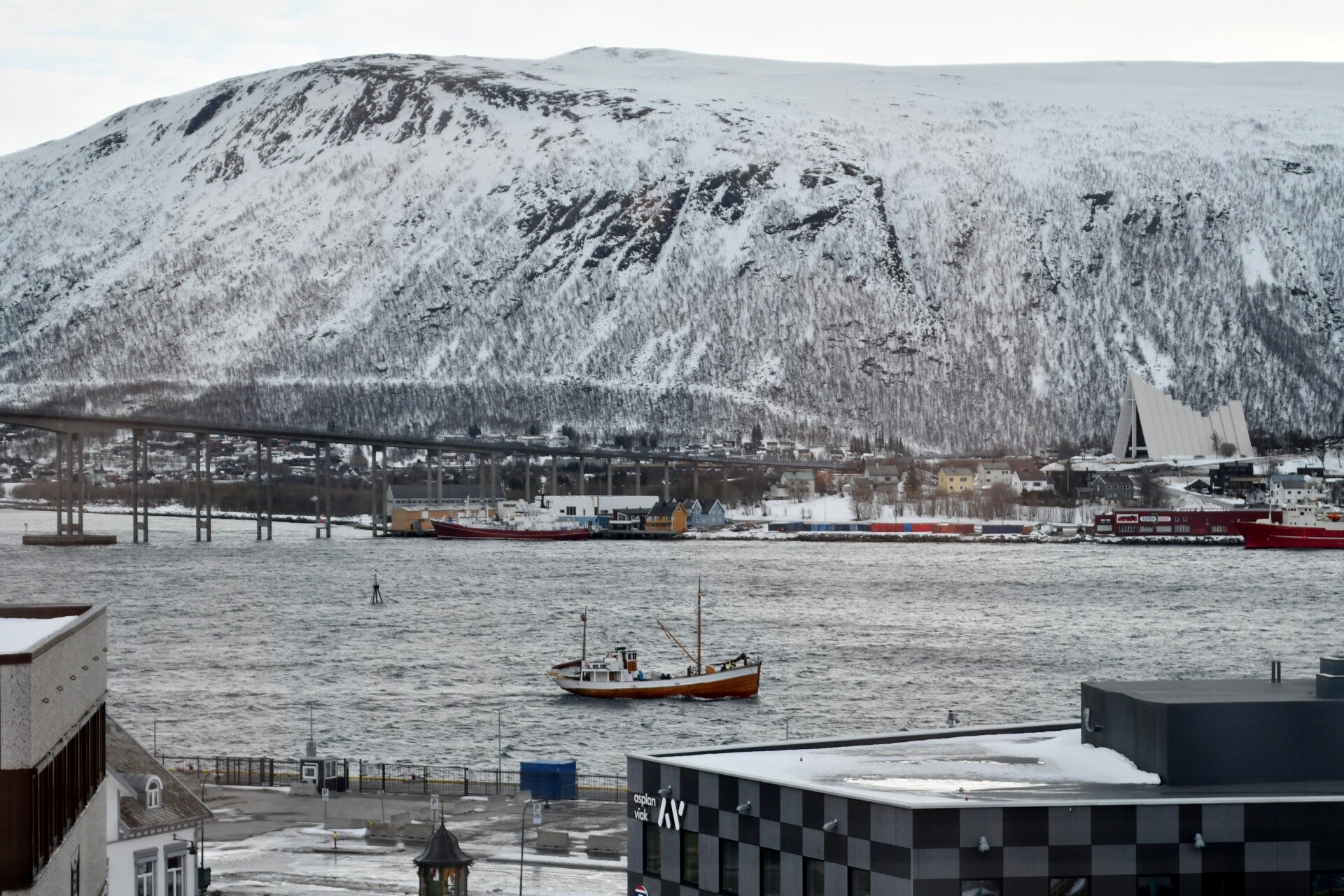
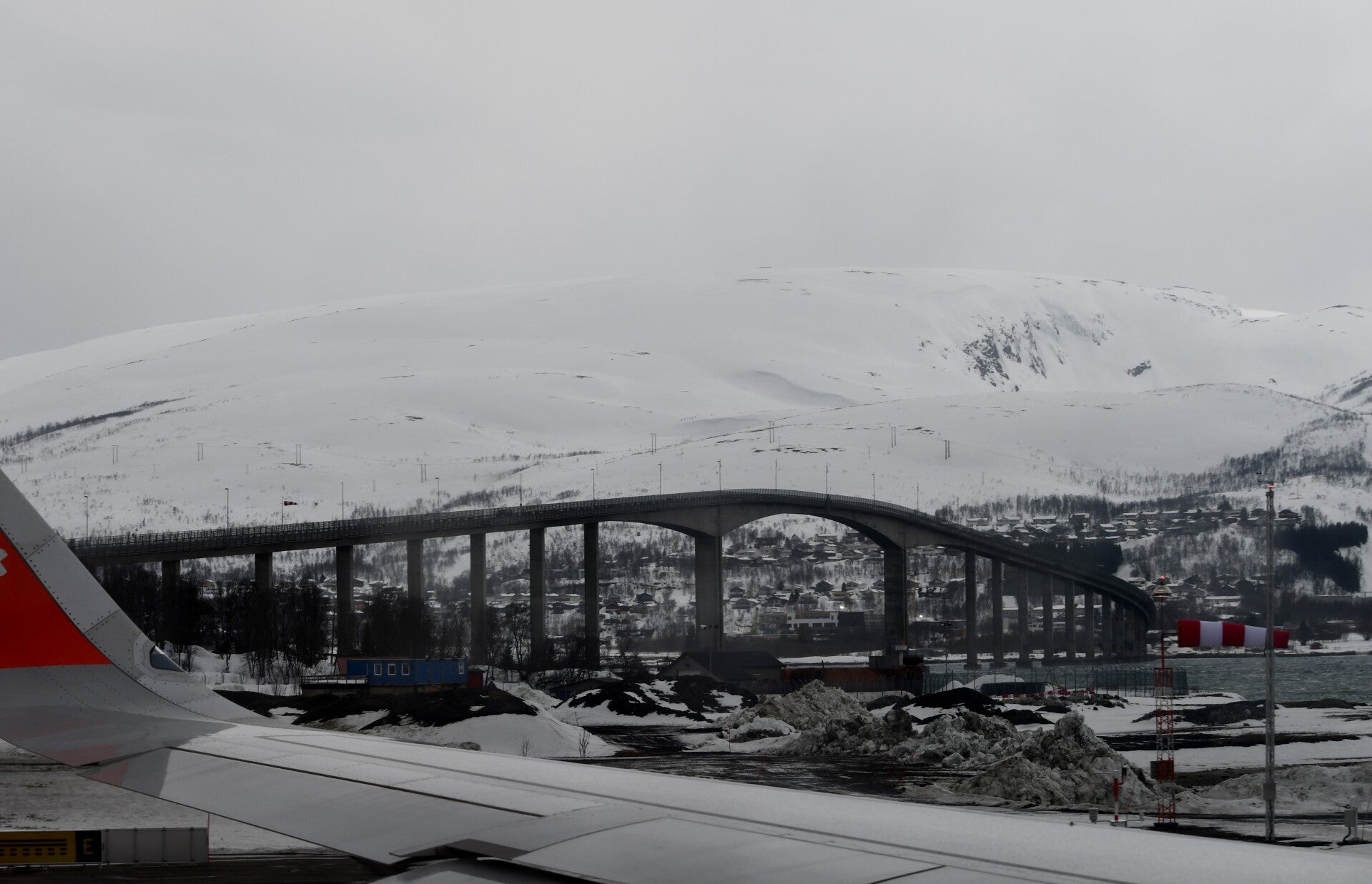
Our original plan was to take the Fjellheisen cable car from Solliveien in Tromsdalen up to Storsteinen, 421 meters above sea level. However, due to strong winds, the cable car is closed, which is entirely understandable. Instead, we decide to go for a walk to the Arctic Cathedral, crossing the Tromsøbrua, the large bridge connecting Tromsø with Tromsdalen.
The wind is still very gusty, and the roads and sidewalks are slippery, making it quite a challenge just to reach the bridge. Once on it, the real battle begins, as the winds seem to double, or even triple in strength over the water. Our faces nearly freeze, and it’s even hard to breath and to fully enjoy the stunning scenery, but we try anyway. After a serious struggle and with thoroughly windblown hairstyles, we finally reach the large white triangular cathedral.
The Arctic Cathedral (officially Tromsdalen Church, but widely known as Ishavskatedralen) is one of Tromsø’s most iconic landmarks. Completed and consecrated in 1965, it was designed by architect Jan Inge Hovig as a striking modern church reflecting the unique light and landscape of the Arctic. Its bold triangular form, made up of eleven aluminum-coated concrete panels on each side, is said to evoke ice floes, mountain peaks, or even traditional Sámi tents. Inside, the church features one of Europe’s largest stained-glass mosaics, The Return of Christ by Victor Sparre (installed in 1972), along with an impressive organ boasting nearly 3,000 pipes. Although often referred to as a “cathedral,” it is technically a parish church, but its dramatic design and Arctic setting have made it a true symbol of the city.
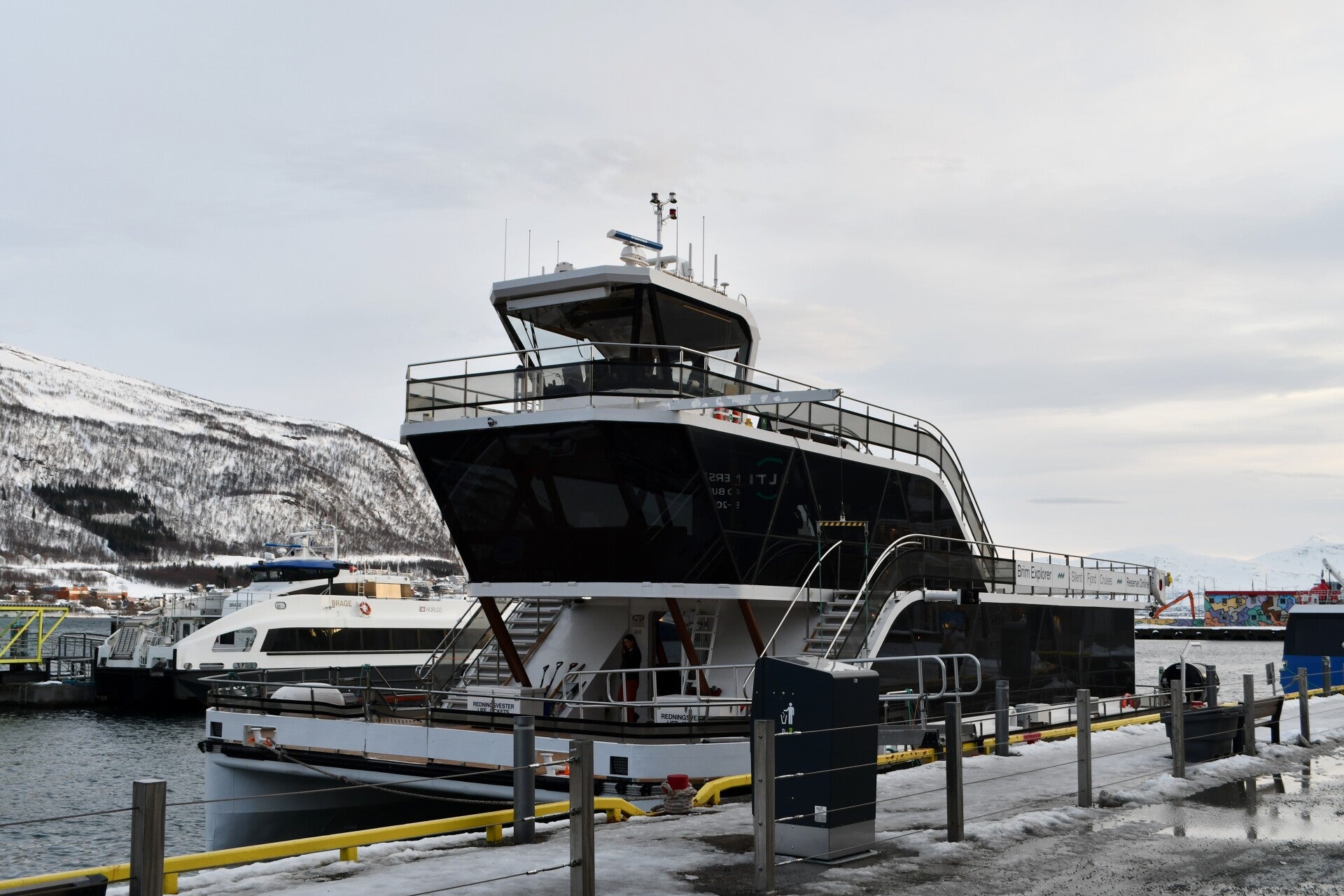
Unfortunately, the Arctic Cathedral is already closed, and from the outside the stained glass doesn’t quite have the same impact as it does from within. So, we brace ourselves once again for the battle against the wind and begin our return to Tromsø. While crossing the bridge, we spot a large passenger ship sailing north beneath us: the famous Hurtigruten, Norway’s coastal express.
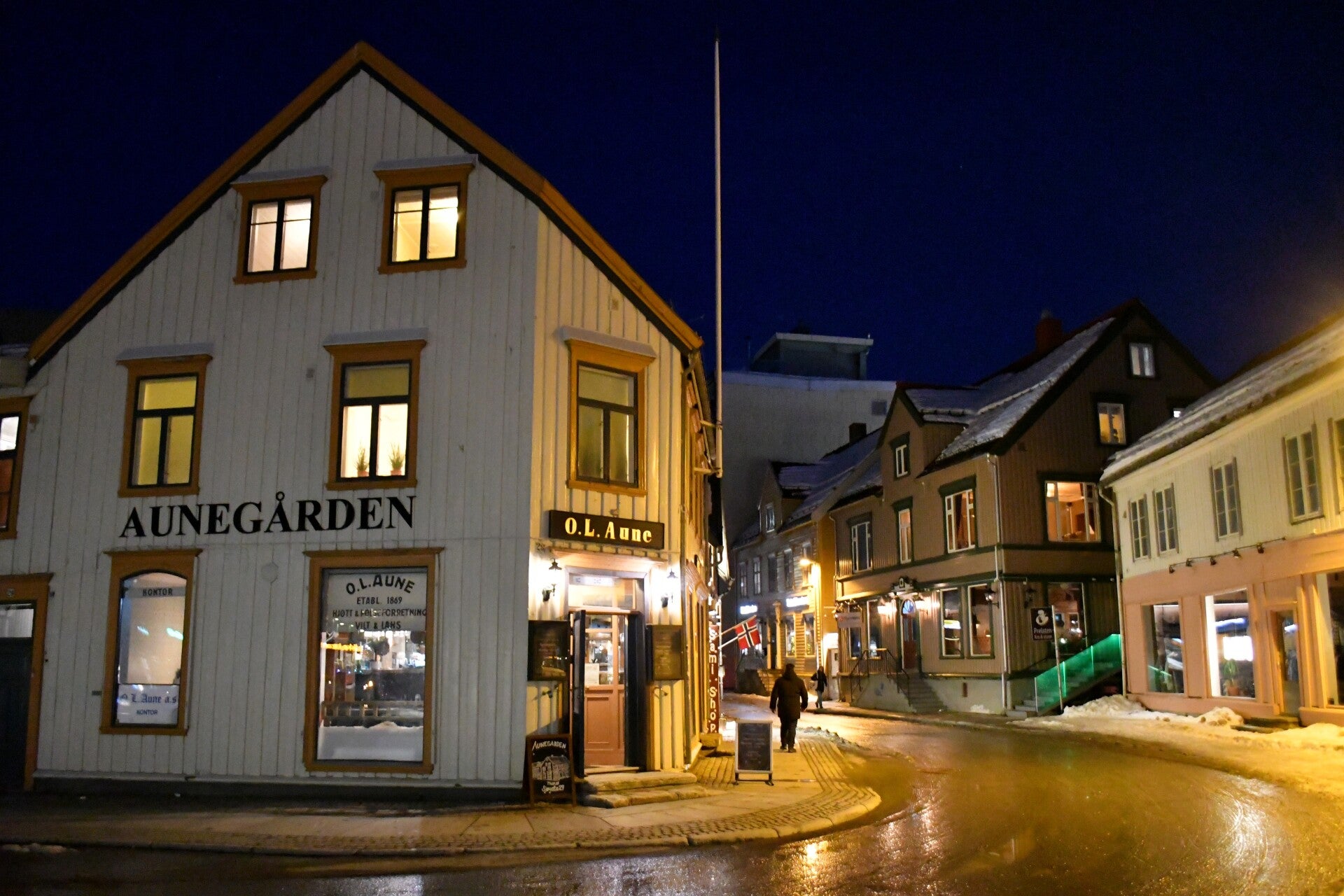
Eventually—and don’t ask us how—we make it back to Tromsø. That means it’s time for a well-deserved dinner. A few days earlier, we visited the world’s northernmost Burger King, but Tromsø has also been home to the world’s northernmost McDonald’s for several years now. With our unwavering loyalty to the Golden Arches, a visit is mandatory, especially since we previously checked off the former northernmost McDonald’s in Rovaniemi, Finland, back in 2022!
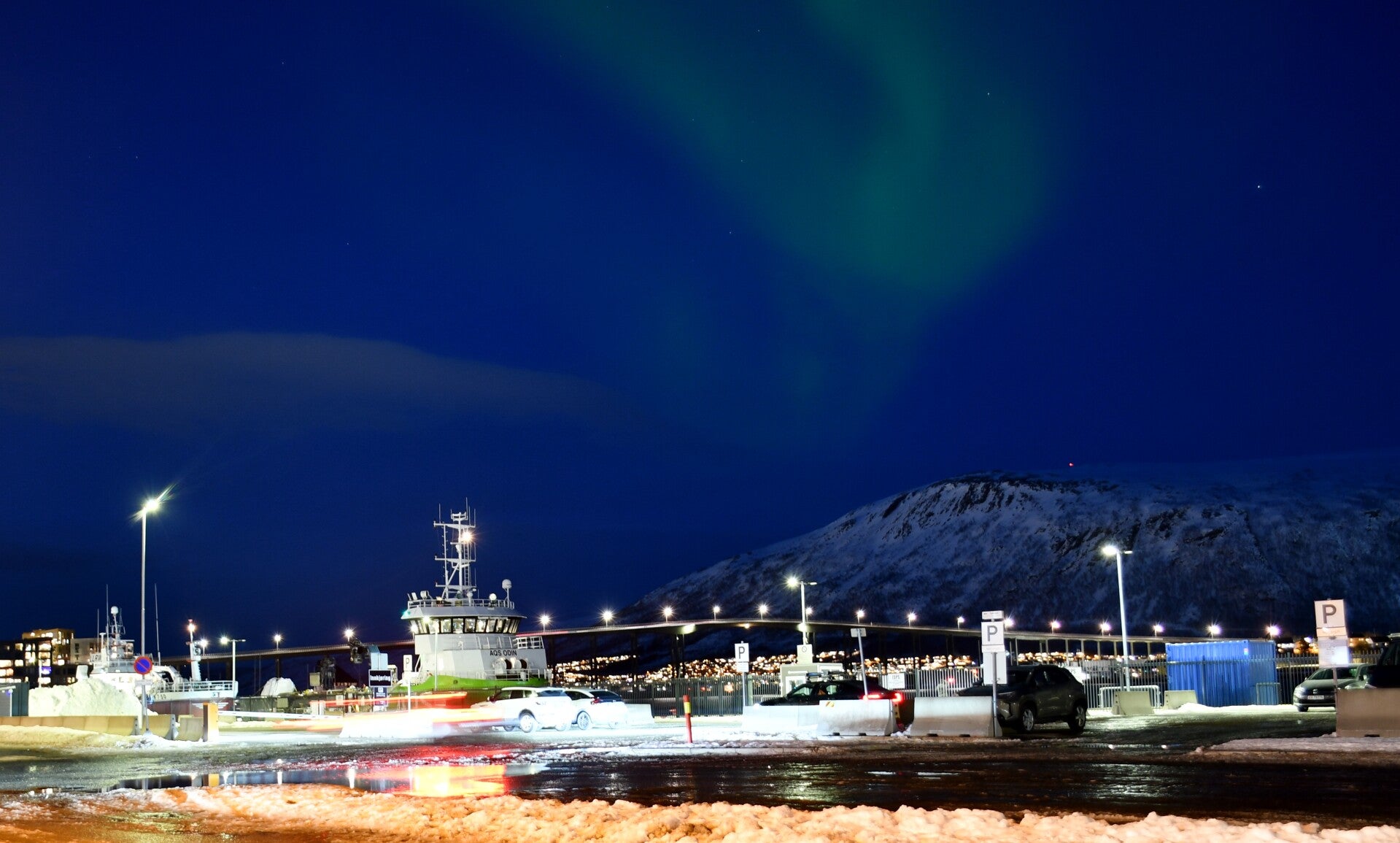
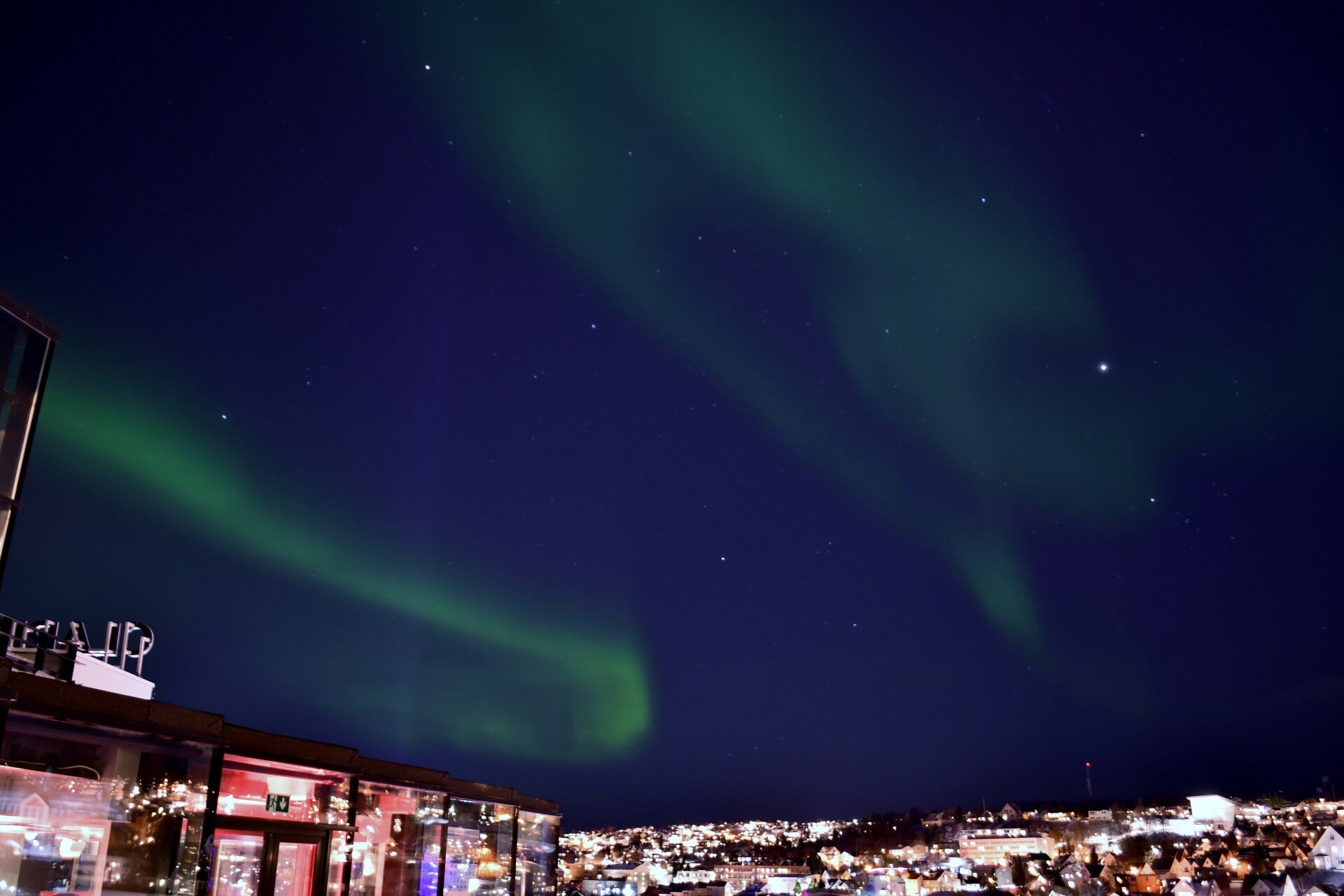
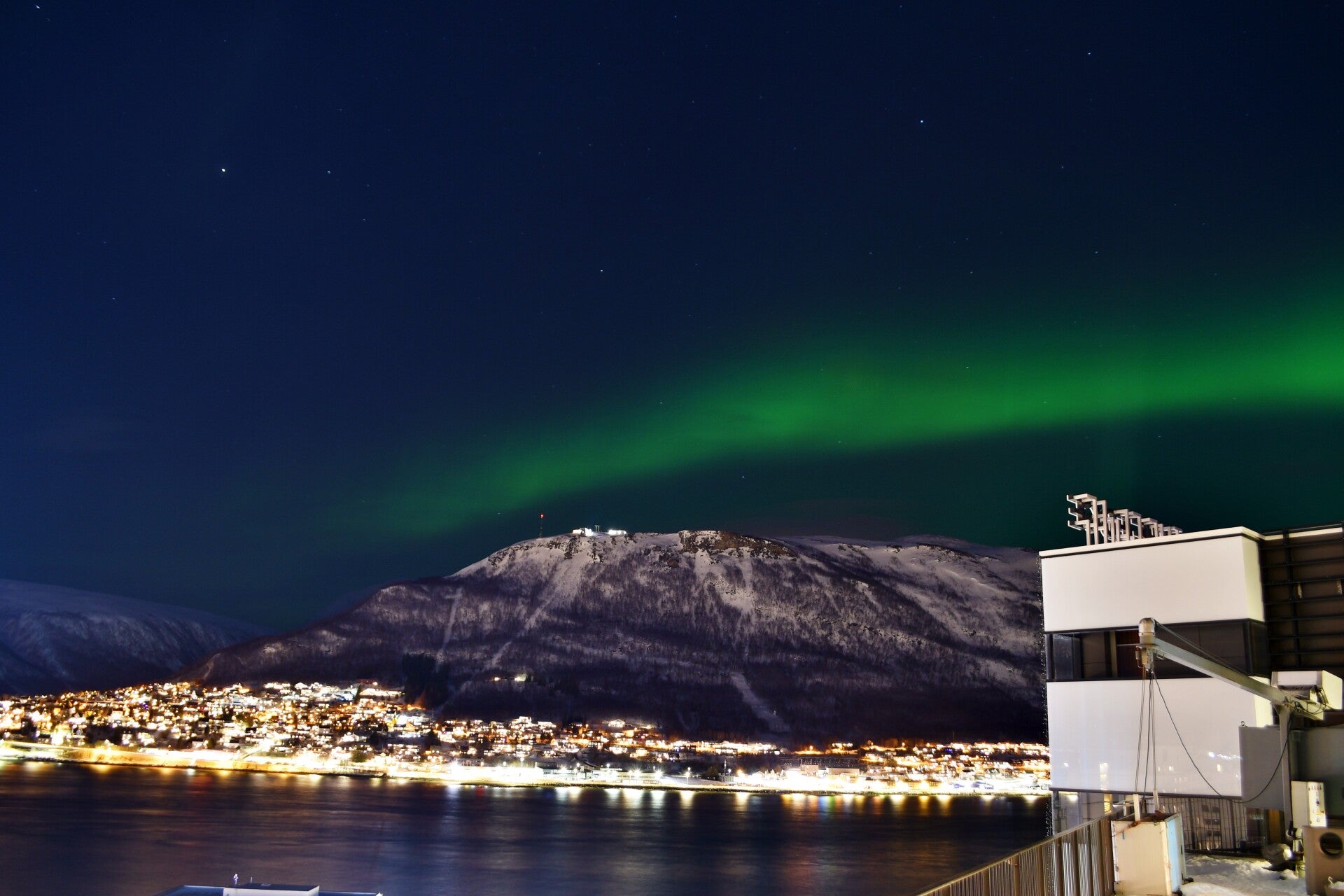
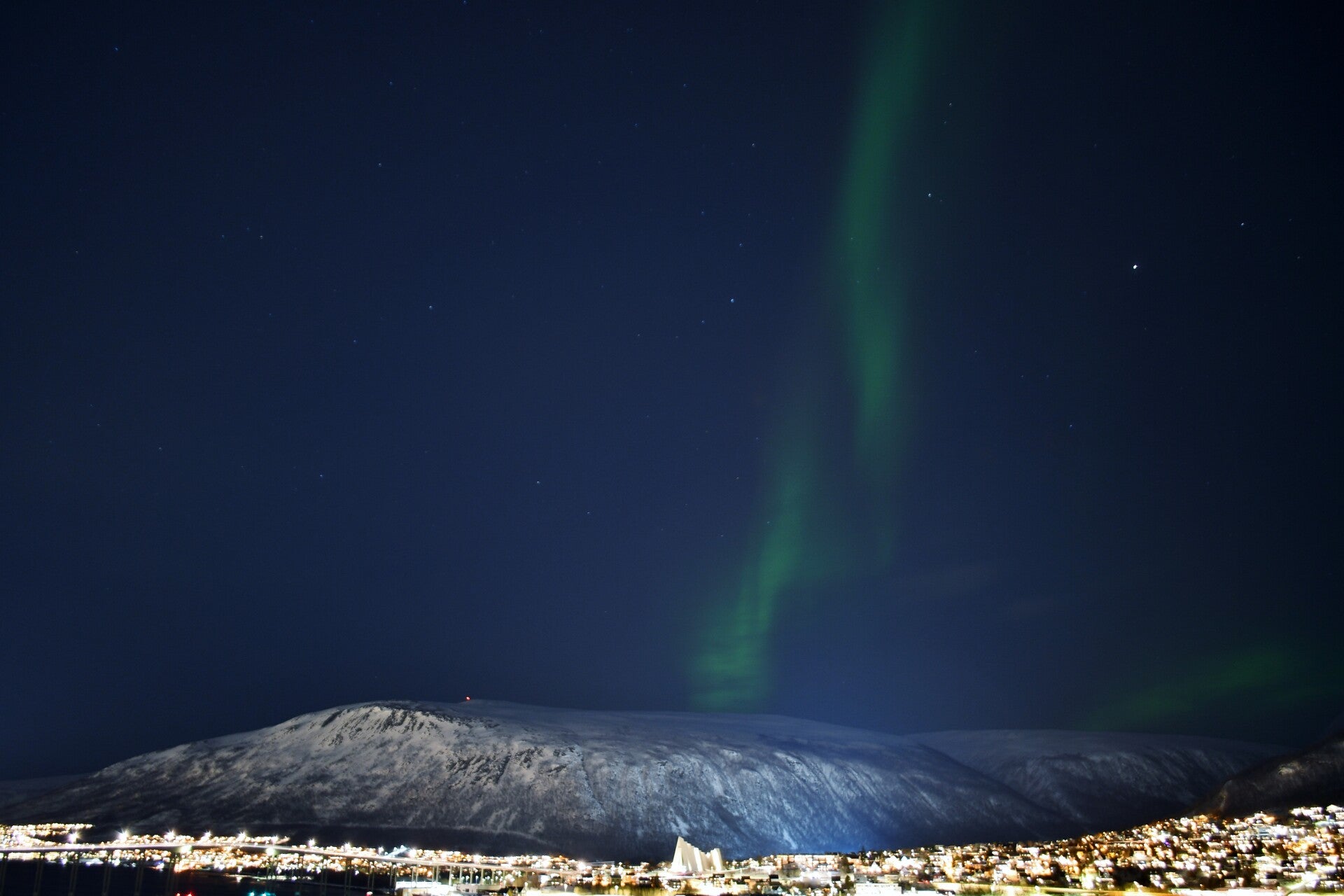
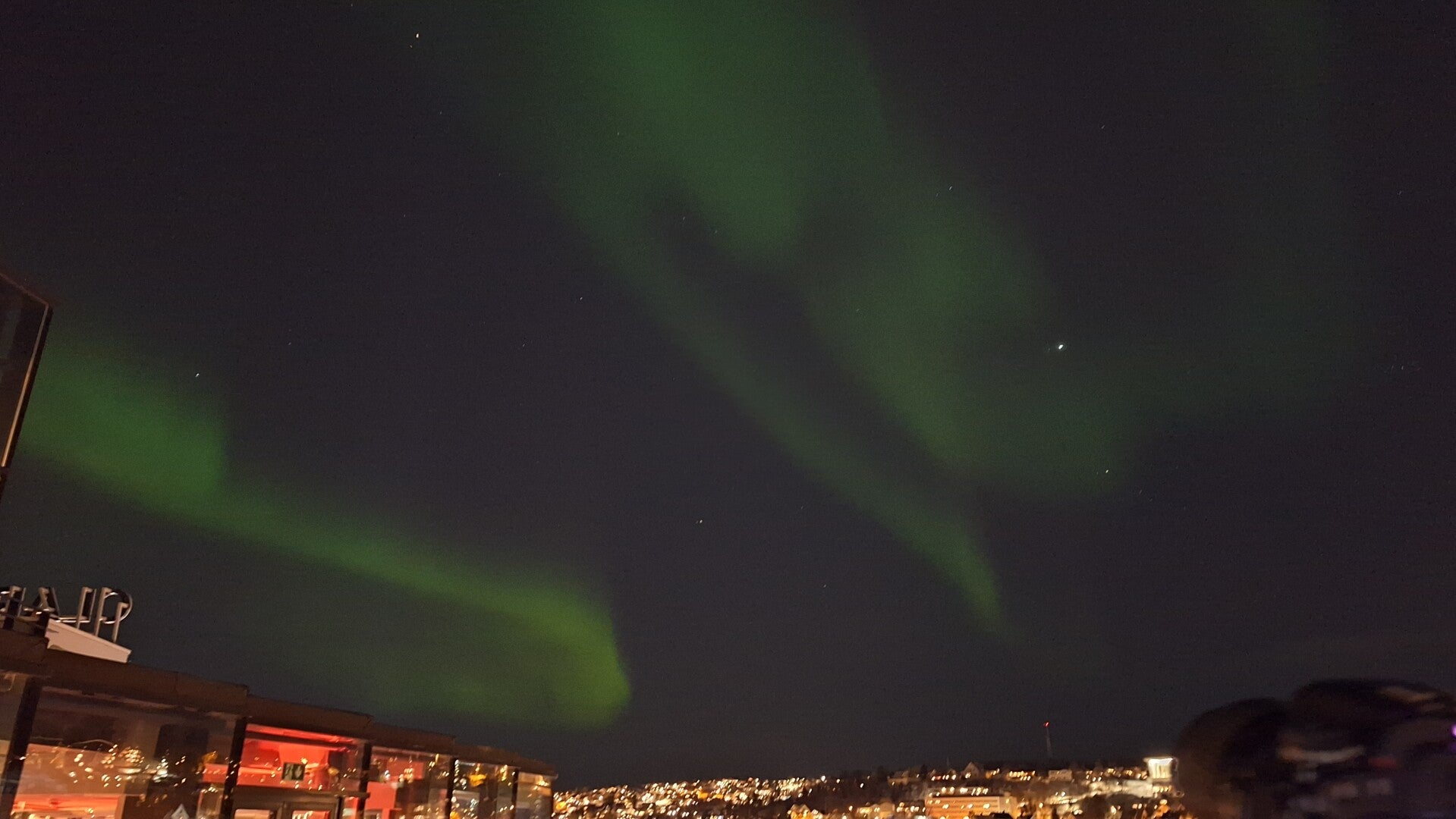
After a decent dinner (let’s be honest, we’ve been spoiled by the past few days), we walk back toward the harbor, where we’re suddenly greeted by the brightest aurora borealis we’ve ever seen. Even with all the city lights around us, vivid green curtains swirl overhead in the night sky. Absolutely magical! We rush back to the hotel, eager to get up to the rooftop terrace as quickly as possible.
Up on the roof, we’re welcomed by the lively atmosphere of the bar: party music, a great vibe, and plenty of tourists hoping to catch a glimpse of the northern lights. Funny enough, many people haven’t even noticed that the aurora is already blazing across the sky, allowing us to grab the best spots to set up our tripods for some incredible night shots. Before long, others follow us outside, and within minutes everyone is standing still, gazing up at the colorful skies. We take great shots, chat with some other tourists and overall have a great time.
What a fantastic last night!









Monday 23 March – Storming Back Home
This morning, we wake up to find that the predicted storm has indeed arrived. Fierce winds howl through the streets of Tromsø, bending everything in their path. After stuffing ourselves one last time at the massive breakfast buffet at the Clarion Hotel, we call an Uber and head back to the airport.
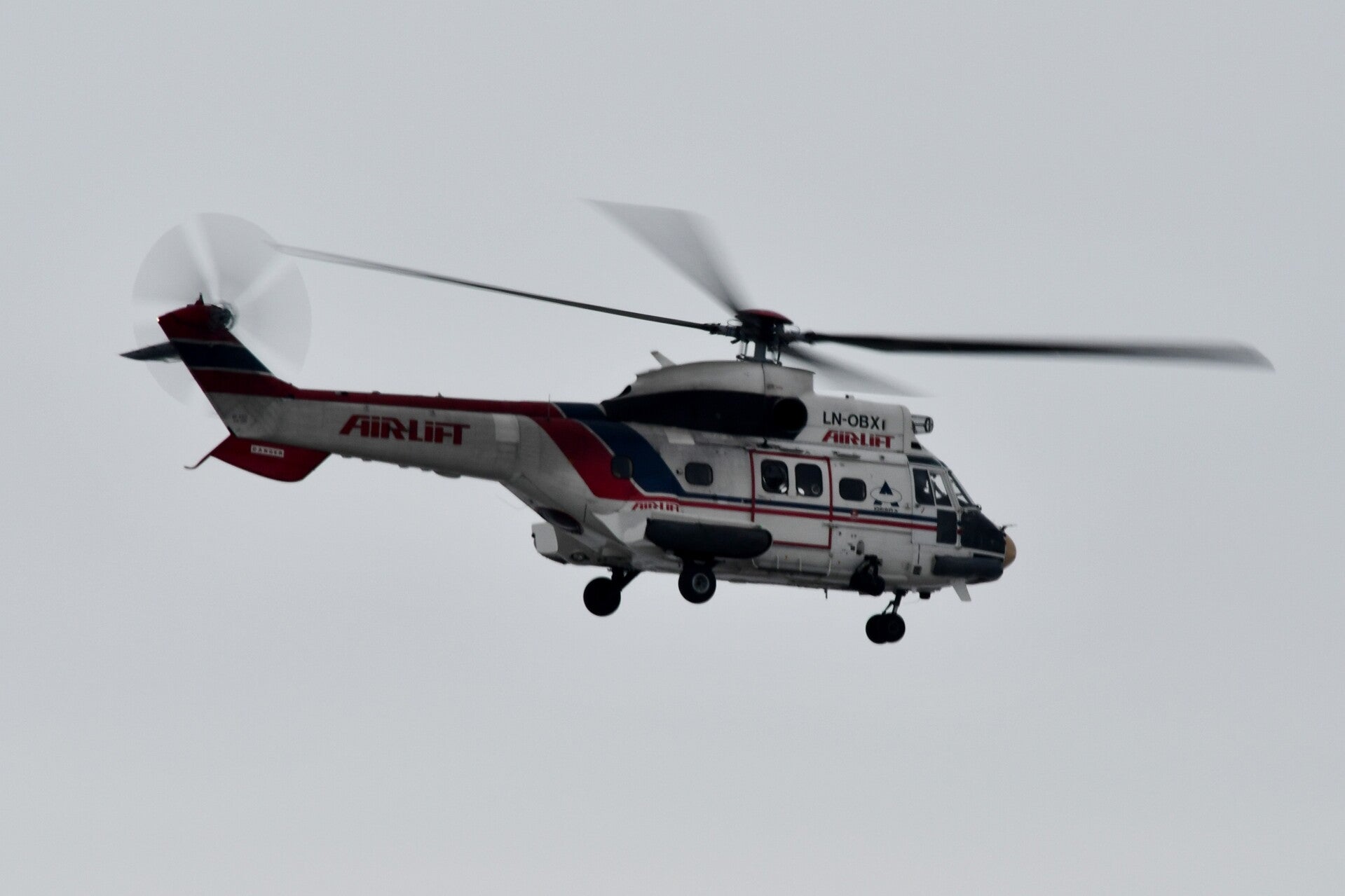
Once there, we check in and make our way to the departure gate for some final spotting. There isn’t much activity at first, just the usual traffic. Suddenly, however, we’re surprised by the appearance of an Aérospatiale AS 332 C1 Super Puma buzzing the terminal, the same helicopter we spotted earlier in the distance from the Moxy Hotel.
The aircraft, registered LN-OBX and nicknamed “Obélix,” is Scandinavia’s most powerful heavy-lift helicopter and is used for demanding operations throughout northern Europe. Remarkably, this airframe dates back to 1979 and holds a special place in aviation history: it is the very first production Super Puma (c/n 2001) to roll off the assembly line in France, following the two prototypes. Today, it is operated by Airlift AS of Norway.
Our ride home is easyJet Airbus A320neo OE-LUE, freshly delivered and still sporting that “new aircraft” feeling. After boarding and taking our seats, we’re pleasantly surprised when one of the cabin crew recognizes us from our outbound flight to Tromsø at the beginning of this trip. Needless to say, the flight back home is smooth, comfortable, and once again accompanied by excellent service.
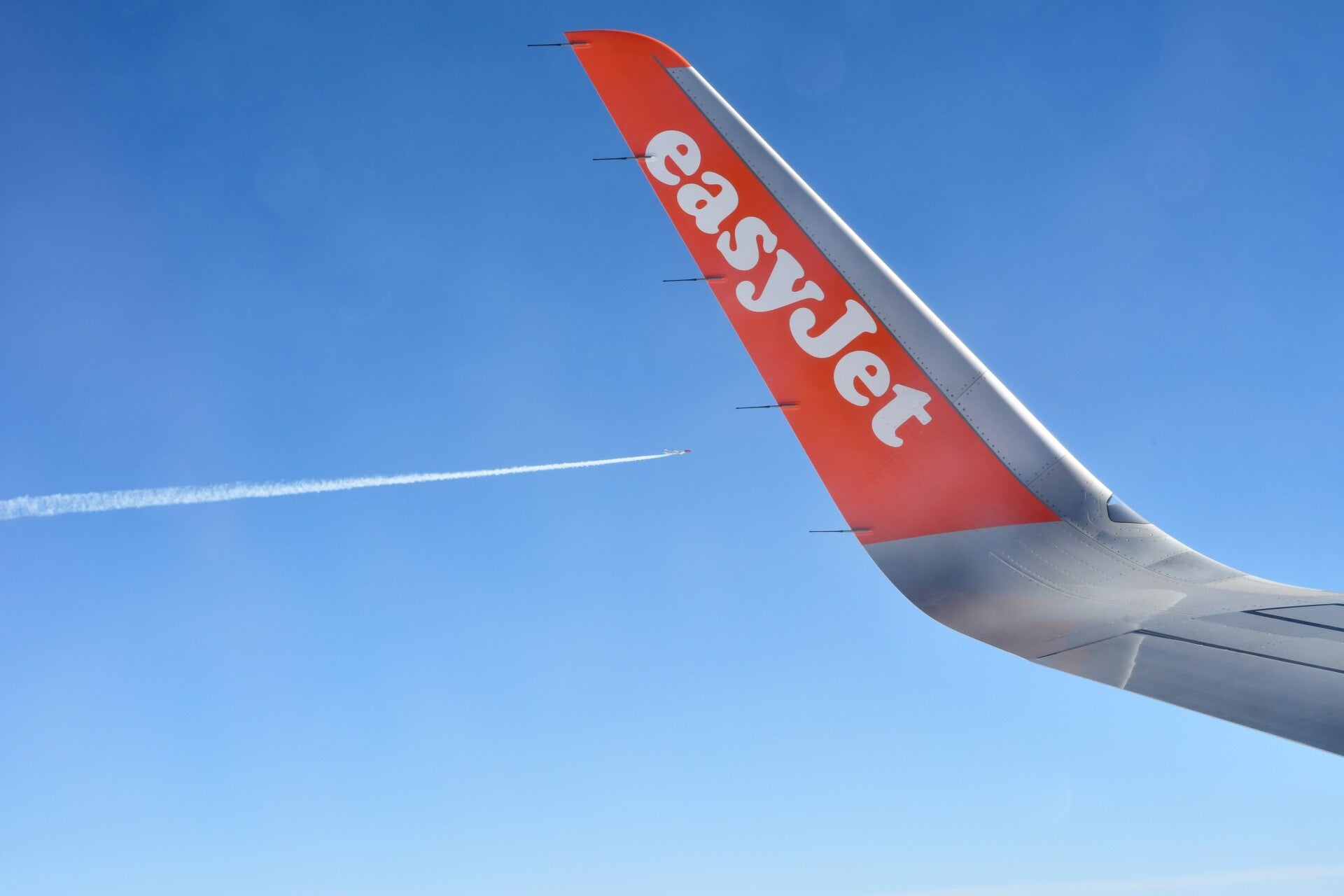
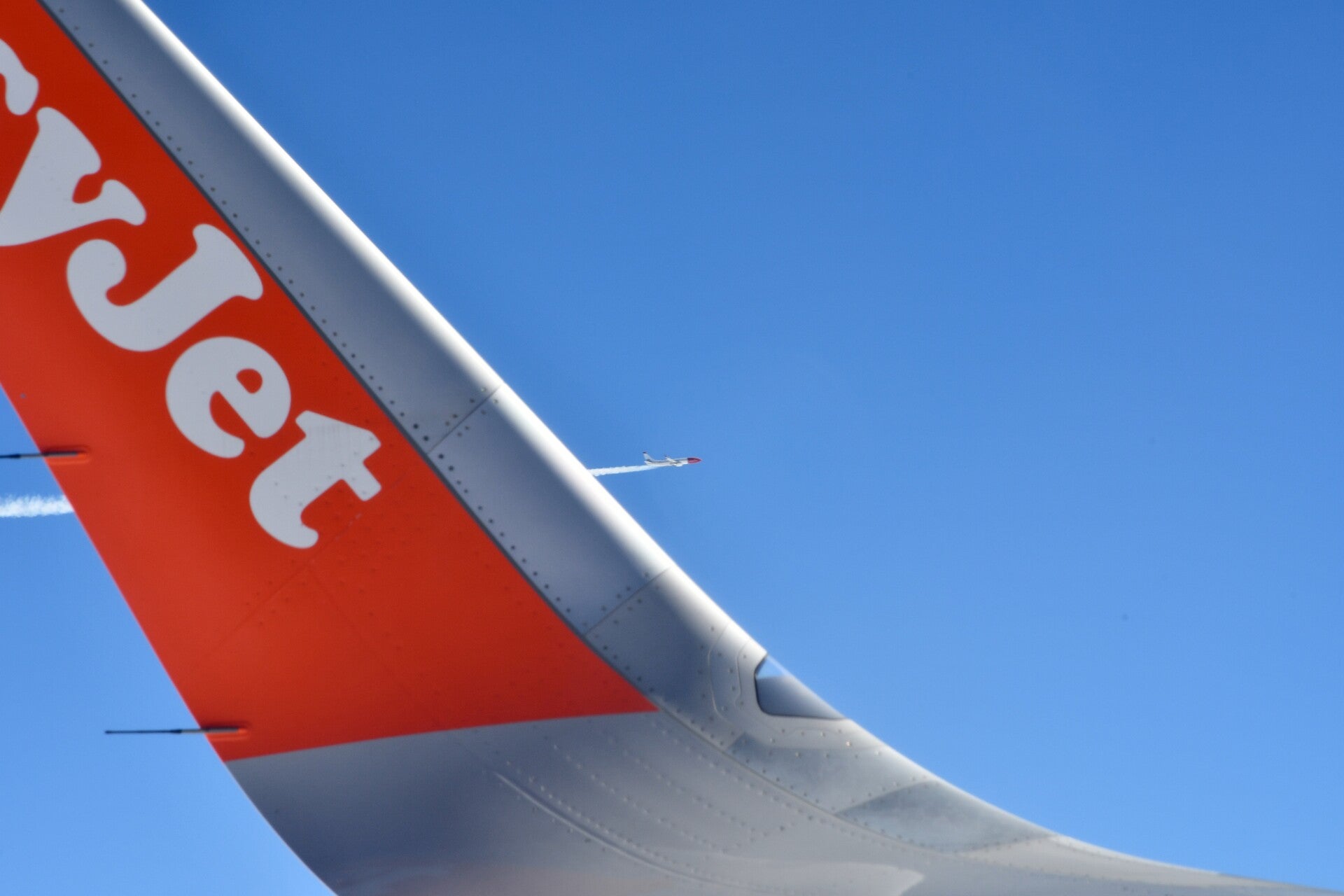
On our way south, we find ourselves racing a Norwegian Boeing 737 bound for Oslo, a fun little bonus to end the journey.
All in all, this trip was quite different from our usual spotting-focused adventures. It was slower, more relaxed, and far more centered on nature, scenery, and simply enjoying the moment. Besides, our goal of ticking off all three classic Dash-8 brothers failed miserably. Still, we absolutely loved it. We hope you enjoyed following along as much as we enjoyed experiencing it.
Next month, we’re already heading off to Canada and Florida, and trust us, this will be the most special trip we’ve ever done… for a reason you can probably guess.



Thank you so much for reading. If you enjoyed this trip report, feel free to leave a comment, we’d love to hear from you!